 Ask ChatGPT



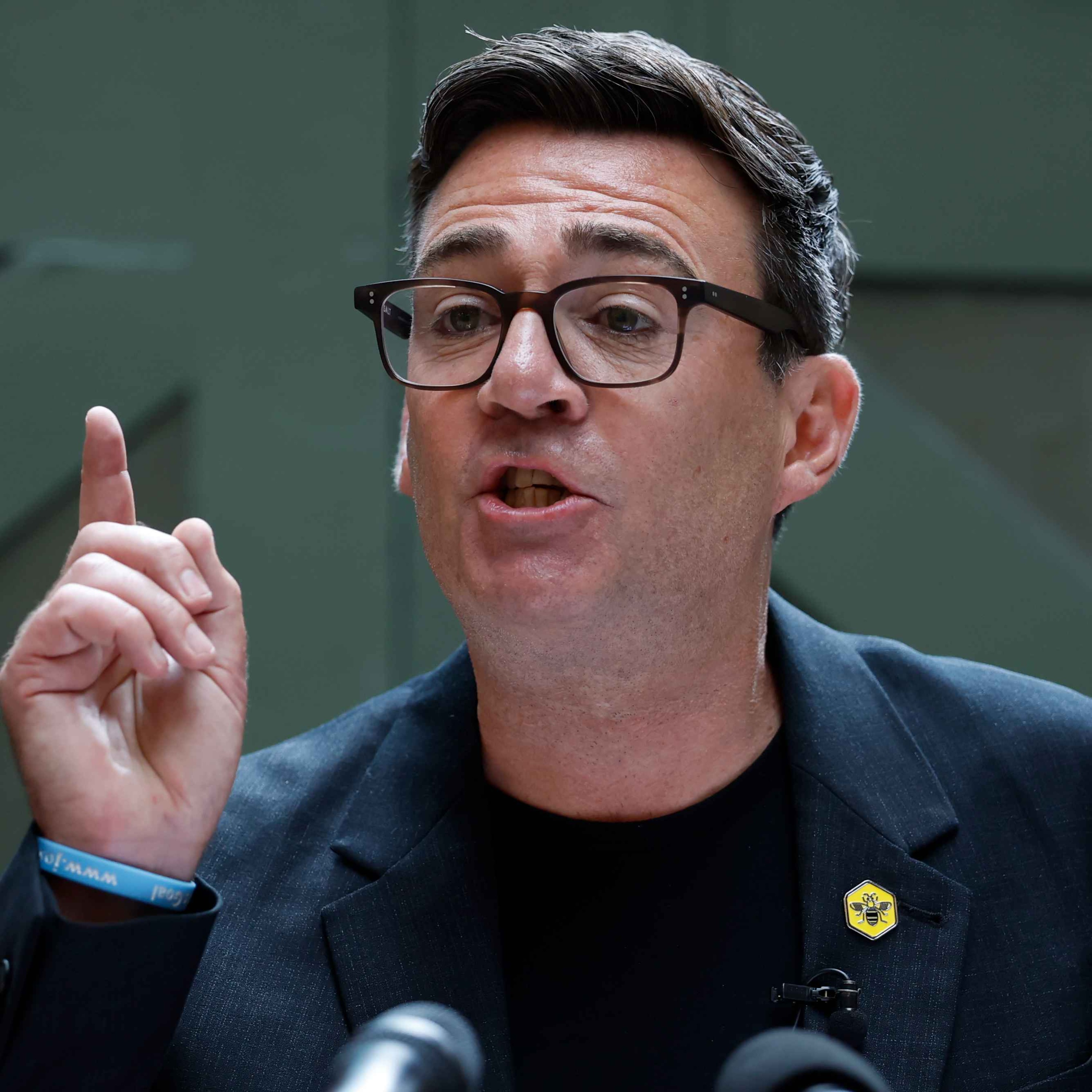
The episode discusses Andy Burnham’s major Manchester speech on a “Burnham agenda” for devolution: a proposed “number 10 of the North” to transfer wealth, resources, and powers from Whitehall to regions.
it would reform utilities, drive re-industrialisation, regenerate places, and make water/housing/energy/transport cheaper via public control (not necessarily full public ownership), modeled on Manchester’s bus system.
none—hosts James Heal and Tim Shippen analyze the speech and broader Labour/UK politics.
Manchester “Manchesterism” and its reliance on foreign investment; 55 referendums on local mayors (38 against); Germany-style “equality of outcome”; levelling up failing due to insufficient money and pandemic disruption; comparisons to Starmer, Sunak, Johnson; references to Kemi Badenoch’s opposition strategy and oil/gas comments; and speculation about Labour’s opponents (Reform/Nigel Farage vs Badenoch).
Written by AI. May contain mistakes.
Discussion on Burnham's recent speech and its implications.
“Yes, he says he missed Manchester so much he had to go back speaking at the People's History Museum, which neither of you and I fancied the trek up to today.”
Analysis of the vagueness and challenges of Burnham's proposals.
“I expect that's the first of many we're going to see.”
Exploration of public opinion regarding Burnham’s devolution agenda.
“But again, I've heard all this from probably the last four or five prime ministers.”
Discussion on the failures of previous political agendas and potential lessons.
“But even he played the, oh, aren't they all terrible down their card?”
Speculation on the future of Burnham's proposals and potential challenges.
“So municipal government in this country is not a sort of delivery mechanism that I'd be relying for my political future on.”
Examination of the internal dynamics within the Labour Party and Burnham's role.
“Well, I think the bond markets would quite like to know what they're dealing with, not only who they're dealing with but what all this, let's be pejorative, word salad actually means at the end of the day.”
Explore the balance between rewarding supporters and managing expectations in politics.
“beastly to each other and threatened, well, you want to keep everyone on side.”
Discussing Andy Burnham's approach to leadership and coalition-building within the Labour Party.
“So I think we're going to see a very, very domestic focus from Burnham.”
Analyzing Kemi Badenoch's positioning and challenges in relation to Burnham and the Labour Party.
“So I think the media gave her much more time than they used to.”
Examining the shifting political landscape and the implications for Labour and Reform parties.
“And I would suggest that given the Essex gains by reform, even if they keep at this level, the locals just last month, they could very much become the biggest party on the right at the next election.”
Discussing the strategic implications of Burnham targeting Nigel Farage in the political arena.
“And just, you know, that's what everybody will want.”

Get the gist, explore an idea or ask about something said.
 Claude
On Coffee House Shots, what are the key points of this episode?
Searching your listeningAutomatic transcript. May contain errors.
0:00Tim Shipman: Business is booming. Is your fulfillment ready for peak season? Switch to ShipStation now and handle more volume with confidence when it counts. ShipStation connects Shopify, Amazon, TikTok Shop, and over 200 more integrations with one platform that does it all. You can manage orders, sync inventory, track returns, all automatically. Everything your operation needs, all in one place. Right now, qualified shippers get a real dedicated person to get you set up and switched over for free. So when peak season hits, you're ready to go. Switch today at ShipStation.com, code audio.
0:38Tim Shipman: Hello and welcome to Coffeehouse. I'm James Heal. And I'm Tim Shippen. And today we're going to be talking about Andy Burnham, who's just given a big speech up in Manchester. Yeah, Andy Burnham has been addressing the nation. Yes, he says he missed Manchester so much he had to go back speaking at the People's History Museum, which neither of you and I fancied the trek up to today. But he gave his big speech talking about plans for devolution and really how he wants to have the biggest transfer of wealth and resources and powers from Whitehall to the rest of the country, create a new number 10 of the North.
1:05James Heale: And the number 10 of the North, we're told, is going to do three big things. It's going to reform utilities. It's going to do re-industrialisation. And it's going to regenerate place. And there's a lot of big talk about transforming the high street, which I think I've heard from every prime minister for the last decade yet to happen. But there was obviously reference to water, housing, energy transport, these key things. He wants them to get cheaper. He thinks taking them, if not totally into public ownership, into public control, which is the model they've used in Manchester on the buses, is the way forward.
1:36James Heale: But it was very much a kind of, we're up here and we've done really well in Manchester. Now we need to translate that everywhere else. I mean, there were some words about London towards the end where he kind of, he sort of amused his audience by saying, greatest capital city in the world. Note, not the greatest city in the world, which he clearly thinks is Manchester. But here we sit in London with our suit jackets, and in your case, your tie. If you read between the lines here, the southern middle class taxpayer, it sounded like is the one that's going to be on the receiving end of quite a lot of what he was suggesting.
2:10Tim Shipman: Yes, and the Daily Mail today had a big splash talking about the pain for middle England. I expect that's the first of many we're going to see. What does actually Burnham's agenda look like when it's translated into policy? There wasn't a huge amount there. We still don't really know, do we?
2:23James Heale: I mean, this was a big, big theme speech. It was about the vibes, let's be honest. I mean, he, you know, he said at one point, he wants every postcode to in the land to sort of be raised up. And he wants hope in every heart. And it seems to me that actually was the message. It was a message to the PLP. It was a message to the voter. It was a message to the sort of cynics of Westminster. here we sit basically i'm going to change things and i want people to feel that and actually that bit of it while it was all a bit vague you can see that he's sort of better at that stuff than
2:58Tim Shipman: starmer yeah the great empathizer in chief the bilklands and i feel your pain and look a first speech clearly it was going to be on the themes he felt most comfortable with as mayor drawing on that and kind of that we discussed i think in commentary before the idea of like boris johnson and then trump both being like the mayors of their disrespected countries my point would be it felt a little bit lacking in places. A lot of sort of big challenges that are going to be coming up, things like AI, energy didn't get a mention. And it felt very much drawing on the story of Manchesterism, which we've discussed before on this podcast, is a lot more complex than he likes to make out, suggesting that you have good growth.
3:29Tim Shipman: Well, does that involve giving off your prime real estate to foreign companies to invest in? That is basically what a lot of the success of Manchesterism is down to.
3:36James Heale: Yeah. I mean, there was a lot of references to good growth as if there there was some sort of bad growth out there. I mean, frankly, any growth at this point would be a good thing. And, you know, there was a sort of through line on growth where he said it basically starts with education and it goes through life chances and opportunity. And there were hints on that basis that, you know, he wants to do something about welfare and getting people into work. But the more developed strain was about, let's get rid of this sort of stampede to university and let's have apprenticeships and people doing manual work and all that stuff, which in an age of AI, you know, those may be quite good jobs, actually.
4:15James Heale: But again, I've heard all this from probably the last four or five prime ministers. We had, you know, T levels were created as the apparent equivalent of A levels. But you're still at a situation where a lot of parents push their kids into the university route. So I guess a combination of vocational stuff becoming more high quality, coupled with the huge cost of going to university these days, there is some rebalancing going on there. And Burnham clearly, I think, kind of feels that in his bones a bit more than probably Keir Starmer ever did. But feeling it in your bones is not enough to get this stuff done, as we've seen.
4:51James Heale: You know, a lot of lines in this speech. I could have heard Keir Starmer saying, I could have heard Rishi Sunak saying, I could have heard Boris Johnson saying, I could have heard Theresa May saying.
5:00Tim Shipman: I think there are three problems as well I could think of. First of all, the timescale. It's for about 10 years. I don't think this is a country that's willing to wait 10 years. He doesn't have 10 years. So there's the timescale. And of course, Manchesterism, I would argue, was a 20-year product. And Burnham kind of came in when the money was flowing in for the latter half of that period. The second point I'd make is that actually devolution, we've seen 30 years of devolution. We haven't seen public services improve. We haven't seen the growth rate in Scotland or Wales improve. It also means that we haven't seen the sort of public get any more enamoured with Westminster in the time we've had that.
5:28Tim Shipman: And actually what we've seen is a lot of devolved administration to say, thanks for the money, we need some more. Oh, it's a Westminster problem. So is that really going to be...
5:34James Heale: And that really was, you know, I mean, give Burnham some credit. Manchester has been largely a success story, though, you know, arguably... One of the more successful ones, I agree. Down to Richard Leeson and Howard Bernstein as much as it ever was Andy Burnham. But even he played the, oh, aren't they all terrible down their card? And you look at Scotland and Wales, particularly in Scotland, where the Labour Party of old thought that devolving power would effectively keep the nationalists out for a generation. In fact, it's been SNP dominated. The life chances in education and health, you know, the outcomes there are terrible.
6:07James Heale: And the SNP never really seemed to pay an electoral price for that. It was always it's London's fault. So are we really – the danger for Burnham here is that he's setting up a whole series of other people to say they're not giving us enough money. It's all their fault.
6:20Tim Shipman: Well, this is the third point, mate, which is that does the public really want this? There have been 55 referendums on creating local mayors since 2001. Of those 55, 38 went against creating the mayoralties. And actually, if you look at the kind of the public, are they crying out for this as a sort of scheme to be proposed for the country? Not necessarily. And they are potentially caught storing up enemies at a time, of course, when people – do they want to have more politicians? Remember, of course, Dominic Cummings, the first referendum he won in 2006 against the North East Assembly. So I'm not sure it's going to be the great election winning agenda he necessarily thinks it will be.
6:50Tim Shipman: No, I mean, there's two questions, aren't there?
6:52James Heale: Will it help deliver popularity? I think that's very arguable. The other question is, will it actually deliver results? Now, you can argue in Manchester that it has, but it's fair to say there's 650 MPs in Westminster. Not all of them are tremendously high calibre people. and not everyone who is running municipal governments is even as good as some of the people in Westminster. And effectively, you're handing power and money to people who are not really, you know, a lot of the time ready to deal with it. And you look at the people who've been successful, Burnham was successful, Ben Houchen in the North East was very good at getting money out of London because the Tories wanted to show that A, heralties worked and B, electing Tories worked.
7:34James Heale: So that did quite well under the last government. But, you know, there is not a model of rampant success. I mean, you look at some of the places in this country, you know, the Welsh government is a disaster. We saw, I mean, Birmingham City Council for ages was a total, utter disaster. Reform went into a lot of these places after the local elections last year and said, we're going to sort this out. We're going to cut your taxes. We're going to get rid of waste. And largely they failed to do that. So municipal government in this country is not a sort of delivery mechanism that I'd be relying for my political future on.
8:10Tim Shipman: Well, I remember, of course, when Boris Johnson came in and there was all this talk about levelling up. And I think it was very much builders. It would have to be something akin to the 30-year state programme that the German government did to kind of level up East Germany with West. You need something like that. I mean, why did that fail, Tim? Why did levelling up fail then? And are there any lessons from the Johnson government for this incoming administration?
8:31James Heale: Yeah, I think maybe there are. But the main reason levelling up failed is because there wasn't enough money. And that is a problem that is even more acute than it used to be. Interestingly, Burnham did reference the Germans today as a sort of – he was talking about effectively – I can't remember the exact words he used. But the implication was he was about equality of outcome across the country. Not equality of opportunity, but that everybody should be living the same quality of life everywhere. and bluntly if you've got a capital city that sucks in talent money and investment that it's quite difficult to then say that some let's choose our words carefully before we get cancelled but some sort of backwards town elsewhere in the country that doesn't necessarily have the advantages that london has should be getting the same outcomes as london if that is the approach it's going to take it won't be leveling up it will be leveling down to the level of everywhere else but you're right.
9:21James Heale: I mean, look, levelling up, I think, is broadly what the public wants. They want, you know, why did we have a referendum result that we did? Why did we have majority for Boris Johnson? Why did we have a Labour landslide? Because people who feel ignored, who don't feel they've got the benefits of globalisation, open borders, all of that stuff, they are resentful, their wages haven't gone up and they think that the centre, the establishment doesn't care about them. Well, that was Boris Johnson's mission. It's clearly Andy Burdham's, which is why someone suggested to me that the sort of shorthand for what he's trying to do is levelling up, which is a little bit patronising, but I think actually captures the essence of it quite well.
9:58James Heale: But if you go back to levelling up, I think the biggest thing that derailed it was the pandemic and the fact that, you know, we suddenly had to spend huge chunks of state money on just keeping people, you know, in work, essentially.
10:10Tim Shipman: That's an issue, isn't it? I mean, Andy Benneke had this grand agenda. We've seen successive prime ministers derailed by crises. What's to stop this grand 10-year plan getting shoved aside? Well, quite.
10:17James Heale: And we already know there's pressure on, you know, we're probably going to see the defence investment plan at some point this week. That's more pressure on money. And we still know that that's not going to be anything like what the armed forces think they need. And there'll be pressure on Burnham to deliver on that. You know, he's nodded towards some of this, you know, this suggestion of welfare reform. But clearly, they're going to be higher taxes on wealth. And what there was no real acknowledgement of in this speech are the sort of trade-offs. Yes. He wants growth and he wants a better, fairer society where everybody's getting a fairer shape.
10:50James Heale: Everybody wants that. But do you achieve that by taxing the people more who are actually paying the money, potentially driving some of them away? I mean, we've heard about the possibility of an exit tax for like billionaires. Well, you only set up an exit tax if you think they're going to leave. And if they leave, you get your exit tax one year, but you don't get income tax going forwards. and maybe he didn't mention energy and maybe he didn't mention AI because any comment on either of those would have looked like a comment on Ed Miliband. And any comment on Ed Miliband is a comment on who his next Chancellor of the Exchequer is going to be.
11:27James Heale: And he made very clear in his speech that we're not going to see those appointments anytime soon. I was steered last week that we wouldn't get it. This week, I guess you'll probably get it before he becomes Prime Minister. but he was hinting quite heavily that a lot of these appointments are not going to come until he is Prime Minister and the country's going to have to wait. Well, I think the bond markets would quite like to know what they're dealing with, not only who they're dealing with but what all this, let's be pejorative, word salad actually means
11:54Tim Shipman: at the end of the day. Well, particularly also because if you want to have proper regional government you may well need to have tax-raising powers. Now, that depends hugely. Your vision of what that should look like could be very different from Ed Miliband to Shabana Mahmood. would they effectively want to give the treasuries tax raising powers away and emasculate a chancellor from day one in some ways a self-denying ordinance um well you might have to find a
12:14James Heale: chancellor that's willing to do that and it may be that not everybody is i mean the other thing is you know he's talked about local um sort of power brokers whoever they are be they mayors or councils having the power to uh spend their own business rates i think a lot of people think that's a decent idea because people know locally much more what might help to get things moving a bit but if you start getting into local income taxes and that kind of thing you quite swiftly get into a situation where you'll have differential tax rates between different areas which would be very interesting and not necessarily great for growth for the ones that put them higher than their local competitors and also we've seen in Scotland that the SNP got given those powers and barely use them because it doesn't want to be the one that gets the blame.
13:03James Heale: It still wants to say it's all London's fault.
13:05Tim Shipman: I would also make the point, I think, that when it comes to different audiences and all of this, part of this was about speaking to the bond market, probably. Part of it was for the country. The most interesting line for me that's jumped out was the line about the PLP when he talked about we need to get rid of so much of whipping, but also I will set a political direction. I'll expect people to stick with that. I mean, how do you resolve that? That's very fascinating.
13:23James Heale: Well, I mean, they're mutually incompatible, aren't they? I mean, he's basically hoping that people smell the vibes and go with him, which to start with, they probably will. There's a lot of, you know, I mean, his big thing was hope, hope, hope, hope. Well, there's a lot of hope amongst Labour MPs at the moment that this is going to transform their fortunes. But of course, it's complicated. And fortunes tend to be incrementally changed, not radically changed. Polls don't zoom all over the place. So it may be a few months in when some difficult decisions have to be made, that he finds himself sort of lacking some of that support.
13:57James Heale: At which point, if you've said, oh, I don't really like all this whipping and the way people are sort of beastly to each other and threatened, well, you want to keep everyone on side. You need a bit of
14:07Tim Shipman: stick as well as carrot. And of course, that's the trade-off point, isn't it? And you're thinking, hang on a sec, if you're one of those Labour MPs, you don't expect to win. If you're the Labour MP for Hendon, won by 15 votes, you're thinking, well, I'm not going to gain from this and see my tax levels go up or potentially council tax bans re-evaluated. That is the interesting question, isn't it? And because this Labour lands either won a bunch of seats they didn't expect to win, didn't win in 1997, certainly. What do those look like under this whole new kumbaya sort of scheme? Are they going to be happy or are they going to start kicking off?
14:33James Heale: Yeah, he seems to be trying, Burnham seems to be trying to get a big tent within the Labour Party at the moment. You know, he's got the support of John McDonnell from the campaign group, you know, on the hard left. He's getting a lot of sort of Blairite retreads turning up. James Purnell his you know Chief of Staff for one we're now hearing David Miliband may return we'll talk more about that if that happens but that suggests to me the suggestion is that he'll keep Jonathan Powell on at least for a bit as National Security Advisor so if you had David Miliband and Jonathan Powell that's effectively a sort of Blairite you know restoration but that suggests to me that he just wants those to go off and deal with foreign policy in the same way that Rishi Sunak kind of said to David Cameron off you pop and just deal with all that because I don't want to have to deal with it I've got enough on my plate domestically.
15:17James Heale: So I think we're going to see a very, very domestic focus from Burnham. But the detail is,
15:23Tim Shipman: you know, it's all that matters. Well, to all give detail, elsewhere we've had Kimi Bainock sort of setting out her challenge. She gave a speech this morning and really it wasn't one with much in the way of novelty or news, but it was her sort of setting the tests for what Burnham should be doing and effectively saying you need to balance the books, mate. Really, I think this comes at a time when I think we've seen Bainock stepping up a lot more and sort of trying to very much take it as a sort of Labour conservative fight rather than going after reformer. That seems to be working for her, doesn't it?
15:50Tim Shipman: Yeah, I think it is working.
15:50James Heale: And it's also interesting because she's always, in terms of the words she used, been hugely into this whole, I've got a team of great people. Why would I have a shadow cabinet reshuffle when I've got this team of great people? But I think what she's realised is that when you're a leader of the opposition, it's basically on you. So she gave her speech. She took a load of pressing questions. Unlike Burnham. Unlike Burnham, who seems at the moment to want to conduct a sort of regal progress towards Downing Street without, you know, excess scrutiny. But minutes later, you know, as soon as Burnham had finished, she was on Sky News pontificating about Burnham.
16:25James Heale: And, you know, the big criticism of her early on in her tenure was that she was lazy, that she, you know, she didn't want to do stuff in the mornings, she didn't want to do stuff at the weekends. But she's putting in a proper shift now, and I think that has not only impressed her MPs, it sort of percolates through Westminster. So I think the media gave her much more time than they used to. And there's just a sense that she's sort of onto something. And it comes at a time where Nigel Farage looks a bit grumpy. His momentum's been stalled. There's a bit of infighting going on within reform about exactly how to proceed.
16:59James Heale: And, you know, I mean, I got a message this morning from one of Starmer's former aides who sort of was giving me his take on the Burnham speech, but also saying that he thinks the next election underpriced. that it will come down to Labour against the Conservatives. And that is something I hear more and more. Not to say it will happen, but it now looks like sort of systemically like it could happen in a way that it didn't six months ago. And in essence, Farage's sort of pledge to have destroyed the Tories hasn't yet happened. I mean, look, a lot can happen in politics and Farage has a habit of bouncing back from these periodic lulls.
17:33James Heale: But yeah, there's a slight sense that Bedouin is, she's at least doing the job
17:37Tim Shipman: of a leader of the opposition properly now. I'd make two points. First of all, she talked about oil and gas this morning. Very interesting, of course, in the context of Ed Miliband potentially becoming chancellor. Remember this by-election in Aberdeen South? There are some echoes potentially with Uxbridge in 2023, which, of course, led to Labour massively scaling back its 22 billion Green New Deal on that. And it's obviously given Ken Baynock a philip and a bounce. Second point, I think, is when Burnham coming in, who is his main opponent? Clearly, from last year, from about May onwards, Labour realised that their main opponent or perceived their main opponent to be reform.
18:06Tim Shipman: You saw lots of talking up that and framing it as Labour reform. I wonder if Burnham looks at this and thinks, who am I better going up against? Is it potentially an unpopular Farage or is it going up against Kami Baden-Og? Now, prime ministers and political leaders can sometimes choose their opponents. You go back to the 1920s, Baldwin and Macdonald basically combined to crush the liberals, thinking that it was very much in their interest. They both took a large chunk of that.
18:30James Heale: Burnham - And that then reshaped British politics for, what, eight decades, essentially, until we got to this kind of, probably longer than that, until we got to this situation where now we've got five, six, seven party politics.
18:40Tim Shipman: And I would suggest that given the Essex gains by reform, even if they keep at this level, the locals just last month, they could very much become the biggest party on the right at the next election. And now Farage might never become prime minister, like the too many is often compared to Enoch Powell and Joseph Chamberlain, making the political weather, but just falling short of premiership. But things could look very different. So a good performance, I think, probably today by Kemi Badenov, but still a long way to go.
19:04James Heale: Yeah, and I think the thing for Burnham, there's still quite a lot to be gained for Burnham going after Farage. I think within Labour, they love to have a kind of moral crusade. It's a sort of binding kind of thing for them and their party. They do feel morally superior to people on the right, but they really feel morally superior to Nigel Farage. And what that does is it animates their own side. It animates the people knocking on the doors. But it also, looking at what happened in Makerfield, appears to have the ability to bring in a lot of people who've started voting Green, some people who've been voting Lib Dem, and even a few Tory tactical voters who want the Tories to win the battle on the right and do not want reform to win some of these seats.
19:48James Heale: So I think he'll keep Farage prominent in his gun sights because I think that's what will kind of unite the left more effectively. What do you think, though, about how Baden-Ock will go after Burnham? Because she's effectively been savaging Keir Starmer, knowing that the public basically hates him, doing sort of practical common sense. Well, what Burnham essentially is doing, and obviously there's a big difference between Baden-Ock's idea of practical common sense and Burnham's, But Burnham is very much pitching himself as, we'll do the decent thing.
20:22Tim Shipman: And just, you know, that's what everybody will want. I'd say three words, Starmer and Jeans. That's what they're going to do. Basically saying, you know, the front guy might have changed, but the guys who actually have the power, the PLP, they're not going anywhere. And really trying to get at, as a very small opposition, and they are the smallest opposition, official opposition, the Conservatives, in many, many generations. And it's clearly, you know, they have to use their troops effectively, but trying to sort of push and pull at those different Labour coalitions. You imagine potentially something like a motion in Parliament on something like the family farms tax, you know, as a way of exacerbating the divide between the rural MPs and the bulk of the PLP.
20:55Tim Shipman: That's what I think they'll try and do. And actually, I think talking to some senior Conservatives, there is a recognition that he'll probably get a bounce, newcomer, narrative reset, and they'll take some time, a bit like we did last year, to work out how best to attack him. But over time, both Conservatives and Reform believe that economic reality will drag him down and he'll end up being like almost every other Prime Minister we've had in the last 30 years, which is that over time, their popularity gets worse and worse the longer they're in office.
21:18James Heale: James Hill, where's the hope in your heart?
21:22Tim Shipman: Or is that your hope? I'm a middle-class Southern taxpayer. There's not much hope for me with a burden of premiership, it would seem. But I wait to be disappointed. Thank you very much for watching Coffeehouse. We hope that you haven't been disappointed from watching today. And tune in later this week for more thoughts from Tim and I.
22:06Tim Shipman: We'll see you next time. Thank you.
Andy Burnham has set out his big pitch to the country: a ten-year plan for devolution, reindustrialisation and a new ‘Number 10 of the North’. But, as he prepares to enter Downing Street, does he have anything like the ten years he wants to deliver it? And who will pay? Is Middle England about to be squeezed to fund Burnham’s vision?
James Heale speaks to Tim Shipman.
Become a Spectator subscriber today to access this podcast without adverts. Go to spectator.co.uk/adfree to find out more.
For more Spectator podcasts, go to spectator.co.uk/podcasts.
Contact us: [email protected]
Hosted on Acast. See acast.com/privacy for more information.