Ask ChatGPT

 Coffee House Shots
25 Sep 2026 · 25m · 15 chapters

A Labour Party conference lookahead focused on what Andy Burnham’s leadership will mean, whether he’ll call a general election, and how Labour will handle major policy fault lines (social care, welfare, North Sea drilling, Gaza/Israel, and EU relations).
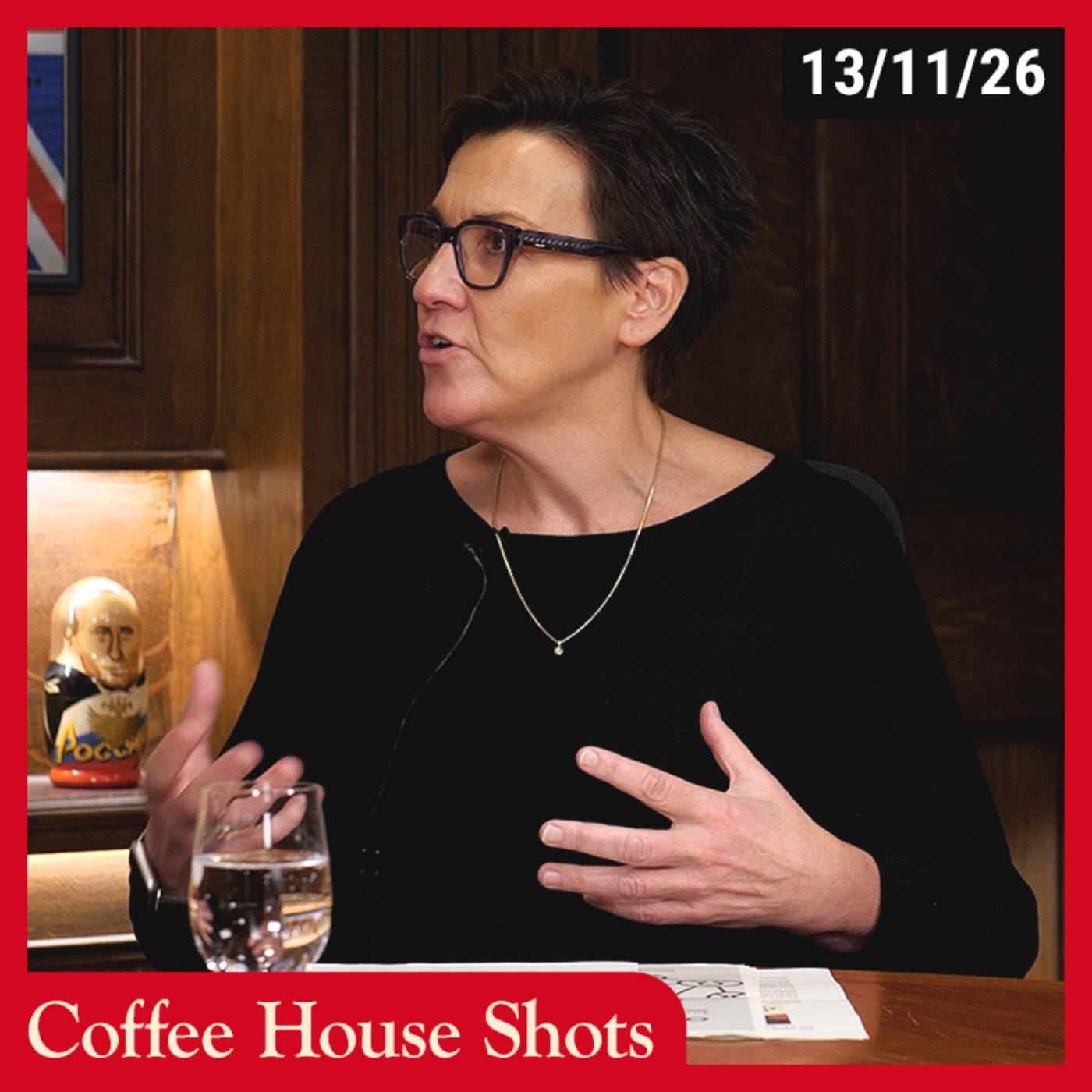
Jonathan Ashworth, former Labour Shadow Cabinet Minister and long-time Labour figure; previously worked for Gordon Brown.
Burnham is expected to energise “party faithful” with a moral/parable style of politics; Labour likely won’t call an election because polls suggest a Labour win is short of a majority (around 241 seats in one scenario) and depends on coalition arithmetic. The Tories’ failure to force an election earlier is framed as a strategic mistake. Burnham will likely delay or manage controversial issues (sanctions, drilling) to keep activists and unions aligned.
sanctions on Israel; delayed North Sea drilling decision; welfare/sickness-benefit spending heading toward £100bn; triple lock state pension debate; possible EU “rejoin” pressure raised by Tony Blair comments.
Written by AI. May contain mistakes.
Discussion about the lively atmosphere of past Labour conferences and how they have changed.
“I'm sure it will be for the younger generation as well, this conference season, people staying up very late, gossiping in the bars, plotting all the intrigue.”
Analysis of the current mood within the Labour Party going into the conference.
“Whereas this is going to be like, I think when Andy Burnham speaks on the Tuesday, I presume it's the Tuesday, usually the Tuesday, it's going to be like FA Cup final day.”
Exploring the significance of Andy Burnham's return to the forefront of the Labour Party.
“They felt that way about Jeremy Corbyn, but I think they would hate that this is a bit more presentable and looks a bit more viable, I would guess.”
Discussion on the major policy challenges and public expectations facing Andy Burnham.
“It's going to be a very exuberant conference.”
Evaluating the likelihood of Andy Burnham calling for an election and the implications.
“I mean, I've written my cover story on this and spoken to a lot of people this week.”
Discussion on the Conservatives' missed opportunities and strategic blunders regarding elections.
“I don't understand why they didn't play that card.”
Exploring the potential economic policies Burnham may advocate and the challenges of taxation.
“But that is immediately then painted by the right as he wants to raise taxes to pay for migrants and benefit claimants.”
Discussion on internal pressures within the Labour Party regarding controversial issues.
“Well, that is the question, because he's tied down like Gulliver, or at least the manifesto which was written, and tied a Labour chancellor down like Gulliver.”
Debate on the contentious issue of North Sea drilling and its implications for Labour.
“And I think what he is prepared to do, I mean, I should emphasise to the listeners, I've got no idea if this is the thinking and down.”
Discussion about Tony Blair's recent comments on EU membership and their impact on Labour.
“a lot of the devolution stuff, he doesn't need an election win to do any of that.”
Examining the strategic focus on party bases for upcoming elections and implications for Labour.
“But there will still be activists pushing him.”
An analysis of Labour's electoral strategy and the activist base's influence.
“Blair seems to be saying, no, no, no, tear all that up.”
Discussion on the importance of policy in communicating values to the public.
“I think, but one of the things with Andy though, I think he, I think he, this sort of, this debate about, you know, this very tactical debate, do a little bit here, a little bit there.”
Exploring potential reforms in welfare and the challenges of funding them.
“If he definitely wants to fix that, brilliant.”
Insights into the dynamics of facing opponents like the Greens and the Tories.
“All these things conservative governments never do.”

Get the gist, explore an idea or ask about something said.
 Claude
On Coffee House Shots, what are the key points of this episode?
Searching your listeningAutomatic transcript. May contain errors.
0:05Hello and welcome to Coffeehouse. This is a special edition going out the weekend of the Labour Party conference. And joining me today, I'm delighted to say, is former Shadow Cabinet Minister and Labour legend, Mr Jonathan Ashworth. Now, I say Labour legend because you and I met, I can't work out whether it was 24 or 25 years ago when we had slightly less facial hair and slightly less grey hair, in an all-night cafe on the Brighton waterfront. And this is what conference used to be about when we were in our 20s, Johnny. We were, you know, you, me, I think Tom Watson might have been there. We were having breakfast at approximately half past four in the morning.
0:39Yeah, it was certainly... Conference isn't like that anymore, is it? Well, not for me anyway. I don't know about yourself. But no, that was what conferences were like. I'm sure it will be for the younger generation as well, this conference season, people staying up very late, gossiping in the bars, plotting all the intrigue. Intrigued. Surely not plotting already. Well, you know, the plotting's done in the Labour Party. They're broadly happy now. What's the mood like then, do you think, going into this? You've got Andy Burnham in. The polls ticked up a bit. They've sort of ebbed off a tiny bit.
1:07But there's a general sort of mood of expectation. But I think people on my side of the fence would say, we still don't really know where the beef is. How's the party feeling about it? Well, I mean, the last couple of conferences have been slightly weird for Labour. They've been pretty miserable affairs, actually. In fact, even the one when we first got ourselves elected back in 2024 was really miserable. Whereas this is going to be like, I think when Andy Burnham speaks on the Tuesday, I presume it's the Tuesday, usually the Tuesday, it's going to be like FA Cup final day. It is the return of the prodigal son, very much so.
1:42And the party faithful, and I use that word deliberately, but I think it's a very good word to use in this circumstance because I've no doubt that spectator readers, your podcast listeners, yourself, perhaps sometimes roll your eyes, find the sense in which the Labour Party likes to think of itself as being a moral crusade. I'm sure you find it insufferably sanctimonious, but nonetheless, the Labour Party does like to consider itself as part of a great moral crusade, and it wants its leaders to be part of that romantic moral crusade, and I think Andy Burnham will hit those notes with the party faithful in a way in which Keir, God bless him, never quite did with the party faithful at the conference.
2:25They felt that way about Jeremy Corbyn, but I think they would hate that this is a bit more presentable and looks a bit more viable, I would guess. Well, the Jeremy Corbyn thing was slightly different because there was a whole number of people who had always been on the far left joining the Labour Party en masse. So it's a different crowd, essentially. It's a different crowd. I remember, you know, the Labour Party, in the old adage, has always owed more to Methodism than Marxism. It's always been, yes, the party of place, but the party of parish. The non-conformist chapel movement was a great influence of the Labour Party.
2:54This is the spirit in which, although he's a Catholic, Andy Burnham will be speaking to the party conference, I suspect. And the party faithful love of it. It's going to be a big old rally, isn't it? It's going to be a rally. The return of the prodigal son to continue this religious biblical theme. They're going to love it. It's going to be a very exuberant conference. He'll get a rapturous reception. But can he turn water into wine? That is the question which we're all asking. Oh, very good. Very good, very good. Well, that is the question because there are huge policy challenges facing him and lingering over this conference a bit similar to how it lingered over the conference I was at as a Gordon Brown bag carrier in 2007, when I think it was Bournemouth, I think, when there was another sense of exuberism, another sense that the Labour Party's got its soul back within them of sort of man who sort of seeps social justice, ooze social justice from his every pore.
3:43I think that's a similar sort of vibe. But does that mean he's going to call an election? I think not, but there's already speculation about that. Yeah. I mean, I've written my cover story on this and spoken to a lot of people this week. I mean, the pros are kind of obvious for Andy Burnham. Can he come forward with a new programme, enthuse the public, use the communication skills, which we've all seen on display. He's done pretty well on that front, and that's part of the reason why a lot of your MPs are feeling a lot happier. They, you know, they've found a leader who can communicate and appears to care, which, you know, they didn't have before.
4:16I guess the questions are still, what is it he would be communicating? My understanding is people who've been sitting in the recent focus groups are saying the public's increasingly, you know, they're not turned on him, but they're definitely saying, what's he actually going to do? How's he going to make my life better? And the general consensus of people I've spoken to is it's pretty unlikely he calls an election. And then we only have to look at, we've got two of these super polls out. they're violently different in terms of the sort of who's winning on the right one of them has the Tories in second place the other one has reform in second place both have Labour up front but in both I think the best of them has Labour on 241 seats which is sort of 80 short of a majority and the other one's slightly worse than that I think in one of those Labour could cobble together a win with the Lib Dems and in the others it would need the SNP as well I mean someone I spoke to you said, look, people in that building can read a poll.
5:08It seems pretty unlikely that he's going to go for it if that is the sort of electoral environment. I think it is unlikely, although as far as a strategist, I'd be looking at it carefully. I'd also be looking carefully at where the reform vote is going because there's no doubt reform have been losing altitude. My instinct is most of that vote, not all of it, but most of that probably goes to the Tories. And some of it's peeled off to restore Britain as well, of course. They've lost four to six points there by the looks of it. Yeah, and remember the reason why Kirsten Armagh's Labour Party got such a stunning victory was both because of the Liz Truss debacle, but also because the centre-right vote was so split.
5:45Andy Burnham needs that centre-right vote to remain split. He doesn't want reform to drop and it all to hit the Tories. Just on the Tories, by the way, I am surprised. I think they've made a strategic blunder by not demanding a general election. I know Camille made a lot of ways to say, well, we had general elections and so on. But I think they could have said and should have said if I was them, this guy wasn't even elected in the general election two years ago. He didn't run on the manifesto. He's got no legitimacy. We want an election now. They've missed the window for that now, by the way. But that would, I think, put the Labour leadership on the back foot.
6:17I think they have made a strategic blunder in not playing that card. I don't understand why they didn't play that card. I think the reason they didn't initially was that they weren't in a strong enough position themselves. They thought we're in third place. We haven't selected most of our candidates. Would it not be better for this to play out for another couple of years and perhaps we can overtake reform, be the dominant force on the right again, and then we are the ones taking on Burnham next time? But I've spoken for the piece I wrote this week to some, you know, next number 10 Tories who've said to me, they agree with you, that that was a mistake.
6:45It's not that bad to force an election. You certainly make life uncomfortable for the Prime Minister. You make him look a bit cowardly and shifty. And by the way, given the way things are going with reform, in a campaign you might find that things break for you in an interesting way. And unless you take risks and gamble in politics, you tend not to come out smelling of roses. And the other reason they said that was the point I was about to put to you is the other problem with an election is either Burnham comes out and says, I need a new mandate and I need it because we've got some big things to do.
7:19these binding rules on not raising income tax and the rest of it, you know, I might have to raise income tax. It's fairer than doing all this tinkering around the edges. But that is immediately then painted by the right as he wants to raise taxes to pay for migrants and benefit claimants. And that's a pretty difficult environment for a Labour prime minister to fight an election in. And if you don't do that, people in your party tell me, well, what's the point? Why would you bother trying to get a mandate if you don't want to sort of change the sort of economic environment? Yeah, I mean, I spent 14 years as an opposition politician, as an attack dog.
7:54You've got to use these guerrilla tactics. You've got to press home your advantage when you spot an opportunity. I was just surprised that they didn't go for this. They should have done. They've sort of missed the chance, really, to make that argument because they should have threw back all the quotes from senior Labour figures demanding elections when there was Liz Truss, Rishi Sunak, all the rest of it. I'm surprised. And I think too often the Tories, to me, they still look very tactical and they don't look like they've got a big strategy. But anyway, I know we're here to talk about Labour, not the Tories.
8:22But if you were Labour and you were deciding to go for it, what would be your response? How do you deal with that from day one onwards? People saying, he just wants an election so he can raise your taxes. And by the way, it's not going to you, it's going to all these people you don't like. Would he have to stick to those fiscal rules? Well, that is the question, because he's tied down like Gulliver, or at least the manifesto which was written, and tied a Labour chancellor down like Gulliver. I think he's got to make a choice as to whether, if he genuinely wants to change the economic settlement in the country, if it's genuine 40 years of neoliberalism, which needs to be ripped up, et cetera, et cetera, does he go to the country and say, actually, I'm going to put a penny on income tax to fund the NHS, to fund social care, to fund, or whatever?
9:10They brave, not necessarily advising him to do that. A lot of polls will always say that the public supports that. but we feel pretty taxed out at the moment. Yeah, it's quite an experiment, you know, on saying all that. Labour did put up tax for the NHS in the early 2000s. I worked for Gordon Brown at the time and won a subsequent general election. And got away with that. So if you're persuasive and you make the argument, you can win the argument. But it's a brave argument to fight an election on. You've got to make the big political argument. And I think what he is prepared to do, I mean, I should emphasise to the listeners, I've got no idea if this is the thinking and down.
9:47People should not read into anything I'm saying. I'm not trying to set any hairs running, but I'm just shooting the breeze with you. But he is good at making bigger arguments. And he understands, to continue with my sort of religious theme, the power of parable, you know, he understands that a political leader has to make these big, big moral arguments in the way in which, you know, as I say, sadly I feel bad sort of knocking him. Kirsten Alba was never great. Well, we've all done plenty of that. Yeah, it's your job to do that. I'm a Labour guy. Pretty far down the list. But it was not his sort of natural...
10:20Every piece I wrote, I made a point of only equating Labour sources when they was lugging him off. It was never me, though. Can you say that? It was never you. But it was never his... There was a lot of internal angst about Keir Starling. Well, that's politics. It's a rough game. But that was never his natural register, whereas for Andy Burnham it is. Whoever he can pull it off, I suspect they will judge, don't go for an election. They've got two years, he's got a big agenda, and he wants to be elected for him. For me, we could string it out for three years. That's an entire Australian parliament in which to do stuff.
10:48And some of the things he appears most passionate about, a lot of the devolution stuff, he doesn't need an election win to do any of that. And from Burnham's point of view, people tell me he thinks that's the kind of thing that would probably be his legacy. That could make him a great prime minister doing all that stuff. And I think a lot of people, including people in the cabinet, would say there's some big stuff coming down the tracks here. We've put off the welfare stuff. We've put off the defence spending. Rachel Reeves, of course, built a whole bunch of cuts into the final year of the Parliament.
11:16That's a lot of money that needs to be found from somewhere at some point. At the moment, there seems to be a slight busking it kind of theme going on. But I assume, as a consequence, this conference will be relatively plain sailing for Burnham. I mean, you talked about plotting in the bars and all the rest of it earlier. Are there any fault lines here on things like North Sea drilling or Gaza? Do you feel like what he's done on sanctioning Israel will calm the sort of base on that front or are there still concerns? I mean, there are still concerns. I mean, I should say that I'm very much in favour of what he's done on sanctions.
11:50I suspect a lot of your readers and listeners aren't, but I am, and I thought the position that Kirsten Armagh got us into on the ceasefire was abysmal, frankly. You know, it's collective responsibility. You go along with the front bench position. But there will still be activists pushing him. I mean, there'll be still activists... In both directions, to do more? I think one of the things that is still sort of bubbling away is, you know, if you're a pensioner holding up a placard saying you support Palestine, whatever, you know, that group, does that pensioner really need to have their collar fell and dragged off to the nick?
12:23Things like that, that is still bubbling around the Labour Party. I think you'll get pushed on that. Everybody accepts that if, you know, people are breaking into RAF bases and smashing up things, they should feel the full force of the law. If you're just a pensioner stood there with a placard, I think people think that seems a bit heavy-handed. So that is still bubbling around in the Labour Party. What about North Sea? I mean, he's delayed the decision on that. It would seem so that he doesn't have to say we're doing any of this during the Hobart and St Pancras by-election where you're up against the Greens.
12:49But is that going to be a live issue, do you think? Well, this is an interesting one because the trade union movement, and remember the trade unions are a big, important part of the Labour family, wants a seat. They want the drilling. Because of jobs. A lot of jobs. Good industrial jobs. And some of our more... I don't want to be sort of insulting, but I'm also city-based middle-class activists tend to be less keen on this. So there is a tension there. I think in the end, he will allow that drilling to go ahead because I think he'll listen to the arguments that the trade unions make about jobs, but I'm sure he will feel the pressure on that from the activists coming from the other direction.
13:25And then what else do we have apart from an Andy Burnham interview with the New Statesman on the eve of conference? This one's gone a bit better than the one he did before conference last year. But who else has popped up? Your old mate, Tony Blair, about whom you, I suspect, are slightly equivocal, given that you were working for him, but primarily working for Gordon. And here he is, helpfully saying, well, we should rejoin the EU. We should tear up these red lines on the customs union and the single market. My understanding of Labour's policy on the talks with Europe is as close as possible without freedom of movement, which seems to me, from a Labour point of view, a common sense position.
14:01Blair seems to be saying, no, no, no, tear all that up. There'll be some people who love this, won't there? I mean, the activist base is broadly Remain and Rejoin. Is this going to be an awkward one for him to navigate, do you think? Well, it's an interesting one, and I genuinely don't know where he would land. So I unfortunately feel, listeners, I perhaps don't have any valuable insight. Other than to say this, the activist base is, that's definitely where the activist base is. If they make the political calculation that the next election is not like elections that I've helped work on as a strategist over many years, where you have to sort of win over the centre ground, the floating voter, Worcester woman or whatever the pulses call these people these days.
14:46The next election is who turns out their base. And how many votes can you grab on the left, essentially from the left block? Yes, this European phrase, blocks, has suddenly entered our... Five, six years ago, we talked about walls, red walls, blue walls. We now talk about blocks in elections. If the election is basically about who turns out more left-wing voters versus right-wing voters, I just wonder if he'll be tempted to go for it. Because on the trip to New York, he was asked about this, Burnham was asked about this by the travelling press pack, and he didn't rule out putting rejoin in a Labour manifesto.
15:21And how would, I don't know, speculation, how would the Tories react, how would reform react if he said, you know, 10 years on, 15 years on, time for another referendum, let the people decide again? I don't know the answer to that, but I suspect they'd bite his arm off because I think they'd win another one. And while a lot of the people who voted to leave have passed on and the numbers on the face of it appear to be pro not having left, I suspect the detail of what it might involve to rejoin might be regarded as a bit tricky for quite a lot of voters. But does the offer of a referendum, is that enough to win over every left progressive voter?
16:02You might get a lot more of those Green voters back. Now, the view of some of the pollsters I was speaking to for the piece about whether I think you'll call an election was saying to me, look, you have made good inroads into that sort of Green voter base. It looks distinctly possible like Labour will hold Hobart and St Pancras, whereas I think, you know, six, nine months ago, the Greens would have been very confident of taking that. But he hasn't made really a great deal of inroads into the reform vote and getting some of those votes back in the Red Wall. and the perception of some of the pollsters I've spoken to would be that he would need to do a bit of that in order to get a majority.
16:36He could certainly be the largest party and could probably form a coalition with others without doing that. But you can't just win with left votes. But as you say, the key thing is whether that's a conclusion they draw in Downing Street or not. I think, but one of the things with Andy though, I think he, I think he, this sort of, this debate about, you know, this very tactical debate, do a little bit here, a little bit there. leaders become so tortured when that's their approach to politics. And to a certain extent, I think the leaders that the public kind of warms the most, the ones who just stand up for what they believe in and say what they believe in.
17:08I think, just to step back, I think the way to test politicians and leaders, the most competent politician can communicate well about policy. The very, very best politicians are the ones who use policy to communicate. And I think that was the failure of the previous government, when they got axed winter fuel payment, that communicated something about labor values. It communicated far more than whatever he said, essentially. Exactly. And I think what he does, he tries to find policy to communicate. That's why he did. Actually, they're not huge cuts in energy bills, but things like VAT. No, they're not.
17:42I mean, it's six quid a week. It's nothing, really. And it's been overtaken by the rising prices since. But it's symbolic. And he was able, that and bus fares. Exactly. These are sort of small incremental things that nonetheless say, this is what I care about. He's using policies to communicate rather than doing the very sort of technocratic argument about those policies. But he's got to think about how the budget communicates. It's not just got the budget, it's also got this 10-year plan he's talking about as well. And in the end, he is going to have to take some hard choices because he's got a fun defence, particularly because he's made John Ely the Chancellor.
18:16And if he wants his other legacy, as well as devolution, to be fixing social care services for people in the throes of dementia, that's going to cost money. It's a big thing he cares about. It's been a failure of public policy forever. I mean, we might not have been talking about it at 4am when we were at that conference 20 years ago, but we could easily have been talking about it because it's been knocking around for so long as a public policy conundrum. If he definitely wants to fix that, brilliant. I'd love him to have my own mother of his suffering from Alzheimer's. I know how the system is broken and unfair, but it's going to take money and it's going to take political will.
18:54But if he can do it, that's quite a level. Do you think he's got that will ultimately? Because people say, oh, he's a people pleaser. He wants everybody to love him. He was asked about this, I think by Sky News and he sort of said, well, there's nothing wrong with that. It's good for politicians to care what the public thinks of them. Do you know enough about him? Do you see him? Do you look him in the eye and think this bloke's got the balls to take all this on and actually make a go of it? I think people underestimate that you don't get to the very top of politics unless you've got a certain steel.
19:21You think about where we were six or seven months ago. At the beginning of this year, I was very, very sceptical about all this talk that Kirsten Amell would be out since Andy Burnham would come in. I was like, well, where's Andy Burnham going to get a seat? And then now we're all talking about it as if it was always a sort of given, a done given. Ruthless, bloodless coups. You've done a lot of your best work in the dark. I can see the admiration. I've got huge admiration for him and his key lieutenants, particularly Louise Haig and Elise Mishley. I mean, they were the, I don't want to say the brains behind the operation, because I don't mean that, but they really are operators.
19:55They're both very impressive ladies. They are very, very impressive. And the way in which they pulled this off with him. But so far, everything he's done has been making the Labour Party feel good. Has he got what it takes to, on a couple of things, say to them, actually, if we're going to do this and this, which I really want to do, like social care, we do actually have to find somebody elsewhere. I mean, he's leaning on Alan Milburn on the welfare stuff. But, you know, the Tories have come out with a plan today, which I would have thought your average punter in the pub is going to say, yeah, give them prepaid cards so they can't gamble or buy booze with their benefits.
20:29Or you give more money to people who've paid into the system, which is totally standard across Europe. The whole lot are going to kick off about that and say it's all terrible and mean, aren't they? Well, this is interesting. Where is he going to end up on welfare reform? I mean, it is a bus system. huge numbers have flowed onto these sickness benefits. I think the last time I looked at the figures, we're due to be spending more on these sickness-related benefits than we do on, I think, defence and policing, I think. Yeah, no, that's correct. And the total bill's heading for£100 billion. Yeah, and it's because of the way the system is set up.
21:01I mean, if you're going onto universal credit, you're basically incentivised to try and get on that type of benefit rather than the job-seeking element of universal credit. We've got this million young people out of education, employment and training. That was something I was banging on about. and did interviews actually with the magazine back when I was the shadow welfare secretary. But some of it is about trade-offs. Yeah, at some point he has to make enemies. I mean, there's a lot of chatter out there from economists and so on about the triple uprating of the state pension. It's a very generous uprating of the state pension.
21:34Should he look at that, for example? Because surely it's going to take a Labour prime minister to do that because the Tories who get a lot of pensioner votes are never going to do that. in the same way that, you know, Tories can't ever fix the health service. Labour has to fix the health service. Labour has to fix planning. All these things conservative governments never do. Yeah, yeah. I mean, I always say the triple lock is only a triple lock uprating. It's not the Holy Trinity. It's not sacrilege to challenge it, but... But is the good Catholic boy going to see it that way? Indeed. That is the question.
22:03You know, is he going to stick with that or what's he going to do on that? I mean, it's very, very expensive, the triple lock, but then pensioners do vote. And pensioner poverty, there's still pensioner poverty that exists. I mean, people forget this. There's still a lot of pensioners in poverty. So there are a bunch of pensioners out there who need it. Who would you, in your old attack unit, prefer to face at the next election? Nigel Farage or Kemi Badenow? That's interesting. So I think Farage, Nigel, who, Farage, who, you know, just to bump into him, I'm going perfectly well with him. I think reform our losing altitude.
22:35I think that Clacton by-election thing was weird. and I think he's beginning to look a bit, their operation is beginning to look a bit tired. I think, I think, Kemi Baden-Ock, who I don't know at all, was in Parliament at the same time, I suppose, but, strikes me just being very tactical all the time. It doesn't look like the Tories have got a big strategy, but I can imagine, I mean, she's a very aggressive performer. You know, she's very up for the fight. You know, she's good at PMQs and things like that. I think in the end though it's going to be such a volatile election it's going to be fascinating for the pundits You're going to have to kick the what's it out of both of them is what you're saying Yeah basically I mean you've got to fight all your opponents and he's got to work out how to deal with the Greens part of the problem is the Greens by the way is that and we had this back in the 90s and 2000s with the Liberal Democrats Labour people get very frustrated that the Greens stealing their left wing clothes But the more, and this happened to us in the 90s, well, the 2000s with the Liberal Democrats, the more you attack them, the more that your voters don't like it because they sort of, you know, they like the Greens.
23:47They liked the Liberal Democrats in the 2000s. Funnily enough, Zach Polanski was a Liberal Democrat in those days. So it's a bit like sort of shadow boxing with them. It's going to be very frustrating, but it's going to have to work out a way to take them on. So conference of success, in short, you think. Budget, is he going to raise a lot of tax? I think tax will go up, but I think he'll stick to manifesto commitments. And will he call a general election? No. There we go. You heard it here first. Thank you very much to Jonathan Ashworth. Thank you to all of you for tuning in. And we will be back throughout the Labour conference with coffeehouse shots every single day of conference.
24:23Thank you very much indeed.
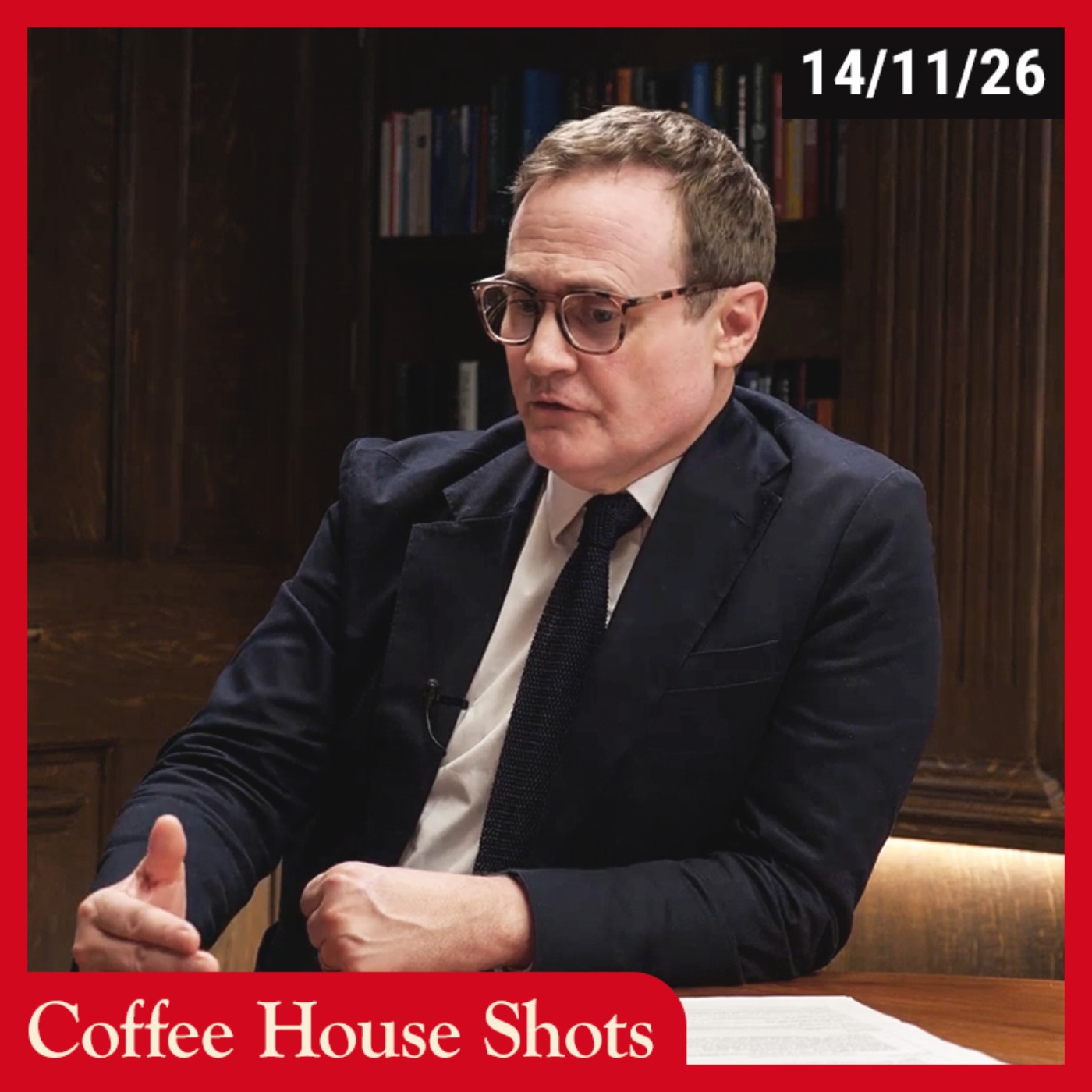
Ahead of Labour Party conference, Tim Shipman is joined by former shadow cabinet minister Jonathan Ashworth to discuss the mood inside the party, Andy Burnham’s growing authority and whether he could be tempted to call an early general election. They also consider the pressures facing Burnham on tax, welfare, Europe and the North Sea – and why, sooner or later, he will have to start making enemies.
Produced by Oscar Edmondson.
Become a Spectator subscriber today to access this podcast without adverts. Go to spectator.co.uk/adfree to find out more.
For more Spectator podcasts, go to spectator.co.uk/podcasts.
Contact us: [email protected]
Hosted on Acast. See acast.com/privacy for more information.