
 Ask ChatGPT



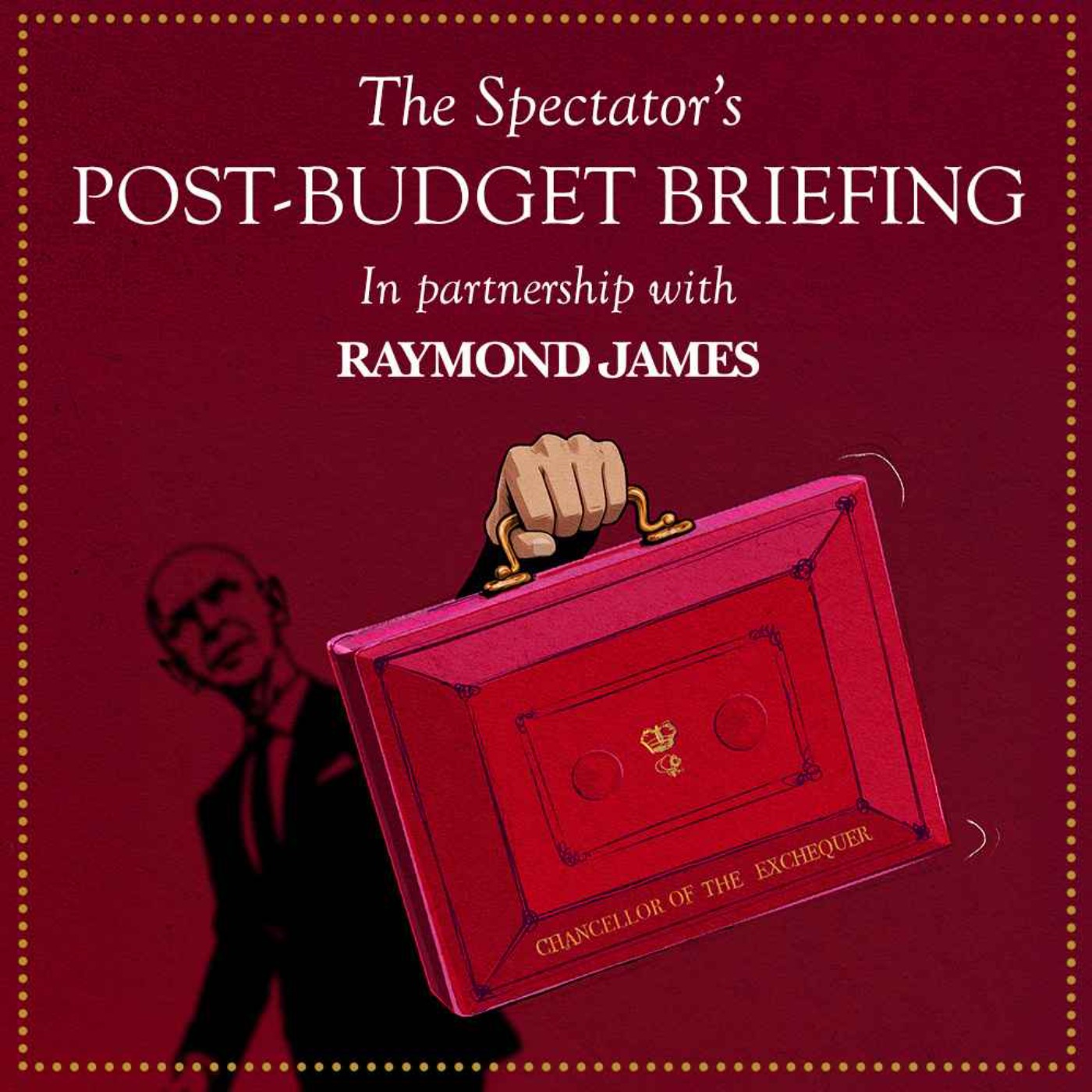
The Spectator’s live post-Budget briefing on John Healey’s “breathing space” budget—arguing it was big in policy count (98 measures) but small in net fiscal impact, with weak growth and worse household living standards per the OBR, plus political strategy suggesting an election may be coming.
Michael Gove (chair/editor, The Spectator); Tim Shipman (political editor, The Spectator); Michael Simmons (economics editor, The Spectator); Catherine McBride (economist, CEO Great British Business Council); Harry Bell (Director of Financial Planning, Raymond James).
Markets barely reacted (gilt yields stable); OBR downgrades growth and disposable income (~£2,000 per head worse); “headroom” reduced to ~£15bn; deficit plans rely on late-decade unprotected spending cuts; budget includes energy/industry help funded by higher bank taxes; possible “kicking the can” toward an election.
taxes on gamblers/vape shops/banks; £100 to 20m families; higher savings/interest tax rates (20%→24%, 40%→44%); inheritance tax planning; warnings banks may relocate profits; energy pricing reform via consultation.
Written by AI. May contain mistakes.
Discussion of the 98 measures in the budget and its perceived impact.
“In fact, with 98 policy measures, it's the biggest budget we've had since at least 2010.”
Examination of economic forecasts and their implications for households.
“And I think that was probably a sensible thing to do, to spend a little bit of that margin of error.”
Insights into the political ramifications of the budget and potential elections.
“that are going to have to happen towards the end of this decade.”
Analysis of public perception and implications for future elections.
“If you open your magazines tomorrow, you will see that I've speculated a little bit about the possibility of an early general election.”
Discussion on the economic weaknesses of the budget and its long-term effects.
“and it's not massively well-targeted, given that quite a lot of wealthy people live in houses that are bands A to D, on the council tax, which is how this money is going to be doled out.”
Critique of proposed energy policies and their potential negative outcomes.
“Because the pollsters I speak to all have terribly sophisticated models.”
Exploration of new tax rates on savings and their impact on individuals.
“and that could be really good for companies and take a lot of those taxes off them.”
A discussion on the implications of recent budget changes, focusing on tax increases and tariff adjustments.
“So with one hand, they're talking about rejoining the EU and resetting and doing the reset with the EU.”
A critical examination of recent political maneuvers and their long-term effects on taxation and financial planning in the UK.
“But we're having to do a lot more inheritance tax planning because obviously we've got the wonderful fiscal drag to deal with of frozen thresholds.”
Explore the potential impacts of the recent budget and political strategies.
“If he does call an election, it would be very brave because, frankly, the first question anyone asks in that campaign is, what are you doing about income tax, Prime Minister?”

Get the gist, explore an idea or ask about something said.
 Claude
On Coffee House Shots, what are the key points of this episode?
Searching your listeningAutomatic transcript. May contain errors.
0:00This podcast is sponsored by Raymond James. In an increasingly standardised wealth management industry, Raymond James' high-touch, service-first way of working sets it apart. It puts people at the heart of everything it does. Advice that's as unique as you. That's the power of personal. Please remember, investing involves risk and you may get back less than you invested.
0:26Hello and welcome to a special edition of Coffeehouse Shots. Yesterday, The Spectator hosted its live post-budget briefing where our expert panel picked apart John Healy's so-called breathing space budget. Chaired by our editor Michael Gove, the panel featured me, Tim Shipman, The Spectator's political editor, our economics editor Michael Simmons, Catherine McBride, economist and CEO of the Great British Business Council, and Harry Bell, Director of Financial Planning at Raymond James. Has Healy delivered on Burnham's promise of good growth in every postcode? And what do the budget's biggest announcements mean for businesses, banks and households?
0:58We hope you enjoy. This wasn't a boring or a small budget at all. This was a massive budget. In fact, with 98 policy measures, it's the biggest budget we've had since at least 2010. except it was a boring budget because add it all up and you get the square root of basically nothing. Look at the budget right at the end there. It was a fiddler's budget. There was so many measures but the actual cumulative cost or the revenue that they raised added up to a very small amount. That paid off for the government though. You didn't see this massive reaction in the gilt markets. The yield has barely moved at all.
1:46And thank goodness, because given we've had this moron premium, I'm sure you're all familiar with, with gilt yields so high, I don't think we could have afforded any kind of market shocks. And unlike the last budget, journalists got something right. We correctly predicted where headroom would go. There was quite a sizable dent from the around 23, 24 billion that it had been left at in the spring. And John Healy decided that he wasn't going to put that all the way back up. He took it to about 15 billion pounds, which, as the gilt yields have shown, markets seem to be OK with that. And I think that was probably a sensible thing to do, to spend a little bit of that margin of error.
2:31When we get to how the OBR, who score these things, who judge the budget, it gets a bit less of a rosy picture. The big story there is lacklustre growth that we're kind of used to over the rest of the forecast period, but a big downgrade next year. That's accompanied by what everyone knows that there's going to be a big pickup in inflation because of obviously what's been going on in Hormuz and what's been going on with the Hufi division of Just Stop Oil. That doesn't seem to have quite fed through yet. So price rises are coming. And then this is the big howler for the government in the OBR. This is your real household disposable income.
3:17What that means is your standard of living. And they've downgraded that considerably because of inflation, because of these other things since March. So John Healy said that he was creating breathing space for households. But the OBR says that over their forecast period, we're all going to be worse off by about£2 ,000 per head kind of over that cumulative period. The other problem that wasn't solved today was how the sums add up when we get towards the next election. He was patting himself on the back because of the comments at the IMF a few weeks ago who said Britain was one of the only countries with serious, credible plans to get the deficit down and to start reducing borrowing.
4:04Now that's totally true, but what this chart shows is that it's based on spending cuts to unprotected departments that are going to have to happen towards the end of this decade. And what else is meant to be happening towards the end of this decade? A general election. Do we really think a Labour Prime Minister and Chancellor are actually going to stick to those plans?
4:30Michael Gove: I'll turn now to Tim Shipman. Tim, given the context in which Andy Burnham and John Healy found themselves, what did you think for the budget? What can we derive from it in terms of political strategy and political consequences? Well, I'm glad Michael's read the budget book, so I don't have to either. Because in 29 years of journalism, 25 years in the lobby, I think this is my 23rd budget. I was struggling to stay awake for most of it. John Healy is a fine man, but he's not one of life's great performers. And as Michael said, this was the square root of nothing, really, at the end of the day. I kept having to WhatsApp my friends say, what did he just say?
5:09Because my mind was wandering. The highlight of it all, of course, was when he said Miata Fambula sought to block the Jackdaw North Sea drilling before saying that she'd approved it. And even she saw the funny side of that. Many truths revealed in slips of the tongue. But look, I think on the whole, this was a good short-term political budget. And as Michael's explained, not a terribly good economic budget. Borrowing is soaring by 10 billion or more a year. What Michael has referred to there at the back end of this parliament, Rachel Reeves created this situation and far from deal with it. Healy's arguably made it worse.
5:51You would need cuts of 2.6 percent in those unprotected departments for their sums to add up. And the only way that the sums can add up is if we never arrive at the years in question, because when we saw them try to shave a tiny amount off the welfare budget under Keir Starmer, it showed that the Labour Party was quite incapable of delivering that. So how does any of this make any sense? If you open your magazines tomorrow, you will see that I've speculated a little bit about the possibility of an early general election. And frankly, my view is that really none of this makes any sense unless you believe that that is what Andy Burnham is at least preparing for.
6:32The man himself was out and about today saying that he wouldn't do that within the next 12 months, which is interesting because he previously said not before 2029 and then not before 2028. and now we've got not in the next 12 months. These statements of never again are always true until the moment that they're not true. Those of you who remember Theresa May in 2017, she was equally if not more vociferously adamant that she wasn't going to call a general election. Now, if you look at what he's done today, we're taxing wicked people like gamblers, vape shops and banks. These are all good things which are popular with the public and we are handing£100 to 20 million families.
7:14Now, that has more than a whiff of a sort of pre-election handout to me because, frankly, it won't make a huge amount of difference and it's not massively well-targeted, given that quite a lot of wealthy people live in houses that are bands A to D, on the council tax, which is how this money is going to be doled out. But it certainly looks like the kind of sweetener. And what Burnham has done a very good job of so far is, you know, we all sort of slightly mockingly refer to it as the vibes. I don't actually want to mock it because I think it's quite good politics. It's indicating what you care about, indicating the groups that you're interested in and want to help.
7:52And if you can do that on the cheap and get a political hit for not spending a huge amount of money, that's no bad thing at all. And there are lots of little things in this budget and in the announcements that they've made in the last week, which indicate that that has been their game plan, effectively, to make people feel more warmly about the government. And it's working. It may not be terribly good economics, but Labour's poll rating is going up. Burnham's approval ratings are doing well. And I rather suspect, if we look back on this week in several months' time, that we might think that the most significant thing that happened this week was not John Healy's running up to make his first budget, but the opinion poll that was published on Monday, which for the first time in a very long time showed Labour on 30%, 10 points ahead of reform, 8 points ahead of the Tories.
8:41Now, why is that interesting? Because the pollsters I speak to all have terribly sophisticated models. So once Labour get over 30 and start to have a 10-point lead, that is where you might start to consider the possibility of an election. And the number crunching that I've been shown, a terribly complicated spreadsheet, shows that the parties on the right matter a bit as well. but Labour could secure a majority if anywhere between reform being two points ahead of the Tories and the Tories being four points ahead of reform in that scenario which is basically where we are now Labour could get a majority with 32.5 % of the vote so they're not a million miles away from that and I think if you take the view that the budget was designed to be calm the markets and generally continue that sort of warm feeling that the public has towards the government, which will be enhanced by stuff that they do on Brexit, potentially enhanced by stuff that they do on welfare, potentially they've got this 10-year plan coming up.
9:46You can see a world in which they're sort of outlining a path. And if the Tories were two points ahead of reform in that specific scenario, Labour could get a majority 50 with just 34 % of the vote. So again, if you can continue that trajectory, it becomes possible. Everything Andy Burnham outlined at the Labour Party conference was stuff I'd love to do but can't yet, and it's all for the next Parliament. Stuff on Brexit, stuff on electoral reform, his great desire to solve social care. All of that requires the ability to tax more and to deal with all the stuff that Michael outlined later. It is almost impossible to see them dealing with that in any coherent way in this parliament with the current fiscal rules and the current sort of group of Labour MPs.
10:40So in that context, it only really makes sense if you think that he's going for an election. Now, I'm told that Labour have signed a massive deal with a German print company, which could involve printing leaflets. I'm told there are officials in the government talking to people at Royal Mail about the possibility of mail drops, potentially even before Christmas. December the 10th is generally regarded as the last moment we could have an election this year. You know, it's quite difficult for him to turn around and call an election imminently, so I suspect it won't be this year. But look at the fuel duty thing.
11:15He's let that run for 15 months until next July. As Rupert Harrison, one of George Osborne's former senior aides said today, oh, well, what might happen between now and July? Why wouldn't he let it run until next autumn? It's a curiosity. So if Andy Burnham is telling the truth, and he's not going to call a general election, all he has done today is defer his problems and show no sign of dealing with any of them. So either he's going to call a general election or today's budget was deeply irresponsible.
11:47Michael Gove: Catherine, damp squid, kicking of the can, something more. Well, there's a lot of kicking the can because there were some great headline announcements, but there's not a lot of detail. I particularly like the idea that they're going to change the way we price energy, and that could be really good for companies and take a lot of those taxes off them. But when you go into it, there's a consultation, and that could take months, and maybe we'll, as Tim suggests, have an election before that happens. but there's some downsides with it. The money he's giving away to help people's energy bills and to subsidise industries that have high energy costs is going to come from taxing the banks more and this is ridiculous to take a really good industry that the UK is very good at and even John Healy introduced and said oh we've got this world beating industry Therefore, we're going to tax it more.
12:47And you think, well, that doesn't make sense. And we're going to tax it so we can pay for the energy costs of energy intensive industries, which we have wiped out over 25 years of putting extra taxes on their energy costs. So most of those energy industries in the UK have already left or they're closing down. And now at the final minute, when they're almost dead, we're going to tax another industry to pay for their energy, which is a crazy idea. But there are some joys for Brexiteers, which I know you're one, Michael, as am I, because all of the cuts in the tariffs he could not have done if he was still in the EU.
13:32And the cuts in the VAT on energy bills he could not have done if he was still in the EU. And it is amusing that on November 20th They're going to go and have a meeting with the EU about joining the EU's ETS, that's their Energy Emissions Trading Scheme, and their CBAM, their Carbon Border Adjustment Mechanism. But meanwhile, in the budget today, they're talking about us starting our own CBAM. They're continuing to talk about this, which the HMRC have published the details on. So with one hand, they're talking about rejoining the EU and resetting and doing the reset with the EU. And in the other hand, the other department is out there doing their own thing and cutting their tariffs and cutting their energy costs.
14:20But the interesting thing is one of the tariffs they want to cut is fertilizer. And he says this is going to help farmers. But one of the things that will go up the most under a carbon border tariff, which is a CBAM, will be fertilizer. So it's going to be a nonsense that they take away with one hand and they give it back with the other. There's also some stuff that didn't make the speech that you have to read the fine print for. Anyone in this room who has any savings in a bank, the tax rate just went up by 4 % now. So if you're in the 20 % band, it's now 24 % on interest. And if you're in the 40 % band, it's now 44 % and 49 % in the 45 % band.
15:05And this is also on rental income. And it's like they really don't want anyone to save any money in this country. They just want you to spend it all on not in bedding shops.
15:20Michael Gove: They don't. But they want you to spend it, I think. Anyhow. As Kevin points out, it's often the case that there are kickers, and not of a good kind, in the small print of the budget detail, which the Treasury and the Chancellor use in order to extract revenue in a stealthy fashion. But we have our own way of defending against those stealth attacks, and that's the expert advice that we get from Raymond James, who are our sponsors this evening. And the Director of Financial Planning at Raymond James is Harry Bell. Harry, as you look at the detail, are the particular things that stand out to you particular evasive action that you would recommend spectator readers take particular opportunities that may lurk there as well our clients have have been hit by some fairly revolutionary changes over the last couple of budgets and thankfully for us this one wasn't too crazy in terms of drastic changes so it's calm probably dealing with things like the bring the pensions into the estate which is fairly revolutionary in terms of a lot of the work that we do.
16:27And now we're having to kind of plan to that when that comes in in 2007 tax year. But we're having to do a lot more inheritance tax planning because obviously we've got the wonderful fiscal drag to deal with of frozen thresholds. And obviously, as wages, asset prices, everything goes up, a lot more normal people are being brought into the inheritance tax space. So there's a lot of planning that we're having to do around that. A lot of our clients were concerned with this budget to see whether or not there were going to be any more hits to them. Business relief and agricultural property relief, which were the ones that came into the headlines.
17:16The farmers got very angry and managed to adjust that. There were some rumours that that was going to change, but it's not. So yeah, in terms of planning around reducing income tax, it's already been mentioned that the 2 % increase on savings rate, the 2 % increase on property. There are lots of ways in which you can get around a lot of these taxes legitimately, but it takes planning and planning for us is a multi-decade process. And we try not to get moved around too much by the small adjustments. Planning is a very long-term process. But yeah, I think this one was relatively quiet. I think there were the changes to the cash ISA, which were reneged on because actually when you look into the details, it's very difficult to make those changes.
18:08And ultimately, I think they realized that you could just buy money market funds in an investment ISO, which gives you the same output. But yeah, I think in terms of our ability to look at various products to reduce those taxes, then yes, absolutely, they're there. But it is a continually more difficult environment because taxes have got to come from somewhere. And usually it's the people who have already got the money.
18:35Michael Gove: Michael, one of the tricks in politics is to choose your predecessor. lesser. And obviously John Healy had Rachel Reeves. Should he be grateful because Rachel Reeves did the heavy lifting of tax increases so that he didn't have to? And should he also be grateful because in the run up to her budgets, there was maladroit pre-briefing, in contrast to which the fact that nothing went wrong, or appears not to have done, is somehow a triumph. He thanked Rachel Reeves at the start of the speech, didn't he? I'm not sure she'd be that glad about being thanked because the things he's grateful for are the things that made Rachel Reeves so unpopular.
19:21And I know she's been going around various events popping up as part of a rehabilitation exercise. So maybe she's here tonight and can speak later. But she did massively increase taxes over her two budgets. Yes, we all know about the£25 billion rate on national insurance, but also by continuing the threshold freeze that we've talked about. Take that together and she's the largest tax-raising chancellor this country has ever seen. This parliament, if nothing changes, even before today, was the largest tax-raising parliament we've ever seen, admittedly after the previous Conservative one, which was then the largest tax-raising parliament we've ever seen.
20:04And so she'd done that work. And that's the one thing she was rewarded for at the last budget was recovering the headroom. That, yes, it hadn't gone into this black hole that had been predicted before the budget, but it had gone down to, I think it was four billion. And she got it back into the 20 billions, which has meant that in the rest of her time as chancellor and in the early days of John Healy as chancellor, they haven't had this. oh Iran's yes it's eroded the headroom but it hadn't created this black hole but I think that also leaves him in a bit of a tight spot because it means there is hardly anywhere else you can go on tax because I feel like it's no longer news every time we have a budget or a fiscal event we say oh the tax burden is at a post-war high or it will very soon be at a post-war high that's true it's true again businesses are being squeezed again that's true but what i think both sides of the political debate don't want to admit but eventually someone will have to grasp is that if you look at the average worker in britain the average worker is not paying that much income tax either by international standards or historical standards and i think if you're john healy andy Burnham or any Labour leader who wants to have a large expansive state, who wants to be controlling water companies, whatever it is, the only place left to go, given that Rachel Reeves has already done the 75 billion or whatever it was, is general taxation.
21:44So that's the only thing that's left. So that's something that Rachel Reeves will be glad she didn't have to deal with and maybe John Healy eventually will.
21:53Michael Gove: And Catherine, you mentioned earlier the particular assault, though perhaps less severe than some might have expected, on the banks and the way in which it was sold as a means of paying for both some relief breathing space on energy and also linked to the broader steps that would be taken on energy. and you indicated also that by going for the banks when their financial services are a relatively healthy part of the economy in order to try to relieve the pressure, the energy costs on manufacturing it's almost as though you were taking a blood transfusion from someone healthy to try to revive a patient that was already beyond help.
22:33Michael Gove: Do you think that that is a mistake that the government will come to regret that their treatment of financial services as a sort of happy milch can, as the one area, following on from Michael's point about the other areas that have been raided, as the one area that can still be pillaged, do you think that will come back to haunt the government? I do think they have to be very careful with that, because financial services can move more quickly than a lot of other businesses. It's all in the ether now. And unlike, we saw this when they put a windfall on the oil and gas industries, and they predicted that they would be making$20 billion a year from them, and instead it collapsed and they got$5 billion and then$3 billion,$2 billion they're expecting next year.
23:20So when they had predicted, the OBR predicted in 2022 when they introduced the windfall tax on oil and gas, that they get£65 billion over five years, they're ending up, they're going to get£25 if they're lucky. That's including next year. Now, they could do the same thing with the banks. By increasing these taxes, banks are more likely to start moving their headquarters to either New York or Dublin that both have lower taxes. They can easily book their profits in other profit centres. Almost every bank in the UK is a multinational. They don't have to book things here. We've already seen Barclays announce that they're going to replace, or they have replaced 5 ,000 staff with AI and computers, that is going to continue.
24:10And by putting up the minimum wage, we're going to see this in more and more industries, not just banks. And the government presently takes more money from companies in their employer national insurance contributions than they get in company profit tax, which is crazy. And it's not a little bit more. It's 50 % more. So the main way we tax companies in the UK is by taxing their employment. So you've got a lot of reasons why banks are going to start thinking, why are we here? Because they've got very highly remunerated employees. So their national insurance contributions must be enormous. Then they're getting taxed on their corporate profits.
24:57They must be sitting there going, why are we here? You know, it's something we've got to be competitive in the industries. And you're right, taxing the good, the healthy one to give a blood transfusion to it. And industries we've virtually killed with our own taxes.
25:16Michael Gove: Already. Yeah. Given how little significant change, Tim, there has been overall, some people might be thinking what was the point in getting rid of Keir Starmer no need to rush all at once and give me your reasons do you think this budget could have been delivered maybe with perhaps less skill but by the Starmer Reeves combo or are we missing something I mean it's difficult to know what they'd have done if they'd still been there I did think it was quite novel when John Healy stood up at the start of his speech and thanked Rachel Reeves for bringing back fiscal responsibility, which is a novel interpretation of raising taxes by£75 billion.
26:04But maybe they would have done something not entirely dissimilar to where they ended up today. But if they had, it would have reflected as poorly on them as it perhaps will do in the medium term on Burnham and Healy. But look, I mean, what was the point of getting rid of Keir Starmer? I think that's pretty evident when you look at the opinion polls and you look at how well Andy Burnham has performed. Those of us with highly acute senses of cynicism and irony will watch a prime minister on Gogglebox or on TikTok and think, pull the other one, gov. But this stuff is effective. It does work. He's a much better communicator.
26:48And I'm a bit bored having covered, you know, politics in frankly more detail than anyone should have to over the last 15 years. The sort of pathetic leadership failed people with no plans who couldn't communicate. And in the case of Theresa May, Gordon Brown, Rishi Sunak and Keir Starmer regarded it as rather beneath them to even try, let alone succeed. it's a bit of a breath of fresh air frankly and you know you only have to look at the Labour Party at the moment see how generally happy they are the public is also happier and rightly or wrongly by what has happened I think there is a perfectly respectable case that Keir Starmer was the worst Prime Minister than Liz Truss who did at least know what she wanted to do and had some had some plans now what is not clear is quite what Andy Burnham's plan is we see what his wishes are but they're all predicated on being in a new parliament and and having the ability to do what Michael says he needs to do which is ultimately to raise income tax because that would be a fairer way of doing all this than all this twiddling my deputy James Hill rather beautifully described it as a Nero budget because of all the fiddling while the economy burns so look I think those of us that have to cover politics are slightly relieved that Starmer's gone as well because every time he opened his mouth it made your ears bleed yes this is entirely possible that the budget wouldn't have looked much different I think you know really the test is what does this 10-year plan look like and what does the spending review look like next year because once we've got through both of those and if it remains the case that there is not a well-thought out plan for getting public spending under control and dealing with the sort of longer-term issues then this budget will be seen to be a missed opportunity.
28:42If he does call an election, it would be very brave because, frankly, the first question anyone asks in that campaign is, what are you doing about income tax, Prime Minister? And unless he's got some very good answers, it's going to be a bit of a bloodbath. But, you know, it doesn't work for the Labour Party. A bunch of them are going to lose their seats regardless, but it might just work for Andy Burnham in terms of getting him somewhere where he wants to be. Thanks for listening to Coffeehouse Shots. To find out more about our upcoming events, visit events.spectator.co.uk
The Spectator’s editor Michael Gove, political editor Tim Shipman, economics editor Michael Simmons, economist and CEO of the Great British Business Council Catherine McBride and Harry Bell, director of financial planning at Raymond James, will give their insights into the autumn Budget, just hours after it is announced.
Become a Spectator subscriber today to access this podcast without adverts. Go to spectator.co.uk/adfree to find out more.
For more Spectator podcasts, go to spectator.co.uk/podcasts.
Contact us: [email protected]
Hosted on Acast. See acast.com/privacy for more information.


