 Ask ChatGPT



The episode argues that Kemi Badenoch’s major economy speech is meant to set up the Conservatives for next week’s budget by stressing “bad borrowing” and proposing welfare cuts to fund defence. Michael Simmons says the Tory attack may land poorly because recent ONS data (growth, falling unemployment, flattening job losses) suggests the labour-market slump is bottoming out, though inflation/public finances and likely Bank of England rate hikes could worsen conditions later this year. Noa Hoffman adds that welfare reform should be paired (cuts plus conditionality and “carrot” measures like training and preventative mental health), not treated as a simple welfare-vs-defence tradeoff. Key examples include the 3% of GDP defence target and ILR policy: extending ILR qualifying time from 5 to 10 years, with Badenoch comparing Mahmood’s ILR decision to avoiding “UK becoming France.”
Michael Simmons (political commentator) and Noa Hoffman (political commentator).
Written by AI. May contain mistakes.
Discussion on Kemi Badenoch's speech regarding economic challenges and welfare.
“preside over a funding settlement of less than 3 % of GDP.”
Analysis of the current economic context and its implications for Conservative strategies.
“that the Tories have had of being like, you know, So Labour mess up the economy, the government are a disaster for the economy.”
Exploration of public perception of the Conservatives and internal party dynamics.
“I mean, I think it probably makes sense politically that, you know, most people are not happy with the welfare spending that we have.”
Examination of Kemi Badenoch's stance on immigration and her political strategy.
“coming out, revealing the state of the party.”
Discussion on how migration levels will influence economic forecasts and budgeting.
“One of the things that you pointed out from the speech this morning was the intervention on ILR, because obviously the government have rolled back their promises on indefinite leave to remain.”

Get the gist, explore an idea or ask about something said.
 Claude
On Coffee House Shots, what are the key points of this episode?
Searching your listeningAutomatic transcript. May contain errors.
0:05Hello and welcome to Coffeehouse Shots, the Spectator's daily politics podcast. I'm Oscar Edmondson and today we have a big, important speech on the economy from Kemi Badenock. So that of course means big, important commentary from Michael Simmons and Noa Hoffman. Now the central pitch was the Conservatives setting their stall ahead of the budget next week, hammering home how bad borrowing is and that we need to cut welfare in order to fund defence. Let's hear a quick clip. Cutting welfare to fund defence is our next challenge. Andy Burnham might think that national security can't come at the expense of social security.
0:41But John Healy resigned as Defence Secretary because he could not, in good conscience, preside over a funding settlement of less than 3 % of GDP. If at this budget he does not find the money to get to 3%, John Healey has an awful lot of explaining to do. Michael, do you think that's a fair assessment? I mean, her justification behind this intervention she's made this morning is that she wants to point out that she thinks, and the Tories think, that Andy Burnham and John Healey are trying to have a budget that tries to do as little as possible in the hope that no one will notice. but because of as she views it Labour's refusal to properly fund defence the refusal as she views it to get on top of welfare and obviously what we've talked about on this podcast many many many times about borrowing being out of control the Tories are trying to position this idea that actually it won't be an uneventful budget that no one notices and it could be kind of bad and they say it could be worse than Rachel Reeves.
1:49But I don't think this speech has been paid much attention this morning. And the reason for that is that if you look at the economic news we've had out of the ONS over the last few releases, so for example, the good growth figures that we talked about last week, and also new figures we had out today about the jobs market that show that the unemployment rate has come down, the job losses on the kind of more accurate HMRC payroll jobs data seem to be starting to flatten out. And that suggests that, you know, maybe that we're at the kind of bottom of this slump in the labour market means that if you look at the actual economic news, for the first half of the year, at least, the picture is a bit rosier.
2:35So it takes away this kind of fertile ground that the Tories have had of being like, you know, So Labour mess up the economy, the government are a disaster for the economy. We've got this big poll lead when it comes to handling of the economy. So we're going to go hard on it. And I think that's difficult for the Conservative Party when you've got this more positive economic news. But if they want to get smart about that, I think they want to look to what happens not just later this year, but even later this week. Tomorrow, for example, we'll get the next set of inflation figures and also the public sector finances, the latest borrowing figures.
3:15Inflation is almost certainly going to go up. You then start to get this picture of a difficult winter. I don't think it's going to be as difficult as the winter as we've seen in the past for complicated reasons that we don't need to get into today. But certainly, all the evidence is there that, you know, growth is going to start to slow down. And I think the jobs figures today make it almost certain that we get an interest rate hike from the Bank of England. So if I was a Conservative, Zach, I'd be looking past this budget and say, what's your plan to get us through the rest of this year? And I think that's kind of what Kemi Bidnock was trying to start doing today.
3:53But on this sort of tradeoff between welfare to fund defence, do you think, I mean, someone's going to have to make a big, broad argument for a kind of new deal when it comes to welfare. Do you think this is the right way to pitch it to the public? I mean, I think it probably makes sense politically that, you know, most people are not happy with the welfare spending that we have. Most people are concerned by our lack of defence spending. So they certainly don't like this idea that you might be funding surging welfare when we're not just defending ourselves properly. I personally think it's actually a really unhelpful argument to be made if you actually want to solve the problems.
4:31Because I think if you were to just blanketly cut welfare because you needed to make up a shortfall in your defence spending, you're not actually going to sort out any of the problems we have with welfare, mental health, whatever, in the long term. And we'll see what Alan Milburn ends up reporting in part two of his report where he's going to come up with the solutions. That will undoubtedly come with some long-term savings, cuts to the welfare system. it will probably come with more conditionality. But there's going to be the carrot side as well, right, where the government says, yes, we're going to make it harder, especially if you're a young person, to get these out-of-work benefits for mental health or behavioural conditions.
5:13But there's going to be some kind of carrot which is more funding for training or more funding for preventative mental health care. And I think that's going to be difficult to make if you view everything as a binary welfare of defence. And actually, there might be this period where you have to spend a bit more on both. And Noah, I mean, there seems to be a real confidence about Kenny Beynock at the moment. And it's easy to see why. We've had polling today that suggests that the majority of the public, this is according to Ipsos, the majority of the public see the Conservatives now as the party of opposition rather than reform.
5:47Noa Hoffman: Yeah. And we're now sort of starting to see a pattern. There is time for reform to revive its fortunes. But we've not seen any evidence in the past few weeks and perhaps even months that they are on track to do so just in terms of unforced errors, in terms of sort of never ending trail of undercover reporting and documentaries coming out, revealing the state of the party. Meanwhile, Kemi Badenok is slowly inching her way up and is slowly starting to bring her party along with her. Now, at today's press conference, she was asked about what this means for reform, both in terms of MPs and councillors who have gone to Nigel Farage's party and supporters.
6:35Noa Hoffman: And she made a very clear distinction between the two. She said she does not want to see any reform MPs or councillors return to the Conservative Party fold. She sort of referred back to the idea of Farage doing the Tory spring cleaning and sort of getting rid of the bad apples and taking the types of characters that she doesn't want in her party, which she continually says is under new management to sort of try and draw clear blue water between the Conservatives as they are now versus as they were before the general election. But she was very clear as well in saying that she wants reformed voters, that she values them, she wants to win them back.
7:16Noa Hoffman: And she wants to prove that while perhaps Farage at one point looked like this sort of shiny new toy on the right, really, you know, he's just leading a party that the Tories say are chaotic, unprofessional and not serious, not having serious answers about the big problems facing the country. So she was very much of the opinion that she wants those voters back. She's going to do what she can to win them back. But if you're the likes of Robert Jenrick or Danny Kruger or Suella Braverman, you can stay away. One of the things that you pointed out from the speech this morning was the intervention on ILR, because obviously the government have rolled back their promises on indefinite leave to remain.
7:57Kemi Bay not really pushing them to stick to their guns.
7:59Noa Hoffman: Yes. So ILR is back bubbling up the agenda again. And that's because we are expecting an announcement from Shabana Mahmood in autumn as to her final decision on what to do. She received a lot of plaudits from across the spectrum, with the exception of many Labour MPs, for deciding that she's going to extend the qualifying period for ILR from five to 10 years. And in particular, that's because we've got millions of people about to become eligible who came here as part of the so-called Boris wave. And once they receive their ILR, they can immediately sort of quit their jobs and find a way to get on to benefits.
8:41Noa Hoffman: Now, that's not to say they all will, but that option is open to them. And with the welfare bill already under so much strain, that would be catastrophic. Alongside that, of course, we have issues of integration and social cohesion. and the question of whether the country is ready to give permanent residency to so many people. And interestingly, Kemi Badenoch drew a direct comparison, and this was a very interesting political choice, between Shabana Mahmood's decision on ILR and the riots we've seen in France. Badenoch said, I don't want to see the UK becoming France. And for that reason, Shabana Mahmood must stick to her guns.
9:20Noa Hoffman: If she sticks to her guns, we will support her and we will be furious and we will cause a scene if she doesn't. Now, all the indications are that she won't stick to her guns. We've had the likes of Angela Rayner, the likes of Miata Fambola, these big cabinet heavyweights coming out and criticizing the plans. And they, I mean, Rayner has specifically been arguing for a carve out for care workers. So we're already seeing what were these tough reforms being softened. I think it would be an interesting development because it can bring the Tories back into the conversation on immigration. At the moment, the Tories have really been focusing on the economy.
10:01Noa Hoffman: But there is still room, there is still fertile ground, if Siobhan and Mood backs down, to take the debate to Labour on immigration, where Labour MPs are at their absolute weakest, because they will not dare say anything even remotely anti-mass migration because of the constituents they rely on for votes and also because of their own ideology. And it's out of whack with the majority of the public who really want to clamping down. Now, of course, numbers are coming down, but we still have this existing problem of social cohesion. And if the ILR rules aren't tightened, that could only worsen going forward.
10:41Noa Hoffman: So Kemi Bainok wants to paint herself as the responsible and respectable face of the immigration debate. a different perspective from Nigel Farage. She's coming into this argument and into this debate from a very serious position, not from one that's sort of more wildly populist and using sort of inflammatory language. She wants to make similar points to Farage, but from a far more poised, polite, but firm position. And I think there's potential there to have support from masses of the public coming in at that position. ILR and immigration is something for people to look out for next week in the budget as well, because one of the great unknowns about all the guesstimates about what headroom is going to be will be partly down to how the OBR judged migration and the effects of migration.
11:33The OBR have had a lot of criticism in past years for overstating the value to GDP of migration because they only look in this five-year window. You don't look at the total fiscal costs or benefits or the financial quality of a migrant. So they have been kind of revising those GDP benefits down over their last few forecasts. But the big unknown is what they think is happening with migration this year and next year. Some people have been suggesting that we may already be at net zero migration. I would push back against that. I think the government is pushing back against that. They don't think that's going to happen.
12:12But depending on how far the OBR downgrades the migration levels, that could be something that plays into this kind of headroom conversation as well. Perfect. Well, thank you so much, Michael. Thank you, Noah. And thank you very much for listening.
12:51Thank you.
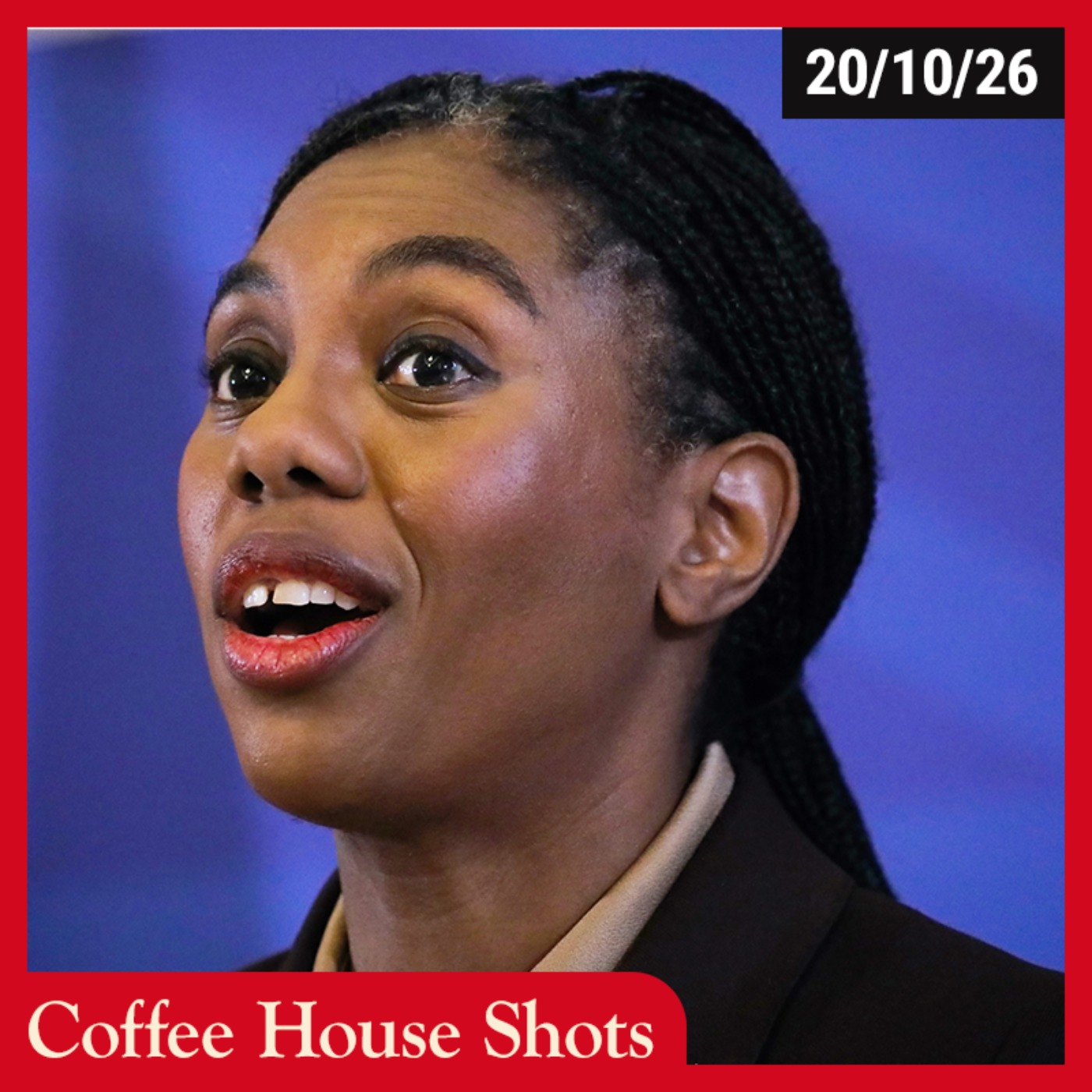
Kemi Badenoch has delivered a major speech on the economy ahead of next week's Budget, calling for welfare cuts to fund higher defence spending. But with some encouraging economic figures, is her attack on Labour landing?
Meanwhile, new polling suggests the Conservatives are reclaiming their position as the main opposition to Labour. Badenoch says she wants Reform voters back – but not its MPs. Are the Tories back in the conversation? And could Labour's divisions over immigration offer the Tories another opening?
Oscar Edmondson speaks to Michael Simmons and Noa Hoffman.
Produced by Oscar Edmondson.
Become a Spectator subscriber today to access this podcast without adverts. Go to spectator.co.uk/adfree to find out more.
For more Spectator podcasts, go to spectator.co.uk/podcasts.
Contact us: [email protected]
Hosted on Acast. See acast.com/privacy for more information.