
 Ask ChatGPT


 Coffee House Shots
8 Aug 2026 · 20m · 8 chapters
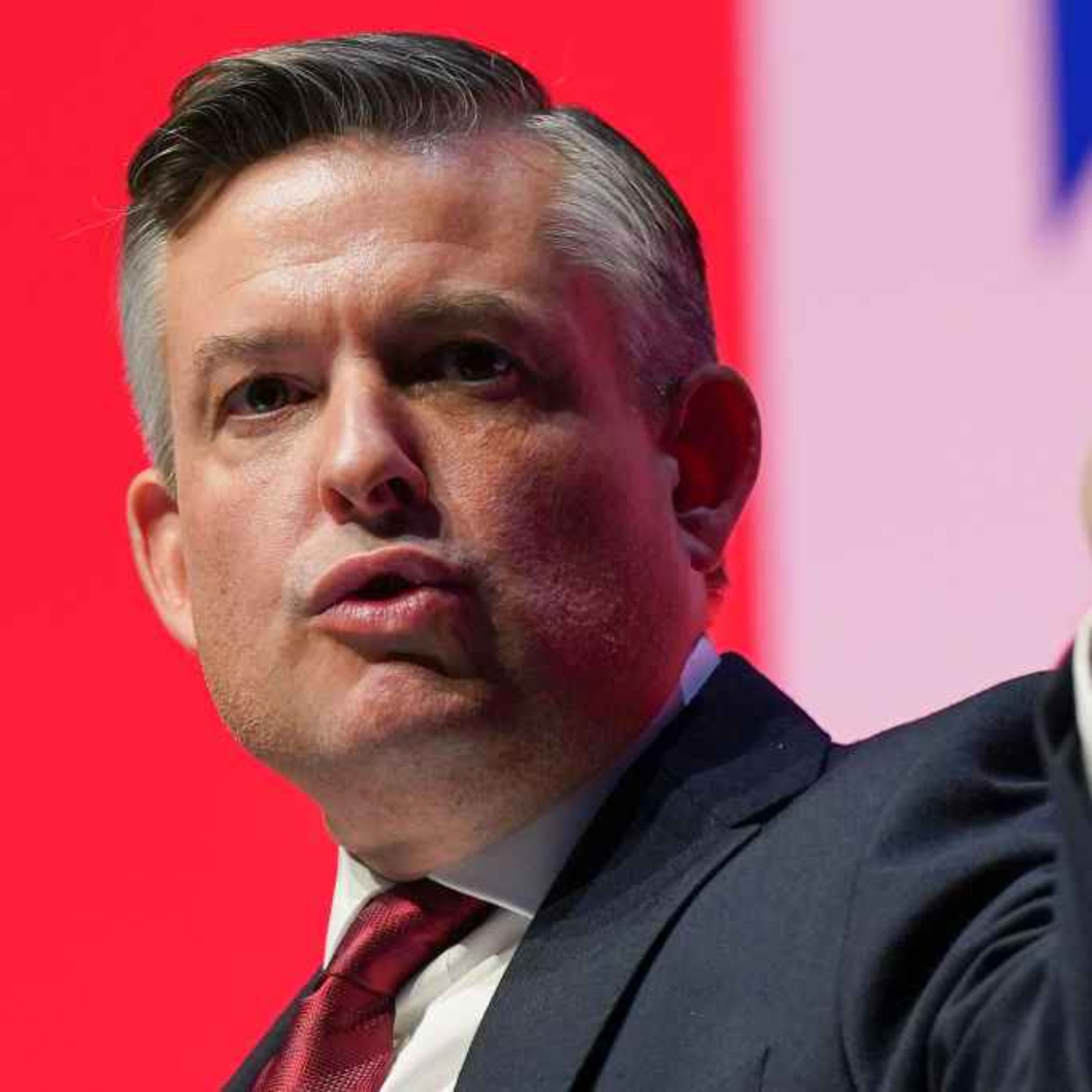
Jonathan Ashworth, former Labour MP, discusses Andy Burnham’s shift toward devolution (“Morrisonian” local control), the urgency and cost of fixing social care, Labour’s internal momentum, and why the Tories remain Labour’s main electoral threat.
Jonathan Ashworth is a former Labour MP and previously Shadow Health Secretary and Shadow Working/Business? (working and benefits-related) Secretary; he worked closely with Andy Burnham for about 25 years, including in Labour’s shadow roles.
Burnham has evolved policy positions while keeping core values; devolution needs accountability mechanisms for mayors; dementia/social care demographics make delay impossible; Labour’s cabinet reshuffle is disciplined (little leaking) and signals “Number 10 North” priorities; if Reform collapses, its vote may bolster the Tories.
NHS centralization debate (Bevan vs Morrison); “one in three children” likely to develop dementia; “£2 billion” policy giveaways; cabinet figures: John Healey, Louise Haigh, Shabana Mahmood, Alex Norris; references to Nigel Farage/Reform and Kemi Badenoch improving.
Written by AI. May contain mistakes.
Discover John Ashworth's long political career and insights on Andy Burnham.
“You worked with Andy Burnham, the new Prime Minister, during the years of government under Tony Blair and Gordon Brown.”
Discussion on the political dynamics of devolution and central control in the Labour Party.
“because there's always been this debate in the NHS since its birth under the Labour government in the 1945 Labour government.”
Exploration of the challenges faced by local government in political accountability.
“Because, of course, Andy Burnham might be a lovely guy, but he's also, at the end of the day, a politician, John.”
Discussion on the urgent need for social care reform and its implications.
“And the proof will be in the eating of the pudding, won't it?”
Insights into the recent appointments within the Labour cabinet and their significance.
“It's a perfectly reasonable thing to do.”
Analysis of the current sentiment within the Labour Party and its leadership dynamics.
“I'm just curious, kind of, which appointments jumped out to you when that was announced a few weeks ago?”
Exploring the positive shift in Labour's mood and its implications.
“So I think you're going to see a lot more of him as going out to bat for the government.”
Speculation on the themes Andy Burnham will address at the upcoming conference.
“And the Tory party is, and always is, the existential threat to the Labour Party.”

Get the gist, explore an idea or ask about something said.
 Claude
On Coffee House Shots, what are the key points of this episode?
Searching your listeningAutomatic transcript. May contain errors.
0:00Your call has been forwarded to an automatic voice message system. A missed call doesn't feel like anything. No red flag, no notifications screaming at you. It just disappears into your call log. And nine times out of ten, that was someone ready to hand you money. That's why today's episode is brought to you by Quo, spelled Q-U-O, the business phone system built so you never miss a call. Here's what I like about it. All your calls, texts, and voicemails live in one place. So anyone on your team can pick up a conversation, see the full history and respond fast. No more, wait, who talked to this customer last?
0:36And if you're worried about after hours leads slipping through, Quo's optional built-in AI agent can answer questions and even book appointments while your team's offline. It's the number one rated business phone system on G2 and over 90 ,000 businesses already trust it to stay reachable. Money is on the line. Always say hello with Quo. Try Quo for free. Plus, get 20 % off your first six months when you go to quo.com slash tech. That's Q-U-O dot com slash tech.
1:12Hello, and welcome to this special Saturday edition of Coffeehouse Shots. I'm James Heal, and I'm joined today by the former Labour MP, John Ashworth. Now, John, you've had a long political career. You worked with Andy Burnham, the new Prime Minister, during the years of government under Tony Blair and Gordon Brown. I'm just curious, first question, how much has he sort of changed in the years you've known him? Yeah, I've known him for a long time, from, as you say, back in the day when I was a bag carrier, to Gordon Brown, a special advisor. He was an up-and-coming MP, very young cabinet minister.
1:44And then I was obviously in the Shadow Cabinet with him for many years. And then he went off to Manchester, and I followed his career closely. And when I was Shadow Health Secretary, Shadow Working Bensure Secretary, I was looking closely at some of the initiatives he had implemented in Greater Manchester. I think he's grown hugely in the time that he's been away in Manchester. I think he's changed his position on a lot of policies, actually. I remember when he was Shadow Health Secretary and George Osborne was setting up the Greater Manchester Combined Authority arrangement. and I think a lot of health and social care was going to be devolved to Greater Manchester.
2:24Andy Burnham, as Shadow Health Secretary, was very opposed to that because there's always been this debate in the NHS since its birth under the Labour government in the 1945 Labour government. There was a huge row in that Labour government between Bevan, Nye Bevan, who created the NHS, and Herbert Morrison, who some of the listeners might know was Peter Mandelson's grandfather. But anyway, he was a very significant player in that Labour cabinet. Herbert Morrison actually wanted more local control over the NHS. He had come from Lewisham. He had been on the Greater London Council, whatever it was called in those days, and he thought local authorities should have more control over local NHS.
3:13Bevan wanted a centralised NHS. Bevan won out famously. So Andy Burnham as Shadow Health Secretary was very much in that Bevanite tradition. When he became the Greater Manchester Mayor, he embraced the Morrisonian vision of health delivery. and it seems now that he's a prime minister, he's talking about this great sort of devolution agenda and moving more powers out of Whitehall to these local areas, that that Morrisonian vision is one that's finally going to be implemented in the Labour Party. The Labour Party throughout its history has always liked central control. It's always been the sort of Fabian society or Bevanite instinct of the Labour Party.
3:56Well, this Labour government's about to embark on a great Morrisonian endeavour and we'll see where we get to. Well, is it? Because, of course, Andy Burnham might be a lovely guy, but he's also, at the end of the day, a politician, John. And I do wonder, I mean, there's very much a sense of we want devolution, but we want them to do the right things. And even if it's things such as the story around Westminster's council and sort of pub licensing hours, and very much the sense of council's being given more money to spend, but they can't give a rebate, the criticism from the right will be, well, it's sort of devolution, but only if it's Andy Burnham's vision of devolution, only if it's a Labour vision of devolution.
4:34And actually, what the right-wing politicians would say would be, well, what about sort of tax competition like we have on kind of states in Florida, for instance, where they can offer money to kind of compete and draw in more business? I just wonder how sincere you think that kind of conversion to devolution is in Andy Burnham's head. Yes, I think that's fascinating. And the proof will be in the eating of the pudding, won't it? I mean, when I was Shadow Health Secretary, I, like Andy Burnham, when he was Shadow Health Secretary, although he's a former health secretary, I've never been a health secretary, was always a little bit skitful about some of this when local government figures would come to me asking for more control over health and social care, mainly because I would make the point that if I was the health secretary, I would be the one who'd be getting kicked around the Today programme studio over the state of accident and emergency or cancer outcomes or people not being able to see a GP or whatever.
5:28It was never ever going to be the local mayor who would be kicked around or would be sort of castigated in the pages of spectator or whatever. So, but I've sort of, I've changed my mind because I've begun to think that we're such a centralised country and that's because of the history of England and the United Kingdom. So there's a lot, there's a reason behind it. And there's a reason why European countries are more decentralized because they didn't necessarily become nation states until much later, you know, you know, and so on. But nonetheless, I do think we are far too centralized. And I think we should give it a go.
6:07That might not be the most intellectual argument for it. But it's almost this, well, we've tried it this way for so long. and it clearly hasn't worked in all kinds of places and for all kinds of reasons. Let's try this and see what happens. And I think Andy Burnham is committed to this. And I think, by the way, he will want to hold mayors to account. And I think we've got to change the way we report on politics. If Mayor Joe Bloggs is not delivering on the health service or on jobs or on whatever it is, then Mayor Joe Bloggs needs to be held to account by the national media. And we probably need to find mechanisms in Parliament to hold them to account as well.
6:47Maybe that's insisting they come in front of select committees a couple of times a year. I don't know. I'm not in Parliament anymore, but there's got to be something to hold them to account. So you've known Andy Burnham best part of 25 years. You think that that period, that sort of best part of a decade when he went to Manchester, became the mayor there, that really was the sort of making of kind of Burnham 2.0, his ready for his second spell in Parliament, which he began earlier this year. Yeah, I think he's been on an intellectual journey. And by the way, one of the things that's always frustrated me in the world in which we operate is the way in which if somehow you change your mind on things or you change your perspective on things, that somehow suggests there's a shallowness to you or something or there's a lack of sturdiness to you.
7:37I think most people in most walks of life think about things, change their mind. It's a perfectly reasonable thing to do. I've changed my mind all kinds of things. I'd hope the listeners don't think it means I'm somebody of no conviction. It's just that, you know, as things change, as the world changes, change your position on a policy. What you don't want to change is on your fundamental values, and I don't think his values have changed. one thing he certainly doesn't seem to have changed his mind on is the need to fix social care and obviously you were shadow health and social care secretary for a number of years you will have grappled with many of the issues that Andy Burnham's clearly thought about he was obviously the health secretary at the end of the last Labour government we had the infamous headlines around you know sort of death taxes etc how do you think Andy's position on this has changed because clearly it's something that as we observed on coffee our shots yesterday is very close to his heart and obviously his dad is now suffering from dementia as well so he clearly seems very determined to press on with the social care agenda at a time when many previous governments have shirked away from dealing with it yeah and i think he wants to i think he wants to fix this i think he wants to be the politician who goes down in history who has fixed this intractable thorny problem which politicians of all parties have paid lip service to but effectively kicked into the long grass over the best part of 30 years or so.
9:03But we are running out of long grass in as much as, you know, here's a rather depressing fact. One in three children born today is likely to develop dementia in their lifetime. And because of the remarkable advances in medicine and drugs and technology and overall health, more and more people with severe disability are living to an older age. I mean, it's a good thing that people are living to an older age, particularly like if 25, 30, 40 years ago, somebody with a severe disability would not have been expected to live to an older age. But obviously, these are often people who are probably being cared for by their parents, who often end up being very elderly, you know, and will need care as well.
9:59The demographics of this are so remorseless that politicians cannot keep running away from it, because the demographics are plain to see. So he's got to fix it, but it's going to be expensive. And I think that is the question for my colleagues in the Labour cabinet now. how is all of this going to be paid for? Because it's not just social care. It's the, what is it, roughly£2 billion worth of policy giveaways is announced, which I think are great. I'm a Labour supporter. I think they're great. You know, exactly the sort of things that voters, consumers want. But at some point, this is all going to be paid for.
10:40What do you make of that new Labour cabinet? You obviously know the Labour Party inside and out. I'm just curious, kind of, which appointments jumped out to you when that was announced a few weeks ago? I think the first thing is that John Healy's appointment I thought was interesting in as much as it did not leak at all. And most of our friends and your colleagues, you know, and I'm a big fan of the lobby. I'm not one of these boring politicians who moans about the lobby. I never have been. But, you know, I think a lot of your colleagues, many of whom are my friends, have got a bit of egg on their face.
11:15because none of them had, there was all kinds of reports about who was nailed on to be chancellor and all this sort of stuff. And I don't think anybody, maybe somebody out there did, apologies if I missed it, but I don't think anybody had John Healy on the list. So I mean, what that tells me is that is an operation that does not leak things. That is quite interesting because for the last 10 years or so in Westminster, maybe more that I've been around, you know, all governments have been as leaky as civs. So I think that shows you something about how disciplined this operation is. The second thing is, I think Louise Haig, as the Chancellor of the Duchy of Lancaster, is fast emerging as the most significant player in that cabinet.
12:00I think it shows you how things quickly can turn around in politics. Obviously, she had local difficulties a couple of years ago. She is now back as the most powerful figure in the cabinet. She is one smart operator and she's the person who's sort of organised the Burnham return and she's going to be a star player. I would also point to your editor's favourite Labour politician, Shabana Mahmood. I know Shabana, you know, hates it when Michael praises her so much, but I know he likes to praise her. But she is a very impressive operator, hard as nails and very sharp. So they're some of the people I would point to.
12:46And one of the kind of overlooked maybe stars of the reshuffler, you want to call it that, quickly promoted, is someone who's now had to be front and centre of the news this week, which is Alex Norris, who's the new Justice Secretary. On paper, perhaps the sixth or so biggest job in the Cabinet. I mean, he seemed to come out of nowhere, but obviously you were MPs in Parliament together for seven years. So tell us about him. Well, I know him very well. I've known him when he was one of the local party organisers in the East Midlands region.
13:19I've known him a long, long time. He's a Man City fan as well, so that's how well I know him. He's a good friend of mine. He was in my Shadow Health team back in the day. Yeah, very rapid ascent for him. Very level-headed guy, was a senior councillor in Nottingham, so knows his stuff. But he's got a big brief, big, big brief with lots of controversies in it.
13:51But I think he'll turn out to be one of those politicians that we all describe as the consummate safe pair of hands. You'll see him getting wheeled out onto Today programme interviews and all the rest of it. So I think you're going to see a lot more of him as going out to bat for the government. There seemed to be a sort of reorientating of the overall structure and power dynamic within the Labour Party. I mean, there was a lot more MPs with Northern and Manchester seats coming into the top tier of government, less from sort of London constituencies. And I think the impression, I don't know what you think, John, but talking to Labour people in the last couple of weeks is they do feel a lot happier.
14:28that he feels it much more a sort of representative Labour government and that I think Burnham is much more in touch with Labour feeling than perhaps Keir Starmer particularly towards the end. I mean, is that a sort of fair assessment of the current mood within the party? I think it's definitely a fair assessment of the mood. I mean, I like this idea of number 10 Downing Street and number 10 North, I should say. You know, I'm a Mancunian by background. I grew up in Manchester, so I'm, you know, I would like that. And I think there is something about the fact that, you know, we do need to level up, to use Boris Johnson's old phrase, some of these northern Midlands towns, which have never, since the de-industrialisation, since the heavy industries of the 80s all closed down, have never really got back on their feet.
15:14And I think just sort of locating part of his operation in Manchester like that, I think that's a good, psychologically, I think that sends such a signal to the civil service about what their priorities should be. Because having worked, having been a special advisor 100 years ago, these signals are important to the civil service. They do respond to the signals from number 10, from the prime minister. I think the mood in the Labour Party is good. I mean, I don't think I'm telling any secrets in saying that in the last few months, people were pretty down in the dumps. They were worried that we were heading into a sort of Nigel Farage government.
15:54I think the mood has transformed, not least because Nigel Farage has, you know, this weird by-election thing, one or two of things. He seems that reform are losing altitude. Labour have gone slightly ahead in the polls. This is not to say that Labour thinks it's in the bag or anything like that. I'm not remotely saying any of that. But the mood has shifted. However, however, the one thing I would say, even though a lot of people obsess about Farage and reform and all that, I think, personally, the battle is still a Labour-Tory battle. The danger for Labour is that if Farage continues to lose altitude at the rate that he is, that that vote just shifts the Tories, it just bolsters the Tories.
16:41Labour got that remarkable landslide victory two years ago. Yes, because people are fed up with the Tories, and Labour had done a lot of work to deal with their sort of weaknesses. But fundamentally, there was a split, a Tory reform split. If reform collapse and that vote just all transfers to the Tories, that makes the next election very competitive. So, you know, Labour MPs can be sort of cheered that this weird Nigel versus a bin thing. but in the end you've just got to be you've got to we're going to watch the polls carefully on that yeah and i was really struck this week i don't know if you saw it john but morgan mcsweeney's comments now suggesting he thinks the next election is going to be labour conservative which i don't think was his view 12 or 18 months ago when it seemed that all those attacks at pmqs all that criticism that focus that scrutiny was of labour reform so i think that's a deliberate shift the the tory party there's a reason why it's the most successful political party in the Western world and has been for 200 years or whatever.
17:47And the Tory party is, and always is, the existential threat to the Labour Party.
17:56And, you know, Kemi Bajanuk is, I think, getting much, much better than where she was two years ago. Because any politician, you improve, repractice. She's a much, you know, I think things like sort of Robert Jenrick defecting to the reform has sort of not really has not helped reform, actually. So, look, I mean, for what it's worth, I think it's very doable for Labour to win the next election if I was to put a bet on it. And obviously politicians can't do betting anymore because it means they get into all kinds of trouble. But if I was to put a bet on it, I probably would bet that Labour was going to win.
18:35but it's going to be a competitive race. And this is the final question, John. We're coming into conference season. At the beginning of next month, we'll have reform and then build up to Labour Conference. What do you think? Andy Burnham's given lots of conference speeches before, different shadow briefs, but what do you think Andy Burnham will be saying in that conference speech, which will be his chance to introduce himself once again to the nation? I think he'll continue on the themes that he's been talking about, which is this sense in which he's bringing back hope. That's an important theme for him.
19:05And he'll want to say that the decisions he has taken are not just sort of random decisions, that they are explicitly and proudly labour-based decisions. I think he will feel that... I think his implicit critique of the Stammer project will be... This will be his implicit... I don't know, it won't be explicit on it, but I think what he'll be trying to suggest or hint at is that Starmer too often wanted to sort of steal the Tory clothes or try and look like they were sort of a pale blue imitation. I'm sure people around, I'm sure Keir himself and people around Keir would take umbrage with that, but I'm not passing comment.
19:54I'm just sort of saying what's what I think his approach will be, and he'll want to say this is a sort of bold Labour agenda because he will feel that the mood in the country is for a more interventionist, social democratic approach. That is his thing. That is where he thinks the country's at. And the thing about Andy is why he is such a remarkable politician in my book, he is able to sort of strike that emotional chord with the country in a way in which we've not really seen that from politicians in Westminster for a while, actually. I mean, Boris Johnson's had it for a bit, but in a different sort of way.
20:25I do think he strikes an emotional chord. I suspect he doesn't strike any emotional chord with readers of The Spectator but he won't worry too much about that Well if he wants to come on always very welcome we have influencers and journalists here so always welcome for our Prime Minister Thank you John and thank you for listening to Coffeehouse Shots
21:09Hey, I'm running out to drop off a stack of letters and packages. Need anything shipped while I'm gone? Save the gas. Stamps.com lets you print postage and schedule pickups right from your desk. Sync your contacts into the address book, get detailed accounting insights, and get notified the moment your certified mail is delivered. All from my desk. All from your desk. Join the 4 million businesses using Stamps.com right now with code podcast and get your free welcome gift. Stamps.com code podcast. Taxes and fees apply.
Jonathan Ashworth is a former Labour MP and shadow cabinet minister. On today's podcast James Heale and Jonathan discuss Andy's first few weeks as Prime Minister, how he's changed since the Blair-Brown era, whether Burnham's promises in devolution stack up and they discuss whether Morgan McSweeney is right to change his mind on the Conservatives, rather than Reform being the greatest threat to Labour.
Become a Spectator subscriber today to access this podcast without adverts. Go to spectator.co.uk/adfree to find out more.
For more Spectator podcasts, go to spectator.co.uk/podcasts.
Contact us: [email protected]
Hosted on Acast. See acast.com/privacy for more information.


