Ask ChatGPT


 Coffee House Shots
18 Oct 2026 · 26m · 6 chapters
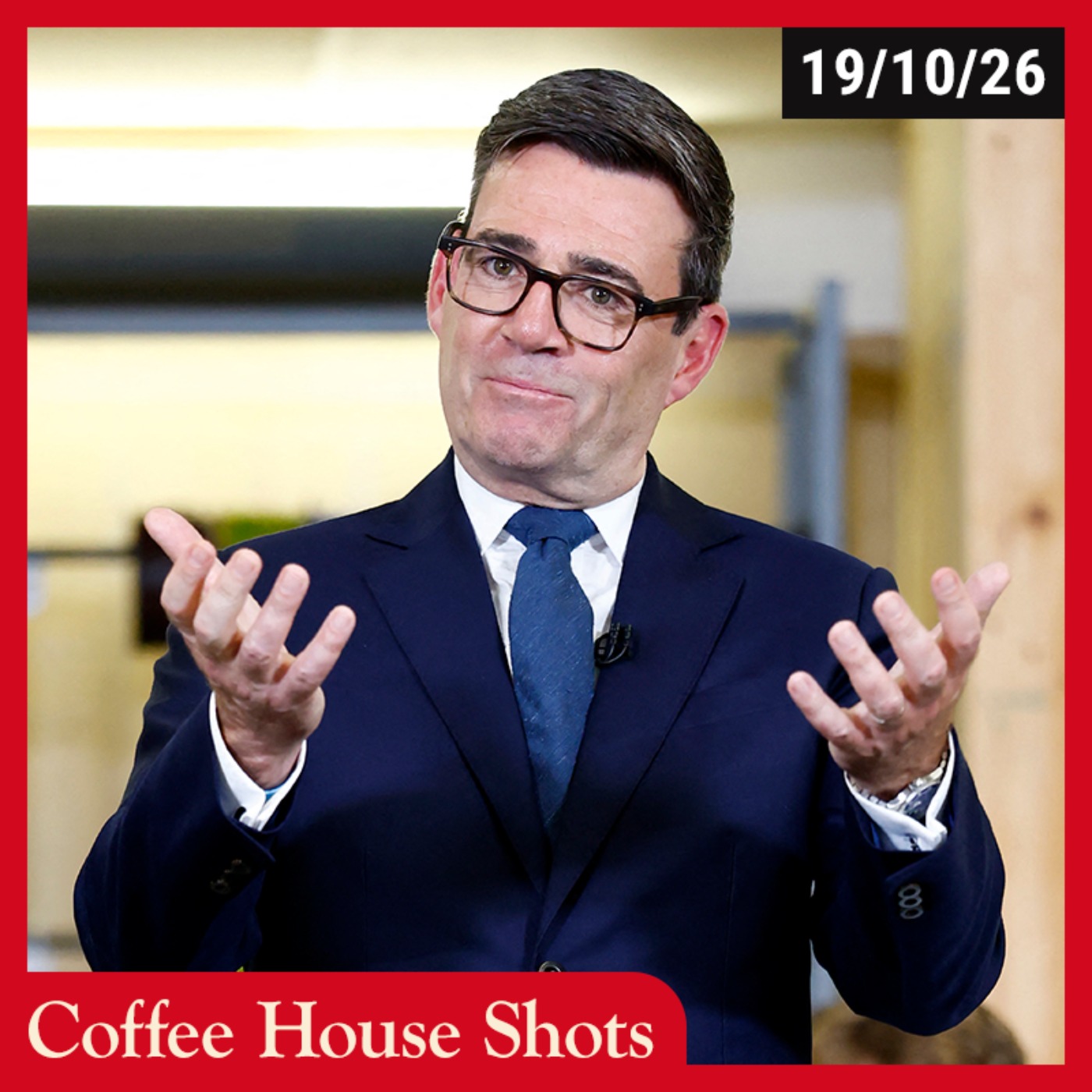
A special Coffeehouse Shots live episode from The Spectator’s Battle of Ideas Festival assessing who “won” UK conference season, how polling has shifted since then, and what to expect from the upcoming Labour budget.
James Heal, The Spectator’s Deputy Political Editor (attended all five major party conferences). Scarlett Maguire, founder of Merlin Strategy (polling/strategy work; focus groups).
Labour and Conservatives have bounced from very low ratings earlier in the year, but neither is “winning” decisively; Reform’s momentum is constrained by competition from Restore and by attention-economy dynamics. Greens are internally fractured and politically damaged after their “Zionism and racism” motion. Tory conference vibes are helped by party spending/expenses culture.
Reform upstaged by a Channel 4 undercover investigation; Lib Dem resignations and an Ed Davey coup; Polanski’s Green conference speech focused on the Holborn & St Pancras by-election he lost; focus-group findings that voters say “tone it down” to Farage but “keep your promises” to Andy Burnham.
Written by AI. May contain mistakes.
Analysis of the recent political conferences and their outcomes.
“All the big parties have now had their yearly jamborees.”
Discussion on the changing political landscape and public sentiment.
“I think for context, I can tell you, I did not go in a suit to that.”
Exploration of the challenges faced by third parties in the current climate.
“I think the overall picture is just one of slight horror on the part of the electorate.”
Expectations and implications for upcoming budget decisions.
“Turning to the next big moment on the political horizon, obviously we're just over a week out from the budget.”
Discussion on the political challenges facing Andy Burnham, focusing on public sentiment regarding energy prices and welfare issues.
“with Keir Starmer and Rachel Reeves, it was definitively the decision on the Winter Fuel Cup payment back in August after they got elected.”
Exploration of changing public attitudes towards welfare, benefit cuts, and the political implications for Labour and Reform parties.
“And I'm not quite sure how long it lasts if you then start making self sort of enforced errors.”

Get the gist, explore an idea or ask about something said.
 Claude
On Coffee House Shots, what are the key points of this episode?
Searching your listeningAutomatic transcript. May contain errors.
0:00Business is booming. Is your fulfillment ready for peak season? Switch to ShipStation now and handle more volume with confidence when it counts. ShipStation connects Shopify, Amazon, TikTok Shop, and over 200 more integrations with one platform that does it all. You can manage orders, sync inventory, track returns, all automatically. Everything your operation needs, all in one place. Right now, qualified shippers get a real dedicated person to get you set up and switched over for free. So when peak season hits, you're ready to go. Switch today at ShipStation.com, code audio.
0:39This festival is all about robust debate, something we wholly support The Spectator, where our next public debate comes on the 17th November, when our editor Michael Gove will chair a panel of eminent speakers confronting the motion this house believes multiculturalism has failed. If you're interested in seeing Melanie Phillips and Suella Braverman take on Safrazna Manzor and John Kampfner in this timely debate, there are still a few tickets left. And we've added a discount for all of you here at the festival. By going to spectator.co.uk forward slash debate and entering code BOI10, visitors to the Battle of Ideas can claim£10 off the ticket price.
1:11Hello and welcome to a special edition of Coffeehouse Shots live from the Battle of Ideas Festival. Joining me, I'm thrilled to have the Spectator's Deputy Political Editor, James Heal, and the founder of Merlin Strategy, Scarlett Maguire. So to kick things off, we've survived conference season. All the big parties have now had their yearly jamborees. James, who are the big winners and losers, do you think, from the last two months? Well, for my sins, I went to all five. So I can give you a sort of comprehensive overview of what they were like. I think that, first of all, we had the Reform Conference, which was going to be the moment when I think some reform got that momentum.
1:47They did desperately need to get back going again. But of course, it was a bit upstaged by the Channel 4 undercover investigation. so I think that they were able overall to kind of get a bit of a score draw maybe a win on penalties if you're feeling generous but it wasn't the great triumph, the kind of 5-0 thrashing they were hoping for in football terms then we had the Liberal Democrats and I think I remember writing for the website much like Graham Greene's Brighton Rock there was a seedy, surly atmosphere on the seafront and much like Brighton Rock that sense of a constant theme running throughout the Lib Dem history was present which is what is the point of the party I mean all the hacks there were very relaxed and thinking Lib Dems are doing quite well in terms of their strategy, but all the activists are getting itchy feet.
2:27And I think we did see in the last couple of weeks that sense of the MPs getting frustrated coming home when two of them resigned and tried to take out Ed Davey in the very Lib Dem coup, which was a four-hour meeting where nothing was decided. I think he's going to keep on walking wounded for the foreseeable future. Next was the Labour Party conference, and I think that was somewhere between a kind of evangelical church and therapy session. I had MPs and sort of their aides and spads sort of almost at the end hugging me in the sense of relief that Kirsten was no longer leader. They were very much glad that they had a leader who spoke their language, who spoke to their values, their interests.
3:03But I do think that, as my editor once said, it was a bit of a holiday from reality. And we're going to see the reality hit the road when we come to the October budget on the 28th. Then we had the Green Conference. I think for context, I can tell you, I did not go in a suit to that. I was wearing my mufti and I had a red media pass you think red for danger it said so all the activists would know who to watch and there was a real sense of a party coming apart they traditionally used to call the green parties a bit like a fruit bowl there's the kiwis, the mangoes and the watermelons kiwis agree throughout they're the eco-environmentalists to the core they're green on the outside, green on the inside the mangoes are the ones that are green on the outside yellow on the inside they're the liberal type, the Caroline Lucases and then there's the watermelons who are the eco-socialists, the full-blown Corbynista-style nutters.
3:48But recently, of course, we've had the addition of the outside people who've come in from the cause of Gaza, people like Mothin Ali, who's the new deputy leader. And I think what we saw on the Sunday vote with the Zionism and racism motion was a party that is not particularly interested in winning over the traditional swathes of green voters. And I very much wait to see how Polanski kind of comes over those structures. And finally, the Tories. I mean, with the Tory conference, there's a sense of everyone going, oh, isn't the vibes really good? And I think, well, yes, because we're all on expenses drinking for 12 hours a day at the Tories, which says a lot about the party's mentality.
4:20But overall, I thought they were in a much better place than they were 12, 15 months or so ago. And as we enter the new party season, there is this kind of sense of an unspoken pact between the Tories and Labour about trying to get it back to the economy and traditional themes around the 70s and 80s and size and purpose of the state. So I thought overall, the winners were probably Kemi Baden-Ock and Andy Burnham. And the losers probably were Zach Polanski and Davey and to an extra extent, Nigel Frosh. I was very amused by the backdrop of the Greens begging their own activists not to go to the conference so they could stay home and campaign in the by-election.
4:49They then lost. Absolutely. Holborn and St Pancras, it was saying, why are you here? There was a big sign up for one of the stands. And you thought, OK, well. And of course, they then lost that by-election straight away. The entire conference speech by Polanski was about that by-election and he lost it. And he could have had a much more subtler, cleverer speech setting out tests for Burnham, which in my view, he'll obviously miss. But he chose not to do that. And so, yeah, Holborn and St Pancras was the spectre looming over the Green Feast. So, Scarlett, moving from the HACC's perspective of the vibes to the cold numbers, if you will, obviously you work in polling.
5:21The word on the ground seems to be that this has been a good few weeks for the Conservatives in polling. They at least seem to be gaining points in some polls. How has the political landscape changed between now and the start of conference season? Yeah, in some ways it actually hasn't changed that much. But I think if you think about the beginning of this year, Labour and the Conservatives felt terrible about themselves. They really did. And they had every reason to. They've both gone back hugely since their 2024 general election result. Keir Starmer was inexplicably, and I don't mean inexplicably that I can't understand why he was unpopular.
5:53I just mean his numbers really were that bad. He was so, so unpopular, which is indeed why I think reform had such a good campaign in the local election saying, get Starmer out. You know, that was such a popular sentiment amongst the country. So we do see Labour and Conservatives are feeling much better about themselves. But really, there are definite winners and losers, as James outlines, and I agree with his diagnosis. But in terms of winners as we're used to thinking about them in British politics, there are none. So Labour and Conservatives are back from the Conservatives' case. I think a lot of them were contemplating extinction this time last year.
6:26I think that's probably always over-egged, but they were. to the now, you know, back to about where they were in their 2024 general election result, which was still their worst ever defeat in history. Labour Party have enjoyed a definite bounce under Andy Burnham. And at the moment, it is sustaining itself. He is that quite rare thing in British politics. At the moment, he is well known and he is popular. But again, they are still behind where they were in their 2024 vote. And not only are they behind, but it's the less efficient vote because it's more dependent on the progressive voters coming back to him than voters that he's lost to the right and to reform.
6:59And so when you look at it, you're still looking at a general public, which is looking at the political parties thinking, I'm not happy with the state of the country. I'm particularly unhappy with things like the cost of living and then issues like public services and immigration. And I don't really back any of you to sort it out. And I think that's back to where we are, even though Labour and Conservatives are up relative to where they were a few months ago. I think the overall picture is just one of slight horror on the part of the electorate. So it seems in some ways, from what both of you are saying, that this is a very good time for the two major parties.
7:29And the third parties have taken recent blows. You've got the Ed Davey coup. You've got the Greens reeling from the Zionism is Racism in Motion and the Lawson Hoburn. Can we talk briefly about the other big third party, Restore? You've written really interestingly about them. Do they still pose a major threat to reform or do you think they're starting to fizzle out? I mean, I think they do still pose a threat to reform And I think that threat is multifaceted. So on the one hand, they pose a threat to reform just in raw numbers. There was an interesting, I would take all seat projections with quite a huge pinch of salt at this point of time.
8:02There was a very interesting model that ran a few weeks ago that showed just the number of seats that restore running would cost reform if they were to run in the general election. They are eating away at some of reform's core vote. But they also are a problem for reform in another way as well, which is that I think there is an extent to which, and I think James will know more about this, having literally just written a book about reform, but they are in reform's heads and I don't think that's going anywhere. And I think that has meant that reform haven't known which direction to go in. So they've been worried about using voters to restore.
8:31They've also been sort of quite erratically thinking about whether they need to try and maintain mainstream appeal. And I think that's part of what's gone wrong over the last few months. Obviously, they've been hit by scandals, by the stories about corruption, by that Channel 4 documentary. But they've also, I think, suffered from this confusion of a sense of who they are, what they're trying to be and who they're trying to go after. But James, I don't know if you sort of agree with that. Yeah, I think we're comparing your position to 2025 when sort of Farage and Reform swept all before them. And there was this sense of almost this coalition building behind Reform of all behind you, Nigel.
9:02They were talking to me about getting up to 40 % in the polls. There was this chance that maybe there could be a big kind of election-winning coalition which Boris Johnson had in 2019. And throughout this year, I think there are a number of key moments, one of which obviously was Restore becoming a force and basically using the old Farage playbook against him, which was, if you look on Facebook, there's 1.5 million people who like Rupert Lowe's Facebook page. I think that's three times higher than Kemi Badenok. And so on the doorsteps, I've been out with politicians who will then bring up this case, even in places like Liberalictum facing Conservative seats.
9:34I was out on the doors with Farage and Clacton and I had a voter, you know, young family, I think in their 30s, took a couple of children, bring it up. So that's a distraction because previously they'd been the master supreme of the attention economy online. So that's something to do with in 2026. I think the other thing is about the Tory defectors and how that's changed the balance of it. And there are some people in reform who advise don't take any of these defectors. They're seen as failed. It kind of goes against our USP, which is that we've had a 30 year establishment consensus. And we've been outside that.
10:03We don't need to get involved with that or sort of make ourselves seem more of the same. but then there were others who said like you know frange's argument was we need to have people with experience and i think there's also something in the reform psyche which was they wanted to have the quick hit of a defector you know it feels good you get the amazing scoop you get the tories in disarray danny kruger robert jenrich etc but the question is what longer term does that do to the political economy i think some is to put out a joint the other thing i'd also just finally say is that i think conservatives and labor did raise their game and the question for reform is much like the kind of Seinfeld effect, what was very innovative and interesting in 2025, by 2026, it can seem a bit samey, you know, have another rally, do another sort of press conference just on one specific element of migration.
10:44And I think that question of levels will be key because this is a five-year parliament and it's not 200-meat sprint, it might be more of a 1500. Yeah. And I think your point on the attention economy is a really striking one and about how reform deal with that, because you're right, they're used to being able to pull the attention towards them. And the way they do that is by being quite different from the rest of the political parties and quite sort of in your face, for want of a better term. But I think it's quite interesting because this now, again, puts them in a bit of a difficult bind, especially with Andy Burnham, who just is much, much more likable than Keir Starmer.
11:12And I was doing focus groups in Sheffield this week. And I was asking these voters, you know, what would your message to Andy Burnham be? And they were saying, keep your promises, do what you say. That's fairly standard for what you get with politicians. And I asked the same about Nigel Farage. And they said, tone it down. That's what they kept saying, varieties of tone it down. And I think there's going to be this interesting dynamic with reform was if they're keen to get attention again, how do they do it? And do they do that in a way that actually just alienates more of those potential voters that they're trying to win back?
11:40Turning to the next big moment on the political horizon, obviously we're just over a week out from the budget. Burnham, who's obviously had a sort of good few weeks, is staying pretty quiet about the budget. He doesn't seem to enjoy being asked about it. They're not touting rabbits and flourishes. What are you expecting in the run-off to the budget and in the budget itself? I'm not expecting a huge amount. I think you can see that this budget is meant to be the antithesis in some ways of the last couple we've had, which had 75 billion in tax rises. This one is not promising a huge amount. And interestingly, talking to people who've had meetings with the Chancellor, they use this phrase about budget and beyond, i.e.
12:17the budget is not a one-off event, but more a process, which John Healy sees in the context of deficit reduction. I think that he himself is someone who's not a particular fan of rabbits. John Healy can look at that from his time in the Treasury under Gordon Brown. But overall, I think the war in Iran has put a big hole in the terms of headroom that was expected. And I do think it's quite striking how much government ministers are shying away from any of the kind of big rhetoric expecting to talk this up. I'd also make the point that the budget, it seems, unlike last year's one, this one seems pretty settled from what all the briefings of people I've been speaking to suggest.
12:48I think we'll see some tax rises on things like the traditional Labour villains, the Goon Squad, like the city, you'll see probably the bank surfeit charge being raised, you'll see more support for small businesses. And I think what Andy Burnham has done since coming into office is two things, one of which is trying to unite the central loft block behind him. And the other was trying to do everything the opposite of Keir Starmer did. So I don't think we're going to see any raids on family farms. I think we'll see more support for small businesses. And I think that sense of trying to avoid creating too many villains will be the key message from this low-key budget in this time.
13:16Scarlett, as James mentions, Andy Burnham's strategy so far seems to have been to create villains and talk about taxing them and try and milk them and then sort of create heroes, small businesses and pubs and try and help them. Does that play with the public? Do you think that will go down well? I actually think that a sort of safety first budget will go down quite well. So, you know, I think two apparently contradictory things, but I think they're on just slightly different timelines. So on the one hand, the public is incredibly impatient for change and it does want to see improvements to its cost of living in particular.
13:49On the other hand, they are not looking for that to happen in the next three weeks. They genuinely are willing to give Andy Burnham a little bit more of a hearing than that. And I think if you look at what started going wrong with Keir Starmer and Rachel Reeves, it was definitively the decision on the Winter Fuel Cup payment back in August after they got elected. Now, you can say that was the right thing to do, but they certainly did not go about it in the right way. And I think what Andy Burnham and his team will be thinking is we cannot have a moment like that. And as far as I see, there are different stumbling blocks where that could happen.
14:20So I actually think the moment of more acute political danger for Andy Burnham is not the budget, it's actually the energy price cap. That is where the public feel the huge amounts of pressure. So on the economy, and again, the public don't care as much about the economy as the cost of living. And I can hear people who hear me saying they're the same thing, not in the minds of voters, actually. And what the voters want is like, and again, this is not me endorsing this, they're saying they want immediate relief from their bills now. And so I think if we're looking at quite a dramatic price cap rise in November, which could then also increase interest rates and people's mortgages start going up at the same time as their energy bills.
14:51That, I think, becomes a politically difficult situation for the public. But I actually think there's a lot more anxiety amongst MPs and journalists for the budget to do big things than the public. I think the public are actually sort of happy for it to just go on for a bit longer. Yeah, it might be more of an elite phenomenon, but I do think the Conservatives are going to be trying to draw a distinction and a tension between Burnham's talk in Liverpool, which was ending 40 years of neoliberalism, hope, change, etc. with the briefings in the Financial Times by Labour MP suggesting we want to, quote, do as little damage as possible.
15:20So how do you two wear those circles? I think that's definitely right. And I would say, I think that, again, I talked about the sort of area of political danger in terms of the public sentiment at the moment being price rises. I think there is another one where the Labour MPs are quite potentially at odds with the public, which is about this idea of benefits and how you might target some of that support. So I think if Labour Party, even with its own voters, starts, say, targeting energy bill bailouts just on those on benefits or on the lowest incomes, that I think could have the potential to blow up and taint the whole way in which people view Andy Burnham's premiership.
15:54And that's why Alan Milburn, in a varied career that's seen him serve in different cabinet posts, Labour MP, etc., is now serving as a human shield for this government in that his report is going to be the thing that Andy Burnham can keep trotting out for the next few weeks and months or so until he finally does report because I do think this issue about sort of unemployment benefits, young people, etc., the NEETs, all these issues are coming to the fore and I imagine they're coming up in your focus groups more than that. They're coming up all the time. Again, I won't sort of talk about it too much.
16:21I was doing these focus groups last week and what really struck me was how, and again, I think it's a difficult issue with the public because actually when you then start suggesting quite wholesale cuts, they get very squeamish about cutting like specific parts of the benefits bill. But every person around that table had a story about someone, either their ex-wife or their neighbour or their friend who they felt was getting a better living of benefits than they themselves were off working. And I think that is an issue that is becoming more widespread amongst the public. And I imagine welfare is somewhere that Burnham feels huge anxiety.
16:50Obviously, the backbench rebellion on welfare that Keir Starmer faced over a so extremely modest cut that it wasn't actually a cut. It was a reduction in the amount of the welfare bill was going to go up was the beginning of the end for him. But at the same time, it's interesting to hear that in your focus groups, people are really starting to go off this sort of handout economy we live in. Will this budget be a time when they tackle this? Or is the plan going to be to stay very quiet, wait for Milburn, and then sort of bring in something off the back of him? Yeah, wait for Milburn sounds like a new Samuel Beckett play.
17:20But that is, I think, the government strategy. It's quite interesting in terms of social attitudes. Obviously, the government won the last election handsomely. But there is some evidence to suggest that British Social Attitude Survey, I believe, is now shitting rightward on some of these questions. reform obviously seen these questions around sort of who's deserving contributory around nationality and citizenship in terms of immigrant versus native etc the conservatives i think now feel like there's a chance to really go on this welfare issue but i do think it'll be less about that in the budget and they'll want to get the budget nicely done and passed square that i think we'll see a lot of healy talking not just to voters and backbenchers but also to the markets as well emphasizing the imf comments this week about deficit production and then i think wealth will be handled separately.
18:01I think overall, this government has a better political operation than Keir Starmer's. Not hard, you might say. But Annalise Mitchell, very interesting figure, elected in 2024, long-serving kind of Labour and union fixer, but already chief whip. And she's very plugged into that 2024 intake. And I'm already hearing sort of talk of rebellions on questions such as proportional representation, a lot of Labour MPs, I spoke to one MP straight after that speech in Liverpool. And they said, well, I don't want that to happen because they know that it might be good for the progressive cause, PR, but it's not going to be good for the Labour Party.
18:30So overall, I think they want to take these one time and try and siphon off budget votes from welfare cuts. And on that question on benefits, it's just worth saying as well that, you know, there are nearly 60 % of Labour MPs, their majority is smaller than the number of disability benefits claimants in their constituencies, which I think is part of the reason why we saw. And that's, again, that's a consequence of the sort of shallow majority, the Labour one, it makes these sorts of decisions seem harder in the face of some of the backlash you will then get. On this question of British social attitudes moving seemingly to the right, looking at interviews over the last few weeks, Labour MPs are really pushing on the war in Ukraine and the war in Iran, the Strait of Hormuz, being the cause of higher energy prices.
19:08And then you've got the Conservative and Reform Line that we are paying through the nose because of the net zero agenda. How are people landing on the ground in focus groups? Can Burnham keep pushing this? It's not my fault. This is an American war narrative. Business is booming. Is your fulfillment ready for peak season? Switch to ShipStation now and handle more volume with confidence when it counts. ShipStation connects Shopify, Amazon, TikTok Shop, and over 200 more integrations with one platform that does it all. You can manage orders, sync inventory, track returns, all automatically. Everything your operation needs, all in one place.
19:44Right now, qualified shippers get a real dedicated person to get you set up and switched over for free. So when peak season hits, you're ready to go. Switch today at ShipStation.com code audio.
20:22And I'm not quite sure how long it lasts if you then start making self sort of enforced errors. Although, again, I think the reform and the Conservatives, I think you're absolutely right to bring up the British Social Attitude Survey. And it's fantastically important because it's longitudinal. It's been going on for a very long time. So we can effectively track views. But I'll just say two things, well, maybe three things on it. Firstly, it's relative. So people are having a sort of more, they think there should be cuts from where we are now. It doesn't mean they necessarily want to go back to where we were 20 years ago.
20:47some people may do but I think it's in direct response to the sort of levels of spending and taxation that we have now. Secondly on that question of tax and spend you have a record in recent history number of people saying there would like to be tax cuts and spending cuts but that is still only 19 % of the population so if the Conservatives are looking to expand their voting coalition based on that message they need to take the public with them rather than thinking they're sitting out there already waiting to vote for them. I was going to say on this point about the Tories versus reform is quite interesting that, you know, this week I interviewed Andrew Griffith for the magazine and he was very much emphasising a traditional fiscal hawk message.
21:22He's talking about for every pound they're making public service cuts, they want to have 50p go back into debt reduction. And I do think the budget will be an interesting point, not just for kind of Labour and the Conservatives, but a battle on the right. You know, Robert Jenrick is very much taking his keys from Jordan Bardella in France, Jadie Vance in America. And he very much sees the battle as being in kind of provincial England, the North and the Midlands. That is a very different offer to the South, which Andrew Griffith's policy and Caring Baden-Knox's Congress speech seemed tailor-made for.
21:48So I do wonder if there's something in the whole Robert Colville point about regionalisation, which is that you'll see a different battle in the South West to the South East, the North West to the North East. And in terms of that kind of sense of no big party, big tent party, is really going to dominate British politics. I found this an interesting aspect of conference season, actually. Last year, the Tories and reforms seem to be doing very similar things at conference, and they both put immigration front and centre. But the Tories seem to be retreating onto the economy more. Kemi, they're doing the whole, we're the adults, we're the serious people.
22:18Kemi's saying before conference, she's the person that's going to say no to the Treasury and the public. Andrew Griffith doing his sort of golden rule, we're going to bring the deficit down, really old fashioned economics. Reform don't yet seem to be on that territory. They talk about saving money sometimes. They come out against things like multibility within the welfare state, but they're much more reluctant to be the party of reducing spending. Is that something that you'd say? I think it's been interesting. It's been a sort of pantomime horse of the year for reform on the economy in the sense of Robert Jemmerich joined and his whole mission, I think, was to close down the perception that reform was a welfare party, hence why he ditches two-shot benefit, hence why you see tougher talk on kind of claiming and sort of alum-clock Britain in the first half of this year.
22:59But in the second half, I think you're right to say that, Lara, to an extent, which is that there has been more of a focus on those kind of red wall traditional voters. I mean, it's now an outdated term, but those kind of battlegrounds which Boris Johnson fought over, where there is maybe more of a hunger for an interventionist state. So I do think this goes to the point, which is that reform are a fast moving, disruptive popular party for whom immigration and questions of nationality are key. When it gets onto the economy, I do think if you look at the different players in reform, there is slightly more disparate views than maybe the remaining survivors of the Tory party, who obviously of the 117, 18 of them are fairly united on the question of the economy.
23:33And I think you're right in terms of that focus, Lara, because if the economy is what's dominating news, conversations, people's talks in the pub, the papers, front lines, etc. Reform are not going to benefit from that. Reform will benefit from immigration being the most important subject. And that's what you see. Immigration is the biggest driver of whether you're going to vote for reform or not, how important an issue you think that is, or at least is up there with some other considers. So reform is actually, sorry, immigration is now reform's only strong suit they have to play. They did have some leads over other issues earlier in this year when Keir Starmer was there.
24:07But at the moment, the Conservatives, last time I looked, I'm sure this has probably changed. This is quite old. But when I looked earlier this year on the question of who was best to handle the subject of immigration, the Conservatives were as trusted as the Green Party is. And they were just not given a hearing on it whatsoever. Whereas they're in play with the economy. Now, again, the public actually don't really think anyone will be great on the economy. But the Conservatives have a good lead over reform and they're in play with Labour. So it makes sense for them to talk about the economy.
24:32And Scarlett, am I right in thinking that reform MPs have a similar problem to Labour in that I think all of them apart from Rob, or maybe including Rob, do have more disability claimants in their constituencies than their majority? Yes, I believe that is true. And they also, if you look at their voters as a whole, not just because obviously they're MPs now, it's quite funny talking them about as a parliamentary party because their share of the vote is far outside to the number of MPs that they have. But when you look at their vote as a whole, then quite large percentages of their vote are claiming benefits.
25:00I'm not quite sure of the exact figures, but they do have more of their voters on benefits than the Conservatives, for example. Although, as you know, as we all know, the Conservatives have a disproportionate amount of pensioners, the reformed global pensioners as well, but the Conservatives, their best age group is sort of the over 70s, the over 75. So when we talk about the benefits bill and welfare bill, a big part of that is pensions. And that's something that's very difficult for the Conservative Party. And one of the things that surprised me, James, is Scarlett said that it's very clear the public is still treating Andy Burnham in a sort of honeymoon period.
25:29He's been given a lot of time to solve issues like energy, like the budget, like defence spending. Is that the same with his own MPs? Are they starting to say, right, we brought you in a while ago now, chop, chop, I want my special interest issue sorted? I think we saw one or two malcontents at the Labour conference. I can't ever remember seeing so much of Darren Jones before. but better or worse um but overall i think the labour party is pretty united in the sense that they know this is last chancelline they know that you can't change prime minister twice in the parliament without recourse to the voters as we saw with the tories and so for now they're all keeping quiet keeping stum the tensions there will not completely be forgotten etc and there's some people who notice how we put our joint and i say things like auto-representation i think there's a lot of people going, what the hell is this all about, Andy?
26:17Put this in the long grass. But I mean, my sense is people feel cheered by not having Keir Starmer, a man who seems to have been designed a laboratory to attract reform voters. And they also know that Andy Burnham has got a team around him who are pretty shrewd. So they feel good at this stage. As I say, what happens when you get to the difficult questions of the budget, Mullen Review, 10-year plan, which you're expecting next month? I mean, I'm not expecting a huge amount from it. I think very much it's all geared around kind of the politics of it but let's see um but for right now the Labour are pretty cheered and they've obviously got the fact that the Greens are you know immolating self-immolating and reform obviously are under many many different clouds at the moment so they feel in reasonably good spirits uh for the past few years and on that note thank you so much all of us for coming to listen to Coffeehouse Shots Live and please join in thanking our panel James and Scarlett
27:34We'll see you next time.
27:43and over 200 more marketplaces with one platform that does it all. You can manage orders, sync inventory, track returns, all automatically. Everything your operation needs, all in one place. Upgrade your shipping operations to stress-proof your biggest sales days and capture every bit of potential revenue. Go to ShipStation.com and use code AUDIO and get 30 days free.
For this live edition of Coffee House Shots, James Heale and Lara Brown are joined by pollster and strategist Scarlett Maguire at the Battle of Ideas Festival to unpack the party conference season and look ahead to the Budget.
Who emerged from conference season in the strongest position, and why are the Conservatives and Labour finding their feet while Reform and the Greens falter?
With the Budget looming, could suspected tax rises on the banks help Labour avoid a repeat of the political fallout from Rachel Reeves’s budget last year? Can Reform broaden its appeal beyond immigration and make the economy part of its pitch?
Plus: with Labour MPs seemingly united behind Andy Burnham, is this really the party’s last chance saloon?
Produced by Abigail Brierley.
Become a Spectator subscriber today to access this podcast without adverts. Go to spectator.co.uk/adfree to find out more.
For more Spectator podcasts, go to spectator.co.uk/podcasts.
Contact us: [email protected]
Hosted on Acast. See acast.com/privacy for more information.