Ask ChatGPT


 Coffee House Shots
30 Jul 2026 · 11m · 5 chapters
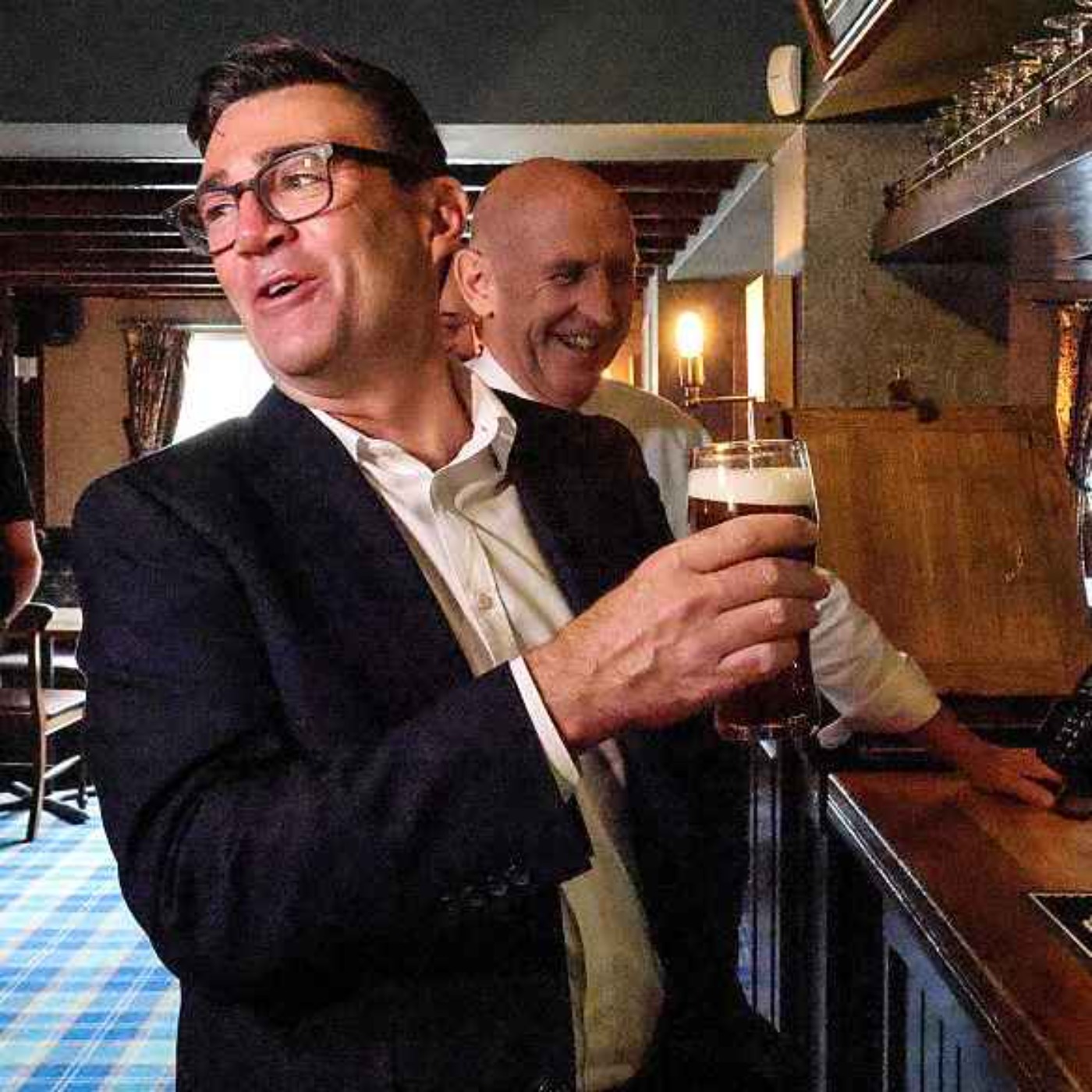
The episode argues that Andy Burnham’s early “policy bonanza” may be ending, as opposition and economic pressures intensify. It highlights Burnham’s visit to Barrow-in-Furness to reaffirm pre-existing funding for the Trident submarine programme, framing it as continuity with the Starmer government and a reassurance to allies (AUKUS), while noting defence spending targets (not 3% by 2030; 3.5% by 2035). The hosts claim Labour’s left-wing MPs (e.g., John Healey, Louise Haig, Angela Rayner) are divided on Trident, and immigration/small-boat arrivals will force Burnham to address a top public concern. Examples include “small boats” coverage by Chris Philp and interest rates kept at 3.75% (63-0), with inflation risks flagged by chief economist Hugh Pill.
Natasha Ffrozen (host), Noah Hoffman (Spectator/analysis commentator), James Heale (Spectator/analysis commentator).
Written by AI. May contain mistakes.
Discussion on Burnham's recent announcement regarding defence funding.
“Andy Burnham was up in Baron Furness today.”
Exploration of differing opinions within the Labour Party on defence issues.
“And of course, we've got that 3.5 % by 2035.”
Discussion on the role of immigration in current politics and its relevance.
“And of course, you have, you know, quite a strong cohort of these fund welfare, not warfare type Labour MPs, who have now under Burnham's own HR whipping office mandate got free reign to have a pop at this announcement.”
Analysis of the obstacles Burnham may face as he leads.
“Chris Philp's had a very busy week when it comes to small boats and has been talking to various French coast guards.”
Discussion on interest rates and the economic challenges ahead.
“Jemre can see a use of going out and campaigning hard on this issue.”

Get the gist, explore an idea or ask about something said.
 Claude
On Coffee House Shots, what are the key points of this episode?
Searching your listeningAutomatic transcript. May contain errors.
0:00This is the story of the one. As a shipping manager, he's running the dock, stocking supplies, and making sure every order goes out on time. And Grainger helps him stay prepared. From shipping supplies, to PPE, to hand tools, he counts on Grainger to keep products moving and trucks rolling. So his operation runs smoothly, no matter the shift. Call 1-800-GRAINGER, click grainger.com, or just stop by Grainger. For the ones who get it done.
0:37hello and welcome to coffeehouse shots the spectators daily politics podcast i'm natasha froze and i'm joined by noah hoffman and james heel and it feels like every day these past week or so we've been thinking about what burnham's doing next today where is he in the country what announcements is he making james top of the agenda today he's in barren and finesse Yes, so this is one of those rare examples of continuity with the Starmer government, which is the announcement of pre-existing funding for the Trident submarine programme. Andy Burnham was up in Baron Furness today. This very much ties in with the kind of agenda John Healy will hopefully be championing, which is sort of tying defence to re-industrialisation, talking about kind of those maybe slightly deprived northern communities that could do with having a proper employer as an anchor industry.
1:24That ties in with the Burnham Northern levelling up style agenda. He was there today. It wasn't particularly much in the way of a news announcement, but it was a committal. And I think this is an important sign because I think that quite a few international allies have been looking at the UK in the spare past few months, both in terms of their foreign defence ministries. And so the fact that we've had this commitment today by Andy Burnham will send a reassuring signal to the likes of the AUKUS partners who are wondering, is the UK really serious on this? We still are not going to be hitting 3%, which is an informal target by 2030 in terms of GDP defence spending.
1:54And of course, we've got that 3.5 % by 2035. So at a time when there's little sort of in the way of news of new money for defence, Andy Burnham is just doing the kind of classic optics of being Prime Minister right and maintaining a kind of pillar of continuity from the Starmer government, which is foreign and defence policy. Yeah, and it's interesting, Noah, because the left aren't necessarily all in agreement over defence and Trident. You've got John Healy, who resigned over the 3 % commitment, whereas Louise Hague, she voted against Trident. Burnham voted in favour of it back in the day. So how does that split play out?
2:32Noa Hoffman: Yeah, I mean, not just Louise Haig, but Angela Rayner as well. And of course, you have, you know, quite a strong cohort of these fund welfare, not warfare type Labour MPs, who have now under Burnham's own HR whipping office mandate got free reign to have a pop at this announcement. But I think by going there, by being there in person on a visit that normally would probably fall to a sort of junior minister because it's a rehashed announcement anyway. He is trying to tie Labour's mast to the idea that they understand defence, they care about this issue and they're not playing student politics with it.
3:12Noa Hoffman: Now, just how big a song and dance the very ideological left wingers in Labour will make about it, I don't think it will be too much. You'll have the sort of usual suspects coming out to play. But I think Burnham's visit is trying to, it's him trying to create an image that he is not aligned with those MPs on this issue. And to also sort of make a statement that without saying it as such that yes, even though some of his top team have had a very interesting track record when it comes to Trident, the mandate under him, the diktat under him is that this is something we support. This is tied to industrial revival, tied to perhaps NEATs and the idea of apprenticeships, although the apprenticeships being announced today only number about 30, which isn't, you know, such an eye popping figure.
4:05Noa Hoffman: But as a statement of intent when it comes to his views on these issues that are often quite thorny among left wing MPs, it's quite positive. No, tomorrow you have an interview with Chris Philp coming out on Coffeehouse Shots. So listeners, do listen out for that. Chris Philp's had a very busy week when it comes to small boats and has been talking to various French coast guards. Why has it been such a big topic this week? Yeah, so Chris Philp, quite successfully, to be fair, has kind of been cosplaying as an intrepid boots on the ground reporter documenting from the front line of the small boats crisis.
4:41Noa Hoffman: And what he's been doing really is trying to force an issue onto the agenda that Downing Street seemingly are doing their absolute best to not talk about. We've had two weeks of announcements. They've covered the big issues of the day, cost of living, defence, needs, social care. But poll after poll shows that among the electorate and in Makerfield, no less, Andy Burnham's constituency, immigration is a top issue. So you would think that this would be something the government would need to talk about, even if they don't want to. But of course, there's been a very glaring omission in this very packed policy programme.
5:23Noa Hoffman: I do think that can only last so long. And the likes of Philp and no doubt reformers well are doing their absolute best to drag it back to the spotlight. I mean, your question, Natasha, reminds me of the reply that Harold Wilson gave once where he was in Chatham campaigning in the 64 election. and he was building up to an oratorical sort of finesse. And he said, why do I mention the Royal Navy? And a voice called out from the back, because you're in bloody Chatham. And the whole point being is if you're in a certain place, you will talk about a certain thing. Why are we talking about small boats?
5:53Because it's bloody summer. And we reduced this all to simple BBC weather girls, but crossings increase when the weather gets better. And what's been really so striking, as Noah talks about there, is that immigration is still at the top of the political agenda. that it is still, according to some survey trackers, the most prominent issue facing the public, which is why it's so interesting then that reform has kind of had this long drop-off in their support since January. I mean, reform's political economy is about immigration. That's the kind of sense of insider versus outsider, immigrant versus native, et cetera.
6:23So it's quite interesting that it has dropped down. Labour hasn't really been keen to talk about it, as Noah says there, but I think they're going to have to be talking about it. So Christopher has been taking an active role today and will do what opposition should do, refocusing the attention. I think it's all the attention economy. and then the sort of public interest will follow onto this to highlight Labour's failings in this area. I mean, I think that you can argue the toss on some of this stuff. Like, yes, Burnham had more small-boats arrivals in his first week than Starmer did, but obviously it wasn't as many as some others, such as Rishi Sunak, for instance.
6:53The point being, though, overall, is that there is still a problem here. Numbers may not be at the record levels, but they are near record levels. And I think that what we're going to see in, I think you got a taste of this in the interview I did for this week's Spectator with Nigel Farage, for reform have been happy to kind of sit back for the first couple of weeks of Burnhamania. And now I think from next week, we're going to see a big announcement. We're going to see lots of campaigning, lots of the front bench, probably the likes of Robert Jemre can see a use of going out and campaigning hard on this issue.
7:18And I think that will be a challenge to Burnham. I think right now everyone said, OK, he gets his new cabinet. There's no point really sort of being on the pitch for now because he's going to have all the sort of announcements. He's a new sexy thing. But I think from next week, we're going to start to see a real sense of the opposition sort of ramping up the rhetoric. And I think that that will be a challenge to Burnham when he won't just have his kind of TikTok stalking it, he will have to be forced into other issues.
7:40Noa Hoffman: And it's also very fertile ground for Labour infighting, really. Because when it comes to the issue of immigration, even some Labour MPs who are considered to be a bit more to the centre or even, you know, among the sort of soft left, so to speak, caucus, their views are probably a bit closer to those of the Corbynite than they are of, you know, the standard public opinion when it comes to these issues. It's, you know, they are very just ideologically not on the same mindset whatsoever as, I would hazard a guess, a lot of the people living in Makerfield, for instance, and in constituencies across the country.
8:19Noa Hoffman: So when this becomes a bigger issue on the agenda, and it's on its way to doing so, and when Burnham does have to finally tackle it, a lot of the Labour MPs who are very left wing who look up to him as as some sort of king and you know were very forthright in pushing his ascendancy to be to the prime minister they're going to have to sit and watch him potentially give some hard line views on this topic but also at the same time is he willing to give them because he was able to sort of talk the talk on the campaign trail but we've not seen him emulate that at all since he's become leader of the Labour Party with Labour MPs now you know people who are in a way responsible for his future as well.
9:04I do think there's been some pretty effective use of media management by the Home Office and I think they've handled the issue of small boats much better than those years of the Tory government and then the beginning of Keir Starmer we had those sort of rolling pictures I think they've done some subtle things they've been trying to talk the right rhetoric on it but ultimately you know why has Burnham enjoyed a successful first fortnight well he's done lots of things differently from keir starmer i don't think keir starmer ever found an answer to a lot of these issues around migration and i'm not sure any burnham has as well so i struggle to see which way he can differentiate himself we don't quite yet know how the ilr reforms are going to go into the home office that's in terms of legal migration and illegal unless you're prepared to have some really tough conversations around things like welfare and benefits and of course we've also got things that we can't ever you know undo you know we have the magnetic draw of the world's most popular language we can't do anything about that as the uk but These difficult conversations will have to keep on happening.
9:52James, update us on the interest rates decision today. Well, the vote was 63 to keep interest rates at 3.75. What was quite striking, as Michael Simmons has highlighted in his Coffeehouse blog, is the fact that Hugh Pill, who's the bank's chief economist, was one of those suggesting that inflation is potentially going to rise. It's going up, I think, to 3.2%, but it's potentially going to spike even more. I think that's a real warning sign if the guy who's paid to keep his eye on the numbers at the bank is signalling on the Monetary Policy Committee that they're going to go up. Michael suggests that we're going to have the most difficult economic Christmas since 2022.
10:24And of course, 2022 was a really, really difficult year for the inflation battle for the likes of Boris Johnson, Liz Truss and Rishi Sunak. So I think that's going to, again, take out some of the burn and bounce. I mean, right now it's been the relatively easy stuff. He's clearly made some good political calls. Let's see how long that endures. And of course, I think, you know, to go back to the column that Tim Shipman wrote in this week's magazine will lead to some people thinking, look, mate, you might have to go for an early election. because as we get all the kind of inflationary pressures from the Iran war fallout, and again with the Americans sort of joining in with the Saudi strikes this week, these economic tensions he's facing at the back end of this parliament are only going to get worse and worse.
10:59Thank you, Noah. Thank you, James. And thank you for listening to Coffeehouse Shots.
11:28This is the story of the one. As a shipping manager, he's running the dock, stocking supplies, and making sure every order goes out on time. And Grainger helps him stay prepared. From shipping supplies to PPE to hand tools, he counts on Grainger to keep products moving and trucks rolling. so his operation runs smoothly no matter the shift. Call 1-800-GRAINGER, click grainger.com, or just stop by Grainger for the ones who get it done.
Continuing his tour across the country, Andy Burnham has been in Barrow-in-Furness backing Starmer's investment plan into nuclear submarines. This ties together with a commitment to reindustrialise Britain and promise more apprenticeships for NEETs. But despite policy pledges on employment, the economy and social care this week – small boats have been a story dominating the headlines. Natasha Feroze speaks to Noa Hoffman and James Heale about why Burnham has avoided this issue of immigration so far, and whether the fun could be over for the Prime Minister next week.
Become a Spectator subscriber today to access this podcast without adverts. Go to spectator.co.uk/adfree to find out more.
For more Spectator podcasts, go to spectator.co.uk/podcasts.
Contact us: [email protected]
Hosted on Acast. See acast.com/privacy for more information.