 Ask ChatGPT
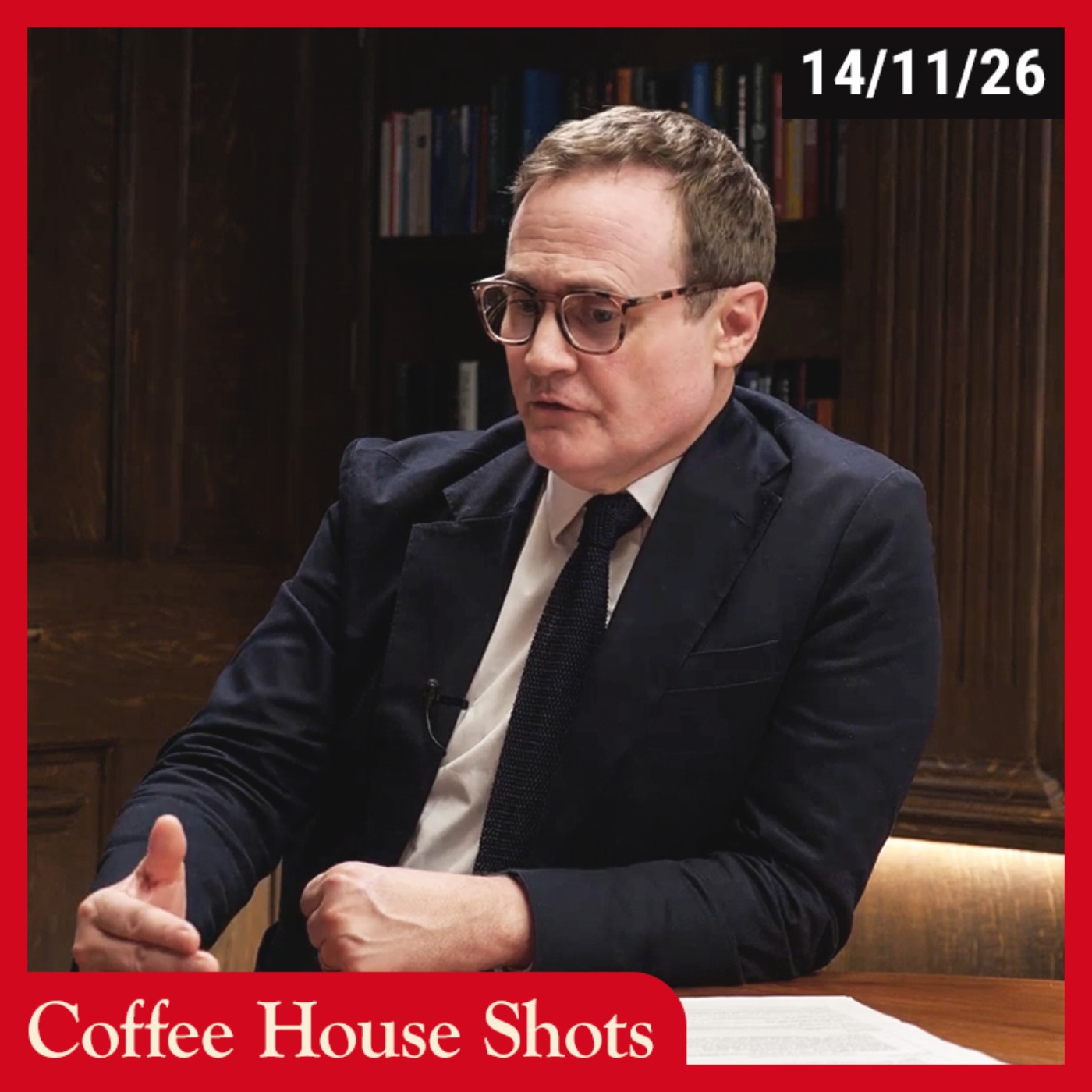


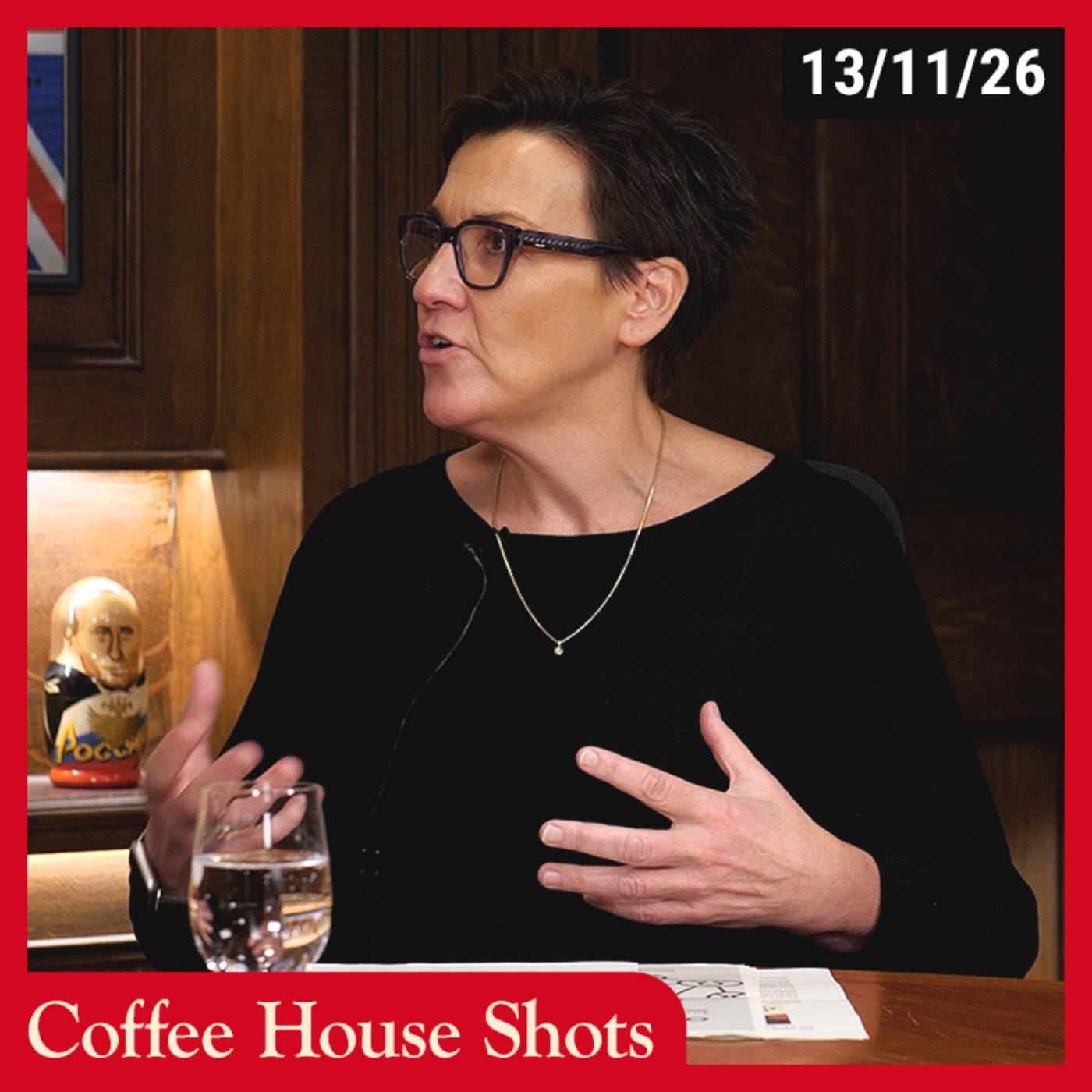
Simon Hart, former UK government chief whip (Nov 2022–Jul 2024), argues that Labour’s proposed “HR-style” whipping by Andy Burnham is naive. He says whips must enforce party loyalty and get government business through Parliament, using “red lines” and sanctions when needed, while allowing private disagreement and possible compromises.
Simon Hart served as government chief whip under Rishi Sunak; he published Ungovernable, the political diaries of a chief whip.
Burnham’s approach misunderstands the whip’s job; big majorities make MPs more likely to act independently; Starmer’s whipping balance and Labour “tribal” briefing contributed to political collapse. Hart says whips rarely used “blackmail,” relying more on persuasion and serious meetings.
Matt Hancock suspended for going on I’m a Celebrity; Labour indiscipline/briefing; Kemi Badenoch’s candidate loyalty rules (net zero, ECHR); Rwanda voting misgivings; “fake jobs” like trade envoys; Mandelson and welfare reform appointments criticized as bad politics.
Written by AI. May contain mistakes.
Discussion on Andy Burnham's approach to whipping and its implications.
“Now, we are about to have a new prime minister who has vowed to take a very different approach to whipping.”
Simon Hart discusses the difficulties of maintaining discipline in a large parliamentary majority.
“And in a way, the indiscipline of Labour MPs, despite the sort of hard line that he took, contributed to his downfall.”
Exploration of expectations for MPs in maintaining party loyalty and the consequences of internal disagreements.
“to go on the government payroll and become ministers.”
Analysis of Kemi Badenoch's recent actions as chief whip and their impact on party dynamics.
“Turning to your own party, Kemi Badenok seems to have stepped into the role of chief whip recently with her so-called purge of the Tory wets, although sources in the party insist no such purge is underway.”
Explore the complexities and challenges faced within the Whip's Office, including discipline, personal struggles of MPs, and the balance of handling tabloid pressure.
“There were a significant number of people who had misgivings about the Rwanda policy.”

Get the gist, explore an idea or ask about something said.
 Claude
On Coffee House Shots, what are the key points of this episode?
Searching your listeningAutomatic transcript. May contain errors.
0:00Ever notice how every new AI tool asks you to explain your business to it all over again? Google Workspace with Gemini skips that. You get Google's AI built right into the premium versions of Gmail, Docs, Sheets, and more. No new tools, no extra logins. Just one subscription that gives you personalized AI right inside your actual workflow. Make work less work. Try Google Workspace with Gemini at goo.gle slash workspace with Gemini.
0:37Hello and welcome to Coffeehouse Shots. I'm Noah Hoffman and today I am delighted to be joined by Simon Hart. He served as government chief whip under Rishi Sunak from November 2022 until July 2024 and he also has published a fantastic book, Ungovernable, the political diaries of a chief whip. Thank you for joining Coffeehouse Shot, Simon. Thanks for having me. Now, we are about to have a new prime minister who has vowed to take a very different approach to whipping. Andy Burnham has pledged to make the whips an HR department where MPs can come hold hands and sing kumbaya, or that's the sort of vibe at least that he is giving.
1:18He effectively is saying that he He wants whipping to be a more agreeable experience where MPs have more room to debate and even, you know, ignore the party whip, it would seem. Simon, what are your reflections so far on Burnham's approach to whipping? Well, I think it's quite naive, to be honest. And I think it reveals a lack of understanding what whips actually do. And that worries me a bit. The guy's about to be prime minister in a matter of a few days time. and the one body that is responsible for getting government business through the House of Government and the House of Lords, he's thinking of as an HR department.
1:59I think the HR element is probably the one thing we shouldn't have been doing. We're not HR professionals. We were often faced with some incredibly complicated, tragic, weird scenarios and we're a bunch of MPs trying to get business through. We're not from that world. We're not in that world. It was riddled with risk. and it sort of sounds nice having everybody sitting around on beanbags, drinking cocoa and discussing all of these things. But in the end, he has to get the government's business through parliament. He has to get 30 bills that were in the recent King's speech, has to get all those manifesto commitments through.
2:35There are a lot of people that are not very comfortable with some of that. Thinking everybody's going to link arms and just get on with each other is, I think, naive. There needs to be red lines and there need to be sanctions. Same in any business, any organisation, any charity, anywhere. You have your arguments. If you lose your arguments, you get behind the leaders. If he thinks people can sort of disagree and sort of disrupt the process, I think he's going to get quite depressed quite quickly. But clearly Starmer didn't get the balance right with his whipping. And in a way, the indiscipline of Labour MPs, despite the sort of hard line that he took, contributed to his downfall.
3:17Where did Starmer go wrong in that respect? Because he seemed to take a more traditional approach to whipping. I think there's a few things here, one of which is it's really hard. It's much harder to have a big majority than a small one because a lot of people who are part of that big majority realise, firstly, that they're probably only going to ever serve one term. They're in there on majorities of less than 1 ,000. The prospects aren't looking too good. And they know that there's too many of them to guarantee a job in the government. They're not going to get promoted. They're probably not going to get an honour because there's too many of them.
3:48And so what are you going to do with your four years? How are you going to make your mark? And so, well, you might as well campaign vigorously on something which is close to your heart, which might be at odds with what the government's trying to do. That becomes quite difficult. The whip's office, the challenge then is really, really significant. I think the other thing is that Kirstenmer made, which I think is a mistake, by the way, which lots of people have made, and I think Burnham is in the process of making it, promises which everybody knows you can't really keep you know whether it's solving the cost of living crisis whether it's resolving the the dilemma at the moment between defense spending and welfare reform whether it is stopping the boats or i think the expectation management around burnham is is going to haunt them quite quickly and probably as early as next week because the first thing burnham's going to have to do is form a company he's going to have to pick 96 colleagues to go on the government payroll and become ministers.
4:42I did nine reshuffles of sorts when I was chief whip. And one of the lessons you learn from that is for every friend you make, you make three enemies. So as of Monday, Burnham's going to make some enemies. He's going to sack some people who thought they were doing rather well. He's going to appoint some people which other people will be confused about. He's going to have all sorts of chit-chat in the tea rooms of Westminster about why people were left in or why people were left out or whatever it might have been. And that's his first test. So instantly he's building up a base of opposition and scepticism.
5:17This idea that that can all be done, as I say, over tea and biscuits, I think he's very optimistic. He thinks he'll get away with that. As you said, there are only so many appointments that can be made in the government. There are only so many fake jobs like trade envoys that can be appointed. Very important jobs. If you are taking... I was a trade envoy once. No shade, but they are fake jobs. Anyway, so if you're saying that you should take out the entire sort of HR positive element to it, how hard do you go? What is the balance that should be struck by an effective chief whip? I think, as we saw from Kemi Badenock this week, actually, it is perfectly reasonable to set out what your expectations are from your colleagues.
6:02whether that's policy or whether it's behavior or whether it's values you can i think that is i think that is perfectly reasonable i think for people who then believe that they can and you you have your arguments in private you can go to your your boss i guess that happens even here i expect you go to michael gove as editor and you might argue a case and in the end michael has to decide what goes in the magazine and what doesn't and you say okay well you know i said my bit and I didn't get that. You don't storm out. You don't walk down the street and start briefing rival newspapers. You don't start a sort of separate leadership campaign.
6:38These are things which is perfectly reasonable for red lines to exist. It's perfectly reasonable for the Whip's office to say, look, you were elected as a Labour or a Conservative MP. You were elected not because of your own personal reputation or brilliance. You were elected on the basis of what the party stands for and what was in the manifesto. That's the reason you're here. so it is not unreasonable that we should expect you to support us in trying to deliver those objectives. Now if for some reason you've got some fundamental objection which is compelling the whips will try and accommodate that.
7:09We always used to try and make compromises. We might find a way of getting an amendment onto the face of the bill to satisfy a particular MP or group of MPs if we thought we hadn't gone far enough or we got it slightly wrong. Alternatively you know the best case scenario, which is the way you look at it, there might be ways in which you can say, OK, look, we've got this vote on Wednesday. We're going to win it anyway. If this is such a big deal for you, just disappear. You know, we'll get off the parliamentary state. We will not require you to vote on Wednesday. You could do that. We tried not to because it set a precedent.
7:43It was about persuasion. It wasn't about force. I can't remember any time when we deployed blackmail. But we did occasionally have quite serious meetings with people and remind them that there was a certain expectation around the question of loyalty. And that worked most of the time. But it didn't work all of the time. As we know, there was always briefing going on and always sort of disgruntled people. And the closer you got to an election and the more they realized that hope for their future careers was gradually eroding, eroding than the less some people, not many, but some people thought it necessary to retain that sense of loyalty.
8:24I mean, it was quite fascinating from a journalist's perspective to see just how quickly Labour MPs under Keir Starmer went feral with their briefing in a way that we saw quite often under the Tories. Starmer came in with this thumping majority and you really did feel at the very beginning a sort of palpable sense that it was a united front but it just fell apart so quickly I think that shocked everybody and I mean also there was an element of um skepticism you know we're having this conversation on Thursday yesterday but Starmer's final PMQs all of the sort of cheering backbenchers on the Labour side and I was looking at that thinking most of you were significant players in getting this guy out of office so I thought that was a bit I thought That was a bit unedifying.
9:13But yeah, and I don't quite, I think Starmer's problem wasn't necessarily himself or the Whip's office, but I think they might have underestimated quite how tribal the Labour Party stood. You know, we had tribes in the Conservative Party, right, left, centre. The five families. The five families. Yes, the five so-called families. But actually, you know, the bit I was a piece of all the stuff which went wrong and went right during Rishi Sunak's premiership, we never lost a piece of government legislation. We never had a successful rebellion which derailed the government's program. We lost a vote on an amendment around infected blood, which was a sort of technical cock-up, if you put it that way.
9:53But on all the major stuff around things like Rwanda, controversial piece of legislation, we did manage to find a landing space which got us the majority that we needed. And I don't quite know. With Starmer, I think it was partly some really clunky politics you know the appointment of mandelson was clearly everybody in the world apparently apart from him because see that was going to go wrong likewise on things like welfare reform likewise on things on the farmers tax stuff like that was just really bad politics i don't know what was going on in in number 10 but there was no nobody there who could we used to use the expression c-round corners and that was weird we there'd been an opposition had been practicing for this moment, we thought, for 14 years.
10:36And when it came to it, they couldn't do it. And that was weird. I think all of us were quite surprised how ill-prepared they appeared to be.
10:47Ever notice how every new AI tool asks you to explain your business to it all over again? Google Workspace with Gemini skips that. You get Google's AI built right into the premium versions of Gmail, Docs, Sheets, and more. No new tools, no extra logins. Just one subscription that gives you personalized AI right inside your actual workflow. Make work less work. Try Google Workspace with Gemini at goo.gle slash workspace with Gemini.
11:21Turning to your own party, Kemi Badenok seems to have stepped into the role of chief whip recently with her so-called purge of the Tory wets, although sources in the party insist no such purge is underway. Do you agree with her decision to remove the whip from Gavin Barwell? And what do you make of her diktat that anyone who wants to stand as a Tory candidate in the next election must be on board with her promises to scrap net zero and leave the ECH on? Well, interestingly, Boris Johnson, I remember, made us all sign up as candidates around and the EU back in the election he won in 2019. I thought the most interesting observation on this was absolutely right.
12:02It was Kevin Hollenrake, who's party chairman, who said there was a big difference between disagreement and disrespect in the context of Gavin Barwell, which has had this story, colleague in the House of Lords who had the whip suspended by Kemi. And I thought Kevin's observation that there's always room in any party for a degree of private disagreement, as we were saying earlier on, If that translates into sort of open disrespect via social media or others, then I think a leader of a party, and Kemi's done it in this particular instance, has every right to step in and say, no, there are red lines, there are standards, there are expectations about our candidates and about our colleagues in the Lords or colleagues in the House of Commons, and I expect them to be met.
12:49and I think that political leaders have been criticised by the media and by members of the public for years for, oh, well, I don't really know what they stand for. I remember going back to people who said that about David Cameron. Oh, I don't know what he stands for. Well, I think what Kemme is doing is making very clear what she stands for. Nobody can be in any doubt about what she stands for and I think that is perfectly healthy and, by the way, well within her rights. So, yeah, of course she can do this. Of course she should do this. She's making a mark as a potential prime minister in waiting and leaving no doubt about how she expects her colleagues to perform.
13:28And I think that's great. Good luck to her. So if a Tory MP disagrees with her positions on net zero and the ECHR, but does so very politely and diplomatically, what does she do in that case? Because there's a difference between disagreeing with a more sort of minor or niche policy and disagreeing with the sort of set piece policies you would put to the electorate in a manifesto. Lots of people might have strong views on lots of subjects. I remember a number of our colleagues used to vote with the government. Rwanda would be a case in point. There were a significant number of people who had misgivings about the Rwanda policy.
14:05One nation sort of conservative, sort of center, center, left. but almost all of them sort of held their nose, did their duty through sort of gritted teeth on the day, voted with the government even though – and lots of them would say to me, God, I don't know why I'm doing this. I hate this. I don't want to do this. I'm doing it because I believe in party loyalty, party unity and getting behind and helping the prime minister get his business through the house. Those are the people you want. And so whatever, in a sense, whatever our private views are, you can argue them respectfully and quietly and persuasively.
14:41But if you don't win them, then your job is to make sure that your leader is able to run your party effectively. Now, I'm going to sort of hark back to my former job as a tabloid lobby journalist and ask you about inside the whip's office. do you have a little black book of sex scandals and affairs and drug taking and god knows what else that you can sort of pull out when you need to discipline a rowdy MP how dirty does it get inside the whip's office I mean I know a number of tabloid journalists who'll be grossly disappointed by what I'm about to say but uh I never saw a black book um whip's office I used to say it did everything that nobody else wanted to do, and it certainly did, and that HR element of it, which could sometimes be comic, and I used the example of the first dilemma I had, I think, when I was Chief Whip, and was having to suspend the whip from Matt Hancock for going on I'm a Celebrity.
15:46That's a sort of not much harm can come from all of that other than it was clearly a line which Matt himself knew was going to come with consequences. A lot of what we dealt with was much more serious and much more tragic. And it was occasions where the wheels had fallen off a particular individual who might have been struggling with a number of things. And, you know, good people with the best of intentions who just reached a point in their careers where, as I say, something had gone badly wrong. It might have been financial. It might have been emotional. It might have been professional. Who knows?
16:20And they were difficult to deal with. And then there was the unpleasant stuff, you know, where people had done things around which there were victims or potential victims. Police might be involved. Palace security people might be involved. The Speaker's Office might be involved. They were extraordinarily difficult to deal with for people who might not be professionally trained in that area. Thank God there are lots of services available in the Palace of Westminster now to do with that. Funnily enough, I've been feeling rather sorry for the Speaker this week because I think there's been lots of suggestions around MP security and a lack of it.
16:57Actually, it's improved massively in the time I've been there and mainly due to the work that the Speaker and others have been doing. And so the idea that MPs don't have and their families and their staff don't have quite a high degree of protection is actually a myth that they do. And rightly so. So the suggestion somehow they're out in the cold is wrong. But I – so I do – you know, get back to the tabloid point. I mean, I always used to dread the call from your people, which was when did you know about – you know, I remember Harry Cole at The Sun. Always his question – first question, pretty well everything was when did you know?
17:36Yeah. And the second question was when did you tell the PM? Well, you know, we had to sometimes be really, really quick on our feet and balance the fact that by being able to provide an answer to that question, we might have been compromising somebody's reputation who probably at that stage, you know, hadn't necessarily been arrested, if that was the nature of the incident, let alone charged. So we had to balance the fact that there were legal minimums which we would have been expected to adhere to. At the same time, it's satisfying the tabloid press that we had dealt with a complaint or an issue promptly and proportionally.
18:21The tightrope was really narrow. And I did often used to wonder whether the Whip's Office was the right institution to be necessarily dealing with that. This has been an absolutely fascinating conversation and I could go on and on and on, but hopefully you'll come back in the months ahead as Andy Burnham's HR department gets up and running to share your insights. Simon, thank you so much for joining us and thank you for listening to Coffeehouse Shots.
18:57Ever notice how every new AI tool asks you to explain your business to it all over again? Google Workspace with Gemini skips that. You get Google's AI built right into the premium versions of Gmail, Docs, Sheets, and more. No new tools, no extra logins. Just one subscription that gives you personalized AI right inside your actual workflow. Make work less work. Try Google Workspace with Gemini at goo.gle slash workspace with Gemini.
Andy Burnham has promised to turn the whips’ office into an ‘HR department’ – but the former chief whip Simon Hart warns that the approach is ‘naive’ and could leave the new prime minister unable to control his party.
Hart explains why large majorities can be harder to manage than small ones, what Keir Starmer got wrong and why Burnham will begin making enemies as soon as he appoints his first cabinet. He also defends Kemi Badenoch’s crackdown on Tory dissenters, arguing that there must be consequences when private disagreement becomes public disloyalty.
Plus: does Parliament take MPs’ safety seriously enough? Hart argues that security has improved significantly in recent years, and that the idea MPs are routinely left unprotected is a ‘myth’.
Noa Hoffman speaks to Simon Hart, the former government chief whip and author of Ungovernable: The Political Diaries of a Chief Whip.
Produced by Oscar Edmondson.
Become a Spectator subscriber today to access this podcast without adverts. Go to spectator.co.uk/adfree to find out more.
For more Spectator podcasts, go to spectator.co.uk/podcasts.
Contact us: [email protected]
Hosted on Acast. See acast.com/privacy for more information.