
 Ask ChatGPT
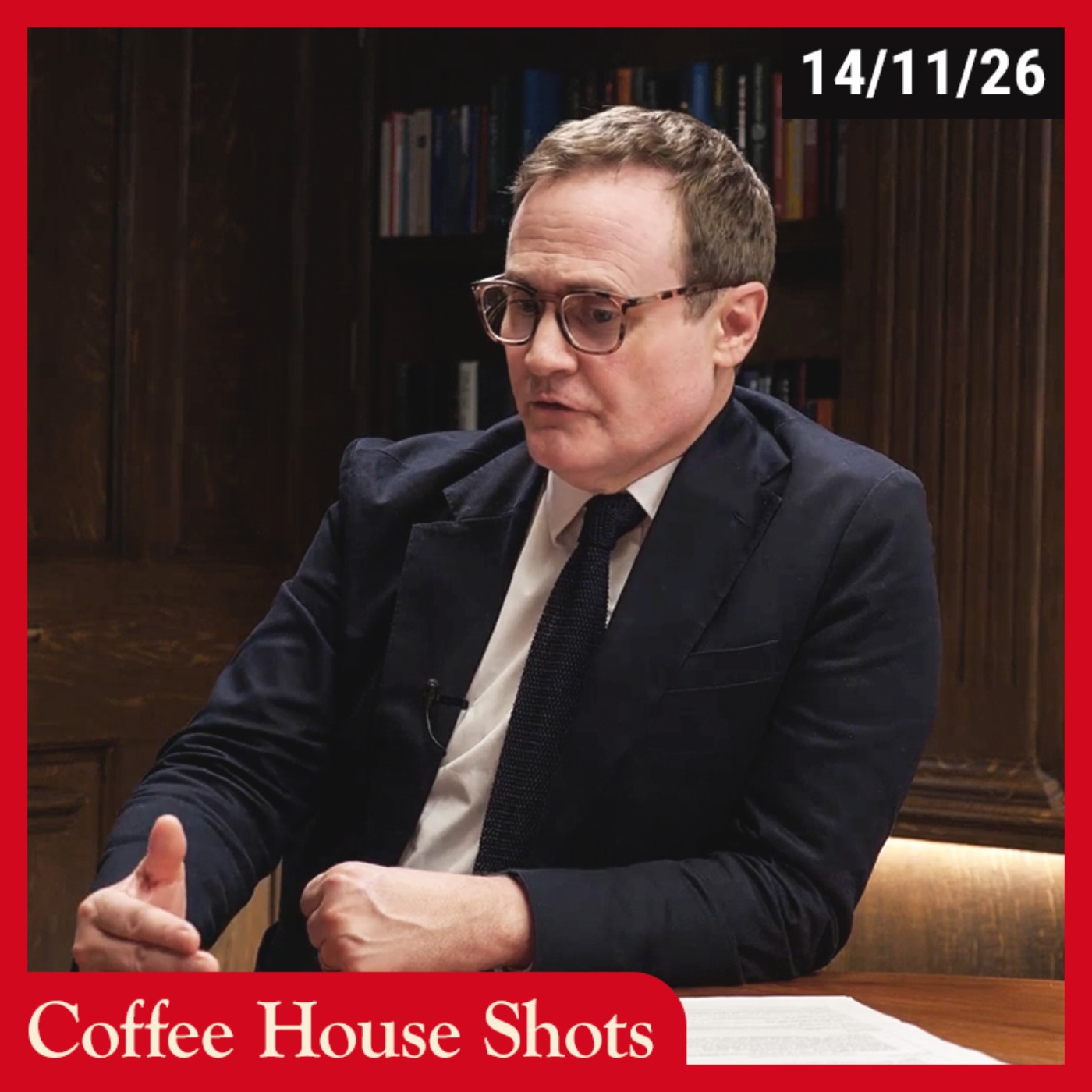


UK politics roundup on devolution (“Number 10 North”/Andy Burnham moving growth work to Manchester), Sue Gray’s criticism of Keir Starmer’s Number 10, and Reform UK infighting between Tim Shipman and Zia Yusuf (“shippers”/“shills” row) ahead of Reform conference.
Tim Shipman (The Spectator journalist; reports on Reform UK and welfare/who it’s for) and James Heal (journalist/commentator; discusses Sue Gray’s role and institutional dynamics).
Treasury “orthodoxy” and Whitehall power dynamics may undermine Burnham’s plan; Sue Gray said Starmer’s Number 10 was “unbearable” and misread the chief of staff role; Reform’s tone and internal disputes risk alienating voters.
Darlington outposts; Sue Gray on Northern Irish pubs; City AM poll on Zia Yusuf and women; welfare/skills/housing announcements; “ice cream truck” analogy for right-wing competition.
Written by AI. May contain mistakes.
Discussion on Andy Burnham's initiative to move growth up north and its implications.
“We've got some devolution news to share, reform continue to take lumps out of each other, and Sue Gray has broken her silence.”
Analysis of current economic conditions and predictions for the upcoming Christmas.
“You've got other new incumbent news this week, such as inflation going up to 2.9%.”
Insights into Sue Gray's recent remarks on Keir Starmer's leadership and her role.
“We've had Sue Gray on political currency drop this morning.”
Exploration of the internal dynamics and controversies within the Reform party.
“Well, the Sue Gray-Kiyostama rift is slightly narrower than the Tim Shipman-Zia Yusuf rift which seems to have opened up since your piece of The Spectator this week, Tim.”
Discussion on upcoming welfare policies and the Reform party's positioning.
“I don't know exactly what the policy is all about, but I'm told it will definitely make that distinction clear.”
Discussion on the Tories' failure in welfare reform and the impact of humor in politics.
“They set up a welfare commission ages ago.”

Get the gist, explore an idea or ask about something said.
 Claude
On Coffee House Shots, what are the key points of this episode?
Searching your listeningAutomatic transcript. May contain errors.
0:00Tim Shipman: Ever notice how every new AI tool asks you to explain your business to it all over again? Google Workspace with Gemini skips that. You get Google's AI built right into the premium versions of Gmail, Docs, Sheets, and more. No new tools, no extra logins. Just one subscription that gives you personalized AI right inside your actual workflow. Make work less work. Try Google Workspace with Gemini at goo.gle slash workspace with Gemini.
0:37Hello and welcome to Coffeehouse Shots, the Spectator's daily politics podcast. I'm Oscar Edmondson and I'm joined today by Tim Shipman and James Heal. And thankfully for us and for listeners of Coffeehouse Shots, this continues to be quite an interesting summer. We've got some devolution news to share, reform continue to take lumps out of each other, and Sue Gray has broken her silence. But we'll start with Burnham, and he's moving growth up north, Tim. You had the jump on this one.
1:01James Heale: Well, James has reminded me that I first said that this was going to happen towards the end of last year. Yes, he's done an interview effectively saying, you've really got to take this seriously, chaps. I'm really doing this. We're actually going north. And what's more, I'm going to take away all the growth stuff from the Treasury, and it's all going to be run out of Manchester. You talk to anyone in the Treasury, and they're like, well, OK, great, but we're still here. We're still in Whitehall. we're still making most of the key decisions. Look, I don't think this is necessarily a bad idea. The Treasury has been under the cosh for taking a sort of slightly dubious approach on all of this for a very long time.
1:36James Heale: It doesn't like dynamic modelling. It's not very good at sort of saying if you do this, this will follow in a positive way. It's very reductionist about how it does its numbers. Binds the hands of every prime minister and is not very good at kind of working out the benefits of innovation. You know, every trade deal has scored at virtually zero. which it never seems to take account of anybody's changing their behaviour as a consequence of the things that it does. So I'm not here to defend the Treasury, but like a lot of people, when we hear all this stuff about the Cabinet's going to go around the country, we're going to have a darling...
2:09James Heale: I think Rishi Sunak was pretty committed to his Darlington outpost, kept popping up there. Rachel Reeves went twice. She spent two whole days working in the Treasury's Darlington outpost. If Number 10 North is a real thing, and it actually manages to release the animal spirits of the economy, I will be one of the first standing on a soapbox applauding. The problem is the Prime Minister turning up to the Times and saying, you really, really need to believe me. It's not a satellite. Well, you really, really need to provide us with a bit more evidence, Prime Minister. You really, really need to tell us that, you know, X hundred civil servants, including 10 people who really matter, are going to be forced to live there full time, do this work properly, and then that they will have the clout.
2:51James Heale: because unfortunately, and this is true of every single power dynamic in any country, wherever they are, and whatever their kind of the power of their capital city and all the rest of it, you go into the White House, what matters is how close to Donald Trump's office you're sitting. There's a reason why the cabinet secretary has gone to sit in the outer office, outside the prime minister's office, which has never happened before, because she knows that's where the power resides. fine if Andy Burnham goes and spends four days a week in Manchester I tell you what so will
3:22Tim Shipman: everybody else because that's where the power will be absolutely and is there any sign that he actually engaged with the literature on the subject has he talked to people like Nick Furson who delivered a few very good lecture a few years ago talking about critiquing the idea of a treasury orthodoxy I'm not sure he necessarily has the one line that Burnham has in the interview is he said it's going to be like the Department of Economic Affairs in the 1960s well that was a terrible failure. Now, in fairness, John Healy, he doesn't have the drinking habits, perhaps, of George Brown, of course, at the time and the infamous stories about Peruvian ambassadors having a waltz.
3:52Tim Shipman: But I'm not sure necessarily that... That's a deep cut there for Coffeehouse Shorts listeners to Google. Absolutely. Nice little Easter egg for that one, a famous story. But overall, it can't compensate for the failures of some policies. And I believe institutions matter. They can take a long time to develop. And I'm not sure necessarily it's going to help in the short to median term for Andy Burnham's vision. You've got other new incumbent news this week, such as inflation going up to 2.9%. You've got the lowest number of vacancies on record in the last five years. With apologies to Edward Heath, it does look like we're going to have the hardest Christmas that we've known since 2022.
4:22Tim Shipman: I'm not sure this is necessarily going to help with that in the next electoral cycle. It sounds sort of good, but I'll also make the point that the Darlington campus is 93 miles away from No. 10 North and Heron House. So in a country like Britain, that matters, maybe less so in America, obviously. But I therefore think the idea you're going to have a whole hub and a cluster, like you've got Whitehall where you've got quite literally the Treasury, all the main buildings within a couple of hundred metres or a mile or so from each other. I think that is an important difference. And I'm not really sure how much Burnham has thought of this other than a general frustration with the Treasury.
4:57Well, let's hope that Number 10 North is a slightly happier ship than Keir Starmer's Number 10 seemed to have been. We've had Sue Gray on political currency drop this morning. Yeah, everybody's missed her. She's back. Some interesting interventions here from Sue Gray, not least on Northern Irish pubs. But the big headline is that she said Keir Starmer's number 10 was unbearable. James, you've listened to it. What did you think?
5:19Tim Shipman: I mean, I think it was for all of us, wasn't it? I mean, it was almost like as a journalist, they're watching a film screaming, it's behind you, turn around. And the same with Keir Starmer. It was so unpolitical. It was so procedural. And I think Sue Gray embodies that. You know, listening to what she said, and I have some sympathies with some of the critiques she has, But I would say two things. One, first of all, she fundamentally mistook the role of Number 10 Chief of Staff. She talked about it being an extension of a public service and the civil service. I think that is a misreading of what that role was and what Keir Starmer wanted and needed her to be.
5:48Tim Shipman: The second point is, again, she talks about all the work she did preparing for government. I have to say, from speaking to people who were in the building with her, I think there were very scant evidence of that. And saying overall, it does really show her weaknesses as well as some potential strengths. She's clearly got a lot of institutional knowledge. She's clearly someone who wanted the project to succeed. but unfortunately she was a dud and I think it's reminded us why Kiyostama failed. Well, the Sue Gray-Kiyostama rift is slightly narrower than the Tim Shipman-Zia Yusuf rift which seems to have opened up since your piece of The Spectator this week, Tim.
6:19Reform are at war. You're now implicated in it.
6:22James Heale: Oh, no, no, no, they're not. Reform are not at war. No, it's all being made up by Tory shills like me, brackets loathed by the leader of the Conservative Party. it's all a result of the spectators wicked editorial line brackets the editors not even here this week who told me what to write nobody whatsoever guess what we got contacted by people inside reform not just me other people in this building who say they don't like the way zeer youssef is behaving and say it doesn't play terribly well with the women zeer has latched onto a poll that City AM ran last month in which he claims it shows that he's very popular with the women, which is interesting for a lot of people.
7:03James Heale: And he is very irate about it and saying that we're all shills, we're all propagandists, we're all running hit jobs. It's otherwise known as journalism. And the list of people who are slagging off journalists for doing their job and reporting what's actually going on in British politics includes Zahra Sultana, Jeremy Corbyn, Julian Maughan, God bless him. Wear a kimono next time you're doing a video, mate. It might work out better for you. Zach Polanski. Zach Polanski, probably top of the list, basically saying he wants state censorship of the media. And frankly, as someone who has worked mostly at right-of-centre publications for his career, hearing the hard left basically bleat about the media and demand redress is something we've all grown quite used to.
7:48James Heale: Seeing it come from the right, I think, is something that's slightly depressing for a lot of us because it suggests that people who spend a lot of time screaming about free speech, the second anyone writes anything critical of them, and frankly, if you go and read my piece, it's full of praise for what Zia Yusuf has positively achieved, and the piece as a whole is about how reform actually have managed to get back on the front foot with their welfare announcement and they're about to do a load more. But to ignore the idea that Zia Yusuf is putting noses out of joints, that would have been the thing that would have been motivated.
8:19James Heale: That would have been the thing where we would have said, oh, well, we don't want to do that because we don't want to upset Zia. We should ignore what is going on and what people are contacting us to tell us about. And I don't want to be patronising because the guy's very, very able character. I do find it slightly perplexing that someone as able and successful as him is quite so angry about absolutely bloody everything in the world. He's been in politics for about two years and I'm, you know, at the risk of sounding like an absolute dickhead. I've been doing this for 25, and this is what journalism is.
8:51James Heale: You do it without fear or favour, and you particularly pay attention when people proactively contact you. And Tim Montgomery's now been kicked out of or suspended from the party. But frankly, we wouldn't have given that interview as much credence as we did had we not heard a lot of the same criticisms from other people within the party who don't want to go public but are concerned by the direction of travel. And not just the substance, it's all about the tone. And Zia Yusuf seems to be someone who cannot exist, can barely breathe unless he is picking a fight with someone. And today he's decided to pick a fight with me.
9:24James Heale: Well, I mean, good luck to him.
9:25Tim Shipman: Yeah, I mean, I think this fits with a wider pattern where reform this summer have felt like they're under the cosh. Lots of questions being asked about different points of sort of recent political history. They've tried to therefore develop their own kind of ecosystem. You see this in Farage's Substack. You see this in Rehreson's podcast. You see this in kind of the public critique of the so-called establishment media, etc. etc. We'll see if that kind of works. I think that, you know, I'm doing this book currently on Reform UK, covering the past 10 years, trust in elite institutions as low as it was 10 years ago.
9:53Tim Shipman: The media is probably less of a powerful force in some ways than it was 10 years ago. But I think ultimately, there are limits to going around acting like a Robespierre, potentially is creating too many enemies all at once. And that's always been the critique of reform's policy as well, which is that, yes, you can have revolution in lots of different spheres. And I think a lot of Tories would agree with the idea, for instance, you need to take a hatchet to much of human rights legislation in terms of dealing with the migration issue but what does that mean for other policies as well and that's why to go back to Tim's very good piece in this week's magazine he talks about Jemric, Jemric had a good week, really really striking polling by the way it shows how different public attitudes are on spending between Labour and the rest of the parties, Labour are the only group of voters as a whole who want a lot more public spending it's much more sceptical even among I think the Liberal Democrats, even to an extent the Greens versus the Conservative in the form of very much anti-moral public And to be fair, while Generic brought
10:43James Heale: that policy over the line and launched it, it was Farage himself who worked out in the spring that this was becoming a problem who turned around and said the Tories keep kicking the what's it out of us for being soft on welfare. Well we're not having that. I'm not soft on welfare. We're the party of workers let's go and get a policy that speaks to that and I think you'll find that Suella Bravin's just announced a load of stuff on skills which favours natural born Brits and Richard Tice is doing an announcement on housing, which I understand I'd be gobsmacked if that didn't say that you go up the housing queue if you are British rather than a migrant term.
11:15James Heale: I don't know exactly what the policy is all about, but I'm told it will definitely make that distinction clear. And this is a party that knows who it's for, knows what it's about, and is beginning to say that again. They've been distracted by, frankly, the self-inflicted mess around Farage's finances, which even he seems to be acknowledging was a bit self-generated. And they've got every chance of having a good and productive autumn, particularly if Andy Burnham turns up, does a budget, and it seems like the sums don't add up. Reform are in a position to kick on again. But if they spend their entire time raring with each other and raring with the media, they're going to miss the opportunity.
11:51Tim Shipman: So in two weeks' time, we've got a reform conference. My understanding is in the next week or so, you're going to start to see some rollouts about what that's going to look like. I think now would be a key time for reform to try and make it safe again to vote for the party. I think this has been the difference between someone like Zia Yusuf and someone like Nigel Farage. Nigel Farage has always used words like replacing the Tories. Zia Yusuf goes, we want to destroy them. Talk about much more sort of hard line. And I think that at a time when there is less blue water in many areas between the two party, and I would cite today, for instance, the skills announcement, Neil O 'Brien on Twitter shared Suella's announcement and said, well, what's taking you so long?
12:22Tim Shipman: Welcome aboard the club. And it goes back to the analogy that Rob Colville had in the Sunday Times when you talk about ice cream trucks. You know, if you have a mile-long seafront, two ice cream trucks inevitably will be alongside each other because they want to compete for the same spot and market share. And I think the same is true currently of the two parties on the right. They've both gravitated together. And a lot of voters are looking and thinking, do I want to go for the Tories or go for reform? And I think if you talk to some of those Tory voters and look at some of the attitudes in polling, some of the tone is potentially pushing them off rather than kind of being enticed over.
12:50Tim Shipman: So I think that's going to be a big battle line we see in terms of tone and substance over the next fortnight as we get close to conferences.
12:55James Heale: And what are they doing at conference? I mean, we're told the slogan's changing and it's going to be something to do with the first hundred days of a reformed government. That is back to trying to lay out their stall and away from some of the sort of ranty campaigning that we've seen over the last few weeks. So it feels like Nigel Farage is responding to some of the things that some of the people have said internally and in public. And it's almost like Zia hasn't got the memo. Do you think he's going to have to start responding more publicly then to these accusations of a split? Because, you know, for all of these policy announcements that they're making, I mean, they're not cutting through as well as they did last summer.
13:31And perhaps partly that is because everybody looks at that party and thinks that they're in a bit of a state.
13:36James Heale: Well, I think conference is always the great shot window, and that will be a very Farage-heavy event. You'll get, you know, some of the sort of handful of other big names will get their moment in the sun, and I'm sure Zia will be one of them. But Farage will want to grab all of that, ram it home, and make sure everybody has a very clear picture of where reform is coming from. And as I say, behind the scenes, if you push aside the financing stuff and this slightly silly spat that's going on at the moment on a personality basis, they've got quite a lot of substantive stuff to talk about. And particularly on the welfare stuff, I mean, the other thing that's in my piece, the other delicious quote in my piece is that the Tories have rather missed the boat here.
14:15James Heale: They set up a welfare commission ages ago. Nothing much has happened on it. And there are a lot of people who operate in this sort of welfare reform world. and frankly they're talking to both parties and you speak to one of them and they say, well look, both parties wanted to announce a bunch of welfare cuts and then spend the money at conference on the stuff that they do like. Well, reform's now got 50 billion to chuck around and frankly there's a danger that the Tories turn up and it all looks a bit reform retready because there's only so many ideas under the sun in this space.
14:41Tim Shipman: Not least because reform is September versus Tories start of October.
14:43James Heale: Exactly. And Helen Waitley, the Shadow Work and Pensions Secretary, we are told, is now being called Helen Lately because she hasn't delivered this welfare thing. Helen Whateley is not a big character in politics, but a devastating, accurate, pecorn nickname like that can really stay with you. And it shows the power of humour in politics. I've had several people in the Shadow Cabinet contact me to say, one of whom had heard it and said, oh, yeah, I see you've picked that up. The other one hadn't, went, well, I'll be using that all the time now. Well, here's to lots more nicknames as we approach conference season.
15:19Thank you so much, Tim. Thank you, James, and thank you for listening. Thank you.
15:51James Heale: you can make sense of your options and decide what to do next. Quicken. Know what to do next. See how at Quicken.com.
It continues – thankfully – to be an interesting summer: there’s devolution news, Reform taking lumps out of each other and Sue Gray has broken her silence.
But first, Andy Burnham is shifting the machinery of government north, promising to put growth at the heart of his new Manchester operation. Will moving power out of Whitehall actually make a difference?
Elsewhere, tensions inside Reform spill into the open as Zia Yusuf takes aim at Shippers over his latest Spectator column.
Oscar Edmondson, Tim Shipman and James Heale discuss.
Become a Spectator subscriber today to access this podcast without adverts. Go to spectator.co.uk/adfree to find out more.
For more Spectator podcasts, go to spectator.co.uk/podcasts.
Contact us: [email protected]
Hosted on Acast. See acast.com/privacy for more information.