
In short
Podcast Episode Notes: Sugar Shane Mosley on Legacy, Grit & The Fight Within | Coffeez for Closers
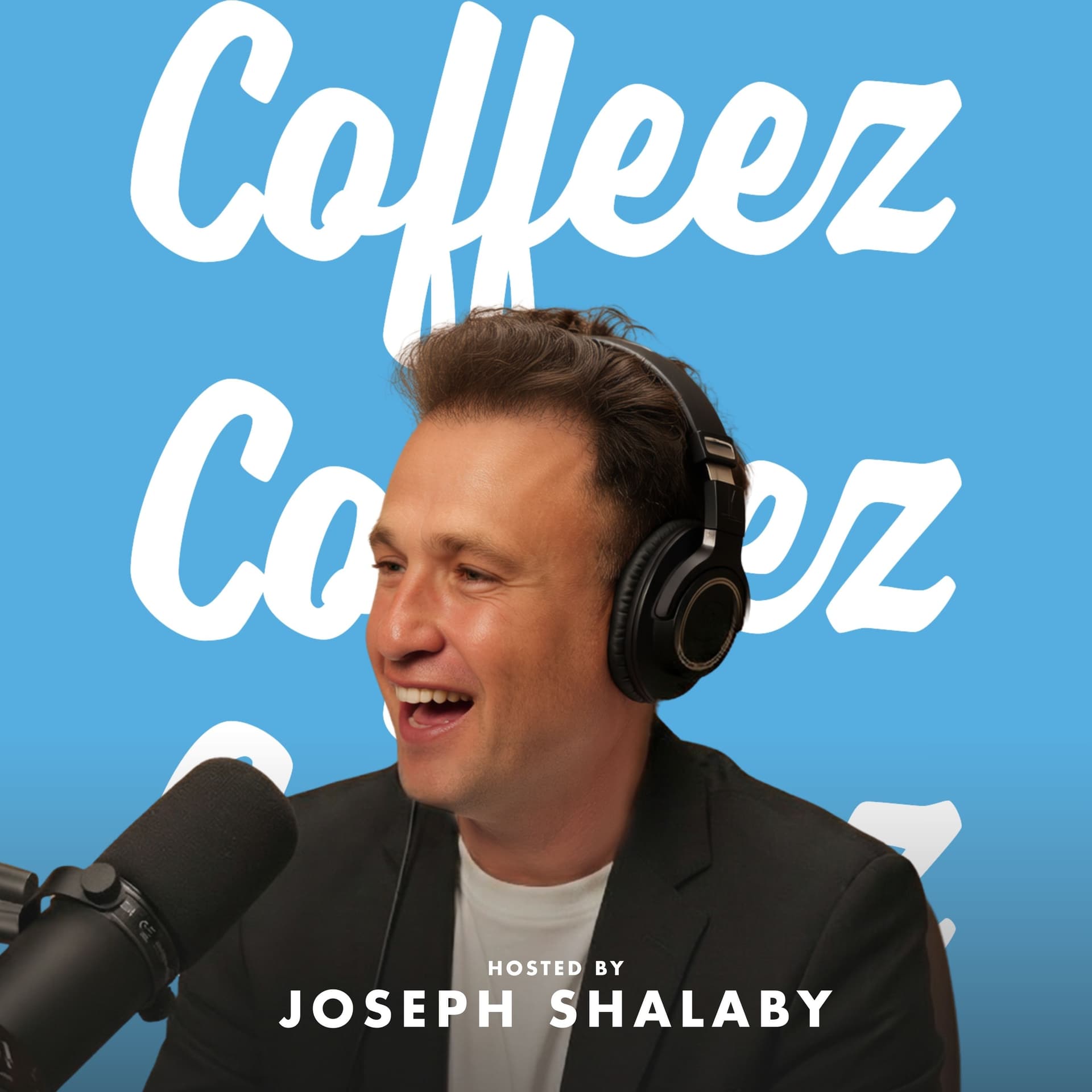
Overview In Episode 39 of "Coffeez for Closers," host Joseph Shalaby interviews Sugar Shane Mosley, a legendary three-division world champion boxer. The conversation covers Mosley’s background, boxing career, the evolution of the sport, and insights on discipline, mindset, and fatherhood.
Key Themes and Concepts
Mosley’s Background and Early Career
- Introduction to Boxing: Mosley picked up boxing gloves at the age of 9.
- Influence of Sugar Ray Leonard: Inspired by champions like Sugar Ray Leonard, Mosley aimed to become a world champion.
- Career Milestones: Made his professional debut at 21 or 22 years old after a successful amateur career.
The Meaning of Winning
- Original Definition: For Mosley, winning was an honor and a sign of greatness; he aimed for knockouts to avoid judges' decisions.
- Changing Landscape: He notes that the current boxing culture often prioritizes financial gain over honor in the sport.
Modern Boxing vs. Past Eras
- Boxing Evolution: Modern fighters often lack the gritty mentality of past champions, with a focus on avoiding risks.
- New Influencers: The rise of YouTube boxers and social media influencers has changed the landscape, with figures like Jake Paul bringing new audiences to the sport.
Training and Mindset
- Fatherhood and Training: Mosley trains his son, Shane Mosley Jr., instilling discipline and a fighting mentality.
- Physical Fitness: Mosley maintains a rigorous training regimen, sparring with younger fighters to stay in shape.
- Mentality of Fighters: He emphasizes the need for fighters to have a “dog” in them—an aggressive, winning mindset.
Legacy and Future of Boxing
- Personal Legacy: Mosley hopes to be remembered as a passionate and honorable fighter who uplifted others in the sport.
- Women in Boxing: He recognizes the growing prominence of women in boxing, crediting influencers like Paul for helping elevate the sport.
Notable Quotes
- “Winning to me back then was more so like, you know, it's like an honor and achievement to be the world champion.”
- “The mentality of going out there and getting the knockout... that's what the fans want to see.”
- “You can train all the other stuff, but training the mindset and training the heart is something that's hard to train.”
Conclusion The episode is a masterclass in understanding not just boxing, but also the values of discipline, legacy, and the evolution of sports culture. Mosley's insights draw parallels between life and boxing, emphasizing the spirit of competition and the importance of a strong mindset.
Contact and Engagement
- Connect with Sugar Shane Mosley: Follow him on Instagram [@shane_mosley](https://www.instagram.com/shane_mosley/) for updates and insights into his ongoing career and personal life.
Written by AI. May contain mistakes. Listen to the episode to check what was said.
Transcript
Automatic transcript. May contain errors.0:00His last fight, I mean, he's still in fighting shape. You know, he's fought in Pacquiao. He's fought Floyd Madeweather. He's fought. I mean, Oscar. Oscar. de la hoja you name it yeah every every champion that you guys all know or grew up with or your parents know and and and uh follow this man has fought them and beat many of them um so it's just an honor to have you on the show today you know uh you grew up with boxing gloves on your hand like you come from a lineage pretty much of boxers was it your father well my father boxed but not really like the boxing that I did professionally, whatever he was more of a, you know, he, he grew up in Watts.
0:42So he had to, you know, do more of the fights in the street and, you know, um, he was in gymnastics and other types of sports like that, but very strong, physically very strong. Yeah. Nice. Now, when did you know, like boxing wasn't just a sport, this was just, this was going to be your life. I knew when I was like nine years old that boxing was going to be my life. I knew that I wanted to be the world champion. I knew that I wanted to be great because at that young age, I said to myself, you know, it's a one-on-one sport, and I determined if I'm going to win or not. If the kids are my size and my age, there's no way they're going to be me.
1:28So I took to the challenge and boxing. I just fell in love with boxing right away. And actually watching Sugar Ray Leonard and a lot of those guys at that time, Sugar Ray Leonard, Tom Mahers, Roberto Rand, those guys actually motivated me to be the top fighter that I was even then. So is that where the name derived from? because I love Sugar Ray Leonard too, but did you get it after Sugar Ray? The name was given to me probably because of Sugar Ray Leonard. I used to wear the Sugar Ray Leonard gloves in 1980. I started boxing in 1979. Sugar Ray Leonard was like the champion in 1980, so he was a big thing.
2:17So I was like, we're going to call you Sugar Shane. And it just stuck with me all the way through. I remember meeting Sugar Robinson and his wife and telling them, my name is Sugar, too. And she was like, you have to be good to be a sugar. And I'm like, well, I'm really good. I'm going to be the best. So, yeah, it just stuck with me. Everybody announced my name when I was fighting. When I was like 12, 11 years old, my name was announced Sugar Shane Mosley when they announced me. It wasn't just Shane Mosley, it was Sugar Shane. So it's been with me forever. You had your professional fight, first professional fight, at what age?
2:57I think I was 22 or 21, 22 years old. I waited until after the Olympics in 1992 to fight professionally. The reason why, because of the Olympics, but I could have probably turned professionally early. I was actually number one when I was 17 years old in the country and represented the United States for dual meets and stuff. From 17 to 21, I was the number one guy in the United States. Wow. Yeah. And was that in the Olympics? That was the Olympics, but I was on the Olympic team, but I didn't go to the Olympics. I lost to Vernon Forrest and was the alternate for the Olympics. And, yeah, I was supposed to go, but I actually beat the guy that was a super medalist in a dual meet.
3:48You know, so, I mean, I just felt short, you know, and things like that happen. It happens. It happens. So from your early days to the big belts, what did winning mean to you back then? And has that definition of winning changed now? well back the day winning uh for me was everything it's like i had to win uh before i fought for my first world title i think i was 22 and 0 like 21 knockouts or 23 and 0 22 knockouts i knocked out pretty much everybody because i didn't want to go to the judges um because you never know sometimes you never know what's gonna happen with the judges i'm like i have to be one of the greats i have to be a champion and um yeah i don't even want the judges to even have a hand in this but winning to me back then it was more so like um you know it's like an honor and achievement to to be the world champion it was it it felt like i was part of history because all the great champions would they they held the belt with honor Nowadays, it seems that the honor has changed.
5:06The box has changed, and it's more of how much money can we get. And even the ones that will fight for honor will turn to fight for the money because the money seems to be, I mean, it's a great tool to have. You know, money's great, right? Yeah, I mean, now these boxing tickets are insane. Yeah. their insane tickets. I mean, can you get a fight against Logan Paul? That would be a big ticket. Logan or Jake. Yeah, I mean, it was funny because I actually trained Jake Paul, so I was one of his first trainers. So I don't think that that would ever happen. I mean, he is fighting guys smaller than him, like Jake Paul.
5:51I mean, like Javante Davis. He's smaller than you? Yeah, Javante Davis is really small. I mean, that would be a cool fight. You and Logan, but it would be probably rigged. Yeah. I mean, if they had$20 million and$30 million and$50 million, I would definitely get in the ring and fight. I mean, that's a no-brainer. Yeah. I mean, I think you'd fight for less than that. You're just a fighter. Really, I'm just a fighter. I love to fight. And I get in the ring all the time with all these young fighters. So if they're paying that type of money, then, yeah, that's just a no-brainer. Yeah. But, you know, at least I go out there and try, you know.
6:28I like to try. What's your opinion about the quality or the metric of these quality of fighters now that we're seeing these YouTube sensational fighters? I think that the fighters, they are good. And they have a lot of great qualities, you know, the speed, power, and, you know, moving around. I guess the physical part of it. But the only thing that's different is the mentality of the fighter back then and now. I think the mentality is changing where they're – they started to really go for it. I mean, Terrence Crawford proved that, you know, he actually showed a great mentality and some old-time, old-skilled type of fighting Terrence did.
7:13Terrence was – he showed a great variety of different styles where he can stay there and punch at the same time he can move. And, like, he did a lot of great things in there. So I took my half to him. I think he did a great job. I actually thought Canelo was just too big was going to win. But he definitely proved me wrong. Well, Terrence is an old school. He's a traditional fighter. He's more of a traditional fighter. And so is Canelo. And so is Canelo. But Canelo kind of fought. He didn't change. Whereas Crawford had different things in there. They changed and made it hard for Canelo to catch up with him.
7:52Yeah, I think you said he knew his strategy already. He knew the steps. He knew basically what he was going to do. And Canelo did the same exact thing every time. Threw one shot to the body or one shot to the head. And Crawford just had to steal it from that and outpoint him. Now, you fought some of the biggest names in history. From De La Hoya to Cotto to Mayorga to Mayweather to Pacquiao. But what was your hardest fight mentally? And what was your hardest fight physically? Well, the hardest fight for both was actually Winky Wright. Winky Ronald Wright was the hardest fight for me at softball.
8:33He was a softball junior middleweight. He was a little bit bigger. And he was very skilled because he can catch and throw, catch and throw. So the shots I was hitting him with didn't hurt. And he was just bigger to me where he can just kind of lay on me or just kind of like smother me, and I couldn't do anything. So that was just a harder fight because of, I believe, his size. and his ability he had great ability too it wasn't just size it was his ability because if he was less than what he was then I could have you know out pointed him or something so he was actually he was a great fighter what year was that fight against Winky?
9:12I'm thinking 2006 or 7 maybe I remember I remember that name I remember that fight yeah he fought he also after because I was supposed to fight Trinidad after that yeah And he fought Trinidad instead. And he beat Trinidad too. Actually beat Trinidad worse. I mean, I actually, it was a close fight with me and him, but Trinidad, it kind of like just outpointed him. Did you fight Trinidad? I didn't get a chance to because I lost Winky. Now, so Winky Wright was harder. That was harder on Canelo. It was harder on Mayweather? Hard on all of them, yeah, because of his style. Like, they were more strategic.
9:50Mayweather and Canelo And Colos They're more strategic Where He was It was just hard to fight him Like a southpaw But he was just tough You didn't fight Canelo did you? Yeah I fought Canelo as well You fought Canelo? Yeah he was like 21 He's a year older than my son How old were you when you fought Canelo? I think I was 40 39, 40 You fought him at 40? Yeah I believe I was 40 years old When I fought Canelo He was 21 Wow. Yeah. I mean, when was your last big fight? How old were you? My last fight was with Mayorga. I did that promotion myself at the Forum. What year was that? 2016, maybe. Yeah, yeah.
10:36Yeah, and that was my last fight. Well, no, it wasn't my last fight. I take it back. My last fight was with David Evanesian, the Russian kid. That was my last fight. And that was maybe 2016. So he was probably 2015. But you're still in great shape. You still look like you could get in the ring tomorrow. I could, yeah. I get in the ring and I spar and move around. Like, I'm still pretty good. I know my limits. You know, I know where I can go, but. What are your limits? I mean, you seem like you're limitless still. Yeah, I mean, you know, a limit would be like maybe getting there with Crawford. You know, he's younger and, you know.
11:14You'd get in there with Crawford right now? I would, but I would say that's kind of like. Crawford, did you hear that? The champ? Yeah, but I would say he's too young for me. He's 30. He's 30. He's in his 30s. But, yeah, I'm saying, like, I would fight somebody different than that. More, you know, like he's more out of the league. My son Shane Drew will fight him. When will he fight him? Probably pretty soon. After my son wins the world title, he can fight Crawford at 160. I think Crawford's trying to go to 60 to fight. And your son's fighting for the world title pretty soon. Yeah, yeah. On December 6th.
11:51In Vegas? It'll be in Vegas in June Grand. Be fighting against Ramos. Wow. So, yeah, he was supposed to fight October 25th, but I think Fendurah hurt his hand. And they postponed the date, so now he's going to be fighting December 6th. And I'm excited for that because he's been working very hard. It's a long time coming. Yeah, you've been training him. Yeah. Well, I'm not his trainer. There's another trainer, Eric. I think it was his last name, but Eric. He's a very, very good trainer out of Canada, and he's been working with him. I give my son all the tools he needs, like all the little different strategies and stuff like that.
12:30So I'm always there beside him. But, yeah. How old was your son when he started boxing? He started when he was 8, but then he stopped, and he came back to boxing when he was 16. or 15 or 16. It's just in his blood. Yeah, it's his blood. He wanted to fight. So he picked up a pair of gloves the same age you picked up a pair of gloves? Pretty much, yeah. You know, I'm just blown away by your level of fitness. Like, guys, you don't even understand. He literally looks the same. You know, the dude is ripped. What is your your regimen to stay this fit still in at 54 so start with the morning what's your morning regimen what depends like it depends on i think if i start working out when i work out but i think that the real reason is me going to the gym and kind of in the bags sparring with the kids staying in shape that way i think that just be being active as a fighter um not on the level that I was when I was fighting for world titles, but just being active, it gives my body that type of, you know, that type of chisel where I could just stay fit.
13:46I think that's the thing. I mean, being active is not like, you don't stay that chiseled, you know? I think that, and not eating this, but not overeating, overindulging. Yeah. I'm trying to, I'm more of a snacker anyway. And just, yeah, still healthy. You eat one meal a day, you mentioned. Well, yeah, one meal a day. I'm a snacker. So I eat one good meal and then maybe snack here and there. What kind of snacks? Nuts or something? Nuts, granola. Granola is not really good, but the nuts are good. You know, pumpkin seeds and stuff like that. Yeah, I can't imagine maintaining that body, that BMI at your age.
14:25I'm sure it gets harder. But not really. I mean, once you get used to eating a certain way, then it's not hard at all. but it's just getting used to it now what about outside the ring what was the fight the public never saw but shaped the man you became now the fight? what's like one fight you've dealt with behind the media I wouldn't say fights I would say more of when you spar when you go to the gym I spar with two world champions every day before I was a world champion I think that kind of molded me. Zach Padilla was 140-pound world champion, and Chiquitito Giannaro Hernandez was a 130-pound champion.
15:11I was fighting 135. So I would spar with these guys almost every day. And I think that— Here in L.A.? In L.A., yeah. I think that made me—that kind of transformed me as a young fighter into a world champion. Helped me to understand what a champion—what it took to be a champion. Because I was sparring with two champions. And I had to be good enough, better, or just good enough to be in the ring with them. Because if I wasn't, they would just, you know, they'd dust me out. But by me sparring with them all the time, they were actually winning all their fights. So they needed me to spar with them.
15:53And that's how I knew that I was going to be the next world champion. Because I'm in the ring with two champions every day. so there's no way that anybody else is gonna be able to mess with me that's just unreal so that's what people don't realize it's like the work that goes into being a champion people don't see that you're fighting champions before people don't see that you're like i mean when i was wearing it all out i was a 15 years i was 15 years old i was in the ring with azuma no son sparring with him and then and then after the sparring session carl king go like oh my god we want to sign you man My father's like, he's only 15 years old.
16:26You can't sign him right now. He's not even pro yet. So I was sparring with a lot of work like Hector Lopez and, you know, like all these world champions I was around. How did you get in front of those people? The gym you went to? I go to different gyms sparring different people, yeah. I'll go to the gym, and my father will take me to the gym, and we will look up for the best person, the champion, the world champion. and we'll get in room with them and work and try to be better you know so I feel like the world of boxing now it's like to be a good boxer like I'll give you where I live in Costa Mesa like there's only one real boxing gym everything else is like this like you know trendy boxing gym you got trapped to the hood a little bit man I did East LA, Pomona Azusa, Bowman Park you gotta go to the the real you gotta go to the little bit they don't have those real boxing gyms all this whole fancy stuff you know where the gym is hot and you know they got air conditioning you don't want air conditioning you know and they got music and it's like disco lights yeah you need a small ring and hot and people looking at you crazy you know that's the real boxing gym you don't see those rocky style boxing gyms anymore yeah you need a real boxing gym and all that that nice stuff I've never I don't think I've ever stepped foot in a boxing gym you got like all of them are now uh like box house or you know rumble boxing they're not real boxing gyms have you ever seen these places i've seen rumble boxing that's not that's just for people to go there it's like for moms yeah yeah just work out yeah i mean i i go to gyms all all the rough gyms even now i go to rough gyms in puerto rico or in mexico or wherever I like to go to the hood and go to the gyms like that and see what they got.
18:21Now you're living in Puerto Rico. Yeah. And we described you got a lot of fans in Puerto Rico. What is it that drew you to live in Puerto Rico? Actually, the people. I actually started, I moved there or went there when I was training Paul for Nate Diaz. And then from there, I started meeting a lot of people there. I already knew a lot of people anyway, but I realized Puerto Rico is a boxing country. A boxing country or a state. Well, it's a territory of the United States. So I realized it was a boxing, you know, I guess you could say. Territory. Territory. Yeah. So, and the people love boxing.
19:04And I love boxing. So it's kind of like I would definitely want to give back to the kids that really want to learn. And they seem to really want to learn the sport and be the best, you know. So I love it. There's a lot of financial benefits as far as taxes are concerned as well. So that's just a icing on the cake. Yeah, I mean, we were having this conversation. It's like, you know, Philippines, Puerto Rico. Yeah. These people just adore you. You know, they just adore you. You go to the Philippines, you go to Puerto Rico. Yeah. It's like everybody knows Sugar Shane. Yeah. It's a whole different flavor.
19:44And it's like. And every meal, 30 plus. Yeah. 30 plus. Right. Yeah. Yeah. I mean, that's the good thing about Jake Paul is because he's getting the younger generation involved and so they can see who's you know who's who i guess but um yeah what's your opinion about this new re-emergence of boxing amongst the youth like jake paul has really like reignited a fire for the love of boxing that didn't exist i would say boxing was a dormant sport for like a decade Yeah, I mean, he's really getting behind, you know, the fighters out there in Puerto Rico and also the women boxing. He's brought women boxing to another level.
20:32I mean, that's what he's promoting it. He's promoting women boxing. And now in Puerto Rico or whatever, if you want to, you know, be involved with the fight game, being a woman, because back in the day, you know, women boxing wasn't that big. But nowadays, the women boxers are getting paid. And that's because of Jake Paul, so he's doing a great job. I see that shift in a lot of women's sports, like basketball, for instance. And I would probably attribute Caitlin Clark to that. But women's basketball is like, I think in like five years, it's going to be neck and neck with the NBA. That's impressive.
21:18Yes. So you're starting to see this in boxing. You're seeing it in basketball. I mean, you're seeing it in, you know, you might see flag football with women. Yeah, in a second, yeah. It's like right around the corner where you'll see a professional flag football. And these women fighters, they're actually good. They have good technique and power and stuff like that, you know. So it's getting more exciting. Before it probably wasn't exciting because it wasn't maybe as good, but the women boxing has really taken off and they're really fighting a lot better now. Yeah, I mean, obviously we know this happens in the UFC.
21:56Women's UFC is obviously insane. So now that you've lived through multiple eras of the boxing sport, what stands out to you the most about how the fight game has evolved? I mean, that's kind of easy. What stands out to me is the money that they're making is crazy. if I was fighting in that era you know I would but Mike Tyson was making insane money right not really I mean he made 20 million but he made 20 million yeah he was making some good money but only Mike Tyson was making like that you know and this era and De La Hoya De La Hoya was really making he was making 10 million but not 50 million 100 million dollars this is a different what's your highest paid fight 7 million and that's what gets Pacquiao.
22:50Yeah. So they're making like Crawford and Canelo$150 million. $150 million? $150 million, yes. Crawford made$50 million or$100 million or something like that. They're making money like that. That's the difference. And he's not like, then what did Jake Paul make? I don't know, maybe$20 million,$40 million. but see, he, but he brought boxing to Netflix. So, you know, he's doing something with all his fans and people that they're, they're supporting him. So that's why he's making that type of money. You know, I think Tyson made 20 million, you know? Yeah. Something like that. So he just gave him that fight.
23:34This type of stuff is like that. That's the difference. And back then, I mean, you go back to Sugar Ray Leonard and all of them back. There was a big, that type of money that we've made more money. And now they're making way more money. Yeah. So we doubled their money that they were making back in the 80s. So does your son get to make that kind of money now? Not yet, but hopefully he'll be in there, you know? Yeah, he's still only making six figures a fight, not seven, huh? Yeah, I think that after this, you know, if he fights Bud, that could be eight figures, you know? Yeah. It just depends on who you fight, you know?
24:09I didn't need to be a seven-time world champion like you, and I already made more than you. Exactly. Exactly. Funny money. Yeah, it's different. Now, today's boxing world looks a lot different. What do you think today's fighters are missing that your era had? The real thing that they're missing, and not every fighter, but I'm just saying the majority is the mentality of going out there and getting the knockout, going out there and really going for the win and making the fans enjoy, letting the fans enjoy the actual fight, like actually fighting. Now they'll say, well, we're boxers. We're going to hit and not get hit.
24:55We're going to hit and not get hit, and they're going to stay away, and they're going to box. That's kind of the difference. They don't really engage. Even the boxers back in the day, like, say, Pranell Whitaker that doesn't get hit or whatever, He's going to stay in the pocket and try to knock the guy out. He's going to not get hit, but at the same time, he's going to actually go for it and make the guy, you know, like go for a knockout. Whereas these guys will not go for the knockout and not get hit either, but just not try. That put themselves in danger, they say. Why put myself in danger? Why risk?
25:35Like, you know, like they're too afraid to go for the knockout. And that's what the fans, like, that's what you train, you work out for. You know, they're too afraid of it. But, you know, to each of the zone, you know, they still, I think they're great fighters, though. There's a lot of, like, Shakur Stevenson and a few others. Tank Davis will go for the knockout. That's why people would like to see him, you know. and Crawford will go for a knockout when he can. So they want to see those type of fights. But other than that, I mean, there's a lot. Inouye is actually a fighter that will go for a knockout, you know, a little Chinese guy, and he's excited and people want to see him.
26:23So it's the mentality has to change. If they have the mentality like those fighters I named, then I think that the sport would change around. Are you instilling that mentality in Shane Mosley Jr.? Of course. He has that mentality as well. He's a good boxer, but he's also a fighter too. He also has, I told you, also the dog in him. Sometimes he has to do more boxing than try to sit there and fight because he will get too much if he just sits there and fights too long. So how do you get that dog in you? What is it that makes you get that dog in you? It's a mentality, a mindset. Like, I will win.
27:00I'm going to get you. I'm going to win. I'm going to beat you a certain way. You know? And even if you do whatever you do, there's nothing you can do that can stop it. You know? You just bite down. It's that... Ferociousness. It's that... Being that predator. Like, you're coming for you. I'm coming for you. You know? Now, social media, big promos, influencers in the ring. what's your honest take on where this sport is headed right now oh it looks like it's headed to uh in the right position i think that maybe maybe these guys are getting paid a lot maybe too much money and sometimes it kind of like makes them more lax a days ago but i i'm all for them getting paid that to my man i would definitely love to get paid a hundred million dollars or whatever it is yeah i mean you got family in it now so it's like yeah i mean but i you know but it takes away it seems like it's taking away the fight out of some of these big fights because they're like oh god you retire after this you know i don't do nothing else um i don't know but i think the sport is is going back to the old the old school the old way i think um the mentality of it you know hopefully it gets there hopefully it it goes to where we where we watched all these fights and want to you know go home and be like I'm gonna watch this fight I watch that fight you know and I knew it's gonna be a great fight you know I said like I wonder if it's gonna make I wonder if it's gonna run I wonder if it's gonna like if it's gonna be a boring fight like you have to wonder if it's gonna be a good fight or not back in the day it's like Like, we know, like, you know, Mike Tyson's going there.
28:44It's going to be a great fight. You know, like, myself or, let's say, Trinity or anybody. Chavez, you know, like, these guys. All these guys, Sherrod Leonard, you know, Chimey Hearns. It's going to be some fireworks. Marvin Hagelin, something's going to happen. Every, like, you talk about Tyson. Every fight of his was so damn fun. It was fun. Like, you know, like, it's been like, oh, man. All your fights were amazing. What's going to happen? Like, what's going to happen? That was the thing. Nowadays, like, you're not like, what's going to happen as far as excitement? But is it going to run? Is it going to be a boring fight?
29:19Like, what's going to happen? Back then, it's like, yeah, what's going to happen? But what's going to happen? Like, who's going to get knocked out? Like, what's going to happen that way? Yeah. Not who's going to run the most or make it a boring fight. Yeah, I'll be real with you. I think boxing was tougher and better back when you were boxing. I just do. I think the era of boxing has gotten a little softer. I know that Jake Paul is trying to make it more ferocious. Yeah. But there's a lot of glitz and glamour and hokey pokey social media, you know, narrative behind it. Right? But Jake Paul is actually a real fighter, though.
30:02Yeah. I trained him, and I know his mentality. I know his mindset. So he's actually a good fighter. Yeah. So he's a good fighter. He's actually a fighter. Yeah. He's been fought for, what, seven, eight years now? Like, he's a real fighter. So you think you see it the same – you don't see it the same way? Do you think the era is a little softer? No, no, no. I mean, the era might be a little bit more softer in everything, not just boxing, but basketball, football. Like, you go to all the sports, and it's softer than it was back in the day. Yeah. All the sports. Probably because of hyper-regulation.
30:36Yeah. You know, don't hit him there. You can't do that. you can't do this. Yeah. Back in the day, your eyeball fall out. They still, you're still fighting. Yeah. I mean, now everyone's concerned about this legal issue and that legal issue. Yeah. Now, if you could train one up and come one coming up, one up and coming fighter today, what qualities would you look for first in that fighter? For me, I look for the, the, the mindset, the heart, because you could train all the other stuff, But training the mindset and training the heart is something that's hard to train. Like you have to really be like a psychiatrist when you're coaching for that.
Read the full transcript
31:19And that's the main ingredient. You have fires like Majorga and Madonna or whatever. They just throw and push from wherever. But they have the mindset that I'm going to beat you. I'm coming to get you. And they became world champion with that, with just not having skills that, like, really that type of skills at all. So if you have that mindset, and we'll call it the dog or whatever, then that's what I would want to see is what kind of. How fast do you see that? Well, you put him in the ring with certain people and see what happens. I mean, I've seen that with Jake Paul. They had a little dog in the one.
31:56You know, I took him down the street to Abel Sanchez gym and threw him in there with some undefeated professionals and, you know, they caught him in the body and, you know, got the best of him a little bit, bloody nose, and he just kept going. I said, okay, he got some dog in him. Like, he, you know, not only could he, you know, dish it, he could take it a little bit too. So he don't mind taking it. He don't mind taking and giving. So that's why I say, you know, Jake Paul, you know, he did his thing. He's a great fighter. That's why he's doing what he did. It could be, I wouldn't say set up, or it could be a little different, whatever.
32:32I don't know what they're doing. But I do know that he is a real fighter, and he can't fight. Whatever it is he's doing, continue. He's making money. He's bringing glory back to the game. He's bringing glory back to the fight game. So whatever it is he's doing, continue. Yeah. A couple last questions. Now, when people talk about legacy, which, you know, there's so much legacy discussion in boxing, what do you hope your name stands for when they tell the story of the sugar shame mosley era oh man i mean i just hope that they look at me as a you know honorable fighter and that a fighter that was really passionate about the sport of boxing i really love the sport of boxing i'm really passionate about it and um everybody knows i'm a nice guy that you know i i'm the type a person that I want the best for the next person or whatever.
33:33I'm not, even if he beats me or he's whatever, I want to see him do well. I guess you could say I'm the type of guy that wants to see the next person do well and I feel happy about that. Yeah. I love that mentality. Got a couple last questions. One is about your family. You've raised four beautiful children. One of them, up and coming champion. Yeah. You've instilled a level of grit, a level of ferociousness, a winning mentality in your children, despite the fact that they grew up with a silver spoon, you know, compared to you. How did you instill that that that mindset into your kids, given all this worldly tribulation, all all the all the things that this world just sways you when you got money?
34:19Your kids didn't grow up poor. Right. I mean, I didn't necessarily grow poor either. I was a middle class kid as well. My father worked and my mother worked. Junior Dynamics, my father worked for the DPS office. So I had a car when I was like 14 years old, driving a green BMW, I mean a green bug. So I wasn't necessarily in the ghetto. I was middle class. but the thing that to my kids, my son, whatever, is that it to be the it's not because you have the money or you have whatever, you have to really want to be the best at whatever it is, I was very competitive and like my son Shane Judy, he's very competitive and he wants to win, it doesn't matter who you are so he wants to win and that's the key ingredient you know, you can, yeah, you want to win because you need money or you need food on the table, whatever.
35:22Yeah, that's one way. But the other way is, you know, like I want to be the best. I want to be the great. And I want to be able to take care of my family or whatever so they don't have to struggle. My son kind of adapted that mentality, taking care of his family and wanting to be the best and setting a goal for himself and not wavering from that goal. So that type of mentality, that type of, I guess, that type of thing that I gave him, that I installed him, that was the type of mentality I installed him that he's seen. He grew up watching me do it. So now he's going to do the same thing that I did.
36:08He wants to be worth it. He wants to be great. He wants to be better. And I'm happy for it. God bless. God bless. I'm happy about that. One last question. When you're in front of the pearly gates, what do you think God's going to tell you? Oh, man. I don't know if I learned all my lessons. I believe that God knows my heart and knows that I'm a light and that I am a helper. I'm not a taker. I'm a helper of everybody. I'm a helper of earth, of people, mankind. And I'm only enhancing. And, yeah, I'm going to get, I believe, get rewards for that. You will. You will. You're one of the sweetest dudes ever.
37:00Guys, Sugar Shane Mosley, the legend. If people want to connect with you or chat with you, how do they find you? Yeah, you can find me on Instagram, Shane Mosley. I think it was with the blue check and yeah I'm coming up with my different websites maybe pretty soon and I'll put that on my Instagram so that's how you can find me it's from the Instagram perfect guys Sugar Shane Mosley seven time world champion thank you guys for tuning in God bless
From the publisher
In Ep 39, Joe sits down with Sugar Shane Mosley, one of the most electrifying fighters in boxing history—three-division world champion, Hall of Famer, and legend who’s faced everyone from De La Hoya and Mayweather to Pacquiao and Canelo.
From picking up gloves at 9 years old to becoming one of the greatest pound-for-pound fighters in the world, Shane opens up about what it really takes to win—mentally, physically, and spiritually. He talks about training his son Shane Mosley Jr. (now fighting for a world title), how discipline shaped his career, why modern boxing has gone soft, and how the fight game—and life—have changed over the decades.
This is more than a boxing interview. It’s a masterclass in mindset, fatherhood, and faith, from a man who’s lived every round of it.
