Ask ChatGPT

 Creative Capes
18 Nov 2026 · 1h 13m · 29 chapters
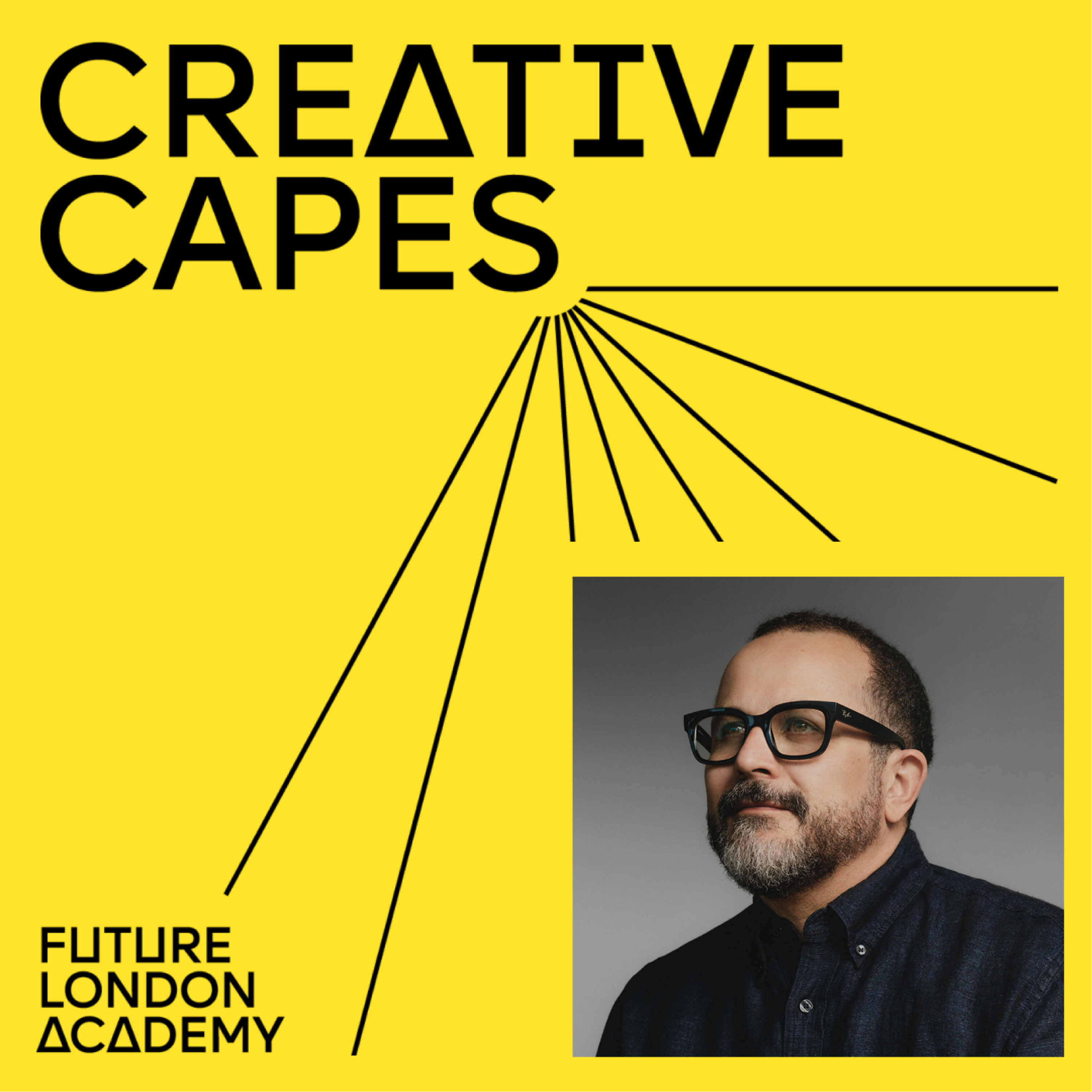
Issa Brabish (Bentley Systems CDO) explains what a Chief Design Officer does in an engineering-led, budget- and boardroom-driven company: business fluency, asking “outside-in” user questions others miss, aligning design with OKRs, and proving design impact with the right metrics.
Award-winning design executive with 30+ years experience. Bentley Systems CDO (engineering software for cities, transport, energy). Previously Chief Customer Officer at Sequent; held roles at Adobe, Corbis, and Verity; co-founded Veer (acquired by Corbis). At Sequent, he built UX capability after it was missing.
CDO success requires business fluency (P&L, numbers) and durability for tough conversations. AI won’t solve the “right problem,” so humans must define the problem. Design value must be measured via loyalty/advocacy, NPS/CSAT/time-on-task, and triangulated data—not “better” claims.
Sequent’s redesign of a complex subsurface product improved usability and sparked internal excitement. A commerce buy-flow redesign drove 500% increase in add-to-cart and double-digit conversion. He cites Air New Zealand’s staff training as a model for aligning culture and promises to users.
Written by AI. May contain mistakes.
Issa shares his background and how he became Chief Design Officer at Bentley.
“Issa is an award-winning design executive with over 30 years of experience.”
Discussion on the challenges and strategies of integrating design in Bentley's culture.
“I came into Bentley as part of an acquisition of Sequent, which was in itself a great experience.”
Issa describes the responsibilities and influence of a Chief Design Officer.
“And so I had pitched this idea to Graham, who was the CEO, around this chief experience officer role.”
Issa discusses how he convinced leadership of the value of design in decision-making.
“Because Bentley is an incredibly inspiring company.”
Exploration of strategies to cultivate a design-centric culture in an engineering-focused organization.
“Therefore, CFOs are in charge of that, or making more money, and CROs and CMOs are in charge of that.”
Explore how to foster a design culture within engineering-focused companies.
“action, I think, is one of the key functions of the CDO inside the business.”
Learn about specific examples and strategies that led to successful design adoption.
“And we've seen some good success with that.”
Understand the importance of metrics and how to define 'better' in design contexts.
“Then moved design into the process and reworked the entire buy flow for that organization.”
Discover how to ensure design initiatives align with overall company goals.
“Yeah, I mean, it's an interesting question.”
Learn how to align team objectives with larger company goals through empathy and transparency.
“it's very hard to actually understand what is the company trying to focus on because there are so many things.”
Explore how to effectively implement OKRs to ensure team objectives align with business success.
“But part of the role of the CDO is in these rooms to make sure that we are building the bridges between the different plans that are coming together.”
Discover strategies to manage conflicts between sales promises and design capabilities while maintaining integrity.
“We might be bumping up against a quality objective that has like certain key results.”
Identify key skills required for becoming a successful Chief Design Officer, including business fluency and resilience.
“to have this shared understanding and shared culture.”
Learn the importance of resilience in design leadership and how to cultivate it in yourself and your team.
“at most companies around, you know, building a team and supporting the work that you feel needs to happen.”
Explore practical methods for addressing difficult challenges and building a resilient mindset in teams.
“So it's this very sort of complementary component.”
Learn how to approach difficult situations and conversations with an opportunity mindset.
“So, you know, one of the things that I like doing and seeing in people is, you know, when folks are faced with like, what is the most difficult challenge?”
Understand the significance of business skills and language for designers.
“Oh, this is a wonderful way to see the world and in general live every day, seeing opportunities and everything that surrounds you.”
Explore how to effectively communicate and influence in a business context.
“And I was like, I kind of fought it for a little while.”
Discover how broadening your skills can enhance your value and marketability.
“advocacy this way then it's a different conversation that we're having because he understands the notion of quality.”
Understand how designers can focus on complex problems that AI struggles with.
“And he talks about how he basically educates everyone in the company to play different musical instruments and do performances.”
Learn how Chief Design Officers can influence organizational conversations towards human-centric growth.
“And we should be able to have conversations about those things, you know, but you need to think broader than just design execution to really sort of realize that.”
Learn how Chief Design Officers can balance growth with employee well-being.
“How are we delivering growth that remembers that we have staff that are going to be under a lot of pressure, a lot of work, they're going to, like, you know, got to keep them healthy.”
Discover how design maturity is evolving within organizations like Bentley.
“and definitely sustainability and ethic and planet centricity.”
Explore how AI is reshaping product design and the associated challenges.
“This has been one of those challenges as an opportunity.”
Understand how research drives design innovation and decision-making.
“Yeah, I mean, more involvement more broadly against more things, right?”
Learn how to transform design from service-oriented to problem-defining.
“as potentially risky creative innovation initiatives?”
Explore the positive experiences and insights gained from human interactions.
“And so, you know, this view of the world that we see on our little box every day can be very different from the reality of what's happening out there.”
Learn about upcoming podcast episodes and resources for design leaders.
“And thanks everyone for joining us today.”
Understand the importance of sharing insights and connecting with audiences.
“be happy to share that in the follow-up as well.”

Get the gist, explore an idea or ask about something said.
 Claude
On Creative Capes, what are the key points of this episode?
Searching your listeningAutomatic transcript. May contain errors.
0:00One of the most important skills for the CDO is business fluency. Designers, we don't like to talk about things like money and influence. If you can't talk the language of the business, if you can't think in numbers, you're going to struggle in the boardrooms. One of my primary roles is to ask the questions that nobody else is asking. The machine is going to solve the problem it's presented. It's not going to figure out if it's the right problem we should be solving.
0:25Issa Breibish: Hi, I'm E. Katerina from Future London Academy, and welcome to another episode of our Chief Design Officer series. Today, my guest is Issa Brabish, Chief Design Officer at Bentley Systems. Issa is an award-winning design executive with over 30 years of experience. As Chief Design Officer at Bentley Systems, the global engineering software company, him and his team designed the tools engineers used to shape the cities, transport, and energy networks millions of people rely on. Before Bentley, he served as a chief customer officer at Sequent and held influential roles at Adobe, Corbis, and Verity.
1:05Issa Breibish: He also co-founded Veer, a design-forward brand, before being acquired by Bill Gates, company Corbis. Welcome, Isa. How are you doing? I'm doing great. How are you, Katerina? Fantastic. And obviously, this will be a very interesting conversation because you are chief design officer in an engineer-led company. So that sounds like an impossible task on its own to become a chief design officer. So I would love to start with a question of how did you get there? Because everyone probably on this call and everyone listening is thinking about becoming chief design officer. So I would love to hear your story because you didn't join the company as chief design officer.
1:45Issa Breibish: So did the role exist already? Did you have to pitch? How did it go? Yeah, that's a great question. So the role didn't exist. I came into Bentley as part of an acquisition of Sequent, which was in itself a great experience. So I got to work with a bunch of folks in New Zealand, got to visit and travel a country I wanted to spend time in my entire life. It was fantastic. And when I joined Sequent, there was no UX capability inside that organization at the time. So they had this really interesting subsurface technology that was very difficult to use for a period of time. but they had an amazing group of people that were very inspiring to be around.
2:29They were very passionate geoscientists and product developers. But the notion of sort of thinking how a person is going to use this highly complex scientific software was a bit of an afterthought at that time. And so I came in and spent some time trying to convince people within that organization that thinking about the user and how they were going to have to work their way all day through the various products that they have would would result in better loyalty better experiences for the users better revenue over time etc and it was a bit of a hard sell so i got on a plane flew down to new zealand and spent time going from product leader to product leader sort of trying to sell design into the organization and i ended up partnering with a guy called pete joint who was starting a new product and it was the right person at the right time we worked on this product our teams worked on this product together and delivered something that was very different from an experience perspective to the users and in that moment you could see the lights turning on inside the business around well this is how good things could potentially be so then you know demand increased and so the story went we continued to start expanding the UX team inside that organization.
3:48During that time, I've always sort of seen design as a holistic approach to building businesses that work, not just a way of making products better. And so there were other areas inside the business that I thought could use some help. And so marketing was one, creative and brand was another. And, you know, I wanted to think of ways in which we could sort of pull all these things together. And so I had pitched this idea to Graham, who was the CEO, around this chief experience officer role. And there was some reticence to do that. We had our CMO. We didn't have a CMO role inside the business. And so we landed on the customer role where I took over, you know, all of these different disciplines.
4:31And then wanted to sort of fabricate this narrative from product end to end and to move it from a you have a problem, we have a solution to, you know, what are these meaningful problems that our users are trying to solve? And how do we tell that entire story from a user perspective? And so spent some time there. I got acquired and I spent a little bit of time, a little bit of the last part of my six years at Sequent, working with a person who ended up becoming the chief digital officer at Bentley. And so before he made the move, he asked if I would come on as the VP of digital here and focus on our digital experiences at Bentley.
5:11Came on board and spent a good amount of time trying to figure out how to improve the experiences here at Bentley from a digital perspective. That work was very good, but I noticed there was a gap here.
5:24Issa Breibish: And I think this will be a repeating theme probably through all of the conversations you're going to have, but it's like every business has gaps and those gaps and challenges represent great opportunities for folks to try to solve them typically. And so the connection between digital and products and again the brand and creative experiences at Bentley required oversight. And we didn't really have that at that time. So I started putting together a narrative arc on how we could tell a better story about Bentley. Because Bentley is an incredibly inspiring company. So, you know, it's not, we're not, we're not figuring out how to sell more things in a cart.
6:08We are trying to figure out how to answer the world's most complex infrastructure problems and challenges that we face. So how do we get people connected to fresh water? How do we connect people through bridges? How do we make the infrastructure resilient? how do we make sure that the things that we're building now not only last but also are less impactful than they were previously in a negative way to the to the earth so there's all these things that are like super compelling but again you know we were kind of telling the story like you've got a problem you've got a product which is fine i mean it's people want to understand what products we have that are going to solve the problem but we also want to make sure that they're aware of the amazing work that our users are doing.
6:55And so I'd had a number of conversations with people after seeing some great results on certain products, that this was a direction of travel that we should move in, that the only way we're going to build a sort of coherent experience for our users was by bringing in some oversight. And just to be clear, for 12 months, I pitched this idea. And I didn't pitch myself, I was pitching it as a hire to bring somebody into the organization. But after 12 months of having these conversations back and forth, it made sense that I was the person to step into the role.
7:24Issa Breibish: Oh, wow. That's an interesting twist of events. And when you were pitching, were you at least a little bit considering that maybe you could be a good person for the role? Sure. You know, like I had come off of an executive role at Sequent, and it's an incredible experience. When I came into Bentley, at that point, you know, I was looking at a one and a half billion dollar publicly traded company. And I actually had a conversation with my wife and she was like, do you think you want to move into an executive role at Bentley? And at that time, I didn't feel prepared. I felt like I needed more time operating below that chair to get a feel for how the company would operate, where it fit, if it was a good fit for me, or if I just wanted to spend time figuring out very specific problems in sort of smaller settings.
8:12Issa Breibish: That is very interesting. And you also mentioned already a few other roles as chief customer officer, chief experience officer. And in general, chief design officer is this very new position, kind of that sits in different parts of organization, some reports to CPO, some reports directly to CEO. So where did you land with chief design officer? And I suppose, what other C-level positions do exist in a company? Yeah. So the thing that appealed to me from a chief design officer perspective is like broad influence over not just design. It's like, how do we deliver better outcomes to our users? How do we deliver better experiences to our colleagues?
8:51How do we tell better stories? Like it really allows us to think about how we show up for all the different groups that we serve in ways that reflect sort of the aspirations and also the inspirational space that we work in. Like, it feels like this is a story that deserves to be told and deserves to be told well. And I wanted to make sure that I was in a position or this role was in a position to move the dials to make sure that that happens as we continue to grow as a business. And then you would ask a question, I think, about, you know, what are the roles? I mean, it's quite standard. So we have, you know, CEO, CTO, we have our CMO, and then we have a chief revenue officer.
9:36The pretty standard roles that you would expect to see in a boardroom.
9:39Issa Breibish: So one actually conversation and question that kept coming up in preparation for this interview is what is the difference between chief design officer and other roles that might exist in a company like chief product officer, or as you mentioned, chief experience officer? And if those roles already exist, then does it make sense to combine them or separate them? What's your view on where do you sit? And again, why did you pick particularly this one? It's a great question. I think for me, in the places that I sit, the answer is the perspective that I bring to the room is typically very different from the perspective and interests of the other folks.
10:18So your CFO is going to be concerned with being relatively frugal, making sure that we can afford to do all the things that we need to do and that we're growing the financials for the business responsibly uh well you hope you see that in your cfo your revenue officer is going to be focused on how do we sell more how do we make sure that we're supporting the business with with the uh our aspirations with the intended growth a lot of these roles are sort of very inside out so we're looking at the business and how we build a sustainable and scalable business which is a hundred percent the right thing to be focused on And to be clear, I am also focused on that.
10:53So I think there's this erroneous sort of view of this rule as always solely focused on the user. I think that you want to make sure that that is a mode of operating for a lot of people inside your organization. and not just in design but in the cdo role you want to have that notion supported also by how are we building a business that is responsible and accountable as we continue to develop but in that room in the boardrooms my one of my primary roles is to ask the questions that nobody else is asking and those are typically about what's happening outside the business from a user perspective and how that's going to impact the way in which we develop the organization going forward And the second part is to make sure that we are not only thinking about our business.
11:42So when I'm seeing people have a conversation purely from a how do we get more from our business, how do we build more in our business and how do we sustain more in our business? Part of my job is to go, all very good and interesting, how is that going to impact the user at the end of the day? How are these decisions going to benefit or diminish the quality of the experiences our users are going to have with us as an organization?
12:10Issa Breibish: And was it easy to convince the leadership team that these are the questions that need to be brought up in a boardroom? You mentioned the process took 12 months, and there is a reason why there are not enough chief design officers, because traditionally companies do care only about saving costs. Therefore, CFOs are in charge of that, or making more money, and CROs and CMOs are in charge of that. So maybe what have you changed in the conversation throughout 12 months, and you maybe found more successful ways to explain that actually these are important questions, as important as finance and everything else?
12:43Well, I mean, I'm very fortunate in that inside Bentley, we have, you know, an executive that is generally very sensitive to the quality of the outcomes for our users. Like the brothers that started this company, you know, 40 years ago, they're super involved in their community. They help build things, you know, they're very active and they bought that sort of view and personality into the organization. And while they have moved to sort of board positions and we have, you know, Nicholas as a CEO and a new, you know, relatively recent leadership organization, that notion of helping others thinking about how we support better experiences has persisted.
13:28And then with Nicholas, our CEO and Julian, our CTO, they are very aware of the importance of design inside the organization. And so my job is made easier by the fact that I have like very you know apparent support from the people that I work with in delivering better experiences to users now it doesn't mean we don't have a lot of work to do like we do in every organization around how do we take that sort of understanding of the importance of design and make sure that it filters throughout the organization this is the work at every company that I've been a part of so you know having that support is great but how do we translate that into action, I think, is one of the key functions of the CDO inside the business.
14:10Issa Breibish: And how did you translate into action? Because again, as we introduced this conversation, it is an engineer-led organization. So it is very natural for majority of company to care about other things rather than design. And maybe they were even hired by their curious interest in certain areas rather than others. So what did you do to start this culture inside the company that appreciates or at least understands a little bit more about how valuable design could be? Well, this is the challenge, isn't it? I mean, this is the crux of the work. So first of all, this is neuroplasticity. I mean, people who work with me get tired of talking about me talking about this, I'm sure.
14:52But I mean, coming into an organization that has engineering as a background, I mean, you have to adjust your expectations around how you're going to show up, right? So in my previous experiences with Veer, I mean, we were building incredibly creative experiences for creatives. And so the type of experiences that you're putting together, Sheldon Peel and John Parker, who were a part of that organization, you know, the work that they're doing is like, how do we push the limits? How do we, you know, do things that haven't been done? How do we reframe things that people see every day? You know, these are kind of the questions we're asking.
15:28at a firm like Bentley and other engineering forward firms, it is about how usable are things? How are we building trust with our users? And how are we making sure that we are incredibly accurate all the time? Like, you know, at Veer, if we got it wrong, you know, that might be too at that point. This is the nineties. I'm aging myself. Sorry, early two thousands, but you know, age myself. If you get it wrong, it's a bad run to 250 ,000 catalogs. Maybe that's fine. But, But, you know, if we get it wrong, bridges fall down, you know, people don't get access to clean water, roadways don't work properly.
16:04So, you know, we have to think about how we're enabling our users to do the best work that they can do. And also, by the way, they're constantly being told that the thing that they're about to start, which could be a 10, 15 year project, is likely impossible. And so we have to make sure that it's not impossible for them, that they can do all the work that they need to do to make these things possible.
16:24Issa Breibish: This is sort of the crux of the work. So how do you move that into the organization? Well, when they've been doing it their way for decades, it is a bit of a difficult conversation. So the way is the same as what I described earlier at Sequent. You find a partner and deliver something that is visible value to the organization. organization that creates a hunger for participation because what happens is they see the things that they've been working on showing up and working better than they would expect and through that they start to talk about it and so one of the things that we've tried to do inside our organizations is not just have designers advocating for work but partnering with developers and pms and folks inside the business getting some wins demonstrating value and then having them pitch the value of design engagement to their peers.
17:19And we've seen some good success with that.
17:21Issa Breibish: And can you give an example of maybe one small win that you were able to share that started this change of people's mind within the organization? Sure. I mean, when we were at Sequent, you know, a new product was coming to life, but that product was quite difficult to use. So there was like a very deep taxonomical structure. There were, you know, the ways in which we were connecting to other products from a data perspective was very convoluted, very difficult. And so we got to spend some time with that team reworking, because it was a new product, reworking how all of those things sort of came together from an experience perspective.
17:58And what the team ended up with far exceeded what they had hoped it would be. And that created real excitement. And that excitement translated into them without prompting to speak to their peers, show their work. There was a pride of work that was a little different than I think what they had had before. And so that really moved the needle inside that organization. And, you know, like the team that is inside that business right now working on UX, Yana Miller and other folks, it is, you know, they're really outpacing in that space. They are producing beautifully usable products in a space that is typically very difficult to operate.
18:42And the products tend to be quite clunky. They feel quite dated. They add more features without thinking about how these things are sort of coming together to create experience. They don't organize things well. I mean, and I'm talking about the industry, like a lot of the products in these industries feel very old. So they are, you know, again, sort of moving the needle on how, like, in that space, geoscience products are showing up for those users, which they deserve, by the way, because geoscientists are super passionate about the work they do and the outdoors and like making life sustainable for people like it's it's wonderful to see that marriage of great products meeting people that really care love it and if we
19:19Issa Breibish: can dive a little bit even deeper in that particular example that you were sharing any other examples because another problem that designers face they do improve things and they say look it's not better but better is not a business term you need to attach some sort of metrics or something to it so it's obvious for everyone else so do you remember what metrics or numbers or what did you show is it how fast people can complete an action like what did you show as an evidence of something that is now better yeah no i mean it's you're 100 right better is one of the things it's a bit of a bugbear for me when people are like ah it should be better it's like what does that mean exactly like can you define what better is that'd be great the in that case It's, well, so first of all, one of the problems with measurement, okay, I mean, this is a, we could spend an hour just on this topic, but, you know, like, measurement's a bit of a bugbear in the design space, I think, because I think it is difficult to draw, in most cases, a direct line between what work was done from a design perspective and revenue growth.
20:24and revenue is often the number that the business wants to talk about and so the way i look at it and i think that we're moving towards inside some of these companies is we can infer revenue lift on based on some of the work that we've done and some of the releases that we're putting out there and so if i think to another organization that i'd worked with a little while ago you know They had a installed commerce workflow that was put together by an IT organization and chose because of the timeline to not involve design. Then moved design into the process and reworked the entire buy flow for that organization.
21:04And we saw after months of work, a 500 % increase on add to cart inside that organization, plus a double digit increase in conversion, which is fantastic. but can we draw a definitive line to design practice and you know revenue lift i think that is always very difficult so the things i often talk about are like how do we understand you know directly if we're contributing to loyalty or advocacy within the organizations that are buying from us and so i think that this is a space in which design contributes to greatly because we can get qualitative data that clearly identifies that you know the quality of the experience is the reason why they continue to advocate for our products inside their organization or that they've chosen the product.
21:51So I think there's that. Then there's things like NPS, which I think, you know, a lot of people take issue with. The reality is, is if NPS is the measure by which the organization wants to measure alignment with their users, then I think we have a responsibility to use NPS as one of the mechanisms by which we report success or failure to the executive. so we use mps we use product mps we use brand mps we run programs at very discrete levels and at very broad levels to try to get an idea of alignment we also use csat time on task we use a whole bunch of things and again i think part of the issue with measurement is that when a team especially design teams are challenged with hey how do we know if the work that you're doing is successful we just kind of like look at it as a bucket of a bunch of different metrics and we go oh, I'll use CSAT for this or time on task or whatever.
22:43And there's two problems with that in my perspective. One is, I think a lot of times we're not asking the right question about what is the problem we're trying to solve with this data. I think we've got to do better at that. And then I think the other thing is that like QuantQual, great, but a lot of times in organizations, they're not triangulating that data to paint an accurate picture of actually what our relationship is like with our users and the impact that the changes that we're making are incurring. So, you know, the example for that is you have people that will tell you that they love your business and they won't buy anything.
23:16So that's not great. And you also have people who buy lots of your product, but are incredibly frustrated with you as an organization. So that's also not good. But the problem is, is that if you just look at units sold, you might infer that that user is happy. Or if you just look at qualitative, you know, a person saying that they love you, you might infer that they're also buying. Until you triangulate these data points, you're not going to get a clear picture of the reality of your relationship with your users.
23:43Issa Breibish: Love that you started a conversation about all the different metrics that we should measure and connect. And I'm 100 % agree with you that before measuring anything, we need to decide what the problem, therefore what should we measure that actually we are trying to solve? And therefore, what are we expecting to change from our design expertise and experience? So maybe could you give a bit of a menu and list of things that, again, people listening to this could relate to that maybe they can start measuring? And maybe as we discussed that it is important to know why you're measuring it with a bit of a context.
24:16Issa Breibish: Why would someone, let's say, time to task is valuable to measure when you saw that, I don't know, there are lots of carts, whatever, exited carts or shopping baskets. So that's where you would put your time or any sort of insight on what are the things that we should start measuring that are the closest connected to business results and why we might measure them? Yeah, I mean, it's an interesting question. You can use very specific examples, right? So, you know, if you're trying to reduce the amount of things the user has to do to get to the outcome, then something like time on task might be great.
24:54If you are delivering a SaaS service, you might want to use CSAT and NPS as sort of joint plus some qualitative interviewing. Like, there are so many ways that you can measure something for a user. But like, so an example of something that I think we don't think deeply enough about. So we're going through the process, say, of designing a program of OKRs for our teams. and you've come up with the things that you think are right to determine whether or not your team is aligned with what's happening in the rest of the business. But one of the biggest issues that I think most design organizations face in the real world is engagement with other teams.
25:39So the engineering organizations, the PM organizations and adoption of the recommendations that the team are designing. So, you know, these are common complaints. And so when we're talking about whether or not we're using data to drive investment in design organizations, a lot of times we go to, oh, you know, we did this work and the NPS has gone up or, you know, customer satisfaction has gone up. And those are all good. but it's a part of the story and i think that if the teams aren't operating well with our partners to deliver great products or if the work that our teams are doing is not showing up in our products then i think it would be much more valuable in the boardroom to use the data around aligning those teams so what are some shared okrs what are some of the things that we can do to tie shared responsibility and accountability for delivering great experiences to our users and i think that the process of doing that is a way of shifting culture inside the business.
26:39I think sometimes we think that CSAT or MPS are quality metrics. They're kind of, I mean, not really, but sort of. I think that a quality metric that I'm interested in is, you know, how many pieces of work did we do where we collaborated with other teams past like a simple heuristic survey, you know, that meant that the thing that landed with our users actually improved their experience and solve problems that they face. Because companies walk past problems that our users face every day. Simple things that would make their life so much better. And so orienting all of the working parts inside your business to address that, I think is far more valuable in many ways than just whether or not the NPS went up or down.
27:25Issa Breibish: I love that you mentioned OKRs and aligning it with the rest of the teams. So for anyone listening who doesn't use OKRs and use any other goal setting KPIs or anything else, Objectives and key results, I suppose, became a staple in many companies. But essentially, for simplicity, we can call them goals that companies have. And you're so right about design teams sometimes not thinking whether the goals that they are setting on or key hours they are setting within the team actually align with other teams and most importantly with overall goal of the business. the pushback that I hear on that is that sometimes, especially in a complex organization, it's very hard to actually understand what is the company trying to focus on because there are so many things.
28:07Issa Breibish: And especially if you are few layers below the executive level, you might not even see your Kiaras or the entire company, or maybe your company is not as public with the goals and challenges they have. So how would you recommend aligning what you're trying to solve with the team to make sure that actually it aligns with what company or other teams are doing. This is great. So you were asking earlier, like, you know, one of the different hats that a CVO wears, this is one of them. So, you know, we have all this empathy for our users, we need to have the same empathy for our colleagues inside the organization.
28:42And part of that from a leadership perspective, is how do we make sure that people understand the context in which they're working, how what they're doing fits in a bigger picture, And how do we make sure that we are keeping people aligned on an agreed to path for the business going forward? And it's super difficult to do. But part of the role of the CDO is in these rooms to make sure that we are building the bridges between the different plans that are coming together. And to highlight when those plans are obviously moving apart. and then trying to activate teams to spend time together, making sure that those things happen.
29:21And one of the things that we've done at Bentley, which I think we're seeing, you know, this has been a bit of a learning time on OKR and option inside the business. But one of the things we raised earlier in the year was, you know, how do we make sure that, you know, these plans aren't coming together in ways that are disruptive, that are actually like moving the business forward. And so, you know, much like we would do with the work of design, we were building like real transparency into the plans within, you know, our product technology organization to make sure that all of our objectives and key results at a team level roll up into the business level.
29:59And then we also spend time reviewing those objectives and making sure that even within our own teams, we're not sort of clashing with competing objectives, that our objectives are all moving us in the right direction. But you can't do that without transparency and you certainly can't do it without empathy. Like, you know, we got to understand that everybody is under pressure to deliver. And what's important to me might not be the most important thing in the room. So we've got to make sure that we are thinking business forward with yielding great outcomes for the user and balancing those two things appropriately and understanding where the strategy is going to drive what it is that we're working on organizationally.
30:39And can you give an example of what a QR that you changed or realigned based on information that you found? I'm trying to think of ones that I can talk about.
30:50Issa Breibish: It's a little bit to me. But just to get an idea of what I suppose was the focus before and the information that you found from these ratios, how did it change the focus of the team and understanding what actually matters? We might be bumping up against a quality objective that has like certain key results. It's like the time on task on that has improved by, you know, 20 % this quarter or my organization might have a quality bump metric. Another team might have a growth bump. So, you know, we are going to sell so many units into this certain area. Yeah. There is always the possibility of sort of a toxic revenue, you know, state happening where you are, you know, companies, and I've seen this at lots of companies where companies are overselling what a product can do to meet a quarter.
31:41It's a horrible practice. But if you look at that from an OKR perspective, you've got people who are overselling what a product can do bumping up against people who are trying to make the product better. And in reality, what's being talked about in the field may never manifest in those toxic revenue situations. And so this is really sort of like a head-to-head situation that can happen in businesses. To be clear, we don't do that at Bentley, but it's something that I've definitely seen at a number of businesses.
32:13Issa Breibish: And let's say there is a situation in a company. So yes, some sales teams, revenue teams want to sell a lot of something and promise the wonder world. And then the design team knows that's not even in a roadmap of having these features. It's not going to happen. So how would you resolve that? Yeah. So, I mean, there's bad behavior, which is just something that I think we have to deal with any company. But I think the more important thing is like, how are we shaping the conversations we're having with our users? And how do we frame it in a way that builds this notion of who Bentley is as an organization and how they show up for their users going forward?
32:53So a great example of this, I think, is like Air New Zealand. Like, I don't know if you've flown Air New Zealand, but it's like an amazing airline. So, you know, I was flying from Halifax to Vancouver, got to Vancouver late. So we'd left like, I think, an hour and a half late from Halifax. We had a 45 minute layover. So we were now 45 minutes late for the flight. We got to Vancouver and we got off the plane. and there was a line of Air New Zealand staff guiding everybody on that plane to get to their flight. They also held that flight for 45 minutes to make sure that everybody, almost everybody, got on the plane.
33:35And it's like you don't get that level of commitment from front of house staff unless they understand implicitly where they fit in the experience for the users. And I found out that Air New Zealand staff get three books when they come on board. They get, you know, this is who we are, this is how we show up, and this is how you fit. So everybody is like fully read in to why they matter, why the work they do matters, and how they execute on the promise to their users. And so like when you're seeing this sort of like discrepancy between we want to make sure we're doing great stuff for our users, but then you also have people who are overselling and what it is that we can do, that really speaks to me around a disconnect between who we aspire to be as an organization and the reality of where we are.
34:25And so the question becomes, how do we fix that?
34:27Issa Breibish: And that probably comes back to culture and all the things that you need to create an organization to have this shared understanding and shared culture. I would love to shift a conversation a little bit to the skills because that's one of the topics that everyone is also very curious about. what skills do you actually need to become a chief design officer and stay successful as chief designer compared to, let's say, design director or VP of design or whatever is the other kind of title before chief design officer in your organization. And before we dive into that, I would love to actually hear from the audience and launch a poll about what do you think are top three skills you need to move from design director to chief design officer.
35:10Issa Breibish: And then we'll discuss with ISA, whether our opinions align or not. And we have vision and storytelling, financial literacy, P &L will be dark gross margin, whether it is business language, Ariantham Samson, marketing metrics, KACL TV, ROS, sales skills and pitching, leadership and self-awareness, team management and operation, culture building, cross-department collaboration. And then the last one is AI tools and technical skills. So pick three that you think are top three. and then we see what is the temperature in the room and whether Issa agrees with that or not. So far, it seems like the clear winner, maybe because it's the first one, is vision and storytelling.
35:53Issa Breibish: That's number one skill. That seems like won 65 % of people's hearts as one of the top three to move from design director to chief design officer. The second one that our lovely audience thinks is important is cross-department collaboration, probably fueled by Isa's stories about how important it is to connect the dots. So 58 % of people think that cross-department collaboration is top three. And then business language, understanding REI, time, Samsung, go-to-market strategy, ICP, and all of that. So that is voted F2P3. Isa, would you like to comment, give your own perspective? What are your thoughts?
36:31Sure. I mean, those are all good and certainly all part of it.
36:34Issa Breibish: I would say you have to have vision. You have to have an understanding of where the business is going, where industry is going, and how you're going to support that in the product space going forward. And then I think you also have to have a vision for where your organization is going, which is obviously critical. I would say, though, that probably one of the most important skills for the CDO is business fluency. So if you can't talk the language of the business, if you can't think in numbers, if you can't understand a P &L, if you can't make a case based on data, you're going to struggle at most companies around, you know, building a team and supporting the work that you feel needs to happen.
37:16And then the other thing that I would say, which is probably not so much a skill, but just something to develop is durability. So, you know, I think one of the things that we don't talk about a lot in UX and in design is, you know, we get into this often because we love to create things we love to see things manifest and we like to solve difficult problems so a lot of reasons why we get into it one of the reasons i don't think we acknowledge is that it is a very tough job so there is a lot of time spent convincing teams and people and organizations that design matters and thinking about what a user actually needs and spending the time to do that is a valuable investment.
37:58And so building that sort of durability on being able to have those tough conversations and hear all the things that you're going to hear a lot of over the course of your career and continue to hear them, your response to those things needs to be even. And you don't get to even responses and calm demeanors and, and, and if you don't have a level of durability in dealing with the tough situations. So I think durability is really important.
38:24Issa Breibish: I love this that you brought up resilience and durability as one of the top skills. I 100 % agree with you. I think it's underestimated how tough in general any C-level and leadership role is, and especially for a role that may be not established as CFO or even CTO, the level of conviction you need in what you're doing, but also being okay with hearing no and hearing resistant, but still keep going is incredible. How did you build resilience and where does your resilience come from? Well, I mean, it probably started at a young age. I grew up very poor. And so there was a lot of invention and dealing with a lot of things that were uncomfortable when I was younger.
39:10But I think that as you work professionally and as you start thinking about your career, I think taking on the tough stuff, not being shy of jumping into the difficult problems a business or user or customer or client is trying to solve just builds that that muscle of getting used to being uncomfortable. I think that, you know, the risk with all of these sort of conveniences we have can be we get quite comfortable and we just sort of look towards being comfortable as the goal. I've chosen and I think in the conversations that I've had with a lot of people who are at the top of their game in like large organizations, they have made choices to put themselves into a state of discomfort to realize something of real value or something that's truly inspiring or something that is really going to deliver something great to whoever the end client is on this thing.
40:10And I think that commitment to pushing builds a level of resilience because it also, by the way, helps build confidence in your decision-making abilities, your ability to deliver, your ability to talk to people and help people. So it's this very sort of complementary component.
40:32Issa Breibish: and i love that you talked a lot about how you need to get out of your comfort zone as a practice and definitely something that becomes harder and harder as you said as the conveniences surround us and we just get used to the things being easy and fast and and that kind of muscle unfortunately we all start losing so what are the maybe practices or rituals or anything you do like to give you an example i've heard um that one person they're raising their child to have this mentality from the beginning so for example they are saying they never accept weather as the reason to do or not do something so therefore if they made a plan therefore if it's rain or storm doesn't matter we're going to doing it so you stop this mentality of like that external circumstance will stop you from doing something and including the fact that when they raise this child to do cold showers every morning saying it feels very good it feels very good so basically connecting the idea of something that might be uncomfortable but it kind of feels very good feels very good um and kind of you're supposed to build that mentality within your life of like okay i'm in an uncomfortable position i'm trying to solve the problem that i don't know how to solve but it feels so good that i'm solving it i'm sure i can solve it so what are the things maybe you're doing or maybe you you kind of encouraging in your design teams or to build that muscle of resilience?
41:58Yeah, like, you know, a super practical way is just is monitoring your response to difficulty and challenge, right? So, you know, one of the things that I like doing and seeing in people is, you know, when folks are faced with like, what is the most difficult challenge? If you're presented with like four things to work on, and, you know, there are different degrees of difficulty for these things. What's the most difficult one that you can attack and try to solve? What's the most difficult conversation you need to have that you haven't had? And how are you going to approach it? Think about how you're going to approach that conversation.
42:34If you need to bolster influence with a very difficult group, what are the things that you need to do to make sure that you establish influence with that group of folks? And like be super practical about it. Like take a moment out of your day and just think about how you're going to approach like inherently complex and difficult situations. And that builds this like system of thinking that helps you deal with all of the complexities and challenges that you're going to face at work. But also the bonus is that it improves the quality of the life that you're having as well. Because there's this sort of like abundance mindset.
43:13My wife talks to me about this a lot because I was not that for a long time. You know, I kind of saw the glass relatively half full and there were things that were sort of working against and, and, and. You know, my wife talks about this sort of abundance mindset. So what are the opportunities in every challenge? And, you know, here we are 20 years later. And I would say that that is the framing in which I will try to approach everything. So if it's a super difficult situation, what is the opportunity? because every situation presents an opportunity. If you can get your head into that space, then really there's nothing that is going to stop you from doing what it is that you need to do.
43:52Issa Breibish: Oh, this is a wonderful way to see the world and in general live every day, seeing opportunities and everything that surrounds you. You mentioned another thing that is super important, maybe number one for being chief design officer, which is business skills, business language, understanding P &L. And again, we separated it into financial skills and business skills, but maybe it is one big thing that you actually, again, you have to have the business fluency. How did you learn all of these things? Obviously, as Futureland Academy, we're very passionate about educating people through a more structured approach with our courses, but you had to figure it out somehow.
44:31Issa Breibish: So what were maybe the first things that you learned that were the most helpful? Because there are so many you can learn as well. Yeah. So when we started Veer, I had no interest actually in the business. I just wanted to do the work that I wanted to do. But very quickly, I discovered how much I enjoyed the act of building a business and how much I enjoyed the creative process that's required to build an interesting company that's going to support families and feed them and give them gainful employment. And especially in the creative field, because at that point I was living in Calgary, the company started in Calgary and in that town, it's an oil and gas town.
45:16And like, if you came out of school as a graphic designer in that, in those days, I mean, your folks were going like, you're nuts because you're not going to make any money and you could just go into the oil and gas industry and you would make a whole bunch of money. Like what? You're making terrible life decisions. and we were able to build a business that was you know sustaining and paying people well to do the thing that they wanted to do and also gave them a way to go back to their families and go like hey see mom and dad i'm doing pretty good but that process like show like that really lit a fire in me on like i want to understand how we build this and we had a cfo at that company so the first point was we had a CFO who was also a stand-up comedian who ran these, his name was Nairn, and he ran these lunchtime numbers with Nairn sessions.
46:04And I was like, I kind of fought it for a little while. And then I went to one and he was so engaging in the way that he presented how to read a P &L, how to look at the financials of business, what an EBITDA was, yada, yada, yada, that I couldn't help but learn. And so I think it's like, find the way that works for you the thing that makes you interested in the things you might think you're not interested in because there's actually like a creative process to all of this stuff and like you know i often have this conversation with folks uh throughout the design organization it's like okay so if you're going to learn something in 2027 what is it and i will say that 99 of the time they always go i want to do what i do better so i want to i want to get better with the tools i want to get better at this aspect of design.
46:53I want to illustrate better. I want to design better products. And it's good, but it's a very narrow belt. So how do you expand your toolkit to understand more about the business so that you are more useful and more knowledgeable? And also, by the way, more marketable if you decide to leave the business and more influential because you can speak the language to all the different levels of the organization. Because the way I talk to my design organization is not necessarily the way that i'm going to have a conversation with our ceo if i go to my ceo and i say things like craft and you know like his eyes are going to glaze over but if i talk to the ceo about like delivering quality that builds loyalty this way or builds advocacy this way then it's a different conversation that we're having because he understands the notion of quality.
47:49So, you know, again, it's like we have to adjust your language. So having a grip on that, I think, is just critical.
47:57Issa Breibish: I'm so glad you mentioned that learning business actually expands your role as a designer, not kind of, and makes you more competitive and gives you more opportunities in the future. And I agree with you. It's so not obvious to design community yet, and I hope it will become. maybe because it's driven by the fear that is happening right now of technology taking jobs so everyone is trying to kind of learn as much in their narrow path of the job this is now the best time to be a design leader because finally you can actually expand your influence yes a lot of your work will be taken away yeah you don't need crop banners but that gives you opportunity to actually do more the question is do you know what more you can do and to know what more you can do you do need to understand other parts of the business, how finance works, what business metrics mean.
48:48Issa Breibish: So you can actually have this conversation and understand what other contributions you can go and do beyond illustration or visual design or whatever you're doing, because your skills of empathy, system thinking, like research, all these things that we're trained as, and no one else in the organization is, are incredibly valuable in so many places, whether it's organizational design, whether it is marketing, whether it is other places where this creativity is so needed right now, this fresh perspective, this design thinking, this way of seeing the world is crucial for any organization right now.
49:24Issa Breibish: And this is why there are more chief design officers now, because C-Level is realizing that potential. But you're right, there is such a disconnect in the design community about the need to learn the business and these things, maybe because they sound scary. And I love that you gave an example of CFO who is a comedian because I agree. I think sometimes the best way to learn things is actually find people who make it less scary. Our best teachers, the reason why we probably do design because our design teachers were fun and cool. If they were like as rigid as our math teachers, maybe none of us would be doing design right now.
49:57Issa Breibish: But I think it's so cool to find these people that, again, explain finance in approachable way. And we actually, the person who teaches finance on executive program for Design Leaders at Futureland Academy has a band. So he's also a CFO. And he talks about how he basically educates everyone in the company to play different musical instruments and do performances. So big hello to Adrian, who is just a superstar and the most approachable CFO I've ever seen who can talk creatively about numbers and P &L the way that you would really want to learn more and you would really not afraid to ask a silly question because there is no such thing as a silly question.
50:38Issa Breibish: But yeah, finding those people within your organization or within your friends group, I think it's so important. Someone who will explain things that you feel less scary, but if someone's really passionate about it, they will explain it in a way that will bring up that passion. Indeed. Indeed. And I mean, you know, one of the things that we do incredibly well is connect dots right and so if your tool kit includes things like marketing finance uh you know all the different aspects that that grow a business suddenly you're able to connect the dots for the business in ways that are often relatively disconnected and so i think you know again it's like how do you drive value inside the organization this is a critical way i mean a lot of times i I have conversations with people.
51:27I go, you know, these numbers, this action over here, the marketing organization, and people will go like, got it, didn't see it, but got it. And, you know, this is a really beautiful spot for designers to sit in. And if we do think about the technology that's coming in and the changes that are happening, I mean, now is not the time to get precious about tasks that we've been complaining about for the last 20 years. Like, let's get humans thinking about the really important problems that we're trying to solve. and focus on the things that ai really struggles with context direction nuance like these are all things that like the machine isn't going to figure out like the machine is going to solve the problem it's presented it's not going to figure out if it's the right problem we should be solving designers are really good at figuring out if we are solving the right problems and doing that in a way that's meaningful for the people that have to deal with the outcomes at the end of this thing so again especially as you're getting into like director senior director vp and then c-level roles the broader the toolkit the more valuable you're going to be the more influence you're going to have inside the organization you're going to make more money you're going to you know have more autonomy over your future like these are that's the other thing that's really interesting like designers we don't like to talk about things like money and influence a lot of the time we sort of shy away from it and i really i find it frustrating we do great work we work hard we are we deal with very difficult things all the time.
52:54And we should be able to have conversations about those things, you know, but you need to think broader than just design execution to really sort of realize that.
53:03Issa Breibish: Brilliant. That leads me nicely to the next poll that I wanted to share and see everyone's perspective about the impact of chief design officer or design in general in the organization. So we can see what everyone thinks we actually, as design, we can bring to current organization or in the next five years, again, as the world faces new problems, again, what can we bring to the boardroom, to the companies as people who've been trained in design or creative skills? So whether it is driving revenue growth, and again, through improving conversions on landing pages or whatever that is, whether it is steering cost optimization.
53:42Issa Breibish: So again, whether it may be making things more efficient, so there is less cost, whether it is about driving customer centricity, Again, something bringing user in the boardroom and making everyone understand why we need to do something. Whether it is leading with purpose, vision and mission. Again, having this very much, but like some sort of clear and bold vision for a company that sometimes gets very diluted when there are too many priorities. Whether it is championing innovation and future proofing and thinking about the future, the problems that are not there yet. But again, we can see and potentially think about cross-functional collaboration and connecting the dots.
54:18Issa Breibish: It's building culture of curiosity and creativity, kind of creating this mindset within the entire organization that, again, we trained as creative designers of curiosity, creativity, problem solving. Or whether it is advocating for sustainability, ethic and planet centricity, like, again, these conversations that maybe don't happen in every boardroom often enough. But again, we can bring those conversations as we are very much connected to those solutions as well. so I would love to hear what everyone thinks on that and we'll share results. Issa what's your perspective what would you pick as maybe what you see now and also what you see in the future and as we discussed before this conversation there's also a reality we can all be very optimistic about what we can and should bring to the boardroom but there is a reality what currently we can in a circumstance so maybe tell us a bit more about what you currently feel like chief design offices can guarantee or definitely should focus on bringing to the boardroom and maybe what the next few years might look like?
55:20I would love it to be growth. But I mean, the reality is, it's just a difficult line to draw. That's probably related to most of the things that are in there is shaping the conversations that are happening at the top level of the organization, right? So we can talk about growth and we should be talking about growth because we want to build a company that ensures long careers, you know, for our colleagues and great shareholder value and also we are solving problems in elegant ways for our users. But, you know, we can shape the conversation, you know, you're talking about ethics towards the bottom of that list.
55:52And it's like we can shape the conversation around growth to things that are more human. So, you know, how are we delivering growth in very human ways to our users? How are we delivering growth that remembers that we have staff that are going to be under a lot of pressure, a lot of work, they're going to, like, you know, got to keep them healthy. So we can shape those conversations. Like even though it might not necessarily be my conversation around driving growth, that'll probably be your CRO. You know, I can be a check on the humanity in the room for people. And then also, you know, there's a note on connecting dots.
56:27I've talked about that already, but I mean, I think that is a critical role for the CDO in any boardroom. And then I think it's also reminding the organization about, you know, when we talk about mission, value, purpose, you know, is that reflected in how our products are showing up? and how we're creating a culture inside the organization. These are all conversations that, you know, the CDO is like critical in from my perspective, because we tend to think about things from the sort of like outside-in perspective and think about the quality of the experience for people internal and externally, so.
56:58Issa Breibish: Brilliant. Well, let's see what actually the audience voted as the top impact. So there is definitely, there is between the two, the winners of leading with purpose, vision, and mission and championing innovation and future-proofing. And I think that's great and definitely aligning. And then the third most popular, or actually we have, again, tie between 59 % thing, it's building a culture of curiosity and creativity. And 59 % thing is driving customer centricity. So I think both. I personally think that we should be driving all of them. Both. That's why they're on the list. But I suppose, yes, we have to prioritize things.
57:40Issa Breibish: We can one by one start bringing. and definitely sustainability and ethic and planet centricity. I would love more of us to somehow sneak into the boardroom. Don't know how yet, but I've seen people doing it successfully, but it is a very difficult journey compared to all the other priorities there are in companies. But I think if chief design officers or designers don't do this, I don't think anyone else in that boardroom will ever do it. Indeed. I love that championing innovation of future proofing is in here. That's actually, we had a design-led piece of work last year that helped define and demonstrate, you know, our vision going forward for the next three to five years.
58:18And so typically this, you know, might fall into other groups. It was led by our design organization this year in partnership with, you know, our partner groups and our product groups and engineering folks. So 100%, that should be in there.
58:33Issa Breibish: Brilliant. What drove the biggest leap in design maturity during your journey? and what key shifts enabled your transition to C-suite role? It's always an interesting question. So I would suggest that, you know, a lot of companies are probably less mature from a design perspective than they actually think they are. And, you know, I don't think Bentley is unique in that space. So we talked a little bit about value earlier. So demonstrable, valuable, measurable impact. These are the things that are going to shift the perception of the value of design inside the organization and having, by the way, your work as an engineer show up in ways better than you expected or PM better than you expected because you've engaged design.
59:16And, you know, the work is crafted and feels like it's a, it's, you know, solving the problem in the best possible way that builds advocacy inside the organization and help start to push the level of maturity inside the business. We've also engaged NNG previously for design certifications for our designers. We've also done design thinking workshops for non-designers. We have design thinking as part of our onboarding now for every colleague that comes into the business. So these are all steps that we can take just to build awareness and skill sets around this. And also, by the way, we have a formalized design stage gating process inside the organization that's rolling out properly.
1:00:03This has been one of those challenges as an opportunity. But it means that design, always, you know, I hear this thing, you need a seat at the table. You know, being able to basically be one of the three legs on the stool, deciding whether or not something is fit to land with our users is a position that design should be in when we're putting products out there.
1:00:25Issa Breibish: Brilliant. And the second part of the question is about AI. And by the way, we had many questions about how AI will evolve. So let's start with this one. How do you anticipate that the path evolving now with AI reshaping product experience in design? I mean, anybody that says they've got this figured out is, you know, full of it. I think we're all figuring it out as we go at the moment. But definitely seeing, you know, the convergence of the sort of traditional design engineering product management roles, the ability for somebody to have an idea and create something that works is a reality. And so I think, you know, part of our approach has been to sort of be very open to this convergence of roles and ways of working.
1:01:11We want to encourage people to do it. One of the things that we do have to check is whether or not we are building noise or we are building alignment. And so I think this is really the challenge with AI inside the organizations is we want, we have to balance the want of getting people to engage with tooling, AI tooling, and experiment and get comfortable with the need to not create chaos. And I think that, you know, the conversations I've had with people at, you know, other large companies, that is the challenge that we are working with right now is just how do we make it useful? And is it fulfilling the actual promise of like, you know, cost savings, getting ideas out faster, efficiencies in operational workflows, yada, yada, yada.
1:01:54And I would say that the feedback that I've heard from a lot of peers is undecided. We're not entirely sure yet. So we're in the middle of it, but what a time to be alive.
1:02:03Issa Breibish: I love it. And how would you say your role is changing, not just the entire organization, but specifically as we talk about the role of chief design officer, how do you already see maybe changed in the past year? And how do you see it evolving again because of technologies that are coming into the workplace? Yeah, I mean, more involvement more broadly against more things, right? So Bentley is, you know, it's a company that has nearly 275 products. We have a large portfolio grown through acquisition. So the conversations become more critical on how to operationalize, you know, design across an organization when we, like every other company, have a large design population, but we don't have enough if we want to do everything.
1:02:50So a lot of the conversations I'm having right now are how do we deliver great products and how do we operationalize that and right size it for what it is that we need to go to. So a lot, the unsexy part of this is like a lot of my conversations right now are, hey guys, we need to get better prioritizing. And we also need to have a better strategy for how design services all the different tiers of products that we have inside the organization. Because we also deal with lots of compliance regulation issues. So we have to think about the long tail of products that might have two users with the products that are like leading the edge for us.
1:03:24And then the other products that are stable products that our users are trusting to build bridges and design airports and roadways and power line transmission, etc. So it's my role is really now entirely strategy. and then in my spare time it is understanding how the tools work so that you know we can get fluent from a an executive level in what is possible with the new emerging tool sets that are available to
1:03:56Issa Breibish: us i like that the theme and what you're saying is still about thinking about the future and connecting all the dots so in then the grand scheme of things i suppose chief designer role chief design officer role is not changing as much. It's just the dots that you need to connect and the future you need to think about changes a little bit. But at its core, it's still part of the role. And the timeline is shortening, right? So, you know, you have shareholder pressure, you have like, you know, market perception. And so the expectation on everything is shrinking. And so we need to get better at making good decisions faster and then getting impacts into the team at a much higher rate than we ever have.
1:04:39So that's the part. And then you have to balance that against the health of your organization and making sure that we're not burning people out and, and, and, and, yeah.
1:04:47Issa Breibish: Well, the next question from Paul is connected to the conversation about the future. I'm curious about innovation and driving development through a future-syncing design mindset in the boardroom. How do you go about driving active investment in the boardroom for what could be perceived as potentially risky creative innovation initiatives? How do you make a case for research as much as making good for the user? Well, I think research is the future, right? I mean, there's nothing more important than research. Research is how we understand the validity of what it is that we want to do. And it highlights the opportunities for us that are often invisible.
1:05:24You know, I think one of the biggest crimes in a design organization is a purely service-oriented research organization. I think you're just, you're, you're leaving 50 % of the value of that organization on the table. So, you know, we have a innovation design group. It's not very big, but it's, it's sharp. And the point is to go out there and figure out what some of the opportunities are. We also have an emerging technologies organization, same deal. Those guys go out and they just look at every neat thing that comes across their feed and they investigate it. They build on it. They try to experiment and figure out where it is that we're going.
1:05:57We do all of that in relatively contained spaces, but we have created products that have come out of those experiments. And so, again, I can't overstate the importance of investment in research and discovery. It's just that's how we're going to get to where we need to go, places we don't even know about right now. Right.
1:06:20Issa Breibish: Katie is following up on, I suppose, some of the conversation we had about engineering-led organization. In an engineering-led organization, how do you shift design from being a team that improves existing solutions to one that helps define which problems the company should solve? Yeah, I mean, this is the age-old challenge, isn't it? when a company's been around for 40 years and and you know it's it's been engineering oriented it and has been successful the question is is like do we really need to change anything the answer to that is we always need to reflect on how we're approaching solving problems and the reality is is you know folks that are graduating from school and engineering their perception of what a good product is and how a good product should work is totally different than people who've been doing this for 20, 30, 40 years.
1:07:10So we have to stay ahead of the curve. And what we did 20 years ago, 10 years ago, is not going to satisfy the expectations of where we need to be. And so the fastest line to that is engaging a design organization, working in a strong partnership with our engineers and our product groups.
1:07:31Issa Breibish: That is great advice. So I would love to ask you two questions that we ask everyone who comes on our podcast. The first question is about the next guest we should have. That again, you see the world from a different perspective. You've met lots of great people. Who do you think design leaders and creative leaders need to learn from? Anyone who comes to mind? Absolutely. Matt Menz, who ran design at Amazon. And the reason I suggest Matt Manns is because when we were talking about durability and resilience earlier, we were talking in New Orleans a couple of weeks ago, and he was telling me about his time at Amazon.
1:08:09And his approach has been, don't let anything stop you from realizing the work that needs to be done. And so at Amazon, he ran into a problem where servers were the issue. So something that would typically sit inside your IT organization. And the answers he kept getting were, can't do it, servers, can't do it, servers, can't do it, servers. And he was like, he went to the leadership organization and was like, I want the servers in the design organization so that I can solve the problem so that we can move this forward. And I loved just how like incredibly brazen that is. And by the way, they did it nine years at Amazon.
1:08:48I can't remember I think it was it was a ridiculous number that he grew that the revenue inside that organization so I think Matt Manns would be an incredible interview for you and for this group of folks
1:09:00Issa Breibish: I love also people with strong opinions and those who are not afraid of making strong decisions so that's great to hear and my last question to you is is a bit philosophical if you could change one thing in the world what would it be? oh i mean how idealistic do we want to be i just wish we get along i know it's a bit of a cop-out but man oh man i mean like everything that divides us is a human invention and it just it is it is so disheartening to see how poorly we treat one another sometimes but i will say this so uh in 2012 i traveled around the world for two and a half years on a motorcycle it was it was part i I had been working hard my whole life, and I had never really spent enough time seeing the world.
1:09:48And it was part recovery from a startup and going through that process. And the thing that I will say is when I traveled the world by motorcycle, you're incredibly exposed, so you're very vulnerable. And I will say that we were treated incredibly well by 99 % of the people, maybe even higher, 99.99 % of the people that we met. And so, you know, this view of the world that we see on our little box every day can be very different from the reality of what's happening out there. And getting to spend that time not only was a great experience from, hey, I'm out here riding a motorcycle, just from understanding humanity and understanding the amount of, like, good that actually exists in the world.
1:10:33I mean, that was life-changing.
1:10:35Issa Breibish: so thank you for giving us hope in this uh conversation and i so agree with you that there's so much goodness in the world that we sometimes are just blind to because of how much uh media shapes our opinions and and what we see but you're so right humans at the end of the day majority of them a biggest majority of humans are actually good at their heart so let's believe in better and also help each other to to build this better world through what we can doing design in social innovation or anything else. Thank you so much, Isa, for this time. And thanks everyone for joining us today. If you're interested in more conversations like this, we'll have our wonderful podcast where we will have more conversations with wonderful chief design officers.
1:11:23Issa Breibish: We also have chief design officer report that talks a little bit more about the skills and the impact that chief design officers that we interviewed so far have. So we'll be happy to share that in the follow-up as well. And if Chief Design Officer is something that you're seriously thinking about and you do believe that you need those business and finance skills, then definitely check out our executive program for design leaders. Is there any last words, anything else you want to share with our audience before we wrap up? Sure. I'm on LinkedIn, so please feel free to connect with me. I'm very open to questions, conversations, all that sort of stuff, so please feel free to connect with me.
1:12:02Issa Breibish: Right. Well, thank you so much, Isa. And thanks everyone for joining. And please like, connect, share any conversations that you felt like resonated with you. It always helps us when you share the insights from this conversation with the rest of the world to create a bigger culture of design and make more people aware of the impact that chief design officers have. But also it helps us to understand what you found valuable and what kind of things resonated with you so we can bring more of these conversations to all of you. So thank you so much for sharing and this time together and until next time.
1:12:34Issa Breibish: Bye.
We talked to Issa Breibish, Chief Design Officer at Bentley Systems, about boardrooms, bridges, budgets, AI and how he turned a business gap into a C-suite role.In the interview, you’ll hear: 🟡 How he turned a business gap into his Chief Design Officer role 🟡 Why “craft” makes CEOs’ eyes glaze over (and what to say instead) 🟡 How to build the durability every design leader needsReady to create a bigger impact with design? Learn more about our Executive Programme for Design Leaders at Future London Academy: https://fla.wiki/3VtB4GZ
00:00 Meet Issa Breibish, Bentley Systems' Chief Design Officer With 30 Years in Design
01:32 How Issa Turned a Business Gap Into a Chief Design Officer Role
08:12 How the Chief Design Officer Role Differs From Other C-Suite Roles
12:10 How to Win Executive Buy-In for Design
14:10 Building a Design Culture in an Engineering-Led Company
17:20 The First Design Win That Changed Minds
19:26 Why "Better" Isn't a Business Metric for Design Leaders
23:58 Which Design Metrics Actually Matter to the Business
28:02 How Design Leaders Align Team OKRs With Company Strategy
30:35 The Danger of Toxic Revenue When Sales Oversells the Product
32:55 What Air New Zealand Teaches Design Leaders About Customer Experience
34:35 The Top Skills to Move From Design Director to Chief Design Officer
36:47 Why Business Fluency Is the Most Important Chief Design Officer Skill
38:54 Where a Design Leader's Resilience Comes From
40:33 Practical Ways to Build Resilience as a Design Leader
43:52 How a Stand-Up Comedian CFO Taught Issa to Read a P&L
46:36 Why "Craft" Makes CEOs' Eyes Glaze Over
50:54 Why Design Leaders Should Focus on What AI Can't Do
53:02 What Chief Design Officers Bring to the Boardroom
55:20 Being the Check on Humanity in the Boardroom
58:33 How to Raise Design Maturity in Your Organisation
01:00:25 How AI Is Reshaping Product Design Roles
01:02:04 How the Chief Design Officer Role Is Changing
01:04:40 Q&A on Investing in Research and Innovation
01:06:15 Q&A on Shifting Design Upstream in an Engineering-Led Company
01:07:39 Who Design Leaders Should Learn From Next
01:09:08 The One Change Issa Would Make to the World