 Ask ChatGPT
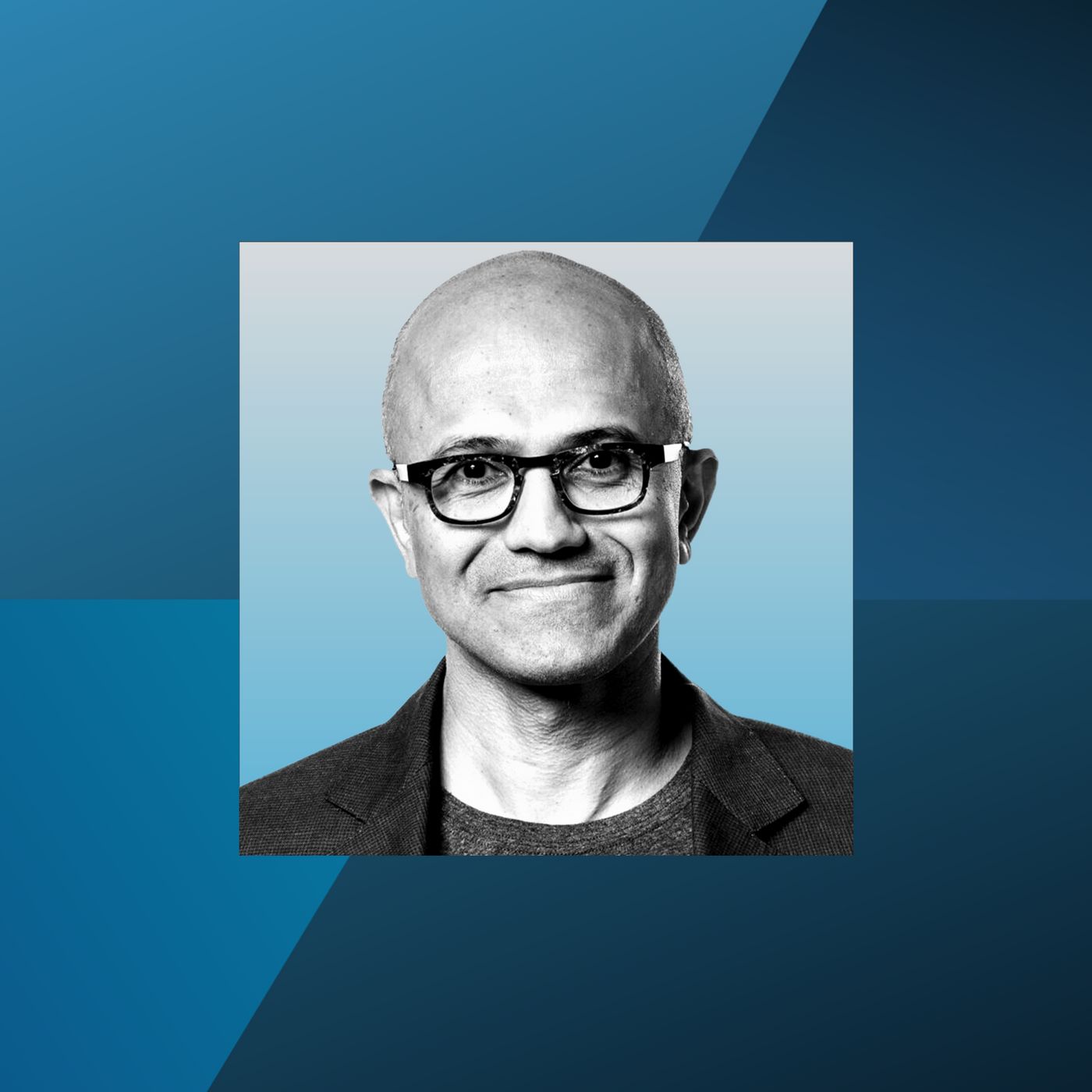

Christine Lagarde discusses trust as the foundation of money, technology, and trade; the state of the global economy and central banking; AI-driven supply chains and trade growth; inflation dynamics from oil shocks; and Europe’s monetary-but-not-fiscal-union structure. She also explains why she announced she would leave the ECB early, citing a desire to speak more freely amid elections and “fake news.”
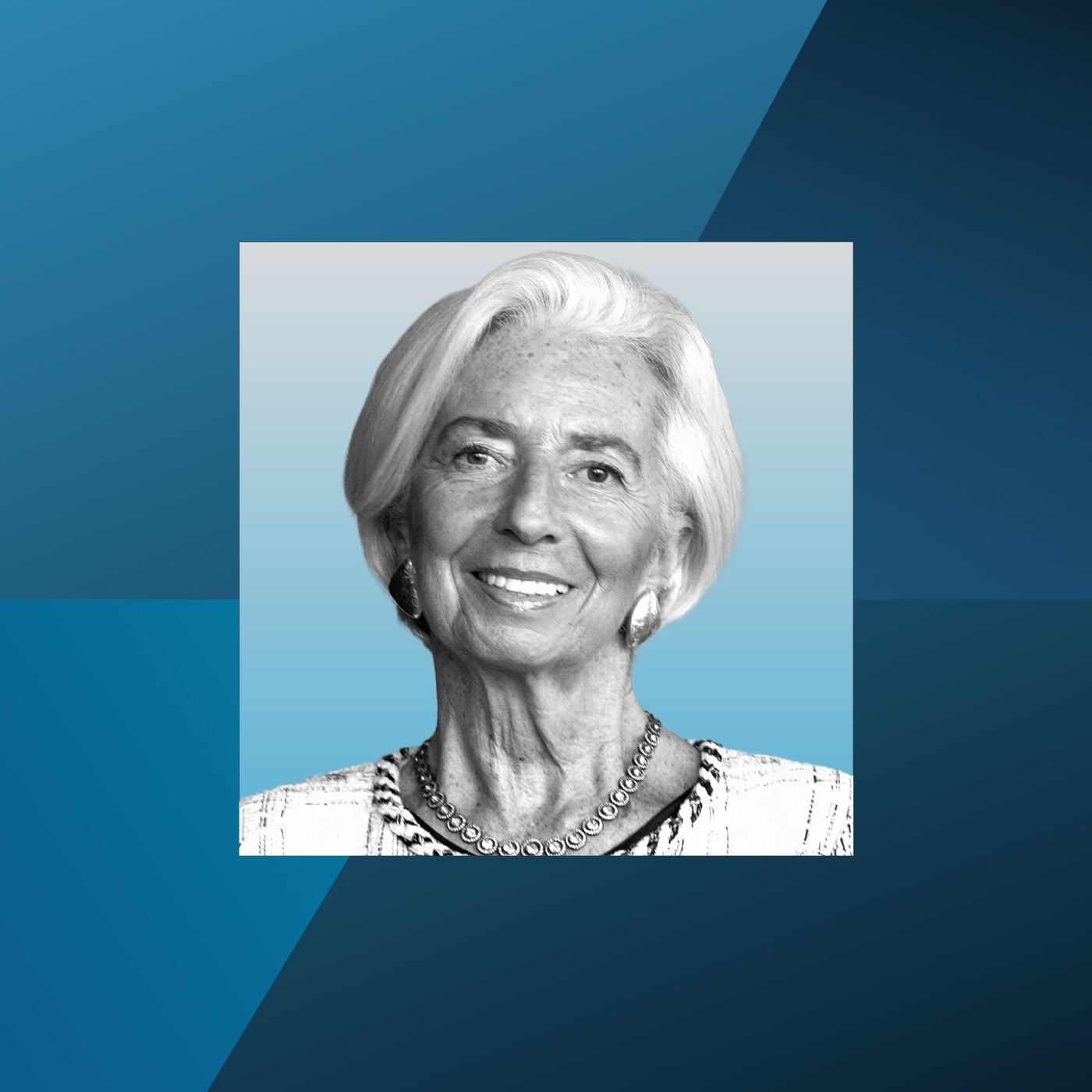
Christine Lagarde (former IMF managing director; former France finance minister; ECB president since 2019). Interviewer: Andrew Ross-Sorkin of The New York Times.
Trust is “in short supply” and essential for stability. Trade rose despite tariffs, boosted by AI hardware supply chains. Oil-driven inflation may require central banks to act if it triggers “second-round” wage effects. Europe’s core problem is lack of fiscal union; pensions must be sustainable.
AI server components moving across multiple countries (e.g., NVIDIA RAC server); oil shock from Iran/Ukraine affecting global oil prices; France borrowing costs vs Germany; Greece’s 2011 sovereign debt crisis.
Written by AI. May contain mistakes.
Christine Lagarde discusses the critical role of trust in financial systems and politics.
“recorded on November 18th in New York City.”
Christine Lagarde explains her decision to leave the ECB early and its implications.
“I'll tell you where I want to start this conversation.”
Discussion on the current U.S. relationships with other countries and trade dynamics.
“I've been for 20 years on the international scene.”
Lagarde highlights the impact of trade on international relationships and interdependence.
“changed the dynamic with which so many of these trade deals and other things are now taking place?”
Exploration of the power dynamics that shape international relations and trade.
“You know, when the tariffs on Liberation Day were first announced in the U.S., every economist...”
Lagarde discusses the current challenges facing capitalism and distribution issues.
“and maybe Europe, and I'm going to try to relate them.”
Discussion on the current investment climate and the importance of financial literacy.
“And where when expectations actually, you know, were ahead of actual earnings, losses were widespread.”
Exploration of how global conflicts affect oil prices and economic strategies.
“Let me ask you a different question, which is that the war in Iran and Ukraine, but Iran has created a huge price spike in the price of oil, specifically in Europe.”
Discussion on the issues surrounding fiscal union in Europe and its implications.
“Let me ask you about your home country, and I don't know how much you can speak to it, but France is now paying about a point and a half more than Germany to borrow for 10 years.”
Talking about the challenges European entrepreneurs face in securing funding.
“And you cannot just borrow your future, including for pension purposes, on a debt that would not be sustainable.”
Insights on central bank independence and speculation about future roles.
“And I think that Europe is working on it, but it has to beef up its game and fast.”
Reflections on women in leadership roles and the importance of diversity.
“You have a book coming out that I believe is going to come out in January.”
Learn about the value of diversity in leadership and the need for global collaboration.
“years in our country, at least over so many different related issues.”

Get the gist, explore an idea or ask about something said.
 Claude
On DealBook Summit, what are the key points of this episode?
Searching your listeningAutomatic transcript. May contain errors.
0:00Andrew Ross Sorkin: Accenture is working together with the NFL to drive international growth by evaluating markets, developing audience insights, and creating new ways to engage fans in cities around the world. The NFL is building a global game, and Accenture is helping make that vision a reality by striking the right balance between what makes the NFL beloved in America and tapping into the passions and preferences that make each market unique. Accenture, the official business and technology consulting partner of the NFL. Learn more at Accenture.com slash NFL.
0:55Andrew Ross Sorkin: and contributing sponsors Atlassian and N-Scale.
1:05International cooperation is a must in this environment where everything moves and affects everybody else.
1:13Andrew Ross Sorkin: This is Andrew Ross-Sorkin with The New York Times, and you're listening to interviews from our annual Dealbook Summit, recorded on November 18th in New York City.
1:29Andrew Ross Sorkin: Christine Lagarde is here. She is, thank you, she is one of the most powerful policymakers in the world. And depending on which list you read, the most powerful woman on that list. She has run the European Central Bank since 2019. First woman to hold that job. Before that, she ran the International Monetary Fund. Before that, she was the France's finance minister. The first woman to hold that job in a G8 country. The ECB sets interest rates for 21 countries and some 350 million people. And we're going to start the day with her because there is nobody better than trying to put this moment in context.
2:02Andrew Ross Sorkin: And we're going to talk about everything, the relationship between America and the rest of the world, the wars in Iran and Ukraine, the economic issues facing Europe and France, the politics of AI. And underneath all of this, the very issue of trust, which I think is being challenged more than ever. Thank you for being here. It's a pleasure, Andrew, to be with you and with all your guests. I'll tell you where I want to start this conversation. I want to start it on the issue of the trust, and maybe you can speak to it, because there really is, even in the last several days, as we were talking about J.D.
2:37Andrew Ross Sorkin: Vance's situation today, a real question about trust, and not just trust, but where we are in terms of the true risks to the system. You've lived through a whole number of financial crises, and I don't know if we're about to live through a a digital crisis that could have a much bigger impact? What I would say first that trust is at the core of what I have to do on a daily basis. Trust and money are very strictly related. And I would argue that it's at the basis of so many things, whether it's the personal relationship, whether it's trust in politics, whether it's trust in the system, whether it's trust in currency.
3:15And I think that at the moment, trust is in short supply. So we have to make every effort to secure it, to cherish it, and to develop it. And I'm very happy to go into any directions you want, but I think that it's fundamental to money, fundamental to technology, fundamental to trade. And there are some really interesting developments at the moment.
3:37Andrew Ross Sorkin: Let me ask you this, though. On October 29th, you announced that you will be leaving the ECB nine months early. And I want to read the statement for just a second, because I want you maybe to speak to this. You said that the reason you were going to step away is I want to have the freedom of speech, the freedom of expression, the freedom to engage on matters that are not monetary policy matters. I don't think I can be comfortable in that neutrality at the present time. And I'm interested in truth. And I see the truth being very often damaged, contradicted by misrepresentation. What is happening?
4:11Andrew Ross Sorkin: What led you? What is happening in this moment that led you to make such a big decision? Well, as you know, in Europe, there are at the moment many elections in the making, one of which in my country, but in other places as well. And as a central banker, I have to observe the principle of neutrality. I cannot focus on any particular member states in the European Union. So if I'm asked to comment about, you know, whether it's France, Italy, Germany, Spain, Greece, I have to say terribly sorry. I'm not commenting on any particular country because I work on the whole of Europe and the euro area. And I think that listening to the propositions, the campaign, the fake news, the fake representations, the misrepresentation, the recharacterizations, I see it as my duty to clarify, rectify and speak from my position and based on the experience that I've had.
5:19You had this beautiful video earlier on, which described what I've done. I've been for 20 years on the international scene. I've seen very close by the financial crisis, as you mentioned. I've seen countries go up and down under program. And I just want to also bring my testimony to what is happening at the moment in my part of the world.
5:42Andrew Ross Sorkin: OK, let me ask you about something that's happening in this part of the world, maybe from the context and perspective of your side of the world. I saw you earlier this year in Davos and asked you about the relationship between the United States and the rest of the world, in Europe in particular. And you said they are behaving, this is the U.S., very strangely for allies. And you said trust has been undermined a little, perhaps a lot. How does the rest of the world view us right now?
6:15I'll tell you something. For those of us who believe in democracy, for those of us who believe in alternatives and rotation in power, I think the rest of the world is looking at the United States thinking institutions can actually hold in spite of whatever happens. And I'm not taking a political view, but it's simply a fact that democracy is about alternance of power and authority. and I think the United States has demonstrated that democracy is alive and kicking in this country. So truth be told, I think there is a lot of interest. I'm understating my position here. You're understating your position.
7:02Yes. There's a lot of interest outside this country for what is happening at the moment and will happen.
7:07Andrew Ross Sorkin: Do you think that the midterms here in the U.S. changed the dynamic with which so many of these trade deals and other things are now taking place? You know, there are some interesting things about trade. Can I go in that direction? Okay. So, backtrack. January 25 and then April 25, everybody believed that trade was going under and that trade would be on hold, that tariffs would stop many things, and that the relationships would have to be rebuilt. So relationships rebuilt, yes. Trade down, no. If you look at the numbers, compared with January 25, trade has been up by more than 25 percent. This is incredible, because in the meantime, tariffs have been brought up by the United States vis -à-vis the rest of the world, Europe, a particular deal, China, another one, certain sectors, particular rates.
8:10But not withstanding that, trade has continued and has prospered. And it's very likely that for two or three years in a row, trade will grow faster than GDP. So why is that? Well, it is so because artificial intelligence sector at large, so everything included, has actually propelled a great intensification of trade. There was, in addition to your wonderful paper, there has been a really good story told by The Economist which describes how an NVIDIA RAC server goes through six different countries before it eventually enters the United States. Every time it crosses a country, border, trade increases.
8:57So we have that incredible increase of trade as a result of artificial intelligence. And as a result of the trust that people have in each other, going from, you know, Taiwan to South Korea, borrowing from the Netherlands, bringing goods from Germany, going all to Mexico before it backs in the U.S.
9:18Andrew Ross Sorkin: You know, when the tariffs on Liberation Day were first announced in the U.S., every economist... I leave it to you to call it Liberation Day. Every economist was saying that this was a doomsday scenario. Yeah. And what's interesting is you're suggesting it wasn't. Correct. And so I'm curious, what did you think before that day, you can call it what you like, and what do you think now? I think that entrepreneur spirit, people in the business of making, trading, buying, are by large trying to either circumvent, ignore some of the barriers that have been erected. And it gives me confidence in what Montesquieu himself, in his old days, said, which is that wherever there is trade, there are better relationships.
10:11And if his findings back from the 18th century is confirmed by what we're seeing now, where countries are interlinked, where supply chains are being rebuilt and where security prevails over reduction of cost, then maybe we will be served by that trade to enjoy better relationships. It remains to be proven because we're not there yet.
10:35Andrew Ross Sorkin: Let me ask you a question about relationships. And there's been a lot of hand-wringing about relationships in recent years. and what those relationships, those friendships between countries even mean. And I wonder whether you believe that this idea of relationships to some degree has been a myth. And when I say that, Stephen Miller, who's the new chief of staff to the president, says we live in a world, in the real world, that is governed by strength, that is governed by force, that is governed by power, and that effectively these relationships have never really been relationships at all. They've been relationships of convenience and relationships of leverage.
11:15Andrew Ross Sorkin: Who has leverage over the other? Shall we stay for a second in the artificial intelligence world? Where you could assume, I mean, I'm not saying that because Sam is going to be the next speaker, but it's a really fitting example of how we are interrelated in a much deeper way than we think. If you look at the outside of this world, artificial intelligence dominated by a duopol, the United States on the one hand, China on the other hand, Europe struggling and trying to catch up in the middle. But if you then go under the hood and figure out how things are made, what are the components? What is the rare earth that is needed?
11:57You see that we are all interdependent. If it wasn't for the lithography machines that are made in the Netherlands by ASML, If it wasn't for Zeiss making some very, very specific optic equipment that is used in the lithography machine, a lot of the microchips simply could not be built. So, yes, force is a key component of the relationship. Sovereignty is an important component. And international currency is a component as well. But bottom line, if you look at sectors, if you look at products, if you look at the convenience brought about by communications systems that we have in place, we are all in this together.
12:39And to assume that, one, because it has strength, because it has a particular standing at the moment, is going to use that leverage forever, I think is a little bit misplaced or ignorant of what is happening in the real life.
12:53Andrew Ross Sorkin: Let me ask a question about maybe the U.S. and maybe Europe, and I'm going to try to relate them. I think that right here in the U.S. and Europe, there is a view, and you hear it increasingly, that capitalism is failing people. You hear everywhere people talk about affordability. And I wonder whether you think it is an indictment of capitalism and how this country, to some degree, has moved left. In Europe, by the way, in your own country, things may move the opposite way and move right. How do you explain it? Well, things are shifting, and sometimes they're shifting back, and sometimes they're spilling over.
13:28That's a fact. You know, there is an issue of distribution. And I think that, as we speak, there are significant valuations being determined, significant IPOs being declared. And I think it raises the question of who is benefiting, how that creation of value will be shared and distributed, and through which means. You know, I don't want to make any advertising for your book, but I think your 1929 book gives us a very good example of... Thank you. She's trying to butter me up. But, you know, there is a great analogy between what you describe in the 20s, where everybody was getting so excited about the car sector, radio, electrification, and where retail investors were brought into the game and were encouraged to invest through, you know, borrowed money in the main.
14:22And where when expectations actually, you know, were ahead of actual earnings, losses were widespread. I think we are in a situation that is not very different from that. And where we have changed, we have improved, we have evolved, but we have to be cautious. I'll tell you why. Through, you know, new good platforms, through ETF, many households around the world are actually part of that frenzy of investing in technology at any price. And that's, I think, the reason why we should be very careful that, number one, there is transparency. We know what we are getting into. We know the circularity of investments and shareholding and long-term contracts between all those players.
15:10You refer to the AI trade. And number two, there is enough financial literacy around the world. I think it's less of an issue in the U.S. because financial literacy is probably better developed, but it's very much an issue in Europe. So there has to be enough financial literacy so that when people are encouraged to buy ETF or whatever, or indices, they know what they're getting into. So you distribute in different ways. Either you distribute the value that has been created by sharing in the equity, for instance, or you distribute via tax. And I'm sure that would be an issue that you will discuss with other members of your panel.
15:44Andrew Ross Sorkin: Do you think we're in a bubble? Do you think we're in a bubble? And a bubble, by default, has to pop. Well, first of all, we've already seen a significant price correction in the last few weeks. At the ECB, we don't call it a bubble. We just published the Financial Stability Review, and we do say that there is a very ambitious price valuation, which, yeah, some of you understand quite well what I'm talking about, which stands to be corrected eventually, because it's going to be a matter of, you know, what expected earnings are, will be, and what discounted value results from that.
16:31Andrew Ross Sorkin: We'll be right back. Women's tennis has always stood for high performance. World-class athletes. Nothing given, everything earned. Now, the WTA and Accenture are partnering to raise the bar even higher by putting athletes first. by applying technology and AI to turn data into real advantage for players, fans, and partners. This is not just about what's next. It's about what's possible. Together, Accenture and the WTA are reinventing the future of women's tennis. Accenture, the official business and technology consulting partner of the WTA. Learn more at Accenture.com slash WTA.
17:14Andrew Ross Sorkin: Let me ask you a different question, which is that the war in Iran and Ukraine, but Iran has created a huge price spike in the price of oil, specifically in Europe. And I'm curious, given what... I don't think you should... Sorry. Sorry. Go ahead. Yeah, I don't think it is specific to Europe. I think, you know, the price of oil in particular, less so gas, but the price of oil is pretty much across the world. in the same range. But here's where, and I know you're not going to want to tell us whether you want to raise or lower interest rates, but I want to ask you a very, no, I want to ask you a sort of philosophical question, which is I think that people see inflation happening and they say to themselves, historically, a central bank would try to raise interest rates to try to cut down on the inflation.
17:58Andrew Ross Sorkin: And yet, clearly, because it is so related, I think, to energy, unless you think it's related to lots of other things, there's this question mark about how you think about those two issues, because raising interest rates is obviously not going to create any additional supply of oil. Yeah, and I can be as good a swimmer as I am. I cannot reopen the Strait of Hormuz. That's a fact. It raises the whole question of whether it is transitory or not transitory, and whether it will obey it by itself, or whether central banks have to get into action to make sure that it does not travel from a commodity price increase to transportation prices, to oil prices, and in particular to salaries, because that's when central banks really have to intervene.
18:47When we have this second round, they have to actually intervene before we see the second round effects. But when we are concerned that there might be second round effects, in other words, price of oil traveling from oil to wages, we have to get into action. And yes, you're right that the natural impact of increasing the price of financing is going to dampen growth. Now, what we have seen in Europe is a resilient economy, which contrary to our projections is resisting much more than we had anticipated to the current. And you think that's a function of AI? I think AI has a lot to account for. Yes.
19:28And it's positive. Let me clarify that. Because we had the sort of negative pressure on oil as a result of oil and gas prices in particular. And then we had the positive of investment in AI and developments and increased productivity. It's not the only thing. There has been fiscal support as well, particularly out of military expenses and budgets, infrastructure improvement. but those two, AI and fiscal, have certainly supported growth.
20:00Andrew Ross Sorkin: Let me ask you about your home country, and I don't know how much you can speak to it, but France is now paying about a point and a half more than Germany to borrow for 10 years. And you're seeing a real sort of imbalance in things. And I just wonder, at what point you say to yourself, this is a genuine problem? I'll tell you what is the genuine problem with our European construction, is that we have a monetary union, which works well, thank you very much, with a euro that is the second international currency in the world at the moment, and a developing role. But at the same time, we do not have fiscal union.
20:44So when the chair of the Fed deals with the Secretary of Treasury, he deals with one person, one treasury, one issuer. When I deal with my fiscal authorities, independently from them, I have 21 interlocutors. So that's a structural problem that has not yet been solved and which I hope will be solved over the course of time. Remember, we had that issue back during the European sovereign debt crisis in 2011, when suddenly people in the business and in the trade realized that one country, namely Greece, which is doing fine now, thank you very much, but one country was not in the same league as other Euro area member states.
21:35And suddenly they had to adjust. And the price of financing for Greece went way up.
21:41Andrew Ross Sorkin: Do you imagine, though, that the budgets in Europe are going to change as it relates to social programs? And I should tell you, I don't know if he's here. As it relates to what? Social programs. I don't know if Lloyd Blankfein is here, but we were talking about this before, and I know he was going to be here. This very question of, you know, there's a question in the U.S. about social programs, but there's a real question about them in Europe and what happens longer term. I think you're referring predominantly to the pension system, right? Yes. Okay. Pension system, but maybe also health care or other things, but pensions mostly.
22:11Yeah. You know, Europe was, many European countries and Europe at large was developed on the basis of a social contract that was predicated on access to health care for everyone, on pension available for everyone at different ages. You know, again, we're back to this discrepancy between the 27 member states. You can retire at the age of 62 in a particular country and at the age of 67 in another country and sometimes beyond that. So there are differences in there. But the social contract was about that. There was a social basis, foundation, that would protect people against hardship. The real question is, can that be maintained?
22:51And at what price? And at whose expenses? And I think it's going to be a debate that will keep busy a lot of politicians in the next few quarters and years, because pensions have to be sustainable, just like, you know, debts have to be sustainable. And you cannot just borrow your future, including for pension purposes, on a debt that would not be sustainable.
23:14Andrew Ross Sorkin: I have a question that came from a reader. I thought this was a smart question. It says, suppose you've got a 25-year-old niece living in Paris. She started a company you genuinely believe could be worth$100 billion. She gets an offer from an American investor, but the condition is that she move to the United States. She calls you on Sunday. What do you tell her to do?
23:40Andrew Ross Sorkin: Goes to entrepreneurship. Brace my heart. Yeah. First of all, it shows that there are great, great European talents.
23:51Thank you. And by the way, you said it's my niece, right?
23:56Andrew Ross Sorkin: That was, yes. That's how it was. So great female talents. Thank you very much.
24:06And I would tell her to hang in there and go do the rounds to raise more funding because she probably needs more funding. I would tell her to try because we have a burgeoning VC sector that I would hope, if her business is promising, would actually invest in her developments. The likelihood of that happening is probably relatively low at the moment because we do not yet have a capital market union. And that she would have to go around various member states, various VCs under different regulatory regimes to actually get the money that she needs. And this is where Europe has to get its acts together, to bring that capital market union, where with a single project, she could access a large, liquid and deep financing set of actors.
24:59It's not yet the case at the moment. And I think that Europe is working on it, but it has to beef up its game and fast.
25:06Andrew Ross Sorkin: We're going to run out of time. So I have a couple of quick questions just about actually the United States and Europe as well, but from your perspective. One of the big questions has been about the credibility of our economy, the U.S. economy, but mostly the Federal Reserve and its own independence. Given some of the comments that we've seen the president make and efforts that he's made to, frankly, undermine the independence of the Federal Reserve, going after people like Jay Powell and trying to jail others. What does the rest of the world think of that? And do you think it's had any impact at all on the price of our treasuries?
25:40I think the independence of any central bank is critical to its mandate. We have an incredible privilege of, as you said in your presentation or in what you said, setting interest rates and financing terms for all economic agents around the world in our respective jurisdiction. And it's vital that these central banks be independent. You know, when I observe how the Fed is operating, I have faith in the successive chairs to defend the independence of the central bank. And whether it was Jay Powell or whether it is now Kevin Walsh, I'm confident that both of them, I know that they value that independence and that they will fight for it.
26:26And I think it's important for the rest of the world, by the way, really.
26:30Andrew Ross Sorkin: You are going to be leaving this role soon. There's a lot of speculation that your next role could be in the events universe, as it happens, to run the World Economic Forum. True? It's one of the options, but for the moment, I'm the president of the European Central Bank and will be so until the 7th of February, and I'm not going to entertain any sort of speculation as to what I will do next, but I'm not retiring. Let me then ask you this finally. You have a book coming out that I believe is going to come out in January. What is coming up? A book. A memoir. Yes. Yes. My autobiography. Absolutely.
27:09Called Lady First. Couldn't be First Lady.
27:17Andrew Ross Sorkin: you once talked about during the financial crisis if Lehman Brothers was called Lehman's sisters it wouldn't have happened yeah and so you will note that the girls are applauding not so many boys I'm just curious what you think the lesson is in terms of we when I first introduced you we said you were the first woman to do this and the first woman to do this and the first one to do this. And where you think we are in that, in terms of shifting the culture and how important that is or that isn't? Because by the way, there has been all sorts of pushbacks even the last couple of years in our country, at least over so many different related issues.
28:06Look, I think there has been a lot of progress and I think that there has been a lot of pushback. So my take, because I've been through all these ceilings and been bruised along the way, is that we should keep at it. And it's in the interest of both men and women to bring that diversity at the head table. You feel bruised by it, by the way? Of course you get bruised when you go through glass ceilings. What do you think? Yeah. Yeah, of course.
28:37Andrew Ross Sorkin: Final question then. What was the most bruising? What's the most bruising story? The most bruising story? Yeah.
28:49You know, I have vivid memories of the financial crisis and seeing the whole financial world, including all the banks and the deposits and all of that, holding by a thread of trust that could have vanished or could have been reinforced. And I think that at that time, international cooperation, including all members of the G20 and all these great leaders at the time, was critically important to just keep this thing holding. Which is why I strongly believe that international cooperation is a must in this environment where everything moves and affects everybody else.
29:33Andrew Ross Sorkin: Christine Lagarde, everybody. Thank you. Thank you very, very much.
29:41Andrew Ross Sorkin: Deal Book Summit is a production of The New York Times. This episode was produced by Evan Roberts. Mixing by Katie McMurrin and Daniel Ramirez. Original music by Daniel Powell. The rest of the Deal Book Events team includes Julie Zahn, Chantal Regnier, Melissa Tripoli, Dana Praskowski, Matt Kaiser, Ezra Lee, Marissa Farina Jesse Brattengeier Nico Gallagly and special thanks to Sam Dolnick Nina Lassam Abe Sater and Maddie Maciello
European Central Bank president Christine Lagarde sits down with Andrew Ross Sorkin, just ahead of her departure from her post, to discuss why public trust is under strain, how global trade and A.I. supply chains are reshaping the economy and what happens when political pressure collides with central bank independence. From ambitious tech valuations and oil-driven inflation to Europe’s lack of a fiscal union, Lagarde reflects on navigating multiple financial crises and the limits of power in an interdependent world. Filmed live in 2026 at The New York Times DealBook Summit.
Subscribe today at nytimes.com/podcasts or on Apple Podcasts, Spotify and Amazon Music. You can also subscribe via your favorite podcast app here https://www.nytimes.com/activate-access/audio?source=podcatcher. For more podcasts and narrated articles, download The New York Times app at nytimes.com/app.
Hosted by Simplecast, an AdsWizz company. See pcm.adswizz.com for information about our collection and use of personal data for advertising.