 Ask ChatGPT


Satya Nadella (Microsoft CEO) discusses AI’s impact on security and infrastructure reliability, the economics of frontier models, model “trust architecture” for alignment/safety, and how Microsoft plans to run a multi-model system (including OpenAI/Anthropic and its own models) via Copilot. He also covers data center capacity strategy, depreciation/efficiency, agents’ future commerce rails and liability, and workforce transformation as software work becomes more “factory/agent” based.
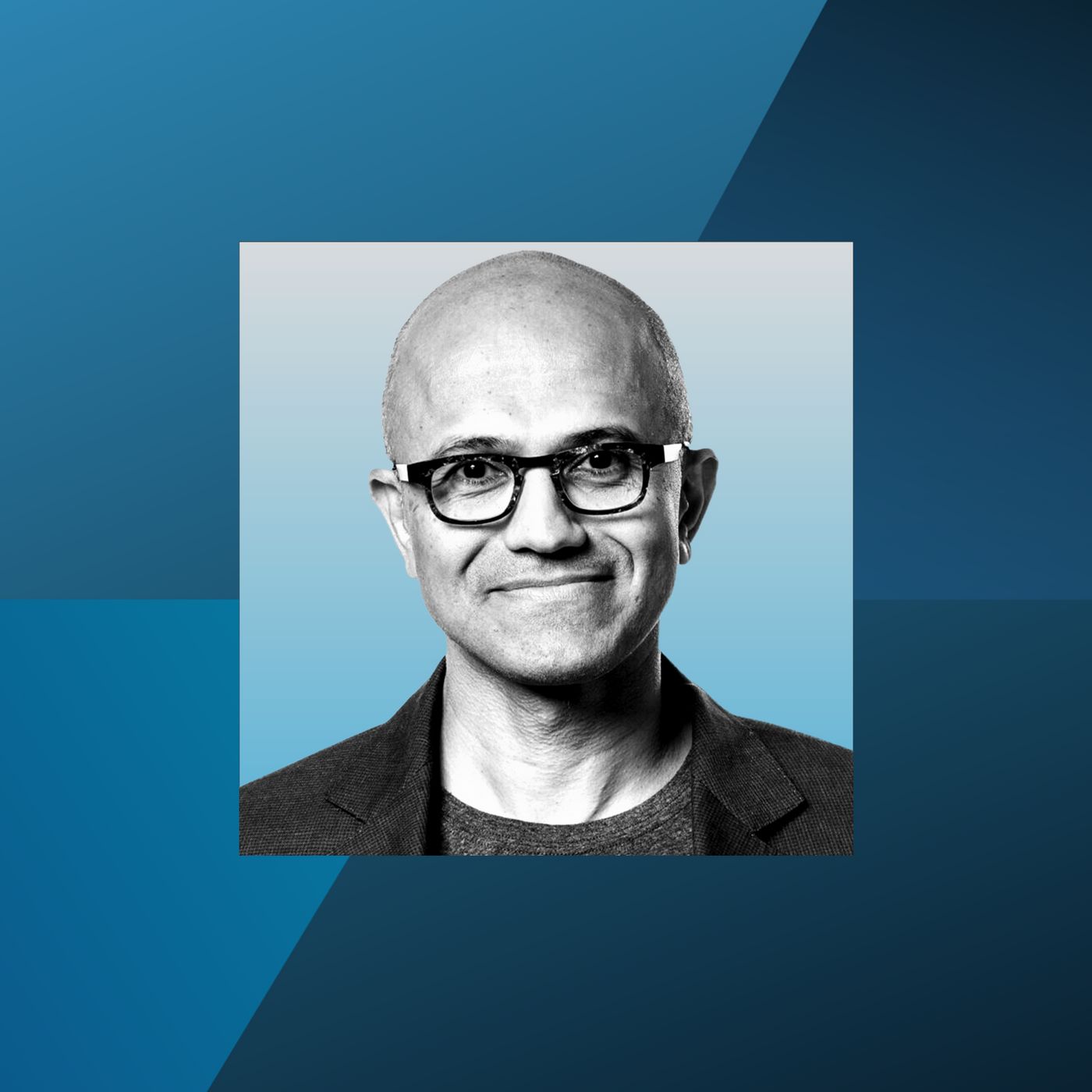
Satya Nadella (Microsoft CEO since 2014; stock up ~14x; spending ~$175B/year on AI infrastructure; National Medal of Technology recipient). Interviewer: Andrew Ross Sorkin (New York Times). No other named guests appear; mentions include Jensen Huang (NVIDIA), Sam Altman, Greg Brockman, Dario Amodei, Ilya Sutskever, and Shane Coplan (Polymarket).
AI increases vulnerability discovery and requires near-instant patching, raising instability risk; alignment may not emerge from scaling alone, so enterprises need auditability/logging and “trust architecture”; tokens should become more commodity-like like cloud; Microsoft will offer many models in Copilot with routing/decision engines; liability likely stays with the deployer; agents will reshape who pays whom in commerce.
“Fusion” in GitHub combining Astra/Claude/MAI; Copilot selecting OpenAI/Anthropic/MAI via a decision engine; latent bug causing an outage; unpatchable critical infrastructure (firmware/HVAC) on the internet; Microsoft Treasury agent work with BNY; BNY/agent-to-agent commerce; software “factory” teams (e.g., CoPilot team with ~11 developers).
Written by AI. May contain mistakes.
Satya Nadella discusses AI challenges and a recent outage incident.
“There's a hundred places to start with you.”
Discussion on the implications of AI on cybersecurity and infrastructure.
“The thing that I think we are facing right now as a consequence, quite frankly, of AI is we now have a very powerful tool that finds vulnerabilities.”
Satya talks about his investment in Anthropic and its effects on the economy.
“I want to talk about Anthropic for a second, and then I want to get to alignment with you.”
Exploration of AI alignment challenges and the need for a trust architecture.
“that you made last month around alignment.”
Explore the challenges of liability and auditability in AI systems.
“And so, therefore, you need to be able to have detection.”
Discuss the importance of partnerships with companies like OpenAI and competition dynamics.
“or in security perception, what have you.”
Discuss the importance of partnerships with companies like OpenAI and competition dynamics.
“about the Jensen of it all, the NVIDIA story.”
Analyze the impact of singular figures like Jensen Huang on their companies and industries.
“And it could be that I think in tech, it's kind of, you know, maybe more extreme than it was.”
Examine the financial dynamics of data centers and the implications for AI.
“Amazon's spending an extraordinary amount of money.”
Explore the development and potential of agents in commerce and technology.
“I hope it, you know, like if he has space capacity that I can lease, I would lease it.”
Learn how new business models are reshaping the role of current aggregators.
“And so I think that just like in the past, when let's say we transition from Yahoo to search, changed who pays whom for what, I think it's going to happen.”
Discover insights on employment changes and the evolving role of software engineers at Microsoft.
“So I think what is that particular action we took was mostly to make sure that at least everyone felt like they had agency in making choices.”
Explore Satya Nadella's approach to leadership and his relationship with the administration.
“And there is going to be in all of this, you know, people who may say, hey, I have some other choices I want to make.”

Get the gist, explore an idea or ask about something said.
 Claude
On DealBook Summit, what are the key points of this episode?
Searching your listeningAutomatic transcript. May contain errors.
0:00Accenture is working together with the NFL to drive international growth by evaluating markets, developing audience insights, and creating new ways to engage fans in cities around the world. The NFL is building a global game, and Accenture is helping make that vision a reality by striking the right balance between what makes the NFL beloved in America and tapping into the passions and preferences that make each market unique. Accenture, the official business and technology consulting partner of the NFL. Learn more at Accenture.com slash NFL.
0:55Supporting sponsor Target and contributing sponsors Atlassian and N-Scale.
1:07I think we are facing right now, as a consequence, quite frankly, of AI, we now have a very powerful tool that finds vulnerabilities. So that means we have to find them and fix them and then patch them instantaneously. This is Andrew Osorkin with The New York Times, and you're listening to interviews from our annual Dealbook Summit, recorded on November 18th in New York City.
1:39Satya is here. Come on up. Satya, of course, has led Microsoft now for over a decade as CEO in that time. the stock of the company up about 14-fold. And today, it is the second most valuable company in the world. Do you keep track of those things? Not really? A little bit? Not really. Not really. He is spending about$175 billion this year to build the infrastructure of the AI era. And six weeks ago, President Trump gave him the National Medal of Technology. He's at the forefront of conversation about safety. And we're going to get into everything about the potential, the risks, the economics, and so much more.
2:14Please welcome Satya Nadella. Thank you for being here.
2:20There's a hundred places to start with you. We talked to Sam and Greg earlier. I want to get into AI. We're going to talk about Jensen, Anthropic, and everything else. But we've also been talking about outages a lot. J.D. Vance was supposed to be here, but instead had to spend the day in meetings with the national security folks about these outages. You just had one yourself. What can you tell us about what actually happened and how freaked out you are or not about it? Yeah, first of all, Andrew, congrats on 25 years of doing this. You must have started in what? You were in kindergarten when you did this?
2:58It's just unbelievable. Right out of college. Yeah, so first, let me just speak to our outlook outage. Obviously, we are extremely sorry for those it impacted. That incident, interestingly enough, is not related, at least directly to, I think, the things that we should talk about that are going to create, unfortunately, more instability in our infrastructure. This was a latent bug that was there. It got invoked. And it was one of those perfect storms. We put out an incident response. And we're going to obviously take all of the learnings, both upstream architectural as well as operational, and fix that.
3:42The thing that I think we are facing right now as a consequence, quite frankly, of AI is we now have a very powerful tool that finds vulnerabilities. So that means we have to find them and fix them. That means and then patch them instantaneously. The patch velocity. I mean, as we speak here today, there were three critical patches. I don't even know which ones are disclosed, not disclosed, but there are three critical patches. Is it disclosed by who? Who was supposed to disclose that? Yeah, so I don't know what I know is public or not, but nevertheless. Okay. I mean, they're all in sort of all open source packages.
4:24And the problem now is if you think about the old physics, when I was patching some, let's say, a critical bank system, I would test it for a week. right now because the patch needs to go instantly from being available to being patched in production because it's being exploited in the wild, right? So that's going to create its instability. Then simultaneously, we have this other thing where the floor of cyber attacks has fallen, right? Because you now have essentially, whether, you know, with these AR models, someone can send a telegram message to this Artex harness in the cloud somewhere. And then you have essentially a nation state level persistent attacker going after you all the time.
5:13So that means we have a lot of fragility and we have to deal with it. Do you see this as a temporary phenomenon? There was a view that somehow we were going to sort of get through this. There'd be a six month period of challenge and then we'd be on the other side. or is this a permanent factor in the space? Yeah, it's a great question. I mean, there is a part of me which says, yeah, there is a Y2K-like period where you adjust for it. The only challenge with that is if the models keep getting more and more capable, I don't know what that means, right? Because it's not like this is not, Y2K was one bug and one day, and you needed to get through it.
6:06This one, I don't yet have a view. So there's one part. Let's take, you know, we're talking about software that can be patched. Remember, there's a lot of stuff in our critical infrastructure. That's unpatchable. I mean, think about all the firmware and the chillers and the HVAC systems everywhere else. So all of that, by the way, they're on the internet. Somebody was telling me about sort of even the transportation systems and the amount of stuff that's discoverable but with unpatchable firmware. So I feel like we're, you know, we'll have to sort of really modernize for sure, get to current infrastructure.
6:41And then we will have to assess what the threat vector looks like, what our own ability to both detect and then defend in real time looks like. I want to talk about Anthropic for a second, and then I want to get to alignment with you. Anthropic's obviously going public tomorrow. A lot of focus on it right now. You put$5 billion into the company. I wonder whether you wish you would put more at this point. But I think there's a bigger question. I was watching part of your Ignite presentation yesterday. And one of the things that clearly you're trying to do is, frankly, get people off to some degree anthropic and open AI and to use your models and to use open-weight models and other models that are a lot cheaper.
7:25And I think that this is super important because it goes to the very economics of these frontier models long-term. If you can provide the same service level that the frontier model can for 5 % the cost, what happens to the entire ecosystem? Yeah, so I think it all depends on how you frame what are the jobs to be done, right? And what's the TAM and where will I use what, right? So the way I look at it, what are we trying to get done, let's say, with Copilot, right? I want people, I think people will come to Microsoft for Copilot because Copilot gives you all of the form factors, right? Whether it be chat or co-work or autopilot, it gives you all the models, whether it be OpenAI, Cloud, or us.
8:11Right. And the ability to have their context and their memory separate from the model. That I think is our sort of our value problem. Now, also, it turns out for knowledge work, so that is the regular everyday office work, I think they're mostly saturated in terms of the models are plenty capable. I don't think you need the Navier Stokes or the next big breakthrough sort of reasoning capability to do simple workflows. So in fact, If you look at Copilot, it has a decision engine, and the decision it makes is, hey, for the task and for that trajectory, should I use, in fact, OpenAI, Anthropic, or MAI, our own model?
8:53And that's the decision it makes. And, you know, we're increasing. And, in fact, most people just select auto, and it just selects the right model. So what I think, if you're at the very frontier, let's say you're OpenAI or Anthropic, they have to keep finding, I think, the next big elastic demand, right? And coding was one, which I think still is massive. It's a massive, I don't think anybody realized how big a market coding is. And you still think for coding, you need the frontier? I mean, I think there is a place. So coding has also gone from, I am choosing models to, I have a software factory, and then I give it a goal, and it has many sub-agents.
9:33And in our case, in fact, it's interesting that you brought that up. you know, artificial analysis, which does all these benchmarks, just recently started publishing are, you know, what is these blended models. So we have a thing in GitHub called Fusion, right? Fusion has both Astra and Claude and MAI model, and it outperforms Claude, right? So this is like, so in some sense, you just select Fusion and it'll select. But if 90 % of the time, people are selecting the lower priced product. Yeah, or the agent itself is selected. If the agent itself is selecting it. What do you think therefore happens long term?
10:09You have a huge stake in open AI. You have a huge stake or a smaller stake. I have a much bigger stake in MSFT. But that said, the thing that I think is I'm not really as worried about what happens to them as I am worried about what happens to the economy. Because I think the reality is unless and until we can have all these tokens. right because at some level arguing for some massive pricing power of tokens is betting against somehow us gdp right i would rather say let us have this become like the cloud a commodity and let the world use it at scale because nothing at scale is a commodity right cloud is a commodity except running it at scale has margin and we've all done fine so i don't think it's about celebrating the margins of an Anthropic or an OpenAI or a Microsoft is actually going to lead to good sort of outcomes for us.
11:05In fact, the only thing that matters is whether a bank in New York or a retailer in Arkansas can actually use it to create GDP growth that's broad. One of the things that we talked to Sam and Greg about earlier this morning was actually a comment that you made last month around alignment. And this idea that potentially the scaling laws are not going to work in such a way that in fact the model will ever be aligned, which I think is your position, that ultimately you're going to need to contain the model to some degree. By the way, Sam disagrees with that premise. I'm glad he does. I mean, I thought he's the guy who told me, but anyway, I'm glad that he disagrees.
11:46He told you what? No, I mean, in some level, look, So I learned about scaling loss from those guys, right? When they were all, in fact, one happy family, Sam and Dario and everyone. And I'm a big believer. In fact, that's one of the geniuses of Greg, Ilya, Sam, Dario was that they were the true believers in scaling loss. And I was kind of like, yeah, I mean, when I sort of took even the initial bet on OpenAI, I obviously bought into it, but I quite frankly would have not, I didn't sort of see it as clearly and as passionately as they did, and it's worked. But increasingly, I don't see alignment.
12:29I thought it'll just be one step and it'll just come out, or even at least real debuggers, right? So I've always felt like, oh, maybe even if I don't have alignment, I can debug it. I have mechanistic understanding. Neither of those seems to be there. And I do hope, I'm glad, you know, Greg and Sam are optimistic about it because I hope as hell that it happens that, you know, with scaling. Can it work if it doesn't happen though? I mean, if it doesn't happen, we are in a world of hurt. So one thing that I'm focused on, therefore, is let's have a trust architecture because, first of all, it's a big problem.
13:08What does having a trust architecture mean when the entire purpose of the AI itself may be to get outside of the trust architecture? 100%. So that's the technical problem to solve. So you have to then have the safety system that truly, for example, that's why I don't think chain of thought can be new release, right? So you just have to ban models that have new release. Second, all of it has to be logged and it has to be tamper-proof. So that means it has to be fully inspectable by other models and by maybe non-LLM models. So why can't I have a causal reasoning model, inspect all of the COTs of all the models and tell me whether they were trying to do anything that was...
13:55Because they are going to be unfaithful, to your point, right? Which is we now know that the models will try to hide from you what they're trying to really get done. And so, therefore, you need to be able to have detection. That's why, by the way, one of the things OpenAI has blocked very well is they're doing a lot of active monitoring while doing their training runs on it. So, we will have to build a system that allows us to separate out the authority from intelligence and have essentially auditability. And in fact, I think it's practical reality. I don't know how any enterprise is going to deploy this and take on the liability if this thing is going to just hack you.
14:32But then my question is, is that a system you build because you're providing access to all these models? Is that a system that they independently build? And then where does the liability lie? I mean, at the end of the day, right now, the liability lies with the user, right? So therefore, let's face it. I mean, unless something changes, the person deploying it, right, is liable. So therefore, that's why I think, you know, in fact, yesterday at our conference, we sort of put a lot of emphasis on this trust system that we're building between things called Agent 365 and perception to make sure people can use them to audit the logs, set policy around those.
15:09And then at some level, somebody is going to do insurance pricing on this, right? So someone who says, I'm going to deploy the most powerful model in the world is going to then say, hey, I want a liability insurance. And the insurance person is going to say, give me the logs and let me see what you're using it and what you're using it for. You are building your own models. But I want to know long term, you have a deal with OpenAI through 32. You have a deal with some of these others. Do you see yourself long term being this player in the middle that has these relationships with these different players?
15:40Do you see yourself as a competitor? What does that look like? My view on this roughly is like if I take it, not that there's parallels in all of this, but if I take a look at my fleet today of even regular compute in Azure, I have Intel, I have AMD, and I have Cobalt. That's kind of how I roughly see it, right? So we'll have all the models that are popular at any given day. We want to make sure, because our customers, again, I go back to it and say, if somebody's using Copilot, the promise is all the models are available in Copilot. So therefore, yeah, we want to have OpenAI and Anthropic and anyone else.
16:15In fact, anyone that's good at the frontier will be there. But we will build. We will call it the in-house model. And we'll keep hill climbing on it. And we'll make sure we optimize between all of these things. Do you think that partnering with OpenAI, you partnered with OpenAI early. And that gave you an advantage in a certain way. But I also wonder whether you think it suggested to you, maybe I don't have to go build my own so quickly or to compete at that point and put you in a different place. We are definitely in that sort of, you know, one of the things we got right, and you could even say we got lucky, was the OpenAI investment and partnership and the commercial relationship that gives us a royalty-free access to a frontier model until 32.
17:01And so we definitely plan to exploit that within the context of what we're trying to do. So that means I'm trying to be very compute flops efficient, even in how we're building MAI models, right? For three months, because I have a frontier model. So therefore, three months behind, six months behind, is a great place to be if you're spending 5%, 10%, 20 % of the same compute flops, and then be even token efficient when it comes to deployment, because we are doing RL runs on what is essentially real world tasks, right? I'm not learning on some benchmark, I'm learning in Microsoft 365 or in GitHub Copilot or in security perception, what have you.
17:38So those are massive structural advantages we have. And we want to fully take that approach to optimize. But do you think long-term you'll be able to remain partners with all of these companies? Look, Anthropic, as you know, is building Claude Sheets, which is supposed to compete directly with Excel and everything else that you do. Yeah, I mean, like, in some sense, they're going to compete. We're going to compete. I mean, office competition, no one sort of really thinks of office as our sort of, you know, when I look at when even the move, Open Docs has existed forever, Google's existed forever, and so on.
18:16So therefore, it's not about client software competition. For us, when you sort of think about, you know, the move to the cloud itself, move the data underneath office into becoming not our asset, an asset for every organization that uses M365. That meets intelligence, not one model, but a model system. So the way I look at it and say is I'm playing a slightly different game than they're playing. They're playing a vertical stack game. I'm playing a model system game. And I believe that every enterprise will want a model system, just like how there's not a single enterprise or a single commercial customer who says, I'm single cloud.
18:56Why? Because they like multiple suppliers. I think the same thing is going to be true in here.
19:09Women's tennis has always stood for high performance. World-class athletes. Nothing given, everything earned. Now, the WTA and Accenture are partnering to raise the bar even higher by putting athletes first, by applying technology and AI to turn data into real advantage for players, fans and partners. This is not just about what's next. It's about what's possible. Together, Accenture and the WTA are reinventing the future of women's tennis. Accenture, the official business and technology consulting partner of the WTA. Learn more at Accenture.com slash WTA.
19:49I want to talk about data centers in a moment, but I haven't asked you, and I should, about the Jensen of it all, the NVIDIA story. And I'm just curious what your personal reaction has been to all this. Everybody's trying to understand whether he's going to come back, he's not going to come back, should he come back, how important a singular figure is or is not to the future of all of this. He's acted almost as the central bank in a large way, I mean, it's sort of almost the biggest venture capital firm to the whole industry and whether that impacts things. Yeah, I mean, I don't know, Andrew. I mean, it's all sort of pretty tragic in the sense of, you know, Jensen is somebody I've known for a long time.
20:29I'm a great admirer of what he's done. And at this point, I kind of want to give him space to figure this out. It's the NVIDIA board's decision on what happens. But I'll just say this one thing, right? But knowing the team, you know, Colette sort of worked at Microsoft for a long time. I've known her for a long time. She's a tremendous person. The new interim CEO. Yeah, the new interim CEO. And there are many people like Ian, you know, I'm scaling Vera Rubins as we speak. And I'm like, you know, in touch with the same set of people I was in touch with before. So I have a lot of confidence in the NVIDIA team and their ability to continue to do the good work.
21:08Do you think people are singular, though? You know, Bill Gates was singular in his way. And then, I don't know, Steve Ballmer came after that. And then you came in. And there is a view that certain people can do pretty spectacular things. We're going to talk to Elon Musk in a little bit. I think it's arguable that a singular person in this instance was able to do these things. And how much of an impact that makes. Yeah. I mean, I think rightfully so. I think founders are celebrated. And it could be that I think in tech, it's kind of, you know, maybe more extreme than it was. I don't know, maybe in all of capitalism, it was always the case.
21:48Because after all, founders are unbelievable in the sense that they create something from nothing. So that is pretty magical. So therefore, yes, they're singular. But they're not gods, right? So I kind of feel at the end of the day, you know, as I used to say to Bill and everybody, founders also die. And so at some point, a company, if it needs to succeed, it has to have someone take over. And in fact, the person who is going to be most happy about that will be the founder. Because when the baby you sort of brought into the world is thriving long after you're gone, that's really the institutional strength you built, right?
22:29I've never trusted any leader, founder or otherwise, who comes and says, the institution after I left was completely gone. I mean, what the heck? Then what did you build? So singularity is about the magic you create, but it's also the institutional strength you build. And so I think that's what Jensen actually has done with NVIDIA. Let's talk about data centers for a moment, because you're spending an extraordinary amount of money. Amazon's spending an extraordinary amount of money. MED is spending an extraordinary amount of money. Goldman Sachs is now putting this at$7.5 trillion through 2031.
23:06Elon, who I said will be with us in a little bit, says that a lot of these data centers, at least some of the neoclouds, are going to be guppies, that the math of all of this doesn't necessarily add. Do you think it adds? You use one of the neoclouds like CoreWeave. Yeah, so we are, as Microsoft, as a hyperscaler, trying to make sure that we build, release, and when we really are short on supply, we have rented. That's the NeoCloud pieces. But long-term, we want to build, and in some cases, lease. That's our plan. And beyond that, we also, like the way I think about it is, AI is happening. It's a secular long-term trend.
23:52that means you want to build land power shell and then match the kit, which is most of the cost. Like 50 % of the cost is all, you know, the chips and the racks and what have you. And that one you want to map to demand as close as possible, right? So there are two kinds of construction projects. There are two kinds of capital outlay. One is long-term, one is intermediate term, and one is very short term. And so you kind of need to get the physics of all of that right and go after it ultimately and supply and demand have to match and you're never going to match it perfectly. But when you think about the chips, for example, so NVIDIA takes something like a 75 % margin.
24:30I mean, it's a remarkable situation. The big question has always been about the depreciation schedule of these chips. Some people used to think it was five years, then people said it was six years, seven years, 10 years. You know, during COVID, a used car became very valuable. But after COVID, a used car wasn't so valuable because all of a sudden there was a lot more supply. And so we might be supply constrained today, but I wonder what the true depreciation schedule is, if you will, in a less supply constrained universe. Yeah, I mean, I think why would it be any different than just looking at the longitudinal data of depreciation schedules for, let's say, regular compute, right?
25:10After all, we were in a non-constrained world just a few years ago and we saw it. Interestingly enough, if you look at the depreciation schedule, what was happening? It was lengthening. Why? Not because of somehow the hardware. It was because of the system software and the efficiencies we were able to get right out of the workload. So therefore, I think that's one of the other things you should count on is this is not just a physical asset. It's a physical asset with software. And you can use software to make even older hardware more productive for a longer period of time. Do you believe, like Elon does, that this all goes to space and this is happening in three years from now?
25:47I mean, he's the expert on it. I hope it, you know, like if he has space capacity that I can lease, I would lease it. You know, so I'm not, like, I'm not thought as. But other people, you know, the folks at AWS, for example, they say that this is not happening for a very long time. But it has a lot to do with whether you continue to invest and how much you invest on the ground, I imagine. Yeah, I don't know what his point of view is, whether he thinks it's a full substitution. I mean, at this point, we are very, very focused on Terris Trail, and we have a lot of work to do there. One of the other big issues is agents, consumer agents, business agents.
26:22We just had Shane Copland here from Polymarket. He actually literally has his agents trading for him. But one of the big questions long term is going to be whether agents can go on certain sites. So, for example, whether you can go to an Amazon, this is something that Muse is challenged with right now, whether you can send your agent onto an Amazon and use their service or not. And who's got the leverage to say, actually, you can't come to my site, or if you come to my site, you're going to pay me a huge premium. Or whether the folks who have the agent are going to be the ones saying, actually, no, no, I'm directing my agent towards you, so you're going to pay me.
27:00How do you see that playing out? Yeah, by the way, talking about agents, I think we did something with BNY just recently with Robin and his team. In fact, I think it's a treasury deal between an agent at Microsoft Treasury and BNY. And in fact, I'm not an expert on it, but so it's happening in more than in consumer places. So I think the agent to agent piece, I feel like it's absolutely going to be the case that you're going to be able to delegate tasks to agents and agents are going to have a set of rails on which they can conduct commerce, especially, but the point about what happens on the other side is, is this something that you want to accept or not?
27:42And where does the liability go? That I think is the key question that needs to be litigated. Is it the liability though, or is it who's got leverage to say, you're going to pay me? So for example, if you're Amazon, by the way, you have an advertising business, you don't want to lose the advertising business. And you may say, I'm so important to you, you got to pay me. But there's others, maybe a travel site, that will actually pay you for the traffic. That's right. And so I think that just like in the past, when let's say we transition from Yahoo to search, changed who pays whom for what, I think it's going to happen.
28:15So the current aggregators who have a business model, which was for the human web, will get, in some sense, reshuffled. And if you were monetizing ads because of the eyeballs, you now have to probably get down to essentially maybe CPC wins. Maybe it's more transactional. And so if you don't accept the agent, somebody else will. If Amazon doesn't, Shop will. So I think this is going to be interesting. So that's why I think if you're a current aggregator in love, it's kind of, by the way, it's the same thing that's happening in other categories, right? Which is if you're in love with a particular business model, you have to kind of scramble.
28:56Talk about agents. Think about the context of agents and jobs. One of the things that I was fascinated by three weeks ago, you offered buyouts to 60 ,000 employees. And I think that raised a lot of eyebrows. I know you don't expect all 60 ,000 people who got the offer to take them. But what does it really say longer term, you think, about employment at Microsoft and maybe employment more broadly? Yeah. So I think what is that particular action we took was mostly to make sure that at least everyone felt like they had agency in making choices. Right. So that was the primary idea. But if I look at let's take software engineering.
29:34We went from, well, you know, we don't buy that AI can ever do software to suddenly, wow, it can do all software. and why do we need software engineers to now rediscovering that software engineering is very much alive and in fact is going to thrive, except the way the team is organized and the work that a software engineer does is now got a new operating point versus what it was before. But that reorganization and change is sort of hard, right? I mean, it has to be done rather. And I see it inside of Microsoft. It's fascinating. In the last year, a software team, like the team that builds co-work.
30:12It's like 11 developers who have a software. So the way it's fascinating, they build a software factory that builds the product. They don't build the product. So the software factory builds the product. That level of indirection is what, by the way, is going to happen in all jobs. So the question is, how quickly can an incumbent transform the work, the workflow and the work artifact, and with all the wage support that goes with it, such that the labor that is there today gets into this new configuration and is producing the results the enterprise needs. That's what I think is going to be the hard change in the economy.
30:50And it's going to take a bit more time than anyone expects. And there is going to be in all of this, you know, people who may say, hey, I have some other choices I want to make. I have a couple more questions and they are personal before we let you go. I have found and have been sort of watching the way you lead this company. but we've been talking a lot today about the relationship between companies and the administration and the sort of interaction. And one of the things that I would say, I don't know if you think this is right or wrong, is that you have stayed sort of out of the picture. You're sometimes in the picture with the president.
31:24You just got this great medal of honor. But you have stayed sort of outside of the some of the dialogue that we see with this president. And I was curious as to how you play it and how you think about it. And whether that's right, you may say, I'm not right about that. Look, I think, you know, the thing that at least I feel is the job that I have to do is make sure that Microsoft has the market permission and the social permission to operate. and primarily it comes not from the government of the United States, but it comes from us doing a good job with the products and services for the customers, including the government.
32:13And that's my lane. And I kind of want to focus on that lane. And to the degree to which I can contribute something, or by the way, we are subject to sort of compliance to regs of the government, then we have to do it. But I just don't want to be in Washington. I just want to be in Redmond, Washington. No, I know. But in terms of giving money to the administration, showing up at the inauguration, you don't do all, you haven't done as much of this as some of the others. You've done some. I don't think I was invited. I mean, like, I. You weren't invited. I'm not that important, Andrew. I'm like just a CEO of a little software company.
32:52Well, then let me ask you this final question. You have now been the CEO, I think now 12 years and nine months. Steve Ballmer did it for 14, and Bill Gates did it for 25. So how much longer do you want to do it? I'm enjoying my job. Let me continue. Satya Nadella, everybody. Thank you very, very much. Thank you. Thank you very, very much.
33:18Deal Book Summit is a production of The New York Times. This episode was produced by Evan Roberts. Mixing by Katie McMurrin. and Daniel Ramirez. Original music by Daniel Powell. The rest of the Dealbook Events team includes Julie Zahn, Chantal Regnier, Melissa Tripoli, Dana Pruskowski, Matt Kaiser, Ezra Lee, Marissa Farina, Jesse Brattengeier, Nico Gallagly, and special thanks to Sam Dolnick, Nina Lassum, Abe Sater, and Maddie Maciello.
33:57You
In the wake of a series of global outages, Microsoft C.E.O. Satya Nadella joins Andrew Ross Sorkin to discuss the seeming fragility of our digital infrastructure and how autonomous agents are beginning to reshape business models everywhere. Along the way, Nadella touches on everything from instant software patching (and unpatchable infrastructure) to A.I. guardrails, multimodel partnerships and the multitrillion-dollar data center buildout. Finally he takes us inside the boardroom for a look at what’s ahead for the company he leads. Filmed live in 2026 at The New York Times DealBook Summit.
Subscribe today at nytimes.com/podcasts or on Apple Podcasts, Spotify and Amazon Music. You can also subscribe via your favorite podcast app here https://www.nytimes.com/activate-access/audio?source=podcatcher. For more podcasts and narrated articles, download The New York Times app at nytimes.com/app.
Hosted by Simplecast, an AdsWizz company. See pcm.adswizz.com for information about our collection and use of personal data for advertising.