
 Ask ChatGPT
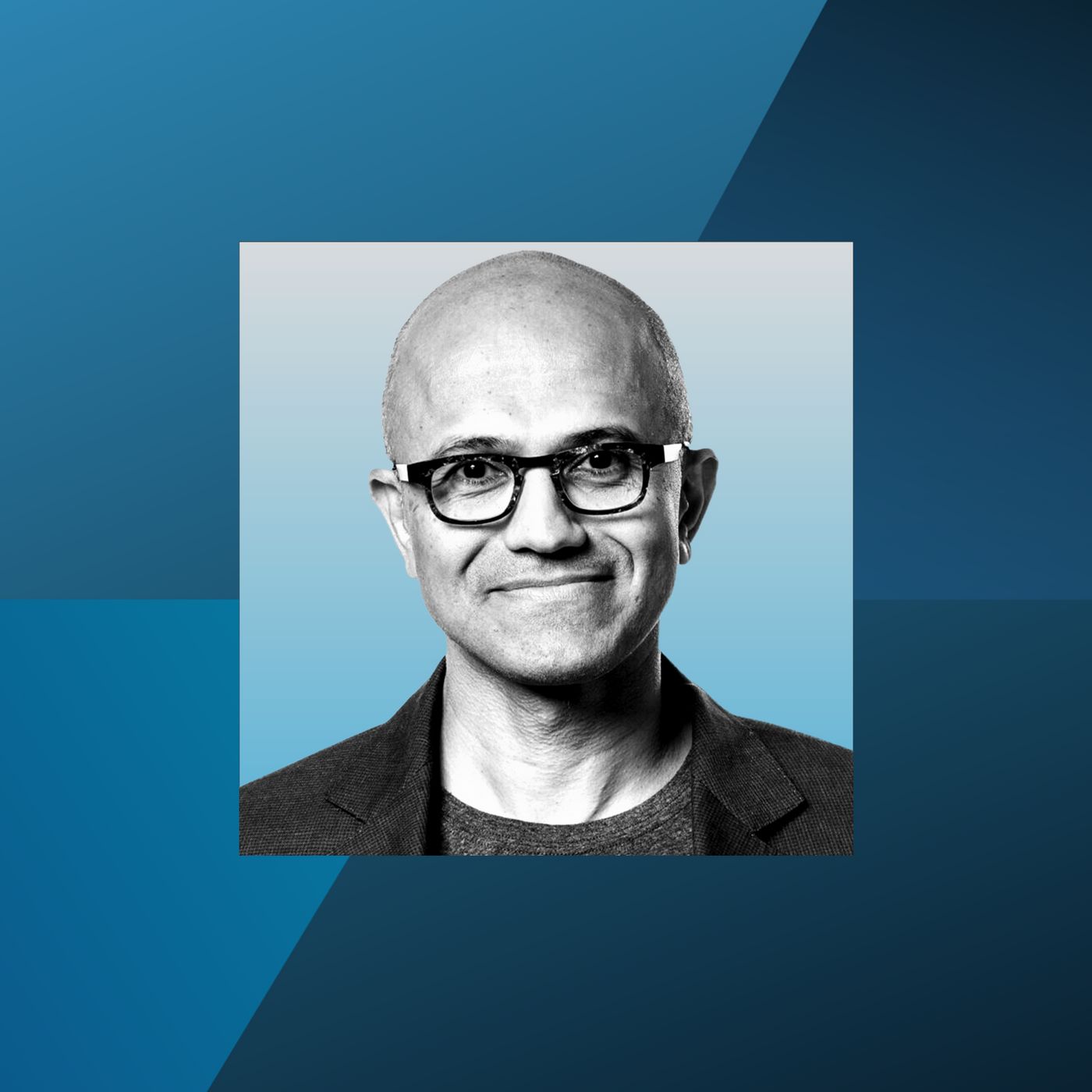


Palmer Luckey discusses “War 2.0” at DealBook Summit—how AI, cyber/space vulnerabilities, and future force design affect deterrence and warfighting; he also argues for renaming the Pentagon to the Department of War, restarting nuclear testing, and increasing transparency/accountability in war and state violence.
Palmer Luckey (33). Dropped out of college to found Oculus; sold to Facebook in 2014 for $2B; fired by Facebook three years later. Founded weapons company Anduril (described as divided ~$90B). Co-led Project Meridian, a Pentagon/think-tank 120-day study of future war (with Elon Musk and Newt Gingrich), reporting to Pete Hegseth. Also involved in a bank named Erebor, plus other defense/tech projects (e.g., military working dogs, American-made laptop efforts).
AI models can’t be reliably “controlled” at use level; defense must outpace misuse. Missile-base “prep” is framed as resilience planning. Renaming DoD to “War” improves deterrence, transparency, mission clarity, morale, and repels opponents. China’s military purge and stockpile concerns shape Iran/Ukraine risks. Starlink/Starshield tradeoffs shouldn’t be outsourced to Elon Musk. Nuclear testing should resume to validate effects on modern electronics and infrastructure.
4chan “ahead of mainstream” cyber rumors; PlayStation outage; North Korea using AI for financial advantage; Xi Jinping purging generals; Ukraine using Starlink for offensive activity; 1960s–1990s nuclear tests hardening hospitals/power systems; Wes Bryant criticizing Meridian’s “oligarchy” ties.
Written by AI. May contain mistakes.
Exploring Luckey's diverse business ventures and background.
“He then started a weapons company named for the sword in the Lord of the Rings.”
Discussion on cyber warfare and AI's implications for security.
“We're going to talk about war and the future of war.”
Luckey shares insights on national resilience and preparedness.
“In the long run, the advantages are going to accrue to the side that is most effectively using AI for defense.”
Luckey discusses the name change from Defense to War and its significance.
“I mean, if the system falls apart to that extent, we're in for a really bad time.”
Analysis of current U.S. military strategies and weapon procurement.
“Okay, but let me ask you then a different question.”
Luckey discusses his support for Ukraine and the complexities of Trump's stance on the conflict.
“and that they have proven over the course of decades they cannot deliver.”
A critique of the corporate role in military decisions and how it affects national security.
“I first met Zelensky shortly after he was elected, actually right here in New York City when he was coming to the UN for the first time.”
Discussion on Musk's Starlink and the implications of civilian technology in military use.
“A steel man is different than a straw man.”
Luckey discusses the role of AI in warfare, focusing on autonomous weapons and their implications.
“problem, which is that nobody in the West actually wants Ukraine to win.”
Exploration of Project Meridian's goals and focus areas for future warfare.
“government should be taking to war that's different than it is today?”
Discussion on unconventional ideas like weather control in military strategy.
“So I will tell you what the high-level topic was.”
Addressing concerns about the relationship between defense companies and the government.
“Can you change where precipitation falls out in the ocean so that you have a better view of your targets and can make better decisions?”
Argument for the need to resume nuclear weapon testing and its implications.
“would you say, let me read this quote about this guy who says, you are indicative of the decay of our nation at a fundamental level?”
Exploring the concept of public executions and its implications for governmental accountability.
“I've got three very quick questions, because I know we're going to be out of time, one of which is an opinion that also, I think, may surprise people in this room.”
Discussion on innovative approaches to data centers and industrial processes.
“One is, and we didn't even get to talk about that.”
Palmer Luckey discusses the concept of floating data centers to circumvent local regulations.
“People are like, oh, Palmer wants, he just wants to bring back the Roman Coliseum.”
Luckey shares his perspective on NVIDIA's leadership and its implications for U.S.-China relations.
“Because I saw a comment that you made, which is you think that this is China winning.”
Luckey reflects on his termination from Facebook and the impact it had on his career.
“But he shouldn't have slept with a whatever she turns out to be.”
Luckey discusses his current work with Zuckerberg and the implications for military technology.
“You're like, we're like, we're like this.”

Get the gist, explore an idea or ask about something said.
 Claude
On DealBook Summit, what are the key points of this episode?
Searching your listeningAutomatic transcript. May contain errors.
0:00Andrew Ross Sorkin: Accenture is working together with the NFL to drive international growth by evaluating markets, developing audience insights, and creating new ways to engage fans in cities around the world. The NFL is building a global game, and Accenture is helping make that vision a reality by striking the right balance between what makes the NFL beloved in America and tapping into the passions and preferences that make each market unique. Accenture, the official business and technology consulting partner of the NFL. Learn more at Accenture.com slash NFL.
0:55and contributing sponsors Atlassian and Nscale.
1:05Every major model has been jailbroken to some degree in a matter of months. So anyone who says that the models can be controlled isn't paying attention to what's actually going on. It's really a question of, can the good guys stay ahead of the bad uses of AI?
1:22Andrew Ross Sorkin: This is Andrew Ross-Sorkin with The New York Times, and you're listening to interviews from our annual Dealbook Summit, recorded on November 18th in New York City.
1:37Andrew Ross Sorkin: I am joined right now by Palmer Luckey. Palmer Luckey is just 33 years old, dropped out of college to launch Oculus, virtual reality company he sold to Facebook back in 2014 for$2 billion. He was 21 years old then. Three years later, Facebook fired him. We'll talk about that. He then started a weapons company named for the sword in the Lord of the Rings. And that company is called Andrel. It's now divided$90 billion. And since this fall, he's co-led Project Meridian. That's the Pentagon's 120-day study of the future of war alongside Elon Musk and Newt Hingrich. And he reports to Pete Hegseth on that.
2:11Andrew Ross Sorkin: He's also, as of this year, a banker. And the bank is named after the lonely mountain in The Hobbit, the one full of gold. It opened in February. And he's building other things. I have to correct you. The Lonely Mountain existed after The Hobbit. And in The Hobbit, they were dealing with the fact that a dragon stole all the gold. The bank is called Erebor, by the way. I've had to be very clear. They're like, why would you name your bank after a mountain where a dragon came and stole everyone's gold? I said, no, no, no. We're the post-Dragon Erebor. The dwarves, they retook the Lonely Mountain.
2:42They kept it secure for about 300 years. It's unclear what happens after those 300 years. But if I can do 300 years of safety, then I'll be fine pretty good.
2:50Andrew Ross Sorkin: Okay. I'm just going to finish the introduction. And then, because he's doing some extraordinary other things, including trying to make an American-made laptop. He's working on genetically engineered military working dogs. And just as a side project, he happens to own two submarines, a Blackhawk and a 1985 Humvee. And he also keeps the world's largest video game collection. I understand it to be 200 feet underground in a decommissioned Air Force base. Missile base, correct? Missile base. Unbelievable. Please welcome Palmer Lucky. We're going to talk about war and the future of war. But as it happened, we were talking backstage just about what might be a cyber war that seems to be going on around us.
3:34Andrew Ross Sorkin: We're talking about J.D. Vance obviously deciding he needed to be in Washington, where they're continuing to have meetings all day about these outages. And I said to you, how much should we be worried about this? And you said. It depends on how well prepared you are. Look, all the 4chan schizo posters are like 12 hours ahead of the mainstream media on this. You guys are going to find out what's going on soon enough. What do you think is happening? By the way, PlayStation now has an outage. I know you're a gamer. We're seeing the natural effects of a lot of these advanced AI tools allowing for the creation of various exploits, some of them for strategic reasons, many of them for purely financial reasons.
4:14There's a lot of organizations, particularly in North Korea, that are using this mismatch between new attack capabilities and our defense capabilities to obtain financial advantage. In the long run, the advantages are going to accrue to the side that is most effectively using AI for defense. The people who say that everything can be hacked, they are right for now, but that actually may be the case with certain new techniques that are coming along. But as of right now, there's a mismatch between the attackers who are very fast-moving and using technology and old, outdated systems that are not able to adopt technology as quickly as it has developed.
4:53And I think people are going to have to pick up the pace. It's time to start running. What does that mean? Are you a prepper? I own a missile base 200 feet underground. By the way, I'll note that's not, it's a funny joke, but a missile base is actually a pretty bad way to run from the apocalypse. Everyone knows exactly where you are, and they're designed to take a hit from a nuclear weapon, a blast overpressure event. But I'll just tell you a secret. You can go to Home Depot, buy a Sawzall, and cut the hinges off the door in about 10 minutes. And so a lot of people think that missile bases, they're not secure.
5:25They're just really, really robust. And so the point is, everyone should have three days of water. Everyone should have three days of dry food. If you have prescription medication, don't go refill it when you run out. Make sure you refill it 72 hours before you run out. The United States is very resilient if you think on a timeline of what we can do to get everything running again over the course of three days. There are a lot of things we cannot get going again in 10 hours, 12 hours, 24 hours. And so people used to be taught this in middle school, and now everyone who remembers that is treated like a nut.
5:59Cheers.
6:02Andrew Ross Sorkin: Do you print out your bank statements? Do I print out my bank statements? No, I do not. Someone told me that I should. That's why I was curious. Oh, that's interesting. I see because it's not clear. I mean, if the system falls apart to that extent, we're in for a really bad time. I think my fishing rod will be more useful than your bank statements if things are that bad. Let me talk to you about your role with the U.S. government in terms of Project Meridian and also so many of the different weapons that you're now selling the government. One of the things that I don't know if most people may know about you, but you may be responsible, at least as one individual, for the reason that the Trump administration changed the name of the Defense Department to the Department of War.
6:48Andrew Ross Sorkin: That was something you've been talking about with them for years. I'm happy to take a little bit of credit. We were talking a little bit backstage about the fact that this idea comes up in op-eds. Like, every 10 years or so, people talk about it. They were talking about it during Bush. They're talking about it during Obama. They were talking about it during the Cold War when everyone was feeling like we need to get back to the name that we had won wars with instead of the one that we kept losing them with. So I was not the first person. It's true. I pushed on this with Trump. I pushed on this with the incoming administration during the transition period.
7:21But there were other people who were pushing, but I will give myself more credit than anyone else. I'm happy to do that. Why did you want to do that? Why? There's a bunch of reasons, and I might have to refer to him. Right when we were talking, I pulled up my notes for my meeting with Howard Lutnick when he was running the transition. So I actually have the contemporaneous. You can take them out. Oh, sure. Tell us when you told them. There we go. Okay, so there are a few things. And these are not ranked by importance. They're just ranked by what I wrote down. But the first one is from a deterrence perspective.
7:56If you want peace, you prepare for war. Nobody says if you want peace, prepare for defense. I think it is good to have a name that people across the world clearly understand the purpose of it. Two, I think it's just way more transparent and honest. It should be focused on preventing wars and, if need be, winning wars. And I think that there's been a lot of obfuscation about what the Department of Defense is, and it makes it so much easier for people to spend endlessly on it. How much money is too much money to spend on defending yourself? No amount, right? If you're very clear, no, no, this is our warfighting capability.
8:33It's a lot easier to make the trade between hospital and war, school and war, versus hospital and defense. And so as a libertarian who generally leads towards wanting to be fiscally responsible, to me, I think the transparency is another one. Another one's clarity of purpose. In any business, you need to have clarity of purpose, clarity of mission. If you try to do everything, you will accomplish nothing. And I think that it is a good idea for the department. There were so many things that were barely tangential to the warfighting capability around economics and international relations and climate change, not from a warfighting perspective, but just from a general infrastructure perspective.
9:08And then the last two are kind of tied together from a morale perspective. Look, the Department of Defense lost every war and the Department of War won every war, the War Department rather. I think there's something to say about getting back to when things were good. And the final is that it's objector repellent. People talk about how important it is to get the right people to come to your company or your organization. But more important than attracting the right people is repelling the wrong people so they don't become poison in your organization. And I think that there's a lot of people who, with no change in the activities of the organization, with no change in its mission as determined by Congress, would be thrilled to work for a Department of Defense and totally unhappy working for a Department of War.
9:58I think that you need somebody who is willing to work under either of those names to be the stable foundation of our warfighting capability. And the people who freaked out about the name and left illustrate my point perfectly.
10:11Andrew Ross Sorkin: Okay, but let me ask you then a different question. You talked about winning wars. What do you think about the war and how this administration has prosecuted the war in Iran. The president has suggested that either he has won or that it's over or something. But I don't think anybody genuinely believes that. And there are other people, and I'm going to read you this, Richard Moore, who ran MI6. He's worried, actually, that people like Xi Jinping are watching the results of both the war in Ukraine, where I know you have operations, and Iran very carefully. And he says that he believes that if Beijing decides the U.S.
10:48Andrew Ross Sorkin: doesn't have the will to see Putin or the Iranian regime toppled, that this is just going to lead him down the path, potentially miscalculating or calculating around something like Taiwan. Look, I agree. When we win and we win in the strongest way possible, that is the best deterrence we can have to countries like China. I do think that luckily China, Look, looking at Iran, they're probably not seeing the best that we've ever pulled off in terms of outcomes. I do think they look at things like Venezuela and realize a lot of the equipment that they sold to protect Venezuela did not work. And so I think we have some losses.
11:30We have some wins lately with those guys. Here's the good news. As of right now, Xi Jinping just fired all of his top generals. He completely purged his military. He's going to have to get his act back together before he's able to take any action. I think probably we are very lucky that he did that before we moved on Iran. Because you could imagine a world where he would look at what's going on. He'd look at our magazine stockpiles. He'd look at our current political situation. And he'd say, you know, I'll fire those guys later. I've got something to do. I've got something to do tomorrow.
12:00Andrew Ross Sorkin: What do you think of talking about our stockpiles? One of the big concerns is that actually we don't have enough stockpiles. We've heard what President Trump say. There's no problem. And we can fight war indefinitely. And what do you say? What I would say is that's exactly the right thing for the President of the United States to be saying from a global perspective, from a civil... Look, there's very different jobs for everybody. Specialization of labor is fantastic. It's what allows society to work. It means I don't have to make my clothes and grow my food and crank the generator from my light bulb.
12:32But what it means is my job is to make sure that our magazines are full, that we have all of the weapons that we need, that we're able to have the defensive and offensive tools that we need to prevent and win wars. The job of the president of the United States might be to help enable that in some ways. But at the end of the day, he's also trying to keep people from attacking us, from attacking our allies. And there's some people who kind of lionize truth as the ultimate thing. And they don't realize that a lot of the prosperity that we have is because people took liberties with it. I mean, the Nixon's madman theory, this idea that you're gonna plant stories that made them think that he was not only willing to push the button, but excited to push the button, that that had a good strategic deterrent effect.
13:21And so I find it hard to get work. People say, oh my God, people in government are saying these things that are, you know, not strictly the way that a perfectly objective observer would describe them. But that's... Well, let me just ask you one of... Pick any president and I'll show you a few things like that. Let me ask a question
13:38Andrew Ross Sorkin: I want to know about this, President, because you've been a longtime supporter of his, I think that's fair to say. And, you know, one of your slogans is rebooting the arsenal of democracy. That's right. Do you think he is trying to reboot the arsenal of democracy? I mean, some of these long-term weapon buys are the largest we've ever seen. They've been investing in a lot of things around mass-producible weapons, lower-cost weapons, allowing more companies to compete so that you don't have one or two companies building systems that we desperately need. and that they have proven over the course of decades they cannot deliver.
14:09And we're not talking about a few months behind. We're talking about years to decades.
14:13Andrew Ross Sorkin: But no, but when I say about the arsenal of democracy, I'm - I'm talking about refilling that arsenal. I've done a lot to - But I'm saying about the democracy part, which is to say - I've got to be honest. I actually hate the arsenal of democracy term. I just have to play along with it because there's a lot of smart people who have used it. We're a republic, not a democracy. And so we're - And there is a bit of a difference. um sorry i interrupt well no i i wanted to ask you just what you've you know you have people in ukraine you have operations there um you've seen some of the comments that this president has made about i've been there personally about putin we've been there since the second and there has been questions about which side of this he really supports and this gets to the idea of of what it means to support a democracy and how you especially given you're the seat you're in think about that?
14:58Look, I think about it, but these decisions should be made by our republic, not by mega corporate executives. And so when people say, oh, you know, Palmer, is there a country you would sell to or that you wouldn't sell? Who should we be selling? Who should we not? At the end of the day, nobody should want corporate executives to have any meaningful control of our foreign policy or military policy, right? I'm a dog on a chain and I need to be kept that way. And I think that's true for all of the people that are in my shoes. Look, I fully support Ukraine and I've probably been way more on the side of Ukraine than most of the Republicans.
15:29And I've sparred with them in public, on stage, on X, and in other venues. I don't really buy into this idea that you can really question which side of it Trump is on. Trump was put into an impossible position. Remember that Trump in his first term was publicly calling out specific European nations saying, you are too dependent on Russian oil. You should not approve this oil pipeline. It is going to put you in a position where you cannot say no to them and you're going to regret that. And what do they do, you may remember, literally laughed at him, right? The whole UN laughing at Trump saying this.
16:02He's been calling out these exact problems for a long time. And it's worth noting, since the start of the Ukraine war, Germany has sent more money to Russia than Ukraine, right? I mean, you can have all these reasons why they need the oil, they need the gas, they're all going to freeze in the winter. By the way, they're not going to freeze in the winter. Their thermostats are up a degree in the winter, according to the smart thermostat data since the the start of the war. So they can't even wear a sweater to save Europe. I find it really hard for people to point at Trump and say, Trump, is he really on the side of democracy?
16:33I think he's stuck with a Europe that has not prepared. He's stuck with an America that, I mean, I tried to sell stuff to Ukraine way before this war started. I first met Zelensky shortly after he was elected, actually right here in New York City when he was coming to the UN for the first time. And the US State Department position was that Ukraine was a corrupt sh**hole that we should not allow to engage in saber rattling with Russia. Not my assessment. That's what you had people in government saying. And so I remember that. And so then we flip and people say, Palmer, why don't you support Ukraine, the shining beacon?
17:07And isn't Trump doing everything wrong? And my point is, one, Trump was put in an impossible situation. He now has to manage that. And the last thing I'll say is, if people think that the right way to influence Trump is for people like me to throw him under the bus and say, yeah, what a idiot. They have not been watching how anything works for the last 10 years.
17:29Andrew Ross Sorkin: Let me ask you a different question that relates, though, to what you said at the top of this last soliloquy of sorts. Sorry for rambling. No, no, no. Which was this? I've got it all pent up. You made an observation that corporations shouldn't be the ones making decisions. Absolutely. The Republic should be the ones making decisions. That's right. So we're going to talk to Elon Musk a little bit later today. And one of the great controversies of this moment, as it relates to Ukraine, as it happens, is about his decision to slow down or not, depending on what you believe has happened here, Starlink or Starshield or some version of both.
18:10Andrew Ross Sorkin: What do you think of that scenario? So first of all, I like Elon. Like, I personally like the guy. So take it with a pound of salt. I think that when the Republic needs to be in charge of these decisions, what that means is there are decisions that they need to make. And there are others that they do leave up to companies. Who America sells weapons to, that's not up to me. I'll go to prison if I make that decision for myself. To what level a company is willing to put their civilian infrastructure at risk for another country's benefit, that is a question that is often not controlled by the government, at least not as of right now.
18:45Let me give you a steel man on this. Russia says that if, and they've hinted this. I don't know.
18:51Andrew Ross Sorkin: A steel man is different than a straw man. I agreed. I'll give you the strongest possible argument. Russia says, I am going to destroy the Starlink constellation if you allow it to be used for offensive military activity against my country. You cannot claim, amid civilian infrastructure when you are explicitly allowing them with knowledge to use them in this way. And the satellites, because they orbit the whole planet, the same ones that orbit the US are the ones that are orbiting Ukraine, right? Because they're going in circles. So imagine this, Russia wipes out the constellation with electronic attack, kinetic attack, cyber effects, however they do it.
19:28So they say, hey, we're going to do this. And from an international law perspective, we are absolutely justified. Nobody can claim that we are attacking civilian infrastructure. We're attacking military infrastructure. And should Elon have to say, well, okay, I will allow it to keep using it for offensive military action, and you can just destroy my entire global constellation because that's fighting for democracy. And that's what I think people don't realize the position he's in. It can be a decision between those two things. Do I stand up for democracy? And then, by the way, ruin a lot of US warfighting capability that depends on those same satellites?
20:04Or do you say, you know what, I'm going to take this region and I'm going to limit the speeds that we're being, and people are saying, oh, but there's defensive systems that use this. Yes, I'm fully aware of that. Some of my systems use those exact same links. But there are offensive weapons in Ukraine being used to attack Russia using civilian Starlink satellites. So that is the steel man. And I've not heard a very good argument for why Elon should sacrifice the existence of the entire Starlink network to prove a point. about defending democracy, particularly given that it's not America.
20:36Andrew Ross Sorkin: If it were America, I would... Isn't that always going to be the risk, though? Meaning for any company that's going to have a network, especially in space, that the second you have that network in space, and depending on how it's being used, that it becomes a military target. It is not anything. So there's different degrees to which this is the case. For example, this is the constant debate over whether a bridge, a civilian bridge, counts as a valid military target? Does a power plant count? Like what fraction of the power goes? Are there other options? So it's not quite simple where if it's used in any way for military, it becomes a valid military target.
21:12It's a matter of degrees. But in this case, look, if the United States were telling SpaceX, you need to do this, I think that they then have an obligation to help defend the constellation and also probably go to Russia and say, hey, you do that, we're going to glass you or some other terrible thing that you really don't want to happen. I don't think it's reasonable for the government to basically outsource that responsibility to a corporate executive and say, hey, we're not going to tell you you have to do this, but we will be really angry if you don't do this thing that will get your whole constellation destroyed.
21:48It seems untenable to me. Let me ask you a separate question because it has to do with - Actually, one last thing I should point out. There are two networks. There's Starlink - And StarShield. And Star Shield, which is owned and operated by the Department of Defense with assistance from SpaceX. To be very clear, the United States could give access to Ukraine, to the Star Shield network, and allow them to run all of their weapons off that. And that is a military target. That's how this was supposed to be. But guess what? The government doesn't want to give Ukraine access. You know why? Because they know that then Russia will blow up Star Shield and the U.S.
22:21military won't have it. So you're in this position. I can't believe I didn't make this point at the beginning. The U.S. government isn't even willing to stand up for Ukraine because they're afraid of losing their constellation. Why should Elon have to lose the civilian network when the government of his own country is unwilling to put anything at risk for the same? And this gets to a bigger problem, which is that nobody in the West actually wants Ukraine to win. They just want them to not lose for as long as possible, which is a bizarre and absurd warfighting position. But I'm not in charge. I don't get to make these decisions.
22:51And if you think you like my opinion on this one, wait till you find out my other opinions and you'll be right back to being glad I'm not making these decisions for the country.
23:00Andrew Ross Sorkin: I'm going to get to a couple of those opinions in a moment. I have one related opinion which has to do with AI, particularly actually anthropic. And we talked about this, I think when I saw you in March, the Pentagon was naming an anthropic supply chain risk at the time. And they then, by the way, took on OpenAI right after that. That's right. And I wonder whether you think, given everything we now know about AI, whether any of these models actually are controllable by a human or by the government. Are they controllable? I mean, you can just look at this empirically. No. Every major model has been jailbroken to some degree in a matter of months.
23:42So anyone who says that the models can be controlled isn't paying attention to what's actually going on. It's really a question of, can the good guys stay ahead of the bad uses of AI? And I'm more afraid of really bad, evil people with pretty good AI than super intelligence that's going to wipe us all out. But no, these models, it is not clear that anyone can control them at a model use level. Now, we can turn off data. I'm not worried about them running amok and running out of control. You can turn off data centers. You can shut off networks. At least as of right now, AI has no meaningful physical arms into the world to affect it.
24:21You know, Skynet may be online, but it doesn't have access to useful tools because we haven't built useful tools. Now, people will point to like, well, what about when there's a billion humanoids walking around? What about this and that and the other? Yeah, that's a different world.
24:33Andrew Ross Sorkin: What does this mean, therefore, to you? You know, one of the things that you are doing is building autonomous weapons. That's right. That probably scares the hell out of a lot of people when you think about what that means, because it also means that AI is playing a role, I imagine, in where they're being targeted and how they're going to work. This is a long, complicated discussion, but let me put you, I'll put my priors on the table. I was an AI guy before any of these AI guys, right? Andrel Industries. The acronym is AI. That was over 10 years ago. That was back when AI was not cool. It was not hip.
25:07you could not raise money for, and everyone treated it like virtual reality or fusion as something that was always in the future, never in the present. So I'm an AI OG by some definition. With that said, the kind of artificial intelligence you use for weapons is very different from these large language models, which are general purpose, super intelligence-oriented models that are trying to do everything that anyone might want to do. People have said things like, well, Palmer, I asked AI to cheat on my homework, and it hallucinated this source, and I got an F. What happens when your AI does the same thing for a missile?
25:45I promise you, the AI that is taking in radar feeds, thermal imagery feeds, and analyzing the electromagnetic emanations of a Chinese destroyer, you cannot accidentally say, oh, I'm sorry, you're right, That wasn't a warship. You know, it's a completely different set of technologies that is, by the way, a lot more reliable than the older analog fire control and seeker systems that were doing things like, look for the hottest thing in this area and go at it. I am way more afraid of the civilian collateral side for dumb weapons than I am for smart weapons. If I were just putting chat GPT in the head of my missile, you would be right to be terrified.
26:27but the types of autonomy. You asked about targeting though. Yeah, that's a totally valid one. People have definitely used LLMs for targeting purposes and made mistakes. I think that the reasonable, and I don't do that. There's other companies that are doing that. I won't name names because I'm going to just stick in my little lane and be nice. But the real question in my mind is to ask, was it a net good? In other words, even if it made mistakes, were there fewer civilians who died than would have died otherwise? Was the mission objective accomplished faster and with less loss of infrastructure than would have been otherwise?
27:04This is the self-driving car problem, right? You're probably familiar. Nobody wants self-driving cars to be a little bit better than a person. They want them to be a hundred times better. And that's what people are demanding of the military. My real politic take on this is that life and death at scale is too morally fraught an area to not bring your absolute best tool to the table, even if it makes people feel icky, even if it feels yucking, because I don't think there's any right number of people to die for not feeling yucky.
27:35Andrew Ross Sorkin: We'll be right back. Accenture is working together with the NFL to drive international growth by evaluating markets, developing audience insights, and creating new ways to engage fans in cities around the world. The NFL is building a global game, and Accenture is helping make that vision a reality by striking the right balance between what makes the NFL beloved in America and tapping into the passions and preferences that make each market unique. Accenture, the official business and technology consulting partner of the NFL. Learn more at Accenture.com slash NFL.
28:19Andrew Ross Sorkin: What are you telling Pete Hegseth in this 120-day period about the approach that this government should be taking to war that's different than it is today? So to be clear, Project Meridian, we're supposed to look at what war is likely to look like in 2050. So they're recruiting us. A lot of people say, oh, they're recruiting these people. What expertise do they really have in defense production? Well, I build billions at all. in weapons. So I'm doing pretty well there. My personal opinion is they're recruiting us just as much from almost a science fiction perspective. The idea is to look unconstrained by what's possible today, at what warfare will look like decades from now, what investments we might need to make now to get there in the future.
28:59It's being run by the MITRE Corporation, which is a quasi-government organization that does a lot of these think tank policy type analysis. Look, the things that we're working at are things, actually, I just came from a project Meridian meeting yesterday at Cheyenne Mountain. So I will tell you what the high-level topic was. It was deciding which of these things we're going to be focusing on in the report. And the winning point, I think, was that we need to focus on the things that do not have existing champions, right? There's a lot of things. People are like, oh, Project Meridian, they're just going to tell them to buy more killer robots.
29:35No, everyone already knows we need more killer robots. every secretary, every senator. Like, if our report comes out and says, guess what, the current zeitgeist, that is where it is at. It's a waste of time. We need to find the ideas that do not have champions and focus our efforts on those things. So I probably shouldn't get too far ahead of it, but like some of the examples of things we're looking at are weather control. How do you make sure that weather conditions are favorable to military operations and not obscuring your view of the enemy? Can you change where precipitation falls out in the ocean so that you have a better view of your targets and can make better decisions?
30:15There's no champion for weather control in the department right now. And I know because I've looked and there's no office of weather control. There's like guys who make non-skid paint so you don't trip when it rains. That's about as close to weather control as the department currently is.
30:31Andrew Ross Sorkin: I have a hard question for you. I think it's a distinctly hard question. And I wonder how you think about it. And I know you think about these things, which is you are obviously you chose to be on this project with the government. That's right. It shows you. And I want to know I want to I want to read you something. Just get your get your response. All right. This is Wes Bryant. He's retired Air Force Master Sergeant until last year ran the Pentagon's assessment of civilian harm. And he said this about Meridian. This is entirely indicative of the decay and oligarchy that has taken over our government.
31:01Andrew Ross Sorkin: and in many cases directly through purchasing influence and power and authority blatantly right in front of us, they're not even trying to hide it anymore. That the connection, that the closeness between you and the other defense companies and the government is just too much. I mean, I respect his service and he's coming at it from a reasonable perspective. Let me put out my perspective. If the president of the United States or the secretary of war says, I need, by the way, there's over 20 people on Project Meridian. So I get a lot of attention and Elon gets a lot of attention, but there are 20 people on it.
31:38And including, by the way, former members of the military, very respected generals and admirals. So it's not like this is just a bunch of tech bros in charge. If you are asked to help your country, you are going to say yes. And I think it's reasonable for people to question what I'm saying and take it with a pinch of salt. Hey, Palmer makes weapons. Maybe we should keep that bias in mind. But I'm going to be totally honest, and this might sound really, really mean to you. You would never be asking this question of Eric Schmidt when he was on the Defense Innovation Board under Biden, right? He was working on defense.
32:14He wrote about it. But would you, in this limited time on stage, would you say, let me read this quote about this guy who says, you are indicative of the decay of our nation at a fundamental level? Of course not. You'd never say that. And he would say the same thing. Joe Biden asked me to be on the Defense Innovation Board, and I joined. Before that, you have the Presidential Council of Advisors on Science and Technology. My point is, what he's saying, that this is some kind of, if it is a problem, it is an old problem. It has been around since World War II. Presidents and secretaries have formed board after board after board to ask people in industry, including people in the defense industry, what do you think we should be paying attention to?
32:50And of course, they take it with a pound of salt. They know these guys have a stake in it, it doesn't mean that you need to shove them in another room and never talk to them. That'd be crazy. And so I've read attacks like that, and my feeling is it's very, very partisan. Like, I didn't attack Eric Schmidt for being on the Defense Innovation Board. I don't think anyone should. And you know what? I bet if you were asked to be on a presidential council of advisors on journalism by Hillary Clinton, I doubt you'd be like, oh my God, doesn't she know that I am a journalist? This is indicative of the moral decay of our nation.
33:29We're running lockstep towards hell. I just, I, the point is to take it with a pound of salt and read our report, which by the way, is going to be public. This is going to be a public report. Read it, look at it. And I think that when we're done, you can decide if we've destroyed the country.
33:47Andrew Ross Sorkin: One of the things that I know, no, no. And I, by the way, I very much appreciate that answer. And I think everybody here does. One of the things I know that you are focused on or have wanted to do is that you believe that we should bring back testing of nuclear weapons. That's right. Which is something that I think also scares the hell out of a lot of people. See, I told you, you guys aren't going to like everything I have to say. So I wanted you to explain that if you could. There's a lot of reasons. Some of them are way less developed and I'm not an expert on them. So I have this working theory in my mind that mutually assured destruction relies on a certain level of psychic belief in the power of nuclear weapons at a population level.
34:28We know that MAD works as a deterrent strategy when everyone is afraid of nuclear weapons. We do not have any evidence that it works when people are not. And when you show that you're not even willing to test things, I think that that robs mutually assured destruction as a concept of a lot of credibility. I have to admit, I'm not a philosopher, nor am I a tactician, nor am I a strategic, you know. There's actually a much more boring reason that I want to restart nuclear weapons. What's that? We need to test not the weapon itself, but the impact of nuclear weapons on the technology that underpins our military and our society, lest we accidentally make use of nuclear weapons an impossibly irresistible use of force.
35:12So I'll give you an example. In the 60s, the 70s, the 80s, the early 90s, we weren't just blowing up nukes to watch what they did. At almost every test, we were lining up rows of civilian pickup trucks, military radios, washing machines, respirators, ventilators, everything you need to run, hospitals, power plants, substations, oil refineries. And we were watching not just what the blast and temperature effects had on them, but also the electronic effects. What is an electromagnetic pulse? A broadband electromagnetic pulse, not something like a directed energy microwave weapon, but a broadband massive pulse.
35:49What does that do? Which things survive? Which shut down, but that are able to be restarted? Which of them are completely fried and will never operate again? We learned a lot from that. And we spent a lot of money hardening military infrastructure and critical infrastructure and power and hospital infrastructure. There's a lot of stuff in hospitals. You may or may not know this. It was designed to survive an airburst nuke above the United States going off and trying to wipe out our grid and everything else. The problem is that we've not run those tests in decades. The models that we use to simulate the effects of nuclear weapons on electronics, they were for transistors that were literally thousands of times larger than the ones in this phone.
36:31We don't actually know what will happen to our phones, to our critical infrastructure, to our military. And imagine this. If I'm an enemy power, imagine if I could make an entire region of U.S. forces non-mission capable, but without killing them. What if I could do a nuclear airburst and all their radios stop working, all their equipment stops working, all this modern tech, all these autonomous weapons that we're building were not sufficiently hardened against those effects? I mean, that's pretty tempting because killing thousands of Americans is going to trigger either an actual strategic change or a massive conventional war.
37:10Does anyone really believe, and by the way, this may not be as obvious as I nuked it on purpose. I'll paint a picture for you. China decides that they're going to test a nuclear weapon in space, not on the ground. Oh no, the yield was larger than we expected and the side lobes hit the whole Korean peninsula. At the same time, coincidentally and surely with no warning, South Korea is invaded by North Korea, decided to use their conventional weapons, which were not affected, their massive artillery all in the mountains, to take advantage of this situation. And the U.S. can't do anything about it, and neither can South Korea because they bought all of America's weapons.
37:47All of this, all that possibility space is downstream of us not testing in any way the impacts of nuclear weapons on modern technology and electronics. And that is why I'm an advocate, because I am not confident my stuff can survive, even when I follow the rules and the radhardening guidelines that, again, were designed for ancient technology. They were designed for the type of cell phone that Abraham Lincoln would have used.
38:11Andrew Ross Sorkin: I've got three very quick questions, because I know we're going to be out of time, one of which is an opinion that also, I think, may surprise people in this room. We were talking about the death penalty recently, and obviously there's going to be, there was potentially going to be a televised death. and you came out and said this was the right thing to do. Absolutely. Why? This is not actually like a Palmer Lucky special. This is a pretty popular libertarian opinion, which is that the state should very rarely, if ever, engage in capital punishment. It should be the ultimate punishment and it should not be something that is medicalized and hidden away and trivialized.
38:52People that the state executes should not be killed by having a doctor who swore to protect life give someone a shot, like they're giving him his annual flu checkup, and then have him peacefully pass away. Execution should be brutal. They should be violent. They should be enacted by the people who we give a monopoly on violence to, which is our law enforcement and military apparatus. And people should respond either in horror, because it was the wrong target, it was the wrong person, someone that they don't think deserve to be blown to pieces, organs all over a wall, or they should say, yeah, that guy had it coming.
39:34And I think that the medicalization and the hiding of the death penalty. It's a deterrent in your mind. It's a deterrent, not just, part of it is a deterrent. That is part of why I support the death penalty in some cases. But I'm talking about a deterrent against the government running amok and out of control. The thing that controls overuse of the death penalty is transparency into the practice. And that's why I said broadcast, that is why I'm a fan of public executions. If the government is going to kill somebody, they need to be willing to put them out in public and say, this is a guy we are killing and it is the right thing.
40:10And by the way, you know what got rid of the death penalty in the United States, in a lot of states, it was states that were doing public executions of people who most people did not agree should be killed. That is supposed to be the control.
40:23Andrew Ross Sorkin: Do you see the same thing in the context of war? In the context of war? You mean like, should it be public? Should it be? Should it be broadcast? Should it be everywhere? Oh, the Vietnam question. Should we be seeing all of it? If the view is we should be seeing the capital punishment, should we be seeing in real time even what's happening in war? I'm going to admit, I have not thought about this very deeply. I'm aware that this became a debate largely during Vietnam when we gained the capability to do real-time television broadcast of war. It's very clear that the anti-war movement was hugely empowered by the broadcast of what was going on in Vietnam.
41:01And so, like, if you believe that the Department of War and our government apparatus should be accountable to the body populace, the people who vote for our elected leaders. Yeah, probably a good, I mean, like here's a hypothetical. How would Vietnam have gone if we didn't have any information from it? What if the only information we had was government propaganda and them telling us what was happening and how great it was? Probably would have been a different response. And then I would say flip to the same with the Gulf War. I think that was a case where it being out in the open and in public made it really clear like, oh yeah, this is This is definitely a good one.
41:39So I would say, yeah, probably I would be on the side of, yeah, you should have more transparency into these things. The more that you're reliant on the government propaganda pipeline as your only source of truth, whether it's for war or who deserves to die, the bigger of a problem that is.
41:55Andrew Ross Sorkin: Okay, two final questions. One is, and we didn't even get to talk about that. A lot of people thought like, oh, Palmer just wants to kill people because he wants bread. I'm not saying you. People are like, oh, Palmer wants, he just wants to bring back the Roman Coliseum. You know, he wants it to be eaten by lions. And like, no, no, the point is I want control on the power of government. And I believe the only way to do that is to get people worked up when appropriate. Tell you about the power of government. One of the things you want to do, though, effectively get away from government, is create data centers.
42:22Andrew Ross Sorkin: Interestingly, you know, Elon wants to do it in space. You want to do it in the ocean. No, no, that is one very small bit. And it is somewhat accurate. You know, I talked about this yesterday. people hadn't heard about it before. So I've been working on building these floating platforms that you can use for the things that need to get done in America, but for a variety of reasons, primarily due to state and local government regulations and pushback, people don't want happening in their backyard. Things like metal ore processing and chemical engineering and oil refining and desalination, right?
42:52Like California needs water, but they don't want desalination plants along the coast. And so my thinking is you can take a lot of these things that America desperately needs. People in an abstract way do want to exist. They just don't want it where they are. And the problem is that everyone is in the places where they need to be. And so you take them, you do them offshore. Now, there's been some reporting that say, oh my gosh, Palmer is working on floating AI data centers, to which I'd say, no, no, I've been working on this for like 10 years. I'm not some Johnny-come-lately hype chaser jumping on the latest trend.
43:23I'll be perfectly fine if AI data centers come and go and there's no more. I actually do lean towards thinking most AI is going to run locally. I think the chips are going to get way more powerful. I think people are going to want to control their own data. I am actually somewhat skeptical of the mass-scale data center as the way AI proliferates pitch. Anyway, I think that data centers are one of the things that people, they want the output of it. People want to be able to go on YouTube. They want to be able to use Instagram. They want to be able to cheat on their homework with ChatGPT. They just don't want big screaming data centers in their particular particular neck of the woods.
44:00And I think that there's ways that we can just take all that stuff and shove it out into the ocean. Real quick, just talking about data centers. Or space. Me and the space people, we're two sides of the same coin. We just agree it can't be done like right over there. I was going to ask you about Jensen.
44:16Andrew Ross Sorkin: Please. Because I saw a comment that you made, which is you think that this is China winning. That's right. What do you mean by that? what I said is that China wants Jensen out, so I want him in. And to be clear, I don't actually agree with Jensen on very material ideas that he has about what the U.S. relationship should be with the Chinese economy. I don't think that we should be exporting chips to China. He thinks that there's an argument. I think there are reasonable arguments. There's other smart people I know, including in the administration, who agree with them. I just happen to not be quite on their side.
44:57There's a lot of people who hear that. It's like the midwit take. They say, Palmer, NVIDIA is the one that was helping China. So you're an idiot. And what they don't understand is China doesn't want NVIDIA to sell GPUs to Chinese companies. There are Chinese companies that want to buy NVIDIA GPUs. There's 600 ,000 H200 GPUs sitting in a port right now because China will not give them an import permit because they want to build an internal domestic processor industry, silicon industry, not build one that is dependent on the United States. And so the point that I've made is China is thrilled to have Jensen, who is somebody who is pro-selling into China.
45:41And they'll say, but Jensen was helping smuggle into China. Yes, against the Chinese government's will. Like the bizarre thing that people don't get is Jensen was basically on the side of Chinese AI companies, but not the Chinese government. And so they're thrilled to have Jensen out. And they know this also, there's a reason it's knocking a trillion dollars off NVIDIA's market cap. They know that it makes America weaker to knock him out. And I'm sure this CFO lady, they put it as the interim CEO, is a perfectly wonderful woman, but she is not Jensen. And she is not going to lead them into a period of prosperity that persists for a millennium.
46:15It's just, she's not quite the right person. Jensen is the guy who built this company from scratch. He deeply understands it. His personal relationships are the reasons that everyone is willing to do business because paper means nothing. Paper gives you the right to sue somebody after you think they screwed you. That doesn't actually solve problems. A piece of paper that says I can sue the guy who screwed me, It doesn't actually solve the issue. Nobody can take Jensen's place in this critical juncture. And so, again, China wants him out. Therefore, I want him in. But he shouldn't have slept with a whatever she turns out to be.
46:56Andrew Ross Sorkin: Final question for you, because I know I think you still hold it inside, but maybe not. How happy are you or sad that you got fired from Facebook in the end, given everything that's since happened? I was going to joke and say I'm not someone who keeps it inside, but this is usually, this is more on the inside side. Look, my general moral philosophy is that people should be judged on their actions in the context of those actions, not with the benefit of hindsight. So if I shoot you in the head and I'm hauled off stage, but you recover and miraculously develop psionic powers, does that mean that it was okay that I shot you?
47:37Now, people could ask you, they say, well, I mean, aren't you glad you got shot? You now have the power to lift entire buildings with your mind. And you'd probably have conflicted feelings. You'd be like, well, you know, that is very good. I'm doing a lot of good for the world. Probably on the net, it worked out better for everybody that I'm now Psyman. But I still shot you. And you probably would still hold it against me unless you're, you know, like a really, really forgiving guy. And I'm not a forgiving guy. and so there's a lot of people who really screwed me over and they stabbed me in the back in a way that was very painful very personal for people who don't know i gave nine thousand dollars to a pro-trump group during the 2016 election and then i was put on leave and then i was fired and in case anyone tries to say it was about x y or z no it was not i had excellent performance reviews i my most recent was exceeded greatly exceeded expectations don't remember this i still remember my performance review from H1 2016.
48:38Yes. But the point is people say, well, Palmer, you know, isn't your company more important? Aren't you doing more for the country? Aren't you refilling the arsenal of democracy? And wouldn't that never have happened had you stayed making virtual reality toys for 10 to 14-year-old boys primarily? And that's true, but I still take it very personally, especially the people that I made hundreds of millions of dollars. I basically made them. I started Oculus when I was 19 years old. I'm living in a camper trailer. These are people who I'd worked with since the very beginning. And they decided that I was a millstone around their neck and they cut it loose.
49:15And so it's probably better for everybody that I got fired, but I have not let it go.
49:22Andrew Ross Sorkin: And you repartnered with Mark Zuckerberg. This is where it gets complicated. So just so people know, so Ann Burrell took over a program that have been struggling for a number of years, IVAS, building infantry vision augmentation systems for soldiers that display incoming threats, show them where the safe areas are, give them much better thermal vision, night vision, so that they can see what's going on in smoke, in clouds, at night. And it's true. I teamed up with Mark Zuckerberg. We are back together. There's a picture. It's like, what are you doing with me? You're like, we're like, we're like this.
50:02Andrew Ross Sorkin: I don't know as a journalist whether I'm supposed to do this. Yeah, see, there you go. So, and people have, they're like, Palmer, what the heck are you doing? The reality is Mark Zuckerberg is not the one who fired me. He runs this massive organization. I was like an update on his daily brief. Oh, by the way, the people who run this division in your company, that's a couple thousand people. They decided that Palmer or Lucky needs to be terminated. Oh, wow, really? Oh, yeah, there's no way out of it. All of the executives say they're going to quit if you make them work with him. Is this a Trump thing?
50:39Okay, like the reality is there's people who they're like, oh, but shouldn't he have stood up for you? No, man, he's running a multi-hundred billion dollar company. His job is not to countermand the signal he gets from his deputies one, two, three levels down. Imagine if that's what he did. I tried to do that and it's really, really difficult. So the people who screwed me over are not Mark Zuckerberg. You know how many times I had met Mark Zuckerberg? Like a dozen. Like I worked with his lieutenants all the time and I'd see him around, like actual conversations I'd had with him, who cares? The guy who screwed me over is the people that I had hundreds of meals with, even in the middle of the night, eating crappy Korean food while we jam to try and get stuff done for CES, the consumer electronics show.
51:27The guy who's worth tens or hundreds of millions of dollars because I bet on him, I put him in a position, I protected him as the Facebook politics tried to replace his job with someone else. Those are the people that I loathe. Mark, he's not quite a god, but you kind of have to almost act as if he is. He's a force of nature. He exists outside of the universe of what Oculus was at the time. And so if I can make a deal with Mark that says that all the tech I sold him can be used to help the U.S. Army and that all of the IP that I sold him can be licensed into that and that all the tech they've built on top of what I sold to them can also help our troops stay alive, I am going to make that deal.
52:09I am not that mean of a guy that I can say, well, you know, this could save a lot of soldiers. But Mark Zuckerberg, you know, he really should have stood up for me. I can't do it. Sometimes you have to do the right thing. And so.
52:23Andrew Ross Sorkin: Palmer Luckey, everybody. Thank you. Thanks, guys.
52:32Andrew Ross Sorkin: Dealbook Summit is a production of The New York Times. This episode was produced by Evan Roberts. Mixing by Katie McMurrin and Daniel Ramirez. Original music by Daniel Powell. The rest of the Dealbook Events team includes Julie Zahn, Chantal Regnier, Melissa Tripoli, Dana Pruskowski, Matt Kaiser, Ezra Lee, Marissa Farina, Jesse Brattengeier, Nico Gallagly, and special thanks to Sam Dolnik, Nina Lassum, Abe Sater, and Maddie Maciello.
53:12A Music in the crémeet
After launching a new bank, and co-leading a Pentagon war-fighting study, Anduril Industries founder Palmer Luckey joins Andrew Ross Sorkin to explore the ever-blurrier line between corporate power and government responsibility. Discussing everything from submarines and the false security of underground missile silos, to renaming the Defense Department and whether A.I. models can ever truly be controlled, Luckey makes the case for deterrence, preparedness and keeping tech founders on a short leash. Filmed live in 2026 at The New York Times DealBook Summit.
Subscribe today at nytimes.com/podcasts or on Apple Podcasts, Spotify and Amazon Music. You can also subscribe via your favorite podcast app here https://www.nytimes.com/activate-access/audio?source=podcatcher. For more podcasts and narrated articles, download The New York Times app at nytimes.com/app.
Hosted by Simplecast, an AdsWizz company. See pcm.adswizz.com for information about our collection and use of personal data for advertising.