 Ask ChatGPT


DealBook Summit interview with Elon Musk on innovation and power, covering NVIDIA CEO Jensen Huang controversy, Musk’s political giving and election takeaways, Starlink/Starshield rules in Ukraine, Starlink’s civilian communications role, future space/“life insurance” motivations, Starlink direct-to-cell and terrestrial plans, potential SpaceX–Tesla merger rationale, and Tesla autonomy/cybercab plans; also discusses Anthropic compute arrangements and his personal mindset.
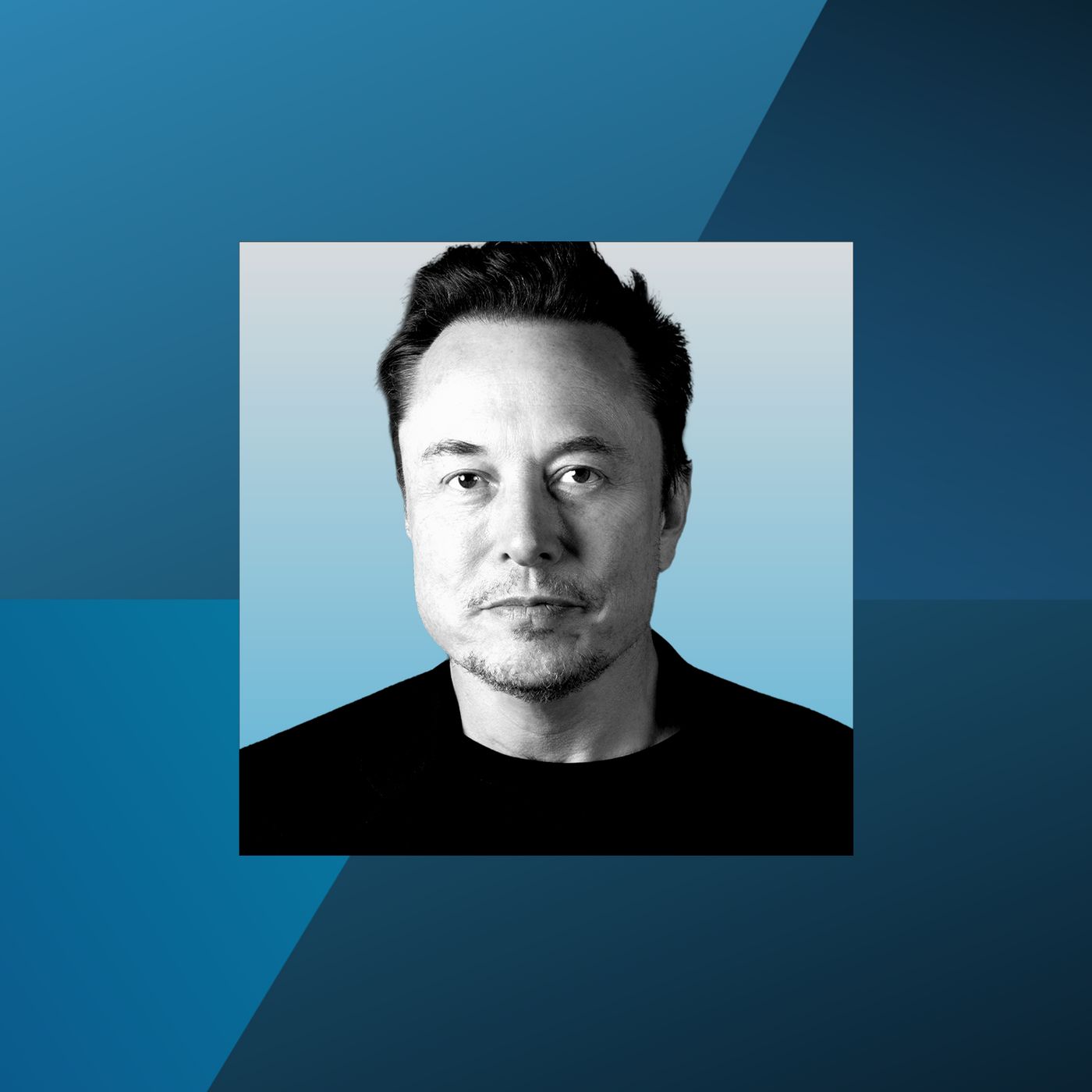
Elon Musk (entrepreneur; CEO of Tesla and SpaceX; runs AI/robotics efforts including Neuralink; founded The Boring Company; built TerraFab chip factory; major political donor). Interviewer: Andrew Ross (The New York Times).
Jensen Huang can’t be replaced; NVIDIA board/ shareholders should reconsider firing; Musk is ideologically moderate and not “MAGA”; Starlink was pre-positioned and must not be used for offensive drone strikes—Starshield is the U.S.-controlled kill system; Zelensky’s claims about throttling Starshield/Starlink are false; Starlink will fund rockets and off-world survival; SpaceX–Tesla convergence is driven by AI/robotics and compute in orbit; he shouldn’t receive merger compensation just for the deal; Anthropic likely won’t terminate compute contracts.
Starship upper-stage catch from orbit; Starlink keeping Ukrainian front communications after Russia disabled other networks; speed limit tied to Ukraine road limits; direct-to-cell v2 (40x bandwidth) and 800 MHz micro ground stations; Cybercab two-seater covering ~90% of passenger miles; orbital compute eventually dominating total compute.
Written by AI. May contain mistakes.
Elon Musk joins the conversation, reflecting on previous discussions.
“recorded on November 18th in New York City.”
Musk discusses his views on Jensen and the impact of leadership changes.
“And I bet you remember the last time he was here, Elon Musk.”
Musk shares insights on the recent elections and their implications.
“You've now also said that you would hire him.”
Musk discusses his political involvement and its potential impact on his companies.
“my funding in this past election but you know hopefully in this country you still need to do an actual crime before you go to prison you know aspirationally that should be how it works Do you think this experience...”
Elon Musk discusses the tribal nature of politics and immigration perspectives.
“I think there are positive and negatives in both parties.”
Musk explains his involvement with Starlink in Ukraine and the ethical implications of using it for military operations.
“I've got a separate geopolitical question for you because it came up a couple times today.”
Musk discusses SpaceX's innovations, patents, and future plans for telecommunications.
“a reduction of the Russian space activities by two-thirds because we took away their Soyuz launches, who took away their commercial rocket launches and reduced the Russian airspace industry by a factor of three.”
Elon Musk discusses how Starlink provides crucial connectivity and its implications for communication technologies.
“And there's a lot of questions about what that ultimately means to a Verizon and T-Mobile and AT &T and whether you can, how easy is it going to be to pull this off?”
Musk shares his perspectives on the need for humanity to become a multi-planetary species to ensure survival.
“You can just do a search and see what good that Starlink has done.”
Discussion about the future of telecommunications, including SpaceX's direct-to-cell service and associated challenges.
“That we should boldly go, it's like Star Trek, boldly go where no one's gone before.”
Musk elaborates on the future demand for bandwidth driven by AI and robotics.
“where we can establish what I call micro ground stations, or very small ground stations, and have a network of very small ground stations that are maybe bundled together with Starlink terminals as one of the approaches.”
Exploration of the implications and considerations surrounding a possible merger between SpaceX and Tesla.
“You probably can't talk too much about it, but obviously the big news is about the potential of a SpaceX and Tesla merger.”
Musk discusses the future of Tesla's vehicle production, including the Cybertruck and autonomous vehicles.
“So really, it's just a question of, do SpaceX and Tesla execute better together and create more value than if they're a part?”
Insights on the evolving landscape of AI and its impact on cloud computing and related businesses.
“It came up a lot recently, which is the Cybertruck, obviously, you are sunsetting so you can make more room to make cyber taxis.”
Elon Musk shares his insights on the AI company Anthropic and discusses the implications of AI economics.
“I have just a couple of quick questions for you that really relate to the AI piece of it.”
Musk provides an update on his personal feelings, comparing his mind to weather patterns.
“And they certainly are, they make a great AI.”

Get the gist, explore an idea or ask about something said.
 Claude
On DealBook Summit, what are the key points of this episode?
Searching your listeningAutomatic transcript. May contain errors.
0:00Andrew Ross Sorkin: Accenture is working together with the NFL to drive international growth by evaluating markets, developing audience insights, and creating new ways to engage fans in cities around the world. The NFL is building a global game, and Accenture is helping make that vision a reality by striking the right balance between what makes the NFL beloved in America and tapping into the passions and preferences that make each market unique. Accenture, the official business and technology consulting partner of the NFL. Learn more at Accenture.com slash NFL.
0:55Andrew Ross Sorkin: and contributing sponsors Atlassian and N-Scale.
1:06I'm not MAGA. I'm not sure what MAGA means, but if that means blind adherence to a set of policies by the Republican Party, then I certainly don't have that. I think I'm ideologically quite moderate. I don't think I have any kind of extreme political views.
1:22Andrew Ross Sorkin: This is Andrew Ross working with The New York Times, and you're listening to interviews from our annual Dealbook Summit, recorded on November 18th in New York City.
1:38Andrew Ross Sorkin: Elon Musk is here. Virtually, everybody, it is fair to say that Elon is the most consequential private citizen in the world. This year, he took SpaceX public, the biggest public listing ever. He runs Tesla, SpaceX AI, now SpaceX SI, X, the boring company, Neuralink, and even more than that. He was one of the largest donors in this month's midterm election to the Republican Party. He's also built a massive chip factory called TerraFab, which he says could become the largest building on Earth. And just last week, you probably all saw it, SpaceX made history when it caught the upper stage of the Starship rocket from orbit.
2:20Andrew Ross Sorkin: And I think as you can watch it there, it really was such a marvel to watch. We're going to talk about his powers, influence, about the future and just about everything. Please welcome back to DealBook. And I bet you remember the last time he was here, Elon Musk. Elon. Hi. Good to see you. It's good to see you. We don't have a seven-second delay, but we thought about it because of our last conversation. Did you say something crazy or something? Do you remember? You don't remember? Yes, I do remember. You remember a little bit. You know, sometimes I put my foot in the mouth, and sometimes I manage to put both feet in my mouth and hover, which is incredible.
3:12Andrew Ross Sorkin: There is a lot to talk about, and you're in China with the president. But I wanted to talk about something we've been talking about all day to virtually every guest. But I know you've been at the forefront of it because you're a close friend of his. And you've been out publicly talking about it, which is the Jensen story and this idea of bringing Jensen back. And if not bringing Jensen back, the possibility of potentially hiring Jensen yourself. So what can you tell us? yeah i think i i tend to speak my mind quite plainly online as is probably obvious and and as i mentioned often uh shooting myself in the foot um and then putting that foot in my mouth i mean it's it's you know i have to say i've um i've gotten myself into trouble quite quite a lot on x formerly known as twitter as as everyone knows um so so you but you're not going to find me saying one thing publicly and another thing privately i i say the same thing so you know jensen is an old friend of mine i think he's i would call jensen like you know michael jordan perhaps at his peak level you know in terms of what he means to a team i i do i do think it's it's uh you you got to think long and hard before you take someone like like let's say you're chicago bulls you know middle of your second middle of your second season and you got to you You got a winning streak, that's just going to happen.
4:36And then you kick Michael Jordan off your team. Doesn't seem like a smart decision to me. I think there's no one that can really replace Jensen. I mean, he does the roles of like several people. I mean, he's managing supply chain. I mean, you see him eating street food in Korea and Taiwan with critical suppliers. He has long-term relationships that have been built up over decades. he understands technology incredibly well uh his team loves him loves him and many of them are there because of him and have had higher offers to go elsewhere and have turned them down because of personal loyalty to jensen so do you think that man you really think you need to think long and hard before kicking someone else like that out you know so someone like that out so it It seems, you know, and I know that there's like been, you know, he's certainly made some mistakes here.
5:36But I don't think he's disloyal to the United States. And, you know, I've been clear. I think it's like kicking Michael Jordan off your team when you're on a winning streak. And it just seems, doesn't seem like a good thing for shareholders. and you have to balance the good that someone does and brings relative to the bad, you know? So, yeah, I think it was a mistake, and I've said so publicly, and a lot of other people have too.
6:10Andrew Ross Sorkin: You've now also said that you would hire him. The board is... Well, of course, but who wouldn't, you know? He's an incredibly talented, he's one of the most talented entrepreneurs of the year in history. Who wouldn't want to hire Jensen? Now, Jensen's not looking for a job, obviously. You know, and I think he's still somewhat stunned by these events. You know, I feel like if this is a movie where, like, in some George R. R. Martin script, where you've got a major character that you're invested in, and suddenly they're gone. It's quite shocking. Do you think, long term, that he will, I mean, do you think that he, Have you spoken to him about this personally?
6:54Andrew Ross Sorkin: Yes. And what did he tell you? And what do you think happens? I don't know what happens next. Obviously, the decision is up to the NVIDIA board, of course. The next level of authority are the shareholders. But the shareholders would have to, you know, I think, like the current board would either need to change their mind or shareholders would need to vote the board out at the shareholders meeting, which is pretty rare for that to happen. But really, the board is in charge of the company right now. So that's, you know. You're with the president. Have you talked to him about it? Well, I mean, I don't think we should make this the Jensen interview.
7:38No, I know. Yeah, well, I think the president has voiced publicly that he thinks Jensen should have stayed as CEO. and certainly everyone I know thinks the same. But this is the other day that the NVIDIA board decision, so we're not on the board. Right.
7:59Andrew Ross Sorkin: Let me ask you about you. I want to get into all of your companies and SpaceX and Tesla and everything else, but we did say at the top of this that you were obviously involved quite heavily in the politics of everything in the country in terms of supporting Republicans in the midterms they lost. And I just wanted to get your reaction to that loss and what you think the impact will be on the country, what you think the impact will be on your businesses. We now have a blue governor in Texas, which is a first in a very long time. What did you think? Well, I think, first of all, the new governor, actually, I think, is going to be quite moderate.
8:43I don't think she's sort of a far-left governor. And based on everything I've heard about her, I think things will be fine in Texas with Jane Eyre as governor. So I think things will be fine on that front. You know, I do think that it's good to have some balance of power, you know, like not have the, as a general rule, not have the presidency, Senate, and House all be of the same party. so my goal I didn't mention this on X was that I think we want to have at least one of either the presidency of the House or the Senate be of the other party so we said what was my actual goal here which failed by the way obviously was to have the Senate be 51 Republican in 29 but obviously the Republicans were routed in this election and the money I spent was, I think, I feel pretty foolish about having spent so much money and not seeing much for it.
9:49Or maybe it would have been much worse without that. But it certainly shows that American elections are not just about money. Obviously, you can put a lot of money into an election and have an effect that is relatively minor. And I think that that was the case here. so probably if I could rewind the clock I would have spent less money and I didn't put a lot of personal attention into it because I'm focused on building SpaceX, Tesla and you know
10:22Andrew Ross Sorkin: The reason I ask though is whether you think it's going to impact those companies because you hear people like the chairman of the oversight committee saying lawyer up and you hear the president saying if I have to give him a pardon, meaning you, I'll give him a pardon. And I just, I'm on a personal level. I don't think I need a pardon, by the way, because I haven't committed any crimes. So, I mean, a bunch of these people are like a little over the top because they're like, you know, a number of Democrats, I think even the incoming Texas House majority leader said that I should go to prison. Then they asked him, but for what crime?
11:03And he couldn't name a crime. but I'm like it was like prison first, crime later and I'm like the guy's trying to channel barrier from like Stalin where it's like show me the man, I'll show you the crime type of thing. I'm like come on guys this is a little over the top but there are definitely a few people grumpy about my funding in this past election but you know hopefully in this country you still need to do an actual crime before you go to prison you know aspirationally that should be how it works Do you think this experience... I'm crazy. I mean, it really needs to be first crime, then prison.
11:41You know, not the other way around. I mean, what country are we living in here?
11:48Andrew Ross Sorkin: But do you think that this experience, though, changes your thinking about being involved in politics one way or the other, meaning giving money to one party or the other, in part because invariably, if you support the losing party, potentially the winning party is then going to, I mean, people talk about whether there'll be hearings and you're going to have to go to Washington. I just wanted to know, as somebody who's leading these companies and thinking about all this, how you think about it? No, my motivations were very simple, which is just to sort of have one of either the House, Senate or presidency be Republican in 29 and not have just a sort of, in the worst case scenario, a supermajority of Democrats.
12:36I'm not in favor of a supermajority of Republicans either. You know, I think we have some, we're going to have some checks and balances here. That was it, really. You know, I think I'm ideologically quite moderate, although, you know, I don't think I have like, you know, any kind of extreme political views. And you've known me for a long time. I mean, can you think of some extreme view that I have?
12:58Andrew Ross Sorkin: I have known you for a very long time. I think it's fair to say that you have said things or reposted things on X where, you know, you got into an interesting interview with Zannie from The Economist, where you guys went back and forth about some of the things happening in Europe and the like around immigration things that people did think were far or extreme. I know you don't think they're extreme. Yeah, I don't think they're extreme. Like what? I think, look, I think in the U.S., people in the U.S., some people in the U.S. might think that some of the MAGA stuff was extreme. And in some of the stuff in Europe around immigration and the like, there are some people who would think that.
13:42Andrew Ross Sorkin: And that's why I'm asking you about it. No, no, but you can't just say broad based, oh, MAGA, whatever. I mean, I'm not MAGA. Well, at least I'm not like, I'm not sure what mega means, but I don't think I'm like, if that means sort of blind adherence to a set of policies by the Republican Party, then I certainly don't have that. I think there are positive and negatives in both parties. But politics is very tribal. And for a lot of people, if they, you know, a lot of people cannot see any good in the other party and they cannot see any bad in their own party. because they've sort of more or less invested in their party like it's their hometown sports team, and it's just their team, and they won't accept that there's anything that the other team could do that's good or anything that their team can do that's bad.
14:32Whereas the truth is that both parties have their issues. And on the immigration stuff, I was just saying, look, I think Europe needs to stop massive amounts of illegal immigration into Europe. which I don't know if that's, these days that's controversial, but I think it seems crazy that they've got these small boats landing all the time with people who are unvetted and in some cases do terrible things to the residents of Europe when they arrive. And you at least want to have some vetting process when people can't just have potentially dangerous criminals arriving illegally.
15:12Andrew Ross Sorkin: Let me ask you... If that's the right wing view, then I guess so. Yeah, sure. I mean, but that used to be a normal view not that long ago. You know, Obama and Hillary actually would say exactly what I've said. Like, you can literally look at their speeches that they're against. Maybe they're for it now, but they certainly were against it, you know, quote, 10, 15 years ago. So this is not in any way like some extreme ideological view.
15:42We'll be right back.
15:47Andrew Ross Sorkin: Golf has come a long way in the past century. Today, the R &A and Accenture are partnering to celebrate its heritage while shaping what's to come. Together, the R &A and Accenture are reinventing the future of golf, using data and technology to enhance your experiences of the game and drive the growth of golf worldwide. All this, and there's more to come. Accenture, the official business and technology consulting partner of the R &A. Learn more at Accenture.com slash R &A.
16:23Andrew Ross Sorkin: I've got a separate geopolitical question for you because it came up a couple times today. And actually Palmer Luckey, who was here, offered a fascinating defense, actually, of your decision. You've talked about it on X, but I don't think you've talked about it publicly. Can you explain to everybody your thinking and also just personally how you felt about it around the situation with Starlink and Starshield in Ukraine and the idea of throttling it and what really happened? Because I don't think that the public really knows the true story. No, most people in the public just believe the person on TV or the article they read.
17:06and they have a somewhat surface reaction to that. But I think it would probably be accurate to say that there is no private individual who has helped Ukraine more than I have. I made sure that Starlink was in Ukraine, pre-positioned ahead of the Russian invasion. And when Russia invaded, they disabled all communications, all cell towers, all fiber cables, and every satellite communication system. there was one system they could not disable, and that was Starlink. And if they had not had Starlink, their entire line would have collapsed because they had no communication system, and Russia would have won.
17:45Now, does that sound like a pro-Russian action to you? So then tell us what happened after. No, it doesn't. Obviously, it's a rhetorical question. And even to this present day, Starlink provides the backbone of communications for the Ukrainian military and for Ukraine more broadly. And if we were to turn off Starlink, the entire Ukrainian front would collapse immediately. So this is, I think, an action that can only be described as incredibly supportive of Ukraine. Now, from the beginning, I've said that Starlink is a civilian system. It is not meant to be used for offensive drone strikes that kill people.
18:29If you want to do that, you need to do Star Shield, which is a separate system that is controlled by the U.S. government. But do not ask me as a private individual to make kill decisions that sometimes result in the loss of innocent lives, not just soldiers. That is not my position to do. And yet we've been pressed relentlessly to do that, which I think is outrageous and not a cool thing to do. So, now, in the stalling system, there is a speed limit, which is, that speed limit is the speed of the fastest road speed limit in Ukraine, which I think is about 80 miles an hour. Which means you can drive around and you can do anything up to 80 miles an hour.
19:25That's it. you know, I repeatedly said, look, if they want you to do something that's an offensive military action, it needs to be the star shield system where the kill decision is that of the war department, perhaps ultimately the president and not mine. And that's how it's going to be. And those are the rules that have been in place since the beginning for years. Now people pressure me to change it, but I'm not changing it. And let me tell you a bit more about this because I can tell you a lot about this war and the origins and the history. a lot more than I think hardly anyone could tell you.
19:59Because I struggle with what is the right thing to do. And what I'm troubled by here is the thing that really travels me morally is a continued conflict where thousands of kids are sent in to die every day with no change in the borders forever. And I think anyone who supports that is a horrible human being or has not thought through the problem. And you should have empathy not just for the Ukrainian boys who are dying, but also for the Russian ones because they are conscripted and forced to go to that line. Nobody voluntarily goes to a line just to die in a drone strike. And now those sons are never going to see their parents again.
20:45The kids of those men are never going to see their father again. Imagine if that was your son. or your dad. And I think there's been too much of this Ukraine good, Russia bad, anything done to the Russians is excusable. That's an unkind thing and a horrible position to take. And I can go on for this topic for a while.
21:13Andrew Ross Sorkin: Let me anticipate some of your questions. So, Russia is the aggressor. No, no. Let me spend a moment on this one.
21:26It's true that from an invasion standpoint, Russia is the aggressive. But it is also true that we, America, staged a coup to overthrow the democratically elected pro-Russian president of Ukraine. That does not strike me. That is an offensive action. And without U.S. State Department and other agencies to help, this would not have happened. That is obviously an offensive action. I mean, the full answer would take too long. Maybe I should just write this up and articulate it. There were some, and it sounds like I'm making excuses for Russia, but I'm not. I mean, if you look at what my actions have done, SpaceX, for example, has resulted in two-thirds of the Russian, a reduction of the Russian space activities by two-thirds because we took away their Soyuz launches, who took away their commercial rocket launches and reduced the Russian airspace industry by a factor of three.
22:22I'm not exactly someone who has aided Russia. We have no business in Russia. We have no nothing in Russia.
22:27Andrew Ross Sorkin: So just help us with this, though. There's one piece that I just, and maybe this will clarify it. President Zelensky talks about the fact that they are using, he refers to it as Star Shield, that he is using Star Shield, the system of the U.S. government, and then claiming that that is the system that was slowed down. That's false. That's what I want to understand. I don't want to blow your mind, but Zelensky is not always truthful. Okay, so... Maybe that comes as a shock. No, no, so does Ukraine... What? He's not always truthful? No, he's not always truthful. Does Ukraine have access at all to Star Shield, the U.S.
23:04Andrew Ross Sorkin: system? Is the U.S. giving that system to Ukraine, or are they simply working off of the commercial system called Starlink? Because maybe what's happening here is some of this is getting conflated. I think some of this is getting conflated. There are two satellite systems. One is Starlink, commercial satellite system. The other is Starshield. Starshield is controlled by the U.S. government. Any action taken by Starshield is up to the War Department. Starlink is commercial and is not intended as a weapon of war. is intended to, you know, just be helpful to people. It's meant a civilian infrastructure.
23:45Andrew Ross Sorkin: And so when the president talks about, President Zelensky talks about using Star Shield, he is not using Star Shield or he is? He's lying. And what he is actually saying is he wants to use Starlink for military, offensive military operations. Have you talked to the president, President Trump, about them in Ukraine having access to Star Shield? Or has anyone in the U.S. government talked about Ukraine having access to that so that it's not controlled by the commercial side of this? Starship is not controlled by the commercial side of things. No, I understand that. That's why I'm asking. I'm asking whether...
24:20It's controlled by the U.S. government.
24:22Andrew Ross Sorkin: Right. I'm asking whether you... You can ask them what they want to do with it. Right. No, the reason I'm asking is... What I'm trying to tell you is Zelensky's actually asking to use the Starlink commercial satellites for offensive military actions. And we have declined to do so as we have declined to do so from the beginning of this conflict. End of story. So what's so interesting about this is, you know, we talked to Mark Carney, the Prime Minister of Canada, and others. So many people have looked at this story and suggested that a single person, meaning you, shouldn't have the power to turn on or turn off one of these services in the middle of a war.
25:01Andrew Ross Sorkin: And that there's too much power for one single individual, right? I mean, that's the argument. You've read it. You've seen it. And as a result, some of these other people are talking about it diversifying away from using Starlink or trying to find other satellite services and this or that. Diversify away. Don't use Starlink. No, I understand that. But what I'm trying to understand is whether you think that there is a misunderstanding about who's controlling the satellites. I think there are both deliberate lies and lack of understanding. But nothing has changed with regard to Starlink. The same rules that haven't been in place for Starlink from the beginning are in place today.
25:36And you can look at my ex-posts and my Twitter posts, and I'm very clear that Starlink, the Starlink satellites are not for use for offensive military operations. I don't want Starlink commercial to become party to a war, which we would be if we allow Starlink to be used for offensive military operations. That's why Starship was created, so that any kill decision there is done by the War Department, as it should be, not me. And we've not turned off Starlink. This is false. By the way, Walter Isaacson made an error in his book because when he wrote the book, and he acknowledges this error, and you can ask him about it, because a false statement was put out by Ukraine saying that, this is a few years ago, that I had turned off Starlink for an offensive strike against the Russian fleet in Sevastopol.
26:27This is completely false. At the time, the Starlink satellite beams were not on in Crimea. They were not on because Russia was a sanctioned country, and it would have been illegal for us to turn the beams on in a sanctioned country without State Department approval.
26:45Andrew Ross Sorkin: How do you feel, though? And I mean this genuinely. People look at you and go, this guy's got extraordinary power. And right now, they see that manifest itself, or they think they see it manifest itself in the context of Starlink, which is so much further ahead than just about any competitor. Amazon was trying to put up some satellites even this weekend and unfortunately had a mishap with the ship going up. And as a result, you have a monopoly on space at the moment. You know, we don't actually file patents. The only patents we file at SpaceX are defensive patents. I encourage people to copy our rockets and to copy our satellites.
27:29We do not place any patent landmines in their way. In fact, we're quite open about how things work. You can go and look at our rocket, for example. There's one sitting right on the main street in Hawthorne, outside of our headquarters. You can measure it and copy it. And I've actually said, look, if anyone wants to do that, we won't sue them. Go ahead and do it. it's a monopoly we've just made a system that is much better than anyone else's but we've done nothing to inhibit others from doing the same in fact we've helped them if anything by saying we're not going to patent or block any any technology innovations that we do and we've done the same at tesla i open sourced all tesla patents for use by the rest of industry in order to help with the advent of electric vehicles talking about starlink one of the things that
28:16Andrew Ross Sorkin: you are planning to do is create terrestrial telephone service. And there's a lot of questions about what that ultimately means to a Verizon and T-Mobile and AT &T and whether you can, how easy is it going to be to pull this off? How much it's going to cost to pull it off? Clearly it works in rural areas. It gets more complicated, the more, the denser you get. What does that look like to you? Well, we're trying to do useful things with regard to communications. These useful things we do with communications allow us to fund the development of advanced rockets like Starship. So, you know, we created Starlink, which has the benefit of providing high bandwidth, low cost connectivity to regions of the world that don't have it today.
29:02So we've enabled high bandwidth, affordable connectivity to many rural schools and hospitals, to rescue organizations. The number of people whose lives have been saved by Starlink because they had connectivity if they were a ship about to sink at sea or there had been a natural disaster and the only form of communication was Starlink. I'm not sure what to count here, but I think it might be that hundreds of people's lives have been saved because Starlink was the only means of connectivity in a natural disaster, or like I said, for people who are lost in aircraft. It's all over the internet. You can just do a search and see what good that Starlink has done.
29:50And it's the first ever global high-bandwidth system. But there was another sort of long-term role that was important for Starlink, which is that we need to somehow fund the development of rockets that are capable of extending life as we know it, extending consciousness beyond Earth in order to secure the long-term survival of humanity and consciousness and life as we know it by building self-sustaining cities on the moon and Mars. Because something bad might happen on Earth. You never know. It could be a nuclear war. It could be like a giant meteor, super volcanoes, some kind of bioengineered virus.
30:32Do you think that's going to happen?
30:33Andrew Ross Sorkin: And is that what's really driving, I mean, is that what drives you and what you fear? Well, it's simply that if you simply look at the fossil record and look at how many extinction events have happened, which is a lot, then you know that this is simply a matter of time. It's a when, not an if. I put that into the general class of things that are defensive reasons to extend life and consciousness beyond Earth. So these are all important. It's important to have insurance for life as a whole. You know, it's life insurance, but for everything. But if you ask what motivates me even more than that, I would say that it's that I want to see a future.
31:18I want to envision a future where that is exciting, that we're out there exploring new frontiers, going to new star systems, and make science fiction, not just fiction forever. That we should boldly go, it's like Star Trek, boldly go where no one's gone before. And perhaps we'll find some long dead alien civilizations or perhaps we'll find actual aliens we could talk to. And to be out there among the stars, I think is an incredibly exciting future to look forward to. And you know how you can figure out if something's really cool about the future? Just ask your kid and they'll tell you. And, you know, there are many problems and difficulties that we have to solve in this world.
32:07But life cannot just be about solving one miserable problem after another. There have to be things that excite you and inspire you about the future, that make you happy. When you wake up in the morning, you can't wait to see what happens next. And being a star-faring civilization is one of those things.
32:24Andrew Ross Sorkin: So back to telecom for a second. One of the reasons to do that is to finance that. What I was going to ask, though, is it's extraordinary cost. And there's a lot of, I wonder whether you think you'll end up buying a telecom company in America. The stocks of all those companies have fallen. And also, by the way, their margins, the multiples they get on those companies are not nearly what you get. And so I'm trying to understand sort of the longer rationale. Well, I think we've got a plan that broadly enables ubiquitous access on Earth, including via cell phone. We'll be launching the SpaceX direct-to-cell version 2 constellation starting next year.
33:10That will, I think, have 40 times the bandwidth of the current direct-to-cell version 1, some very big multiple. And there'll be version three and so forth beyond that, where it can connect directly to your phone from space, just with your normal phone. There's nothing that needs to be added to it. But there is a missing piece of the puzzle here, which is that if you're indoors, especially if you have a metal roof, that blocks the signal from space. So we need something that's terrestrial, that addresses situations where people are in a building with a thick roof, essentially. And that's where the 800 megahertz band that we bought comes into play, where we can establish what I call micro ground stations, or very small ground stations, and have a network of very small ground stations that are maybe bundled together with Starlink terminals as one of the approaches.
34:15But basically, instead of having these big launch towers, sorry, these big cell towers all over the place, having a whole bunch of sort of micro cell sites that are scattered throughout densely populated areas. And this is a design, we have a design for this, and it's going into production, I think, next year. which is quite a revolutionary sort of like micro cell tower thing that you can just put on your roof like a stalling dish. And it addresses the problem of reaching people who are in a building. And I don't really think, by the way, I don't think this means like AT &T, Verizon, or others go out of business or anything.
35:01And maybe they'll lose some revenue here, but I actually think that the demand for bandwidth will be tremendous in the future. And that bandwidth will be driven primarily by superintelligence and robots. And they're going to need a lot more bandwidth than humans. Because while humans can speak at maybe 100 bits per second at a peak rate, the computers can do it at a trillion bits per second. So that means you're really going to want several orders of magnitude more bandwidth to service the superintelligence and the vast number of robots that will exist in the future.
35:42Andrew Ross Sorkin: You probably can't talk too much about it, but obviously the big news is about the potential of a SpaceX and Tesla merger. And I was just curious what you would think if it doesn't happen. I think everybody thinks it eventually will find a way to happen. But if it doesn't happen, how much more challenging you think it would otherwise be to operate these businesses separately down the line? I think either path is possible. It's just that there's more and more areas of interaction or overlap with SpaceX and Tesla that didn't exist before. So if you'd asked me five years ago, do I ever think there's any purpose in SpaceX and Tesla getting together?
36:22I would have said no. And people did ask me this. And I said, I can't think of why that would make sense. You know, the word synergy is overused and misapplied. And, you know, very often, like the number of mergers that actually worked out where the combined company is worth more than some of the prior two companies is relatively unusual. What we are seeing is that is that AI and robotics, or SI and robotics, is what's causing convergence here. Both SpaceX and Tesla have major AI software groups. Obviously, the Tesla AI software group is primarily focused on real-world AI with Tesla self-driving and with the Optimus robot.
37:06SpaceX has sort of the large model AI stuff. And on the AI software front, both Tesla and SpaceX have advanced chip design groups. And if you look into the future, its orbital compute is really going to be where things scale to very, you know, like in the future, the amount of super intelligence compute that's in space will round up to 100%. Now remember these words, because that sounds like a preposterous thing to say, meaning that I think super intelligence compute will be less than 0.4 % of compute. Therefore, orbital compute will round up to 100%. And I think this is a relatively easy prediction to make, and it's simply a matter of time before that happens.
37:51And you need the two companies to be together to do that, you think? You don't need them to be together, but would they be better together? Right. I mean, probably yes. No, this is not like let's merge the companies no matter what. These require shareholder votes, which may or may not succeed, at least in the case of Tesla. But even for my shareholder vote for SpaceX, I have to represent other shareholders. I can't just drag them into a non-economic merger that is bad for them, because I'll obviously get sued. So really, it's just a question of, do SpaceX and Tesla execute better together and create more value than if they're a part?
38:31And does that hypothesis stand up to scrutiny? Is it actually valid? And that will be up to the shareholders to decide. But there are so many areas of convergence that didn't exist in years before and are increasingly significant to the future.
38:49Andrew Ross Sorkin: I got a hard question for you. We asked readers if they had questions for you. And one question that came back a lot was this. It relates to the merger of SpaceX and Tesla and relates to the idea that at Tesla, you have a pay award that's tied to operating targets. But that if a deal happens, at least historically, you would have been able to capture that compensation. And the question that they asked multiple times was, given that that was done originally so you could control Tesla, and that you now have full control of SpaceX, whether you think you should get or not that piece of compensation if a deal is done?
39:28Well, I don't think I should be compensated with any kind of award just for doing a merger. That would be unreasonable and not right. I mean, I think the right way to think about any deal is, what did the parties intend at the time of doing the deal? And you should keep your deals and stay true to your word. And so if, say, Tesla stock options that were contingent upon Tesla execution, I should not receive those stock option awards simply for merging with SpaceX because that is not meeting the deal, which was that I should only get those stock options for Tesla performance, not just because of a merger.
40:13Right.
40:14Andrew Ross Sorkin: Big question about cars. It came up a lot recently, which is the Cybertruck, obviously, you are sunsetting so you can make more room to make cyber taxis. And eventually, I imagine... Cyber cab, yeah. Do you think in the end that you make and continue to make... I just got one, by the way, a Tesla. By the way, I ordered it. I did not actually get it yet. You've got a long line, Eli. Which one did you order? The YL. We've got three kids. It's currently our most popular car. I think we probably need to change all of the Model Y production to the YL because it's what most people seem to want. But the question is, do you think that you're going to be selling cars in the future or you're just going to be making cybercabs if that becomes the business?
41:06No, well, it's going to make sense for us to make cars that can seat different amounts of people. So the cybercab seats two people, which covers 90 % of old passenger miles. So if you look at old passenger miles, the average number of people in a car is like 1.2. So Cybercap being a two-seater covers about 90 % of all passenger miles driven. But we still need autonomous vehicles for, say, four or six. If you've got a whole family in the car, you still need autonomous vehicles for that. So what we plan to do is have an autonomous version of Model Y that wouldn't have steering wheels and pedals and would be good for transporting groups of six or seven people.
41:56Andrew Ross Sorkin: I know you've got to run because you've got some meetings, and I know it's early in the morning there. I have just a couple of quick questions for you that really relate to the AI piece of it. You recently said that you thought a lot of these neoclouds were going to be guppies and that the economics of some of this were going to fall apart. And I just wanted to expound on that, especially this evening as Anthropic is about to go public. By the way, I'm actually very interested in that too, which is what your take is on Anthropic. This is a company, interestingly, that I think at one point you thought was terrible for the Western civilization, and now they're renting a lot of compute from you.
42:32Yeah, by the way, before we rented them any compute, I went and met with a lot of people at Anthropic. I didn't just move forward with the deal. And it turns out I actually do know a lot of people at Anthropic from my opening eye days. And no one I met at Anthropic set off my evil detector for what it's worth. And these are relatively short-term deals that either party can terminate. And if I feel Anthropic is doing something really terrible for the world, obviously I would end those contracts. And Anthropic, by the same token, is able to end the contracts with, depending on which one, three to six months' notice.
43:12do you think they will?
43:14Andrew Ross Sorkin: because there's been some speculation they apparently had told some investors that they might I think that it's unlikely that they will do so so when I've talked to Anthropic they tell me it is extremely likely that they will continue to rent compute from SpaceX and in fact that they want significantly more but they have to say in a worst case scenario where there are extreme curtailments based on what AI OSI can do, then they may not be able to use compute. But they've told me that their sort of highest probability outcome is that they would like an incremental 10 gigawatts of compute from SpaceX.
43:56So that's a big number. Yeah. But my interaction so far with the Anthropic team is that they seem like good people and they seem principled. They may, there's, you know, there's some crooks about them, like we all do, but they seem, you know, they seem diligent and they seem to care about the future. And, yeah, so I don't, you know, I kind of like the guys, to be honest. So it seems good. And they certainly are, they make a great AI. Opus and Fable are a great product.
44:35Andrew Ross Sorkin: Maybe two philosophical questions for you. The last time we saw you, I'm just so curious how you're feeling personally. When we were up here last time, I talked to you about this idea that you said that your mind was like a storm. And at the time, I asked you whether it was an unhappy storm. And I wanted to know what it's like now. Well, I think it's not always a storm. I mean, I think it's sort of maybe those weather conditions or something. Sometimes it's stormy weather, sometimes it's not. I wouldn't say it's particularly stormy weather right now. I feel relatively at peace. You feel relatively at peace?
45:10Yeah.
45:12Andrew Ross Sorkin: Elon Musk, everybody. Thank you. Thank you very, very much for the conversation. Appreciate it. Thank you.
45:24Andrew Ross Sorkin: Deal Book Summit is a production of The New York Times. This episode was produced by Evan Roberts. Mixing by Katie McMurrin and Daniel Ramirez. Original music by Daniel Powell. The rest of the Dealbook Events team includes Julie Zahn, Chantal Renye, Melissa Tripoli, Dana Pruskowski, Matt Kaiser, Ezra Lee, Marissa Farina, Jesse Brattengeier, Nico Gallagly, and special thanks to Sam Dolnik, Nina Lassum, Abe Sater, and Maddie Maciello.
46:07liberating God bless you.
Fresh off taking SpaceX public and catching the upper stage of a returning Starship rocket from midair, Elon Musk joins Andrew Ross Sorkin from China to talk about his unprecedented (and unsuccessful) political spending on the midterms, the evolving war in Ukraine and why he believes his dominance in space infrastructure does not constitute a monopoly. Never one to pull punches, Musk dives into Jensen Huang’s recent troubles, defends his controversial views on immigration and polarization and makes a surprising declaration: “I am not MAGA.” Filmed live in 2026 at The New York Times DealBook Summit.
Subscribe today at nytimes.com/podcasts or on Apple Podcasts, Spotify and Amazon Music. You can also subscribe via your favorite podcast app here https://www.nytimes.com/activate-access/audio?source=podcatcher. For more podcasts and narrated articles, download The New York Times app at nytimes.com/app.
Hosted by Simplecast, an AdsWizz company. See pcm.adswizz.com for information about our collection and use of personal data for advertising.