 Ask ChatGPT

Mark Carney discusses tariffs and “sovereignty” in Canada’s trade strategy, including negotiations with China and the U.S., diversification to reduce strategic dependencies, and how to build redundancy in areas like space/satellites and critical minerals. He also addresses Canada’s capped electric-car tariff deal with China and the outlook for North American auto competitiveness.
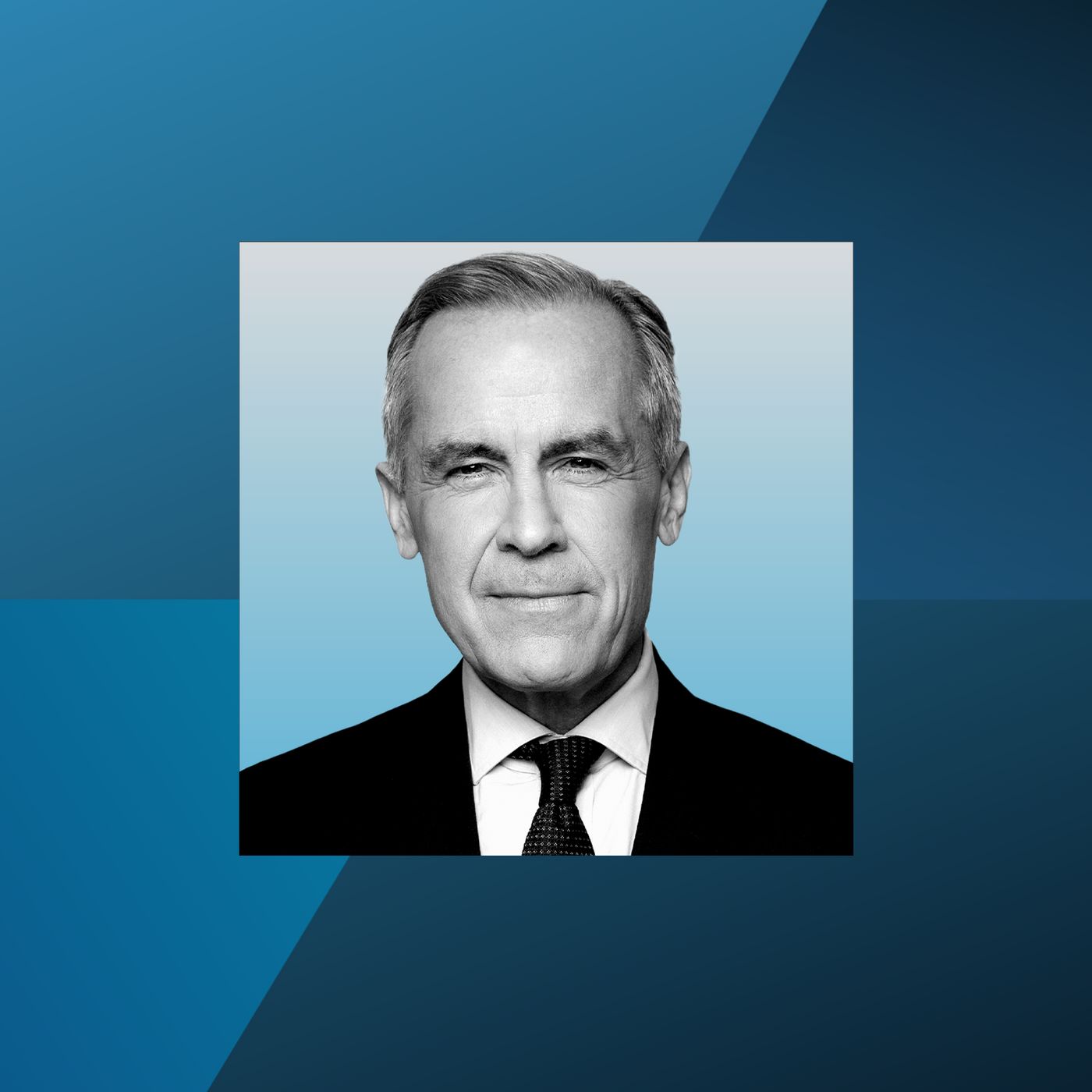
Mark Carney, Canadian Prime Minister (speaking from China at APEC). Background: over a decade at Goldman Sachs; governor of the Bank of England during the financial crisis; central figure in Canada-U.S. trade tensions. He previously warned at Davos about a “rupture in the world order.”
Trade negotiations with China are progressing well; Canada’s strategy is driven by reducing coercion risk via diversification; Canada’s China exposure in intelligence infrastructure is “de minimis” versus the U.S.; sovereignty requires redundant systems (citing Starlink/Star Shield vulnerability concerns, including Ukraine).
tariffs reduced on 90% of China trade “irritants”; Canada’s EV tariff cut from 100% to 6% applies to 49,000 cars with a hard cap; redundancy for Arctic/high-north protection; Starlink dependence turning from advantage to vulnerability.
Written by AI. May contain mistakes.
Mark Carney discusses the status of trade negotiations with China and the U.S.
“Our next guest is Canadian Prime Minister Mark Carney.”
Carney explains Canada's strategic position in global trade and its relationship with the U.S. and China.
“You know, ultimately, that's what's that's what's driving the strategy.”
Carney discusses Canada's focus on deepening ties with Europe amidst global trade changes.
“Look, we've got the strongest fiscal position in the G7 by far.”
Discussion on the importance of sovereignty in satellite technology and defense.
“One of the things that I know you're working on with the Europeans is satellites in space, in large part, I believe, to not become dependent on Starlink.”
Explore the complexities of sovereignty in international trade and security.
“We're not looking to, you know, hundreds and millions of applications.”
Discuss the implications of reducing tariffs on Chinese electric cars in Canada.
“Arctic Defense, NORAD would be an example.”
Hear insights on negotiating trade deals with the U.S. and Canada's priorities.
“Let me just ask you a very personal question.”

Get the gist, explore an idea or ask about something said.
 Claude
On DealBook Summit, what are the key points of this episode?
Searching your listeningAutomatic transcript. May contain errors.
0:00Andrew Ross Sorkin: Accenture is working together with the NFL to drive international growth by evaluating markets, developing audience insights, and creating new ways to engage fans in cities around the world. The NFL is building a global game, and Accenture is helping make that vision a reality by striking the right balance between what makes the NFL beloved in America and tapping into the passions and preferences that make each market unique. Accenture, the official business and technology consulting partner of the NFL. Learn more at Accenture.com slash NFL.
0:55Andrew Ross Sorkin: and contributing sponsors Atlassian and N-Scale.
1:05There are a variety of areas where we cooperate deeply with the United States. We are NATO allies. We still have quite an open trading relationship as well. But there are dependencies for which it would be unwise for us to not hedge.
1:23Andrew Ross Sorkin: This is Andrew Ross working with The New York Times. And you're listening to interviews from our annual Dealbook Summit, recorded on November 18th in New York City.
1:37Andrew Ross Sorkin: Our next guest is Canadian Prime Minister Mark Carney. He joins us now from China, where he is attending the APEC meeting. He spent more than a decade at Goldman Sachs. He was the governor of the Bank of England through the financial crisis. He, of course, is at the center of the U.S. trade war with Canada. his speech at Davos earlier this year was a watershed moment when he warned of a, quote, rupture in the world order. We want to thank the prime minister for joining us. It is late in China, Mr. Prime Minister, so thank you for being with us. Maybe you could just, before we even get into it all, bring us up to date, because I know that you just had a meeting both with the president of China yesterday, but also, I believe today, President Trump and where the trade negotiations stand real time?
2:22Well, Andrew, I can report that the trade negotiations are going exceptionally well. We reached an agreement. We reduced tariffs on over 90 percent of trade irritants. And of course, I'm speaking about our trade negotiations with China. They're very professional. They move forward in a very linear fashion. And it's all very rational and moving forward. Now, if you're asking about the United States, well, we continue to have a series of issues there. Look, there is a very, very good trade arrangement that is possible. We had an existing one under USMCA. There is one under the new trade policy that is possible, but we're not yet there.
2:58Andrew Ross Sorkin: Can you explain the way you now think, though, about your relationship with China in a different way than your relationship with the U.S.? How do they compare? I think that if we had had this conversation a year or two ago, you would have said the U.S. is our ally and you would have called China something else. Well, we certainly, I mean, the U.S. is our ally. That has not changed. We are NATO allies. We're allies in a wide range of areas. So that hasn't changed. The trading relationship has changed. That's the first thing. The second thing that's changed is both the United States and China over the course of the last 18, 24 months have used integration as a weapon.
3:38The U.S. with tariffs, China with critical minerals. There's been other examples of this we've used. Canada would be included in this payment systems against Russia as part of the sanctions with the Ukraine, the unjustified Ukraine wars weapons. What we've taken from that and a number of other countries have taken from that is where are your strategic dependencies? With whom do you need to partner and diversify in order to not be coerced, right, subjugated, to use another term. And that's much broader than the sort of traditional areas that are still important, of course, energy, food security, defense.
4:17But it extends out to, you just obviously had a very fascinating discussion, which I caught a bit of with Sam and Greg, the intelligence infrastructure. It extends to space, critical minerals, other things. So our trade strategy with China, with the U.S., but very much with everybody else, is driven by diversification, reducing those dependencies so that we're that so that we are more sovereign. You know, ultimately, that's what's that's what's driving the strategy.
4:48Andrew Ross Sorkin: And is your sense that the midterms here in the U.S. changed anything as it relates to trade and your even view of the U.S., given some of the comments that this president's made about either you personally or this being the next 51st state? You have to take the president's comments in the round. We had a very nice discussion this evening, so I'll hang on to that. Look, has it changed? I would say no is the short answer. What will change views will be policy decisions that are taken and that stick. I think in the end, that is what is going to change views. I mean, we're in a situation, when I say we, I mean Canada.
5:31I obviously only speak for Canada, but a number of countries that have been through this experience more than once. And until policy actually changes, it's hard to change the view. That's the reality.
5:44Andrew Ross Sorkin: Okay, this is a hard one for you. Do you trust President Xi more than President Trump? Look, you just had a discussion about alignment. We look for situations where there's alignment and we trust alignment. And do you see yourself aligned with China now? And the reason I ask is, look, he jailed two of your people. Very much. Yeah, exactly. We've had fundamental issues in the past with China. We've had very frank discussions, myself and President Xi, about those issues, about how to operate going forward, about what the limits are to the relationship. So, I mean, one of the things, let's take a big step back in terms of dimensioning Canada-China trade, Canada-China integration versus the United States.
6:37You know, we trade agricultural products. Most of the liberalization has been around agricultural products. We trade some LNG, conventional energy, let's say conventional energy as a whole. We import, like many others, manufactured goods and others from China. We don't trade any aspect of intelligence infrastructure with China, any aspect. That is a huge difference between us and the United States right there. So the exposure, if I can put it that way, to China, the dual use exposure with China and Canada is de minimis. And it's certainly dwarfed by that of the United States. Now, the United States is a very sophisticated policy.
7:18It's got multi-layered relationships. But, you know, I find the emphasis on China and Canada's relationship with China, which is a normalization from a very low level because of some of the issues that you just referenced, Andrew, a normalization from that. It's a different order of magnitude of what other advanced economies have.
7:42Andrew Ross Sorkin: President Trump said last month that Canada is, quote, willing to give us anything at this moment. He said, quote, we have all the cards. What are your cards? Our cards is that everyone else in the world wants to deal with us. Number one. Number two. Look, we've got the strongest fiscal position in the G7 by far. We are at the start of an investment super cycle. We're an energy superpower. We're tracking job creation twice the rate of the United States. We're tracking foreign investment per capita, twice the rate of the United States. We have our non-U.S. exports. We've grown them to an extent in the last 18 months, that they are the highest proportion of our trade in 40 years.
8:33I mean, we have a lot of cards that we're playing. I'm not saying that the transition from an economy that was highly integrated with the United States is easy. It's not. There's challenges there. But equally, and the other card we have, I would say, is we have a population that's united, as united as you can have a population and a democracy behind what we're looking to do.
8:57Andrew Ross Sorkin: You know, interestingly, you talked about the population being united. You look at some of the polling in Canada, and there's a lot of concern about the integration and relationship with China. This is the Agus Reid Institute, a non-profit Canadian pollster, found that only 14 % of Canadians favor closer trade ties with China. It's 58 % who want closer trade ties with Europe. What do you make of that? Well, what we make of it is that we're pursuing the closest economic relationship and partnership with Europe that we can have without being a member of the European Union. We're on the process of becoming an associate member of the European Union.
9:39We already have a deep free trade agreement with the European Union. We're taking it to the next level in terms of people to people ties, in terms of research, in terms of, again, intelligence infrastructure, in terms of regulatory alignment and and defense alignment. We're treated effectively as European for the purposes of the defense. Why is that?
10:00Andrew Ross Sorkin: Explain why that's helpful to you, though, because what the distinction is without being an associate member. It seems to me that you actually have a lot of those benefits already. No, well, no, a lot of those are being built above and beyond a conventional trade relationship. And why is it a benefit? I mean, there's a couple of things. One is, you know, it is still the second largest economy in the world. We are underpenetrated in that economy because we had been more focused on the United States. Now, the United States has changed its trade policy and changed a number of other policies. We're reacting to that.
10:34We're diversifying. That's the first thing. The second thing, as we were talking about earlier, is that, look, the world, the rupture you referenced earlier, part of that rupture is how the international system operates. You can't rely as much as you could. You never could fully, but you can't rely as much as you could on WTO rules, other global standards. And we're seeing that, look, that deeper integration with one partner is a huge risk. It's an obvious point once you realize it. It is a huge risk. So us diversifying with Europe, who's very like-minded, who's minded to follow the rules, who is complementary in things from space through to critical minerals and others, that's an advantage.
11:22That's not the only aspect of our strategy, but it's an important element of our strategy. And as you just referenced, it is very, very much supported.
11:34Andrew Ross Sorkin: We'll be right back.
11:39Andrew Ross Sorkin: Golf has come a long way in the past century. Today, the R &A and Accenture are partnering to celebrate its heritage while shaping what's to come. Together, the R &A and Accenture are reinventing the future of golf, using data and technology to enhance your experiences of the game and drive the growth of golf worldwide. All this, and there's more to come. Accenture, the official business and technology consulting partner of the R &A. Learn more at Accenture.com slash R &A.
12:17Andrew Ross Sorkin: One of the things that I know you're working on with the Europeans is satellites in space, in large part, I believe, to not become dependent on Starlink. We're going to be talking to Elon Musk in just a little bit. He also, I know, is in China with you, and we're going to have that conversation. But my question to you is, when you think about saying, OK, I don't want to be dependent on a Starlink, if that's the decision, whether you think you can find products and services that will actually do what other products like a Starlink would do. I know you're planning to use some satellites that I think are going to go up in a year or two from now.
12:55Andrew Ross Sorkin: But do you think in a year or two from now that Starlink will be even better and you will have wished that you had done that? So we have seen cases, including in Ukraine, where a dependence on Starlink or Star Shield, to be more precise, but related technology, has gone from being an advantage to a huge vulnerability like that. you can't unsee that once you've seen it particularly given the integration of space technology and defense technology drone tech i mean all all the aspects i'm sure you're well familiar with it you've got palmer lucky and other people i think on on stage a little bit on deal books so yeah yeah exactly so the the issue for us the issue for the koreans the issue for the Japanese, the issue for the Europeans is, can we build at a minimum a redundant system or a sovereign system?
13:52With whom do we pool in order to do that? And remember, we're not looking for something that is global retail, if I can put it that way. We're not looking to, you know, hundreds and millions of applications. But if you're looking for, which we are, the Norwegians are, the Europeans are, how are we going to protect the Arctic and the high north? And whose system are we going to rely on? And can we rely on that system when push comes to shove? Who will make the decision whether that system is on? And, you know, it's, these are fat tail risks that have been realized in the recent past by some of our allies.
14:36And that's the situation in which we and others are making those determinations.
14:40Andrew Ross Sorkin: Let me ask you this, though. Does it make it more, this whole idea of sovereignty, that's been the big theme for you by diversification, effectively, diversifying these relationships. Longer term, I imagine it's going to be more complicated, not less, because I imagine that there are going to be things that China, for example, may do. I don't know whether you think they're going to invade Taiwan. That's a question I have for you. But if they do, how that changes everything else, for example, that you're talking about? Well, you have to, I'm not sure it changes it, Andrew, so much, but you have to make a determination about with whom are you partnering.
15:23Now, if we're partnering with China to sell them canola, I don't think that's compromising our sovereignty. It's just basic agricultural trade policy. If we were partnering with China to provide our space system, our satellite system, for military applications, yes, then we would be, in your example, compromising. I mean, we're a little more sophisticated than that in terms of determining who's our partners, who will be aligned with us, and how are they aligned with us. Now, you're always, lastly, I'll say it and head back, you're always taking some risk, right? Different governments could come in.
16:04Their priorities could shift. Different alliances could come into place. And so you have to build in some redundancy. And look, this is not ideal. To be clear, it's not ideal. There is a cost to insurance. This is insurance, right? It would be simpler if we could just align just within the Western alliance that was there and we could take first best technologies. But, you know, you can't go through Greenland. You can't go through 51st state. You can't go through Ukraine and Starlink and responsibly hold that assumption 100%. And that is a very difficult and that's a very difficult reality. But it is reality.
16:52Let me put a hypothetical to you.
16:54Andrew Ross Sorkin: 2028 comes. A new president is elected. They have a very different view in their approach. They say, we want to be allies with Canada. We want to go back to the way it was. You say what? I look forward to look forward to dealing with that. I mean, look forward to moving forward in that regard. Do I think there'll be some... But do you think that memories are long, they're short, that the world has changed forever, or that really, depending who's in the office, things could be different? I'm just trying to understand sort of, because again, if we'd had this conversation a couple of years ago, we wouldn't be having it actually as it happens.
17:34You'd be having it to an extent, but to some degree you would be having it. But I don't think the necessity of acting would be as great. I mean, it is a hypothetical, so it depends. Can I put it this way? It will take action as opposed to intent. And exactly the form of that action on the trade side, I can't put it back in the bottle, if you will. And I do expect, let me say as well, there are a variety of areas where we cooperate deeply with the United States. Arctic Defense, NORAD would be an example. We are NATO allies. There are a host of issues where we collaborate in national security and other aspects.
18:21we still have quite an open trading relationship as well. But there are dependencies for which it would be unwise for us to not hedge. And once you hedge, then you take a decision. You know this from finance. Do you take the decision to take the hedge off just because the market's repriced? Or is it better to leave it on? And I think people will be leaving on their hedges for a while until they truly believe they're in a different market environment. if I can sustain the analogy.
18:53Andrew Ross Sorkin: Let me ask you a question about automobiles because it's a biggie. Canada cut tariffs on Chinese-made electric cars from 100 % to 6%. Interestingly, by the way, one of the first companies to really use that opening was Tesla. Tesla, yes. Building those cars in China and then exporting them from China into Canada. What is your thought longer term about automobiles coming from China and their ability to ultimately potentially get to the U.S. or not? So a couple of things. One, the deal we did with China was we had been importing about 49 ,000, in fact, 49 ,000 cars from China before we put punitive tariffs on Chinese cars matching the U.S.
19:37And then they put tariffs on us, etc. So we unwound that on the agricultural side. But what we said to China when we dropped the tariff from 100 to 6, MFN rate, was that's only for 49 ,000. Above that, there's a hard cap because the tariff is there. So effectively, we've capped them, whereas previously, before 2024, it was the market that was determining what was coming into Canada. And they were all Teslas then. In fact, I bought one of them, Andrew. I have one of them. I don't have it anymore. Sorry, Yilan, I don't have it anymore. Why not? And I didn't get the resale value for it that I thought I would because they don't quite have the cash date that they used to.
20:20Well, I got a new job and I'm not allowed to drive anymore. That's actually what happened. But that's, there you go. So, but to go to your broader question, what happens with Canada-China auto trade? That's, I mean, where our deal is right now is it's capped. It's less than 3 % of our market. It's basically going to sit there for the next few years. That's our deal with China. The question is, what is going to happen to the North American auto market? That's the fundamental question. I don't believe President Scheinbaum, who I also saw here in the last 24 hours, she doesn't believe either, that the North American auto market is going to ultimately be competitive if it is disintegrated.
21:02In other words, if it's all repatriated into the United States, it doesn't have the advantage of Canadian and Mexican auto parts and other aspects. That's not the sole determinant of competitiveness in North American autos, but it's a big determinant of competitiveness, as is the speed with which it becomes electrified. And to go back to your previous guests and others, you know, connected and AI driven. And we are like, let's state the obvious. We are way behind in North America relative to China, as is Europe. And so we're spending way too much time on a trade war around autos, as opposed to where is this sector going and how are we pooling our resources?
21:46We are very keen to do that, but we need a willing partner in the United States.
21:51Andrew Ross Sorkin: I know we're out of time, Mr. Prime Minister. Let me just ask you a very personal question. So you meet with the president, President Trump this is, who, by the way, says he is the reason that you were elected. He believes that he got you the job. I think you know that. Um, what is it like when you shake hands at the end of the meeting? I mean, just on a very personal level, what, what is, how does, how does it begin? How does it end? Is it as blustery as it is, uh, on television and, and, or is it very different inside the room? He's very different inside the room, uh, is the short answer. Uh, I mean, he's, I mean, he's a very personable individual.
22:27I mean, it's hard to get elected president ultimately if you're not, but he is number one. Number two, he listens a lot more in private. I mean, he's interested genuinely in your opinion. And it's a reasonably direct conversation. But, you know, in the end, we're talking about a deal or not. And it's got to be something that's in my country's interest. And we're not yet there. We're moving closer to something. What is closer?
22:56Andrew Ross Sorkin: If you handicap it, give us a calendar here. Look, it should have been done six months ago, but we're not going to sign something that doesn't make sense for Canada. And look, and we've got the thing, Andrew, I'll leave you with this. We are catalyzing a trillion dollars of investment over the course of the next five years. We're on track for that. We have a lot of things to do. We just signed two trade deals in the last two days with ASEAN, 700 million people with the Philippines. We will sign a deal with India over the course of the next three months. We have free trade with 2 billion consumers ex the United States.
23:31We're on route to three. We got a lot to do, so we would like to do the deal. But if the U.S. doesn't want to do the deal, we're busy. Mr.
23:41Andrew Ross Sorkin: Prime Minister, thank you so much for staying up late. We look forward to seeing you in person very, very soon. Thank you.
23:51Andrew Ross Sorkin: Dealbook Summit is a production of The New York Times. This episode was produced by Evan Roberts. Mixing by Katie McMurrin and Daniel Ramirez. Original music by Daniel Powell. The rest of the Dealbook Events team includes Julie Zahn, Chantal Rene, Melissa Tripoli, Dana Praskowski, Matt Kaiser, Ezra Lee, Marissa Farina, Jesse Brattengeier, Nico Gallagly, and special thanks to Sam Dolnick, Nina Lassum, Abe Sater, and Maddie Maciello.
Canadian Prime Minister Mark Carney is rewriting his country’s economic playbook, while trade tensions with the United States threaten to shake up the global order. Joining Andrew Ross Sorkin from the APEC meeting in China, Carney explains why Canada is diversifying its partnerships, from a new deal with China on tariffs and electric vehicles to closer ties with Europe and a push for sovereign space and satellite systems. Hear how he thinks about strategic dependencies, risk and what it would take to reach a deal with Washington. Filmed live in 2026 at The New York Times DealBook Summit.
Subscribe today at nytimes.com/podcasts or on Apple Podcasts, Spotify and Amazon Music. You can also subscribe via your favorite podcast app here https://www.nytimes.com/activate-access/audio?source=podcatcher. For more podcasts and narrated articles, download The New York Times app at nytimes.com/app.
Hosted by Simplecast, an AdsWizz company. See pcm.adswizz.com for information about our collection and use of personal data for advertising.