 Ask ChatGPT


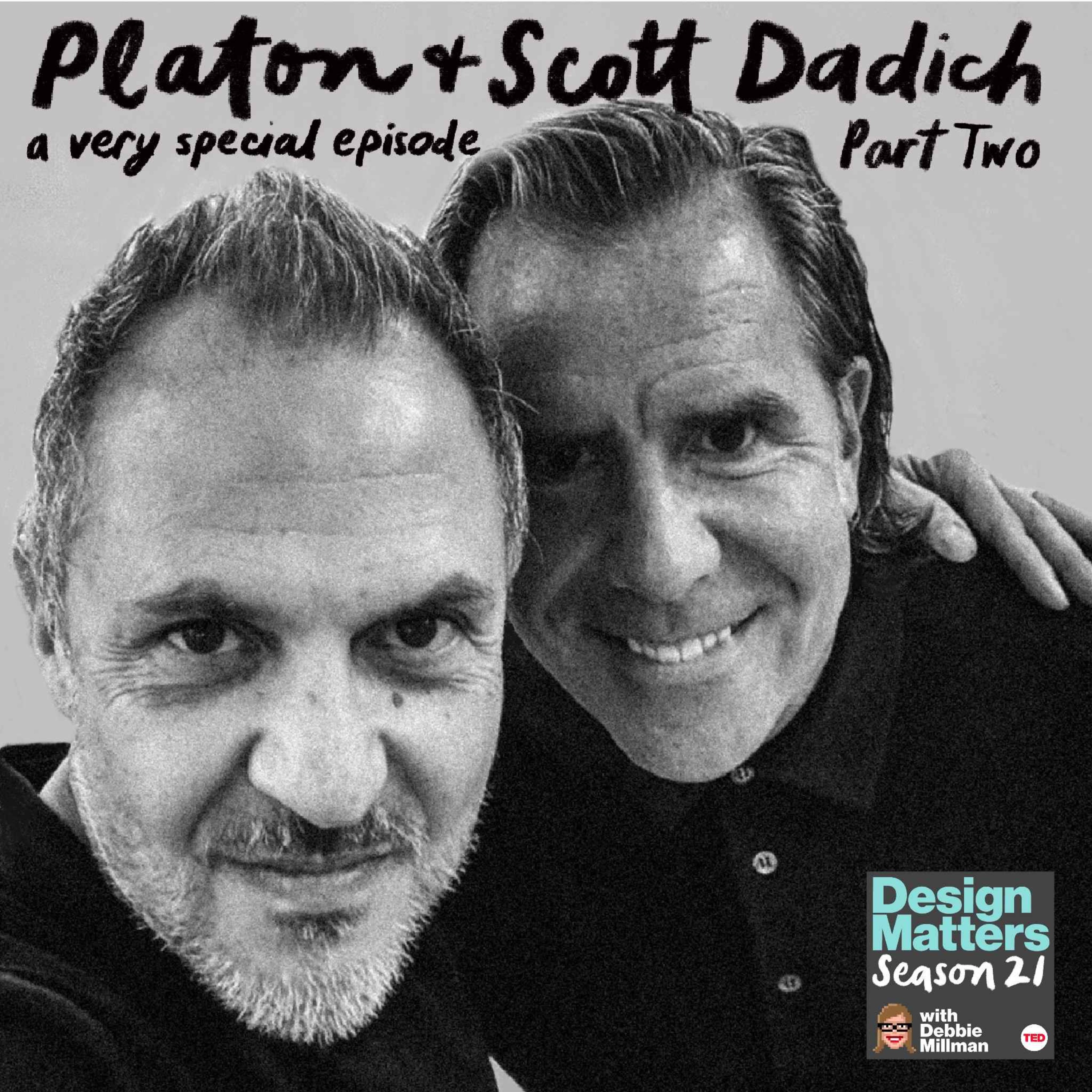
The episode (Part Two) centers on Platon and Scott Dadich’s long creative collaboration and their latest book Paros, which argues for “mastering the art of living” by reclaiming calm, reflection, and non-digital presence. It also explores how authenticity and trust shape portraiture and design, and how technology/adrenaline can distort attention.
Written by AI. May contain mistakes.
Explore how technology influences our ability to find calm and reflect.
“We've all got over-distracted and over-stimulated with technology and haven't we all lost our capacity to just have a moment of calm?”
Discussion on their book about living authentically away from digital distractions.
“On this episode, part two of a conversation with the designer Scott Dadich and portrait photographer Platon about their long collaboration and their latest book.”
Setting the stage for the continuation of the conversation with Platon and Scott.
“Debbie spoke with Platon and Scott Dadich a few weeks ago in Platon's studio in New York City.”
Platon shares his experience photographing President Bill Clinton and the pressures involved.
“I want to talk to you about some of the very powerful people you photographed in 2000.”
Exploring the importance of authenticity and the story behind a memorable photograph.
“Maybe the White House complained about my behavior.”
Discussion on the illusion of power and the right to be oneself.
“Well, when you get something right, sometimes it goes beyond just describing the person and it can describe the time.”
Platon recounts encounters with famous individuals like Prince and the lessons learned.
“Everyone has the right to be themselves.”
Learn how adrenaline affects concentration and decision-making during high-pressure moments in photography.
“Afterward, she hugged you and whispered, when all is said and done, I'm just Michelle.”
Explore the deeper meaning behind portraiture and its impact on cultural legacy.
“And in England, we invented being polite.”
Discover how trust is integral to the visual language and communication in creative partnerships.
“I know I've danced around big systems and authorities, and I've been very lucky to be able to navigate the corridors of power.”
Understand the dynamics of a successful creative partnership and the synergy it creates.
“And Scott taught me a very early stage when we were doing this, that actually the backbone of the whole enterprise is actually trust.”
Learn how iconic photographs are made through intuition, spontaneity, and deeper narratives.
Gain insights into the challenges faced while capturing Edward Snowden for a magazine cover.
Learn about the intense experience of waiting for Edward Snowden and the philosophical discussions that unfolded.
“What did those hours of waiting teach you about each other?”
Platon shares the story behind his book and the impact of his photography.
“Platon, when you were 17, an older woman in Lefkiss saw you photographing the village.”
Scott discusses the evolution of the book and his collaboration with Platon.
“After 40 years of photographs, how did you begin deciding what the book should become?”
Platon and Scott elaborate on the design choices made for the book.
“And then I cut out one passage into five segments.”
Platon shares a poignant story about the impact of technology on tradition and nature.
“Platon, you've described Paros as asking us to stop and look at an old man's boot, an old woman's hand, the way someone ties her hair.”
A discussion on how modern distractions affect our ability to appreciate life.
“I thought I was augmenting his experience, but I was actually taking him away from the subtleties of the natural landscape.”
Explore how technology distracts from life's simple moments and reflection.
“That suddenly what was naturally there was not as good as that other thing.”
Learn about the new venture advising leaders and the challenges they face.
“You have each spent decades studying leaders from very different vantage points.”
Understand the importance of leaders taking risks and unifying their teams.
“but sometimes it's just being in community with one another and telling the truth.”
Discuss the significance of honesty and vulnerability among leaders.
“we're going to have to be very humble, we're going to have to be curious about each other, and replace judgment with curiosity.”
Discover the dynamics of collaboration and shared creativity in projects.
“to tell you something true when it would have been easier not to.”
Learn about the creative process behind the making of a film for the DNC and the importance of teamwork.
“And they all had a different point of view, different vision for what the idea was.”

Get the gist, explore an idea or ask about something said.
 Claude
On Design Matters with Debbie Millman, what are the key points of this episode?
Searching your listeningAutomatic transcript. May contain errors.
0:00We've all got over-distracted and over-stimulated with technology and haven't we all lost our capacity to just have a moment of calm? How much reflection do we really have? And I think technology has robbed us of that and we were conned into thinking that we're somehow liberated, but actually we've become distracted.
0:27From the TED Audio Collective, this is Design Matters with Debbie Millman.
0:34On Design Matters, Debbie talks with some of the most creative people in the world about what they do, how they got to be who they are, and what they're thinking about and working on. On this episode, part two of a conversation with the designer Scott Dadich and portrait photographer Platon about their long collaboration and their latest book. The whole book is about mastering the art of living and getting back to something that is not digital.
1:08This episode is brought to you by Capital One. Capital One's tech team isn't just talking about multi-agentic AI. They already deployed one. It's called Chat Concierge and it's simplifying car shopping. Using self-reflection and layered reasoning with live API checks, it doesn't just help buyers find a car they love. It helps schedule a test drive, get pre-approved for financing, and estimate trade-in value. Advanced, intuitive, and deployed. That's how they stack. That's technology at Capital One. With no fees or minimums on checking accounts, it's no wonder the Capital One bank guy is so passionate about banking with Capital One.
1:44If he were here, he wouldn't just tell you about no fees or minimums. He'd also talk about how most Capital One cafes are open seven days a week to assist with your banking needs. Yep, even on weekends, it's pretty much all he talks about. In a good way. What's in your wallet? Terms apply. See CapitalOne.com slash bank. Capital One N.A. Member FDIC. With no fees or minimums on checking accounts, it's no wonder the Capital One bank guy is so passionate about banking with Capital One. If he were here, he wouldn't just tell you about no fees or minimums. He'd also talk about how most Capital One cafes are open seven days a week to assist with your banking needs.
2:24Yep, even on weekends, it's pretty much all he talks about. In a good way. What's in your wallet? Terms apply. See CapitalOne.com slash bank. Capital One N.A. member FDIC.
2:41Debbie spoke with Platon and Scott Dadich a few weeks ago in Platon's studio in New York City. It was a long conversation, so we broke it up into two episodes. If you haven't already heard the previous episode, we recommend going back and listening and then coming back to this episode. Here's where they left off. I want to talk to you about some of the very powerful people you photographed in 2000. Esquire magazine gave you eight minutes with President Bill Clinton. The photograph that became famous came in roughly the last 30 seconds. What did you see in him at the end of that sitting? Well, again, it goes back to Oasis.
3:24We're told to behave ourselves. We're told to behave in a certain way. esquire briefed me and they said we want a nice elegant head and shoulders portrait hand on the chin very noble it's his last official portrait as president we need to be respectful in the way we think is appropriate they said but we've seen that you sometimes photograph people from a low angle with a distorted sense of perspective for goodness sake whatever you do don't do that so okay i promise i said kind of and you don't think you're a punk so uh i went and you know i i did what i promised i would do i for seven and a half minutes i did what it said on the tin but then i thought had a bit of a moment you know you talk to yourself in those moments i'm sure you've had those moments we all have where time stands still everything goes quiet and you say to yourself come on let's be honest i'm a bit of an imposter here it's a miracle that i got this far i'm standing in front of the most powerful man in the world and this is fluke i'm just me from a village this will never happen again anyway so what have i got to lose sometimes in life we've just got to roll the dice place all bets on ourselves for better or worse we've got to dare to be authentic so to the horror of my assistance i put on the wide angle lens i had maybe five seconds left before the white house administration shuts down the session so uh to get his attention i was already losing him i said mr president will you show me the love i don't know why i said that and then everyone gasps in the room his chief of staff i think it was john podesta i'm not sure lean forward and said mr president whatever you do do not do not show him the love we've had enough love in this administration mr president thank you so much and then Clinton says shut up shut up I know what he means puts his hands on his knees gives charisma I caught it on film I handed it into the magazine at the bottom of the pile of the headshots and I quickly ran out their offices because I was terrified months went by no sign of my cover I was too nervous to call them up and say how's it going guys you know paranoia creeps in.
6:10Maybe the White House complained about my behavior. Maybe the magazine did a reshoot with a much more experienced photographer. So then I come home from work one day and I said to my wife, I said, I'm too depressed to help cook dinner tonight. Let's order takeout. So we ordered some noodles, something comforting. I said, I'm too depressed to even talk. Let's just watch TV. So turned on the TV, nine o 'clock, CNN, Larry King comes on. He holds up my picture on a leaked advanced cover of Esquire. And he says, viewers, I just got my hands on this. This is hot off the press. No one has seen it. And it's my shot, the low shot.
6:55and he says viewers this is disgusting this is an outrage that we show our president in this lurid sexual way and i think he invited bob woodward of the washington post who brought down nixon by the way to analyze the picture for the whole hour so then they analyzed it and said the hands are big as clues to grab you the the face is smiling as if to say i got away with it the legs are spread apart and then they even said the tie is the biggest clue of all because it's an arrow pointing down to his crutch and then you know and then I think Larry said or Bob Woodward said um I think we should blame the photographer for everything at which point the noodles fell out of my mouth and I turned to my wife and then she said there goes your green card application so that was um well what did that teach you about losing control of an image once it enters the culture it taught me that authenticity is the most important thing of all and it taught me that i remembered back which i almost let it go the mandate that i had with john kennedy jr he said to me there's something visceral about your work he said you're clearly not qualified to be in front of all these powerful people i will send you to but there's something honest and true about them and when i look at your work i want to see what is it really like to meet this person i don't want to perpetuate power and fame because he said i grew up in it and he said to me the president was my dad i played underneath his desk so he said i i want to show what it is like from inside so that mandate that was my job he said if i see for a moment that you are drinking the kool-aid and starting to allow their power to shape your imagery and I lose touch of them as human beings, he said, you're going straight back home to London.
9:08So after John died, I almost slipped. I spent seven and a half minutes covering my ass. And then thank God I had those 30 seconds of reboot, stand your ground. And for all the controversy, that photograph has stood the test of time. It's one of the all time great photographs of Bill Clinton. Well, when you get something right, sometimes it goes beyond just describing the person and it can describe the time. Because if that person is a very influential person, we see ourselves in that story. The reason I refer to Oasis again and again is because I've had so many times where I have felt the pressure to bend and I have to put on one of their songs.
9:59and the songs remind me to stand my ground and be defiant and be me. I'm acceptable. And everyone I photograph is acceptable. Everyone has the right to be themselves. And this idea of power is an absolute bloody joke. It's an illusion. Martin Luther King always said, beware of the illusion of supremacy. That always had a big effect on me, that statement. It's a swindle. and I'm lucky that I can see it and of course now I have enough of a bit of a reputation that that people are more willing to share in 2004 you waited eight and a half hours backstage in Nashville to photograph Prince when he finally arrived I believe you asked him what the meaning of life was.
10:52Yeah, I did. Yeah. So talk about why you decided to do that and also what he said. Well, John Lennon once asked the Maharishi if he could slip him the answer. And as a huge Beatles fan myself, I was always, that's why I asked Leonard Cohen, can you slip me the answer? I've asked lots of people to slip me the answer. Well, you asked Putin about his favorite Beatles. Yeah. Yeah. Full circle here. Full circle. And my son's name is Jude and my dog's name is Sergeant Pepper. so i'm legit um well prince was a mystical person to say the least i'm sure when he walked his feet weren't touching the ground he was like floating and he was an hour an hour and a half late to go on stage and we were backstage literally underneath the stage of his concert and the crowd i don't know how many people in a stadium 25 30 000 i don't know but they were they were getting frustrated man and they were banging their feet prince prince come on and he walks in at that moment to sit for me i was supposed to photograph him at 11 o 'clock in the morning or something so i was emotionally a wreck because i've been waiting for him to literally walk in for hours hadn't eaten because they might walk in any second were you angry that he was keeping you waiting no i'm never angry i'm never angry i was only ever angry at p diddy but that's another story but like prince i mean i could share some good p diddy stories okay yeah well that happened in this room that dent on the floor is from the p diddy shoot but i'll tell you about that later okay i'll tell you your mind tell me yours so um but prince was mystical and magical and it's it's who he is so he walks in and glides in and i said we did a few pictures and i said can you slip me the answer at the end and he says i have it so i said well what is it so he puts his arm around me and i think god i'm being hugged by prince this is insane and he puts his hand in his lapel inside pocket and he pulls something out hands it to me and as if by magic disappears it's the end of the shoot he walks on stage takes control of thousands of people and i look down at my hand see what he's given me and it's a jehovah witness pamphlet and i was like is that it i was i was honestly a bit disappointed i was hoping for something much more like something i could personally relate to because i'm not a religious person myself but i'm always interested in religion so the next day i was on the flight going home and i thought i should read this i mean prince did give it to me so i read it It's a pamphlet.
13:31And it's the usual stuff about religion, you know, God, community, be kind to people, blah, blah, blah. And then something felt funny in the binding. So I thought, what's that? And I get to the centerfold and he had wedged his guitar pick in it. And on the back in purple lettering, it said, always love from Prince. That was the answer. That was the answer. I've got it upstairs. Still keep it. When you photographed Michelle Obama for her first portrait as First Lady, you, in your own words, said that you became nervous and blurted out, my love, I want your soul, give it to me. Jesus Christ. Afterward, she hugged you and whispered, when all is said and done, I'm just Michelle.
14:22What did you understand in that sentence? I understood. Well, from my question, that's the time when I realized what adrenaline does. And it's very dangerous thing. We have to master it. It can destroy your concentration. And it can make you very, very reckless. and i've asked tennis players like roger federer talked to me about how he dealt with adrenaline and you often see tennis players like pluck their racket or do some tiny little routine when they're on center court in wimbledon because the adrenaline the distractions the pressure and you have to focus on shooting a ball across the court and hit it right where you want it and adrenaline can destroy that concentration and it can certainly destroy mine so sometimes you get this rush of adrenaline that comes out and that was a big one you know it was the first time she's ever photographed as first lady it was a time cover i knew if i get it right it would be meaningful i mean i'm actually proud to say it hangs in the smithsonian now but i hadn't taken the picture yet so that pressure built and uh it was an eruption of adrenaline and i quickly realized what i just said because it caused a stir and it actually created the raising of her eyebrow and it was a look that's almost half offended how dare you and half i quite like it at the same time which is a common look i get in my work now um but i was lucky that she got that my intentions were honourable.
16:06I did apologise to her. I said, oh my goodness me. I said, I'm an Englishman. And in England, we invented being polite. I know Americans do it better now, but we invented it. And here I am in the White House calling you my love and demanding your soul. You're the first lady. Please forgive my atrocities. And that's when she stands up, gives me a hug. She says, Platon, when all is said and done, I'm just Michelle. bang, right back to the lesson again. I'm just Michelle. I'm just Bill Clinton. I'm just Donald Trump. I'm just Putin. Michelle Obama's portrait is not the only work of yours in the Smithsonian.
16:50In 2020, the Smithsonian acquired an archive of your portraits of prominent African American civil rights and cultural figures. Did that change the way you thought about what a portrait can become over time? It did have an effect on me. It's a great privilege, first of all. But the nicest thing that happened, if I'm going to be really honest, is a part of that portfolio was the Little Rock Nine. And yes, that picture is in the Smithsonian to inspire, you know, new generation. but the best thing for me is that that picture is also a mural been made into a mural that we made with my foundation that hangs in the little rock canteen where all the kids have lunch these days and actually that it means even more to me because it's not an elitist organization like all museums are and I'm very grateful it's in the Smithsonian and humbled but I'm really excited that it hangs in the college school canteen because every day kids eat their lunch underneath that giant mural and it reminds them that they continue the extraordinary legacy of social inclusion and so that actually is magical i actually got a letter the other day from uh the daughter of one of the little rock nine and she thanked me from her heart for capturing her mom in that what turned out to be the last portrait of them all standing together that means a lot i'm i'm i'm a person of the people.
18:39I know I've danced around big systems and authorities, and I've been very lucky to be able to navigate the corridors of power. But I'm really, I belong with my feet firmly on the ground with the people. Well, I think that's why your non-profit is the people's portfolio. Well, Scott helped me build it because I couldn't do it on my own. And I needed his incredible sensory perception and his understanding of communication. And Scott taught me a very early stage when we were doing this, that actually the backbone of the whole enterprise is actually trust. So the language that Scott helped me build is a language where we want to show humanity, but we've also got to earn people's trust and show that we are serious about what we do.
19:32and the typography, the visual language that Scott helped put together was really we kept saying to each other, this is about trust. I'm very privileged to have Scott on the board still. What was your first impression of Platon, Scott? What was your very first sense of who this artist was when you first met? Be honest. Go on. Well, I was a student of his work in college, So as a magazine fan, I had been a reader of George magazine and so had that cultural context and was blown away by the work itself. But it was the Clinton cover. And I was a big student of Esquire magazine, David Granger, John Corpix, Nancy Iacoy, all friends.
20:22but that magazine was the cauldron for me that inspired my work at Texas Monthly and really lit under me the fire that would drive my magazine career. And so when that came out, I just knew immediately I had to work with Platt. And so I reached out to him and we discussed an assignment actually to photograph Karl Rove. So the administration had changed over and this is later in 2000. so to meet Carl to have those conversations to set that up I was terrified of him to be totally honest of you Carl Rove we knew we could figure out well he those of you who know Platt his stature he's a short lovable guy I love my pictures with him but he's just this towering intellect And as we've been just listening to this dialogue, you see the way his mind works.
21:24And that was evident right away, right away. And the calculus that he brings into that moment, the construct to be able to empathize with that leader, to sit with them, to live honestly in a moment and change his posture and read body language and all the things that he describes so beautifully in this moment. uh were completely evident and so it was a very intimidating process but our second shoot was george hw bush as he was out of office and that's one where we got to spend a lot more time together and really i think commune and that that is the moment i think our friendship really kicked in so probably 2003 okay so first i have to explain this special relationship and bond i have with Scott.
22:17I've been privileged to work with extraordinary editors, creative directors, designers, photo editors. But once in a while, you gel with somebody. It's a Lennon and McCartney thing. It's the way I can describe it, that you need each other and you augment each other. now scott and i kind of become the same mind on set and we've applied our process to many different situations with many different people i know what he wants and an idea is such a fragile thing that you can't even describe it because you might destroy it it's a bit like describing a dream the more you describe it to someone the more it fades away it's so fragile so i'm able to share an idea with him without spoiling the idea because he won't corrupt it if anything he might make it better that's such a beautiful thing it's got nothing to do with type skills or color which is i'll take that as a given because he's the best yeah but like what makes him my special creative partner in my career is his capacity to just meet me right there at a moment that is just terrifyingly fragile and all the moments i've had in my life where i've created a picture with the sitter have all been that moment of extreme fragility as I described with Bill Clinton or Michelle Obama or Putin and when we did George Bush that was a moment because it was at the end of the shoot and Bush senior had been very gracious actually I got on with him very well he spent a lot of time complaining about what a bully Margaret Thatcher was which I thought was brilliant so we got on very well i even taught him some cockney rhyming slang which he didn't really understand but he was willing to try and be taught which is a very working class way of speaking from london so we got on really well and at the end of the shoot i remember he had some handlers that were very it was time we were it was time we were done and i i had good portraits of him but i didn't really have he was quite cheeky the way he talked about margaret thatcher he had a sense of humor we don't normally think of bush senior as having a sense of humor he never really allowed that side of his character out in his public life but i saw it you saw it scott it was it was kind of funny so he's standing there with his arms folded and i knew he loved winston churchill we talked about it with him and i thought okay do i do it we looked at each other i looked at scott i looked at scott there's always a moment where i will look at scott i will never look at anyone else on a shoot as when i'm in the flow but he's the only one i just look at him like that and he doesn't even have to nod or respond he just looks at me back and it's like a language of do it do it that's true it's true roll with it so arms folded um bush senior standing in front of us he i feel the the usual moment where all his um advisors are starting to step in they're like wolves stepping in circling you time is up and i should have stopped a minute ago two minutes ago so i said um winston churchill was great wasn't he i love winston churchill he said yeah i love winston churchill i said let's give him a tribute pay him a tribute he said yeah sure so i said v for victory and he and i said give me a v for victory and he went one hand just moved like this and and then gave me a v for victory and i got i think two frames of it the first one he blinked and then the second one i got it and then as i'm shooting it his people are going oh my goodness no and they shut it down so it's two frames and you got it and i got it and it became the moment because actually some people think it's a peace sign and it's sort of this ironic thing because at the time we're in probably the midst of well yeah the cultural context is george w bush his son had just declared mission accomplished on the deck of the aircraft carrier and this picture came out six weeks after that i don't remember that so there was a very sharp commentary hidden in this picture that was uh interesting and layered to say the least it's interesting because i think that's apparent in so many of your photographs there's a subtext no language needed no typography no direction it's just there embedded in the soul of the photograph it's it's again it's um it doesn't need a headline because the headline is in there and when scott and i work well he would be probably one of the few creative directors in the world who who understands that if if the headline is in the image, then it's even better.
27:57No type is needed. No type is needed. Read it. You get it. So when Scott and I spoke on design matters, he told me that when the two of you began pursuing Edward Snowden for Wired for the cover of Wired and the big story, you spent the better part of nine months trying to gain access to Snowden, then ended up waiting together in a Moscow hotel room without your usual phones or computers, really unsure whether he was actually going to arrive. What did those hours of waiting teach you about each other? Well, that was excruciating. Kind of brilliantly fun, but we went completely under the radar. I mean, we weren't allowed any cell phones.
28:40Well, I had the great fortune of getting to work with David Remnick, as you did. And when this was afoot, this shoot, I went to David and And I just sought his counsel on getting this photograph because we were going to go outside the bounds of the traditional permission structures within Conde Nast. We obviously had to keep this in a deep cloak of secrecy, not only from our colleagues in the printing press and all the other areas where this could leak, but also we didn't know what was happening with the U.S. government. We didn't know what was happening with the Russian Federation. And David gave me, David is the Moscow.
29:20bureau chief from the Washington Post had incredible insight for me. And one of his strongest recommendations was to leave all of your devices at home. And so we did that. We met in Charlegal and put our phones into a FedEx pack and sent them back home and then landed in Moscow and got burner phones. And that was all we had. So it was the first time, I think, in the post-iPhone era that I had ever felt completely cut off and completely evacuated from the normal digital lives that we take for granted today. So that was one context. And then we also had this instruction that on this certain day, at this certain time, in this certain hotel room at the Hotel Moscow Metropole...
30:06You will be contacted. You will be contacted. So we didn't know what that means. And when the task comes at the door, like what's on the other side of that door like we we didn't know is it a SWAT team is it a type of CIA operative is it the new FSB is it uh or is it him there were two moments I really remember because looking at that look with Scott did you go to the door I opened the door went to the door so it was like I looked at Scott we hear the tap at the door and it's like okay Scott give it gives me the look he opens the door a small gap and this diminutive figure slips through the door he's got a backpack with his laptop in it places it by the side of the hotel bed broken glasses broken glasses tilted to one side super skinny scruffy hair shoes worn sits on the edge of the hotel bed doesn't look at me doesn't really look at scott he looks down at the floor i look at scott and he does he says i'm ed i'm here let's begin and i don't know if you remember this he started like an hour long four hours was it four hours four hours he was just talking out he wasn't really talking to us he was talking to himself getting it out of his system about what happened to him what was happening to him because it was still going remember the food I said, you look like you could use a meal.
31:36And so we got room service and he ordered two plates of beef stroganoff and he sat there and ate while he talked. And it was exactly that. He just had to get it all out. Now, we hadn't shot anything. And I know I was reading Scott's mind. Look, at what point do we interfere, break this rhythm and say we've got some work to do. But by also doing that, you might destroy the moment completely and you lose him so again we're we're both tuning into this frequency of how do we play it when when do we step in should i step in should scott step in i started to gently engage by just asking him a few philosophical questions to just start to bring him round so he's communicating more with us he was a really he was very nice to us he was um clearly out there tortured tortured so i asked him about loneliness that was the and it wasn't a trick i didn't have pre-prepared because you can't really pre-prepared because you don't know what's going to happen so i said are you lonely i said you must be lonely the fbi can't find you cia can't find you and he said loneliness can be a terrifying thing especially when you've been robbed of all the people that you love but loneliness can also be an empowering thing because when you're lonely there is nothing but a wall of silence listen to the silence and you just might hear the voices of history talking to you i look at scott and it's like this is epic whoa so then he fell back into the sofa rubbed his eyes he said i said i feel tired and a bit stressed so i said uh got another question i want to know about moral compass how do you know that what you did was right some of our friends think you're a hero some of our other friends think you're a villain and he said the line between right and wrong is not always bright and all of us at some point in our lives will cross over that line but what makes an honorable person is when you recognize you've crossed over and you do everything in your power to bring yourself back to the right side of history i look at scott okay we're warming up we still haven't taken a bloody picture i'd taken a couple of 35 mil pictures of him sitting on the bed i was gently you know it's such a small my lycas are very quiet no flash just available room and i'm low down on the ground so I'm not powering over him.
34:34And I did one of him on the bed and he didn't seem to mind while he's talking. One on the sofa. Then he falls back. I took one on the sofa. Then he stands up and he goes to the window. The curtains are drawn. The net curtains are drawn, but you can see the shadowy imposing figure. Red square across the street. Red square. You can see the Kremlin shape through the net curtains. and I took a picture as he's looking out the window and then this is where another moment happened with Scott for John Kennedy Jr. I'd photographed Pamela Anderson for the cover of George. Now Pammy came to that shoot this was peak 90s she was a big superstar in America and she came to the shoot with a secret she was actually four months pregnant and the bump was beginning to show and she didn't want anyone in the media to know she's going to be her mother.
35:32She wanted privacy, but she couldn't fit into any of the sexy tight dresses that John had ordered for her that day. So she panicked and she said, I can't wear the dresses. Everyone's going to find out. Help me hide my bump, but still make a positive statement about my love affair with America. So I said, why don't I run down the street and buy you a cheap, big American flag, and we'll just wrap you in the American flag. Brilliant, she said. So we did it. It was a hit. It was a great cover for George. It was my favorite cover I did for George, actually. And she gave it to me. And she said, it's my gift to you.
36:15It's your good luck flag. Maybe it will bring you the same luck it brought me. It's the same flag I draped over Muhammad Ali's shoulders. She said, take it with you, put it in your suitcase to all your big photo shoots. So I brought it with me to Russia. And it was draped over the edge of the sofa out of my suitcase in the room. now that's that fragile idea that i'm talking about that i would never trust anyone else but scott daddage with that idea because it might not happen and it it would be so easy for it to go horribly wrong but scott obviously saw it we didn't have to say much about it but before snowed and walked in he saw it and he gave me that look that he also gave me when i was photographing bush senior that he also gave me when we photographed carl rove and all the tech titans it's that look of i get it you're in the zone i'm in the zone do it leave it there see what happens snowed and picks it up and he said this is interesting and like another look at scott we're getting there don't breathe you can't ask Snowden to do something because that would be contrived it has to be on his terms so he picks it up and he says this is interesting and I felt that moment coming and I said I'd like you to sit for a portrait while you're holding it no no no you asked you said what would you do with this and he said I would hold it and he he embraced it he embraced it he embraced it yeah one of the great covers of all time i mean so yeah but i remember around that time i said to him i he sat in front of the camera embracing the flag and like you know okay so i'm in my position now and this is i'm comfortable now so the nerves go because i'm very at home with this space he's on the apple box i'm at his feet I'm holding my camera the light is where it always is and I have him and he's sharing his humanity with me and I have the support of Scott standing there who isn't going to interfere he knows that he's already given me the look so I know he's in on it and I said to Snowden now I'd like to ask you the big question.
38:52Are you a patriot or are you a traitor? And he's holding the flag, man. And he said, don't get bogged down with labels. Don't get bogged down with picking sides or picking teams because it's not about us versus them or red versus blue. It's about us coming together to solve common goals. He continues, and what I did was not for my own benefit. He said, I took the information and I gave it back to the people. And the reason I did that was not to gain a label, but to give you back a choice about the world you want to live in. click that's the moment i didn't need to look at scott because it was that same lovely feeling of comfort that he was right there with me he gave me the opportunity i couldn't have done it on my own it was like incredible mutual respect and trust and we both believed that this is appropriate and that we are there to encourage Snowden to express himself, not put him in a box as a kind of celebrity cultural figure.
40:17The reason Snowden, I found out later, agreed to sit for me is because he didn't want to be seen as a celebrity and other photographers may have photographed him as a celebrity. He's an activist and he knew, I hope he knew, that I was there to give him a platform so he could share and express himself through the platform that we had created. And we're not selling him. And I'm not promoting him. I'm not selling anyone. I'm not clever enough to know whether what he did was right or wrong. That's for the world to decide. That's for history to decide. But I do feel very privileged to work with someone like Scott and for both of us to work in an environment where at least we have freedom of speech and we are able through our platforms to instigate a respectful debate about the times we're living in.
41:15And so many times we worked together, we triggered that debate. That's the privilege. But we're not selling anyone. We're not promotion. We're provocateurs. That's the George Lois thing. Yes. This episode is brought to you by Capital One. Capital One's tech team isn't just talking about multi-agentic AI. They already deployed one. It's called Chat Concierge and it's simplifying car shopping. Using self-reflection and layered reasoning with live API checks, it doesn't just help buyers find a car they love. It helps schedule a test drive, get pre-approved for financing, and estimate trade in value.
41:55Advanced, intuitive, and deployed. That's how they stack. That's technology at Capital One. With no fees or minimums on checking accounts, it's no wonder the Capital One bank guy is so passionate about banking with Capital One. If he were here, he wouldn't just tell you about no fees or minimums. He'd also talk about how most Capital One cafes are open seven days a week to assist with your banking needs. Yep, even on weekends, it's pretty much all he talks about. In a good way. What's in your wallet? Terms apply. See CapitalOne.com slash bank. Capital One N.A. Member FDIC. With no fees or minimums on checking accounts, it's no wonder the Capital One bank guy is so passionate about banking with Capital One.
42:39If he were here, he wouldn't just tell you about no fees or minimums. He'd also talk about how most Capital One cafes are open seven days a week to assist with your banking needs. Yep, even on weekends, it's pretty much all he talks about. In a good way. What's in your wallet? Terms apply. See CapitalOne.com slash bank. Capital One N.A. Member FDIC. State Fair food is getting smaller and pricier. We'll have room for fried cookies. Okay, you never overspend on food. What's your deal? What's his deal? He went to Metro and got$450 in value on the new Samsung Galaxy A37 5G for free. And no activation fees.
43:19Free phone? Oh, sign me up. Get that more for your money feeling. Only on Metro by T-Mobile. Bring your number and activate$40 period plan. $450 based on device discount waived activation fee. Not available if with Metro or T-Mobile in the past 180 days.
43:35Platon, when you were 17, an older woman in Lefkiss saw you photographing the village. She asked you what you were going to do with all the photos. You told her you were making a photo album. Nearly 40 years later, you and Scott have collaborated on a book called Paros. It contains 225 photographs made across much of your life. If you could put that book in her hands today, what would you want to tell her? That old lady now rests in the village cemetery behind the big church. I know where her grave is. I know she's pleased that I did something with my life. I'm hoping that, as I know many of the villagers, they don't really care that I've worked with all these famous, powerful people.
44:27they're proud because i photographed their aunties their cousins their children their grandparents and almost all the grandparents have gone sometimes even the parents have gone but i've kept them alive people can become immortal in a picture because if you get it right you see their character and you can look at it and there's still that sense of humor there there's still that cheekiness there that lovely look in someone's eye or that gesture and these people sort of live forevermore in the book so i know she's happy and i think she's proud she's proud that her family can still see pictures of her and feel that she's present and she's talking to them through the pages.
45:21Scott, you've described Paros as Platon's life's work, and the two of you designed the book together. After 40 years of photographs, how did you begin deciding what the book should become? It's been one of the great honors of my professional career and life, really, to watch you evolve and for us to work together. I call him my brother. He's one of my best friends in the world. We talk every day. So to have seen this evolve over the 26 years of our friendship, so I haven't, I got a little more than half of it, but every time I'd come to the studio, he'd have just returned from Greece and have new portraits.
46:04And he invited me to partner with him on this many, many years ago, probably 20 years ago. So we knew this would be a very consequential task this was not something to take on lightly and it was just an ongoing process it was like um you know it felt like boiling the ocean at some point because of the volume of work and the quality of the work and the personal connection that you've had to it but i think maybe what i was able to provide was a bit of an objectivity as a reader as a viewer as a listener to hear the stories of these individuals to see how they relate to one another how they constitute a fabric of existence especially in a time that is so difficult for so many of us right now and so inundated with digital technology and ai and the fracturing of personal relationships to see the evidence and the proof of this community through platon's lens felt like an enormous responsibility but it was um ultimately as much a formal exercise as it was a narrative exercise and and the ability to tell that story of birth through passing and the eternality of the life cycle as witnessed by these really beautiful people was uh the great gift scott brought the same relationship we always had when we were laying out a story together for a magazine because um i'm focused on the images but scott's able to stand back and say how does this flow as a story what story are we telling yeah and it was scott's idea to actually break the book into segments and permeate the pictures to create a moment of pause and then And we thought, well, what are we going to put in the pause?
47:58So then I suggested this beautiful passage by Kazan Jakis that comes from the book that my dad illustrated. And then I cut out one passage into five segments. We divide it up into five sentences, showed it to Scott. He liked the idea of it. So then we just put blocks of text in between. I couldn't really resolve the graphics part of the book. I knew the essence, the feeling I wanted, but it didn't seem to work with traditional text. So I was saying to Scott, how do I do this? And I had written something. I'd scribbled some notes to Scott and he said, well, your handwriting is nice. Why don't we do it all handwritten so that there is no other voice?
48:49There could be more personal than your own hand. so again it's that lovely moment it's like with edward snowden or all these people it's that look it's that that sort of confidence of scott to help me be me you could say well it's not uh doesn't look like something else scott might have designed but it really does because what scott does is just what's right and and what's right is in this case it had to had to be the human hand the whole book is is about mastering the art of living and getting back to something that is not digital so then scott says you know try writing it we experimented with different ways of writing it then i dug out my dad's old stencils from his architectural drawings well my dad wouldn't have used the actual stencil metal letters themselves he would have drawn through them and he always drew with ink and sometimes when you draw with ink the ink goes underneath a stencil and and bleeds and i tried a bit of that and it's oh that's nice and occasionally while i'm because i did it all with the nib the same nib my dad used same ink that my dad always used same paper that my dad used and then i started to occasionally accidentally the ink would drop from the nib and you just get a drop of ink and i started to think well this is really nice i needed something visual sort of references so i at the time i was looking a lot of miro and corbusier's drawings and van gogh's drawings with pen and ink and then my dad's drawings van gogh's letters to theo were all written in pen and ink so there are smudges and thin bits thick bits and there's this unpredictability as there is with the human condition so i experimented a lot shared it with scott scott would tidy it up scott would balance it bring his magic to it scott helped me with the design of the book i had moments when i bottled it originally i wanted to do um the size of an album cover 12 inch by 12 inch because we all grew up looking at vinyl opening it up and wow those are the days those are the days and it was as much visual as it was for sound so i told scott about that and then i said it's going to be so expensive to do it that way and there's so many reasons not to do it scott gave me the look do it we're doing it stand your ground we're doing it and so we did it and uh gatefolds we did it even the scale i've been lucky to spend a lot of time on paris with platon and the massive quality of the architecture the strength of the stucco that we really tried to put that into the book with these white panels, but it is such a sturdy object.
51:42It has that feeling of a wall that you might encounter. A great wall, the original white background. Wandering around his home. Platon, you've described Paros as asking us to stop and look at an old man's boot, an old woman's hand, the way someone ties her hair. One photograph in Paros shows a package of AA batteries hanging on the wall because the man who lived there apparently assumed the package was decorative. What did that detail tell you about the world you were documenting? Well, that was a bit of a moment that I photographed him. He looked after my uncle's farm on the sister island called Antiporos.
52:28And in those days, if Paros was wild, Antiporos was really wild and it was beautiful earthy and this man lived on this farm and i would go and visit him and i this is this picture was actually photographed 1985 1986 so i photographed him by the window i hadn't yet figured out how to shoot on a white background i didn't know how to use a strobe light all i had was a camera that i borrowed from college art college or just before Hasselblad camera. I had one lens. I hadn't yet thought of the wide angle idea. I didn't really know how to be me yet, but the simplicity of the shape I was starting to figure out.
53:12So I used window light, going to sit by in front of the window. And on behind him, there are three objects on the wall. There's the empty picture frame. He didn't have a picture to put in it, but he knew it's a frame. So he hung it. There was a pin cushion, which he used to repair his clothes because no one bought clothes in those days you just keep repairing them and then there was this pack of batteries double a's and i thought what's he doing with them on the wall so i asked him i said why have you got those on your wall he said i don't know what they are but i found them on the beach and they've got a little hook in it like the picture frame so i'm presuming it's an ornament so i said no no no that they're batteries and they're for something called a Walkman.
53:54So he gives me a blank look. So the next day I went back with my Walkman. For all your young listeners, I hope they all know what Walkman is, but it's like, it was the first time you have this mobile device. Portable music. Portable music. Cassette tapes. And so I had my Walkman, opened up the back, showed him that this battery is inside it. And he went, oh yeah, okay, what does it do? So I said, this is what it does. Come with me into the field. went into the middle of his field i put the headphones on his ears and i said push this button so he pressed play and i had mozart symphony it's called the hafner symphony it's wonderful symphony and i pressed he pressed it and he freaked out he was screaming jumping dancing crouching down leaping into the sky because for him it wasn't coming from the headphones it was coming from the landscapes, coming from the mountains.
54:53And then he starts to get emotional and he starts crying. And it got so much that he ripped the headphones off and was sobbing in the field. And I looked at my uncle. We thought it was funny at the beginning. But then I realized, what have I done? I've destroyed something beautiful here. This man used to be able to read the mountains he would know if it's going to rain in four days because of the sounds of the wind and the birds would be telling him something he would know what's happening with the sea in the distance it's not just visual it was completely sensory aware of his environment and what i had done is disrupted it with something he'd never experienced before and I thought I was augmenting his experience, but I was actually taking him away from the subtleties of the natural landscape.
55:56And I was worried that from now on, he'll always walk into the field and say, when is that sound coming back? That suddenly what was naturally there was not as good as that other thing. And now I think, well, maybe that's what we're all doing. we've all got over distracted and over stimulated with technology and haven't we all lost our capacity to just have a moment of calm and just look at the mountains or look in the park or look in your garden and just watch a leaf moving in the breeze how much reflection do we really have and I think technology has robbed us of that and we were conned into thinking that we're somehow liberated but actually we've become distracted from the important things and I know I'm not alone in thinking this because I bet all of your listeners are probably thinking yeah I have that feeling it's like constant slight anxiety that no matter how fast I go and how hard I try I can't find peace of mind let me paint you a picture so there's a fisherman and he's on his boat and i photographed him and on his boat he's got a little cloth with some olives a piece of bread and a small bottle of wine now i'm watching him he takes an olive shows it to the sea and eats it breaks a piece of bread shows it to the sea and eats it raises his bottle of homemade wine uncorks it and drinks some wine raises it to the sea I said why are you doing this and he said the olives are salty like tears of sadness the bread is calming like the hand of friendship and the wine eases the thirst like a much-needed victory.
58:04But be careful, he said, for too much sadness makes us bitter. Too much comfort makes us lazy. And too much celebration with the wine can make us reckless. If we can get the right balance in life, then we can master the art of living, and together all, we can be free. democracy. This book is about mastering the art of living again. And it's a beautiful book. Thank you very much. Thank you both for making it. It is so necessary in this time. Thank you, Debbie. You have each spent decades studying leaders from very different vantage points. Plot on you from portraiture, Scott through editorial, design, filmmaking.
58:53what made the two of you want to begin advising leaders together in a new venture that you're about to launch? Wondering if you can tell us about it and all the whys and wheres and whens. Happy to. This is a conversation that's extended past me and Platon. and there's a small circle of us I think that we look out for one another as colleagues and creative collaborators and peers and over the last few years we've had these conversations sitting in rooms like this small tables those of us who've been in those chairs who've done that kind of work who've sat with leaders and I think in the last couple of years in particular last particularly the last two, a lot of the folks that we've been talking to recognize that the tools that got them into those positions of leadership are no longer working.
59:55It's a lot about what Platt was just describing with what this book is about and the friction and that low hum and the constant anxieties, the pressures of business and entrance of politics into the institutional sphere. So there are six of us, actually. It's Platon, myself, John Iwata, who is the longtime chief brand officer of IBM Hall of Fame, Greg Hoffman, very dear friend of ours, who is the chief marketing officer of Nike, Michael Ventura, who wrote the definitive book on empathy and leadership, very dear friend of ours, and Stacey Tank, who has operated for 25 five years across the Fortune 500, both as a board member and as a CEO, most recently as the chief transformation officer at Heineken.
1:00:44We've all had these strong creative relationships, advisory relationships, peers, colleagues, coopetition, we call it sometimes, but this is a word by Michael. I love that word. But we found that being in council with one another and with colleagues and friends has been some of the most valuable work that we've been ever able to participate in. Sometimes it is about the making. Sometimes it's about designing a book or making a photograph, but sometimes it's just being in community with one another and telling the truth. And one of the theses that we've come to try to explore is that distance between what an institution says and what it does is the real gap that's causing so much friction in the business climate today, in society today, and that we maybe have a role in helping bridge that gap between the says part and the does part and getting into the action and helping leaders make better decisions in moments of real consequence.
1:01:49I think there's also something else that's happening with people who have huge responsibility on their hands. There are so many powerful forces tearing us all apart right now, especially with politics. But it goes way beyond that. It goes into social media. It goes into just baked in division into our society. And being an optimist myself, I think it's business leaders who are going to lead society into a better place. It's their job description to bring people together. they need to unite their teams so they can navigate together tricky situations and they also need to unify their customers you can't play that divisive game if you're going to upset half your customer base so i've spent so much time around political leaders i know generally their job is to divide us into two groups or three groups so that they you know it's it's a it's it is a divisive it should be a thing about service and often it can be but it's also well you have your block and you want to play to you got to win that block business leaders have to unite people and right now just their teams alone everyone is very nervous about making a mistake judgment is terrifying and the risks are terrifying.
1:03:16So the worst thing a business leader can do is to retract, go into their safe place of comfort and not deal with the real challenges ahead because they're frightened of risk and disturbance. Yeah, and innovation only comes with risk. Yes, but you've got to find a way to come out of your comfort zone and face the risks and deal with them in a way that's productive, not counterproductive, not disruptive but productive we care a lot that this goes well and i think with all our collective experience we're trying to find a way of creating a kind of support group for leaders to turn to and the reason why the title is is equals is because certainly when i'm photographing someone we are equal you know whether they have no power or lots of power.
1:04:13We're just two people. And Scott said the magic word. You're just speaking truth to each other and you're being honest together. And that's how you create those magical, powerful moments. And this is a manifestation of those core beliefs that we can't fall back and play to our comfort zone. We're all going to have to step out. But to do that, we're going to have to be agile. we're going to have to be very humble, we're going to have to be curious about each other, and replace judgment with curiosity. Equals is spelled with two L's. Why? All plus equal. The portmanteau of those two words to bring those two thoughts together, just as Platon described.
1:04:58But it is just as much a mindset around the nature of the work that all of us in one way or another have carried the burden of responsibility of having employees, of having to make decisions at scale and institutions of consequence, whether that's when two companies break apart or come together, when a leader takes on a new role or hands that role over, when AI changes the rules, when crisis occurs. There are these significant moments and And really the point was there is no junior staff or leverage here. This is just a group of senior practitioners who've sat in that chair and feel comfortable bringing a truthful conversation.
1:05:44Because we couldn't have done this when we were younger. No. Because we've all, we've talked about this earlier, about we've all won and we've all lost. Yeah. What will you actually do? Our work is in providing decisions. directing leaders toward the decisions that they ask us to help them make. Sometimes that takes the shape of counsel, sitting together in deep conversation. Sometimes that's a late night phone call. Sometimes we use the tools of journalism to go derive and discern the patterns. Who am I? Who are we? Exactly. Some of the literature that you shared. It's really interesting. And to bring in cohorts, whether those are skeptics, customers, employees, and use that investigative power to derive what are the truths that live in those groups of people, those cohorts, those marketplaces, and then bring that truth back to help that leader make a better decision.
1:06:46the problem with power is it's isolating and the higher up you go it sounds great but the promise can turn into can turn into a nightmare and everyone around you sort of steps back no one will dare tell you the truth because they have a stake in the outcome they have a stake in the outcome so how do you know what your reflection really looks like what do you know that? Our job is to hold a mirror up and say, this is where you're at. This is who you really are. Scott, you've said that the people you keep central in your life are the ones willing to tell you something true when it would have been easier not to.
1:07:31What does candor look like between the two of you? It has become so routine that it is almost transparent to me, given our daily talks and chats and texts that there is no wall between candor and puffery. For me, it's a felt thing. I know when I'm not being as candorous as I ought to be with Platt or with one of my dear friends or one of my colleagues. And it's a felt, I can feel my body behave differently. And so I just listened to that. The body in my time has become much more of a leadership tool that I can listen to it almost like a tuning fork and use it as a guiding mechanism for my behaviors and my words and the kind of work that I want to do and the kind of person I like to be to my friends and family and colleagues.
1:08:31So it just to me is felt sometimes we fight what does that look like between the two of you uh depends what our mindset is when we're fighting i like fighting with him because it's for a good cause like if he's going to strongly held beliefs yeah like i know he cares about the work scott always had this phrase which i've kind of stolen uh which is i just want to do good work and if we fight it's not because of ego it's because and i'm sure we both have egos yes clearly but we know we don't fight about that side of our mindset we fight about the work because if scott's going to argue with me he really believes that you know it's with his experience this is the right thing and if i fight back it's it's for the same cause and the amazing thing is that in the end we do what the work requires requires yes and sometimes it's my idea but sometimes it's scott idea and um and i'm cool with that and i'm very proud if it's not my idea i'm very lucky that scott was there to make it that good so i'm very cool that about what scott will contribute there is no competition between us but also there's moments of extreme vulnerability when we've seen each other vulnerable i remember we did um maybe you won't mind me saying this but um we did a we made a film for the dnc yes so that was american family that was that's your idea yeah that was scott's idea so he comes to me and he says look i'm thinking of making a film there isn't really a budget there isn't really time there isn't really uh any way of um pulling this off but this is a history anyway this is a historic moment let's do it anyway usual story with us yes so okay cool how are we going to do it we started piecing it together the idea was to let the people speak not speak for them and the film would be shown at the dnc at the convention so the deadline was nuts and we pulled favors scott pulled so many favors from you made a film i think in two weeks is that correct yeah yeah it should have taken six months yeah and we did it in two weeks and i shot i don't know 20 people 50 people 50 people in a day and a half yep and we interviewed all these people together shot them americans from all over the country flew them in Scott had the most amazing people who found people from across the country to come in.
1:11:17And they all had a different point of view, different vision for what the idea was. It's an American family and we all ideas are on the table. Let's talk this thing through. And it really was our core belief that let's turn the mic to the people, because at the convention, it's all politicians making speeches. and if the democrats are there to represent the people why is no one else letting the people speak so that was our mandate so it got to the night before the the one of the deadlines and we were so tired emotionally and physically and i know scott when he he gets to a point where it's just you can't keep going anymore you can't keep solving problems and we had this some kind of crisis and we had to we were both sitting over there and it was like 4 30 in the morning and um scott had a meltdown because he was faced with another problem to solve with graphics and it was design and we were saying how do we get all these voices we need some kind of escalation at the end and i remember you panicked and i really felt for scott because the responsibility on his shoulders was massive and it's lonely you know everyone just assumes you're going to have the answers so i remember he for about five seconds he lost his composure and i i leaned in i said look don't worry we got it we got it come on let's let's focus let's refocus you can do this I said, what about if we did some kind of grid?
1:12:57And all I said was that. So then Scott goes. So he gets out a notepad, he draws a grid and then Scott's magic starts taking over and the panic disappears. And before I know it, he's drawing out the most incredible ending of the film. To have all these people's stories come together in a giant grid that's all moving, very complicated thing to do with motion graphics. so then he makes a phone call to his team could we do this with motion graphics could we fix it this way and they said i don't know we've got like 10 minutes to do it do it do it do it and it got scott came back and he didn't just come back he came back with absolute genius but i was i just felt him wobbling and i have moments when i wobble too and knowing that scott's there is is just enough to get you through it so it's teamwork you know and he's done it for me millions of times so it was a great privilege to just say come on you've got this you've got this we're gonna try this what about that and i know how his brain pattern works and when he when he's lost temporarily he just needs a tiny thread to hold on to as i do so that's that's what it's like i think a lot of leaders need that i think a lot of artists need it yeah i think we all need it yeah um it's you know recently i've i made a film with um de niro and pacino and um i had to direct it which is kind of intimidating so um i've photographed them quite a few times over the years but to have them as elder statesmen in front of my camera was a thing and um it was one of those moments like with scott i have to say to myself how am i going to do this just calm down don't let the pressure get to you just be human and they told me they'd become friends long before they were famous they were out of work actors and they met in a in an acting class and they maintained this beautiful friendship all the way through their careers and i said to them both in front of me i said now you're elder statesman you've got everything you ever dreamed of your oscar winners you're legends you're famous and rich you're even the godfathers i said now you've got everything you ever dreamed of what is the most important thing pacino puts his hand on de niro's arm and rubs it a bit and he says can i tell you what it is it's trust it's trust me and scott we've been friends the same it's trust i trust him and with trust comes respect and you really care about that person and when you're with someone in the trenches and stuff's going off you need to know that the person you're with is there right there with you so that's what we have that's why the work is good it's not really because you're great at visuals it's because trust is there that's right and i think that's the magical component and this equals a project we're setting up that is actually about trust and we want to bring that to people who feel isolated and uh losing touch with themselves all leaders right now are getting punched in the face a lot and i feel terribly for them and we what we need them to refocus regroup recalculate and come back better than ever and if we can offer that service then i think that's a good thing to do we could be of some good use yeah platon scott dadich thank you so much for making so much work that matters.
1:17:01And thank you for joining me today on Design Matters. Thank you for being curious. Platon and Scott's latest book, their collaboration is called Paros. It is a work of art and their new collaboration in business. You can find out lots more information at equals E-Q-U-A-L-L-S dot U-S. This is the 21st year we've been podcasting Design Matters, and I'd like to thank you for listening. I'm Debbie Millman, and I'll talk to you again soon. Design Matters is produced for the TED Audio Collective by Curtis Fox Productions. The interviews are usually recorded at the Masters in Branding program at the School of Visual Arts in New York City, the first and longest running branding program in the world.
1:17:51The editor-in-chief of Design Matters Media is Emily Weiland.
1:18:01This episode is brought to you by Capital One. Capital One's tech team isn't just talking about multi-agentic AI. They already deployed one. It's called Chat Concierge and it's simplifying car shopping. Using self-reflection and layered reasoning with live API checks, it doesn't just help buyers find a car they love. It helps schedule a test drive, get pre-approved for financing, and estimate trade in value. advanced, intuitive, and deployed. That's how they sack. That's technology at Capital One. With no fees or minimums on checking accounts, it's no wonder the Capital One bank guy is so passionate about banking with Capital One.
1:18:38If he were here, he wouldn't just tell you about no fees or minimums. He'd also talk about how most Capital One cafes are open seven days a week to assist with your banking needs. Yep, even on weekends, it's pretty much all he talks about in a good way. What's in your wallet? Terms apply. See CapitalOne.com slash bank. Capital One N.A. Member FDIC. With no fees or minimums on checking accounts, it's no wonder the Capital One bank guy is so passionate about banking with Capital One. If he were here, he wouldn't just tell you about no fees or minimums. He'd also talk about how most Capital One cafes are open seven days a week to assist with your banking needs.
1:19:17Yep, even on weekends, It's pretty much all he talks about in a good way. What's in your wallet? Terms apply. See CapitalOne.com slash bank. Capital One N.A. Member FDIC.
1:19:49the invisible load that pulls attention away from what really matters. That's where ServiceNow's AI specialists come in. They don't just tell you what you should do about your busy work. They actually do it. Start to finish. Cases closed. Requests handled. No extra work for you. To learn how to put AI to work for people, visit servicenow.com. State fair food is getting smaller. And pricier. We'll have room for fried cookies. Okay, you never overspend on food. What's your deal? What's his deal? He went to Metro and got$450 in value on the new Samsung Galaxy A37 5G for free. And no activation fees.
1:20:26Free phone? Oh, sign me up. Get that more for your money feeling. Only on Metro by T-Mobile. Bring your number and activate$40 period plan. $450 based on device discount waived activation fee. Not available if with Metro or T-Mobile in the past 180 days.
Renowned portrait photographer Platon and acclaimed designer, editor, and filmmaker Scott Dadich return for part two of their conversation, sharing behind-the-scenes stories from photographing some of the world's most influential figures, from presidents to cultural icons. They also discuss their deeply personal new book, Paros, and a new venture focused on helping leaders navigate complex decisions.
Hosted on Acast. See acast.com/privacy for more information.