Ask ChatGPT
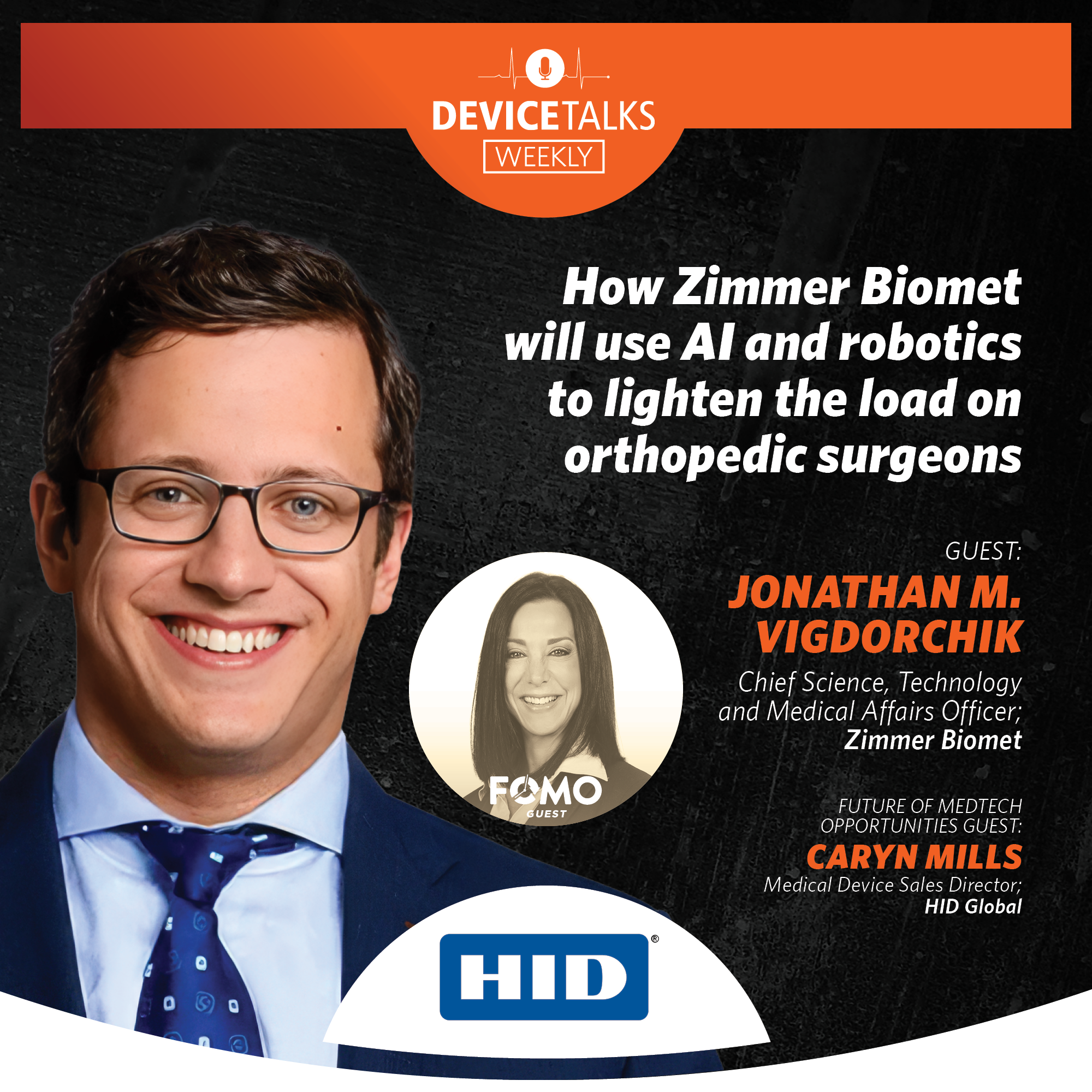

 DeviceTalks Weekly
25 Sep 2026 · 54m · 15 chapters
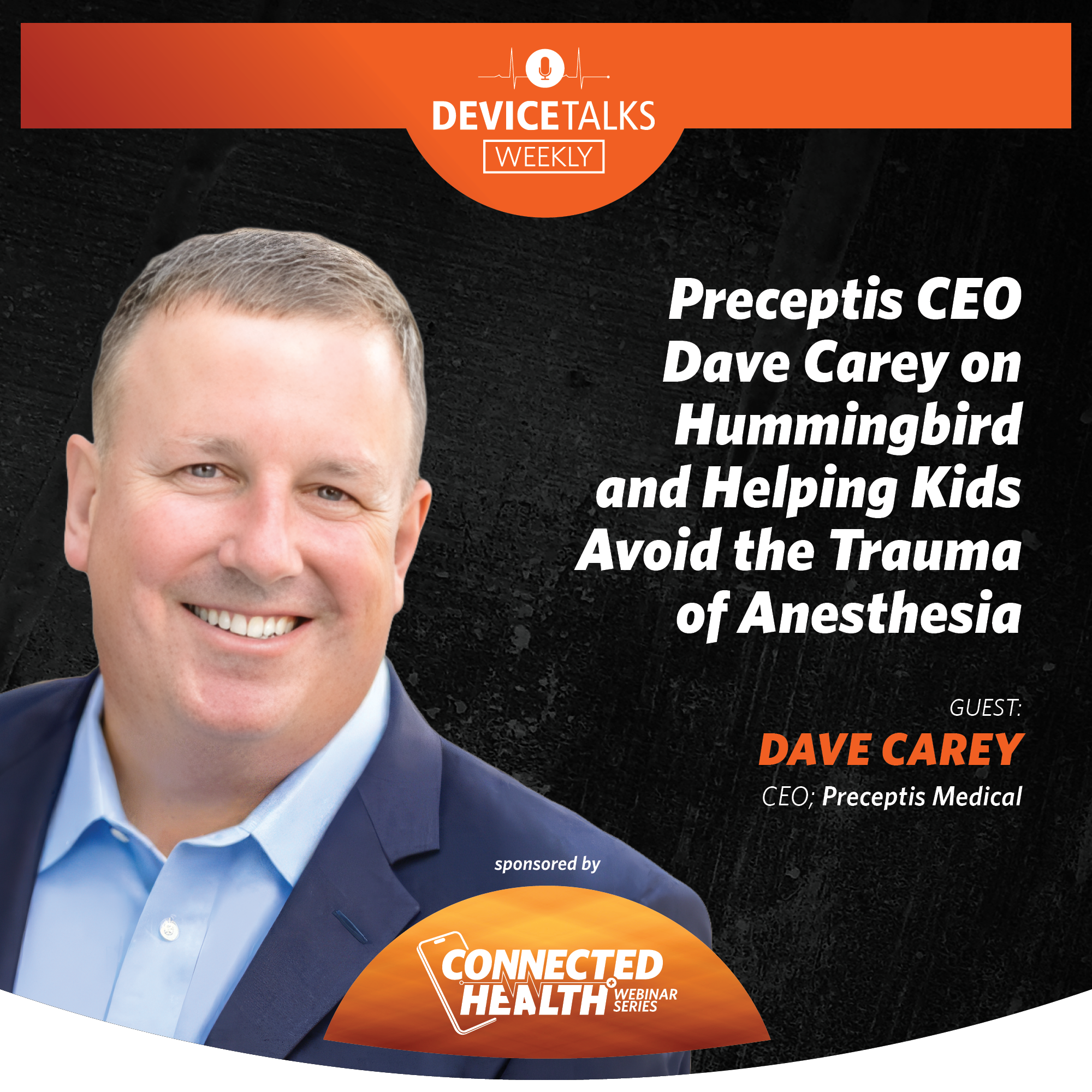
Device Talks Weekly Ep 305 combines “Newsmakers” medtech headlines with a keynote interview about Perceptus Medical’s Hummingbird ear tubes—moving pediatric ear tube placement from the OR to the office to help kids avoid general anesthesia and reduce anesthesia-related risks (including emergence delirium and potential long-term behavioral/learning effects). It also covers Perceptus’ go-to-market strategy for changing ENT workflow, including peer-to-peer support and programmatic launches.
Dave Carey, CEO of Perceptus Medical (medical device executive with prior roles at Merck/Kelgon-Vestal, Boston Scientific, Medtronic, Stryker, and Pristine Surgical; previously ran a distributor business). Chris Newmarker, editor of MassDevice (appears in the Newsmakers segment).
Emergence delirium occurs about half the time after general anesthesia; FDA updates advise avoiding anesthesia when possible for young children. Perceptus’ approach uses topical in-office procedures, aiming to reduce OR time/cost and anesthesia exposure.
Ear tube stories from Carey’s family; pediatrician referral shift data (88% would move referrals to an office-based option).
Written by AI. May contain mistakes.
Tom shares his reflections as he prepares to leave Device Talks, expressing gratitude to listeners and guests.
“But first, I want to invite you to join us on Tuesday for Device Talks Tuesdays.”
Tom and Chris Newmarker discuss their history of podcasting, including memorable moments and changes in the MedTech industry.
“and the Newmarker's Newsmakers moving to the interview and then we'll wrap things up.”
Chris shares key updates from the MedTech industry, including executive changes and innovations in surgical robotics.
“But let's adjust our gaze outward and look at the medtech industry.”
Exploration of Johnson & Johnson's decision to offload a technology.
“funny because it's true it is true should I be worried about this?”
Wrap-up of the news segment and introduction of Dave Carey.
“It's been awesome, and it's been just really an honor and a privilege, man.”
Dave Carey discusses his career path and experiences in medtech.
“Uh, Perceptus makes the hummingbird ear tubes.”
Dave Carey shares insights on medical device sales and training experiences.
“At the time, I think the other thing that MedTech has afforded me is the ability to live in different places where I needed to at the time.”
Learn about the complexities and nuances of medical device sales training and the importance of preparation.
“Again, I've learned a lot from talking to you.”
Discover how Dave Carey made the transition to Perceptus Medical and the significance of his previous experiences.
“So let's, let's move into, so you, you, you went from your distributorship to striker and then you joined pristine surgical, which is where we met.”
Understand the rationale behind Perceptus Medical's mission to help children avoid anesthesia during ear tube procedures.
“We have a device, a platform that enables ear tubes to be performed in the office instead of the operating room.”
Gain insights into Dave Carey's approach to assessing and leading Perceptus Medical as their new CEO.
“if you can avoid it, particularly under three or four.”
Learn about the challenges and strategies of a new CEO in medtech.
“And I think you were the second CEO, right?”
Discover the importance of surgeon trust in adopting new medical technologies.
“88 % of pediatricians said they would move their referrals if someone offered an office-based solution.”
Explore how engaging pediatricians is crucial for successful tech adoption.
“and wants to do it as a start, the pediatricians knowing that this option now exists locally is next.”
Hear about the growth trajectory and future plans for Preceptis.
“and then you go to do a little research and there's nothing else except for this Instagram ad?”

Get the gist, explore an idea or ask about something said.
 Claude
On DeviceTalks Weekly, what are the key points of this episode?
Searching your listeningAutomatic transcript. May contain errors.
0:00Dave Carey: Hey everyone, this is Tom Salemi, Device Talks. Welcome back to the Device Talks Weekly Podcast. We have a great episode coming your way a little later in the podcast. I'll speak with Dave Carey. He's the CEO of Perceptus. Dave has become a good friend of mine and he's the type of person I think about when we put together medtech content. He's just been a stalwart in medical devices and sales and now operations and now he's the CEO of Perceptus, which is one of those medical device companies that's been around a bit, has amazing technology. and is working to find its way into the commercial market.
0:32Dave Carey: So I know you'll enjoy that conversation with Dave Carey. Before that, of course, we'll have Newmarker's Newsmakers with Chris Newmarker, the editor of MassDevice. Before we begin, a bit of news. But first, I want to invite you to join us on Tuesday for Device Talks Tuesdays. Kayleen Brown will be moderating a webinar from our very good friends at S3 Connected Health. They've been one of our longtime supporters of Device Talks. a great firm. They always put it together, a great presentation. You can go to devicetalks.com to register for that. That's free. You can watch that live and watch that on demand.
1:10Dave Carey: Before we begin the podcast, I have a bit of news. This is my last episode of Device Talks Weekly. Moving on from Device Talks, I'm going to pursue other opportunities. I'm excited about that, but I am certainly sad to be leaving my friends here at Device Talks and Mass Device, and also to be leaving my many good friends out there in Device Talks, the Device Talks community. We launched this podcast a little over six years ago when the pandemic was just settling in, and we did it to connect with folks, and we did. And I'm really grateful for that. um, heard lots of kind words about the podcast, about the role it's played, played during the lockdown and about the role it's played since.
1:58Dave Carey: And, uh, I just, uh, couldn't have, couldn't have, uh, anticipated, uh, a better outcome. And I'm grateful for, for every bit of it. I'm grateful to, uh, to our hundreds of guests. I'm grateful to our, uh, our hundreds of sponsors. I'm grateful to our, uh, our tens of thousands of, of listeners. Uh, it's just been an amazing ride. And, um, And I just want to say thank you. That's all. I don't do prepared remarks. I sometimes think I should, but I often just like to speak from the heart. And that covers it. I'm certainly sad. I'm certainly excited to be moving into a new direction. And I will certainly be available.
2:40Dave Carey: You'll see me around. Follow me on LinkedIn and see what I'm up to. So that being said, again, thank you to everyone who has been part of Device Talks, who has listened to our podcast, participated in our webinars, sponsored our webinars, attended our events, sponsored our events, et cetera, et cetera. I love MedTech and I have loved bringing this podcast to you and our other podcast to you for your enjoyment. So thanks again, everyone. We'll kick off this episode with, of course, Chris Newmarker and the Newmarker's Newsmakers moving to the interview and then we'll wrap things up. Let's go. All right, you ready for this?
3:19Dave Carey: Ready.
3:38Dave Carey: Chris Newmarket, how are you, sir? I'm doing all right. I'm doing all right. I already broke the news to our listeners if they listen to the intro. So, yes, this is our final New Markers Newsmakers. Chris, it's been a pleasure and an honor. And you and I remember calling me in March 2020 and saying, Chris, we're doing a podcast on Friday. And you're like, okay. And we did it. Yeah. We've done it. We've been doing it pretty much every Friday ever since.
4:04Tom Salemi: I think I remember more specifically, it was you calling up and saying, like, they hired me to do events and we can't do any events. What am I going to do? I think maybe we should do a podcast. I'm like, that sounds good. Let's do it, man. And like, so we. I might have offered that background. Yes, I'm not sure. I think there might have been too some like, where in the hell do I find, like, I don't even have toilet paper at my house, Tom. And you're like, Staples, go to Staples.
4:30Dave Carey: If folks want to go back to episode one, I think Chris talked about how he scored some toilet paper at Staples. Yes.
4:37Tom Salemi: Yes.
4:38Dave Carey: Good practical COVID advice. I know I listened to that episode and talked about where you scored toilet paper at Staples. And then we wondered about what the future would look like, whether people would be just talking on Zoom and not going to actual meetings or not traveling and not flying. We didn't think it was possible. And yet here we are. A lot of that came to fruition. Yeah, totally, yeah. Shows you the powers of our prognostication. Not so great. Not so great when it comes to broker socialists. But when it comes to MedTech, I think we're fantastic. I think we are too.
5:10Tom Salemi: I think we've got like at least, or at least we've been around covering this industry long enough that we definitely have some good insights to share with people. And man, it's been awesome, the six years. I love this audience that we've built here. And, you know, just like everything we've done, I think this is the favorite thing that I've done here at Mass Device and MDO is doing these newsmakers with you. And just in case our audience is sitting here like, oh my gosh, I just lost my favorite MedTech Industry podcast. I do think like even as you head on to the next great thing that we're going to figure, I hope we figure something out over here.
5:56Tom Salemi: Stay tuned. I would love it if this continued on in some form. But it would definitely never be the same.
6:06Dave Carey: Well, I appreciate that. There's certainly a deep, deep bench here with you and Jim and Kayleen and Skyler and now Connor. So I'm sure you'll all figure something out. But let's adjust our gaze outward and look at the medtech industry. Chris Newmark, what's the big news on the pages of MassDevice?
6:27Tom Salemi: You know, number five, we've got Medtronic. They've hired the former CEO of Recor to run their interventional cardiology groups. So, wow. You know, and just, you know, the fact that, you know, she was in charge of the main competing system to Medtronic Simplicity Spiral, and now they've tapped her to, you know, run the business that includes Renovation, Renovation, which is just like, you know, Medtronic considers this a huge opportunity going forward for them.
6:59Dave Carey: Absolutely. And of course, Jason Weidman left to join Teleflex. He had sort of been the champion of Renovation in Medtronic before.
7:07Tom Salemi: and um and that was jason brought on shots yeah yeah jason montana has left as well and he was
7:13Dave Carey: involved with so so there was an opening there and and lara barra i mean she joined she wasn't part of the renal innovation story from the start uh she joined in 2023 she had been with siemens previously so she kind of went from big company to small company so now she's going back to a big company but uh it seemed like a good match for her for sure yeah totally yeah and of course we had And Helen Steve-Rover, the new CEO of Recore on the podcast a few months ago. And it's going to, there'll be some good competition there for sure. Both, I think, are looking to apply renal renovation energy into, or their de-innovation energy into other applications as well.
7:51Dave Carey: Yeah. Beyond the kidney. Yeah. Exactly. So, yeah, it'll be good.
7:55Tom Salemi: And it's going to be neat to see what Jason does over at Teleflex as well. I mean, I saw he brought on Sean Salomon onto his board, and it'll be, yeah, that's definitely something to watch. We're getting a little, like, former Medtronic crew, like, you know, building up over at Teleflex. Yes, why not? Yeah, exactly. So, very, very cool. All right. Yeah, I mean, number four on the list, we've got Meinre. Speaking of, speaking of pandemic, huh? Okay. Oh, yeah, right. I know, we got a good...
8:26Dave Carey: It's bringing me back.
8:27Tom Salemi: It's like throwback time, man. We got ventilator news. And this is MindRay rolling out a new model in its hospital ventilator lineup here in the U.S., the SV70. And they're kind of saying like, hey, there's been opening in this market. I mean, Philips had all those huge recalls in recent years. I mean, Medtronic pulled out of that market. so you know mine ray is a season opportunity to get in and you know you know provide you know kind of you know a workhorse ventilator for you know for hospitals across the u.s
9:09Dave Carey: interesting yeah no we obviously that brings us back but looking at the at the medtronic news at the at the record medtronic news number five and we're going to skip i'm looking ahead to number three and two there's it's just interesting that how much has changed since we did the start of the podcast in six years i mean renal renovation is on the market we're going back to ventilators yeah that's that's that's a common story but the next uh item uh another big change from six years ago once you roll into number three yeah totally
9:39Tom Salemi: yeah i mean the um you know the you know the last uh you know over these years like the just the rise of surgical robotics and now we've got i mean medtronics already in the u.s market with hugo as they look to compete against Intuitive and Da Vinci systems. And now they're kind of like doing like a side play here, you know, with their deal for Cornerstone Robotics. And our new senior editor, Connor Hale, has a story out on MathsDevice. Connor, you know, comes to us from the Fierce publications where he wrote about MedTech for years. I mean, he's a great addition to our team. He's, you know, just already really impressed with the knowledge that he has of our industry, you know, what he brings to us.
10:24Tom Salemi: But, you know, Connor is writing, you know, about a Needham company analyst saying, like, you know, this strengthens Medtronic's position having Cornerstone. This, you know, investing$700 million in them and getting the right to distribute their Sentire system across certain international markets. It allows them to kind of differentiate what they're offering here.
10:44Dave Carey: so their needham is basically affirming uh medtronic stated strategy and uh i think i think a lot of outsiders as well have thought it was a really shrewd move to uh invest 700 million in cornerstone and to to distribute it across their international markets so uh yeah it's nice to be able to offer more than one robot if if as someone said if i can't tell you this how about this does this work for you better? So it's good for sales folks to have that option. Yeah, totally.
11:15Tom Salemi: So, and then, you know, number two on the list, this is another, you know, thing with analysts. I mean, you know, city analysts downgrading Boston Scientific because they just see this, you know, recent, you know, you know, cyber, you know, attack, you know, you know, at Boston Scientific is just further, further compounding competitive pressure, you know and you know I still remember you had some really good points about that cyber security incident that just like you know speaks to how as MedTech becomes more digital you know it also becomes more exposed you know and so you know here you have Boston Scientific like really you know really taking a hit you know from having you know this global outage you know from a cyber security incident
12:04Dave Carey: Well, this certainly takes that thesis even further. What I talked about as MedTech moves into more connected health, it's more exposed to cybersecurity. The issue with Boston Scientific was we were talking about how it actually impacted operations. And, of course, if you're going to impact operations, it only makes sense that it's going to impact financials as well. And that's what I think Citi's downgrade is certainly telling. You know, I think Striker probably had a downgrade too when it had its issues earlier this year. so it's not the first time we've seen analysts make adjustments like this.
12:36Dave Carey: It'll be interesting to see if things like this ever hit bond ratings and things that are more impactful. So yeah, we need to tread carefully in the connected health space and it's getting crazy out there, man.
12:53Tom Salemi: It is, man. Especially when you hear about AI breaking out of places and like hacking. Like it was bad enough when people were doing it And now we got like, you know, like AI, you know, like, like rogue AI. And it's like, who knows what it's going to do. So, yeah, it's a brave new world.
13:09Dave Carey: My source of what I would do about rogue AI, my computer would probably be going to Claude. And I'm sure Claude's going to be in cahoots with whatever rogue AI. And I'm just toast. I'm losing my bench of technical expertise. Yeah. Claude would be like, it's okay, Tom. Just embrace it. It's like, just let it in. Just put up in front of a bus, Tom. It's over. It's okay. Okay, Claude. Okay, Claude. I don't know. Claude says I should step in front of a bus.
13:38Tom Salemi: Claude's never wrong. I was running an errand last weekend and caught the NPR thing, wait, wait, don't tell me, and there was a comedian that mentioned something like that Bill Gates had written a 6 ,000-page report about the dangers of AI. He said, you know, so I just ran it through ChatGPT to get a summary of it, and Chat said, don't worry, Bill says things are going to be fine.
14:02Dave Carey: funny because it's true it is true should I be worried about this? no no
14:07Tom Salemi: no
14:09Dave Carey: you need to read that
14:10Tom Salemi: 6 ,000 page 6 ,000 word essay
14:13Dave Carey: go watch some more TV go stream some more Ted Lasso Tom you'll be fine it's great don't worry about it
14:18Tom Salemi: season 4 we've got things taken we've got this so yeah it's fun alright what's number one on the New Market Newsmakers list Chris? and finally on the list we've got johnson and johnson offloading uh the uh at left atrial appendage closure system um it paid 400 million dollars for nearly at three years ago this was like the uh you know the uh acquisition of uh of laminar but um they um you know they had a uh you know they had a suspended pivotal trial like in mid 2025 and like you know connor noticed like according to clinical trials.gov. And, you know, so, you know, it looks like J &J is kind of like designed to offload this technology.
15:06Tom Salemi: Then, though, you know, this was actually bought up by like a new venture-backed entity that is led by Laminar's former CEO, Randy Lishinsky. So, you know, it looks like the, I mean, J &J said they didn't, decided I guess that they didn't want to keep working on it but the people who developed this obviously seem to think there's still some good promise here so they talked some investors into coming along for the ride so it looks like we'll see what they do with it going forward.
15:44Dave Carey: That's not a commonly used playbook but it's certainly not the first time we've seen investors buy or the CEO backed by investors buy a product back that maybe they think the the acquiring company, uh, didn't manage the trials correctly or some adjustments could be made to tech to the technology. So, uh, that, that's certainly interesting. I remember years ago seeing that with the trivascular team with an A graph, uh, that, uh, had been purchased by, I can't remember whom, one of the bigger strategics and then it was spun out back again and built into its own company. So it can, it can happen.
16:17Dave Carey: Uh, it'll be interesting to see. I mean, where more devices are needed. So I'm glad the technology is being given a second, I guess it would be a second chance. Yeah. Yeah. Yeah, very cool. All right. Well, great list, Chris Newmarker. What can we say? This has been a treat.
16:36Tom Salemi: It's been awesome, and it's been just really an honor and a privilege, man. Same here.
16:43Dave Carey: For every minute we talked, for the newsmakers, we spent about the same amount of time just kind of talking about kids and shooting. and stuff. And, and, uh, and it was a good, good sort of end of the week kind of debrief. So, uh, appreciate those conversations as well, Chris. And, uh, this will not be the last time we'll talk. I'm sure. We'll be a stranger buddy. All right, Chris Newmarker. Thanks one final time for this week's Newmarkers Newsmakers. Now it's time for our keynote conversation with Dave Carey. He is the CEO of Perceptus Medical. Uh, Perceptus makes the hummingbird ear tubes. We talked a lot about ear tubes and about preceptus in the conversation, but I don't know if we got into the, uh, into the actual name of the device.
17:27Dave Carey: I think we did, but, uh, this is the kind of conversation that I think people will connect with on a personal level as a parent. So if you have any interest in, uh, in learning more about the hummingbird ear tubes, go to hummingbird eartubes.com and you can find more information there. All right, let's get, uh, this conversation going with Dave Carey, CEO of Receptus Medical. Well, Dave Carey, welcome to the podcast.
17:56Tom Salemi: Well, thank you, Tom. Good to be with you again.
17:58Dave Carey: Yeah, no, it's great to talk to you. Full disclosure for everyone, Dave and I have had dinner a few occasions. We don't live too far from each other and enjoy each other's company for the most part. I do anyway, Dave. I don't know if you do.
18:10Tom Salemi: No, it's reciprocated. Plenty of conferences too.
18:13Dave Carey: Yes, absolutely. You're a very loyal attendee to Device Talks and we're grateful for that. And you're also, I said this before we pushed record, you're one of the folks I think about when we put out content. How does this content sort of land with a guy who's been in the medtech industry for decades, has done, I think, every commercial job possible and is now leading a startup for the first time. so I want to sort of draw from that experience and understand not only your story but how you're applying lessons learned to running a company Perceptus Medical which also I think is a is a great medtech story because it's it's one of those typical medtech startups that's been around for a while has a fantastic technology and is just finding a way to work its way in into the commercial sort of realm.
19:06Dave Carey: So, and I know you're making some progress there, but let's first start with you, Dave. How did you find the medtech industry? What was, why did you join the medtech industry?
19:16Tom Salemi: You know, my story is not too dissimilar from probably many other people in the space. I was a college athlete, loved competing, wanted to continue to compete however I could. and um you know i was at the time there were a couple of different roles um that uh i was offered from a division divisions of merc and one of them was wound care and hemostats and uh and i decided to go down that route and so i literally graduated college on a saturday and i was standing in an or terrified on a Monday, wondering how did this happen? But I never looked back. And since then, as you mentioned, I've been lucky enough to have every role from sales associate now to CEO, making huge strides and mistakes along the way.
20:13Tom Salemi: But it's been a great experience. So right out of college, I walked in as a sales associate and just moved up the ranks. I went to school nights while I was a rep for B school, but ultimately decided I just liked being close to the action here.
20:28Dave Carey: What was the first job in MedTech? Who'd you sell for or work for?
20:33Tom Salemi: Yeah. So it was a division of Merck called Kelgon Vestal Laboratories. I still love that job. It was a midsize company and we had wound care products, hemostats. We had a full bag of all kinds of different products. And if one part of the hospital didn't like dealing with you, another one would. So it was a lot of fun. It was a great first job. But I think where things really transitioned for me was after that role, I took a job with Boston Scientific. And it was for an organization within that company that was creating the first stunt graft. So the first AAA stunt graft. The product never made it, but I was hooked on that kind of disruptive experience.
21:22Tom Salemi: And, you know, sure, it's great to be competitive and have like products to everyone else and try to beat them out. But I really found it rewarding to get involved with tech that was just coming in and that I could be the guy to help present and hopefully change some workflows, change some minds. and ultimately, in my own humble way, hopefully make some changes to the business I was in. And I've been really fortunate for that. From that experience, I went on to be one of the first spinal cage reps. And then Medtronic launched a drug-eluting stent, their first one, Endeavor, in the early 2000s.
22:04Tom Salemi: and you know just it's been a lot of fun to be involved in disruptive tech most recently uh striker bring echo in and around the northeast so it's always been trying to bring something new a new way of thinking about things and i i seem to gravitate to those kinds of opportunities don
22:21Dave Carey: what do you look for it and because you you're mentioning some some really odd areas in medtech historically um and you've been at some i think intriguing ones as well like invuity i remember which was sure yeah so when you're assessing uh an opportunity in sales are you and we've when we've had this talk uh over dinner are you looking at uh the technology the opportunity are you looking at the lifestyle because as you've told me different different specialties come with different lifestyles if you want to sell trauma implants great but don't count on watching an entire movie because you're going to likely get called out during it uh what do you look for when you're assessing new opportunities in sales?
23:05Dave Carey: Or what were you?
23:07Tom Salemi: You know, I think that the first thing is the team. So I'd like to know, especially when you get involved with startups, the foxhole is pretty small. But even with large companies, you're still part of a smaller team. And, you know, you've got to make sure that you've got a a great organization built on trust. And just people that are not always like-minded, but at least want to run at the same pace. I'm one of those guys where I run pretty hard and people around me tend to run pretty hard. And that's just something that's been a big part of my approach. And so most importantly, I want to know the team that I'm on.
23:53Tom Salemi: but I'd say also it's really important that you have a belief in what it is you're there to do I don't care if it's a big company or a small one med tech takes a lot out of you it's hard work you know I I think I understand finally why you know so many athletes gravitate to this space it's not because we like to sit around the locker room and and you know talk about old glory days but people that have that come to this business have to be able to put an exceptional amount of time in they've got to be patient it doesn't happen overnight and so it's clear to me now that you know athletes really gravitate to this space because they're used to committing themselves to something a little bit bigger than they are putting the time in and getting it done so I think the people thing is super important and then just the tech and making sure you're excited about it because you're going to be talking about it all day.
24:53Tom Salemi: And if you're just talking about why your box is red and the other is blue, you're going to be bored. And so I just, I feel like the, you know, having a tech that you believe in or, you know, or a product that's somehow close to you is, I think is important. You know, I went during that first role with Boston Scientific, we went from, you know, what they called the Braveheart procedure back then, which is where they opened you up from, you know, essentially from the base of your sternum and all the way down and really just, you know, had to move organs out of the way to be able to work on your aorta to a small incision in the leg.
25:35Tom Salemi: And, you know, you talk about what a difference that made in people's lives, survival rates, recovery rates in, you know, a week instead of months. These are important things to patients. And so, and there's still, even as advanced as we are, I think there's still a lot of great tech that's coming in that's making things easier for surgeons, easier for allied staff, nursing, NPs, and ultimately better for families. All of that. And there's still a lot of really great opportunities to go and have an impact in this business. That's great.
26:09Dave Carey: And just one thing I know you did, you had your own distributor company for a couple of years successful. How did that come to be? And how is that different than selling for a company? And is that something that you encourage other people to do it if they sort of want to, I guess, I don't know, do you get to call your own shots? Are you actually not calling your own shots? Could you have so many different things to sell? What's the experience like?
26:32Tom Salemi: Yeah, no, I mean, it's interesting. You know, I think that I enjoyed it. At the time, I think the other thing that MedTech has afforded me is the ability to live in different places where I needed to at the time. At the time, my dad was sick. I wanted to be closer to home. In hindsight, I'm very glad I was there. But, you know, the distributorship is not an easy life. It can be very good. And you are your own boss, but you're still reporting up to, you know, the companies that you're supporting. and they have goals that they want to achieve. So it's kind of like having a board. You've got people coming at you from a lot of different directions, different experience, all wanting you to be successful and helping you and pushing you to that.
27:23Tom Salemi: So it was very helpful for me at the time. I think that ultimately I did decide to go and join Striker after that. But that specific experience came about because I learned about that business from Invuity before we transitioned. And so for me, it was a really great opportunity to, as I said, get closer to home and build out, hire some young kids, copier sales kids and everything else, and give them some great experience and turn them on to their own med device careers.
28:01Dave Carey: And I want to get into your work at Pristine in a moment, but you give a lot of thought to medical device sales training. What's that experience like? Again, I've learned a lot from talking to you. I didn't really appreciate how much work went in, how much additional education went into it. what's your assessment of training today and and uh and maybe uh do you see any things that need to be changed or handled differently you know i would say that these
28:35Tom Salemi: days it's really interesting for people that want to break into med tech because there's so many different disciplines now that the space and you know somehow some way down range i'll find a way to make a profession out of this maybe, but I feel that the career, you brought it up, a career in trauma sales is very different from a career in joint sales. I've interfaced with all kinds of cardiology, pacemakers to stents, and they're all different jobs. And I think even industry veterans, we kind of lump ourselves into med device, but the truth is that As a guy that's, you know, for a lot of reasons jumped from ortho to interventional cardiology to pacers to spine and all these different disciplines, they all ask something different.
29:31Tom Salemi: And preparation for that is usually not starting until you've already accepted the job and you're on the ground. So I do feel like people should do well to make sure they understand what they're getting themselves into. spend time talking with reps that are successful in that space so they can understand what's required. And I think that they'll be surprised and hopefully better for it and ultimately better prepared to do what it takes to be successful, knowing that before they ever step into the role in the first place. A lot of people, I think one of my favorite interview questions when people come and meet with me.
30:17Tom Salemi: And I'm usually not the first interviewer. I'm one of the last ones. And I'll ask, what competitors should we be concerned about? And that answer, if they answer it intelligently, tells me that they've done the research and they know what they're getting themselves into. If not, and they can't name a company, then I realize that this person doesn't really know what they're walking into at this point. And it's a higher risk. And so ultimately in med tech risk is, um, the, the risk in hiring is strong because there's a strong burnout factor that comes with this and people getting into roles and not really understanding them as well as they could to know what's required.
31:01Tom Salemi: And it's happened, it's happened to me and several people that I've hired. It doesn't have to be athletics, Tom, but I'd want to know that someone has committed themselves to something. My other second favorite interview question, tell me about something that you really committed yourself to and what was the result? And it doesn't have to be athletics. One of the most interesting people I hired you, you'd be amazed at the answers you get from that. But one woman actually hiked the Appalachian Trail after she graduated college by herself. And I thought, wow, the bravery of that as a young female, the planning that's required in that.
31:42Tom Salemi: And that's execution. That's planning and execution. Somebody doing that well is going to step into a territory and crush it because they're going to apply that same methodology that made them successful in achieving that hike. And so I think that it's really important as people are trying to break into this space that we make sure that they understand what's really required from this because turnover hurts companies badly in this space and um and again i i want to make sure that as we bring people in we're responsible about it people are excited about medtech they hear that it pays well but there's um there's a lot that goes into that i went to
32:28Dave Carey: opening day at Fenway for 12 consecutive years. Would that, would that get me the job? Would that be impressive or would you say?
32:34Tom Salemi: Yeah, I think it would depend on where your seats are probably.
32:41Dave Carey: So let's, let's move into, so you, you, you went from your distributorship to striker and then you joined pristine surgical, which is where we met. You were chief commercial officer, first VP of gym and marketing, then chief commercial officer. Single use endoscopy, another, another hot area. um what what uh were you at that point thinking you wanted to get a c in front of your name some point were you looking you're putting an executive yourself on an executive track how did you find
33:06Tom Salemi: your way to pristine no you know it's funny brian lord and i actually live in the same town and so um i reached out to him because i saw the tech uh and i thought this is really interesting this is a problem that needs solving and and they had a very unique product and approach so I was close enough to sports medicine where I knew some of the challenges of equipment management and all of that and yeah so I had a great conversation with Brian we think alike on a lot of things, very smart guy and we had many great years together, we hired an unbelievable team, I think the tech is still evolving with Christine for us And, you know, I'm not there any longer, but I would say that, you know, I think as you look back on your career, you say, well, how did I assume?
34:01Tom Salemi: How did I walk into that? And I still think that single-use endoscopy is going to rule the day. The technology needs to be able to match current visualization and make sure that you're meeting customers where they are. And it's going to happen. And I think we were a little bit early, but I think in the long run, that company is going to be very successful. Fantastic.
34:25Dave Carey: So let's talk about where you are today. I mentioned at the top here, Perceptus Medical. Tell folks a bit about Perceptus first, and then we'll get into why you took this opportunity.
34:38Tom Salemi: Sure. So Perceptus Medical is a startup based in Minnesota. We've been at it for a couple of years. We have a device, a platform that enables ear tubes to be performed in the office instead of the operating room. Why do we want that? For really a couple of reasons. We want to help kids avoid anesthesia when possible. So there's been some really good research around the negative impact. And in fact, the FDA has issued updates on this, that young children shouldn't be exposed to anesthesia if they can avoid. it. But, you know, now that I've been in this role and I've been here for about a year, everyone has a story about ear tubes with either their kids, their niece, their nephew, their neighbor, and they're usually not great.
35:26Tom Salemi: And the truth of the matter is that, you know, these procedures are performed in the OR. They last about five minutes. It takes the same amount of time to get your ears pierced at the mall that it does to, you know, have your tubes placed. That's how quick these procedures happen. And, you know, the fact of the matter is they've been in the operating room for a very long time. It's expensive. Operating room is a constraint when it comes to timing and block time and everything else. And, you know, anesthesia has been increasingly challenging for ASCs. And, you know, we provide an interesting release for that in that, you know, we're going to take that procedure and move it with a topical into the doctor's office.
36:09Tom Salemi: And so that's essentially our tech. We enable that migration from the operating room right to the office.
36:15Dave Carey: And you mentioned, I personally have a, I don't know if it's a story or not, but my younger son needed tubes. And I remember my wife was very upset because he, we weren't in the room with him when he emerged from his anesthesia. For some reason, they didn't tell us in time and he understandably freaked out and she was upset for a very long time about that. So that's a story we had. I know you, when we talked at the start, you didn't necessarily look to you weren't looking to be CEO of a company necessarily, but this story resonated with you directly. Why was that?
36:48Tom Salemi: Well, we have a good friend in common, Mr. Mullings, and you know, it was about six months before I joined Perceptus. I hadn't heard of the tech yet, and my daughter had ear tubes. And she came out from her procedure. Tube procedure went fine. She came out in what's called emergence delirium. So she didn't recognize me. She didn't recognize my wife. She was inconsolable. Now, I've got 20 ,000 pictures of my daughter in my phone, and half of them she probably took. But one that's burned into my head is just her face and the fear that was in her face. And so, you know, I was, I was not, I was not happy about that.
37:36Tom Salemi: I, I went at the ENT and said, what was that? And, and, and so, well, that's emergence delirium. It's actually in the consent. And sure enough, it was on the back page and size eight font of the consent. But children come out of, often come out of general anesthesia in this emergence delirium where they're completely disoriented. And come to find out, it happens about half of the time. Wow, really? So yeah, so for 800 ,000 procedures that are performed in the U.S. every year, that means 400 ,000 families went through what my family went through. And this is when I was still at Pristine having this conversation.
38:17Tom Salemi: And I was talking with Joe Mullings, and he said, look, I know you're not really a title chaser, but there's a CEO role that I'd like to talk to you about. And I said, okay, tell me more about it. And he said, well, it's ear tubes, but it's a different approach and it's taking these ear tubes out of the OR and into the office. And I said, will they avoid anesthesia? He said, yes. And I said, I'll take it. And I don't think you're a real sure negotiator. I still remember because he's like, well, I suppose you should probably interview him. Maybe you want to be forwarded. But, you know, again, we talked earlier about wanting to, you know, if you're going to do something, make sure your heart's in it.
39:03Tom Salemi: Yeah. I've got something pretty personal tied to this. And I think that it makes it easier. You know, this morning I was up at 3.30 to catch a flight. Those aren't easy things to do. But it gives you a little extra added fuel. to know that you're going to help families avoid these things. So it's not just the emergence delirium. FDA issued an update in 2017 that said that kids shouldn't be exposed to anesthesia at all if you can avoid it, particularly under three or four. One prolonged exposure or a couple of short ones can actually cause behavioral issues, downrange, or learning delays. Wow. Yeah.
39:44Tom Salemi: And so one unknown fact is a lot of kids get tubes more than once. And so all of a sudden you're in multiple anesthesia exposures, you know, just for getting a couple of sets of tubes in one of your children. And then if it's adenoids, now it's three tonsils. And so the risk is real. And parents, you know, I often say that our best parents are informed parents. And the way that Google and more importantly now these days, Claude and ChatGPT are lining things up. Parents are prepared. They understand. And now they're seeking us out, which has really been great. So this has been a shift for me. And you didn't ask this question, but I'll offer it up.
40:33Tom Salemi: For most of my career, my patients didn't have parents anymore. I mean, so ortho, cardiology, you know, these are the things that happen to 60, 70, 80-year-olds. And so now parents are front and center in every conversation that we have. And so it's not just marketing to them. It's about making sure that you're positioning the entire company and maximizing the possible upside for families. And parents and children and the family experience is really central to everything that we do. And that's really how we differentiate. In the end, the tube that's left in the child's ear is the same tube or the same type of tube that's left in a procedure that's in the OR.
41:25Tom Salemi: So the results are the same. um it's about building a great family experience uh and hopefully reducing some some angst some cost and and just some time out of the entire thing so you you obviously took the job you met
41:43Dave Carey: with the board and it all worked out uh what was uh talk about talk us through the first year you've been there for just under a year, I believe. Yes. How do you go about assessing a company that, again, has a product, it's been out there? What does a new CEO do going in? And I think you were the second CEO, right? The founder, Steve Anderson, was the first CEO.
42:08Tom Salemi: Yeah, Steve did a great job. The great news is that the foundation of our place is excellent. So we have an outstanding contract manufacturer that makes products for some of the largest companies in the world. So naturally, we get to benefit from a lot of their quality experience and such. But I inherited a great team of people. The commercial arm of it was not as supported, not as funded as it could be. And it makes sense that they would want to bring in a commercially oriented CEO at that point to kind of take it to the next level. So I've been launching products for most of my life. in looking at this tech and realizing what needs to happen, there's different ways you approach it when you're Medtronic versus a company of 10 people.
43:04Tom Salemi: And we will never, no matter how successful I am at fundraising, but we'll never have a Wagovi budget to go out and hit the airwaves and get to everybody. So how do you get the word out? How do you expand? And that was really the charter was to think about we need to be able to build sustainable growth trajectory and have a multifactorial approach to it. Not just do one thing, but what are the things that we're going to execute on well? The biggest thing when you're changing workflow, in my experience, and I've worked in a lot of different disciplines, but they tend to follow the same trajectory where surgeons are initially skeptical.
43:48Tom Salemi: early adopters come in they start to move the needle a bit but it's not until a surgeon really believes that this is a tool they need in their bag and that they ultimately start to realize they need to train residents and fellows, that's when you know your tech's really going to take hold and that's really been our charter but early on, I think people are always fearful of change. And any physician is skeptical of change and wants to make sure that they do their diligence on it. In this case, in particular, with ear tubes, this is the number one procedure that an ENT does. So the ENTs will look at this and say, okay, so if this is the procedure I do the most, am I going to overwhelm my office?
44:38Tom Salemi: What are the tips and tricks? And how do I do this? So there's just a lot of questions. There's the transition curve, the selling curve, whatever you want to call it. There's a lot of little constraints throughout that entire process. And peer-to-peer is huge. We end up having doctors assist in almost kind of a phone-to-friend fashion to answer the little questions that come up as people are thinking about how to operationalize this. But what we have found is that once we build that and we build a program around a surgeon and they agree this technology is something they want to do, we start small.
45:21Tom Salemi: We don't say move everybody. We say let's pick some subsets. Let's show you the value, maximize the value, minimize the risk of transition. And ultimately, our customers get themselves there. and they start feeling more bullish on the tech. They understand the puts and takes of it and they start to apply it more broadly. And that's been a lot of fun for us. One trick I learned, and it's not new, but I think it was highly reinforced for me with Striker and Mako, was the idea of a programmatic launch. And you're not selling a robot. What you're doing is building a robotic program. We said that so many times, I get tired of hearing myself say it, but it was true.
46:06Tom Salemi: And so you sit here and say, well, what do robots have to do with ear tubes? Well, they're still changing a workflow and building new habits and doing things differently. And once you get that sunk in and a doctor really believes in it and wants to do it, the next step that you have to do is make sure that you're educating people that the doctor is doing this procedure now. And so we've got, you know, obviously customer acquisition is very important, but we're engaging pediatricians and letting pediatricians know when we set up a program, everybody within 50 miles of that program is going to know that there's now a local option for office-based ear tubes.
46:51Tom Salemi: We did a lot of research. 88 % of pediatricians said they would move their referrals if someone offered an office-based solution. And we're putting that to the test and it's proving out. And then finally, it's parents. Once you get the pediatric path going, and that's a great group of doctors, then you're activating the parents and providing them resources so they can go and follow that path from the pediatrician onward to the ENT and get that option. So it's really a multimodal approach, and all three are required, the ENT, the pediatrician, and the parent, to make sure that ultimately we're building some really strong programs out there.
47:34Dave Carey: What's interesting is I would have thought that you would have approached parents first, pediatricians second to kind of apply pressure and maybe ENT third. But it sounds like it was reversed. What goes into that strategy? I guess you need to meet, ENTs need to be comfortable to start with. They don't want to be maybe under siege or. Right. Is that what you're looking to sort of disarm any resistance that they may come up with?
48:00Tom Salemi: Yeah, I think whenever you're putting a program together, whatever tech it is, you want to make sure that things are in place, that the doctor's fully bought in, understands exactly how to operationalize it. And so, you know, in a lot of med tech, people use consultants for kind of, you know, I guess I call them podium presentations and things like that. And for us, it's more of a collegial phone-a-friend type environment where we're going to give someone who's looking to make this transition a contact with someone who's already done it so they can help them see around some corners. We're very good.
48:40Tom Salemi: We've built a full workbook on all this. We have a plan for everyone, but no one on my team has MD after their name. and so it carries a lot more weight to talk with the physician that can just handle the small questions that come up. So that relationship's really important. I would say also, though, the specifics around doing the pediatricians before the parents, I think you have to build the road first. An ENT that understands that it's bought in and wants to do it as a start, the pediatricians knowing that this option now exists locally is next. I have this vision in my head of parents going down a path, but on that path to the, ultimately to the hummingbird, starts with a pediatrician.
49:30Tom Salemi: And if you activate parents and they go to the pediatrician and the pediatrician hasn't heard about it, that's tough. That's really tough. And so, you know, for me, I think the best thing that we can do as a small company with a small budget is get very focused in specific markets, develop and make sure that people have an amazing onboard experience. So if we're good at three things, it's finding the right customers, it's giving them an amazing onboarding experience, and then world-class market development on the other side to make sure that patients are going to show. And we have determined after a lot of angst and a lot of work that if we execute those three things well, we're going to be successful.
50:19Dave Carey: That's great. That's a great point. How many times do you find something on Instagram that sounds amazing and then you go to do a little research and there's nothing else except for this Instagram ad? You're like, it must be nonsense. I can't trust this. So building the road makes perfect sense. Final question, just tell us what sort of results are you seeing and what's next for Perceptus?
50:42Tom Salemi: well we're at the fun part now uh you know we're just starting that bend in that hockey stick and revenues are starting to climb people are getting excited uh so it's not uh i'm not high-fiving yet things are going well the team's great uh we've added some great talent and so for us right now we're just starting on that growth and and experiencing all the all the growing pains that come with that. So for us right now, we're looking hard at our processes, make sure that we're getting ready for what we think is going to be some great growth the rest of this year and next. And it's just a fun time, Tom.
51:23Tom Salemi: And, you know, we go from these roles where we're wrestling with VAC committees and red scrub caps and credentialing and all that to, you know, working in offices where we're getting hugs from mom and fist bumps from dads. And it's just super rewarding work at this point in my career. A lot of the guys that I have on the team have been at this for many years. And so we're hitting a really fun time for the business. And in that part where we just get that momentum, as I mentioned, we have a lot of major programs now saying we need to start offering this, when you start training our doctors, which is, to me, the highest form of flattery and compliment that you can get in medtech.
52:09Tom Salemi: So great days ahead. We're just starting to make that turn. Awesome.
52:12Dave Carey: Well, it's fantastic having, again, one of my core medtech people in charge of one of my core medtech companies. I remember when you told me you got the job, and I was like, that's perfect. I love Perceptus. That's a great story. It was a great pairing. So, Dave, thanks so much for joining us on the podcast.
52:29Tom Salemi: It's great to talk with you again, Tom.
52:34Dave Carey: okay that is a wrap thanks again folks for uh for listening to this episode of the device talks weekly podcast and of course for being part of this device talks journey uh it's been long and exceptional exceptional exceptional and memorable uh and i i'm really grateful to uh everyone who's listened to everyone who's appeared who has appeared on the podcast again everyone who's uh been participating in our webinars and of course our in-person events uh you're all um Just amazing. And I love telling your stories and I look forward to telling many more in the future. But please do check out the S3 Connected Health Device Talks webinar.
53:12Dave Carey: Device Talks Tuesday's webinar coming up on Tuesday with our managing editor, Kayleen Brown. Of course, continue to read the pages of Mass Device and Medical Design and Outsourcing, led by Chris Neumarker and Jim Hammerin. And of course, follow us all on LinkedIn. Follow me on LinkedIn to see what comes next. Follow Kayleen Brown, follow Chris Newmarker, follow Jim Hammerand, and of course, follow Device Talks and MassDevice as well. All right, folks. Again, no words to express my gratitude other than thank you, thank you, thank you, thank you, and I look forward to seeing you and talking with you again in the future.
53:53Dave Carey: Take care, everybody.
54:01Thank you.
In this episode of DeviceTalks Weekly, Host Tom Salemi talks with Preceptis Medical CEO Dave Carey about his path from MedTech sales to the corner office.
Carey shares lessons from launching disruptive technologies at Boston Scientific, Medtronic, Stryker and Pristine Surgical, including what he looks for when hiring salespeople and what it takes to change established clinical workflows. Carey also explains why his new role at Preceptis is personal. After his daughter experienced emergence delirium following anesthesia for an ear tube procedure, Carey was drawn to Hummingbird, Preceptis’ technology for moving ear tube procedures out of the OR and into the physician’s office without general anesthesia.
He explains how Preceptis is working with ENTs, pediatricians and parents to drive adoption and why changing even a five-minute procedure requires more than selling a medical device. For more information, visit https://www.hummingbirdeartubes.com.
We’ll open the episode with Newmarker’s Newsmakers featuring Mindray, Boston Scientific, Medtronic and Johnson & Johnson MedTech.
This episode is sponsored by DeviceTalks Tuesdays Connected Health Series. Register at DeviceTalks.com.
***
Enjoy the show? Follow DeviceTalks Weekly on all major podcast players + Follow us on YouTube.com/@DeviceTalks to ensure you never miss an episode.
Want access to the complete DeviceTalks Podcast Network (DTPN)? Follow us today at https://devicetalks.castos.com/subscribe