Ask ChatGPT


 Do Not Disturb: The Inside Story
16 Sep 2026 · 49m · 24 chapters
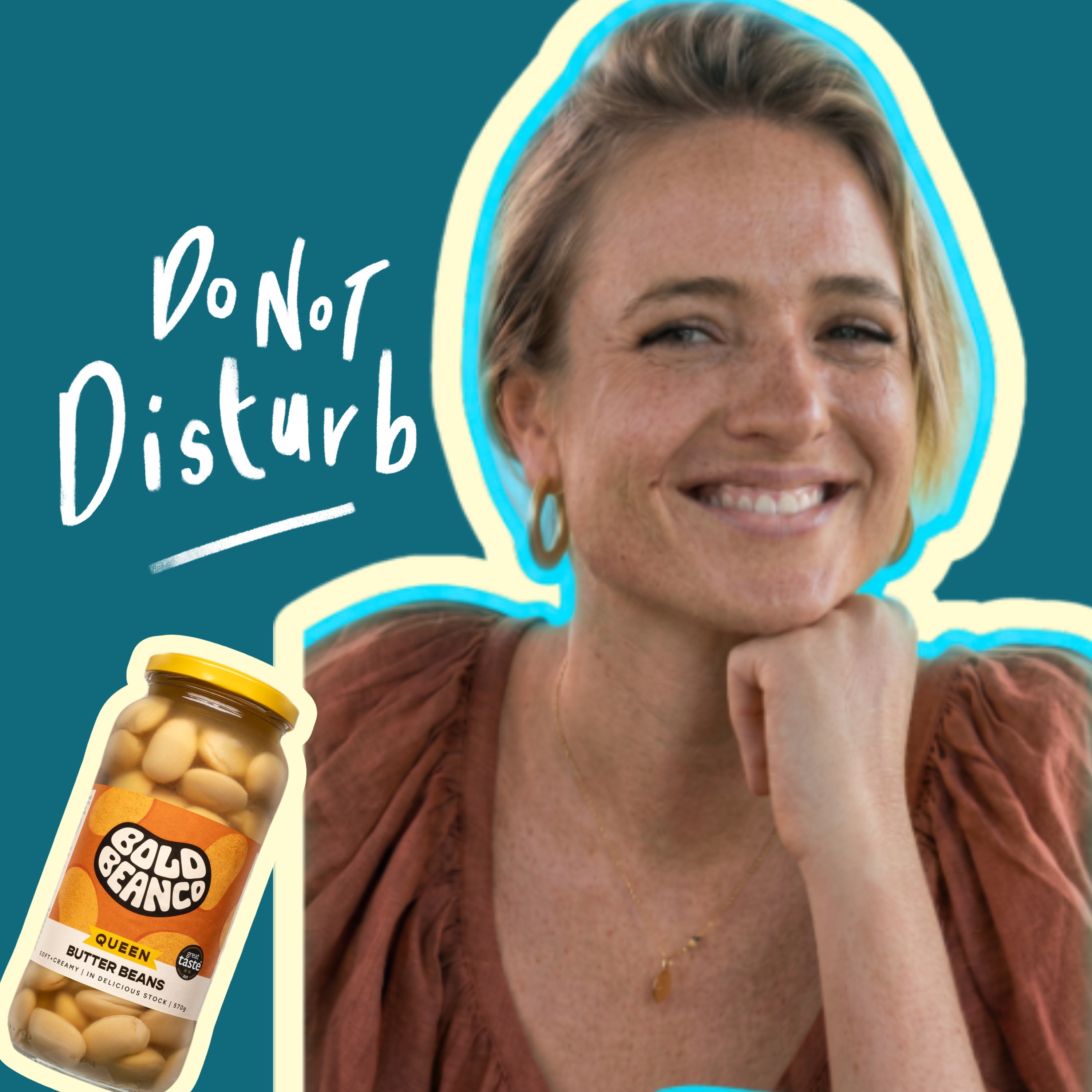
Amelia Christie-Miller, founder of Bold Bean & Co (Bold Bean), discusses building a category-defining bean brand in the UK, using intuition plus early data validation, and redesigning her work and life around motherhood (remote-first, flexible culture, gradual return to work). She also covers body-image pressures after pregnancy and how she manages self-doubt, pay, and delegation as a founder.
Amelia grew up as the middle child in a four-kid family, with a strong food influence from her Australian grandmother (including living with her in Australia at age 11). She studied and worked as a chef during university summers. She did an Erasmus exchange in Madrid. She later built Bold Bean into one of the UK’s fastest-growing food brands and became a mother to a daughter (Olive).
“Bold” came from listening to feedback (not “humble”); intuition matters but should be backed by evidence; founders must value their own time (she didn’t pay herself for the first year); early retailer entry isn’t the finish line; flexible culture enabled her maternity leave and remote work.
validating her business idea using British Library data; rejecting collaborations to focus on her own content/recipes; choosing Barcelona for affordable childcare and parent-friendly culture; describing “perfect beans” as melt-in-the-mouth with thin skins and higher water content from recent harvests; returning to work gradually (naps, LinkedIn sign-offs, senior one-to-ones) and trusting her team to run without her.
Written by AI. May contain mistakes.
Exploring the impact of societal beauty standards on self-worth.
“It's so hard to get rid of those thoughts, particularly if you grew up in the 90s with Kate Moss, that you should look a certain way and you're valued if you're a certain way.”
A look at Amelia's journey and the early days of Bold Bean Co.
“and I proposed yet another one and Amelia politely said no.”
Amelia shares her upbringing and influences that shaped her.
“But before we dive into all these amazing territories, I read a lot of your interviews.”
Amelia discusses her journey into cooking and how it shaped her career.
“So I really wanted to ask about your upbringing and what made you you.”
Discussion about the naming journey from Humble Foods to Bold Bean.
“So I read recently that the name was almost humble.”
Amelia explains how she validated her concept before launching.
“I did this like one day course of like a how to start a food business course that was going on at a university and I saw it on Eventbrite and I went and I realized that actually everyone else there was a student.”
Insights on the struggles and glamorization of being a founder.
“the UK, but they are also extremely glamorized.”
Learn why valuing your time and compensating yourself is crucial in business.
“So how did you approach those first years in terms of actual survival?”
Explore the unique challenges and realizations from pitching on a TV show.
“Was there a moment Bold Bean almost didn't make it?”
Discover the characteristics of high-quality beans and their culinary uses.
“are gonna shake hands but think about it there's so much due diligence that goes into they're not going to invest in a random brand.”
Understand the benefits of living in Spain for work-life balance and family.
“You've got to be able to eat it straight from the jar, yeah.”
Learn how stories of others can inspire confidence in personal choices.
“Because with Nojo for a long time, I was like, okay, we'll just get 100 shops more in co-op or we'll just get this and we'll just get this.”
Discover how optimism can play a vital role in personal and professional growth.
“And then also, you know, personally, I try and make myself visible and front of mind.”
Explore the personal and professional challenges of pregnancy and becoming a mother.
Amelia shares her experiences during pregnancy and the positive changes it brought to her life.
She discusses the energizing experience of returning to work after maternity leave.
“It's also crazy how the time flies, but my life feels a bit more simple and I'm getting pleasure from more mundane things.”
Amelia reflects on the challenges of maternity leave and the differences in work culture for founders vs. employees.
“If I was had a bad night, I was not working that day.”
She explains her gradual return to work and the benefits of stepping back to empower her team.
“I had obviously that month before birth and then I had two months where I was like very much out of the business.”
Amelia discusses her feelings about body image and identity after childbirth, emphasizing the importance of self-acceptance.
“you actually got advantages from stepping back and running and letting your team step up so that's That's a huge one.”
She talks about the challenges of maintaining friendships and hobbies while balancing family and business.
“And I think I have realized over the years as well, like my siblings are hugely important to me.”
Amelia shares her struggles to maintain a fitness routine and the importance of prioritizing self-care.
Learn how flexible work cultures can lead to successful businesses.
“And I think that I wish I'd kind of known that earlier and could have more conviction and confidence in those decisions.”
Discover the balance between motherhood and maintaining personal identity.
Explore the importance of self-compassion during challenging times.
“I'd like to think that I've, you know, because I care so much about women and the fact that women in the workplace and careers, I'd like to think I would have offered that if one of my team opened up about that.”

Get the gist, explore an idea or ask about something said.
 Claude
On Do Not Disturb: The Inside Story, what are the key points of this episode?
Searching your listeningAutomatic transcript. May contain errors.
0:00It's so hard to get rid of those thoughts, particularly if you grew up in the 90s with Kate Moss, that you should look a certain way and you're valued if you're a certain way. Welcome to Do Not Disturb, the inside story where we talk honestly about work, motherhood, identity and the things women are quietly trying to hold together. I'm your host, Simona Deifta. Today I'm joined by Amelia Christie Miller, founder of my favorite beans company, Both Bean & Co. Amelia is actually a friend and we've known each other for years. We met back in 2020 through a mutual friend when I was building Nojo. Naturally, beans and sauce go very well together and we used to do a few collaborations and I proposed yet another one and Amelia politely said no.
0:50She told me they were going to focus on creating their own content because they believed people could become obsessed with beans. At that time, I thought, that's a bold strategy. Looking back, it wasn't really about beans. It was about conviction. Amelia trusted her instincts long before anyone else did. Today, Bold Bean is one of UK's fastest growing food brands. But what interests me the most isn't the success. It's how Amelia has built a business while redesigning her life around motherhood, not the other way around. So today we are talking about intuition, ambition, motherhood, building a category-defining brand, and what happens when women start designing success on their own terms.
1:41Amelia, welcome to Do Not Disturb. We'll talk a lot about workplace and what you're building and, you know, you being part of By Women Build and all of that. But before we dive into all these amazing territories, I read a lot of your interviews. I follow you on LinkedIn and your amazing content. And, you know, I like to think that we've been friends for a long time. Most of your interviews and most of your story we hear about starts Madrid hangover, discovering beans, bringing beans to the UK. I wanted to take a step before that and talk also about your upbringing, because I think you have an incredible quality.
2:22So I know you since 2020, I believe. I went back to our emails and we used to do collaborations together. And then you had 2000 followers at that time. We had 16000 followers. And you told me, Simona, I'm sorry, we are not doing collaborations anymore. I want to make people obsessed, people obsessed about beans. And I believe in doing my own content and my own recipes. And I thought, wow, girl, that's so bold, you know, and that's paid off 10 million percent for you. And since then, I've been watching you and I think you come across as someone very centered and grounded. And, you know, you have strong voice inside you that's telling you what to do.
3:06At least it feels like that from outside. So I really wanted to ask about your upbringing and what made you you. That's a great question. Well, I am one of four kids. So I'm number three, middle child, which means that you have to shout to get attention. And I, yeah, I grew up, my parents were, you know, incredible at really helping us choose our own paths and supporting that and nourishing that. And I would say I also had a very strong relationship with my grandmother who in particular cultivated my love of food. And I actually lived with her for three months in Australia when I was 11. My mother's Australian.
3:52And so I went to my mum's old school when I was 11 and I got very homesick. But I think that time actually cultivated a lot of independence in me and was really brilliant hanging out with my grandmother who just made food just such a joy. My mum had four kids and food was just, let's get this done. Let's get this done. Whereas with my granny, it was just a joy and occasion. It really inspired me. So I would say that my parents have been a big influence. My siblings as well have been a huge influence. My older sister, who is my best friend and I look up to, she often would say to me before I reach the age of, you know, considering careers, do something you love.
4:39Amelia, you love food. You should pursue a career in food because I don't have that clear vision myself. You need to do that. And she also told me, if you have the chance to live abroad, you should go and do it. And that's where one of the reasons why I did the Erasmus exchange in Madrid. And even though I particularly then was terrible at Spanish, but I was like, let's do this. I'd say my, yeah, compounding, you know, factors have influenced like who I am today, but family is very important. Great. And thank you for this answer. That was really nice. And And you also worked as a chef during your university years.
5:20Is that right? That's a very unusual job for a young woman, especially. There are not many chefs to date as women. But yeah, how did that come along? Yes, I kind of always, my dream was to do, because I loved cooking, my dream was always to, you know, cook for people. Both my aunts are chefs on both my mother's side and my father's side. and I wanted to do that as kind of you know well actually a way to earn money whilst you know obviously enjoying it but I remember at the time distinctly because during the summers I would be working at catering events I'd be I was working kind of in a sort of um at an opera as a chef for all of the staff in the in the kind of um space there and what I found really um interesting is that at the time I felt really guilty I was like I shouldn't be earning money I should be trying to get a paid internship at a PR firm or something that was like businessy and proper and now I look back and actually see that that was such an important part of my journey into what I do today that you know I would I remember I was once cooking for a woman in in her in Mallorca and And I remember going to bed at night, just daydreaming about flavor combinations.
6:39And it really helped me see how creative and amazing cooking and writing recipes can be. And I think that, you know, I just find it so interesting that at the time I felt bad about it. I was like, oh, I'm doing a bad thing by doing this. I feel naughty, not investing in my career and one of those established career paths that my peers were doing. But in hindsight, it was the right thing to do. And I always think that everyone's career paths are different. But if you look back, suddenly things which felt like a waste of time or a distraction actually can kind of create part of your superpower today, regardless of whether you're a founder or you're just someone in a business.
7:19I think trying to see every part of your experience is part of what makes you uniquely positioned to talk about that or do that within your current role. Yeah, and any job will give you a lot of soft skills. alongside even like waking up and organizing for cooking a meal for an X amount of people. It's a skill as well. Yeah. That's thank you for sharing that. Let's talk about bold beans. So I read recently that the name was almost humble. Is that right? Yes, that's right. Yeah, I started and I was convinced it was going to be called humble foods. And I wanted it to be ironic, like humble. We're not actually humble.
7:59We're loud and proud, but I'm going to kind of ironically say humble. And, you know, this is, you know, the naivety is such a gift when you're creating a brand, but this naivety was taking it too far. I was expecting consumers to see humble foods and see actually loud and proud, bold foods. And actually, when I, as soon as I started getting people's feedback, it was quite clear that, wait, hold on, Bean's reputation currently is humble. Like, don't you want to change that? And you're like, yes, but it's ironic because we're not going to be humble and as soon as I got a bit of feedback I realized okay it cannot be humble it has to do what it says on the tin and be bold and that is why we're bold binko it's quite a big change but it's good when you're able to listen to that feedback early on uh I also read I did the same actually I have not met anyone else who did that that you went to British Library to validate your idea before you launched?
8:55Why did you need that? Yeah. I did this like one day course of like a how to start a food business course that was going on at a university and I saw it on Eventbrite and I went and I realized that actually everyone else there was a student. I had just like booked in somehow. I'd slipped through the gaps and they'd let me book even though I wasn't a member of the university and they were talking about. And in it the speaker spoke about how you can use the British Library for data and spoke about that and obviously if you look at any kind of how to write a business plan things they'll say like validate it with data and all of that and so I went and did exactly that and I think that maybe it's in hindsight that I've realized how maybe I was doing it at the time for because I thought it was what you should do but in hindsight I've realized that that validated my business idea because I saw the evidence I needed to see to build resilience to those early days because as you know you feel very mad for a long time and you don't have confidence that it's going to be right and a lot of people will not validate your concerns because a I think particularly in the UK there's a British culture of not necessarily geeing up people to start businesses very much Yeah, exactly.
10:20Yeah, exactly. Whereas in America, it's very different. You know, oh man, you should go do that. That's amazing. So you need to be resilient and face and like own that criticism. But also I think that we all take for granted our own personal whys and how we get up each day. And your why is built over time. Like I came to Love Beans because of years of working in the food sustainability space, combined with my passion for delicious food and the ability that sustainable food could live could coincide with delicious food that's one layer but then I really did need that extra layer of hold on pulses are growing in this is pre-covid pulses are just growing very slightly the category is growing year on year that's very interesting I saw some early data around pre-covid and pre-ai guys this is pre-ai oh my god ai would be amazing now to start studying all of those sorts of like brain waves and then also um you know i saw a few reports because at the time ultra processed foods were not that as a phrase wasn't explored no one knew what it was but i saw ultra processed foods lead to early death and remember at that time my enemy my kind of sort of this product is not for me beans are was fake meats it was something that really just didn't appeal to me as a consumer but I wanted to reduce the amount of meat I was eating so that kind of fake meats are full of ultra-processed foods and what's really interesting is since then we have we went through a phase where plant-based was huge and sadly it's it's not it's it's adapted it's evolved and now it's a bit more kind of nuanced people but people are way more motivated by health I would say now and that early signal has like also you know of ultra processed foods backlash gave me the confidence that this is this is a this is exciting business opportunity it's not just me being a bit mad and loving beans great you followed a hunch but then you had to validate it to keep going and I had a question for you about those early days what do I think businesses although they are discouraged in the UK, but they are also extremely glamorized.
12:36What do you think founders should talk about more about those early days that they don't talk about? It's really interesting. I sort of feel like those early days aren't glamorized. Like you're sampling in a planet organic and, you know, you're hustling, you're getting rejected by delis who just don't want to speak to you, don't want to be pitched by someone else. I don't think there's that much glamour in those early days. And my view is there's more glamour down the line where you kind of have maybe, for example, people think that if you get into a retailer, oh my god, you've made it. And we know that actually getting into a retailer is one part of the puzzle.
13:18It's then staying there. It's, you know, negotiating with the retailer, making sure you're making money, making sure you're getting stock on time. There's so many other things and i think particularly in food and drink um as you know like there's this idea like you're in in a said retailer you've you've sorted you must be making loads of money and i think that that's the bit that that's the stage which often gets kind of glamorized when they don't realize how much hustle is happening or in the background for me i think the biggest founder thing that's not spoken about is the self-doubt along with those first years and i don't know about you but I wasn't paying myself enough.
13:59It took me a long time. I speak to many women who also put their salary check last. So how did you approach those first years in terms of actual survival? Yeah, I can so see that. Yeah, I didn't value my own time. And I think that I, you know, I didn't pay myself for the first year of working on the business. But obviously, I didn't because it was my money going in like it was it was such a blurry line but in hindsight what I could have done is paid myself through a director's loan and then when I fundraised or when I started making profitability paid all of that back and at least had that time and sweat in the P &L somewhere for almost just a signal like you are worth something you matter yeah whereas I didn't do that in early days, you know, I didn't pay myself for a long time.
14:50But then, you know, as soon as I fundraise, I then paid myself a very, very small salary. And however, I met, you know, I had a founder who kind of said to me, found a friend who said, I just realized way too late that, you know, you can't be paying yourself the least in the business. You're, you, you know, you've already taken the risk by setting this thing up by getting it going you know actually de-risk yourself pay yourself a decent salary and that was that was a really brilliant like turning point for also by just like quality of life like suddenly it took the pressure off and it's such a simple thing it doesn't need to it's not it's not even like you know we require that much but not not scraping by and valuing your own contribution, I think is really important.
15:42There is also another lens that if you are ever looking to sell, which a lot of people who start businesses are, you can't buy a business where the CEO, the person running it, is paying themselves$0.00 because the P &L is wrong because the CEO would have to pay themselves a lot more than that. So that was definitely, yeah, eye-opening, that idea of like valuing your own time and starting to see it as having a value similarly same goes for when you are like starting to employ people to do tasks which maybe aren't your skill set I was terrible at ops and I would get all these breakages complaints and I had to do this boring process with our third party and delivery partner and it was administrative I was terrible at it.
16:31And I then kind of rather than feeling like I needed to be a hero and do everything, I was like, hold on, this takes me a lot of time. I mess it up. I'm not detail orientated. I outsourced it to someone on Upwork and they cost me, you know,£15 an hour. But actually my time is worth more than£15 an hour to the business. Starting to sort of respect the value of my time on the business really helped me delegate and hire more people to do jobs that I is bad at. But it's it takes a lot of courage to admit something that you're bad at when you feel like you're supposed to be doing everything, especially at the start.
17:08So I, I really applaud that in you. Was there a moment Bold Bean almost didn't make it? I would say I would say no, I don't think I ever gave up on just I am an optimist. I'm a huge optimist. And I never gave I had hard times, but I've always just believed so much in what we're doing. And I still do. So I would say no, because I've always been determined and an optimist. Fantastic combination. Dragons then, you went in, you got an offer. How was accepting an offer? Did you think of saying no? Was there a moment of hesitation? How was it being up there? It's quite a surreal experience. It's amazing.
17:54like it's very much you know you're on a tv show and that is thrilling have you done it did you do no no no i wanted to but i haven't no it's all to come i bet you will in the future no but what's amazing about about the experience is that you're on a tv show but then what's interesting and surprising about this experience is you're on a tv show and it shouldn't be surprising but you realize as soon as you get in the room you're like aha they are performing a narrative they've decided one of them has decided i'm going to play this role in this you know particularly if you've binged every episode before you go on which you do because you want to be prepared you realize in the room and that was actually liberating in a way because it kind of made me kind of made me feel free in a way because i was aware that they are they are they in it it's not personal it's not personal exactly but did you feel like you had to accept an offer did you feel like you didn't have yeah what was the actual moment because that's a life-changing decision right there and then no well actually so you agree on screen you agree like kind of a sort of okay we are gonna shake hands but think about it there's so much due diligence that goes into they're not going to invest in a random brand.
19:15And that takes months and months. And equally, there's kind of, you know, further negotiations around like all these different things. So it doesn't feel as significant as a sort of, okay, oh my gosh, you have like phases. You just posted on your amazing LinkedIn page that someone described your beans as nuanced. I love it. A word used for wine, usually. I love your beans. I also buy it for my friends and family. Like I'm a big fan. But can you tell those who haven't tried what a perfect bean actually has to taste like? Well, first of all, it depends which variety, just like grapes and wine. But I would say generally, we are looking for a kind of a melt in the mouth texture.
19:58It's just as much about texture as it is about flavour. The beans have a very neutral flavour. And that's what makes them so versatile when it comes to cooking. But typically, we're looking for thin skins that rather than kind of chalky textures, you want melt in the mouth, thin skins rather than kind of contact lenses style beans where the skins are tough. And you want them to kind of really be unctuous. And what that does, how that happens is through a series of like, obviously, the variety of bean you're going for. But then it's also about when that variety was harvested before you cook it, because Because if it's from a recent harvest, it has a higher water content.
20:40And that's what creates that really delicious melt-in-the-mouth texture. Whereas if it's from an old harvest, which is probably going to be cheaper, then it will be chalky, it will be chewy, it will be bullet-like. So those are the sorts of things you're looking at. Makes me hungry. Amazing. No, your beans are great, guys. You can buy a jar and eat straight from the jar. That's the tagline, right? That's one of the tests. You've got to be able to eat it straight from the jar, yeah. So you live between London and Barcelona. Why? So it's a combination of factors. And I'm probably preaching to the choir here with you.
21:16But I was in London and I was getting so burnt out. I think that as when you care so much about your business and you want it to thrive and you care about what you're doing, you don't want to say no to opportunities. so I was saying yes to everything I was saying yes to the panel talk over here and and I'm not talking about me speaking on a panel I'm talking about like attending a panel talk I'd be saying yes to all of these things and feeling like I needed to be available the whole time and I was available the whole time but I also have friends I also have family and I was getting you know though they mean a lot to me as well so I was saying yes to those to try and keep up with my friends and I was consistently burning out and a few years before we moved here and myself and my co-founder did three months in Barcelona we just thought well we're a remote business let's let's try this out and I noticed just my body language change as soon as I kind of and I felt like it can and I was so much more creative I could come up with creative ideas I had brain space I had energy and I had time.
22:25And for me, you know, when planning also to have a child and thinking about family planning, I just couldn't have seen it happen in the UK. You know, childcare support is so expensive. And knowing that, you know, if I need to start working in less than however many months, they'd have to go to nursery really young, which a lot of people have to do, which is really hard. But I wanted childcare support that meant I could work and be flexible. In Spain, it's incredibly affordable and as well as that it's a you know in Barcelona it's a city built for parents the playgrounds are in plazas where you can have a glass of wine and watch your child it's just a very different culture where families are just completely prioritized and and it's a big part of what they support and I kind of realized that actually I would I would also love to live in Spain and then I kind of and I was traveling to Spain a lot because our supply base thing in Spain And I suddenly had a reflection where I was like, hold on, why am I not moving to Spain?
23:27And I was like, sort of, I realised it was because I cared what people thought. I was worried that people would think because I'm in Barcelona, she's not taking this business seriously. And I realised that actually that's something I could probably get over, caring what people think. If I can, who cares? Like, ultimately, this is my life. and I want to live in a country that makes me infinitely more content and work-life balance and I'm still having to travel to Spain anyway I might as well just travel to the UK instead and that was what I did so it's been amazing I love living out here um and it's really helped me I'd say like I use the word indulge I don't think that's appropriate but indulge and also parenthood.
24:10I didn't go back to the UK for over six months when Oliver was born. And it kind of helped me separate like work, stress and my life in a far healthier way. That's great. Because with Nojo for a long time, I was like, okay, we'll just get 100 shops more in co-op or we'll just get this and we'll just get this. And then I live and then I live and then and then my son was around five. And I was like, wait, I haven't started living, you know, and he's five already and life is going so that was a really huge realization for me it's like I thought life can just wait but you know whilst we are building businesses life is still happening it's a time you'll never get back again that's why I adore you admire you because you have a very clean vision of your life well actually a huge a huge part of like that decision making is like I just think you remember be you living in Lisbon and being like, I didn't even realize that.
25:06And that was kind of like, I just assumed she was in the UK. And I was like, that's really powerful that I didn't even know. And then I remember sitting next to a woman, completely different sector at a bi woman built event. And she had done exactly the same and was just singing its praises. And I was just like, you do need to hear stories of other people who've done it to build the confidence. So I I really have to thank you for being part of that. That's why the podcast exists, because I feel like women need to see more ways of living their life and seeing just more of different ways. But there are costs of living in Barcelona.
25:42I'm sure there were times when I felt huge FOMO or just missed my mom or, you know, my friend. So do you feel... I do, but I think I really... really I've like kind of picked this lane and I just I don't like to dwell too much on the kind of downsides because I I try and like instead focus on what I can do from here so we've built you know we've really built our the business around a remote culture and made that a selling point but also you know we can hire incredible talent from across the UK and Spain wherever they live. And then also, you know, personally, I try and make myself visible and front of mind.
26:23If I can't be at that event, you know, networking, I can be showing up on LinkedIn and staying front of mind in other ways. And that's obviously I've invested in that channel hugely. So I think there's, you know, there are downsides, but I think you just need to mitigate against them through focusing on what you can do from where you are. Amazing. As you said, you're an optimist. I can see that showing up across across board that's great I'm a bit of a shaky one I'm like I'm gonna do it but I'm going to doubt myself the whole way but I'm learning I'm learning to be focused focus is I have a lot of coaching to help me work that out you know when I first moved over I was like so apologetic about it I didn't want people to know and then suddenly I was it took me a lot of coaching to arrive at that.
27:10I think it is, yeah, you always start doing something and feel nervous about it. And then you build up confidence over time. Yeah, it's doing it that builds the confidence. Most people listening to this haven't hit follow yet. If this conversation is doing something for you, hit follow wherever you're listening. That's it. That's all I'll ever ask.
27:34You recently became a mom. Yeah. congratulations how was it on a personal level pregnancy and having a baby and also how was it for work so both tell me tell me about your journey into motherhood yeah so pregnancy I mean obviously I have the the shock of what women go through this morning sickness how did I not realize how bad it was and and I think it's yeah I don't know how I didn't realize that um that was shocking and then actually i i really enjoyed um the rest of my pregnancy um i had a lot of energy and i and i kind of had this so we launched our second cookbook last autumn and i got the last flight possible before i was like over my sort of um threshold for flying and it was sort of there was this it was like a it was like a ski track and i was like okay i just need to get there and then I can like relax and I kind of focused on that and then the month before I gave birth I was out of the business but I was still working but I really wasn't working in I wasn't on team calls I was spending you know I was going to 11 o 'clock prenatal yoga classes I was going for the long walks I was batch cooking you know at 3 p.m.
29:00I wasn't working in a conventional sense and I really took the time to slow down and I'm so grateful I did that because it's a big transition and I felt really prepared and ready sure enough my baby came contraction started on the due date thank you so much Olive um and that was that was amazing and then I have just loved it actually it's been a really positive experience I really I'm grateful for so many things. I think it's slowed down my life in a really beautiful way. It's also crazy how the time flies, but my life feels a bit more simple and I'm getting pleasure from more mundane things. And I really love that.
29:43I think it's a really positive change. And I think that's what children give you through just, you know, you can stare at them for hours and now I can engage with her for hours. So I've really loved that. And the journey back into work has been, you know, actually energizing because I didn't have because I gave myself and I told the team that I'm taking this time off. I didn't have a sense of obligation to work. And I think that, you know, any work I did, I felt like an absolute hero. And actually, I think a lot of founders come at it from another way. They're like, oh, I should be working like, like, I'm going to try and be back as soon as possible whereas because I framed it in a different way with the support of my team and the confidence of my team I was like I'm taking this timer off if you know like emergency happens yes I'll be back in but you're gonna have to crack on without me it meant anything I did do first of all I felt yeah I felt good about myself for working which you know is a change I think and then beyond that when I came back in I felt really excited to work again because I wasn't working at all out of obligation.
30:49If I was had a bad night, I was not working that day. So it meant that I would only come to it when I felt like mentally ready. So I think it that helped with, you know, confidence. I mean, one of the scenarios where I couldn't change it was a board meeting, for example, where I couldn't really change the date of that based on how I was feeling and I needed to attend and I was remote. And that was where I very much did not feel confident. I felt really out of my depth and questioning myself and sort of anxious. But it was, you know, that was one occasion in the grand scheme of my maternity leave where I felt that way.
31:27And I think it was such a signal because it wasn't really my choice around the timing. I couldn't opt in. I couldn't opt out. I could, whereas the rest of my work during my maternity was really opt in if you can and join this if you can. But you say it as if it's a very natural thing. You build your company that way. you build it purposefully to allow that kind of flexibility and that applies to you and that applies to other parents in the company is is that right yeah i mean it's definitely it's going to be really interesting to see because when it comes to we obviously are we big encouragers of flexible work culture but it is interesting because maternity leave paternity leave like if you are an employee how that's going to be different you know you kind of have your time off where you're you know and and it's a bit like working on holiday like are you going to work on holiday our team don't work on holiday they're not allowed to work they don't work so will they do it in the same way you know one of my senior team is having a baby later this year she's but she probably might take take some influence from my maternity leave because she really she really what was possible through mine and I think saw that actually that is a really amazing way but it's harder with employees I think to you know yeah for them to on their maternity you'd be like oh I'm just going to do some work now why why would they do that if you know I not wouldn't expect them to do that because that's their time off they're not being paid or they're that's their time that they are being paid to be office so it's a it's not something that everyone can have and I think that's one of the benefits of being a founder is that you can choose your time in a way that employees could but I don't think there's the there's the processes right now for employees to have that that same flexibility around around time around leave we can offer flexibility around time you know you can catch up late at night if you have to pick up your kids early all of those sorts of things but when you are in that maternity leave phase typically you commit to time off and that's your time off and then you commit to time when you're back.
33:37How many months in did you come back? So it was gradual. I had obviously that month before birth and then I had two months where I was like very much out of the business. I kind of had a, you know, I, I dialed into the, I saw the T the office party presentation of the strategy for the year. And I maybe caught up with my co-founder like a couple of times during that time but it was you know I was asking him about his his life as well as work and if there's anything front of mind and he didn't come with an agenda it was more like a glass of wine and catching up and then following that I started to do dip my toe in when Olive was napping so I would do a bit of I would do a bit of like LinkedIn sign off that was something which I was obviously it's me speaking so I need to be part of that process.
34:28So I'd do a bit of that and I would start listening to video calls of major meetings just to build context. And then I started one-to-ones maybe with key senior leadership team. But only this month am I back to the team-wide calls. And some of the team-wide calls, you know, some of the team calls, like the senior leadership team calls, I won't ever go back to because I can see that they're running them really effectively without me and I can watch what their decision making is so they don't need to update me on everything build the context but I don't need to be in the room and I think that's what maternity leave showed me is that I don't need to be in the room I can trust six months in now am I right six yeah so Olive's six months old yeah yeah great so you actually got advantages from stepping back and running and letting your team step up so that's That's a huge one.
35:21Yeah. There is the right culture for them to take it over and to deliver. That's a huge one. This is every founder's dream. I'm so grateful to them. I hate a word bounce back. Did you feel any pressure? Like in terms of work, we unpacked it, I think, quite well. What was your bounce back to work? It was a very gradual and conscious return. What about you as a woman? that is a harder sort of yeah you kind of build I mean I've I've felt so confident about you know who I was and sort of and also I before and then your body is just in ruin it's still not repaired and you can't help but feel I hated the fact that I was feeling self-conscious about what my body had had become and everyone's like but you you know the narrative is like you birthed human but it's so hard to get rid of those thoughts which particularly if you grew up in the 90s with like Kate Moss that you should look a certain way and you know you're valued if you're a certain way and I think that I definitely struggled with that as well as the fact that like fitness wise you just can't can't get back on that for for a while I'm still very much not not there and nervous to really because of um my pelvic floor so there's a lot of there's a lot of things that I think are um challenging about the bounce back idea and I didn't think my maybe I've sort of thought that maybe I won't bounce back and that's fine that's kind of more the the kind of idea that I'm trying to get to is like actually just I just need to change my where I place value but you can't help those negative thoughts at the same time.
37:14Well you look beautiful you have nothing to worry about but I think we don't bounce back I think we evolve into a new much more beautiful in my opinion personality and body but there is a little bit of grief associated with letting go of the old self as a woman i i don't think that woman exists and even second round there was more layers to let go of um i bet yeah even harder i think running a business but you'll you'll get there beyond the business and the baby do you have any time for anything else in your life not baby like family family and business do you have time for friends hobbies um i I definitely really I really value my friends and I I think that my friendship group has shrunken but relationships I have are deeper and that means that actually it's not about frequency of communication it's about depth of communication so I think that's important to me and I try and you know have that you know the relationships that didn't have that have probably drifted away so it's really about depth of friendship hobbies wise unfortunately I've done sorry Is that because of family or is that because also of business success?
38:33Both, both for sure. Yeah, yeah. And I think I have realized over the years as well, like my siblings are hugely important to me. And like they, my brother, my brothers live in different, they live in, one lives in Amsterdam, one lives in New York. And prioritizing time with them is, is really important. They're three best friends you have to keep on top of. So that's very important to me as well. So they probably take priority and my parents. so they probably take priority all in all and then my friends are very important to me as well but hobby wise it's really hard because I've made my hobby which was you know part of my career which is writing cookbooks so that I've found really hard becoming a mother because that creativity and that like endless dedication to a delicious meal has gone completely out the window and I really had a bit of an identity crisis there because you know I've got two cookbooks and people have this expectation of a cookbook author that like everything has got to be you know I've got to be like Anna Jones every time and probably Anna Jones has that expectation for herself but I have found it really hard getting back into the bandwagon of creating delicious food since becoming a mother because I'm time poor.
39:54I don't want to spend that mental energy on sort of deliberating different, you know, delicious concoctions. I don't have it anymore. And I really hope that comes back because I'm just really not feeling it at the moment. Yeah, the mental load is huge for mums. I remember seeing your LinkedIn post next to like a laundry rack and being like, why nobody told me there was something like, there will be so many small things to do and so much laundry like it really hits you yeah yeah it really does what about fitness do you have time I read somewhere you are like that founders are expected to wake up at 5am and have their water and lemon water and hit all these milestones like do you have some kind of a movement routine for yourself I wish I wish I was that disciplined sadly it's just my husband's been really good recently and being like get out I'm looking after Olive like go and tries to like get me out um actually during maternity leave I was a lot better I'd go to classes the last few weeks I haven't been good and and I need to sort of prioritize that more I think it's an ongoing journey for me like I always deprioritize it I always make up excuses and then I know it's important and try and work out more but um yeah it's sadly no routine it's yeah it's a lot to navigate for the reason why i came up with these questions because for me for a long time there was just no joe and family there was no time for friends it was christmas and stuff you get with family there is just that much time we have and i think it's good if people speak realistically about it because I would feel very upset with myself when I would be like oh but I haven't worked out this week oh but I haven't seen a friend oh but I couldn't do a coffee with moms well I really couldn't like I couldn't yeah and I think if more women know it's okay it's a period of my life that yeah there will be no room for other things I can see yeah it's it would be good to hear I thought I was just failing you know for a long time yeah no I mean it's impossible to do everything for sure and I think that one of the benefits of moving to Spain is that all my best friends are in the UK and instead of being a bad friend in the same city as them who they never see and aren't close to anymore I'm just their best friend that lives in a different country and that's why they don't hear from me and I find like my lack of plans just are essential out here and it's because I don't have many friends.
42:28And then they can come and crash on the sofa in Barcelona you're all of a sudden the best friend they could have no exactly that's the hope um just a few questions to reflect in the end what do you know now that you couldn't have known at the start either of your motherhood or business or anything you think you've learned that you would like to share i think it's really that idea that you you don't need to you can you can create your dream culture and the business can thrive. I think I always thought that the way I wanted to work wasn't going to lead to success, but I've created a working culture which has enabled me to be flexible, take maternity leave, be remote first, all of these things which kind of conventional corporate wisdom is like, this isn't good and the business is doing really well.
43:23And I think that I wish I'd kind of known that earlier and could have more conviction and confidence in those decisions. That's a great answer. And what do you hope your daughter to learn from you over the years watching you? Oof, that's a hard one. I'm lucky she can't understand me yet, so I don't feel that much pressure. I would like her to, I mean, obviously I would like her to feel like she's very much loved, but yet I have something that I'm very, what am I trying to say here? I'd like my daughter to see that she is loved but she also has a mother who has another love as well and basically is that both those things.
44:08I don't want it to feel like I'm choosing one or the other which is obviously the conundrum of all women who work but that you know if you're gonna dream that would be it is that, you know, I would want to be known as being there for her, but also having my own thing going and loving what I do when I'm not with her. That's the ultimate dream to have your own identity separate from it all. Yeah. I had another question. So I think the way you build is very interesting. I don't know if it's true, but it's a hunch I had. I think a lot of decisions that you take, although you said like you went to the library, you wanted to validate your idea, but I feel like a lot of it is hunch based or intuition based or you have you just follow your heart whatever that is that you follow is that true and how does that that process work yes definitely there are some things a lot most a lot of things that happen day to day most things that happen day to day I defer to um my team but then there's the most random thing where like in my gut I feel so strongly about something and that is when I have to listen to it so I really do trust my intuition I but I also trust other people's intuition as well but when my intuition comes in it's really hard to not do something about that I have to to fix change whatever it may be but that's great I think I think a lot of women have that but they don't trust it and time shows that they had to trust it and i see you trusting it and it's paying off in many ways and it's good to see that around linkedin and newspapers and everything you cultivate around you so well done thank you so much simona that was such a lovely chat quick pea or butter bean butter bean yeah okay i have to start with the butter bean first first bean that changed me soup or stew stew you cooking alone or feeding a table both i like to cook alone but i also like to feed a table okay that's that's accepted answer accepted one thing you've become stricter about since being a mom phones good for you my baby only crawls to a phone so he's totally knows it's it's there it's worth crawling for so it's more phone presence for me i think i definitely definitely does the same immediately to like what is that exciting object but it's more for me I'm more conscious of like actually if I can just leave my phone to another room I'm going to be more present and trying to not always be walking back from the office and sort of on slack sort of before I get through the door I'm trying to like shed myself of that other version of me beautiful one thing you've softened on ooh since Cosan really yes think compassion maybe I've had to I think you have to for more compassion why why do you say you have to because there's a lot that I found doesn't function in the same way and you know that that can be quite you know my people talk about brain fog but you know I'm I'm often I really have noticed how my brain is separated I can't recollect things in the same way and that's really frustrating um but I've tried, you know, trying to be compassionate about that rather than frustrated.
47:36To yourself. Yes. Yeah, exactly. Exactly. I'd like to think that I've, you know, because I care so much about women and the fact that women in the workplace and careers, I'd like to think I would have offered that if one of my team opened up about that. I wouldn't have sort of judged them for it. I really, I do believe that. But I think it's, you're harder on yourself. Yeah. Also, until you go through it, it's very hard to really fully understand what it's like. So I understand.
48:15Thank you so much for listening to the episode to the end. If you haven't tried bold beans yet, you should find it in your local supermarket and eat it straight out of the jar because they're great. If you could click a like button and subscribe button, it helps us a lot to grow this account and to keep having these kind of conversations with amazing guests like Amelia. Also, if you could send this episode to a friend that you think might benefit from it, please, please do so. Because you cannot imagine how much those sends and shares and likes impact a small podcast like mine.
What does it take to make Britain obsessed with beans? Simona Deifta sits down with Bold Bean Co founder Amelia Christie-Miller to talk about building a challenger food brand, creating a new category, the reality behind Dragons’ Den, and the naming decision that nearly sent the business in a very different direction.
Read the article inspired by this conversation: https://www.donotdisturbpodcast.com/the-edit/amelia-christie-miller-motherhood-ambition
For more DND stories and ideas, subscribe to our newsletter: https://www.donotdisturbpodcast.com/subscribe
A candid conversation about conviction, risk, brand-building and turning an overlooked everyday product into something people genuinely care about.
Watch the full episode on the Do Not Disturb YouTube channel.
Follow Amelia Christie-Miller and Bold Bean Co on LinkedIn.
Hosted on Acast. See acast.com/privacy for more information.