Ask ChatGPT


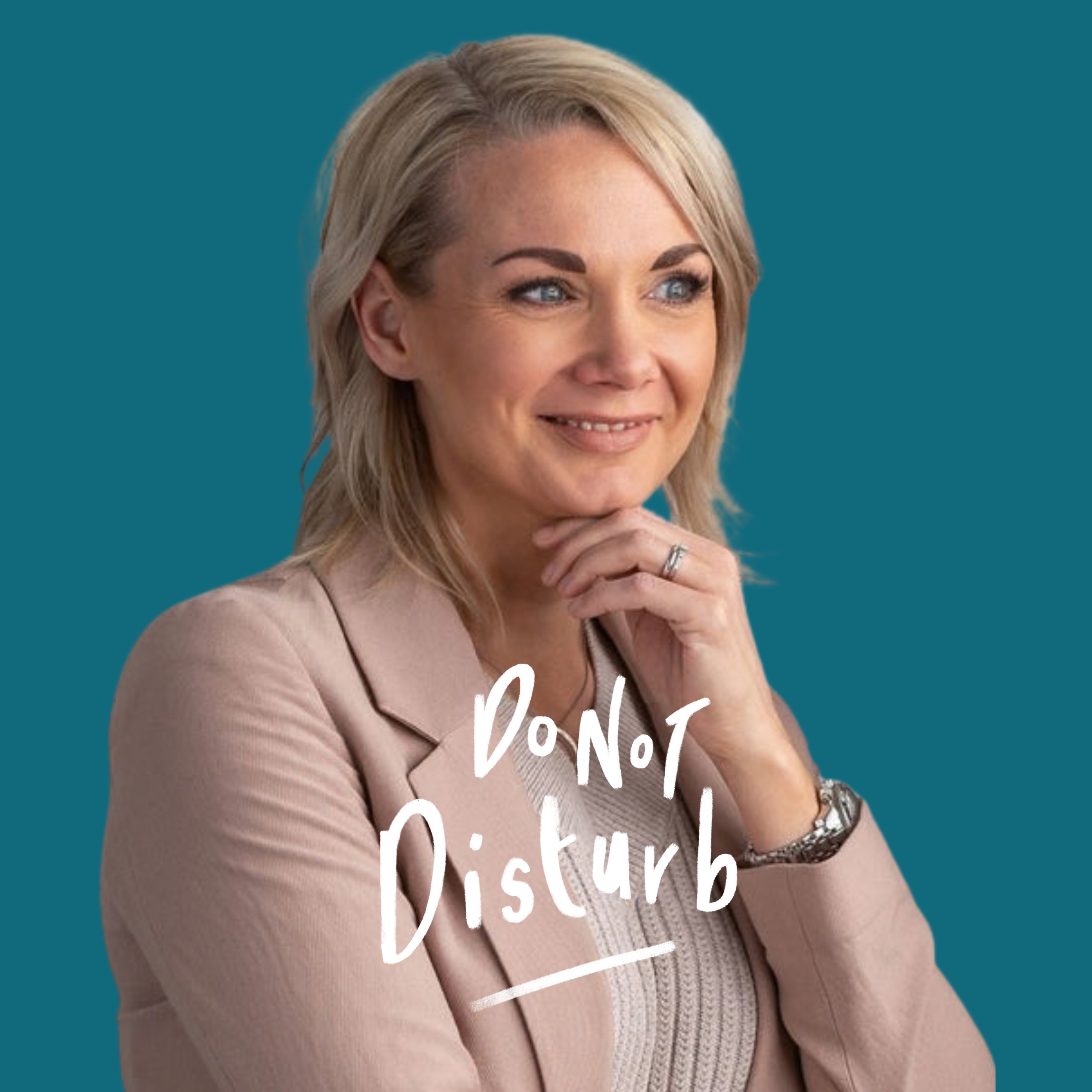
 Do Not Disturb: The Inside Story
11 Nov 2026 · 36m · 15 chapters

Career pauses/downshifts for parents—how to keep ambition, identity, and income choice while caring for children; includes language/scripts (“right now I get to…”) and planning frameworks (budgeting, interdependence, valuing unpaid care).
Neha Rouch (spelled Naya Rouch in transcript), founder of The Power Post / author of The Power Pause. Immigrated from India to a small town outside Boston; Stanford business school; ran brand at a tech startup in venture-era e-commerce; married in NYC; had a son in 2016 and later a second child.
Childcare is valuable work and an investment in the whole household, not a “luxury.” Privilege is the ability to choose. Success metrics must shift from career promotions to realistic micro-goals and calm/reactivity. Build a bridge back to work via networking and strategic resignation.
Negotiated a two-day/week work schedule; a swim-class mom asked “what do you do?” leading to “stay-at-home mom” feeling misaligned; partner called it a “luxury,” prompting “interdependent organization” framing; budgeting math where childcare costs determine net benefit.
Written by AI. May contain mistakes.
Discussing the complexities and pressures surrounding women's choices regarding work and child care.
“podcasts everywhere a cast.com there are many women who are making complicated choices that don't feel like choices, who would love to forego their income but can't.”
Naya shares her immigrant background and early career experiences leading to her pivotal moment of reflection.
“For some women, stepping back from paid work brings relief.”
Naya recounts her experience of finding peace and fulfillment through motherhood despite societal expectations.
“And then I had what on paper was my dream job in my early 30s.”
The struggle of balancing professional identity and motherhood amid societal pressures and personal choices.
“And what I was doing before in my career just felt so immeasurable in some ways.”
Exploring the emotional impact of identity shifts when moving from a career-focused life to being a stay-at-home parent.
“I read somewhere, I did research on you, of course, that it was very hard not to have that.”
Naya discusses the privilege of choice in career pauses and the societal value of caregiving roles.
“Like I had, you know, I said like, oh, I used to be in marketing, but now I'm with my kids.”
The importance of partnership and shared responsibility in managing work and family life effectively.
“And once you own that, then neither side is particularly luxurious.”
Learn how couples can strategically plan career shifts around family needs.
“work gets to do it only because second person gets to cover child care.”
Discover insights on handling career pauses and the emotional aspects of resignation.
“I have a question about your post, the original one.”
Explore how parenthood reshapes the definition of success and personal goals.
“when I talk about getting your footing in your paws.”
Learn strategies for establishing routines and reducing pressure in parenting.
“your relationship with your kids, really, if that becomes your metric.”
Explore strategies for managing household responsibilities and family time amidst a busy career.
“The other piece was having a perfectly clean house.”
Learn how building a network of supportive women can enhance your experience as a parent.
“But these classes, I have also one of the best friends from these classes, but they're so cringe.”
Understand how to leverage past experiences and networks for career advancement while raising children.
“Build your sense of self and identity so that when you come back, like we talked about, there's greater perspective.”
Discuss the evolving narrative of balancing work and family responsibilities over time.
“This is a decision with feelings, practical needs and real consequences attached to it.”

Get the gist, explore an idea or ask about something said.
 Claude
On Do Not Disturb: The Inside Story, what are the key points of this episode?
Searching your listeningAutomatic transcript. May contain errors.
0:00A-Cast powers the world's best podcasts. Here's a show we recommend.
0:30reasonable amount of our lives to understanding the Brown family. And by understanding, she means roasting them because every week we recap Sister Wives with sarcasm, deep dives, and questionable impressions. Because when you spend your Sunday night watching Sister Wives, you shouldn't have to process all of that alone. So whether you've been here since the beginning or you're just discovering this beautiful disaster, come hang out with us. We'll bring the snark, you bring the opinions and together we'll survive sister wives follow surviving sister wives wherever you get your podcasts new episodes every monday a cast helps creators launch grow and monetize their podcasts everywhere a cast.com there are many women who are making complicated choices that don't feel like choices, who would love to forego their income but can't.
1:27It's to say that the privilege is to get to choose. Today's guest is Naya Rouch, founder of The Power Post. The child care is an investment in the whole household. And that is a crucial piece of this. For some women, stepping back from paid work brings relief. For others, it brings a loss of confidence, income, and choice. Child care being peace was, okay, then I'm going to lower expectations on a certain piece. So for me, it was to free up naps, to pour back into those, you know, those personal goals, in the standards and expectations on the things I didn't care as much about. I was able to free up time.
2:11I didn't fully pause for a couple of years and because I wanted that sort of creative pursuit. And even once I did pause, I had, you know, a small project for myself alongside because I do think it keeps you whole. And I think there's no one right way. I want to know your backstory and what was happening in your life when you decided that you needed pause. How did this, you know, even start? Well, I feel if you were to go way back, I immigrated to the country, to a small town outside of Boston from India. And I bring that up because I spent a lot of my upbringing with wonderful friends and amazing family.
2:53And yet I was always looking for belonging. And then I found a lot of sort of self-worth and pride in my career. So I really gave my career everything in my 20s and early 30s. Then I went to business school at Stanford. And the goal there was really, again, I was looking for so much of that outside validation of I've made it. And then I had what on paper was my dream job in my early 30s. I was running brand at a tech startup. And just to paint that picture, it was when all of the sort of big e-commerce brands were, you know, blowing up the Warby Parkers, the guilt groups. It was just a really exciting moment in venture.
3:31And I was excited to be a part of it. I was newly married in New York City and then I had my son. And it was New Year's Day 2016. And a few months later, I was rocking with him in this rocking chair and I felt immediately at peace. like a different sense of peace than I had found for all of those years of looking for belonging. And I think it was finally this kid, this baby didn't want me to be anything besides exactly who I was. And there was something so freeing in that. And so when I say you're an author and so beautifully put. And when I, you know, I share that because I think so many people think I paused my career because I thought it was better for my child.
4:14and it really wasn't. I mean, I was excited to spend more time with him. I really wanted that time. I was enamored with those sort of baby years, like so much changes week to week. It was so measurable. And what I was doing before in my career just felt so immeasurable in some ways. And I had somewhat gotten bored in what I was doing and something about learning how this kid was going to eat and walk was so interesting. And so a combination of all of that just felt like I wanted more of it. And so I initially downshifted my career, meaning I went part-time. I negotiated a two-day-a-week work week, and I spent the rest of the week at home with my son.
4:59And as soon as I said I was taking my foot off the gas, you know, my career-wise, I started to hear the pushback of, well, are you giving up? What are you going to do all day? Aren't you going to be bored? Why do you bother going to Stanford? And I really started to hear this very well intended critique. And it really highlighted for me this disconnect between the creativity and the interest I was feeling and the opening up I was feeling and the perception other people had of how I was going to be spending my time. And what did it do to you? Did you start? I read somewhere, I did research on you, of course, that it was very hard not to have that.
5:38Like, you know, we all identify ourselves right through our work like um i interviewed someone earlier today and she said you know i used to be an editor a lot of it a lot of my life came with that title right a lot of our lives come with our i used to say oh i'm a businesswoman this is my card or this is what i do and then all of a sudden you're like i'm a mom she's very cool by the way but it's hard no Yes. I mean, I would say a couple of things happened. So I want to first say that the year was 2016. So if you remember what was happening in 2016. It was so different. It was very intense. You know, the moment was we were coming off of Sheryl Sandberg's book Lean In.
6:22Lean In had been sort of the rallying cry at my business school graduation. Women really felt the sense of to be a true feminist, to be ambitious, to be successful. you needed to achieve a certain amount in the C-suite. And Sheryl Sandberg was sort of the poster child of feminism. And I was feeling all of that, but equally saying I feel really powerful at home. But as I started to circulate around this news and get the feedback, I was left thinking no one else sees me as ambitious, but I've never actually felt like I've worked harder. And that disconnect felt so real. And I felt so like there was this big mismatch.
7:08So and I'll give you the example I was, you know, because you're talking about that title. I was, you know, we'd taken our son to a swim class. And my husband was in the pool. And there was another mom. And she was just, as you described, very cool, you know, just a fused cool, had this big, beautiful sun hat, big sunglasses, clearly worked in fashion. or production or something. And she asked the very simple question, what do you do? Because that question in our culture has come to stand for who are you? Do we, are we going to connect? And I realized in that moment that she was asking, do we have things in common?
7:48And I wanted to convey, yes, we clearly do have things in common, but all I had to offer was, well, I'm a stay at home mom. Right. And that for the first time, those words did not, it occurred to me, those words that didn't match me, didn't match my sense of experience that I was bringing in, the sense of equity I felt in my marriage, the sense of intrigue and interest I was feeling with my kids, how I was sort of making room for myself. And that's when I came, I mean, I word vomited that day with that woman. I left feeling just so blah. Like I had, you know, I said like, oh, I used to be in marketing, but now I'm with my kids.
8:28And it didn't convey that sense of confidence. And that was really the beginning of saying, okay, I need, I need a playbook. I need language that describes where I am right now, that acknowledges my creativity, that acknowledges my feminism, that acknowledges how much possibility I feel and doesn't sort of send me back to the 1950s with April and Strings. What would you say now, if you could go back to that moment? Well, I, you know, I ended up in a lot of the book includes this, and a lot of my work includes this, which is just language, right? Reframes on every step of the way. And part of that was how do you introduce yourself, you know, when you don't have a pithy title, right?
9:09Because if you say, I run marketing at a tech startup, it immediately conveys I run, I'm in a leadership position, marketing, I'm creative, tech startup, I'm sort of like ahead of the curve. And when the absence of those words and when you don't when stay at home mom doesn't do justice, I had to figure out, well, what's another script? And I do believe scripts help in transitions. It gives us a sense of bravery. And what I came up with was right now, meaning this is a moment in time I get to be with my kids, meaning that's actually like how I'm spending my day to day. And I'm just, you know, that's that's my activity.
9:45We'll see what comes next, because it's there's a moment. And it sort of acknowledges that this is a moment in time. I really like that right now. And I really like the get to spend time with children because I think there is a very important separation because not everyone gets the chance to have that pause. Right. I feel like it's still even in the Western world, especially so in America, it's a privilege to get to spend time with the children. how do you distinguish getting I mean yeah everybody yeah so you know it's interesting because I've actually acknowledged this in the book and in the scripts that you know I got to say I got to because it was an active choice right and and so they didn't feel it was a choice or a privilege and in that case they might say I am right now I'm spending more time with my kids It's not a get to, right?
10:43But it is an I am. And it still gives power and dignity to this is how I'm spending my time. This is what I'm actively doing. I get to acknowledges the immense excitement and enthusiasm and conveys like I go back to that moment with that woman on the it could convey that joy that I really did feel. And that deserves a level of gravitas. Right. But to pivot to the privileged conversation, because I think this is important, you know, for so long, I think that we have characterized career pauses or stay at home motherhood chapters or stay at home motherhood as a luxury. And when we deem something a luxury, we treat it with less value.
11:26And the reality, at least in our country, where we don't have quality, affordable child care, there are many women who are making complicated choices that don't feel like choices. And it's not to say that working out of the home is a luxury, right? Working for pay. Because, you know, there are many women who would love to forego their income but can't. It's to say that the privilege is to get to choose. It's not to stay at home or work or exist in between. The privilege is to get to choose. 100%. Really choose. And once you own that, then neither side is particularly luxurious. I mean, if you've ever spent a whole, you know, 72 hours with a child, you know that it's not particularly luxurious.
12:14And the reason why that's important as a distinction is because once we acknowledge that taking time to care for kids is not a luxury, but it's actual work of value. Then in a two parent relationship, the person at home isn't made to feel like, oh, well, it's such a luxury to be at home. She is seen as, oh, she's contributing value to this household because my partner and I, and I talk about this in the second chapter of the book, had to go through that dialogue about, well, we are shifting our finances, my job, to make room for me to provide this care at home. But I remember the first time he by accident said, well, it's, you know, it's a luxury to be at home.
13:01And I said, no, no, no. It's a luxury for you to get on a plane to California for, you know, a fundraise for your company without even thinking about what's happening at home. For a partner to be able to single task in the workforce without thinking about what's happening at home is also a level of dependence. And from there, I really established this idea of interdependent organizations. And once you as two partners can decide we are an interdependent organization, then you sort of have a more financially dignified. You're coming into this as a more financially dignified and empowered woman. Right.
13:37Because you're saying we together are making this decision. We together are shifting someone's work situation. We together rely on the joint household. That's not reality for most stay at home parents. It hasn't been. And that is that is the work that we're doing to be able to give women the language to be able to advocate for themselves before they step into a career break and forego that income. Could you give an example of how, well, you gave already a very good example, just to start talking about interdependency and working as a team, as I understood from your message, that whoever is the person that goes to work gets to do it only because second person gets to cover child care.
14:22But could you give maybe some examples like you did with sentence about right now I get to spend time with our children? So the most crucial piece is that no one is shifting their career without some degree of planning and dialogue beforehand. Right. So I lay out a few. I mean, we interviewed so many different couples. And for some couples, it was a very simple, you know, the math. There was a woman in California who was a teacher. The math just like equated that she was in parting with her income. They were still going to be at a net benefit because of the cost of child care. Right. So for them, the math, math, that they were able to decide together that based on the cost of child care in that area with one partner shifting, that the joint household income would still net a positive.
15:15And so for the two of them, the most crucial piece was planning ahead and deciding together that they were going to make this shift and that the household income about three to six months ahead. I always suggest because then you're able to sort of move the pieces around in the budget. You know, basically you're sitting down and you're saying this is the income in right now. This is how much we spend. These are the expenditures in our family against various budgets. and you together are deciding that the household income is shared, no matter who's contributing how much. And you recognize that if you were to outsource that care, how much that would, and not just the child care, but the 24-7 child care, the sick leave, the tutoring, the cooking, the cleaning, how much would that actually cost the family, right, to be able to outsource that completely?
16:05And so they together decided that made sense for their household. And so that's another piece of this, right, which is even if you choose to pause or downshift, right? So in my case now, I probably make as much as my, but I still want to be available to the kids. But I also need some child care. The child care is an investment, not in just my work. The child care is an investment in the whole household. And that is a crucial piece of this. And it sort of starts again with that upfront planning, which is why I spend so much of the upfront of the book talking about the planning with a joint partner and going through the financial conversations, having the conversations about being an interdependent household, making sure that your partner really does value the unpaid contribution.
16:52and if they don't, how do you protect your interests, right? Because you want to make sure you are safe and you want to make sure you're on the same team because then you're setting up the subsequent years to also be able to enjoy them more because you aren't just pausing or shifting to be a warm body in a house. You're pausing and shifting to give your children and or your family the life you envision and that includes a whole and healthy supported parent. And so that relies on a certain amount of care. And going back to the budgeting, maybe you're lowering in your house, you're lowering the expenditure on personal care or clothing.
17:31And I do the same thing. I would rather keep those buckets low because to me, child care is self-care. When I was 20 and I used to work in a bank, I would die for a designer back. So let's peel that back, right? And that's also because so much of our 20s is based on seeking belonging, seeking connection, ego. Our career is so much a part of it. I actually spent an extreme, I look back and I actually regret a lot of those purchases. And, but I think I was so proud of earning. And I was also so proud of the rooms I was in from a career perspective. And I wanted to signal outwardly my success. And then in my 30s, my mid 30s, my early 40s, so much of success, I had to rewrite for myself as how I felt walking through my day to day, you know, and so much of it when I made the career shifts was a reconciliation of ego and what that really meant.
18:29And so I think part of it is the perspective gained in parenthood of what really matters. And I would rather my kids see accomplished. I would rather show up for my children as the calmest, sturdiest, most joyful version of myself. I agree. Than have them see me, you know, present, then present a certain way for other people. I agree. But I also think I can do it because, you know, here I am with my ring and I can see your bracelet. So it's because I had that. Have I never had that before? I think I would need to experience that until I can shift my values. So, yes, I do think I agree. I think that a certain amount, first of all, financial security, financial privilege just gives you a level of security.
19:17That is the greatest luxury of all. I think being able to attain a certain amount of education, attain a certain amount of career success gave me more possibility. It allowed me to step into a career shift with more confidence because it buys you possibility. All women, regardless of socioeconomics, deserve more options. And career breaks for family life and or career downshifts and flexibility should be available for all families. When I was an employer, I also always hired mothers and I was very flexible about working hours because I just knew they're going to get done things. And I didn't have any hesitation around delivery or teamwork.
20:05I just I didn't I didn't even like I let them be as autonomous as possible. The more children, the better, because I never was like, oh, but she's a mother of three. Is she going to do it? It's like, of course, she's going to do it. She's going to get it done in four hours, you know, and cook lunch at the same time. And never disappointed me, any mom that worked for me. So if you're enjoying this episode, please click like and we'll keep bringing amazing guests like Nea. Now back to it. I have a question about your post, the original one. Would you do anything different now than what you did originally?
20:43Would I do anything differently? I think so much of the book and my work follows the arc of having to actually live the pause and learn along the way. Right. Like from starting from that first, very first time of answering what you do. I think the financial piece, I think we handled really well because my husband is a true operator. And so we entered marriage running our home with a P &L, you know, basically. So we went through the practice of financial meetings very early. So we had language to discuss it. And I think we did that part well, I would say that, you know, I talk a lot in the front end of the book about knowing that a career pause is in a life pause, and or and or a career ender.
21:29And so when you're resigning from your workplace, I think there's a way to do it with much more strategy, which I share in the book that I did not do. I had a much more emotional resignation. And so, you know, I coach women all the time. That is such an important window to preserve your options on the other side. You really almost want to network on your way out, meaning you're taking, you know, you're really taking people out for coffees. You're taking the mentor that you really enjoyed out for lunch. You want to, you know, share on LinkedIn that you're making the shift, but be incredibly positive about your previous employer, just to be able to remind yourself that that network, that bridge back to the workforce still exists.
22:15And you can almost build that bridge as you step into it. So I would say that was part one that I did wrong. And I, you know, I'm lucky enough to be able to now share that as helpful lessons for anyone else. I think, I think the other piece, you know, when I, in the middle section of the book, when I talk about getting your footing in your paws. There was so much of that. One quick question about that. While I have that. It was 2016 when you had your child. Did you see any other woman do that? Because now I think we see more women doing that. No. I think it's like you could do it differently. But in reality, because I had my baby in 2016 and I was raising money and I did not tell anyone I had a baby at home.
22:58Like I just knew I'm not going to raise money if I did. say that. So it's a great advice. And I think it will work now in 2026. But in reality, could you have, could you like, could, I think I could have resigned with more dignity. Yeah, I do. I really think that I don't think that that's a time boxed advice. I think that, you know, I think there's a real way of being strategic as you even then, if I could have taken my boss out for coffee and just talked about how much I loved working there, even if it's not completely true, you can really like communicate and invest in those relationships regardless of how of how you're leaving.
23:37So I think that that yes, there's just a lot of learning. I think maybe what you're commenting on was there was no strategic roadmap at that time. That's why I put it together. That's why I wanted this book out in the world. But there was no roadmap. And so it was, you know, I was sort of fumbling my way through it. I think the other piece that I had to sort of learn while living in the pause was that, you know, if you come from a very type A executive career where you are getting promotions annually, or you're getting salary bumps, you're used to a certain metric of success. And suddenly, you're at home with your kids.
24:14And the days can feel long and endless. And there's no real measure of you moving forward. And I think what happens very quickly for women during career pauses and it happened to me was that suddenly success becomes how well behaved your kid is, you know, how how well they're eating, you know, and and and that's yeah. And those are not real metrics and it can drive you absolutely bananas if that becomes your metric, because inevitably kids are not perfect and they and it really can strain your mental health and your relationship with your kids, really, if that becomes your metric. And so it took, you know, a couple years of realizing that my kids were not going to be, were not a accurate representation of my success in this chapter to really design realistic goals with the time that you have.
25:12And so for me, it became, okay, I'm going to really work on reactivity and calm. And, you know, maybe it can be measurable by, I'm going to listen to one podcast a week, or I'm going to do one therapy session a week, or I'm going to build a small meditation practice. And that's going to be my success for this, you know, year, or it became, you know, creatively, I want to explore writing again. And I'm going to do three blog posts or five Instagram posts a week. And that was, you know, those sort of small micro steps became obviously the foundation of my work and helped me feel like I was moving forward.
25:46And so I would say those were sort of the two things. And then I would say the help piece was really important. I think it took me quite some time to really understand that I was not a piggy bank and that I wasn't expected to do all the things all by myself and that help and child care, wait in whatever form, whether it's a meal delivery service, whether it's a babysitter for 15 hours a week, even a full-time man, whatever that looks like for your family, help comes out of the whole household and serves the whole household. That me quite some time to learn. Yeah, because work, when you go to work, it's usually, let's say, nine to six for most people.
26:23I'm sure there are many people working very long hours or some people working part time, but mostly it's nine to six just for the ease of it. Then you come home, then you have your evenings and weekends free or with kids shared. But if you're a stay-at-home parent, then weekends and evenings become a little bit of a blurry territory. Do you have any advice for those? I think there's a real world and I talk about this in chapter five around designing rhythms for yourself, right? Because there's a flow that we are offered in the workforce that we don't get at home. And while routines sounds like a bit contrived, they're supportive.
27:03They're supportive in giving you some sort of emotional predictability in your day. And I think you get to decide. So often we are, I think, fed the idea that stay at home moms have to be super moms and you have to volunteer and you have to bake and you have to cook homemade meals and you have to. One thing that really served me and this I did pretty naturally was figure out what parts of motherhood I really enjoyed and what parts I did not and how I could find room for myself. So when I didn't have child care, a big piece was, OK, then I'm going to lower expectations on a certain piece. So for me, it was food.
27:38I was going to go with the simplest meals possible, frozen foods included, to free up naps for myself, to use nap time to pour back into those, you know, those personal goals that I had for myself and pour back into myself. And so by lowering the standards and expectations on the things I didn't care as much about, I was able to free up time. The other piece was having a perfectly clean house. I'm like, naturally pretty tidy, but I wasn't going to do laundry on during nap time. That was not going to be my thing. My husband, when his workday ended, my workday ended. And together we then split up the rest of the things.
28:16You know, we were able to, he handled a lot of the cooking and we together cleaned the house after the kids went to bed. But I reduced a lot of that pressure during the day and really structured the day to day around what things, you know, what sort of predictable windows can I find for the kids, whether that was nap times or quiet time. What times can I have with them that I can enjoy, too? For me, that was classes in the place. I loved going to baby classes because a lot of my friends like I made I met so many interesting women, you know, and the myth that your network dies in motherhood. some of my closest friends still, I met at the first baby class I ever went to, Rambling Dan and this weird, wonderful movement class.
29:02And so that was really important to me to fit into that day to day. So there were parts of the day to day that really served me too. You have two children? Two. Did you go with your second child to these classes as well? I did not as frequently because the pandemic, which was hard, which was hard. She's eight. And so the first her first year of birth was the first year that I accepted a lot of help. I brought in a mother's helper four days a week and it was only for that one year. But it was I had postpartum anxiety that really manifested around how much time I was spending with each child. So I was very focused on like I'm spending equal amount, which is just will drive anyone bananas.
29:51Like it truly wasn't healthy. And so we brought on someone at that time. And I do, you know, I remember thinking for so long, like, oh, I'm spending so much less time with her going to these sort of movement classes and these music classes. But in the end, she is. Then the pandemic happened and I spent all day every day with her. So it didn't matter anyways. So it all worked out. But these classes, I have also one of the best friends from these classes, but they're so cringe. And I think especially for type A women with career, you know, here you are, your Stanford MBA, and you're going to go and sing nursery rhymes with puppets.
30:27It's so cringe to go. But I think it's a lifeline. Like, it's such an important thing to do with a first child. This is where you are born as a mother, as a parent. I think dads should go as well if they can. It's beyond important. I'm so glad you brought up dads because I think in the last what I've noticed is in the last 10 years, there's been just such a change. You know, I had an incredibly and have an incredibly, incredibly hands on partner and husband. I mean, I really think he does more than I do in some ways. But he I thought I didn't think he was a rarity back then. But now it is very mainstream.
31:10I see it with my younger brother-in-law, who's 10 years younger to have dads in those classes. I didn't see dads in those classes 10 years ago, 11 years ago now. And that's changed a lot. The father, I have everybody in my podcast knows, but my children are from different dads. And the first dad, the first dad, the original dad, he lost it. He lost it. And I think he's only, not because he's bad or good. He's been working very hard. He had to work very hard. He works in banking and nobody did that really, especially in banking. There were no role models for him to do that. Nobody would let him take time off investment banking, take his power post to go to baby class.
31:54Like, what? Like, that's just not happening. But now that our kid is almost 12 and, you know, he's coming to see him and he's like, yeah, dad, I'm going to go on bikes with my friends. I'll see you later. And he's like, but I'm available now, you know. And it's sad because that time is not coming back for him. No, I was speaking to a father yesterday who regretted those few years. But you get that, you know, you can find it in new ways to show up. And it's a long game. And time is not finite, you know. Yeah. Luckily. But they grow very quickly. So, yeah, guys go to baby classes. They go to baby classes.
32:37But also because I just met such incredible women. And I think a lot about how I think so much of my work is founded on those years because I had such an incredible. I mean, it was hard and I had to obviously work through things. But I met so many incredible women who were shaping my thesis, who were incredibly ambitious, who were making room for family life in different ways. And it's really because I met so many of those women beyond myself. There were no public role models at the time, but there were women in my community. And I was looking around thinking, wait a second, like, I'm in a really cool cohort of women.
33:15We might be sitting here going, tap, tap your knees. But we are really cool. You know, it's not just a pose. It's a power pose. Right. Can you tell us why? Why is that? Well, the power pose, the definition is the idea that in making room for family life, You can actually make a little bit of room for yourself to grow in ways that you didn't expect. Network with interesting women. Build your sense of self and identity so that when you come back, like we talked about, there's greater perspective. And sort of the back end of the book really focuses on how tactically do you expand that network? How you use mother friends as actually not only a lifeline, but as your bridge back, as your creative sounding board.
34:02Ultimately, you know, when we think about our return, how might we be coming in with a clearer sense of what we want next? But also, you know, when I when I talk a lot about resume gaps, not being gaps, but actually just another layer in a career portfolio. Right. You're coming in with all of this great experience that did not disappear. year, right? If you were a 15 year brand marketer, that didn't go away. You just layered on top of it new experiences. And that takes some careful work and a little bit of a chat now to help take that volunteering or that helping of a friend on a, you know, business plan or advising your husband and helps you construct, you know, these are real experiences that I developed over these last few years and they add a really interesting layer into a portfolio that I get to return with.
34:53You know, you can't go from zero to 60. Like, yeah, I've been on pause and now I'm trying to return after. There is a realistic pathway back, but you do sometimes have to take those micro steps and need the confidence to do that. Yeah. And you have a framework in your book advising what kind of frameworks that could be, like working for a friend or, like you said, utilizing your mother network, your local network. I think, yes, women supporting women is the answer. Guilt. We talk a lot about guilt in this podcast. Guilt of not earning money or guilt of not spending enough time with your kids or guilt of spending time away from the kids for work.
35:33So guilt is something that is always there. How do you deal with it? And what do you advise to people. You know, for me, it really comes up as, you know, if I'm out for two nights in a row and I miss bedtime, I will feel guilt. And so oftentimes I'll check in with it. And so if I've been out a couple of nights, yes, I want to, I want to feel it. And I want to say, okay, something, maybe I'm going to recalibrate and, and, and look at my schedule for next week and make sure that I'm, I'm not missing bedtimes because something feels out of whack for me, Or I can check in with it and say, you know what, this is from an old construct and my kids are safe and happy and they're doing just fine.
36:17And I'm choosing to do these two nights because it makes me a stronger mother. And that's fine. But I do think of it as a very natural emotion that we should all use as data. Is there anything else you would like a woman listening now to know about herself and decision to pause or not to pause? It's a long game. It's a really long game. I have paused. I have sprinted. I have shifted. I have existed in between. And we are just all due for a much, much more fluid narrative about work and family. So really tune in to right now and try and give yourself sort of a year at a time to recalibrate. Great advice.
36:57Thank you so much. Thank you, Simona. This is a decision with feelings, practical needs and real consequences attached to it. I hope this conversation helps someone ask better questions about what she wants and what support she needs. Neya's book is The Power Pause. You can find her work at thepowerpause.com.
37:21ACAST powers the world's best podcasts. Here's a show we recommend. In 2008, a promising young actor showed up on his first day on set, ready to film the action-packed climax of his new movie. He'd been training, cameras rolled, and he tore his butt cheek. That actor was Robert Pattinson, and the film was Twilight. Listen to our podcast, What Went Wrong, every other week as we unearth the chaos behind Hollywood's biggest movie flops and most shocking successes. Available wherever you get your podcasts. Acast helps creators launch, grow, and monetize their podcasts. Everywhere. Acast.com.
A conversation with Neha Ruch on Do Not Disturb, hosted by Simona Deifta.
Explore more Do Not Disturb conversations and stories: https://www.donotdisturbpodcast.com/
Subscribe to The Cultural Edit: https://www.donotdisturbpodcast.com/subscribe
Hosted on Acast. See acast.com/privacy for more information.