Ask ChatGPT


 Do Not Disturb: The Inside Story
14 Oct 2026 · 1h · 23 chapters
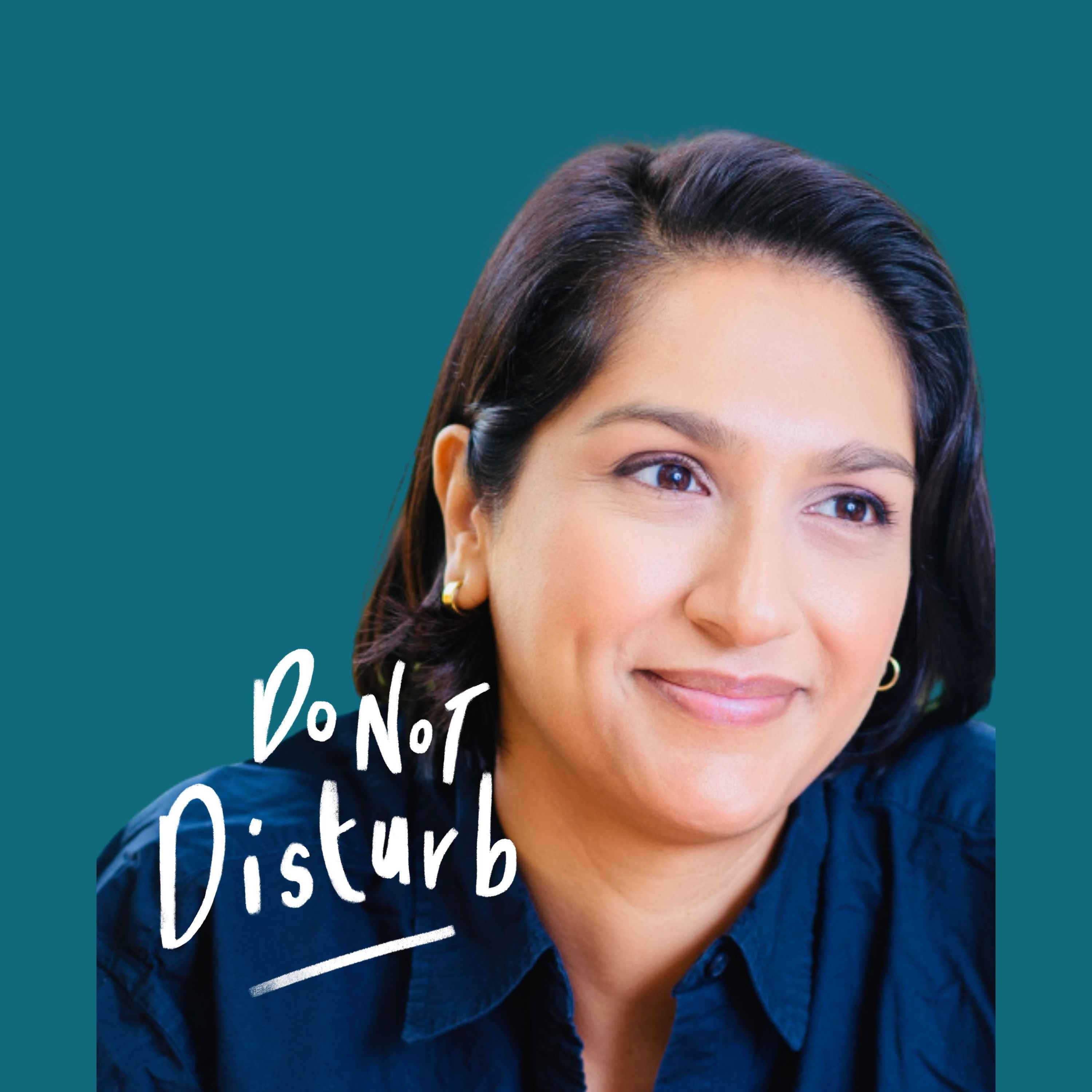
Angela Saini discusses how gender roles and “natural” ideas about women are socially conditioned, tracing patriarchy to the rise of early states and arguing that many supposed brain/behavior differences are overstated or misinterpreted. She also connects these ideas to motherhood, “maternal instinct,” and the household “mental load,” emphasizing negotiation and explicit agreements between partners.
Angela Saini is an award-winning science journalist, author, and MIT professor. Her books include Inferior (2017), The Patriarchs (2023), and The Patriarchs’ themes are male domination and the historical origins of gendered roles.
There’s no statistically significant difference in how men and women think; “natural” is often used to naturalize imposed rules. Maternal instinct isn’t universal; caregiving can trigger bonding/biochemical changes for some people but not automatically for everyone. Patriarchy emerged gradually with early states needing population and soldiers, plus patrilocal marriage that shifted women into vulnerable daughter-in-law roles.
Ancient Athens’ oikos (home/women) vs polis (public/men); Egypt and other societies with different roles; brain-size myths (Darwin-era assumptions); Sarah Blaffer Hrdy’s work on fatherhood; Mesopotamian divorce/marriage tablets; Denise Candioti’s “patriarchal bargain.”
Written by AI. May contain mistakes.
Angela discusses her upbringing and influences that shaped her views on gender.
“What has influenced you to come into this work?”
Angela reflects on her experience with gender stereotypes during her studies.
“engineering, seeing so few women doing the kind of things that I was doing.”
Discussion on how the term 'natural' is used to justify gender roles.
“I think we use natural so much to persuade people natural cosmetics.”
Angela discusses societal expectations surrounding motherhood and career choices.
“Like, how can this be expected, but at the same time doesn't feel like?”
The complexities and diverse perspectives within feminism and gender equality.
“Where do you think feminism sometimes gets it wrong, I guess, wrong from a scientific point of view?”
Exploration of how societal classifications impact individual identity and treatment.
“that society should not set limits on me based on how it categorizes me or classifies me, really does want to break free of these classifications altogether.”
Discussing the misconceptions surrounding biological and cognitive differences between genders.
“the brains of everybody else because of the kind of job that they do.”
Debate over the existence of a maternal instinct and its implications in parenting.
“Those biological changes in our bodies happen, even if they're not our own children.”
Insights on dividing parenting responsibilities and the importance of communication in relationships.
“So if you look back to when I was writing The patriarchs, I go back 10 ,000 years, you know, this is right to the beginning.”
Learn the importance of explicit agreements in romantic partnerships to avoid resentment.
“relationship but I am so grateful that we've engineered a situation where we can do that and that is often my advice to my friends and to my sisters is that don't slip into a certain pattern of doing things.”
Explore how historical perspectives on marriage can inform modern relationship dynamics.
“I'm not going to pretend that any of this is easy.”
Discover insights from ancient societies on shared responsibilities and equitable partnerships.
“I would look at these tablets and they would say underneath, this person's saying that if this person does this, I will divorce them.”
Understand the gradual development of patriarchal systems and their societal implications.
“And I've learned myself that I'm a control freak.”
Examine the cultural pressures on women regarding motherhood and societal contributions.
“So more than you would see in a hunter-gatherer society, more children than that.”
Learn how power dynamics in families perpetuate cycles of exploitation and abuse.
“So that in itself would not create a power imbalance necessarily between men and women.”
Discover how recent legal changes are reshaping women's rights within marriage.
“It's the entire family that is abusing these women.”
Discuss strategies for overcoming patriarchal structures and supporting one another.
“And why do you think that in Latin America, for example, there are these women who live their families and they live with their husband's family.”
Explore how power hierarchies affect family dynamics, especially for women.
“She was studying these relationships in high status families.”
Discuss the changing roles of fathers and the societal expectations of parenting.
“It's the being able to say to our dad, why are you just sitting there and not helping with the cooking?”
Examine the consequences of societal classifications on individuals and groups.
“We have very high rates of suicide among young men at the moment.”
Investigate how data classifications can undermine equality in practice.
“but also there are other countries that do this now, you'll be asked your race or ethnicity.”
Discussing the evolving perceptions of race and its implications in modern data.
“If you're non-white, you are being denied the level of care that you should be getting because of these assumptions that these models are making.”
Exploring how gender expectations are formed and the impact on future generations.
“I feel like this conversation leaves us with a really interesting question.”

Get the gist, explore an idea or ask about something said.
 Claude
On Do Not Disturb: The Inside Story, what are the key points of this episode?
Searching your listeningAutomatic transcript. May contain errors.
0:00We have the tech to get food delivered in 15 minutes, but we all have horror stories about buying tickets. The GameTime app gives fans the advantage. Get amazing tickets in just a few taps. Fees are included, so what you see is what you pay. And the GameTime guarantee means authentic tickets at the best price every time. Take the guesswork out of buying tickets to concerts, sports, comedy, and more with GameTime. Download the GameTime app and create an account for$20 off your first purchase. Terms apply. Welcome to Do Not Disturb, the inside story where we talk honestly about work, motherhood, ambition, identity, and the things women quietly carry.
0:41Today I'm joined by Angela Saimi, an award-winning science journalist, author, and professor at MIT. Her books Inferior, Superior, and The Patriarchs look at some very big questions. What science had got wrong about women, where our ideas about gender come from, and why so many things we think of as natural may actually have much more complicated histories. Angela, welcome to Do Not Disturb. What has influenced you to come into this work? Did you grow up and you're different than other children? What started this whole journey? I don't know. I think everyone thinks that how they grew up is normal, right?
1:21Everyone thinks they had a kind of similar upbringing. I was quite fortunate in that we're a family of three sisters. I have two sisters, no brothers. When we were growing up, my parents split everything down the middle. So my dad would do everything my mom did. My mom would do everything my dad did. So there wasn't this sense in our household that there was such a thing as men's work or women's work. My father sadly passed away this year. And he was always of the view, and he would say it quite openly, that there is no such thing as women's work. There is no such thing as men's work. There's just work.
1:57And the work needs to get done by someone. It really doesn't matter who does it. And I think that in part came from the fact that he came from a military family. He was raised in India in a family in which his father was away at war or in combat, and his mom would take care of everything and everyone would muck in because that's just how it is. And I think that's true for a lot of families around the world, even though we don't think about it that way. So that was my lesson. My dad had studied engineering and I thought if my dad can do it, then I can do it. And that was never challenged really the whole time I was growing up.
2:29It was only really when I was much older that I realized that other people didn't live that way. I would go to other people's families and their dads would just be sitting there reading the newspaper while the mum was in the kitchen. You know, the dad would be asking the mum to bring him a coffee or a water or something. I'd never seen my dad do that. I'd never seen my dad ask my mum for so much as a glass of water. If he could do it himself, he would do it himself. So it was just very, it was an understanding that maybe things weren't the same for everyone. But I still thought that other people who lived in that kind of old-fashioned way were old-fashioned, that most families were living like I was living.
3:10And it dawned on me after a while, especially when I got to university and I was the only girl in my college in my year doing engineering, seeing so few women doing the kind of things that I was doing. It slowly dawned on me that maybe this isn't just because we are different. And I think there was a part of me that did think for a while, maybe I'm just built differently. Maybe I'm just different deep down. It slowly dawned on me after many, many years that actually this is conditioning. This is what we believe ourselves to be capable of. The lives that we have are so heavily influenced by what we believe is possible.
3:46Did you have to unlearn anything about women? Did you have to let go of some stereotypes as you were in university? Your own stereotypes? To an extent, I was exposed to other people's stereotypes. And so I learned to challenge them. Like I said, I grew up in an environment where I wasn't exposed to that many stereotypes. But I remember one of my college boyfriends saying to me, he was studying chemistry, I was studying engineering. And he said to me, boys have better spatial awareness than girls. And, you know, he gave me this mental exercise where you have to rotate a 3D figure in your mind. And, you know, where does it end up?
4:22He was like, you know, I'll just be better at this than you. And I couldn't help thinking at the time, I'm studying engineering. You're studying chemistry. What makes you think you would be better? at this than I am just because you're a man. It just didn't make sense to me. So I was exposed to stuff like that. And I think that was part of what drove my 2017 book, Inferior, was just hearing these ridiculous things, these gross generalizations about people and just thinking, I know from my own experience, I know from the experience of other people around me that it doesn't work this way. There's no statistically significant difference in the way that men and women think.
5:03There are individual differences. There's no doubt. So, you know, my spatial awareness might be better than the next person's spatial awareness. That's nothing to do with gender. It's everything to do with the individual. Great. I genuinely believe that men had better spatial orientation. Here, there is another big myth or topic or I want to unpack today, natural. I think we use natural so much to persuade people natural cosmetics. It's natural to feel love to a baby. It's natural to, I don't know, for women to cook, right? And that makes everything straight away, you can't argue with that because it's natural.
5:41Why do we use that word so much? Well, I think things become naturalized, right? That people build rules for society, those rules become ingrained. And then after a while, we start to believe that those things are biological, that they're rooted in something deep down inside us rather than imposed from the outside. And this is the argument that I was making in my 2023 book, The Patriarchs, is that when we look at the history of patriarchy, the history of male domination, this is a system that emerged very piecemeal and certainly not universally, but just in certain parts of the world, very piecemeal over many thousands of years, right towards the end of human history.
6:21So we have hundreds of thousands of years of being modern humans in which we are mainly doing everything. Everyone is doing everything because you have to. There is no way to survive as a subsistence hunter-gatherer or even as a small-scale domesticated farmer. You know, you can't survive in a society in which you have a very, very rigid division of labor between everyone. Everyone has to be able to do everything. And that's what we did for most of human history. And then right at the end, the rise of the modern state, you get these divisions of labor emerging, not just between men and women, but also between certain social classes.
6:55You know, the idea of an elite who are largely doing a certain kind of work, and then everyday people or laborers or military people who are doing other kinds of work. So we have these class differences, we have these gender differences come in, racial differences much later, this idea that different races are suited to different things. All of this, as it is imposed by people in power for their own ends. I mean, gendered divisions of labor are rooted in this idea that if we are building a state, we need as many people as possible. We need high population levels in order to sustain the size of the state, in order to provide more people to fight and defend the state, to produce a surplus for the elites.
7:38So that's where this gendered idea that women should be having as many children as possible, that their role is in the home, and that men should be available to fight and defend the state, that their role is out there fighting. You see the apotheosis of that really with ancient Athens. If you look at ancient Athens, and remember, we say ancient, it's very, very late in human history. This is only a couple of thousand years ago. So we've been around for hundreds of thousands of years. A couple of The oikos is the home. This is the domain of the woman. Polis is the public space, the domain of the man.
8:18And very unique to that city, that city-state of Athens. Even neighboring states didn't share that same view. Ancient Egypt, women are working as doctors and you have female pharaohs. You have a very different way of doing things. Further afield, you have even more different ways of doing things. But even in ancient Greek literature, you can see this attempt to try and naturalize this, that this is people's natural role, that this is how we should be, that anyone who defies it is going against nature, that if you're not fulfilling your gendered obligation to the state, that you are betraying your natural purpose in life, that you are not being a good man or you're not being a good woman.
8:58So over then, over thousands of years later, centuries into this, which is where we are at now, we have fully naturalized it. We fully believe this thing, This idea that a woman's place is in the home, a man's place is out in public, that a woman who doesn't want to have children or doesn't have this natural motherly instinct is somehow betraying her biology. A man who isn't brave and ready to fight is somehow betraying his natural biology. But all of this is cooked up. We know from the experience of our own lives, we can know just from looking around us, that not every woman wants to have children.
9:34Not every woman makes a good mother. and likewise not every man is able or wants to go out and fight not every person is equipped to do that and we see that challenge now in contemporary life that fewer and fewer women are having children one of my own sisters very consciously made the decision not to have children and even women who are having children are having fewer so birth rates all over the world are falling through choice because now we have this choice and we're exercising it and at the same time you have much higher rates of women in the military, so women fighting and defending their state.
10:07So we can see very quickly that given the choice, given the option, that we very easily defy those stereotypes and those natural roles. And as we do, then we undermine this idea that any of this is actually natural. I have a little insight through my own podcast, which is obviously a very certain class, very certain population group, very certain kind of woman that comes to my podcast. But what What I found is interesting, while everyone is admitting that it is natural to give birth for women and to stay at home and to be a mom, and they see that expectation, they don't feel rewarded for doing that choice.
10:47They feel that being in public, that's something that feels aspirational and feels like achieving, whilst even though they're having children, that's what they were expecting to do, that doesn't feel like a rewarding job. Can you comment anything on that? Like, how can this be expected, but at the same time doesn't feel like? Well, the thing is, when something is naturalized and expected of you, you don't get any rewards for them doing it, right? You don't get a pat on the back for doing what is expected of you anyway. And I think that's the thing about motherhood and having families is that we are expected to do it.
11:23So we should just go ahead and do it. And why should we get any accolades for just doing it if this is our natural role? And that, I think, is part of the trap that so many women fall into is that we are told that we should have these particular lives. Sometimes we do it against our instinct or we do it against our personal wishes that we have children when we don't want to have children. We have more children than we might want to have. We get married when we don't really want to get married. And then we feel disappointed when society doesn't reward us for doing these things which society tells us is natural and normal for us to do.
11:59My answer is you just live your life. Do it your way and don't worry about what everybody else thinks. Don't expect anything from society, but make your own choices. If you don't want to have children, don't have them. If you want to work, work. You choose the life that you want for yourself. Working mothers don't get it any easier. I'm a working mum myself. It's not as though society gives me bonuses for having children at the same time as I'm working. It is really, really hard. It is hard either way. And the same thing as I was saying earlier, one of my sisters decided not to have children. She works.
12:37And I can't say that society necessarily rewards her either. She also gets it from the other side, which is, why are you not having children? Why did you make this choice? So you can't win either way. And the only answer I would have as a feminist is to say, you make the choices that you want to make and do them fully in the full understanding that you will not necessarily win anyway. None of us win anyway. That's just the nature of living in late capitalism. It's sad, but at the same time liberating, no? Because the sooner you acknowledge it, the sooner you can be fully yourself. Where do you think feminism sometimes gets it wrong, I guess, wrong from a scientific point of view?
13:19Because feminism is a broad, broad spectrum, right? There are people with a million different views, which is exactly what you should expect, because gender equality means something different to every single one of us. You know, there are women for whom gender equality means that women get paid the same as men, whatever level they're at. There are other kind of socialist feminists who believe that it is capitalism also that is wrapped up in this, that we should be looking out for the women at the bottom of the working ladder, as well as the women at the top of the working ladder, that we should be evening all of that out.
13:50There is indigenous feminism, there's black feminism, there are so many different kinds of feminism. So I don't, I wouldn't say it's that feminism gets things wrong necessarily. It's that my school of feminism, which is this belief that gender should not define what you can and can't do, that society should not set limits on me based on how it categorizes me or classifies me, really does want to break free of these classifications altogether. So my view is that me being a woman or me being a man or whatever shouldn't make any difference to how I live or how I'm treated. I mean, we are probably different, right?
14:27Biologically, physically. So there must be some differences. It's difficult. You know, this is something I addressed in my 2017 book, Inferior. And this is very deep rooted, this idea that men and women are fundamentally different. And there are some fundamental sex differences, there's no doubt, in reproductive biology. You know, that's the most obvious one. Hormone levels fluctuate. We all contain estrogen and testosterone. But the average levels differ between men and women. There are average differences in height, average differences in upper body strength, things like that. We have to remember a lot of these differences, apart from the reproductive ones, are averages.
15:04So there are very many women who are taller than a lot of men. There are very many women who have much higher body strength, upper body strength than some men. So it's not a kind of very, very clear dividing line always. Now, when it comes to the brain and the mind, intellectually, in the 19th century, it became very common for biologists and doctors to assume that women were just psychologically, cognitively different from men, that we were not capable of doing the things that men did. Even Darwin wrote this. Charles Darwin, who was so careful about so much of his work, just looked around him and saw that women weren't doing what men were doing and just assuming this was biological, that we had evolved this way, that we weren't intellectually capable of doing the same things as men.
15:48What has happened over the last 200 years or so is that we've realized that clearly that isn't true, that when women are given the opportunities, when universities opened up to women, when they were given the same education as boys, at the school level, girls often outperform boys across the board, you know, in every single subject. It's at universities, many universities in the world now have higher enrollment of women than they do of men. A lot of these assumptions have turned out to be obviously rooted in prejudice rather than in fact. Now, when it comes to studying the brain, there is very little that we know about the brain.
16:22It is really just this big hulking organ that we're just kind of poking around with, tinkering about with, at the moment, trying to figure out. Very early studies, there was this claim that was made in the 19th century by one male neurologist that women's brains were on average smaller than men's brains. And that made them more stupid, that we just weren't capable of the same thing because our brains were smaller. And there was this very wonderful woman who went and studied with a neuroscientist, Helen Hamilton Gardner, and she said, well, actually, brain size is just a function of body size. If women's brains are on average a little bit smaller than men's, it's only because their body size is a little bit smaller than men.
16:59By that logic, a whale should be the smartest animal on the planet. And we know that the whale isn't the smartest animal on the planet. So brain size, absolute brain size really has nothing to do with overall intelligence. And to some degree, we're still laboring under those kind of misapprehensions that we can look at the size of different parts of the brain, or we can look at different regions, and that we can somehow tell, find sex difference somehow. We can justify social differences between genders just by looking at that. But research has shown again and again, that even though sometimes small statistical differences are found, it could well easily, very easily be down to social conditioning as well.
17:40That if you exercise your brain in one direction, if you repeat a certain task again and again, then your brain changes. So even these gender differences that have been claimed to see in the brain, there have been neuroscientists like Gina Rippon, like Daphna Joel, who have argued that, well, the brains of taxi drivers, because they have to understand their roots and they have to understand maps, look different from the brains of everybody else because of the kind of job that they do. So isn't it possible that women, on average, if they're expected to do different kinds of work and they do it, that their brains, on average, will also look a tiny bit different from men's?
18:16That's nothing to do with underlying biology. That's not something we're born with. That's about how your brain develops over time. It's a plasticity in your brain development. And that can change. And it is changing. It's changing all the time. I'm always very nervous. That's not to say I dismiss them out of hand when I see these studies, but I am very nervous about the motivation behind these studies and what they're actually trying to say. Are they trying to say that your brain is different, so there is no way that you can do this job? Or your brain is different, you should just be a mum. That is sometimes a political motivation beneath this kind of work.
18:52And for me as a science journalist in particular, that's what fascinates me the most. It's not that we have some smoking gun that tells us women's brains are different from men's brains. We just don't have that. But what fascinates me is the motivation behind that kind of research, which has been done for hundreds of years and has yielded very little. The topic that interests me personally the most is motherhood. And I am fascinated about another word that I use also in your materials a lot is instinct. You know, instinct, natural. I think you can keep pushing, especially women, into more boxes.
19:29Like women are naturally or better caring for children or women must have a maternal instinct when babies are born. Do we have any evidence of that? If there is a maternal instinct, there is also a paternal instinct. And I would recommend to people that they read. There's a wonderful, wonderful primatologist and evolutionary biologist called Sarah Bluffer Herdy, who is one of my heroes. When I was writing Inferior, I even went to stay with her on her walnut farm in California, where she lives now, in Sacramento, for a while. Her work is outstanding. She rewrote what we know about women in evolutionary biology, about the female in evolutionary biology.
20:11She published a book a couple of years ago called Father Time, which looks at the role of fatherhood in evolutionary history, hugely neglected by biologists. You know, a lot of biologists and primatologists don't look at the father-offspring relationship because always the focus is on the mother-offspring relationship. But as she writes, and as we can see also in our own lives, that in the last 50, 60 years or so, as fatherhood has become more socially acceptable, as the idea of the hands-on dad has become more socially acceptable, and as more studies have been done into that relationship between fathers and their children, we see that there is a chemical reaction there.
20:52There is a bond that develops. There are hormonal changes that occur within fathers in a similar way as happens between mothers and their children when their children are born. The more contact you have with your child, the stronger that becomes and the more profound that becomes. So there is such a thing as chemical changes that happen when you have a baby or when you take care of a child. There's no doubt. Sorry to interrupt you. And what if you, as a mom, not going to spend time with your child? Are you going to have those chemical changes? Well, then it's less likely to happen, yeah. There's no doubt that you...
21:27Yeah, because it's just my personal observation. Because I had my second child in Brazil, and it's very common to have nennies and sort of outsource your kid to the nanny, especially in the first months. Those biological changes in our bodies happen, even if they're not our own children. So it happens with adopted children. It happens between grandparents and their grandkids. It happens between siblings. It happens between aunts and uncles and their nephews and nieces. It's just about exposure to a child and what that does to us biochemically. It's really fascinating. And this is an area of research that I can't wait to see how it develops over time.
22:06But that's not to say that it happens automatically for everyone. That's not to say that it works in the same way for everyone. We are not all withed in the same way. We don't all react to our situations in the same way. And I think that's another thing that Sarah Blufferherdy has emphasized over time is that even in other primates, you see examples of infanticide. You see examples of females abandoning their offspring. You see much more complex behavior than we would imagine. So it's not an automatic thing. It's not as though you have a child, you're exposed to it and suddenly you're you know you become a perfect parent it just doesn't work that way for everybody it's much more complicated than that and that's why i think we should be very careful about assuming that maternal instinct is something that every person shares or that you know that every woman just by dint of having a kid will you know suddenly develop spontaneously it doesn't happen for everyone it's a difficult thing for us to accept as a society because we want to believe that it does.
23:08And, you know, a lot of our beliefs about parenthood and children and, you know, how we care about children, it can feel very difficult to hear that that doesn't happen for everyone, but it really doesn't. And do you think it doesn't happen for everyone? Or I would challenge you on that, it doesn't happen for anyone, but because women do the majority of work, it happens for them eventually. No, it doesn't happen for everyone. Some people obviously it's difficult okay because this is an ongoing area of research and it's not just because you are caring for a child that you feel a maternal instinct there are biochemical changes that happen in people when they take care of children that's just that's just how it is happens differently for every single person before i had my son i really really really wanted a baby and i cannot even explain why that is you know i've grown up in a family in which i was under no pressure to have a kid.
24:05Nobody. My mom was very ambivalent about it. My dad didn't care either way whether I had kids or not. But I felt this kind of real, I felt like something was missing until I had a child. I had a child. I loved that kid to bits. He is my absolute center of my universe. Then I look at my sister who chose not to have children. She takes no interest in anybody else's children either. Even her own niece and nephew, very little interest. We're just wired differently. You know, we have different instincts. We're different people. And I think that's the thing to understand that this isn't about gender necessarily.
24:40It's not about sex necessarily. It's just about the individual. And if we could see people as individuals rather than assuming that you belong to this group, so you have to behave this way, this is natural for you. That's the mistake, I think. There are very many men who make amazing fathers. My husband is an incredible, incredible dad. So loving, not just to his own kids, but to other kids as well. He is just such a great, great dad. And I would defy anyone who says that he cannot be as good a parent as a mother because he is a man. I just don't believe that. And maybe if you allow me to ask you a few personal questions, you were saying he's a great dad.
25:18Congratulations. He chose a wonderful partner. I think these are one of the most important decisions in our life. How is your mental load split? Because traditionally, women, especially on this podcast, it's a recurring topic. Women carry the majority of mental load. Do you have it 50-50 or are you the default parent? So like I said, I grew up in a household in which my parents split everything down the middle. So that was what I was used to. I tried to cultivate that in my own marriage when I got married. Let's remember also, women have always done this. So if you look back to when I was writing The patriarchs, I go back 10 ,000 years, you know, this is right to the beginning.
25:59You look at ancient Mesopotamian, ancient Assyrian clay tablets with cuneiform on them. You get divorce documents, you get wedding documents, you know, marriage agreements in which men and women are negotiating their roles in marriage. Marriage is a legal binding partnership. But in any sense, a relationship involves a set of assumptions and obligations about how you're going to live. I think very rarely do we ever make that explicit. You know, you are going to do this. I'm going to do this. This is how it's going to be. This is how many children we're going to have. This is how we're going to live.
26:34We don't articulate that enough. I made a very conscious effort all the way through to articulate this is how it's going to be. This is, you know, let's agree. This is how we're going to manage everything. And certainly at the beginning when my son was first born, I definitely took a longer time off than my husband to take care of my son. I think I took nine months. I was working for some of that, but most of that nine months I took off before I went back to work. Now, my son is 13. For the last year, I've been working at MIT. My husband and my son still live in New York. I go back there at the weekends, but most of the semester I'm here by myself.
27:13So my husband takes care of everything at home. He does the cooking, the shopping, the cleaning, taking care of the childcare, everything. He does everything. And I don't think about it, hardly at all, only slightly replying to school emails occasionally, but mainly he does that too. So that mental load he has adopted now over the last year or so. I would say at the beginning, when my son was very little, I probably took the lion's share of that mental load. But that was a negotiation we had, you know, from the beginning is that I took on the burden at the beginning. and you know that's a choice that we made and when the time came for me to make certain career choices then he took on that mental load and it's not easy it's not a straightforward thing not everybody is happy to divide things up equally or to take turns in the way that we have in our relationship but I am so grateful that we've engineered a situation where we can do that and that is often my advice to my friends and to my sisters is that don't slip into a certain pattern of doing things.
28:16Don't just take on stuff. Negotiate what you will do and what you won't do within your relationship. Treat it like a legal contract. If things are explicit and clear and that each side knows exactly what is expected of them, then I think it's possible to build a much more equitable relationship that way. But I think so often we don't do that. We don't treat it like a legal contract. We just kind of just do it. And then before you know it, you're doing everything. and then you become resentful because you wonder how did it get to this and why is my partner not doing it as much as I'm doing? But why don't we negotiate?
28:53I think it comes back to this, you know, notions of patriarchy or of notion of I'm not being a good mom if I cannot handle it all. I think women are, at least from conversations, it seems to me that women just are afraid of not meeting the high bar of this job of being a mom. Yeah, and part of that is social expectation, you know, what you can and can't do. It is internalizing guilt, you know, about what we should be doing, what we shouldn't be doing. I try very hard to push against that internally, you know, psychologically, emotionally trying to push back against that all the time. And it is a challenge.
29:32There's no doubt. I'm not going to pretend that any of this is easy. And sometimes we have partners who are not willing to negotiate. you know, who will just dump things or not do things or they won't do things to the right standard. And then we feel like, OK, then we have to do it because we don't have a choice. And that also is very, very difficult. But that's why I think it's all the more important. We live in an age of romantic love, right? Marriage through history was not a romantic thing. It was a partnership between families. It really was much more of a legal understanding between two families or two people.
30:07And so when it was treated like that, there were terms and conditions. There were certain expectations that you could negotiate, that you could draw lines and boundaries around. And I wonder if, you know, we get caught up in romantic love and we dismiss the idea that actually, if you're going to live with someone, if you're going to share a life with them, which involves financial responsibilities, which involves work, paid and unpaid work, that involves childcare, that involves all these things that require your time and energy and commitment, that we do need to treat that more like a legal entity rather than kind of get swept up in the assumption, certain assumptions about who should be doing what.
30:46Can we have another book on marriage, please? I think we all need that. But I was in Southern Anatolia and I went to, I was studying like these very early societies, 9 ,000 years ago, 10 ,000 years ago, very early settlements in which men and women basically were doing the same thing. Childcare is shared and everyone's basically doing the same thing. And then you get to much later, you get to Assyria and Mesopotamia and you start to see these tablets. I would look at these tablets and they would say underneath, this person's saying that if this person does this, I will divorce them. If this person does this, this is how it's going to essentially laying out the terms and conditions of the relationship.
31:31Under these circumstances, I can reasonably ask for a divorce. Under these circumstances, this is what I expect. And we don't do that. I just don't know why we don't do that now. If they were doing that 5 ,000 years ago, why can we not do that now? Why can we not sit there with our partner and say, this is how we want our lives to be and this is how we're going to divide up the work. in our household. Let's agree to this before I commit to marrying you. My first guest on this podcast was Sarah Corbett-Winder. And she said that every Sunday they sit with her husband and they do like a week of literally a week ahead look and they negotiate every single thing.
32:14And I started doing it with my husband and it changed my life. And she also said delegate ownership of things so instead of saying you're taking kids to vaccines you're like sort out kids vaccines which means book the appointment find the doctor you know know which it's very different job to own this task or just to take the kids to the vaccines because that's like the like your husband that's just a little bit of it yeah yeah he's owning it at home right now. It's a very different kind of delegation of tasks. And that has those two little tips literally changed my life. It's just incredible. It is incredible.
32:54And yeah, we should do that more. And I've learned myself that I'm a control freak. You know, I want to be on top of everything. I want to be in charge of everything. And that's certainly how I, when my son was born, I was like that for very many years. I just didn't trust my husband to do certain things because I didn't think he would get them done. Over the last year or two, since I've been working here in Boston, I haven't had a choice. He has to take care of stuff. And he steps up and he does it. I don't know why I thought he couldn't. Of course he can do it. And he may not do it like I do it.
33:27He may not do it at the same time. He may miss things occasionally, but he does it. And he can very well learn to do it. I think sometimes we infantilize our partners. We assume that they can't do things and that we have to take over, which suits them very well, because then they don't have to do it at all. Patriarchs, I think, is a very beautiful book. Where did patriarchy actually come from? It is difficult because I think people want to feel like there was one moment in time, the way that Friedrich Engels argued that there was this world historical defeat of the female sex and then everything changed.
34:04And honestly, if you look at historical evidence, that just isn't very clear. There isn't that kind of crashing moment. It wasn't agriculture. We have agriculture for thousands of years before you see any signs of gendered oppression or rigid division of gender roles. You see women participating in farming, participating in animal domestication. For thousands of years in every single part of the world, you see women warriors in every single part of the world. So women doing all the things that men are doing, hunting, gathering, everything. But the really big cutoff, and this is what the great historian Gerda Lerner argued 40 years ago when she wrote The Creation of Patriarchy, is that with the rise of the early state, so this is between 5 ,000 and 7 ,000 years ago, what you see is a gradual, this spread into certain gender roles that I was talking about earlier, this idea that that young women should be having many more children than they would otherwise.
35:05So more than you would see in a hunter-gatherer society, more children than that. So just constantly pregnant from a young age. And young men should be available to fight for the state and defend the state with their lives if necessary, which is a huge thing to ask of people if you think about it. So what these early states did is essentially transfer the loyalty, the natural loyalty we would feel to kin, so our family members, to transfer that natural loyalty to the state. So we're no longer working for each other and for ourselves. Now we're working for the state, for the people who run the state.
35:40And we can see that play out in lots of different ways, even today, this idea. So all this mental burden and guilt that we carry about not having children or not being a good mom or not being a strong man or not, you know, all these ideas about masculinity and femininity come from that. This idea that we are not serving the state. When women who don't have children are told you're being selfish, who are we being selfish to? Who are they failing by not having children? They're failing the state. That's the thing to understand is that that is who we're seeing to be failing, society and the state.
36:16So these very rigid ideas then become the kernel of modern day patriarchy together with patrilocal residents. So that in itself would not create a power imbalance necessarily between men and women. This idea of division of gender roles would not. By itself, that doesn't imply a hierarchy between men and women. But what you do also have at the same time is in certain societies, this idea, and this is a very natural human thing, is that people move away to get married because it's not a good idea to just have children within a small community over very many generations. We know that that's unhealthy, it doesn't work for us.
36:53As humans, genetically, it's just very dangerous to keep doing that. So most societies practice some kind of exogamy where you move to get married. Sometimes the men move, sometimes the women move, sometimes it's either. In patrilocal societies, women move to get married. So essentially, they are leaving their homes, all their sources of support, all their kind of networks of care and love to go and live with someone who could be little more than a stranger, you know, in a family that isn't their family, and is not invested in their health or well-being at all. And we see that play out. I think it's difficult for people in Europe and the US sometimes to understand because we tend to live in nuclear families, and exogamy works in every direction.
37:36But when I speak to families in Latin America, in Africa, in Asia, they fully understand what it's like to be the daughter-in-law in a family in which the mother-in-law hates you, in which the husband takes a mother-in-law's side, in which a family that essentially alienates you and makes you feel like the new inferior person, that you become immediately vulnerable. The most extreme version of this, of course, is forced marriage. And very often forced marriage involves very young women, sometimes girls, who are, and I will straight out say forced marriage is a form of slavery. It's a modern day form of slavery.
38:12That's how the International Labour organization. The UN agency classes it because these women become very quickly targets of abuse and targets of exploitation. They're expected to do all the work. And abuse happens on all sides. It's not just the husband. It's the entire family that is abusing these women. Millions of women are living in that situation right now all over the world. This is the foundation, I think, together, patrilocality, together with this kind of division of gender roles, I think, forms the conditions for modern day patriarchy. And it involves over time. So it's not that it happens like a crash.
38:49It happens over many thousands of years until you get to, in modern states, laws that dictate that a woman is the property of her husband. She essentially is a slave then in her marriage. She belongs to her father and then she's given to her husband. And that becomes the foundation of modern day patriarchal states of the last few hundred or so years. So over the last century or so, we are really just weaning ourselves away from that. This idea that women should have equal rights, that within marriage, we are no longer property, that we have the rights to our own money, that we have the rights to our own income, that our children belong to us.
39:25It's extremely recent. That is like last century. That is very recent. Yeah. It's just happened in the last... In some countries, just in the last couple of decades. So, you know, this is very new. England. Yeah. England, 1970. France, in Switzerland. I mean, these are countries that only very, very recently have introduced these laws. Marital rape is still legal in some countries, including in India, where my parents immigrated from. So, you know, we're just recovering, only just starting to recover from this thousands of year period in which it was assumed then, over time, it didn't happened immediately that women were the property of their husbands, which is, I would say, the foundation of patriarchy.
40:09And why do you think that in Latin America, for example, there are these women who live their families and they live with their husband's family. And what's stroking is that you said, then the mother-in-law hates the daughter-in-law. This is something I heard a lot in Brazilian and Mexican family. Women to women, they should be supporting her and helping her. And then a Mexican friend of mine said, well, that's because the mom went through the same pain and she's now giving it back. And I would be like, what? If she had the same pain, surely she would want to break the cycle and give this poor girl all the loving.
40:47Give me some science information to understand what is happening there. This is not a scientific thing. It's not biological. There's no biological explanation for this. This is a sociological thing. So the sociologist Denise Candioti wrote very beautifully about this. She termed it the patriarchal bargain. Essentially, you are a daughter-in-law coming into a family, treated as a servant within that family, abused, exploited. Your only real way to gain power and status is to have a son. And then that son brings in his own daughter-in-law. And then you can then transfer all that status, that low status to her, that inferior status to her.
41:24So these women bear it. This is what Candioti writes. These women bear that horrible situation of being a daughter-in-law, hoping that one day they will be a mother-in-law and that they will then have this high status. They will be able to order somebody else about and tell that person, you do the cooking, you do the cleaning, you kowtow to me now. I'll be your mistress and you will be essentially my servant. now. And that plays out, you will be, maybe you won't be shocked to hear this because you've already heard it in Brazilian context. This plays out all over the world, all over the world. Fatima Mournisi, the great Moroccan sociologist also wrote about this in a Moroccan context in the 1970s.
42:00She was studying these relationships in high status families. The daughter-in-law would have to call her mother-in-law Lala, which means mistress. So she, you know, there's a deference that she had to show her mother-in-law in those situations. It's about power. A lot of this can be explained by power. And I think a lot of what we think of as natural status hierarchies are actually just negotiation of power. And how do we break that cycle? It can happen. I mean, to a degree, the nuclear family is a breaking away of that pattern, right? I have a friend from school, a very, very good friend from high school who got married.
42:35Her in-laws were horrible to her, just treated her abominably, you know, really, really mean, very, very cruel. This was in London. And so her and her husband decided we're going to move to Australia. They moved to Australia as far away as they could get from their in-laws. Very happy. They lived their own life there. And to a degree, I think that's what many of us are doing when we break out, when we choose not to live in extended families, when we decide to live in families of our own. We are kind of breaking away from that. And that's part of the reason I think the nuclear family system or the kind of independent household system is so popular is because we don't want to be told by those older than us what we should be doing or what we can't be doing.
43:14We don't want those power hierarchies. But of course, that doesn't mean that women don't face any danger or loss of safety, even within the nuclear family, because that status hierarchy, that power balance can still play out between a husband and wife, even if it doesn't play out in the bigger extended family. Also, women are policing women. We have on the podcast a lot like negativity. Well, she was not breastfeeding or it was not a vaginal birth or, you know, there is a lot of women to women pressure about choices they make about their bodies, about their children. Is that all part of the same or that's a different social argument?
43:55I think it's part of the same kind of idea, social expectation that we place on each other. And part of it is an insecurity that we are having to do this. Why are you not doing this? You know, I am breastfeeding. Why are you not breastfeeding? Do you not care about your child in the same way that I do? We're kind of justifying to ourselves our own choices. the most kind of defensive people that you will find when it comes to kind of the traditional family are people who are living that way because they have made this choice it's not always ideal they know full well that it's not always serving them very well but if you if you make yourself believe that this is the best way to live then naturally you're going to start telling other people that this is the best way to live why are you not living like this you know because other people living differently is a judgment.
44:43But you're here telling me you're questioning every belief. So maybe if we all questioned every belief and came with that detective kind of mind, then we would evolve faster from that. Yeah, and I think we are. When I write, I look at the long sweep of history. Like I said, in my last book, I looked at the last 10 ,000 years. If you look at how much we have been able to challenge and overturn the last century, it's just remarkable that we've been able to do that, that we've been able to push back and achieve so much in terms of asserting our equality and our rights in the way that we have. So it is happening.
45:18I do think legally in many countries now, women have legal equality, nominal equality in at least a legal sense. Where we are struggling is at that family level within the household. It's the being able to say to our dad, why are you just sitting there and not helping with the cooking? Why don't you pick up the hoover instead of expecting somebody else to do it? why are you expecting me to go and change that nappy when you could very easily go and change that nappy? That is where it gets hard. That's where, you know, the rubber hits the road. Yeah, it gets hard systematically. For example, we just moved from Brazil, but my husband would be very happy changing nappies.
45:55There was not a single male bathroom with the changing table inside. So he would need to enter a female bathroom to change the nappy, making it just kind of awkward for everyone suddenly. That is changing, though. And I do see a lot more family bathrooms when I'm out. So, you know, like, you know, this is for families and it has a changing table. It has everything in there. So we do see that. I see a lot more gender neutral bathrooms now so that anyone can use it, which I think is a great thing. I just think, why shouldn't we have gender neutral bathrooms? It makes perfect. So these things are happening.
46:27There's no doubt. When I go out, and maybe this is just because I've lived in London and New York and Boston, so I see things, I see a certain slice of society that maybe not everyone sees. But I see dads all the time taking care of their kids, changing nappies with their prams in the sling. It's very, very common to see that. It was not common 30 years ago or 40 years ago. Well, I just came from Germany. Yeah. And I was on the playground with my little one who is one year or so. I was the only woman there. I felt like, oh, my God, they must be thinking my husband is dead. Like, there was not a single woman in there.
47:05Yeah. And that's very common now. It's very, very common for dads to do, you know, as much caretaking as the moms do these days. It's very common. I feel that sometimes in this slices of the society, like London, New York, Berlin, whatever, not world as a whole, we are not getting equality anymore. We are getting role reversal. So rather than fighting for equality, kind of a certain feminism, they said, we did this for generation now you are doing it. Like I have friends who say, I'll never change a diaper. And I'm like, well, that's the same thing, but just boys are changing now diapers and girls are not.
47:47Like, surely that's not what we want. Is there anything you know about that? I don't see that myself. I don't know of anyone who has said, I'm never ever going to change my baby. He could do it. I've never seen that myself. But then at the same time, I can't help thinking if that is what you've negotiated in your relationship, fine. If that's how you want to negotiate for you, then you do it that way. It is as arbitrary as saying the woman should always change the diaper. You know, there's no reason why within a particular relationship you shouldn't divide up labor however you want to do it, as long as everyone is happy with it within the relationship, as long as the terms and conditions are there.
48:27So it's not about role reversal. I think it's just that there are infinite ways to arrange a marriage or a relationship, to arrange childcare. And I want to see us exercise all those ways. I don't want us to have one way of doing things. I want us to have all the different ways of doing things. And everyone does it their way, how they want to do it. In my marriage and in my family, we're doing it this way. We've negotiated it and we've come to this agreement. It's not for everyone. And I would say you do it your way, whatever is best for you, as long as everyone's happy. a very unique lens and unique perspective and unique mind.
49:06Do you think you have some kind of framework you developed inside your head to when you see a problem, let's say baby changing, how do you unfold for yourself first if it's your preference or if it's something you learned to do? And then how do you change that? I don't know what we do from instinct or what we do because we're socially conditioned to do it or because we tell ourselves we want to do it. Yeah. But changing diapers is not a fun thing. Okay. But there is, you know, my sister had a baby a couple of years ago and I was with her over the summer and I was really excited and happy to help her take care of her niece.
49:45As was my husband. My husband was also really excited and happy because you get to spend time with that baby. You get to, you know, play with them. You get to hold their hands while the nappy is being changed. You get to do the hair and feed them. And there is a joy that comes in childcare as well. You know, it is a burden. There is no doubt. But there is a lot of joy, which is why we have children. I don't think we would even bother having children if there wasn't also joy there. So we can't deny the joyfulness of it. We can't deny the love and the positive feedback we get from caring. That does exist.
50:19And we all feel it, which is why we Take the time to care for other people, including children. So I would say don't deny that part of yourself. If you feel it, then run with it. That's fine. But we have to accept that not everybody feels that way. We just have to accept that every individual is different. I definitely feel the joy. I think the problem is when you just do so many hours of it, it stops being joyful. And that's where the vision of labor really helps. I want to ask one more question about patriarchy, and then I want to ask you about your new book. Is there a cost to this old-fashioned patriarchy model to men?
50:55Yes, absolutely. And in fact, that's one of the arguments I make is that these rigid standards of femininity also have their counterparts in very rigid standards of masculinity, which very many men cannot live up to. And we see this play out in the modern day. So for example, a few years ago, I wrote a piece for the Financial Times when the Russian government announced a new kind of advertising campaign to try and recruit men into the war effort. Because the war with Ukraine, they were losing a lot of people. a lot of men did not want to sign up because they didn't want to fight in Ukraine. There were young men trying to flee the country, you know, because they didn't want to be conscripted.
51:32The title of that advertising campaign was Be a Man, right? This is how you become a man by fighting for the state. What a thing to be saying to young men is that you only really live up to this label. You only become the person that you're supposed to be when you do this thing, when you fight, when you defend the state. That is a huge amount of pressure. We have very high rates of suicide among young men at the moment. These huge, very tough standards that we place on them that in late stage capitalism are very difficult for them to live up to because you just cannot earn the same amount. Cost of living is very high.
52:10And yet you're still expected to provide, you're expected to do all these things that society tells you you should be doing in order to be a man. And it's That places a huge emotional, physical toll on men as well. So for me, freeing ourselves of patriarchy is not giving women all the things that men have. It's about getting rid of these expectations based on gender for everyone. They're freeing for everyone. It's about saying to men, you don't have to fight. You don't have to be this person, this very narrow version of what society wants you to be. You can be expansive. You can be a dad. You can be a stay-at-home dad if you want to do that.
52:48There are a million different things that you can do. Just like I want to be able to say to women, there are a million different things that you can do. I think it's freeing for all of us to be able to have that liberation out of patriarchy. Every morning, I have dads lined up on my school bus for my older son. And the school bus driver is a woman. And I'm just, I'm just, it makes me smile every time. I'm like, we are doing it. Brick by brick, but we are doing it. It's not happened even 20 years ago, you know. Makes me cry. I'm very emotional. I'm very emotional. It is incredible. We're living it, for sure.
53:28You're writing your new book. Do you want to tell us about it? I finished writing the new book. I actually finished it in the summer. And it will be out in January. So this kind of builds on particularly inferior and superior. These are my 2017, 2019 books. The question I was often asked is, if gender and race are social constructs, then why do we still use these labels? Why do you still use these categories? And the stock answer we often give is, well, they're socially meaningful, so we still have to study them. And I think that's true. But what I wanted to look at is when states, when nation states and governments and institutions and scientists use these categories, when they classify us and then they use that data, what happens with that?
54:12What happens to us as a result of them doing that? And I expected to see harms. I didn't expect to see such widespread harm, like really devastating harm right across the board that is happening because of this kind of dogged insistence that we sort people into these groups and then we study them this way, that we treat them differently based on this way, that we design laws around these classifications. it is really, to me, it was mind-blowingly shocking. It's really transformed the way that I think about human classification. I'm much more suspicious of it now. I'm suspicious of it when governments do it.
54:49I'm suspicious of it when technology companies do it. I'm suspicious when scientists do it. And I think what I hope is that the book will be counterintuitive. It will challenge. I think people, it challenged me in the process of writing it, but I hope it will make people think that can we reach a world in which we don't need these classifications anymore? I think a lot of people feel that way, and especially immigrants to the US, because the US does it so much. You know, it's so rampant that you will get asked constantly all the time on forms, what is your sex or what is your gender? What is your race or ethnicity?
55:22We need to know this. We're never told why. We're never told how are you going to use this information? What will it mean for me downstream? And I think what people don't realize is that very often it's not being used the way that you think it's being used. Just to give an example, in medicine, in health and medicine, often when you go to a hospital, especially in the US, but also there are other countries that do this now, you'll be asked your race or ethnicity. And often we think that's because they're just tracking discrimination against patients. That information increasingly is getting coded into AI models that then decide how should a person be treated?
55:59How quickly should they be treated based on assumptions that they make about your race ethnicity? If you're non-white, you are being denied the level of care that you should be getting because of these assumptions that these models are making. So this data that you're giving in order to improve equality is very often, in fact, very widely being used to undermine equality at the other end. So on the census, you will have a list of race categories and you will have other. The number of people ticking the other box has soared in recent decades. So it's so high. In the US, other is ticked even more than anyone ticks the African American box.
56:37So there are more people classified as other in the United States than are classified as African American. It's a mix of things. Partly it's because sometimes they're immigrants from countries in which the categories are not the same. So for example, a lot of Latin American immigrants to the United States, They don't see themselves reflected in the boxes. So they're just like, okay, I'm just going to tick other. A lot of people, it's because they really feel that it's not your business. It's not the government's business to know what race I am. And I don't trust the government with this information.
57:07That's also increasing. So there are protest ticking of the other box, but there is also, I don't want to be classified by race or I don't know what. I can't see where I fit in this system at all. And that is increasing all the time. Obviously, as societies become more multiracial, it becomes more and more complicated, people. And I think naturally, that breakdown is already happening. It's happening in all multicultural societies that the categories are breaking down. They mean less than they did before. How much can you really tell about a person because of their race? I mean, now politically, if you look at the UK, for instance, the head of the Conservative Party is black.
57:45The head of the Labour Party, the left-wing party is white. What can you say about someone's political affiliation based on their race? I think it's become very, very hard to do that anymore. So the categories tell us a lot less about the individual than they used to. And as that happens, then we have to ask ourselves, what work are the categories even doing anymore then in research terms or in demographic terms? How useful are they really? Yeah, I don't think they have ever been useful, to be honest. I love your idea about just judging individuals. I've been always like that. And I've been so confused, like even as a girl if I wanted to play and then someone told me like but this is boys thing I would be like what are you on about like I know what I want to play I'm gonna play but I was lucky enough not to.
58:31I can empathize with that. When I was in primary school elementary school we used to play there was a group of us girls who used to play football with the boys and the boys would always pretend that they were better at football than we were they just cheated a lot they would cheat all the time and I just thought are you better than us or are you just just cheating just to prove something to yourself. It's a very weird one. Last question. Yes. Parents wanted their children to inherit fewer assumptions about boys and girls or general stereotypes. What would they need to do differently at home? Well, I have tried to model my family situation in my own family.
59:13And I'm not saying it's easy because each of us grows up with a certain set of expectations based on how we lived. We carry that with us our entire lives. I was very lucky that I grew up in a family in which I didn't have a sense that there's women's work and men's work just because that was how it was. I think the closest, closer we can get to that, modeling that behavior for our own kids, I think is a good thing is that just do everything. Everyone does everything. Your kids also do everything. That is a good place to start. It's not difficult to do, You know, just everybody does everything.
59:48That's how a lot of families live. And I do really think it works. And the reason I say that is because I lived it myself. And me and my sisters are living proof that when you grow up in a family in which you're told that you can do anything, there is no limitation on you based on gender, then you can do anything. Gender or race, yeah. Gender or race, yeah. Yeah. Beautiful. Great. Angela, thank you so much. I feel like this conversation leaves us with a really interesting question. How much of what we think is simply who women are is actually something we've learned, practiced, or inherited. If you enjoyed this episode, please follow the show, share it with someone you think would love the conversation, and subscribe to the Do Not Disturb newsletter through the link in the show notes.
1:00:36We have the tech to get food delivered in 15 minutes, but we all have horror stories about buying tickets. The GameTime app gives fans the advantage. Get amazing tickets in just a few taps. Fees are included, so what you see is what you pay. And the GameTime guarantee means authentic tickets at the best price every time. Take the guesswork out of buying tickets to concerts, sports, comedy, and more with GameTime. Download the GameTime app and create an account for$20 off your first purchase. Terms apply. A colossal monster, a city in ruins, no way out, except inside of the all-electric Toyota CHR.
1:01:14John Cho stars in Escape. Test drive Toyota's new all-electric family today. Toyota, let's go places.
Are women naturally better carers—or have practice, expectation and power made familiar roles feel inevitable?
Read the episode summary and explore the conversation: https://www.donotdisturbpodcast.com/angela-saini-science-women-patriarchy
For more DND stories and ideas, subscribe to our newsletter: https://www.donotdisturbpodcast.com/subscribe
Simona Deifta speaks with award-winning science journalist and author Angela Saini about what science has got wrong about women, where ideas about gender come from, and why supposedly natural roles have complicated histories.
Drawing on the ideas behind Inferior, The Patriarchs and Superior, Angela connects science and history to ordinary life: motherhood, the default-parent role, invisible care, work, ambition and the stories women are taught about themselves. They also look ahead to Other: Race, Sex, and the Hidden Harms of Human Categories, due in January 2027.
Angela Saini is an award-winning science journalist, author, and Assistant Professor of Science Writing at MIT.
Find Angela and her books: https://www.angelasaini.co.uk/
MIT profile: https://cmsw.mit.edu/profile/angela-saini/
Pre-order Other: https://groveatlantic.com/book/other/
Content note: This episode discusses sexism, patriarchy, racism, race science, scientific bias and the social consequences of classifying people by sex and race. It is a journalistic conversation, not medical advice.
Hosted on Acast. See acast.com/privacy for more information.