Ask ChatGPT

 Dodge Woodall Network
30 Dec 2025 · 1h · 26 chapters
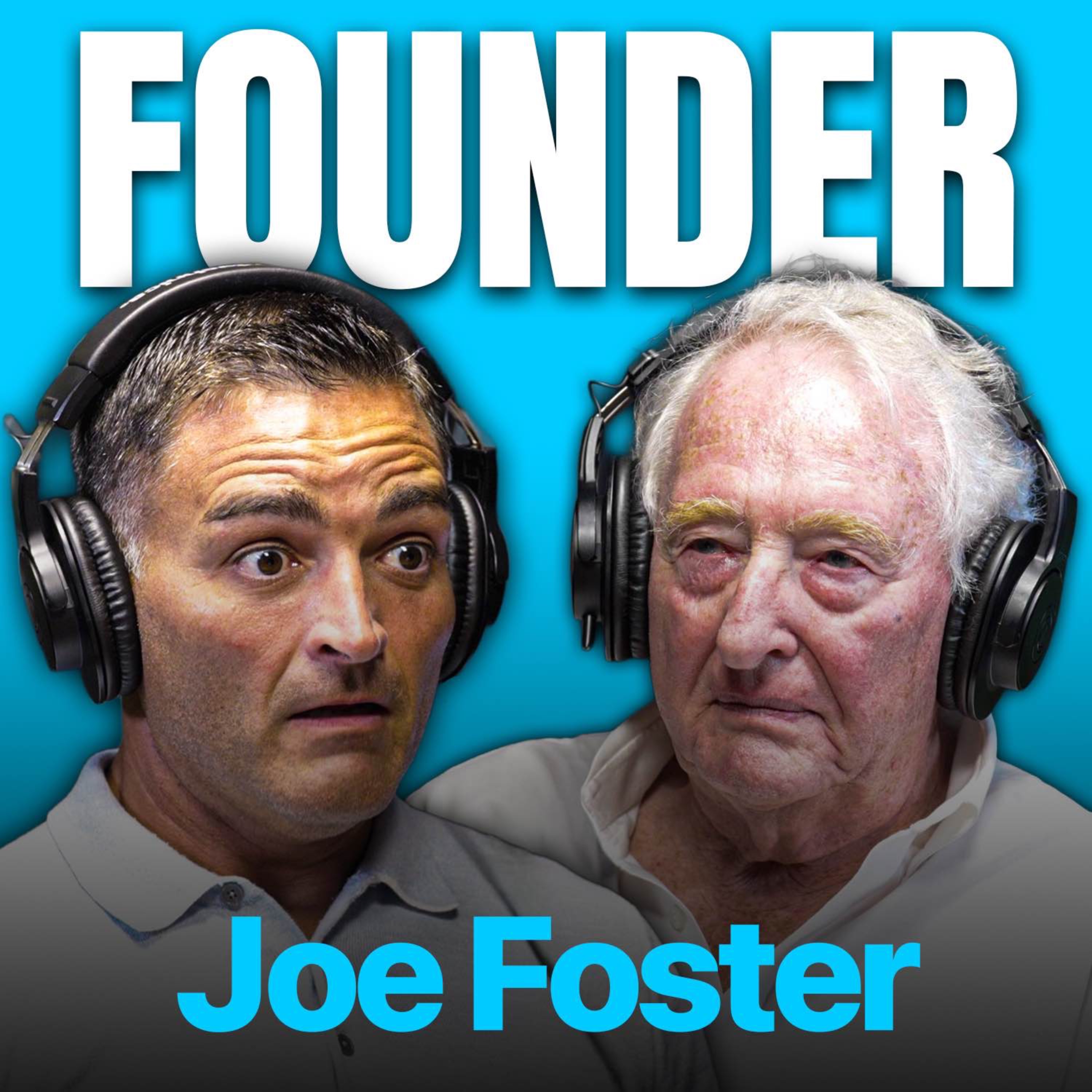
In this episode of "Eventful Lives," host Dodge Woodall interviews Joe Foster, the founder of Reebok, a pioneering British sportswear brand. Foster shares the incredible journey of Reebok from a local UK running business to a global giant, detailing the challenges and triumphs faced along the way.
Written by AI. May contain mistakes.
Explore Joe's journey from the UK to dominating the sports shoe market.
“Yeah, very much looking forward to this.”
Learn about the hurdles Joe faced entering the U.S. market.
“business and we made shoes How many years were you running for before you first went to America?”
Discover how running evolved and its impact on Reebok's strategy.
“And then there was a question saying, what do we do now?”
Understand the significance of the five-star shoe in Reebok's success.
“For you, as a Bolton, I'd go straight into America.”
Learn about the historical growth of the running shoe market and key players.
“But that breaks your heart, I don't know.”
Discover the operational challenges faced when scaling shoe production for the American market.
“So we got to know him, but that's always useful in America.”
Explore how Reebok strategized to enter and compete in the American market.
“And also, in fact, I got supply with 20 ,000 pairs.”
Learn how the popularity of aerobics created a massive market for Reebok.
“So we're growing nicely and we have a tech rep, a tech rep called Arnhill Martinez.”
Learn how the popularity of aerobics created a massive market for Reebok.
“That didn't come through to me until somebody said, we're having problems.”
Understand the challenges of maintaining control during rapid company growth.
“And gloves are that you can just rip it like paper.”
Learn how Joe Foster secured funding for Reebok's expansion in America.
“Well, that's the time when I realised that if this is going to take advantage of this opportunity, one, I need money.”
Discover Joe's thoughts on his past business decisions and their impacts.
“He'll guarantee you the money to go and buy all the stocks.”
Understand how Reebok capitalized on Nike's inventory issues to grow.
“So, you know, and when you think about that, I think these are bits of luck.”
Explore Joe's experience in expanding Reebok's influence globally.
“They got too much of it and they were not selling it.”
Learn how Reebok focused on women in sports when others didn't.
“In the 80s, I would be certainly flying to Japan.”
Discover Reebok's innovative marketing strategies and celebrity endorsements.
“and really get into the women's football market.”
Learn about Joe's views on leadership transition and company culture.
Joe discusses the challenges of creating and selling Viper 10 Sportswear.
“and lucky enough to sell it in 2018 called Viper 10 Sportswear.”
Joe reflects on Reebok's journey and its acquisition by Adidas.
“But in a way, they didn't seem to still have that culture at one point.”
Discussion on Shaq's influence and ownership stake in Reebok.
“Which, when they were selling it, it was 2019, 2020.”
Joe shares insights on Reebok's marketing strategies and challenges faced over the years.
“The only problem I have with Nike is that they were, and it may be woke, but it was always, they were always angry.”
Joe explains the story behind the name 'Reebok' and its logo.
“I guess there's been a lot of those, a lot of happy moments.”
Learn about the challenges Joe faced in naming his company.
“well okay so we uh we left jd forsters and we had to find the name yeah so we started on mercury we'll become mercury sports footwear and the little man with his torch he will be our our logo.”
Discover how Joe ended up choosing the name Reebok after various challenges.
“It came back about two weeks later and said, unfortunately, Mercury's already pre-registered with British Shoe Corporation.”
Joe shares insights about aging, business, and personal life.
“In fact, we're working with so many startups and so many other people right now.”
Understand the importance of storytelling in Joe's career.

Get the gist, explore an idea or ask about something said.
 Claude
On Dodge Woodall Network, what are the key points of this episode?
Searching your listeningAutomatic transcript. May contain errors.
0:00Taking care of your eyes shouldn't be a hassle. That's why Warby Parker is a one-stop shop for all your vision needs. Our prescription glasses and sunglasses are expertly crafted and unexpectedly affordable. Stop by a nearby store or use our app to virtually try on frames and get personalized recommendations. Did we mention we offer eye exams and take vision insurance too? For everything you need to see, head to your nearest Warby Parker store or visit warbyparker.com today. That's warbyparker.com. Youth mental health is a complex challenge that requires comprehensive solutions. We must strengthen after-school programs.
0:37We must make digital literacy tools available in our schools. We must work with mental health professionals to support children. And we must empower mentors, educators, and parents to keep kids happy. Learn more about our commitment to finding lasting solutions at empowerourfuturecoalition.com slash solutions. Paid for by the coalition to empower our future. Most all-in-one HR systems are a patchwork of disconnected and manual tools. Rippling is totally automated. If you promote an employee, Rippling can automatically handle necessary updates from payroll taxes and provisioning new app permissions to assigning required manager training.
1:16That's why Rippling is the number one rated human capital management suite on G2, Trust Radius, and Gartner. If you're ready to run the backbone of your business on one unified platform. Head to rippling.com slash AcastBiz and sign up today. That's R-I-P-P-L-I-N-G dot com slash AcastBiz to sign up. Who is Joe Foster and what's been your biggest achievement in business so far? Joe Foster is the founder of Reebok. I think most people have heard of Reebok, even if they haven't bought a person. That took us zero to a billion very quickly. I guess there wasn't much competition back then, was there?
1:53Joe Foster: plenty there was oh yeah plenty we had uh nike i did this so we go to europe i did some puma with her so why jump into the lion's den why don't we go to america when i suggested that the family looked at me and said you must be crazy and we overtook adidas we overtook nike we became globally the number one sports brand so what's to regret what's to change went from nine million dollars as a small company to 900 million dollars in four years my god welcome to the eventful lives podcast i'm your host dodge and i'm the founder of borma sevens the world's largest sport and music festival on this podcast i speak to proper characters of all lived eventful lives do us a favor and hit that follow button and be sure to check us out on youtube instagram facebook and tiktok at dodge woodham where we've now had over 100 million views joe welcome to the show thank you for the invitation.
2:47Yeah, very much looking forward to this. Who is Joe Foster and what's been your biggest achievement in business so far? Simply about Joe Foster is the founder of Reebok. I think most people have heard of Reebok
3:01Joe Foster: even if they haven't bought a pair. And biggest achievement so far? It's difficult to say because you know, you get a lot of luck in life and you wonder which was it luck or was it okay, so I designed a five star shoe five stars was a shoe that's picked up in america as five stars that got us into america that took us from zero to uh i guess zero to a billion very quickly wow and when when when you were when you created a five star shoe i bet i guess there wasn't much competition back then was there plenty there was oh yeah plenty we had uh nike adidas uh brooks seven hosts a whole host in America.
3:42There's a lot of them in America. But before you went to America, in the UK, what was the competition?
3:48Joe Foster: Competition, three or four companies. I can hardly say any of them. Around Inter, Kingswell, Stubbert. Okay. There were companies really, most of the companies were sort of footwear companies that decided to make a sports shoe. Okay. Therefore, they were in the footwear business. We were in the sports business and we decided in the sports business my grandfather did really if you want to go way way back in fact he invented the spike run issue back in 1895 so we were really in sports business and we made shoes How many years were you running for before you first went to America? First went to America in 1968 and we started our company in 1958 so 10 years of building in the UK and finding, we called it white space.
4:43Joe Foster: It was white space because we left the family business, Geoff and myself, because the family business was going nowhere. Yeah, okay. It was fading fast and no one would listen. So we had to leave and that was in 1958. And you were based in Bolton? Yes. And then when you left, were you like, oh, I feel free now to really take this business to a whole new level? I guess that wasn't really the motivation the motivation was that we could see the family business going down and I said to my father look you know we've got to do something we've got to change this we've got to move with the times they were still doing shoes that were made and designed in the 1930s so you can imagine Adidas were coming in and all my father could say to me he said Joe when I'm gone and your uncle's gone they were 50-50 at J.A.W.
5:34Joe Foster: the Fosters I'm going to your uncle's gone this will be you do what you like with it and I said sorry dad problem is we don't want you to go for this one we don't want you to go but this business will be gone long before you're gone made no difference didn't seem to understand that there was no future and after six months Jaffa and myself we decided nothing's happening we'd just done national service so we'd been away from the business we'd worked in the business they'd been away for two years and you know you see a different side to life you've got to look after yourself a lot more you've got to do things and we came back to the and that's when we saw it before then we were just playing around we were kids we were enjoying ourselves why not two years national service come back we wouldn't need a living and that was the motivation what are we going to do when this business goes out we're going to have to become mechanics or do something because the Bolton wasn't a shoemaking town the shoemaking towns were 15 miles up in Bakeup and Rossendale Valley so there was what would you do down there in Bolton when all of a sudden you're in a business but also when you're looking at 1968 and obviously you went to America, like back then how would you even think about going to America there wasn't the internet, there wasn't, you know it would probably have been fax and telephone how did you get an opening to say we need to be in America well, during that 10 years, we had grown from zero to really owning the track and field and running market in the UK.
7:04Joe Foster: And then there was a question saying, what do we do now? Do we get more products? Do we go into football? And it is in football. They're big. That's going to cost a lot of money. Okay, then if we can't go into that, we were already in cycling and running and bits and pieces. So what do we do? How about territory? Should we go to Europe? Well, 28 countries and different languages, different cultures, plus added some puma with her. So why jump into the lion's den? Why don't we go to America? When I suggested that, the family looked at me and said, you must be crazy. We can't afford. You go to America?
7:41Joe Foster: How do you do that? However, it just so happened about the same time, I'm reading a magazine that we subscribe to, which is called Eurosport. And the government were advertising in the magazine, we want you to export to America in particular and we'll pay for a stand at the NSJA show which is National Sporting Goods of America we'll pay for your stand there and we'll pay for a return and 50 % of your expenditure whilst you're there the family didn't offer any resistance so you can go right okay so that's how we first got into America what was that feeling like being a young lad all of a sudden you're in the 60s, 70s actually going to America it wasn't sort of an accessible place where there's loads of flights coming in and out.
8:25For you, as a Bolton, I'd go straight into America. Where were you in America at first? And how did you get the contacts? Well, of course, as I'm talking about, there was a booth at the NSGA show, and that was in Chicago. So that's where I was going. But we flew into New York,
8:43Joe Foster: and just as you would do. Now, if you flew into New York, you've seen it so many times. Oh, I know that place. Yes. Because every film that you'd seen that came from Connecticut, New York so we knew and that was a funny feeling thinking oh yeah we know this place so we went into New York I went with a friend a friend called Bob Brigham who had outdoor shops and we were making a climbing boot for him so that was the connection and he said yeah I'll come with you we'll go to do a stand or a joint stand at the NSJA so we went into New York and he looked at all the outdoor stores I looked at the sports stores and we had a couple of days there and then we moved on to Chicago and at the show.
9:29So, the show, I didn't sell anything.
9:32Joe Foster: Okay. But Bob did. Bob managed to get some orders for his climbing boots. I found out the reason why. The sports shops didn't want to import our shoe. Is that right? They didn't import a British shoe? Yeah. I mean, because this is where the retailers went to buy the shoes from. Okay. And a lot of them came up and said, oh, love your product. This is great. Where do I get it from? And I say, England. And the guy says, is that New England? No, not exactly. It's across the water, you know, England. Oh, London. Yeah, London. So you could tell by that sort of interest, no, they're not going to import my shoes.
10:11Joe Foster: Okay. And so that was the start of my, how do we get a distributor? Okay. What countries did you go to to create all your trainers over the years? Over the years? Well, I mean, I guess that we followed Foster's route in a way that we used to advertise in athletics magazines and different magazines that would be read by athletes. And so a lot of our business, as far as other countries are concerned, was mail order. Okay. we'd got into France and we'd got into Belgium because again athletes who decided they'd like to buy some product from us that was it so I had a young guy in Paris and had a couple set up in Belgium but that was all apart from that our first real exploit was America 1968, that's been when I got in there 1979 1979.
11:101979? 1979.
11:12Joe Foster: So you had 10 years of building up to get there. Yep. Took 11 years. I had six distributors that didn't work. In fact, I had one of the distributors I had in four years trying to get into the market. And no one was interested? Well, it was difficult. No. Was it difficult because of the product you had or was it difficult because you were British? What did you find hard at that period? Well, initially because we're British, not because we're British, but we hadn't got distribution. The people who would buy our product wanted to buy it within the USA. They wanted a warehouse like a Juxquol to get the product.
11:52Joe Foster: That, I had to have overcome that. Adidas, they're already overcome that. They were a big company by then. We were still small. And they had about four different distributors located in different regions in America. And I would be happy just to have one. But as I say, they couldn't make... The people I got were more into the, shall we say, the running market. People who were runners and they wanted to... They wanted to do it through, say, running stores or direct. When was the point where you were like, this running, there's not enough money just in running to say, look, we need to look at another sport here, a sport that hasn't been tapped into before or an opportunity that hasn't been tapped into.
12:37Where was that point? When did you break the back of the business?
12:42Joe Foster: Well, really, America was the answer. It wasn't a question of, do we go into another sport? It was a question of, how do we get into the running market in America? It was right at the beginning of the 60s. That's the 1960s. Really, at the beginning of the running, was just a small fitness sport. People just go out and just run. but throughout the 60s, early 70s, that market had grown immensely and we were not with it. Nike had grown with it. Tiger or Asics, they had grown with it because again, there were two big companies. In fact, Asics were distributed by Nike. At that time, they were called Blue Ribbon Sports but they started distributing that.
13:29Joe Foster: And it was how do you get into this rapidly growing market because like I said, there was a shed load of other brands that were over there in America. Usually they were imported from Asia. One or two may have made a few bits and pieces. And probably Mexico and the Caribbean they made a few of the shoes. So how do we get into this rapidly growing marketing? That's where, when you asked me what was the best decision, the five-star shoe. I designed a shoe. Why did I design a shoe? Well, during this growth... Are you calling a shoe a trainer here? You're calling... Yeah, this is a trainer. It's now called a sneaker.
14:10Sneaker, isn't it? But that breaks your heart, I don't know. That's right, yeah. It's called everything these days. But how do we get into this trainer market?
14:21Joe Foster: And right at the beginning, the magazine called Runner's World, there's only a very small magazine, probably just one page. by the mid to late 70s. Running had grown that much that this magazine was 70 pages, full colour, big thing, told everybody who were winning races what the next races were. Because it grew so much that 5K events came out, 10K, half marathons and marathons, all these. And so people were starting to compete. And Runners World got to that size that the editor, He decided he could tell everybody which was the best shoe, which was the number one shoe. And he did. And it was Nike.
15:09Joe Foster: Okay. Nike was, this is the number one shoe. So think American. Think of them learning that this was the number one shoe. Millions wanted to buy that shoe. Unfortunately, they were made in Asia. Some in Japan, some in Asia. and they just couldn't turn up the wick to make the product that was demanded. Or quick it off. Quick it off, yeah, they couldn't do it. So the retail trade, everybody who was a runner was going in saying, I want to put these Nikes, tailwinds or whatever it was. Sorry, we can't get them. So the retail trade was sort of up in arms. So the next year they changed the decision on which will be the number one shoe and I don't know whether it was a new balance so there was another shoe but same thing happened they were being brought in from the far east and they couldn't make enough third year Bob Anderson who was the editor he decided to go into star ratings so that five star would be the best and working your way down that way he could get four shoes so that's when five star ratings come around was it yeah wow okay he could he could probably get four shoes which were five stars So he wouldn't be just giving one shoe the number one position.
16:31And at that point, you know, we're in the business. We know exactly what to do to hopefully get a five-star rating.
16:40Joe Foster: And by that time, I'd been in America a few times, and I'd met Bob Anderson, who was the editor, and we'd had a different chat. So we got to know him, but that's always useful in America. So on this next time, we sent three shoes in, and if I can rewind to the point that when in 78 I went over to America and you all know Kmart, Kmart I think but they were big, they were massive Kmart came, because running was really growing Kmart came to my stand and said like your shoes, we'd like to buy 20 ,000 birds Happy days right yeah but um we want a better price well we obviously knew what better price meant better price meant we had to bring it out of asia yeah we could no longer make it in the uk and that i'd sort of realized the fact that if we did get a five star if we did get into america we needed to get a better price so i've been talking to some agents for korean factories and so that meant that you know there was interest there plus a guy called paul feyman came onto my stand he had a small business which was called boston camping he's american he's american and he's in he's in boston and we had a good chat and he said joe we were talking about five stars that if you get a five-star shoe i'll be your distributor i'd already had six and failed about I thought, well, one more.
18:14Joe Foster: Give it a go, yeah, yeah. Why not? Let's see what happens. And so that was sort of, there were people that were ready and waiting for five-star shoes, plus the fact that I was sort of talking about making them in Korea. Well, certainly 20 ,000 perils would have taken our small factory six months. We were obviously punching above our weight. We were nowhere near ready to really work on the American market. The supply, we couldn't do it.
18:49Joe Foster: So it's in 1978. In August 1978, the ratings edition for Runners World, that would be out then. And we'd supplied shoes. And it was towards the end of July. I knew it always came out just a bit early. I phoned Paul Feynman because I'd seen Kmart. I'd been to their office, which was a warehouse with about 50 different buyers all sitting there in different places. This won't work for me. I can't think that big. And also, in fact, I got supply with 20 ,000 pairs. But if this table is supposed to make 500 pounds a week and we're only making 200 pounds a week, that's it. Yeah. You'd only 20 ,000, no more.
19:40When was the time when you created the Reebok Classic Trainer? And was that your biggest ever seller?
19:51We eventually got round to the fact that America being the big market, we'd better short-circuit things and send all our team of designers over to America
20:02Joe Foster: to work with America and to develop the product there. The classic is really the Aztec or our five-star shoe in leather. Yes. That was the difference. Our five-star shoe was in nylon with plastic silhouette. Well, the stripes on the side were plastic, and that was to give the tension to the shoe. And all that happened is that the classics came out, But they came out a little later. We were doing quite nicely. We started really selling in America in 1980. And I think the classics came out probably in 1984. Okay. Because what happened in America, we had some good designers, good people in America, and that was fine and we were selling nicely.
20:58And it was growing. And I came to an arrangement with Paul Farman. you look after America, I'll do the rest of the world. And so we sent the team over to work in America, do the design, which they did quite nicely. But as I said earlier, we were looking for white space. When Reebok got into its existence, it did so because we picked up on cross-country, fell running, things that were just north of England. We also did rugby league. I could call on these guys, and I could talk to them and sell direct. So that's how we had started. Now we've gone to America and we've got five-star shoes. So we can go into retail and sell our five-star shoes.
21:45And that started growing quite nicely. So we're growing nicely and we have a tech rep, a tech rep called Arnhill Martinez. Arnhill is originally Cuban, good athlete.
21:58Joe Foster: and he only got the American Olympic team but didn't however he knew all about the athletic shoes so he was a good tech rep and he in fact he actually bought a shop and it also decided to be a re-bought shop but he is at home and his wife Frankie she'd been out training with her friends and came back and they were really full of something And then Arnold said, what are you doing? Oh, well, we have classes and it's aerobics. And of course, you know, we've never heard of aerobics. Arnold's saying, what's aerobics? Oh, she said, we're actually exercising to music. And we love it. Yeah. Oh. Arnold went to the next class.
22:5030 or 40 girls in there. That's right. If your eyes are the windows to your soul and your glasses are the windows to your eyes, then it's pretty important to find your perfect frames. That's why at Warby Parker, we've made shopping for eyewear as easy and fun as can be. Peruse endless styles in our stores or use our app to virtually try on frames and get personalized recommendations. To find your next favorite pair of glasses, sunglasses, or contact lenses, or to locate your nearest Warby Parker store, head over to WarbyParker.com. That's WarbyParker.com. You know what's wild? Most people are still overpaying for car insurance just because it's a pain to switch.
23:31That's why there's Jerry. Jerry's the only app that compares rates from over 50 insurers in minutes and helps you switch fast with no spam calls or hidden fees. Drivers who save with Jerry could save over$1 ,300 a year. Before you renew your car insurance policy, do yourself a favor. Download the Jerry app or head to jerry.ai slash acast.
24:17so it fits so comfortable. Perfect. I didn't hear a word of all this. That didn't come through to me until somebody said, we're having problems. Well, let me take you back a step further than that because Arnold's noticed this. So he's in Los Angeles. He took a flight up to Boston to see Paul Feynman and he reels out his story to Paul Feynman and Paul's saying, Arnold, slow down, slow down. We're a running company.
24:45Joe Foster: why do we want to be making dance shoes for girls oh well and no no go back watch it carefully and if it seems to be something that we should get into we'll do that yeah i know wasn't satisfied he went to the back door and had a word with steve liggett who was in charge of production and uh steve well steve thought it was a good idea why not so steve got him 200 pairs of samples which he eventually took down to Los Angeles gave it to some of the instructors and that's almost end of story because they loved them it blew up didn't it it blew up massively we had a problem couldn't wait enough no, that's an eventual problem the first problem was it was made in glove leather glove leather is one millimetre thick and then you've got to take the surface off in order to let the adhesive in so that you can stick the saw on.
25:44So you've got 0.7 of a millimeter. You can imagine how thin that is. And gloves are that you can just rip it like paper. So after four weeks of girls jumping up and down and their shoes were falling apart, just falling apart. Luckily, we were in America and we were in Los Angeles. The girls didn't care. They went out and bought another pair. Fantastic. And they did all sorts of things. They actually lined it with nylon. By this time, I'd got wind of what was going on. And they'd line it with nylon. Oh, we're all right now, Joe. We're lining it with nylon. I said, you can't do that because leather's supposed to breathe.
26:23Joe Foster: You've just glued nylon on the back. Now you're stopping it breathing. Oh, what did they do? They punched holes in the upper so they would breathe. So it just goes to show marketing is so much better. Absolutely. Did you ever meet Phil Knight from Nike? Never. Never? Never. cross paths no no no i knew his company very well i knew his second in command jeff johnson yeah and jeff johnson and i used to chat but never never saw phil knight you know when you went to america did you own 100 of reebok and when was it when you had to start selling percentages off of your company yeah i did own 100 of reebok at that time uh well my brother and i on 50 50 but unfortunately just as we got into America he fell ill and he died of stomach cancer so I did at that point only 100 % and this comes along because we've got Arnold he's got aerobics we've cured it because now we've got two more garment leather than glove leather it's still soft it's still great then Jane Fonda went out and bought a pair and used them videos and then it went wild absolutely that was it went from nine million dollars as a small company to 900 million dollars in four years my god and that's where the problems came in okay yeah so for you how did you how did you personally manage that you're going from nine mil in control did you find you were losing control of your own business while you while it was going massive in America at the time.
28:03Joe Foster: Well, that's the time when I realised that if this is going to take advantage of this opportunity, one, I need money. The company needs money. And ironically, this is where we come back to the UK again because the money came from Stephen Rubin. Don't know if you know Stephen Rubin. Is that Pentland? East Pentland. Pentland Group. Ah, okay. Yeah. So he invested money in you, did he? Yes. How much did he put in and what percent did he get? Well, Paul did a good job. He eventually ended up with 55 % of the American company. How much did he give you? He didn't. I think he paid£75 ,000, that's all, for his share.
28:48But he gave us an open credit. Okay. So we had a credit line which was open. Which means for the listener.
28:55Joe Foster: which means for the listener that if you're going to do business and buy a product from overseas, you've got to guarantee the money, usually through a bank, letter of credit, whatever it is. So the bank has to fund you. And the bank would not fund us because we were a small company. We didn't have that sort of money, so we couldn't guarantee to repay it. So a credit line means that... He'll guarantee you the money to go and buy all the stocks. Steve and Rubin were sort of paying the bills. yeah okay is that a good when you look back now how old are you today how old am i to this 90 are you 90 i'm 90 my god i've never guessed that yes when you look back now with your wise age now is there anything you would have changed in that deal with stephen rubin and pentland group at the time you know it's very hard to say i would say to answer that problem if my brother had still been alive at that time, I think it would have been different.
29:55How different, I don't know. But otherwise, you know, we looked at this, I looked at it, and we took the option. And we overtook Adidas. We overtook Nike. We became globally the number one sports brand. So what's to regret?
30:14Joe Foster: What's to change? I kept thinking, yeah, you might have changed it, but would you have had the same people? would arnold have seen what we would be employing arnold would he have seen what he saw would you know it's like trying to change the direction of anything yeah no it's an amazing story but sometimes you know in in business where you make a move okay you you say your brother passed and you had 50 percent or say 100 maybe were you too freely to give 55 away at the time looking back Well, looking back on this, I've got to look again at why is Stephen Rubin doing this? And, okay, both he and Paul Feynman are Jews, that does help.
30:56I mean, I've had a lot of good business deals with Jewish people because they have the connections.
31:02Joe Foster: Yes. And they have the connections. But this connection was more with Paul. and one of the things that Stephen wanted Paul to do because Paul had a group of representatives he wanted Paul to go around and sell to all these different seers and all the different big people their own brands. That's what he wanted to do because he knew that would be volume. He didn't. Initially, I don't think Stephen even thought that Reebok was why he invested. Right, okay. I think he invested in the sales team. The people. In America. Yeah, okay. But Paul turned around and said, no. Yeah, okay. He said, no, we've done a deal.
31:43No, I won't do that. Yeah. So, you know, and when you think about that, I think these are bits of luck.
31:50Joe Foster: These are bits of things that happen that you didn't control. Absolutely. Well, the more risks you take, the luckier you get. Well, absolutely, yeah. And you have to take these risks. So I had to make a decision. do you want to own 100 % or do you really want to own Reebok or do you want to see Reebok do, become number one or do better? And my decision was, well, we're having fun. Yeah. Let's make it happen and not worry about who owns it. How old were you roughly when you went to America? So I can work out. Were you in your 30s, your 40s? Well, we're talking about 68. I'll be 33. Okay, 33. and you saw that business go from$9 million turnover to$900 million.
32:32Yes. Is that in one year? Over four years. But is that$900 million a year or just got to$900 million total over the four years?
32:40Joe Foster: It got to$900 million total because it accelerated. Yes. It just went bigger and bigger. And you mentioned earlier, oh, you'd have trouble getting product. Yes, we had trouble getting product. So we'd overcome the money problem because that was our first problem. How do I get the money to buy this product? then we were running into this problem because how do these factories come with us? Yes. Luckily for us, at Nike, Nike ran into the wall. All of a sudden, they got too much inventory. Got too much stock? Yeah. Set on stock, okay. Yeah. They got too much of it and they were not selling it. You know, every company goes and has a bit of a flat and then they come up again or they die, whichever it is.
33:25Joe Foster: so they they hit the wall they came out of four factories we went straight in yeah the four factories okay luck yeah yeah so you knew the contacts there to go okay we're not dealing with nike anymore boom rebox straight in and we'll look after these factories look after you and grow with us yeah well we were knocking on every door of every factory all the time we need more production how exciting yeah when as nike had this problem And I do remember that Paul Feynman was interviewed when Nike were having this problem of too much inventory, and they said, what would you do, Paul? And he said, well, I'd put all my inventory into a ship, sail it out and sink it.
34:08What was your main role when you were at in America? What were you doing? And when was the first time you endorsed an athlete to represent your brand at a high level? Well, we decided, certainly I decided, that America is, that's the influence. You know, everybody has influences. The influence for Reebok was America. They don't want a Brit trying to tell them what to do in America. So I stood back and said, look, guys, you just go for it. They had the income coming in from, well, not the income from sales. And so they did a lot of those choices. I stood back from that and I looked after global.
34:48Okay. So my area was to pick up distribution around the world. And I guess that's when I started flying more and more and more. Every other week I was off to wherever, you know, whether it's Japan or… Give us some countries that you were flying to in the 80s. In the 80s, I would be certainly flying to Japan. Canada and Mexico were part of what we agreed was America so you could control shipping so I went to Japan quite a lot Australia, New Zealand and Spain, I was in Spain quite a lot because they were one of our main distributors we surrounded Germany before we went in there Italy, I went to Italy and the rest of Europe apart from Germany.
35:48And it was only when we were ready we said, well, let's go into the Lion's Den. Which was? Oh, I'm just trying to think. What year would that be? No, no. Who was the Lion's Den? Germany. Germany, okay. Because it's Pumor and that is us. Okay. How was that going into Germany now you've got two really strong brands? And how strong were they at that time in the 80s? Well, they were very strong, but the thing we've got to now consider is
36:14Joe Foster: how did Reebok grow? Yeah. Women. Yeah. And Nike, Adidas, Puma, they didn't believe in women. They couldn't find, they said no. And they looked at aerobics when we were really growing. They said no, no. It'll be a fad. It'll be a phase. It'll come six months and it'll be gone. It'll be over with. But it's still going today. And I think Reebok now have an opportunity to use what they know, use what they know, and look at women's football, because women's football is now going to grow and grow, and have been known as a woman's company. I'm sure they could leverage that and really get into the women's football market.
37:05I want to know what that feeling was like for you going into Germany, because the Germans would be like, hold on a minute, let's not let Reebok get in here. the two brothers who fell out under Adidas and Puma did you feel like they were trying to push you out of their country? Well this is why we're talking about aerobics because they were not in aerobics. So was there aerobics in Germany? Oh yes We took it global we took aerobics global and we went to the to the sporting goods in Munich, Ispol Ispol show It's still going today it's still going and we took a big stand but we put on Hollywood we had dancers, we had music and this was all aerobics and everybody and intersport Jeremy came up to me and said look I want 10 ,000 birds and I said you'll be lucky
38:04so that was what was happening and because we changed everything, we'd added a new dimension. And that is why, I'd say over a period of, I think about 1985, we became number one. Yeah. Because we were just... And then this brings me to your classics. Yeah. You asked about classics. Yeah.
38:26Joe Foster: Because all of a sudden, we said, wow, this soft leather. And then advertising, Reebok advertising was, you don't need to break your shoes in. Was that the advertising, was it? Oh, yeah. Okay, brilliant. So soft. So soft, yeah. In fact, Paul Fannman put an advert in Tennis Magazine because we moved into tennis as one of the sports. And it was, if you don't believe that Reebok tennis shoes are the best you've ever had, we'll give you your money back and a can of balls. And the strap line was Reebok Buster, balls on the line. Quality. Quality. Amazing. So I want to know, in the mid-80s there, who did you endorse what what celebrity sports people did you endorse back then oh i think you've got the uh sydney marie who sorry sydney marie who was uh a south african okay he he got the world for world mail record at one point um and there were a lot of runners you probably wouldn't anyway away anything away from running when was the point what about the book pump right well you know something i had stepped back by the time you have okay but when it got to i stepped back at the end of 1989 max in 1990 okay at that point what shares did you have left when you started i'd sold by then you sold everything by then i i sold everything because i really needed uh steven rubin and uh pentland to stay behind the brand okay so i don't know I don't care about owning it that's one thing you can get enough money out of doing what you're doing but by that time plus the fact that new people needed to come in yeah I tell you new ideas and whatever and basketball in fact I had stepped back before Shaquille O 'Neal came into the into the company and then shortly after that somebody invented the pump that's right I mean I say a step back because it was difficult to retire from it I didn't retire from it because I decided I needed time so I went to Tenerife and just sort of bought an apartment there so I can have a rest and I just watched but the telephone kept ringing I'm sure Joe what did we do with this Joe what happened here did you find did you find you were becoming under more and more pressure in the 80s as the as the company was growing because you had 45 % left did this did the 55 % owner have the opportunity to buy your shares off you well i yes it was an opportunity because i i decided that uh i said owning the company is not really a big thing if the company is not going to go anywhere yeah you know if you take the railway off and you've nowhere to go you might have a train but you know where to go there's a norway there and then the company just fades and fails and so I needed people to have enough energy and feel that they did enough I want to say power if you will and I had to realize long ago that the power isn't in the money the power is in the people who operate the business and who know the business so I was always in a position to do what I wanted and do how the company wanted.
41:49And that for me helped because people
41:52Joe Foster: do that. I say, what's the most important thing about running a company? A big company? I say having fun. Having fun, yeah. Three things, having more fun and even more fun. But you can only have real fun when the money's coming in because the hard graft of building a brand and a build a... If your eyes are the windows to your soul and your glasses are the windows to your eyes, then it's pretty important to find your perfect frames. That's why at Warby Parker, we've made shopping for eyewear as easy and fun as can be. Peruse endless styles in our stores or use our app to virtually try on frames and get personalized recommendations.
42:30To find your next favorite pair of glasses, sunglasses, or contact lenses, or to locate your nearest Warby Parker store, head over to WarbyParker.com. That's WarbyParker.com. Youth mental health is a complex challenge that requires comprehensive solutions. We must strengthen after-school programs. We must make digital literacy tools available in our schools. We must work with mental health professionals to support children. And we must empower mentors, educators, and parents to keep kids happy. Learn more about our commitment to finding lasting solutions at empowerourfuturecoalition.com slash solutions.
43:07Paid for by the Coalition to empower our future. Sportswear brand and lucky enough to sell it in 2018 called Viper 10 Sportswear. But that, out of the five big businesses that we've created over the last 20, 30 years, that was one of the toughest to break the back of it. And we hold no stock. You know, we had your factories in China, we had your factories in India and Pakistan and we found one in Lithuania that could turn around things in four weeks rather than 12 weeks what they were doing in China to bring all the water to England and distribute it that's right yeah and that's what we found and that we were lucky enough to build that business up in eight years and then and then be bought out by someone yeah so i understand what you were going through obviously yours was a lot bigger scale but out of that 55 you had 45 left do you remember selling that 45 who to um that what happened is that the american company bought that okay so that the america reebok was it is that set up yeah america reebok bought that and uh steven rumen had 55 of that so it went into america however i'm sorry so the um it was really funny because the irs used to form me which is like what the tax man the american tax yeah because they didn't like the idea that uh the shares were held in america but they weren't getting the money from the royalties.
44:28The royalties were still going into the UK company. And I remember being invited
44:35Joe Foster: down to HM... HM's treasury. It's in... HMRC. Yeah. They invited us down there to talk. The Americans wanted to talk about this because the IRS were bugging them. It was in London. And we went in and these guys, they were not stuffy at all. There was no. And they said, what do you want to do? Well, we want to sort of take the trademark and owns it in America. And is there a problem with that? And the guy said, no. No, it's not a problem. But it will cost us money, won't it? Oh, yes, it'll cost you money. Yes. How much? Oh, I don't know. If you want to take it, you take it and then we'll let you know.
45:28yeah and the guy singer but one of the um one of the ad guys in the in the uk said you know we never do well when we argue yeah with the irs yeah yeah there's only one winner isn't there yeah how have you seen briebok grow go bust highs lows since you left how do you explain that journey Well, the journey was, of course, that I stepped back and Reebok were number one. Yeah. And Paul Farnham had really worked his socks off and with a good team there. Is he still with us today? Oh, he's still with us today, yes. And with Reebok still? No. No, he sold Reebok. He got out of Reebok when Reebok sold to Adidas.
46:14Adidas, that's right. Yeah.
46:17Joe Foster: But in a way, they didn't seem to still have that culture at one point. You know, we'd built a winning culture. Everybody knew everybody. And people like Arnhall. I think if Arnhall had become the CEO, I think we'd have seen a difference happening. But Paul Feynman tried to bring all the different people in. For whatever reason, he didn't see Arnhall as the CEO. And he couldn't find anybody. Really, he couldn't find anybody. which you think well yeah you know would would would Arnold have been okay because Arnold left yeah and went to Deckers you might not have heard of Deckers but you will have heard of Oak yeah Oak Boots yeah yeah okay well that used to be Deckers was it it still is okay still is part of Deckers and so the Oak Boots has been going around for decades is it it's been going around for a long time yes wow and Arnold became CEO and he took it to a billion before he eventually retired from there.
47:25So he obviously had some good ideas and he obviously managed companies. Did they ever give Shaq O 'Neill a percentage of Reebok? Shaq O 'Neill has 15%, I think it is, of ABG. And ABG now have 100 % of Reebok. Reebok, okay. So in that way, before he wasn't part of it, but he loved Reebok. Yeah. And Reebok paid him a lot of money. and when do you know how much they remember paid Shaq O 'Neill no I don't remember Dylan do you mind having a look at how much they paid Shaq O 'Neill and also I want to know what size feet Shaq O 'Neill has 22 is it 22? is that right? yes and that's why he came from Reebok because Nike would want to make 20s as the biggest bloody hell where have you how would you explain Reebok this journey from the 90s to now because i've seen it go bust or be sold for nothing and it's been it had its ups and downs it never went bust it was sold for 3.8 billion yes that's a big number a big number okay 3.8 but how much debt were they in there weren't any debt so there was no debt no okay no it's uh its sales have gone down okay its sales have stayed around 4 billion they got there And, you know, some people can climb the hill, but when they get to the top, they don't know where to go.
48:50Yeah. And I think that's what happened to Reebok. Okay. Didn't know where to go. So eventually, firemen and the stockholders, because there were quite a few stockholders in that town, because it went public. Yeah. And so you got a lot of stockholders. They decided it would be better off if it was sold. Yeah. And take the money. So that's when it got to Adidas. Adidas really didn't want the Reebok brand. They wanted what Reebok had in America. Right, okay. Because Reebok had the NFL, the NBA, there was a lot of contracts that they had. Yeah. And so when Nike and Adidas bought it, they switched those contracts.
49:30To Adidas straight away? Yeah. Unfortunately, those contracts come to an end. Yeah. And they were never renewed. Right. So whilst they did gain something, and they probably gained a bigger foothold. They lost all those contracts. And from Reebok, they just wanted to take Reebok as a fitness company. Okay. And so they took Reebok out of team sports and out of individual sports. In fact, they took it out of sports and just put it into fitness. Which, when they were selling it, it was 2019, 2020. Yeah. A lot of people came to me and said, should we buy it? Well, buy it back. Well, should we buy it?
50:15Other companies wanted it, other people wanted to buy it. And at that time, it was valued at one billion. So from four billion and actually being bought for 3.8 billion. And we're talking dollars. Yeah. And it's now valued at one. It was now valued at one billion. Wow. Okay. And ABG, because Shaq, Shaq had been pestering, and Jimmy Salter, who owns MBG. Why don't we buy Reebok? Why don't we buy Reebok? And Salter got Shack into his office and said, guess what? I bought Reebok. It's yours. It paid$2.5 billion. And all the other people who I knew, quite a few of them, were saying, we were nowhere near.
51:05Okay. It was a closed bid offer. we were nowhere we were a billion than that a billion short so people were bidding for 1 or 1.5 you're saying and it got sold for 2.5 2.5 that's right okay so that was a big number yeah and then it's a matter now how do you get back in well it started to get back in by going back into basketball okay because Shaq is now president of basketball division and Iverson Alan Iverson is is is is vice president and they're making a difference they are yeah they're making a difference and also now Reebok are getting back into football yeah and they've signed what was it MK Dons okay and Charlton okay so they're just for the shirts they're just getting back into football now are they yeah yeah what brand really stands out for you over the last 30 years as the number one brand in the world Well, the number of brands in the world, if you're talking about sports, of course, has got to be Nike.
52:10Yeah. They went through some bad times. The only problem I have with Nike is that they were, and it may be woke, but it was always, they were always angry. Well, yeah, really angry at things. And we have a good example. I think it was 92 when the Olympics were in Los Angeles. And the gold medal was won, of course, at basketball. by the American team. And I would think 90 % of the American team were Nike. They had a Nike contract. But Reebok had bought the rights for the track suits worn on the cellar, on the, what do you call it, where they give them the medals, the medal summary. Reebok had bought that.
53:00So they had to wear this Reebok track suit. And Johnson, of course. didn't like this idea at all. Well, Magic Johnson. Oh no, the sprinter Johnson. No, he's a basketball player. Okay, Magic Johnson, yeah. Magic Johnson. So he got an American flag and threw it over his shoulder. And blocked the Reebok logo. The Reebok logo, yeah. Which was, okay, that's fine. But had he just left it as it was and just got through it, no one would talk about it. Because after the ceremony, he just ripped off his jacket, threw it down, and one of the team picked it up and said, just sign this. And he signed it. I think it's about two years ago now, it was sold for a million dollars.
53:46Yeah. And I believe only six months ago, the flag that he threw, which again, the old sign, that was sold for one and a half million dollars. Oh, God. And so the publicity we got, by him doing this, was bigger than just buying the uniforms. What's been your happiest moment in Reebok? The happiest moment in Reebok? I guess there's been a lot of those, a lot of happy moments.
54:19There are so many. I guess when somebody says, you're number one. Yeah. You're number one. Yeah. You think, and in a way there's a lot of sort of sadness there because Jeff wasn't there to see it your brother my brother yeah that you know we'd grown from zero to become the number one global sports brand and sports goods intelligence you used to bring out a magazine and talked about yeah everything whatever and Nike were called the Eager Beaverton don't know what Adidas were called but the Carters numero uno perfect perfect it's absolutely perfect and this went on for quite a long time yeah have you have you enjoyed uh reminiscing over the years about what you created and created one of the most powerful biggest sportswear brands in the world and to be able to tell this story now at at 90 years old you don't look 90 by the way thank you fantastic thank you i feel it sometimes would you look back and and with a huge amount of pride oh yes i mean then i guess what comes with this is that you're always looking down at people's feet yeah to see what they got on yeah what have you got on now i've got rebox you've got nike yeah you notice them straight away don't you i used to have the rebox classic when i first came out in the 80s i think everyone did it was the comfiest thing ever absolutely it was amazing wasn't there they really were they were soft and comfy and there was a different where did the name rebook come from because it's an animal is it not it is an animal yeah well you should really buy my book and read it but uh because the story's much much better well okay so we uh we left jd forsters and we had to find the name yeah so we started on mercury we'll become mercury sports footwear and the little man with his torch he will be our our logo.
56:18We liked that. That was good. 18 months into our business and the accountants came and said, Joe, you're doing pretty well. You're making a bit of money. Register your name. Right? Yeah, what's that? Yeah, we were in our early 20s. What? Register your name. We learned why. Yeah. And so I went to register the name. In fact, the accountant pointed in the direction of an agent. Yeah. And the agent that we said, look, we've got to register our name. I said, okay. It came back about two weeks later and said, unfortunately, Mercury's already pre-registered with British Shoe Corporation. We're small, British Shoe Corporation.
56:58But they'll sell it to you for£1 ,000. Well, we just set up a whole factory for£250. Back in 1960,£1 ,000 was like, can't go to the bank. The bank would look at us and close our account. So I said, well, if you can't buy it, you can take them to court. I said, okay, how much would that cost? He said about£1 ,000. I said,
57:26Joe Foster: okay. So if you can't do that, you've got to change your name. But don't give me one name. Bring me ten. And I was saying, ten? You know, this has got to be our name. We've got to believe in it. we can't just take the 10th choice. I said, well, I'm sorry, because every name you give us has to go through the register, and it takes about two weeks for every name. So, you know, if you get to 10, you're 20 weeks down the road without a name. And so bring me 10 now. So we sit down. I'm sure you've done this. What should we call this? That's the most fun bit, isn't it? Yeah, we'll let you get to some really weirdness.
58:11We really do. But I've got to take you back to 1943. I'm eight years old. War. Just like COVID. In fact, in those days, there were no lights, no man. He couldn't move, he couldn't do anything, but we did have local events. And I won a 60-yard race at eight years old. I had an advantage. I wore my grandfather's spike shoes. The other guys just had to do with Dunlops or whatever. The best they could do. anyway I won the race and I went up to collect my prize guess no it wasn't a football which was most disappointing you know because they gave me a dictionary and back then in 1943 we didn't even have schools all schools were closed because everybody had gone to fight a war or do something and a dictionary I suppose I could have kicked it around a bit and done whatever but it wouldn't be like a ball would it But it was an American dictionary.
59:13Webster's. And we know American dictionaries spell certain things differently. Tomatoes, tomatoes. That's right. Whatever it is. But they smell different. Colour's different. Lab is different. All these things are different. Okay. So fast forward again now to 1960. We'll look at a new name and my dictionary sat next to me. Yeah, brilliant. And I like the letter R. for no no no reason i open my dictionary letter r and start thumbing through very soon you come across re it's pretty near the beginning there r e e b okay what's that it's a small south african gazelle we're a running company brilliant gazelle brilliant that's it top of the list take it to the agent i said look we've got this like cheetah and falcon and different and all birds of prayer, all those animals, whatever.
1:00:10I said, but we want this one. The guy's a lawyer, he says. See what we can do. Two weeks later, he'd gone through all this stuff, came back and said, Joe, you've got your wish. You can have Reebok.
1:00:24Joe Foster: Just one caveat. What was that? Well, if somebody starts making shoes out of Reebok skin, you can't stop them. Yeah. And I looked at Jeff and we said, no. that'll never happen that'll never happen so we said okay you've got you've got Reebok but it has to be in part B of the register up to two or three weeks ago we didn't even know there was a register so okay no problem and okay we're in part B and ten years later the registrar came back and said we moved you to part A of the register okay why? well everybody knows Reebok now and everybody knows that Reebok is a sports four-by-shoe sport and so we're now in part A but that's how we got Reebok and the rest is history and the rest is history Joe are you happy?
1:01:21yes I wish I wasn't 90 yes because moving around and doing a lot of things but I still move around and enjoy that luckily I married a younger lady yes I've seen you Julie she's lovely and she's lovely she does everything She's brilliant as well at business. She is, isn't she? She's down on the bone. Yeah, absolutely. In fact, we're working with so many startups and so many other people right now. I had the guy who introduced us, Rick Cronin. Yes. Yeah, of Premier Intros. Yeah. People like that. In doors. Yeah, openly in doors. How do you want to be remembered? Well, not like Spike Milligan. I told her I was ill.
1:02:12I guess it's you know he tried he got lucky and yeah he made it you're amazing Joe you're an absolutely wonderful human being and an amazing story to be sat here with the founder of Reebok I swear pleasure beautiful that's what my career is now telling the story like I say and I'm able to tell the story doesn't change that much. No. Depends who you're talking to. Do I have to do it on track for you? Joe, you're an absolute star, mate. I really do appreciate you making the effort coming all the way down to Bournemouth. It's a pleasure. We have friends in Salisbury. We've been on there shortly. Wonderful.
1:02:51Yes. And I wish you all the best. Thank you very much. You're a good man. Cheers, Joe. Thank you. You're a good man. An absolute pleasure. Yes, it has. Thank you. Thanks for watching, guys. If you'd like to see someone on the show, leave a comment below. And if you haven't already, do us a favor, show us a bit of love, press the subscribe button, and it allows us to grow the show even bigger and bigger each week. Nice one.
1:03:35semi-annual LiveWell sale. From crushing workouts to leveling up your nutrition and everything in between, get the best deals on the latest innovations. All the newness is all on sale right now during the LiveWell sale on The Drop by GNC. AI pilots are easy, but scaling AI across enterprise customer experience is where most organizations fail. Parloa's Agentix CX platform helps enterprises move from experimentation to production. With the AI agent management platform for Enterprise CX, companies can design, test, and orchestrate production-grade AI agents across customer service operations. The result, AI agents that turn customer conversations into lasting loyalty.
1:04:17Learn more at parloa.com. Influencer marketing isn't what it used to be. We're shifting from reach to resonance, from impressions to impact. It's no longer about how many people see your content, it's how deeply you connect with them. And nothing creates that connection quite like podcasts. ACAST's Podcast Pulse 2025 report reveals how podcast creators are redefining influence through resonance, multi-platform fandoms, and their ability to shape culture. So if you're a marketer who's tired of vanity metrics and looking for meaningful results, podcasts are where you need to be. Download the full research free at podcastpulse2025.com.
Joe Foster is the founder of Reebok, a British sportswear brand that went from a small UK running business to a global giant.
He talks about designing a “five-star” shoe that got picked up in America - the breakthrough that took Reebok from zero to a billion. He breaks down why people underestimate how competitive it was even back then, with Nike, Adidas and others already fighting for the market. Joe also explains how he and his brother left the family business in 1958 when it was “going nowhere,” then spent 10 years building in the UK before making the bold decision to target America. He shares the practical reality of doing it in the 60s - getting a government-backed stand at the NSGA show in Chicago - and why the US felt like the biggest opportunity, even if it looked like “jumping into the lion’s den.”
This is the eventful life of Mr Joe Foster.
All Enquiries - [email protected]
Website: DodgeWoodall.com
YouTube: Dodge Woodall
Facebook: Dodge Woodall
Instagram: @Dodge.Woodall
TikTok: @DodgeWoodall
LinkedIn: Dodge Woodall
Hosted on Acast. See acast.com/privacy for more information.