Ask ChatGPT


 Dodge Woodall Network
14 Oct 2026 · 41m · 20 chapters
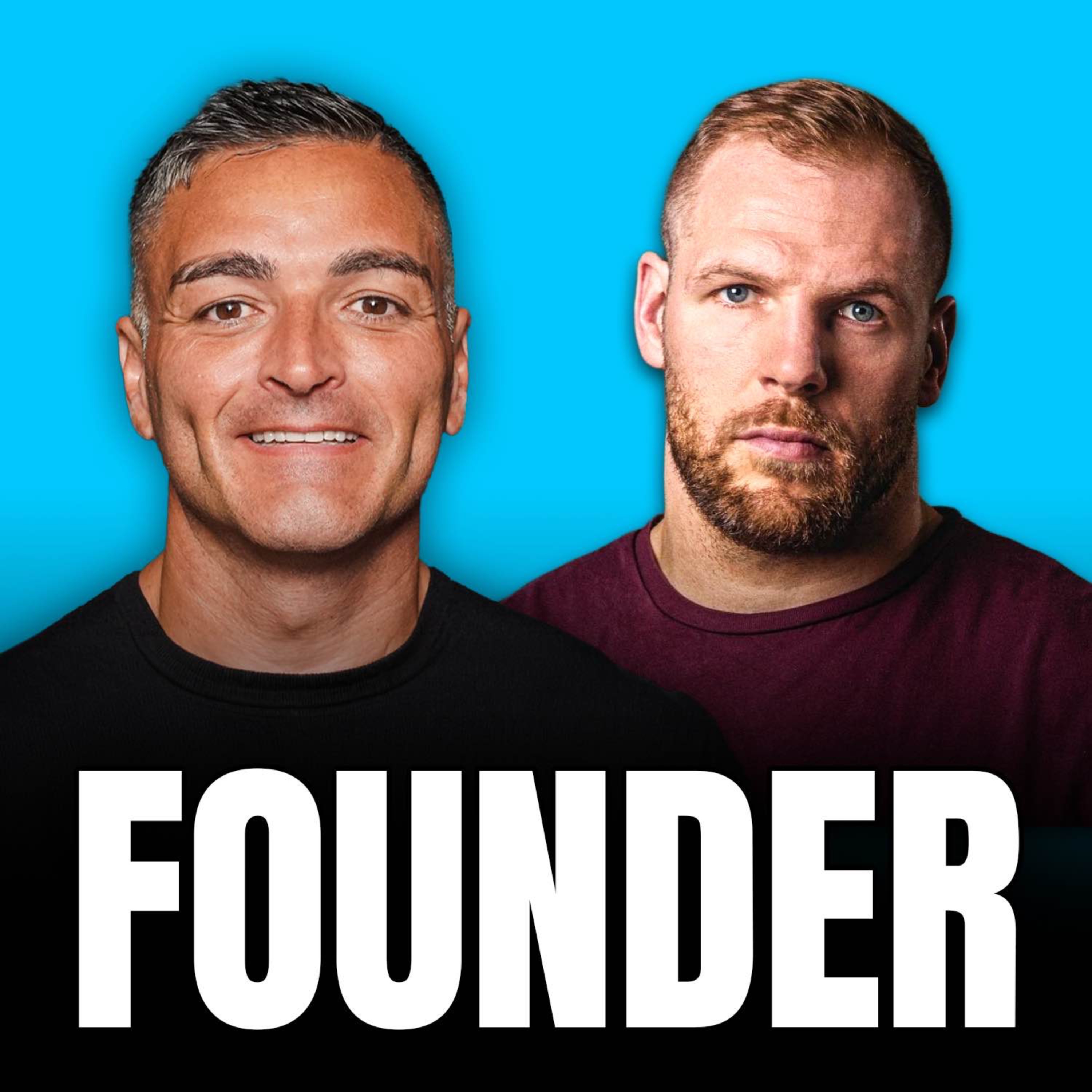
James Haskell and Dodge LIVE discuss entrepreneurship after pro rugby, building a long-running festival, personal branding, marketing, and lessons from sport (accountability, sacrifice, resilience). They also share practical business claims: focus on one consistent offer, do homework on competitors, and don’t expect “positivity” to replace hard work.
James Haskell, former England rugby player (77 caps for England; played for Northampton; mentions major injury/arthritis and retiring), entrepreneur and festival founder; runs/helps run Bournemouth Sevens and other ventures; DJ/producer and author (claims eight books, including Sunday Times bestsellers). Dodge (co-host/entrepreneur/festival figure), long-time collaborator with Haskell; discusses business and leadership.
retirement causes identity loss; success requires being comfortable being uncomfortable; social media is controllable PR if used consistently; most entrepreneurs fail (about 90%); independent ownership protects festivals from being bought out.
2008 global crash nearly killed their first festival; remortgaging decision with his wife Fleur (50% owner); DJing for Carl Cox at Universe (15,000 people) and playing until 5:40 a.m.; rugby camaraderie/accountability translating to business.
Written by AI. May contain mistakes.
Explore the challenges of transitioning from sports to entrepreneurship.
“If you felt stuck trying to lose weight, you're not alone.”
Explore the challenges of transitioning from sports to entrepreneurship.
Discuss the loss of identity and challenges faced after retirement.
“What was it like for you finishing your career and then becoming a full-time entrepreneur?”
Learn about the importance of acceptance and adapting to life's changes.
“I think they say that some of the most difficult things that you have to do in life are divorce, bereavement or retirement.”
Understand the value of a personal brand in business and life.
“And then if you don't make those changes and tweaks, that can affect you.”
Discuss the accountability and teamwork lessons from sports.
“So I thought I had that and I got a level one barista course.”
Discover how sports foster essential social skills for success.
“silver spoon in a mansion it wasn't yeah just grew up living above pubs and when you live above pubs with a nightclub next door to you, you grow up very, very quickly.”
Explore the current marketing trends and the importance of personal connection.
“It was just if you were a good person and if you worked hard and did what you're supposed to.”
Learn how effective communication and honest interactions can lead to better business relationships.
“And allow the piss being taken out of each other.”
Explore how traditional marketing evolved with social media, and its impact on business outreach.
“More books than rubbish children's library.”
Discover the challenges and joys of writing personal stories while maintaining authenticity.
“Do you fancy coming to DJ at Bournemouth 7s?”
Understand the transition from nightclub promotions to creating a large-scale festival, including the lessons learned.
“I just run everything off my mobile phone.”
James shares his journey from nightclub promotion to creating a unique sports and music festival.
“You know, you work out the numbers and it was all right when you're in your 20s.”
James discusses the financial risks and realities that entrepreneurs face in their journey.
“So we run out of money six months prior to putting on the first festival.”
James emphasizes the importance of hard work, sacrifice, and the daily grind in entrepreneurship.
“And it feels like we need someone in the UK to stand up and just hold people accountable.”
Discussion about the importance of loving what you do as an entrepreneur.
“I structure them with a remote PA and I've got my training in the morning, my meetings, my calls, my work.”
James reflects on his experiences in music and rugby and the impact of those choices.
“one of the things in music is massive peaks and drops.”
Explore insights on team dynamics from rugby and the importance of personal growth in business.
“Well, it's a good question because I can't do one anymore.”
Learn how to effectively work with and manage different generations in a professional environment.
“I've got Josh back here who was on board with me for two years, Gen Z.”
Understand the significance of setting standards and leading by example in business and personal life.
“But if you drop your guard for a minute, like in a team, you can't afford to do that because people are always watching you.”

Get the gist, explore an idea or ask about something said.
 Claude
On Dodge Woodall Network, what are the key points of this episode?
Searching your listeningAutomatic transcript. May contain errors.
0:00Therapy's biggest impact doesn't show up in some dramatic breakthrough. It shows up in the smallest moments. You bite your tongue instead of escalating. You put your phone down instead of firing off that text. You say what you actually mean instead of what would hurt someone else the most. Nobody applauds those moments, but they quietly change your life. That's what growing feels like, and that's exactly what Grow Therapy is here for. Grow is therapy that works, covered by insurance. Sessions average$21 with insurance, and some pay as little as$0, depending on their plan. There are no subscriptions, no long-term commitments.
0:37You just pay per session. Grow connects you with thousands of high-quality, licensed therapists across the U.S., offering both virtual and in-person sessions, nights and weekends. You can search by what matters, like insurance, specialty, identity, or availability. and you can book a therapy session in minutes and begin in as little as two days, not the national 48-day average. See if you could pay as little as$0 for therapy in seconds at growtherapy.com slash start now. That's growtherapy.com slash start now. growtherapy.com slash start now. Availability and coverage vary by state and insurance plan.
1:18If you felt stuck trying to lose weight, you're not alone. Enter Weight Loss by HERS. It's designed to support you in reaching your goals. And HERS now offers access to an affordable range of FDA-approved GLP-1 medications, including the WeGovi pill and the WeGovi pen. Even better, with a range of affordable GLP-1 options, HERS makes it simple to find an approach that fits your needs and your budget. If eligible, you'll get a treatment plan personalized to you and unlimited dosage changes as needed. It's weight loss designed to work with your life. Ready to reach your goals? Visit ForHERS.com slash eligible to get personalized, affordable care that gets you.
1:56That's F-O-R-H-E-R-S dot com slash eligible. ForHERS.com slash eligible. Weight loss by HERS is not available in all 50 states. WeGovi is the registered trademark of Novo Nordisk AS. To get started and learn more, including important safety information, WeGovi clinical study information, and restrictions, visit ForHERS.com. Still waiting in line?
2:47Again? Let's roll all the way back. What was it like for you finishing your career and then becoming a full-time entrepreneur? I walked into Northampton, said I'm retired, and the next day I went from Jay's Haskell rugby player, 77 Cats for England, to Jay's Haskell. No medical care, no structure, no routine, no physio, a wrecked body, no income. But I think a lot of the lessons I learned in sport was to hustle, was to work, was to not listen to what other people said. So along come the idea and it was 2008 and all of a sudden the global crash happened. So I was like, shit. We're in for a hundred grand at this point.
3:22We run out of money six months prior to putting on the first festival. And when you go out of that conversation with your wife to say, are we walking away from this hundred grand or are we going to gamble the house and remortgage the house to get the money out to put this party on the field? You know, that's a serious conversation to have your fiance at the time. But what separates people from being successful is are they prepared to sacrifice and struggle and become comfortable being uncomfortable.
3:51Let's roll all the way back. What was it like for you finishing your career and then becoming a full-time entrepreneur? Yeah, it's very difficult. I think they say that some of the most difficult things that you have to do in life are divorce, bereavement or retirement. And I think a lot of things, particularly professional sports, when he's overlooked with retirement, just how a loss of identity it can be, how difficult it is. And it's difficult because a lot of people in the street would look at sports people and say, you have a privileged life. And Rio Ferdinand made that mistake all those years ago when he tweeted, didn't he, that it's all right for you, you all get to have your Christmas day.
4:33And it's like, yeah, but you are getting paid 300 grand a week, so shut up. So I'm not saying woe is me, But I'm saying that when you've been, you know, given up your physical health, your mental health at times, and I've been known as a professional athlete to walk into the club, which happened to me in 2019. I wanted to go to the World Cup. I was unable to perform anymore. I had a pretty bad arthritis in my ankle and I couldn't run anymore and I couldn't do it. And I tried to, I played five games in Northampton and I was trying to get back to the World Cup and I couldn't do it. And I remember I walked in, said to the whole team, broke down in tears, like, listen, lads, I can't do this anymore.
5:11I'd never had that bad injuries. I'd never be confronted with that. And I'd probably had the hardest year and a half I'd had in my life, not being able to do what you want to do. Because I think one of the things about human nature is kind of acceptance of where you are, not where you used to be. And I think a lot of people struggle with that. You know, the acceptance of I used to do this. I remember being like that. But actually, where are you now? And I think when people retire, they struggle to accept the changes. Financially, you know, you obviously have obligations because you're earning reasonable money.
5:41And then if you don't make those changes and tweaks, that can affect you. You obviously have a bubble around you. I was institutionalized, really, from the age of 10 years old. I went to boarding school and I went to public school at 18 and I went straight into being a professional athlete. So I was a bit like one of those things you saw with like the nature shows. where they let like a domestic you know like a domesticated animal out and just run straight into the mouth of a lion like i didn't really know what i was doing and so i sort of i prepared for it um i prepared for it because i always had ideas to make money outside of what i was doing because when i was younger i was uh we were 21 we were training at northampton and um we went down we're doing a scrummaging session matt hampson was there those who don't know matt hampson was a player very promising player for leste he was a front run we went to a scrummaging session and i was on the flank and we hit him into the scrum and the scrum collapsed and he never got up and i remember everyone pulled everyone to their feet and he was on the floor the doctor rushed in and he said i can't feel my legs we all got moved across the side of the field and then we turned back around and he's getting cpr and he was a quadriplegic from the from he's never you know walked again but he's built get busy living he's made amazing um strides helped so many people and has become um an incredible person as he always was now the thing with the thing for me is that's a great wake-up call to go the you know the the the finite nature of the things we do one injury one collision one sort of moment um can really affect um uh where your career is so i'd always tried to do stuff the only thing with all my stuff it was not based in kind of building what we'll talk to you about you know building an amazing um festival you know all my stuff was relied on me speaking in front of a crowd being popular um i had no vocational skills the only skills i ever got was i got a ticket to drive a digger on um any building site i got from 10 tunnel above excavator as soon as i i had enough fame in a verb comma z list fame i started working with jcb they trained me so i thought if i get cancelled they'll accept me on a building site basically because unless you're a nonce they'll have you on a building site do you know what i mean let's let's be honest even if you even if you murdered someone as long as you murdered someone who deserved it the labs will have you right that's how my thinking that's how my that's I was not a PR, that's what I was thinking about.
7:53So I thought I had that and I got a level one barista course. And then I walked into Northampton, said I'm retired. And the next day I went from Jays Haskell rugby player, 77 Cats for England to Jays Haskell. No medical care, no structure, no routine, no physio, a wrecked body, no income. Do you know what you did have? You had a personal brand. And personal brands that everyone's talking about at the moment, they're so important in business. whatever business we're in whether you create a personal brand in 2020 or you're creating one now there's a personal brand that you created that no one was creating in the time that you were doing and you got a lot of stick from a few of the boys going what the fuck do you think you do who do you think you are there was one time you had you remember the old video record camcorders and you were going around the pitch camcorders and I thought Backey Backey had a go at you saying who do you think he is but you were ahead of the game because you knew when you retired you had to find something and you used your fame well to go and create the businesses you've created since you've left yeah and i think you know i think one of the things i have now is i sort of at the beginning of this year a big swing a big swing i got massive swing or coward bison head but um i i started i started this year and i was just last year i turned 40 i got divorced i was a dad um you know i was suddenly i'd had three or four or four or five surgeries since i retired and all my stuff was still public facing so I look at guys like you know Dodge and and what they've built with with the Bournemouth's Bournemouth Sevens and that longevity and yes there's lots of inherent risks and and stuff that goes with it but you've built an opportunity that pays you while you sleep and you've created a business that doesn't rely on you being front and center and I'm still trying to get out of that but I think a lot of the lessons I learned in sport and early on from seeing Matt was to hustle was to work was to not accept not listen to what other people said I think that's a really big lesson a lot of people will have opinions and i think particularly in this country um we have a bit of tall poppy syndrome we're not that happy to see others do well really if we're honest we saw that's sad because remember you if you're born you and i were born in america we'd be whooping hollering high-fiving you know because your journey was insane because how did yours start growing up above pubs living in living in london i can relate to that silver spoon in a mansion it wasn't yeah just grew up living above pubs and when you live above pubs with a nightclub next door to you, you grow up very, very quickly.
10:12You become streetwise very quickly. Being around doorman, being around your old man who had to sling people out and have tear-ups. You were around this in the 80s. We grew up with upstairs in a two-bed flat. We had budgie regards. We had two Alsatians and a Doberman. We had a cockatoo. Sounds like Lonely Falls and Hawks. Sounds like you've got a job lot of zoo animals you can't get rid of them. I've got one fire-damaged parrot for 200 quid. We had a cockatoo, rural West Ham fans, we had a cockatoo called Bubbles. So every time it was squawking, I'm forever blowing bubbles, I'm forever blowing bubbles.
10:46And that would wake up the pet monkey. So genuine, my sister's here. Where's my sis? My sis grew up in a two-bed flat park. You were around the pet monkey and it was just madness. It's only when you look back now, you think, that was the norm to us, you know? But when you're growing up, you're wheeling in the deal, you're seeing people earning money, you then start earning money, start earning quick money, you think, I'm liking this. You know, you're creating win-win situations. You look people in the eye. You do deals. And all it's done is earning your pound a man. I was selling tickets to the nightclub next door.
11:15My bedroom was there. There was one wall than there was Cinderella's nightclubs with 1 ,500 people stamping their feet every Thursday, Friday, Saturday, saying, come on, Eileen. It was constant. There was sleep deprivation. There was a whole lot. So we just did what we had to do to earn a pound note. And when you're selling tickets to the nightclub next door and you're earning a pound a man, All that's done is grown to where I am today, three decades on with a 30 ,000 people festival. Do you think one of the things I think that is interesting about rugby in particular is when football is Finnish, they obviously earn such an astronomical amount of money because they all, not all of them do, but some of them do because it's a global sport.
11:55Rugby likes to think it's a global sport. It's actually probably third, second or third tier sport. Yes, it's played globally, but it's actually pretty disorganised. but I do think rugby players you develop through that camaraderie and that change in conversation honesty and accountability someone asked me out there what lesson would I say transitioned across and it's professional sport is really the last bastion of proper accountability and what I mean by that is if I miss a tackle not only do I miss a tackle in front of my teammates it's on TV it's on social media you come in on Monday and you sit up and they play a big screen and they rewind it and they go what were you doing there and you can't go oh my my butchery guy was sick my nan oh i need mental health day you know that doesn't work that doesn't work i'm sorry just doesn't it doesn't work and the thing with it is is that if you are you know if you are working hard and a good team person and you are honest and direct that's what matters and team sport for me always taught me that what a lot of the stuff the world is trying to adjust to which is um you know equality is judging people by skin colour, by sexuality, but all that stuff never mattered to us.
13:03It was just if you were a good person and if you worked hard and did what you're supposed to. I don't care what you did. They're enjoying your time. Cheers, girls. All the best. Thank you. I'm always a big fan of the girls. My audience is normally slightly overweight, white, middle-class men, so that's it. I saw that. Sorry, I've upset the girls. Never mind. Not a massive loss. The closest thing to professional sport is going in, The closest thing to professional sport, playing sport at a high level, is going into entrepreneurship and setting up a business. I love to employ people who have played sport in leadership, respect, accountability.
13:45I was going to ask you, because you're one of the most personal people I've ever met, my long-winded way of asking was, do you think all those lessons taught you the social skills that I think a lot of people are missing? A thousand percent? Yeah. What, sport? Yeah, I think sport taught me social skills, the ability to communicate and be honest and direct and take feedback. And take the piss out of each other. Yes. And allow the piss being taken out of each other. Yes. That's powerful. Yeah, I mean, my ex-wife actually did say to me, no wonder we've all got mental health issues because we're just all terrible at each other.
14:11I mean, on the first day at WOS, one of my teammates had terrible acne. The lab's nicknamed him the Clumsy Beekeeper. I still don't know his name.
14:23Dan Cole, he used to call Dan Cole seaweed because not even the tide would take him out. That's what I mean. Honestly, honestly. We called Melodice earlier our men because we always had to have the last word. We've got loads of stuff like that. People are vicious. But what I meant with that is that because you have to be honest, you have to articulate yourself. You have to be able to communicate. You doing what you did is going up to people. It's hustling. Then when you go into business now and you meet people, lots of people can't look you in the eye. They can't talk. They've got brilliant ideas.
14:50They're genius, but they're not necessarily front of house people. You've always been, have that ability, you know? Yeah, it's interesting. On the way up, I was chatting to Caden on the way up here. People see this like marketing world at the moment where it's all social media and it's dead easy to do social media. People don't realise and they see you on, put you on some sort of, oh yeah, he's a festival owner, he's a podcast host, he's up there. It's bullshit. What went on before? No one saw what went on before when you're on the streets for 10 years, flyering people. Postering, flyering when we had the nightclub, the student nights in our 20s.
15:18I was on the street, I was speaking to personally over 500 ,000 people. and then mate what are you doing it's a group of you come and come to this nightclub three quarter ticket and you're taking all the door money so you're doing that in your 20s and then all of a sudden marketing changed all of a sudden this massive thing landed on my lap called mark zuckerberg facebook and all of a sudden you can lay in bed now pressing buttons to speak to half a million people or a million people like we've gone the people who've done the hard graft in marketing have now reaped the rewards with the social media yeah and i know social media everyone talks bad about social media i seem to speak about is like social media's bad one it's free two it can massively massively explode your business and it can make you global very very quickly it's the only pr that you can control yeah if you think about it if you're in if you're in a position like you say the wrong thing well if you said yes but then you know you sort of bore yourself which i've done many many times i've sort of been i've been cancelled more times than hs2 and i'm still here it's unbelievable probably the last time i do ideas fest again but i just think like i think that for me like social media is is is an important tool you use it well yeah do you know I've got it wrong a number of times.
16:22And I think one thing that I've learned about social media in the most recent time, and I think what you've always done, is if you do one thing, deliver it very well and consistently, and it's just direct message, and you don't give up, you will have success. Where people go wrong, particularly what I did wrong, I had a lot of diversity of things I was doing. I retired and I do a lot of laughter and speaking, a lot of corporate speaking. I DJ, make music, got a gin business. I do stand-up comedy. We've got a production company. I've written eight books. You know, all this stuff. Whoa, whoa, whoa.
16:51How many books? Eight books. More books than rubbish children's library. Wait, how many books did you actually write? I wrote them. I wrote them. I swear. I swear my life. All eight? All eight. So I got my two autobiographies, the Sunday Times bestsellers. Oh, guilty. Hate that. How many copies of? What? Over 250 ,000, man. Did I give the money to Shari? No. I'm a rugby player. Do you want to write all eight? Yeah, yeah. I'll tell you why. So what I did is... No, no. I've got a go for Set It to Set It, and I rewrote them. I spent the whole time, the best skill my mum ever gave me was we, when I was younger, I was about 15.
17:26And I did a council free touch typing course. And so I can fly to it and I love it. And it's the only thing I've ever really stuck to. You know, I've always started loads of online courses. I did it and I finished it and I just went through it. And what I did is when you write autobiographies in these books and stuff, a lot of people now can see through the nonsense. Like you see, you know, I'm not having a go to Gemma Collins, but one of the things she when a book came out, she was as surprised as anyone else what was in there. You know, like Tyson Fury, same thing. These guys don't read them because they just sort of carry on.
17:58It was really important for someone like me that's a bit of an acquired taste as a personality. Not everybody likes that. I wanted it to sound like me and my my life had been fun. And if you sit down with a ghostwriter, yes, they learn to sit it out. But the story, the nuances, the voice, the extra bits aren't you. and I just loved sitting there and I was like howling with laughter the whole time and show off my own jokes but bloody funny. That's why it's number three bestseller. But I sort of, and I really kind of enjoyed it so that was really important. So I did it, yeah. Then we've written ones with the podcast off the back of it.
18:29I mean, like I said, I've run out of ideas. I want to write a fiction book actually but again, I'm doing what I said not to. It's finding that one consistent idea, sorry, going back to that and actually what with my social media, I went back and I went away from rugby. I went away from all the things that my fan base had built had been interested in. I was sending too much stuff. Nothing was growing. I went back to rugby and we put 30 ,000 followers in two months across two things. You know what I mean? Then the rest of it had gone up by 50 ,000. The times I look here, I'm like, ask me, what are you juggling?
18:59Yeah. You're literally juggling so much. So many different things. You never really focus and go, I need to nail that. I need to become obsessed. I need to become relentless rather than, I want to be relentless to that. There's something shiny over there. You've gone for that and gone for that. When you look back now, like what we now 20 26 and it was 2019 when you look back what lessons have you learned over the last seven years with creating businesses that have either worked or you've had to step away and haven't worked so i so i think one of the lessons i actually learned very early on was um that like i'll give you an analogy if you if you sell chinese food and an indian opens up next door and they've got queues outside the down the street do you start making indian food would you made by a Chinese food.
19:40And I think for me, a lot of times, particularly now with the, it's the easiest time to set up businesses, right? Because of all the AI technology, it's actually the hardest time to be really successful because there's so much competition and the barrier for entry has been removed. It was very complicated before. And I probably got involved in things that I thought were going to make me money, but they weren't necessary passions. And I think it's a real thing. I think a lot of health and fitness stuff that I did originally, you know i i sort of it was an easy thing for me i lived and breathed how i was doing it but i didn't ultimately want to sit and coach people um uh you know in a gym and pt it wasn't something that flowed to my boat dj and making music speaking entertaining people was what i loved there's nothing better than making a room people laugh or gasp or whatever it is and i i basically realized that all the stuff that i that i was enjoying was around performing um and being um a bit of attention-seek.
20:33I'm not going to lie about it. And I was like, how can I monetize the ability to communicate my life experiences, the things I've gone through, the mistakes I've made, and be honest and accountable about it and go, look, I'm not for everybody. I make mistakes. I get things wrong. But I'm also happy to listen to people's opinions, the right people's opinions. And I think the lessons I learned are doing things you absolutely love, because then they don't seem like a job. They will always become hard at times, but they won't seem like a job. you will genuinely be motivated to get up and do it and it's focusing on that one thing and doing it really well um and i think for me even though that there looks like a lot of stuff it is all centered around me performing really the dj making music stuff is probably the weirdest segue and actually the hardest thing that i've tried to get involved in because there's a lot of stigma around um arts you know fashion music uh is very snobby and people always perceive that i'm going to be kind of a celebrity DJ turn up with a recorded set.
21:28Do you remember? Do you remember? I know, you panicking. That was so funny. He was so panicking. Mate, can I tell this? Yeah, of course you can. I said, how's it put you up to? He retired from rugby. I said, how's it put you up to? Do you fancy coming to DJ at Bournemouth 7s? Because he was a DJ. And he turned up and he looked at me and went, mate, you look fucking really nervous. You were like, what was it? He said, I'm fucking half decent this month. I'm not like fucking Paris Hilton, you know? Yeah. There was some comment like that. But do you remember the look on my face? I was feeling like, I really hope you don't know.
21:59After I played that first song and it went wild. But before though, wasn't it? I was like, oh my God, what's this going to be like? I DJed it somewhere the other day. But that was one of your first ever gigs. Yeah, yeah. And you gave me an opportunity. Again, you're always one of those guys that kind of gave me a massive opportunity to DJ to a huge crowd in a mega moment. And you smashed it, by the way. Thank you. I appreciate it. But do you know what I did? Again, I took the lessons that I learned from rugby, which is there's always someone doing what you want to do better than you. so you reach out or watch what they're doing and learn from them i think and also um upskilling yourself you know i just i would practice my tackling practice my passing when i got involved in djing the one the worst thing i wanted to do was just play around with it so i did i work with loads of different dj coaches then i did a year course then i go back and top up all the time i do online courses i work with people and then i started making music 2021 and by the end of this year i had 40 records out in different labels i've done five production courses because i want to have that accountability to be involved in it.
22:54So when I do turn up and people go, you can't eat, and you go, actually, you can. And I had a thing the other day, they were panicking all the time. I said, Lance, just relax. Just relax. And they called, it was really good. I'm like, yeah, what did you think I was gonna do? You know what's lovely about this whole thing is I've been on DJ courses and this. I've never heard about that in my life. I've got my good mate here, Brandon Block on the front here. One of the best DJs in the UK has ever produced. Did you go on any courses, Bloggo?
23:24that was a different kind of course yeah no but i think do you know why i tell you why i did that which when i again when i got into one to got into doing it um simon dunmore who used to own defective record was a big northampton fan i did a dj lesson well with him he said a very kindly gave me a lesson it was amazing to work with him but again he's been doing it for such a long time just because you're good at it doesn't necessarily mean you can communicate how to do it or i don't learn that way so i watched him and some of my music i used to be really into edm i could see that i played a few songs it was just lips like a shirley's christmas presents he was like this is awful he said have you looked at soul funk and all this kind of stuff so he's gave me an education i work with jaguar skills carl cox gave me a lesson um seb fontaine but all these guys are amazing but i realized the way i need to learn is i need to be shown the skill practice the skill do it repeatable have a structure to it now that is a bit of difficult when you're doing a creative thing um but i found places to learn and to do it and it was easy because everything i did as a sportsman or when i speak or whatever i put a process in place so if an element of that if i make a mistake you can then go back and go what was missing from the process did i prepare the set had i practiced had i gone through my music had i prepped my cue points did i look at the djs are playing on the lineup did i see what time i was playing you know had i slept the night before what kind of move was And as soon as you look at those, if any one of those elements is wrong, you then go, well, that's why you DJed rubbish.
24:47That's why you didn't perform. What's your pinnacle of DJing so far in the last six years? DJing for Carl Cox at Universe on 2nd of August a few weeks ago in the bunker. Some club, isn't it? Oh, my God, yeah. Was it 15 ,000? I went there. Did we go there? I don't remember. 15 ,000 people. I played the bunker, and it was really interesting. they've got a bunkered like a room downstairs and it's kind of a bit a bit like a boiler a bit like a sort of cave like and I went on there's a famous DJ called Anna Tour that was playing and I walked into the room and she was absolutely smashing her set and the crowd was quite big but it started to peter out and she sort of said to me oh you know sorry this is normally what happens at this time and I was like no no no we're going to have this so I just went on and played and I filled the room and I kept and normally you finish up I play four till five Kyle plays till six they let me play till This is a.m.
25:38by the way. Yeah. People don't get to the club till 1 a.m. Till 7 in the morning. We're not having an early bird dinner at 6 in bed by 7. I played 4 till 5 in the morning, but they let me play till 5.40. And it kept going. It just kept going like this. And honestly, it was such a magical moment because I was with two of my mates who were absolute morons. And they were having the best time of their life. My mate was like front and centre, hyping the crowd. But they'd said to me beforehand, you've got to get the energy right. And I was like, all right, lads, I'm going to try to. You've got to match the energy.
26:05It's the hand of birds. The energy is unbelievable. I was like, I'll do it. And for me, it was a big moment. So I went in there, I prepped my set. I was very professional. I looked to the crowd, seen what kind of music she was playing. I thought, where can I go with this? And if you earn the trust of the crowd, you can then push it. Mate, we absolutely had it. And the videos were amazing. Apart from my mates in the way of the decks. And I'm like, he's got to be the darb on him. So I'm like leaning around, trying to tweak the knobs. But that was a big moment. I think I played on the beach for him as well.
26:30And then I've got, I'm playing again at Universe 27th of September. So that's cool. Like those moments have been massive. But I want to talk to you about you, Because your festival, you talk about music and festival, you know, Bournemouth has become one of the sort of seminal festivals. It's getting bigger and bigger the entire time. How do you go from having a monkey, a parakeet, selling pound coins to selling tickets to, which sounds like a strip club, to the next door, to the find of the pot, to owning a massive, massive festival and taking all the risk on yourself? Yeah. Well, no, and my wife.
26:59And your wife? Yeah, my beautiful wife, Fleur. So, and I just did a post today because being the front man of something, you get all the credit. It's like, whatever you do, you're the front man, you get the credit, well done. But actually my wife is 50 % owner of the business. Like she's the glue that holds everything together. I know how to promote something. I know how to pull people in. I've got the contacts. But she holds it all together behind. All the finances, all the contracts, all the emails. I don't do email. You know, that's the right result, by the way. Don't do email. I don't own a computer.
27:28I just run everything off my mobile phone. I have done for last, since 1995 when I first got the same number here. So I've just found I love creating brands and what I've done in the 10 years of the nightclubs and where I had 12 nightclubs every week all around the country, throwing parties and clubs from Manchester, Birmingham, Leicester, Oxford, two in London, Brighton, Bournemouth. It just went on. So it's 12 every single week. So I couldn't be in 12 places. So you'd have teams of people out there making sure that they're protecting the cash because you're taking the door money. So 2 ,000 people at three quid in Manchester, too.
28:01You know, you work out the numbers and it was all right when you're in your 20s. And absolutely loved it. And then you moved into the period thinking, you know, when you've got something good in life, what I've learned is it doesn't always, it doesn't carry on. There's always going to come to an end. And I kind of sensed around the 2008 mark, 2007 mark, to get out of the nightclub world, student nights, we're putting on student nights all around the country, to get out of that nightclub world. and the next step is you either owned a bar or you owned a nightclub that's normally what promoters did back then in your in the in the mid 2000s and not very many promoters took a massive gamble and said well let's do a festival i went and saw dubai sevens and i saw i went to v festival in essex years ago and i saw that back then there was reading and leeds and glastonbury and a couple of others there's probably 15 around the uk and i was like why don't i mix all my contacts in rugby world well connected in that world mixed with my promoting the way i promoted and all my contacts with the DJs and everything, why don't I put something in a field and create a sport and music festival that no one ever has attempted before?
29:03So along come the idea, and it was 2008, and all of a sudden the global crash happened.
29:11Therapy's biggest impact doesn't show up in some dramatic breakthrough. It shows up in the smallest moments. You bite your tongue instead of escalating. You put your phone down instead of firing off that text. You say what you actually mean instead of what would hurt someone else the most. Nobody applauds those moments, but they quietly change your life. That's what growing feels like. And that's exactly what Grow Therapy is here for. Grow is therapy that works, covered by insurance. Sessions average$21 with insurance and some pay as little as$0 depending on their plan. There are no subscriptions, no long-term commitments.
29:47You just pay per session. Grow connects you with thousands of high-quality licensed therapists across the U.S., offering both virtual and in-person sessions nights and weekends. You can search by what matters, like insurance, specialty, identity, or availability. And you can book a therapy session in minutes and begin in as little as two days, not the national 48-day average. See if you could pay as little as$0 for therapy in seconds at growtherapy.com slash start now. That's growtherapy.com slash start now. growtherapy.com slash start now. Availability and coverage vary by state and insurance plan.
30:29If you felt stuck trying to lose weight, you're not alone. Enter Weight Loss by HERS. It's designed to support you in reaching your goals. And HERS now offers access to an affordable range of FDA-approved GLP-1 medications, including the WeGovi pill and the WeGovi pen. Even better, with a range of affordable GLP-1 options, HERS makes it simple to find an approach that fits your needs and your budget. If eligible, you'll get a treatment plan personalized to you and unlimited dosage changes as needed. It's weight loss designed to work with your life. Ready to reach your goals? Visit ForHERS.com slash eligible to get personalized, affordable care that gets you.
31:06That's F-O-R-H-E-R-S dot com slash eligible. ForHERS.com slash eligible. Weight loss by HERS is not available in all 50 states. We Go V is the registered trademark of Novo Nordisk AS. To get started and learn more, including important safety information, We Go V clinical study information and restrictions, visit ForHers.com. So I was like, shit, we're in for a hundred grand at this point. So we run out of money six months prior to putting on the first festival. And when you go have that conversation with your wife to say, are we walking away from this underground or are we going to gamble the house and remortgage the house to get the money out to put this party on the field.
31:48You know, that's a serious conversation to have your fiancé at the time. And luckily she fully backed it. And then we went for it. And luckily it has paid off because we're 19 years in now still independently owned. You know, so thank you. I appreciate that. But I think the most important thing here is being independently owned. Like most festivals financially fail. the festivals that you see today are either bought by live nation or aeg or superstruct and then as a festival owner you then get pushed out so they're by 30 percent then they're by 60 percent they're by 70 and then they'll go see you later off you go and lots of promoters are you know we chatted about this earlier lots of promoters then go oh god i'm not a festival anymore but we're still independently owned which is the biggest amount of pride out of everything the only one in the country we're 19 years 19 years in but i am obsessed and i am relentless ask, as you know.
32:44If I've got something and I'm going to focus on it, everyone out the way, oh, I don't mind doing 18-hour days. To me, the weekend is the weekend. Then kids, the weekend, a Monday, a Sunday, a Tuesday, I'll phone the accountant on a Sunday night. I'll phone a lawyer on a Saturday afternoon. I don't care. Every day is just the same. When you become obsessed with something, and then, does anyone here run their own business? Okay, quality. Who's here? Let me just hold that thought. Who here is happy running their own business? Quality. Love it. Who here hasn't made a profit yet on their business? Honesty.
33:20Honesty. Because what's happening here, I just went another angle. Is that okay? Do what you want, mate. Yeah, mate. No, because I want to hold that thought. I missed it. I'm all alone. But what I found is that the honesty in entrepreneurship, all I know is being an entrepreneur. All I know is building business and building brands. And I'm very open with my contacts. I'm very open. I want everyone to succeed. You'll never see any neg of anything. I want people to succeed. And what I've noticed today, I did a speed dating. Speed dating? Be careful, your wife. 50%. Speed business dating. Was anyone in there when I was doing it?
33:56Right, good. Because it was pain. I was in shock. I was in shock. Because you sit down and you say, well, how can I help? And I said, what's your business? And they said, my business is this, this and this. I said, what are you turning over so far? Well, it's year two. We've only turned over 30 grand. I said, that's okay. how much you invested 250 grand of your own money yeah if you've got kids and family and mortgage yeah what's your runway maybe like another month what's gonna happen at 250 that's me that i've lost it in debt so what i've what i've learned this this holiday it's not holiday this festival it's kind of holiday it's quite nice in fact but um it's weird being a festival with no banging music and everyone people most people are half cut by now everyone's sobering yeah i know What I found interesting and what I speak a lot about on LinkedIn and the people I meet here will come and have a chat is before you go and launch a business or you're in a business, you've got to do your homework.
34:51You've got to be picking up the phone and phoning up your competitors under different names three times a day because there'll be someone in that office who's going to give you the information that you need to know you're on the right tracks. And what I'm finding is a lot of people are jumping into business with two feet, chucking their money in, and all of a sudden they realize there's no cash flow. So chuck some more money and then realize I'm in trouble and I'm seeing this everywhere. And it feels like we need someone in the UK to stand up and just hold people accountable. Stop a minute. I know you want to be an entrepreneur because all the social media tells you be an entrepreneur and you're free.
35:20Listen, when you're an entrepreneur, you do an 18 hour days. Your weekends blend into weekends. Your Christmas is the Christmases. You're on the phone. You're WhatsAppping down here. You're going away. And that's that's part of entrepreneurship. And people who leave a full time job in 2020, 2021, one who set their own businesses and now all going back say, can you employ me, please? Because that bloody entrepreneurship is really hard. And it is really hard to be an entrepreneur, but it's even harder to be a success. Only like 10%, 10%, you know, 90 % fail in entrepreneurship. And this is the truth.
35:53You know, only 2 % get to 10 years, you know, and I'm lucky enough, I've built five brands and I've sold two. But to sell a company, to sell a brand is really, really hard. And the to selling a brand in here and your business is having that relationship and hooking someone in and not letting them go because it's quite easy for the middle man to get in the way i think as well like just on your point i think one of the lessons that we're doing particularly with kids a disservice is that we we talk about positivity all the time and that anyone can achieve anything and everyone is open everyone could be successful and the honest answer is you know yes there is always a division of where you're born and who you're born to and i understand that but what separates people from being successful is are they prepared to sacrifice and struggle and be uncomfortable and become comfortable being uncomfortable and i don't mean that in a flipping way i mean prepared to pick yourself up when you make the mistakes to take to take those calculated risks when you need to to to work those time and i i am genuinely uh you know i mean dodge and i know each other for a long time but you know my life is i i'm a workaholic you know the reason i do these different things is i'm much better because i didn't have that routine i used to have I built a routine around business.
37:00I fill my days. I structure them with a remote PA and I've got my training in the morning, my meetings, my calls, my work. I work weekends like Dodger. I don't see those days because I'm hungry to be successful. But when you work weekends and you work every hour, you've got to love what you do. Yeah. Who here loves what they do? Oh my God, that's amazing. Yeah. Who doesn't enjoy what they do? What do you do? Do you mind me asking? What do you do? I'm a translator. Oh.
37:35Who's that, sorry? She's a chartered accountant. You're a chartered accountant? OK. But everyone needs an accountant. Everyone needs a good accountant. I've got 600 clients. Have you? Fair play. Yeah, that is... Did everyone hear that? I've got 600 clients, but I only enjoy working with 20 of them. Wow.
37:58Therapy's biggest impact doesn't show up in some dramatic breakthrough. It shows up in the smallest moments. You bite your tongue instead of escalating. You put your phone down instead of firing off that text. You say what you actually mean instead of what would hurt someone else the most. Nobody applauds those moments, but they quietly change your life. That's what growing feels like. And that's exactly what Grow Therapy is here for. Grow is therapy that works, covered by insurance. Sessions average$21 with insurance, and some pay as little as$0, depending on their plan. There are no subscriptions, no long-term commitments.
38:35You just pay per session. Grow connects you with thousands of high-quality, licensed therapists across the U.S., offering both virtual and in-person sessions, nights and weekends. You can search by what matters, like insurance, specialty, identity, or availability. and you can book a therapy session in minutes and begin in as little as two days, not the national 48-day average. See if you could pay as little as$0 for therapy in seconds at growtherapy.com slash start now. That's growtherapy.com slash start now. growtherapy.com slash start now. Availability and coverage vary by state and insurance plan.
39:16If you felt stuck trying to lose weight, you're not alone. Enter Weight Loss by HERS. It's designed to support you in reaching your goals. And HERS now offers access to an affordable range of FDA-approved GLP-1 medications, including the WeGovi pill and the WeGovi pen. Even better, with a range of affordable GLP-1 options, HERS makes it simple to find an approach that fits your needs and your budget. If eligible, you'll get a treatment plan personalized to you and unlimited dosage changes as needed. It's weight loss designed to work with your life. Ready to reach your goals? Visit ForHERS.com slash eligible to get personalized, affordable care that gets you.
39:54That's F-O-R-H-E-R-S dot com slash eligible. ForHERS.com slash eligible. Weight loss by HERS is not available in all 50 states. WeGovi is the registered trademark of Novo Nordisk AS. To get started and learn more, including important safety information, WeGovi clinical study information, and restrictions, visit ForHERS.com.
40:19But you know what might be the thing with the interest is maybe that's the next thing if you're involved that is you build it build it you step further back and but one thing I have learned again your own company. Yeah. Can you. Yeah. How long you been in it for so far 12 years when can you get out and sell you could fair play what percentage do you own. Happy days good for you. The only thing I would say, because I think these are great. One of the things I think is talk to people. The way the world is right now, get out as quick as possible. I just want to hold a thought on that one. You said being comfortable, being uncomfortable.
41:02That's a saying that can't do. I'm happy being uncomfortable. Is anyone happy being uncomfortable? I think we need... Amazing. I think we need... This is such a positive room, by the way. Have so many wonderful entrepreneurs in there doing their bit and giving it a good go. I just want to say, I think when people like you can love what you do and you can have those moments and it's not you don't need to be stressed to be successful. You know, you need that ability to to be resilient and to dig deep and to take a bit of pressure. But then ultimately that is not sustainable all the time. You need to have those moments.
41:37And, you know, for me, of all the things I do, one of the things in music is massive peaks and drops. You know, I will turn up to somewhere, and in my mind, it's going to be amazing. It's 1 ,000 people, and you're DJing to eight people in an empty tent. You still get paid, you do it, but after a while, it's soul-destroying because you want to perform. Would you rather play a set in front of 1 ,000 people or walk out and 82 ,000 people at Twickenham sing the national anthem? Well, it's a good question because I can't do one anymore. No, no, no. You want to pick one. Oh, fuck it. I haven't played rugby for so long.
42:11I'll say, to keep all the rugby fans happy, I'll say Twickenham, but I think maybe, like, Universe would be quite cool. I'll play there, yeah. I think... Hold on, hold on. You're not getting away with that. Sorry. Pick one. Pick one. Universe with Cole Cox in Ibiza or England, New Zealand, 82 ,000 people at Twickenham. I do England, New Zealand every time. I'll tell you why, because, again, the reasons that... Make it out. The reason I've had those levels, of success in certain areas was because of the lessons I learned when I was playing. That sacrifice, that constant training. And what I did was, again, your wife sounds like an amazing woman.
42:51All right. She's fair. I'll come for the other half of the business. Muffy might have almost sevens. Hask sevens. But I... What was it? having good people around you is really important as well. I think there's lots of lessons I learned that never accept what you're given. Always look and see if you can work around it, which I did as a player. So we had weights, programs, and bits and pieces, but I always thought there's a better trainer, a better nutritionist, a better physio. It's reinvesting in yourself as a sports career was really important. I always found out with the business that I've started that no one cares about your business as much as you do, and employees are the biggest issue, and they're very frustrating.
43:30No, no, no, no. Well, hold on. But I say often people talk about that being an issue, but there are good people out there. Actually, building people that challenge you, particularly in a sporting environment, is important. You don't need to be friends with everyone, but you need to have respect and you need everyone to be making the boat, to use that rowing term, go faster. And I found that if you can, like for example, your business, if you can find people that you trust, but you can oversee it and then also delegate when it's important, you will find quality people. but most people I speak to, they always say, I've probably got staff, but there are actually great people out there.
44:04It's just, you've got to find them. You've got to challenge them because if you don't have good people around you, I'll give you an analogy like diet. If you've got someone that every time you say, I'm not drinking, I'm not eating, they go, shut up, you're being a person. You need to get rid of those. Those people aren't relevant. If you say, I'm going to work weekends, I'm going to do this, I can't come out, I've got to stay in, I've got to focus, and they go, oh, shut up, you're so boring. They're not good people. You need someone like DodgeWipe who goes, I'll support you, I'll back you, I'll take the risk.
44:28We're there, we're in together. If you say, I'm going to do a diet, someone's going to join in with you, I'm going to support you. Someone's going to build a business, I've got to work late. Could you pick up the pieces? Could you pick up the slack? They're good people. And relationship capital, I call it, is really important. And it's the same thing with staff. Because for every dodgy one you get, there will be someone, a young person potential, someone that's really motivated, that will sacrifice. But you have to kiss a lot of fogs to find a prince or princess, really. What are you going to say?
44:52you're going to challenge me it's fine no I just think one of my strengths is hiring good people yeah I'm not very good at lots of other stuff but hiring good people is one of my strengths and the beauty of being able to hire good people is having this personal brand thing I don't like that name personal brand but it's what people talk about you when you're not in the room or it's not what people see online is he real and all of a sudden people warm to you and go I want to work with you and then I love Gen Z's they get a lot of shit any Gen Z's in any 20 definitely not any 20 old in here no it's not my demographic It's not my demographic.
45:24But Gen Zs are absolutely wonderful. They are brilliant. I've got Josh back here who was on board with me for two years, Gen Z. Caden here said, they're amazing. You just have to nurture them. You have to guide them. They teach you all these skills that none of us know about. They teach you a skill like CapCut and design and grist and social media and TikTok and all this stuff that's giving you more exposure or helping your business grow. You know, they take a lot. I reckon it's one of the hardest generations coming through. Yeah. Again, it's how you, one of the things with sport, again, is how to understand the structure of a team.
45:57You know, like one of the things when we had England in 2015, everyone thought we were going to go to the World Cup and do really well. And we trained extremely hard. That was at Twix as well. Yeah, we knocked out of poor stages of our own home World Cup. Now, the thing is, everyone in that group were great people, great workers. But was the balance right, for example, of the management? No, I don't think it was right because I think you had four out. I don't manage about it. It was Stuart Lancaster, Andy Farrell, Graham Roundtree and a couple of other guys. And Mike Carr and stuff. They're all brilliant people.
46:24They've all gone and had successes. But sometimes the chemistry of how you make the team up is so important. Because you need sometimes to be a dictator. You need people to be leaders and alphas. But you also need people to understand the social IQ of the room, the emotional ability. Because you could be direct, but you need to understand how your team complement each other. And the same thing with working with people. you know the old adage was you could just treat everyone the same it's my way or the highway now with different generations that you've got to talk to in different ways and you've got to have a central message that you all believe in but you've got to know for me eddie jones got the best out of me out of any coach ever for the simple fact he treated me like an adult he wasn't threatened by the fact that i worked and did stuff off the field and was a bit of a quirky personality but and i was then saying but i worked harder as hard as anyone you know i was the first one in last one out i did just i used to carry tupperware box around with food i used to be practicing my skills they had to tell me to do less and he knew that all he had to do was treat me in the right way and he'd get the best out of me other coaches were like i'll tell you what i'm going to do i'm just going to say that you're not very good at that leave me if you say to me that i struggle if you say listen you're not doing that very well but you're doing this well but here's how to fix what you're doing wrong i'm going to show you the skills i'll run through a wall for you and i think that's management is also on you and if you don't have the right team then you've got to move people on if you don't have the right people in your life you've got to move your mind it's ruthless but you can also got to learn how to speak to people and how to motivate them and one one one you know one shoe doesn't fit all you've got to pick the right ones to do it and that's a really important thing because sometimes it can be your responsibility because you're looking at your standards like i i learned something very interesting my i know we're going to finish my daughter there's my daughter's four years old right and i saw something on social media that confirmed what i was saying was i make my bed every every day right because i watched a video about a navy seal general that said if you um you know if you don't do anything in your day you fail achieve you come back to a may bed who doesn't like having a may bed if you make your bed it's the first you've done in the day so you start the day the right way so i've always made my bed right i've never told my daughter to make her to make her bed she sees me do it i come in and she's four and she's doing it and it's like one is a monkey see monkey do if you are running a business and like with dodge and i've seen how he works always works hard always personable always front of house, always knows what to do.
48:39People follow and have those standards. But if you drop your guard for a minute, like in a team, you can't afford to do that because people are always watching you. And you've got to make sure that you set the standards. You can't ask others to do what you aren't prepared to do. Hi, guys. I really hope you enjoyed that as much as I did. Can you do us a favour and leave us a review as it massively helps us grow the show? Cheers, guys.
49:27We'll be right back. Simplicity Pro required. Plan and device payment. Purchase or separate agreements with separate terms. Service plan for watch or iPad required. Additional terms apply for all offers. When you're running a growing business, the right systems can unlock your full sales potential and make fulfilling every order effortless. Switch to ShipStation before peak season so you're prepped and ready before the rush hits. ShipStation connects Shopify, Amazon, TikTok Shop, and over 200 more marketplaces with one platform that does it all. You can manage orders, sync inventory, track returns, all automatically.
49:53Everything your operation needs, all in one place. Upgrade your shipping operations to stress-proof your biggest sales days and capture every bit of potential revenue. Go to ShipStation.com and use code AUDIO and get 30 days free.
James Haskell and Dodge Woodall take the stage live at IdeasFest to talk about life after the final whistle, the reality of entrepreneurship and why the people who win right now are the ones who are real.
James, who won 77 caps for England, talks openly about the day he retired and went from international rugby player to having no income, no structure and no routine overnight. He explains why retirement is one of the hardest things any sportsman faces, the loss of identity that comes with it, and how seeing Matt Hampson’s career-ending injury at 21 taught him early on that everything in sport is finite.
He shares how he built a business life around performing, from eight books and a podcast to making music, and how he went from nervous first DJ sets to playing for Carl Cox at Universe in Ibiza.
Dodge shares how growing up above pubs next to a nightclub shaped him, from selling tickets as a kid to running 12 nights a week across the country and putting everything on the line for the first Bournemouth Sevens in 2008. 19 years later it’s still independently owned. Together they get into the honest side of building a business: doing your homework before you launch, hiring good people, and why only a small percentage of entrepreneurs make it. They also take live questions from the audience on culture, Gen Z in the workplace and why we all need to put our phones down.
This is Dodge Woodall and James Haskell
All Enquiries - [email protected]
Website: DodgeWoodall.com
YouTube: Dodge Woodall
Facebook: Dodge Woodall
Instagram: @Dodge.Woodall
TikTok: @DodgeWoodall
LinkedIn: Dodge Woodall
Hosted on Acast. See acast.com/privacy for more information.