In short
The episode of The Intelligence from The Economist covers three topics. First, a content warning: the murder of 18-year-old Henry Novak in Southampton. Hugo Jai (Economist British political correspondent) explains how body-cam footage released after the trial shows police initially treating Novak as the attacker after his brother reported a racist attack that wasn’t true. The killer, Vikram Digwa (who used a ceremonial dagger), was sentenced to life with a minimum of 21 years. Reform UK and Nigel Farage claim “two-tier policing” and compare it to George Floyd/Black Lives Matter, citing past issues like the grooming gang scandal. The episode counters with statistics and argues the police mistake was situational, not systemic, while noting protests led by Tommy Robinson. Second, NATO’s “Plan B” if America withdraws, featuring NATO Secretary General Mark Rutte and discussion of the Joint Expeditionary Force. Third, Andrew Miller’s Backstory on how “skip intro” is eroding TV title sequences.
Written by AI. May contain mistakes. Listen to the episode to check what was said.
Chapters
Tap a time to open that second in VOA Cautionary Tale: Henry Novak's Death
0:00 to 0:18
Discussion about the tragic death of Henry Novak and its implications.
“If you've got a teenager, it's time to have the talk, you know, about investing.”
A Cautionary Tale: Henry Novak's Death
0:44 to 1:08
Discussion about the tragic death of Henry Novak and its implications.
“and what is lost when everyone skips TV show intros.”
Police Response to a Stabbing Incident
1:08 to 1:54
Details of the police response to Henry Novak's stabbing and subsequent events.
“A content warning here, you're about to hear some of the last words of Henry Novak, an 18-year-old student.”
Political Reactions and Protests
1:54 to 2:41
Political fallout from Novak's death and public protests that ensued.
“In Britain, one party, one man, wants to use Mr Novak's death to make more of that echo.”
Context of Racial Tensions in Britain
2:41 to 4:24
Exploration of racial dynamics and reactions to Novak's death.
“On Tuesday night, protests led by the far-right agitator Tommy Robinson in Southampton started peacefully but ended with violence.”
Two-Tier Policing Debate
4:24 to 6:24
Discussion on claims of two-tier policing and the response from political figures.
“Well, it touches on very sensitive issues around race and policing because the way that Digwa tried and failed to avoid justice was to say that he was the victim of a specifically racist attack.”
Reform UK's Strategy and Political Landscape
6:24 to 8:04
Analysis of Reform UK's political strategy amidst changing dynamics.
“At the same time, they were being called to an incident where the information they had when they turned up was that there was a racist attack and Henry Novak was the attacker.”
Henry Novak's Father's Message
8:04 to 10:09
Reflection on the message conveyed by Henry Novak's father after the tragedy.
“Britain went completely out of proportion with the underlying issues and has created this view of systemic anti-black racism in Britain that, according to the right, is not true in the UK, even if it is true in the US.”
NATO's Future and Plan B Considerations
14:00 to 19:00
Explore the challenges NATO faces with America's potential withdrawal and the planning for alternatives.
“worry that without that glue, other bits of NATO start coming unstuck.”
The Evolution of TV Title Sequences
19:00 to 24:19
Examine how technological advancements are transforming TV title sequences and their significance.
“Technology forges new art forms and destroys them.”
Transcript
Automatic transcript. May contain errors.0:00If you've got a teenager, it's time to have the talk, you know, about investing. With the new Schwab Teen Investor account, teens can gain hands-on investing experience and build positive money habits. It's an account co-owned by you and your teen, so you can monitor and engage with the account while your teen learns how to invest and manage money. Learn more at schwab.com slash teen.
0:27The Economist.
0:34Hello and welcome to The Intelligence from The Economist. I'm Jason Palmer.
0:43Today on the show, how NATO is preparing for life without America and what is lost when everyone skips TV show intros.
1:00But first...
1:09A content warning here, you're about to hear some of the last words of Henry Novak, an 18-year-old student. Grab his other arm. A police officer is speaking to him shortly after he was stabbed in the English city of Southampton. You've been stabbed? Whereabouts? I don't think you have, mate. The police handcuff Henry and initially ignore his pleas. Hand.
1:39Put the hand in the cuff, mate. The last thing you can hear him say on the recording is, please, brother, I can't breathe.
1:49For many people, those words will spark a grim memory from six years ago. In Britain, one party, one man, wants to use Mr Novak's death to make more of that echo. By the moment you are under arrest, and that's for assault, so you do not have to say anything, may harm the defence, if you do not make your mind questioned. Henry died on the 3rd of December last year, but the police body cam footage of his final moments has only just been released after the conclusion of his murderer's trial. Hugo Jai is a British political correspondent for The Economist. Some figures on the British right have compared the way he was treated by police to the death of George Floyd, which sparked the Black Lives Matter movement in 2020.
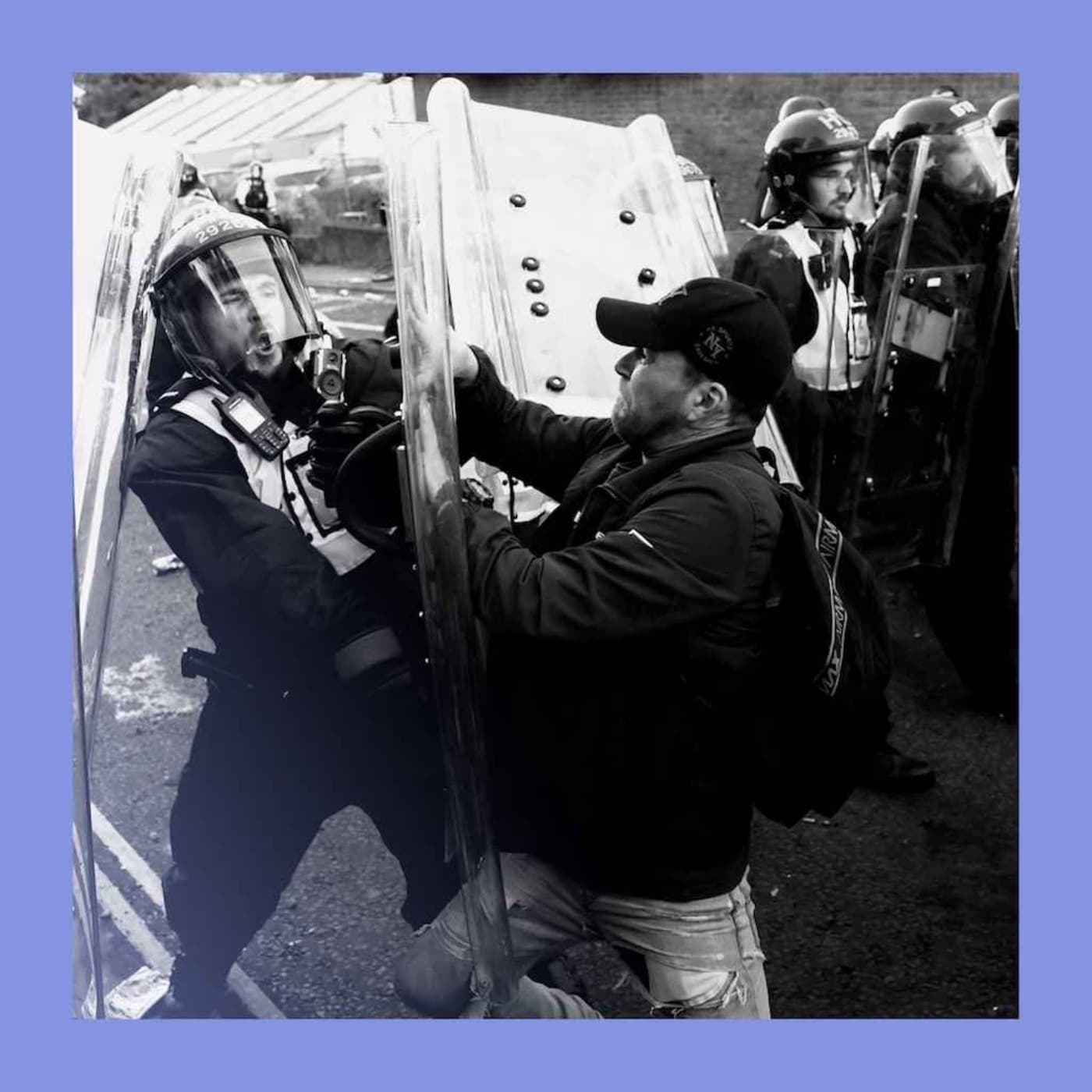
2:27The police have apologised for the way that Henry was treated as he was dying, but nonetheless, the case has attracted national attention and become a major political talking point this week. More than just a political talking point, though, this has reached the streets. That's right. On Tuesday night, protests led by the far-right agitator Tommy Robinson in Southampton started peacefully but ended with violence.
2:54A number of protesters were arrested for attacking riot police and there are fears that these protests could continue in the coming days. Let's wind back a little bit just to understand what exactly happened to Henry. So Henry was walking home from the pub after a night out when he encountered Vikram Digwa. The two men became involved in some sort of altercation. Digwa, who is Sikh and carries a ceremonial dagger that some Sikhs use as a sign of their faith, then pulled the weapon out of its sheath and used it to stab Henry multiple times. His brother then called the police and said that they had been the victims of a racist attack, which wasn't true.
3:33And the police, therefore, when they arrived, treated Henry as the perpetrator. And in the footage, you can hear Vikram Digwa claiming that he was the victim, that he'd been attacked and talking about his supposed injuries. Has anyone been hurt other than him? Yeah, me. He's grabbed my brother. He's took my turban off. So I grabbed him, my head. Are you injured? Yeah, yeah, I've got swollen eye, little bruises. All right, just step back a little bit for me. Someone flag these down. For at least the first few minutes of this, the police accepted Digwa's account and treated Novak as the suspect, though the judge in the case clarified in his sentence remarks he was sure that Henry had not in fact said anything racist or attacked Digwa in the way that the murderer initially claimed.
4:17Digwa has now been sentenced to life in prison with a minimum term of 21 years after being convicted of murder. And why has this killing in particular become such a political flashpoint? Well, it touches on very sensitive issues around race and policing because the way that Digwa tried and failed to avoid justice was to say that he was the victim of a specifically racist attack. Reform UK, the right-wing populist party that's currently leading in the polls, says that this is an example of what it calls two-tier policing. It points to a number of genuinely concerning examples in the past where it appears that the crimes committed by people from ethnic minorities have been downplayed out of misplaced fears of inflaming racial sensitivities.
5:01The most famous of these is the grooming gang scandal, which saw large groups of mostly Pakistani men sexually abuse mostly white young girls and that the authorities turned a blind eye to for many years. The Prime Minister said that he was very moved by the footage of Henry Novak's last moments. It's harrowing. and I have to say, as a father of a 17-year-old boy, I felt sick watching it. But he also made it clear that he doesn't believe this is a systemic issue. Mr Speaker, I don't believe there's two-tier policing in this country. Nigel Farage and his colleagues in reform were rather less measured in their response.
5:38I suggest the rest of us respond to this with pure, cold rage. This is wrong. They claim that this case shows Britain is a two-tier society where the concerns of white people matter a lot less than those of ethnic minorities. So let's take those claims on their face then. Is there any basis to what they are saying? No, the idea that there's a widespread and systematic two-tier culture discriminating against white people is not true. If you look at the statistics, white and black people pretty much equally likely to be the victims of crime. black people more than twice as likely to be arrested than white people.
6:17If you look at this specific case, clearly the police made a mistake with the benefit of hindsight. That's very obvious. At the same time, they were being called to an incident where the information they had when they turned up was that there was a racist attack and Henry Novak was the attacker. It was dark. Henry Novak's wounds were mostly internal bleeding. It took them a few minutes to realise that he was not the perpetrator, he was the victim. They then, within about 20 minutes, arrested Vikram Digwa, who has at relatively high pace gone through the criminal justice system and been quite rightly convicted of his crime.
6:55But still, Mr Farage and his ilk want to make a political hay of it. Yeah, and this is something new in British politics, including from Nigel Farage. He's been around a long time on the political scene, but he has typically taken a sort of colourblind attitude where he claims to represent all groups equally. He's tended in the past to draw his support mostly from white voters, though that's changing. 12 % of ethnic minority voters, according to a recent poll, are supporting Reform UK. So this turn towards the idea of Farhad being the defender of the white majority is new and is arguably pretty dark.
7:35And I think you can look at this as the result of reform facing a threat, bearing a grudge, and also seeing an opportunity for future advancement. Okay, let's take those in turn. What's the threat? So the threat is from a more extreme right-wing party called Restore Britain, founded by an MP called Rupert Lowe, who's been endorsed by Elon Musk and making big waves online. The grudge is basically against the Black Lives Matter movement. Many people on the right have long thought that the horrendous death of George Floyd in Minneapolis led to a political movement that particularly in Britain went completely out of proportion with the underlying issues and has created this view of systemic anti-black racism in Britain that, according to the right, is not true in the UK, even if it is true in the US.
8:23So what reform is doing is partly setting up this case as a sort of mirror image of George Floyd and Black Lives Matter. And then the opportunity. Politics now is so fragmented with five major parties, UK wide, more in Scotland and Wales, that actually for reform to stay where they are on 26, 27 % of the vote, that will probably be enough to win a majority at the next election. So they don't have to worry as much about alienating non-white voters, liberal voters, as they might have done in the past. So where does that story finish if reform is that much more unchained, got a grudge, feels a threat?
9:00Yeah, well, the political row is likely to continue. The Labour government, backed by the Conservative Party, has promised to look at the specific issues thrown up by this case. And that includes reviewing some controversial guidance for police across the UK published last year, which set out the argument that treating people fairly doesn't mean treating white people and ethnic minorities the same. It means adjusting the way you handle, whether it's suspects, victims, members of the public, to some extent depending on their race. And the government is looking again at whether that advice is right or whether it risks leading to more horrendous cases like this one.
9:44The clearest message, though, about how to respond to Henry Novak's death has come from his father, Mark Novak. We do not want his death to be used to create further division, hatred or tension. we want his story to make our streets safer for everyone. Whether Britain's politicians listen to his message is another question. Hugo, thanks very much for your time. Thank you, Jason.
10:37Transcription by CastingWords
10:52For all the axes that President Donald Trump has to grind, he reserves particular scorn for NATO. In his second term, he is really grinding away. Early on came a threat so outlandish it was for a while hard to take seriously. If we don't take Greenland, Russia or China will take Greenland, and I am not going to let that happen. More recently, there's been more than bellicose words. Reducing troops on the ground in Europe, cancelling the deployment of a cruise missile unit. When NATO members didn't jump to aid America's war of choice in Iran, that was more proof to Mr. Trump that the alliance is of little use.
11:31I've long said that, you know, I wonder whether or not NATO would ever be there for us. So this was a great test. Because we don't need them, but they should have been there. It carries on. Military brass in America warned last month they're draining some of the pool of resources the alliance has earmarked for big conflicts. And yesterday said they expected Europe and Canada to step up in response. The casual threats are over. For NATO's leadership, it's dawning that something really now must change. For months, Mark Ritter, the Secretary General of NATO, has refused to admit the fact that the transatlantic alliance, this incredible partnership that has kept the peace in Western Europe since the Second World War, is basically falling apart.
12:17Jonathan Rosenthal is our international correspondent. And that's required a fair degree of willful blindness on Mr. Rutter's part to the fact that President Donald Trump has said he does not think he wants to honour the central promise of NATO, which is that an attack on one is an attack on all. blindness to the fact that Donald Trump has been threatening to and pulling troops out of Europe and withdrawing key capabilities. But the days in which that blindness could continue are coming to an end. I spoke to a bunch of senior military officials, senior officers across several European countries in NATO, and they're all saying that the time now is to start thinking about a plan B.
12:56Well, first, let's talk about Plan A, the degree to which America is central to, crucial for NATO as it operates now. This operates at a couple of levels, and the first is the one that people talk about most, and that's just basic capabilities. Now, military folk love the acronym ISR, which is Intelligence, Surveillance, and Reconnaissance. And America does that very well. It provides its European allies with incredible intelligence, as we saw before the war in Ukraine. It basically had the battle plans that Russia was bringing out. But there's a lot more to NATO and America's participation than just these capabilities.
13:32NATO's real strength is that it's not just a kind of alliance where people show up on the day with whatever they've got and they fight along together. NATO is this really highly practiced orchestra with a single conductor, and that's under the leadership of America that lets it fight under a unified command. And more importantly, America is kind of the glue that keeps European NATO together. As long as the US is in there, you don't have France and Germany squabbling about who should be in charge. There's a real worry that without that glue, other bits of NATO start coming unstuck. If that glue then has blatantly been coming unstuck for much of certainly Mr.
14:09Trump's second term, why has Mr. Rutter put off the discussion of a plan B for so long? In some ways, you've got to have sympathy for the man. His job is to try and hold the alliance together. He has done everything in his power, called Donald Trump daddy in a public forum. He's really tried to stay close. And in some ways, European allies will credit him with that, that he has done his level best to try and keep America close because of its central role. A lot of what military officials have said to me is that any talk of a plan B has actually been quashed within their own countries, partly because of the fear that if Europe starts saying we don't need America, we can do fine without it.
14:47That just acts as an incentive to Donald Trump and his MAGA foreign policy cohorts to say, fine, we're out of here tomorrow. So the plan B planning, such as it is, has been going on in secret, in the dark. Some of it, to be honest, has been relatively overt in the sense that America said we're pulling back slowly and Europe has hoped that there would be this long orderly transition that would give them time to buy those capabilities, the intelligence, reconnaissance, surveillance. But NATO, again, is much more than just a bunch of countries with a bunch of modern weapons. It is this highly honed orchestra.
15:20And if the conductor leaves mid-performance, who takes over? And that's where a lot of the plan B planning is now going on, saying, what is the command structure? How do we fight? Who's in charge? Who's giving the orders? And? There are a couple of options here. One is to try to build on some existing structures. One of those could be the Joint Expeditionary Force, which is a British-led coalition of 10 countries. People also look to the Anglo-French Coalition of the Willing that's been discussed for providing some sort of security force to Ukraine after there's a ceasefire. Or there is talk about trying to say, well, how do we Europeanize NATO?
15:58How do we get more European NATO members in top commanding positions in NATO and try and use all of that infrastructure? So of those options, which do you think is the best, the fastest, the safest? This is about not just plan B, but what some Nordic defense official said to me is a plan B and a plan C, possibly a plan D. So ideally, we'd really want to say, let's try and keep NATO and make it work, even as America withdraws or pulls out. But that said, we need an insurance plan. And right now, the JEF, the Joint Expeditionary Force led by Britain, is probably the closest. It's already a coalition that's been doing exercises together.
16:34It's got a headquarters that is up and ready to go. That headquarters has got many of the key functions that you need, capabilities and intelligence and logistics and planning and those sorts of things. So if NATO were to fall over tomorrow, that would be the most sort of oven ready option. And again, one of the key points about the Jeff is that it can sidestep one of the central weaknesses of NATO. And that is that in order for this Article 5, this promise NATO will respond to an attack on one is an attack on all, is that it requires a unanimous decision by all NATO members. Now, the Jeff was explicitly set up as a way of acting more quickly without the full consensus.
17:14As people have said to me, we don't need to call a committee meeting and wait for Portugal and other countries to show up and debate. The Jeff is a group of like-minded countries that are all acutely aware of the Russian threat and would be ready to go at a moment's notice. And so that would be the best, perhaps, among the options. But is even that enough? Would that be enough to shore up what seems to be crumbling? There are two questions implicit in this. And the one is just the narrow question around the Jeff. And it has some weaknesses. It doesn't include some of the major other continental European NATO powers.
17:47Germany is not in it. France is not in it. Poland is not in it. So in order for Jeff to be a real alternative, you would want to draw those countries in in some way. There is also some concern about British leadership of GEF. Although Britain has been on the front foot in terms of showing solidarity with Ukraine, as well as partnerships with new NATO members like Sweden and Finland, who came into GEF before they were in NATO, people look at Britain and its current spending problems and the fact that its armed forces are actually not very capable at the moment. It's going through a really difficult transition.
18:21So the GEF itself has some problems. If you step back and say broadly, can Europe defend itself without the US? The answer has to be an unarguable yes. Europe has got a vastly bigger population, the EU plus the UK, than Russia does. The combined economy is nine to ten times Russia's size. Just in terms of things like modern fighter jets, European NATO has probably a thousand modern fighter jets more than Russia does. So in terms of raw capabilities, Europe could certainly pull it together. The issue is how bloody and how long do you want that war to last? Jonathan, thanks very much for joining us.
19:00Thank you very much, Lesin.
19:18Technology forges new art forms and destroys them. Andrew Miller writes Backstory, our column on culture. The printing press revolutionized literature and rubbed out illuminated manuscripts. Cinema killed off the music hall. Today, a popular gizmo is threatening another intricate craft. The art form is the TV title sequence. The menacing tech is the little skip intro button that you reflexively click. The outcome is changing the way stories are told and watched on screen. Once upon a time, TV titles were simple cards displaying static text. By the 1950s, they served as prologues, introducing characters and catchphrases, as in The Adventures of Superman.
20:04Look, up in the sky, it's a bird! It's a plane! It's Superman! Titles came to incorporate cutesy animations, as in Bewitched. split-screen effects, the Brady Bunch, and stunts, like the much-emulated bonnet slide in the Dukes of Hazzard. Many came with earworm tunes, such as the finger-clicking theme for The Addams Family.
20:34I think the form probably peaked in the era of prestige TV around the turn of the millennium.
20:44Think, for example, of the titles for The Sopranos, which are set to Woke Up This Morning by Alabama 3. The protagonist, Tony, is glimpsed through cigar smoke and in a rearview mirror. In these seconds, he's close yet elusive, as in fact he remains for the following six seasons.
21:05My personal favourite is probably the ghostly imagery in the first season of True Detective
Read the full transcript
21:14which offers a concise montage of the show's Louisianan themes sleaze, pollution, faith, guilt and downright weirdness These ingenious sequences are at once a compliment and a brag Your time is so valuable, they flatter the audience, that even the credits will be exquisite. The brag, meanwhile, is about the show, for which implicitly only a sublime introduction will do. They're summaries, moodsetters and advertisements, deft enough to intrigue new viewers and resonate with returning ones. Like the overture to an opera, they are, I think, an integral part of the drama. Now, some of these shows aired without adverts, freeing up minutes for luxuriant openings.
22:02But today, the exigencies of streaming are changing. Adverts are creeping back, making time scarcer again. And meanwhile, title sequences are an obstacle to binge-watching. Gorging fans don't need to be reintroduced to a story every hour. Many of them just want to get on with it. And thanks to skip intro, they can. Noticing that users were manually fast-forwarding through titles themselves, Netflix divides the button in 2017, and other streamers followed suit. By 2022, Netflix viewers were clicking it 136 million times a day. Since then, intro skipping has snowballed. Across all the output on the BBC's iPlayer, for instance, use of skip intro in March was roughly double the level two years earlier.
22:53It has soared in the past six months. The underlying impatience, I suppose more than the button itself, is bad news for elaborate opening titles. But as they dwindle on TV, I think something is being lost. It's not just that, as in the new series of The Night Manager, they can be the best bit of a show. More than that, shrinking them undermines cliffhangers. When you roll straight into the next episode, you can't dangle in tingly anticipation for very long. Most importantly, I think titles can be a kind of spell. Discard them and you may miss some of the magic of TV. Like your flight to a holiday resort or dressing up for a night out, a title sequence is an in-between moment.
23:40It eases you from your own world, slumped on the sofa after putting the kids to bed, into the imaginary world of the show. The titles are a crossing on which you suspend your disbelief. And I think the trajectory thereon tells us something about the state of the modern world. After all, like making phone calls and shopping, watching TV has become immeasurably easier. These days, you can see an abundance of programmes on a whim. Somehow, though, it seems that speeding things up has only made people more impatient. The yen for instantaneity is insatiable. But if you're always hurrying, boundaries are skipped and nothing is special.
24:39That's all for this episode of The Intelligence. We'll see you back here tomorrow.
24:47Thank you.
25:17Choice matters. No matter your goals, investing style, life stage, or experience, Schwab has everything you need all in one place. So you can invest your way. Visit schwab.com to learn more.
From the publisher
Nigel Farage, leader of the populist-right Reform UK party, wants Britons to be enraged by a killing in the street. We ask why his tone has changed from “colour-blind” to race-baiting. NATO must now take seriously the idea that America is pulling back; we ask how it is adjusting. And why skipping title sequences is forgoing some of television’s magic.
Guests and host:
- Hugo Gye, British political correspondent
- Jonathan Rosenthal, international correspondent
- Andrew Miller, “Back Story” columnist
- Jason Palmer, co-host of “The Intelligence”
Topics covered:
- British politics, race relations
- NATO, American foreign policy
- television, media
Get a world of insights by subscribing to Economist Podcasts+. For more information about how to access Economist Podcasts+, please visit our FAQs page or watch our video explaining how to link your account.
Hosted on Acast. See acast.com/privacy for more information.