In short
Podcast Summary: A World-Changing War: Four Years in Ukraine
Podcast Title
Economist Podcasts
Episode Title
A World-Changing War: Four Years in Ukraine
---
Episode Overview
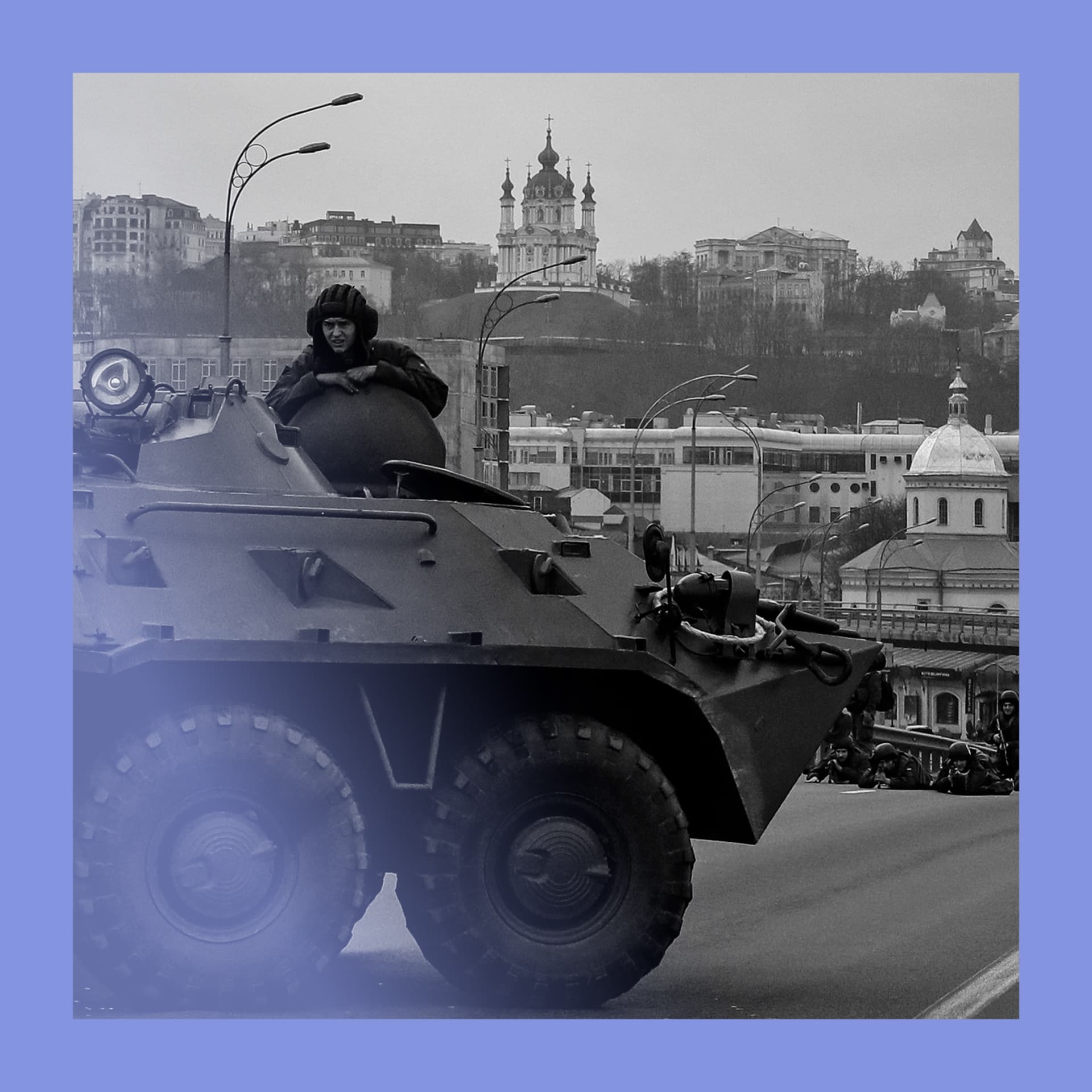
On the fourth anniversary of the war in Ukraine, the podcast discusses the profound changes that have occurred not only in Ukraine but also in global alliances, military strategies, and the broader geopolitical landscape as a result of the conflict. The episode features insights from several correspondents, including Edward Carr (Deputy Editor), Oliver Carroll (Ukraine Correspondent), and Shashank Joshi (Defense Editor), with co-host Jason Palmer leading the discussion.
---
Key Topics Discussed
Context of the War
- The war in Ukraine, which many initially believed would be brief, has lasted four years and caused significant displacement and hardship.
- Millions have fled, marking the largest displacement in Europe since World War II.
- The conflict has reshaped global security dynamics, particularly in Europe.
Personal Accounts and Observations
- Oliver Carroll reflects on his experience as a journalist in Ukraine since the early days of the invasion, witnessing significant events such as the atrocities in Bucha.
- Edward Carr notes the initial intense coverage and how perceptions of the war have shifted over the years, recognizing the high stakes for Ukraine and Europe.
- Shashank Joshi discusses changes in military strategy and the impact of technology on modern warfare, emphasizing the shift to drone warfare and hybrid strategies.
Changes in Ukrainian Society
- The war has transformed Ukrainian society, with a significant shift towards European values, but also increasing divisions among those who stayed in Ukraine and those who fled.
- There is a reported decrease in the population and a notable change in public sentiment towards Russia.
Political and Military Ramifications
- The podcast discusses the emergence of traditional politics within Ukraine amidst the war, including concerns over corruption and waning public support for President Zelensky.
- The nature of warfare has evolved, with a focus on small, mobile units and the use of drones and precision strike weapons becoming prevalent.
Global Security and Alliances
- European defense spending has dramatically increased, with a reported 50% rise since the invasion.
- The podcast examines the implications of a strengthened Sino-Russian defense alliance and how it may shape future global conflicts.
The Day After
Risks and Challenges
- The speakers express concern about the uncertain future for Ukraine, particularly regarding European support and the potential for diplomatic negotiations post-war.
- The difficulty in achieving a meaningful peace agreement is highlighted, with specific challenges related to territorial disputes and security guarantees for both Ukraine and Russia.
---
Key Takeaways
- Human Cost of War: The war has led to immense suffering and a significant demographic shift in Ukraine.
- Shifting Perceptions: Initial underestimations of Ukrainian resilience have proven incorrect as the conflict has persisted.
- Modern Warfare: The reliance on technology, especially drones and satellite communications, has redefined battlefield strategies.
- European Defense Dynamics: The war has prompted a massive rearmament in Europe and changes in military partnerships.
- Future of Ukraine: The potential for political divisions post-war raises concerns about national unity and the long-term implications of the conflict.
---
Conclusion
The episode serves as a poignant reminder of the ongoing implications of the war in Ukraine not just for the country itself but for global geopolitical stability. The insights from the correspondents provide a comprehensive overview of the challenges faced, the evolution of warfare, and the uncertain path that lies ahead for Ukraine and its allies.
Written by AI. May contain mistakes. Listen to the episode to check what was said.
Chapters
Tap a time to open that second in VOAnniversary of War in Ukraine
1:40 to 2:11
Explore the impact of the war on Ukraine and its people on this anniversary.
“Every weekday, we provide a fresh perspective on the events shaping your world.”
Witnessing the War Unfold
2:11 to 4:49
Correspondent Oliver Carroll shares his experiences reporting from Ukraine.
“In short order, millions of Ukrainians had fled, the biggest displacement of people in Europe since the Second World War.”
Changing Perspectives on the War
4:49 to 7:37
Discussion on how the war has shifted views among the panelists over four years.
“but also a massive privilege to see and witness and document it for The Economist.”
Impact on Ukrainian Society
7:37 to 8:33
Examine how the war has transformed the Ukrainian national identity and society.
“fundamentally, and Ukraine has been the catalyst of that.”
Politics and Governance in Ukraine
8:33 to 12:20
Analyze the political landscape in Ukraine amidst ongoing war challenges.
“And society is now split into different camps.”
Evolving Nature of Modern Warfare
12:20 to 14:03
Explore how the conflict in Ukraine has changed the tactics of modern warfare.
“And it isn't the first time that a big army has struggled against a much smaller army.”
Assessing Russia's Military Failures and Rearmament
14:03 to 16:19
Explore the challenges and failures of Russia's military strategy in Ukraine and the implications for future conflicts.
“The price for recruiting them is going up.”
The Risks of Post-War Ukraine
17:22 to 20:33
Discuss the potential risks Ukraine faces in a post-war scenario and the EU's role in its future.
“What, at this point, is your view, what risks are there for the day after?”
Challenges for Peace in Ukraine
20:33 to 22:34
Analyze the complexities and challenges surrounding peace negotiations in the ongoing conflict.
“the right time to take the chance to bank some of the things he's being offered from the Americans.”
Transcript
Automatic transcript. May contain errors.0:00Edward Carr:Iowakim Wolleri here from the Athletic FC podcast. Ever feel your workload is out of control, like you're wearing every hat and you're expected to be everywhere at once? Running a business means juggling books, payments, leads, payroll, basically everything. But with Intuit QuickBooks, your workload gets unloaded. QuickBooks gives you access to Intuit's powerful AI agents and trusted experts. They work together to handle the tedious stuff so you can get back to what actually grows your business. And because everything's streamlined on one platform, your customer management, accounting expenses and payroll all work seamlessly in just one place.
0:40Edward Carr:So go ahead, outdo it with Intuit QuickBooks and get 50 % off QuickBooks online for three months. Terms and conditions apply. Feature availability may vary by product. Visit quickbooks.com for details. when you manage procurement for multiple facilities every order matters but when it's
1:00Shashank Joshi:for a hospital system they matter even more granger gets it and knows there's no time for managing multiple suppliers and no room for shipping delays that's why granger offers millions of products and fast dependable delivery so you can keep your facility stocked safe and running smoothly call 1-800-GRANGER click granger.com or just stop by granger for the ones who get it done.
1:32Shashank Joshi:The Economist
1:39Shashank Joshi:Hello and welcome to The Intelligence from The Economist. I'm your host, Jason Palmer. Every weekday, we provide a fresh perspective on the events shaping your world.
1:53Shashank Joshi:Today, on a grim anniversary, we look back on how war in one country has changed the world far beyond its borders.
2:10Shashank Joshi:Four years ago today, all across Ukraine, people woke up to this.
2:20In short order, millions of Ukrainians had fled, the biggest displacement of people in Europe since the Second World War.
2:28Shashank Joshi:Those who stayed, those who have since returned, are now facing the harshest winter since the war began, often and unpredictably without water or power or heat. Many Ukrainians, of course, have made new lives elsewhere.
2:42Edward Carr:As all Ukrainians, I planned to return home, but my life was a little different.
3:12Shashank Joshi:more than tear apart Ukrainian families. It's ripped at the global security order, as American aid in particular has proved so fickle. War on Europe's doorstep has the EU working to secure its own defense like never before. And it's changed what that security looks like. Less tanks and jets, more drones and hybrid warfare. To talk through all of this, I'm joined in London by Edward Carr, our deputy editor, and Shishang Joshi, our defense editor, and Oliver Carroll, our Ukraine correspondent, who's in Kyiv. Thanks, all of you, for joining us today. Nice to be here.
3:48Edward Carr:Thanks, Jason. It's great to be here.
3:52Shashank Joshi:Now, Oliver, let's start with you on this fourth anniversary of the start of the war. You've been reporting from Ukraine since that very first day. I remember that day. What's it been like, in short, to witness the war unfold?
4:04Oliver Carroll:I arrived in Kyiv a little over a week before the invasion. And at that point, I was still pretty unsure whether this would be a two-week assignment, but it turned out to be something quite different. By the 23rd, there were no doubts. I had a tip-off that it would be the next morning. And so I got up in the morning at 4 a.m. And then sure enough, the missiles started falling. It was a really surreal and really quite sad first month, seeing university lecturers preparing Molotov cocktails. I was one of the first journalists into Bucha to see all the atrocities there. And we've seen everything since.
4:37Oliver Carroll:The offensives, the counter-offensives, the war of attrition, and now we're down to this really uneasy quagmire. Seeing Ukraine hold the front lines heroically, but get progressively weaker in the rear. So, yeah, I mean, it's been heavy, I suppose you'd say, but also a massive privilege to see and witness and document it for The Economist.
4:56Shashank Joshi:And Edward Shishank, you've been involved deeply in the coverage that we have had of this war from London. And kind of in that four-year sweep, how do you think your view on the war has changed over that time? Edward, let's start with you. Well, I remember getting the phone call, what time was it, Shashank?
5:17Jason Palmer:I mean, very early in the morning. It was dawn. Yeah, it was a Thursday morning. And the first few months, it was very intense. We were covering this war around the clock. Meanwhile, the stakes to me seem just as high as they were. The stakes for Europe, the stakes obviously for Ukraine itself, but also the stakes for Russia and the consequences for Russia of what is, in my mind, a disastrous war for it and for Putin.
5:48Shashank Joshi:Shashank, I recall early discussions with you about whether or not the guesses of this being three days and over with were going to prove true or not.
5:58Edward Carr:I remember that. I also remember being woken up by Ed saying, it's happened, it's happening. And I remember ripping up what we'd written for that week and starting again. I was among those who underestimated the Ukrainians and didn't think they would be enduring to this degree. I thought Russian mass would eventually overpower them. And I was very, very wrong on that. But I reflect on the last several years and I think of the shockwaves this war has sent in so many directions. Stuff that is now almost at the back of our heads. the remarkable mutiny of Evgeny Prigozhin, the march on Moscow, North Korean troops fighting in Europe on a substantial scale to evict Ukraine from Kursk province.
6:35Edward Carr:And of course, for me, it's a sort of observer of nuclear strategy worldwide, that really dangerous moment in late 2022, when there was a real chance that Russia might use nuclear weapons if Ukraine were to break through at Kherson and cause massive damage to Russian forces. And it's, I think, a sign of how momentous this war has been, that each of those things, in some ways historical in itself, has been cast into some kind of subplot for the war as a whole.
7:05Jason Palmer:The other thing I think this war has been the stage on which the increasingly troubled transatlantic relationship has played out. America's support for Ukraine, the terms of that support, the feeling that Europe was or wasn't doing enough, then followed by Trump's skepticism about the war. All of that has been the backdrop for something we're still trying to comprehend now. It's still unclear exactly where that's going. But I think the relationship between the United States and Europe has changed fundamentally, and Ukraine has been the catalyst of that.
7:40Shashank Joshi:And Oliver, we've spoken over the past four years about how the war has played out, how things have looked on the ground. Taking all of that in, how do you think the war has changed Ukraine's people?
7:51Oliver Carroll:Well, I've been traveling to Ukraine since 1997. So I know the country, it was a tender, tolerant, relatively peaceful country, if you take aside what was happening in the East. And what Russia did to it, with all the things we've talked about, and the consequences of that have changed the nation and make some of the decisions that it now has to take about its future so much more difficult. Ukraine itself is physically smaller. The population is about a quarter smaller than it was at the start of the war. And there's been a shift in opinions. 98 % now have a very negative view of Russia, a shift towards European values.
8:27Oliver Carroll:But you're also seeing a fragmentation. The pure unity of that first year of war is definitely fractured. And society is now split into different camps. Those who stayed, those who left, those who fought, those who didn't. And these divisions, I think, will be heavily played upon the minute the war ends, if it does. I think the day after promises to be just as dramatic and difficult as the war itself.
8:50Shashank Joshi:And Edward, what's your view on what things are like in Ukraine in the political sphere?
8:54Jason Palmer:Right at the beginning of the war, one of the things that happened was that this country that had been very chaotically and corruptly governed, cohered. It was an astonishing thing. It was a sort of self-organising principle that Ukrainians found within themselves the ability to resist a much larger country and surprised the world when it did it. And as the war has continued, perhaps understandably, kind of normal politics has reasserted itself. And so Zelensky's incredible popularity has been eroded. There have been instances of corruption, in particular a very big instance with the arrest of one official recently and another official fleeing the country.
9:38Jason Palmer:All of that is kind of what you'd expect, I think. It hasn't stopped Ukraine being able to fight. It hasn't stopped there being a resistance to Russia, but there's fatigue and this war's been going on a very, very long time now.
9:57Shashank Joshi:Shashank, a question for you, because you've been following the defense end of things. And in a sense, we've seen the nature of modern warfare change just in the course of this one conflict.
10:08Edward Carr:We have. Just before the war began, I wrote a technology quarterly which was on the subject of hiding versus finding on the battlefield. And the argument was essentially the technologies of sensors, so drones, satellite, things like that, combined with cheap precision strike weapons were tilting the battlefield away from the people trying to hide on the ground and towards the finders, and you had a more lethal battlefield. What we've seen in Ukraine is the extreme validation of that concept. We have moved much more in the direction of what you would call a transparent battlefield, one in which everything is seen from above, one in which it is very, very dangerous to be moving or exposed on the ground.
10:51Edward Carr:And the result is effectively a static, sluggish battlefield in which neither Ukraine nor Russia can concentrate large numbers of forces because they will be seen and destroyed from the air. They have to rely on very small, dismounted infantry formations sneaking over the terrain. In addition to that, we've seen dramatically expanded use of small, cheap strike drones. We have seen the return of very old-fashioned ways of fighting, such as wire-guided missiles that would be familiar to an Egyptian infantryman from the 1970s fighting against Israel. We've also, I think, in a very big way, seen the central role played by commercial actors in warfare.
11:35Edward Carr:And I think the most obvious example of this is the provision of satellite communications by Starlink, both to Ukraine and, more recently, some degree, to Russia. and the role of these commercial entities who are not necessarily beholden to states, who have their own interests. I think that's been a real wake-up call for Western militaries as well, who have realized this is the way that we might also have to fight.
11:57Jason Palmer:The thing that strikes me about the way that the war's been fought is the somewhat different stakes here. This is a war of attrition, and that clearly favors Russia, but it's also a war where Ukraine is fighting its survival and Russia is fighting a war of choice. And so I think that somewhat offsets the question of mass and resources. And it isn't the first time that a big army has struggled against a much smaller army. And I think it's worth remembering that.
12:30Oliver Carroll:There's this unspoken assumption that Ukraine will continue as Europe's fortress. Certainly the Ukrainians feel this, a lot of them do at least, that they're fighting on to buy Europe, for example, time to prepare. And I think there's a danger that unless serious thought is given how to strengthen Ukraine, that means not just using the billions which are being earmarked for Ukraine to strengthen Europe's own industrial base. We're only actually buying time for Russia. Ukrainian resilience isn't inexhaustible. I was speaking to a soldier just the other day, I mean, he's been fighting since 2014, and he reckoned a third of his address book was no longer phoneable, and he couldn't bring himself to delete the names, he said.
13:13Jason Palmer:But what strikes me, Oli, is that Ukraine started this war in a weaker position, in a much weaker position. In fact, the calculation of Putin's generals was that they would be able to overrun the country. And then this period of mobile warfare ended after a few months, and since then it's been very static. and we've seen up front, you've seen in fact reported brilliantly up front on how much strain Ukraine has been under and through your reports we've got a very keen sense of how much suffering and effort's been required. We don't get the similar reports from the Russian front lines because journalists aren't allowed there.
13:54Jason Palmer:Very occasionally we get to read accounts of the slaughter and misery on the Russian front lines from conscripts who are deserting in record numbers, undertrained. The price for recruiting them is going up. And still Russia fails to take towns and advances. A recent report from CSIS said only up to like 70 meters a day in the Donetsk front, which is slower than the Battle of the Somme. So I don't want to minimize in any sense the suffering on the Ukraine side and the exhaustion in Ukraine. But I am struck by the repeated failure of Russia to be able to stage large advances. And I guess the question for this coming year of war is whether Russia's ability to mobilize manpower and machinery is likely to increase, stay the same, or even decrease.
14:48Shashank Joshi:A question maybe for all of you on how this has shuffled alliances, the notion of rearmament, who backs whom, who can count on whom, and how that's changed over the course of the war. What's the sort of high-level view from your standpoint, Shashank?
15:00Edward Carr:The rearmament is real. It's very, very real. And to give you a sense of that, even since the beginning of the full-scale invasion, European defense spending has gone up by 50%. That's an absolutely enormous sum of money, and it's resulted in massive changes. equipment procurement has gone up 40 % year on year in Europe. Defense R &D has gone through the roof. Ammunition production has multiplied sixfold since the pre-war level in Europe, if you look at shells. So this is incredibly real rearmament. But on the other side, what we also have seen, and this is very important, is a Russian North Korean Iranian Chinese defense industrial complex to the point where without regular supplies of Chinese components of North Korean ammunition, of Iranian drone designs earlier in the conflict, Russia would not have been able to maintain itself in this conflict.
15:57Edward Carr:And indeed, even if today China were to shut the supplies off of all vital components, the Russian defense industry would grind to a halt. So one really significant outcome at the last several years of conflict has, I think, been this deep coupling of this Sino-Russian defense industry in a way that will have consequences for years to come.
16:19Oliver Carroll:Okay, I have to tell you, I was just looking on eBay where I go for all kinds of things I love and there it was.
16:25Shashank Joshi:That hologram trading card. One of the rarest. The last one I needed for my set. Shiny like the...
Read the full transcript
16:30Oliver Carroll:Designer handbag of my dreams. One of a kind. eBay had it. And now everyone's asking, ooh, where'd you get your... Windchill wipers. eBay has all the parts that fit my car. No more annoying. Just beautiful.
16:44Shashank Joshi:Millions of finds, each with a story. eBay. Things people love.
16:50Edward Carr:That new thing? Yeah, we've got it. The Drop by GNC, bringing you all the newness that matters. Handpicked by the pros who actually know what's up and what's proven to work. We keep you on top of the trends and dialed into what's next. Whether you're crushing it at the gym, leveling up your game, or thriving every day, The Drop by GNC is where the latest solutions in health and wellness land first. Nonstop innovation and fresh finds daily. Explore what's new and what's next on The Drop by GNC.
17:21Shashank Joshi:Oliver mentioned earlier the notion that we've spoken about several times on the show, the day after, the plan for what comes after. What, at this point, is your view, what risks are there for the day after?
17:34Jason Palmer:One of the things that really worries me about the day after is that I don't see the European Union coming good on its promise to admit Ukraine. And I also think, given the fiscal pressure of most of Europe, that the chances of Europe being insufficiently generous to Ukraine when the fighting stops are pretty high. So the scene is set for some kind of betrayal narrative in Ukraine. Ukraine having fought the war partly for Europe's behalf and then Europe not really coming to help afterwards. And that's potentially very, very dangerous.
18:07Edward Carr:I think much more attention has gone to how does Ukraine secure itself, you know, stand on its own two feet in a post-war scenario. What we have seen in recent years is Ukraine power ahead on developing long-range drones, long-range cruise missiles of a kind that many NATO countries simply don't possess themselves. And these are not hypothetical weapons. These are weapons that are already striking deep inside Russia, inflicting damage on Russian oil refineries, energy supplies, causing real disruption. And I think if we think about Ukraine as a post-war state standing up for its own security, The Ukrainian missile force with ever longer reach into Russia with ever more accurate missiles is going to be one absolutely pivotal element of that deterrent effort that Ukraine will need to stabilize a long-term peace with Russia.
19:00Shashank Joshi:About the nature of that peace, I'd like to ask on this anniversary, do you see an end to this? Will we be sitting here talking about another anniversary or one four years from now?
19:09Jason Palmer:Well, I think there are a number of problems about imagining a real peace here. Part of this is for Vladimir Putin. Peace is difficult for him. Reallocating resources from his war economy to a peace economy is very difficult and likely to cause a recession. Another thing is that the returning soldiers are not coming back as heroes. And the other thing for Putin, I think, is that the underlying logic of the war he's been able to sort of put aside, well, I think he has to start facing up to the fact that this war's cost a lot in blood, and in treasure and has accomplished very little. But from the point of view of the battlefield too, it's difficult to see how this works because of two outstanding issues.
19:52Jason Palmer:One is territory. Putin wants to be able to say that he successfully got the territories that he said he had to, and that means being given ground that he couldn't take through force of arms. Why should Ukraine give up this ground? It's vital for the defense of Ukraine and to stop further advances. The other thing is security guarantees. The better the security guarantees, the more plausible they are for Ukraine, the less acceptable they are to Putin. So it's hard to imagine a set of security guarantees that satisfies both parties.
20:25Oliver Carroll:Every day that the war is going on in Ukraine, Ukraine is losing a little bit because the war is going on in Ukraine. It's really not going on in Russia so much. And there is an argument that sooner or later, Putin may decide that this is the right time to take the chance to bank some of the things he's being offered from the Americans. But if you speak to those who are on, you might say, the pro-continuation camp, the people who believe that reforms in Ukraine can actually lead to massive attritional rates. So not at the 30 ,000 we're talking at the moment, but 50 ,000 is the target by summer, maybe 70 ,000, maybe 100 ,000 a month.
20:59Oliver Carroll:Those kind of figures, it's very difficult to continue war. And there are some optimists inside the new defence ministry, for example, who think, That kind of thing is possible if reforms are successful. But again, does Putin understand what's coming down the line? Probably not. This is a man who was told in 2022 there would be very little Ukrainian resistance. I think ultimately we're looking for real pressure to be put on Russia from the Americans. And what we've seen so far is it's not really coming.
21:29Edward Carr:The frustrating thing is in the Trump administration, we hear the view that Ukraine is losing. Ukraine is fated for defeat, and that's why it must sign a deal now, however ropey that deal is. But the U.S. is approaching this as if it is some disinterested, detached observer of the conflict, when in fact it's the pivotal player here still. U.S. power is still the central factor in much of this, both in terms of its ability to pressure Russia, but on the flip side, in its ability to give Ukraine the arms, the ammunition, the technology that it needs, whether that is intelligence, whether that is shells, whether that's long-range rockets.
22:05Edward Carr:And if Donald Trump decides to keep that up and keeps selling some of this to Europe, Ukraine can stay in this, even if things are tough. If he chooses to say, I want a deal before the midterms that I can claim as my own and go towards my Nobel Peace Prize campaign, and I'm willing to cut Ukraine off at the knees, we are not out of the woods yet in terms of the risk of that scenario. and I worry very much that that could still completely upturn many of the assumptions of our conversation.
22:36Shashank Joshi:Edward, Oliver, Shashank, thank you all very much for joining us.
22:40Edward Carr:Thank you, Jason.
22:41Shashank Joshi:Thank you.
22:42Edward Carr:Thanks, Jason.
22:46Shashank Joshi:What has remained largely hidden from view over these four years is what's going on inside Russia, a country at war whose citizens increasingly wish it wasn't. Tomorrow, we'll be joined by our Russia editor, Arkady Ostrovsky, to take a close look at how the conflict manifests in Russians' day-to-day lives.
23:17Shashank Joshi:That's all for this episode of The Intelligence. We'll see you back here tomorrow.
23:58Edward Carr:We'll be right back. by GNC, bringing you all the newness that matters, handpicked by the pros who actually know what's up and what's proven to work. We keep you on top of the trends and dialed into what's next. Whether you're crushing it at the gym, leveling up your game, or thriving every day, the Drop by GNC is where the latest solutions in health and wellness land first. Non-stop innovation and fresh finds daily. Explore what's new and what's next on the Drop by GNC.
From the publisher
On the fourth anniversary of a war that many predicted would last mere days, much has changed—even beyond the unthinkable misery in Ukraine itself. Alliances have weakened, Europe is rearming like never before and the very nature of modern war has been redefined. Our correspondents take stock and consider what kind of peace is even possible.
Guests and host:
- Edward Carr, deputy editor
- Oliver Carroll, Ukraine correspondent
- Shashank Joshi, defence editor
- Jason Palmer, co-host of “The Intelligence”
Topics covered:
- war in Ukraine, Russia, defence, diplomacy
Get a world of insights by subscribing to Economist Podcasts+. For more information about how to access Economist Podcasts+, please visit our FAQs page or watch our video explaining how to link your account.
Hosted on Acast. See acast.com/privacy for more information.