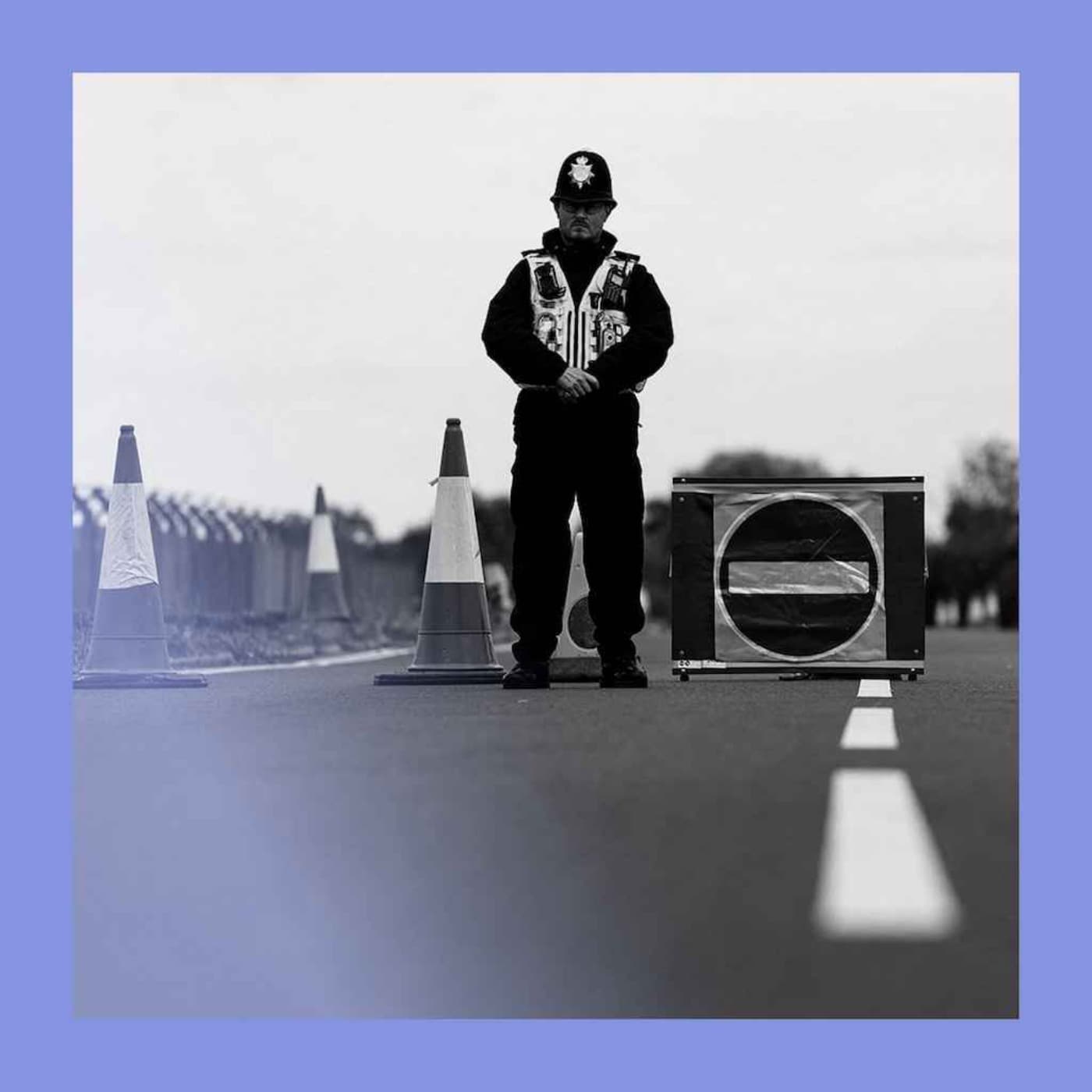
In short
The episode of The Intelligence from The Economist is a three-part correspondent roundup. Topic 1: Afghanistan, five years after the Taliban returned.
Guest
Tom Sass, Economist South Asia bureau chief.
Key claims
Kabul is comparatively calm and “safe,” but Taliban hardliners have consolidated power under emir Haibatullah Akhundzada, including control of mining revenues and a loyal Praetorian force (~8,000 fighters). Daily life is marked by poverty, hunger, unemployment, reduced healthcare funding, and forced refugee returns (about 6 million). Women and girls face restrictions, including a ban on girls’ secondary schooling; a Kabul madrasa is described as a workaround with limited affordability.
Notable examples
Taliban music/dress bans; girls’ limited future hopes. Topic 2: Colombia earthquake response.
Guest
Claire McHugh, Economist Latin America correspondent.
Key claims
response is faster than Venezuela’s, but uneven—better in richer cities (Cali/coffee region) than in Chocó, where poor infrastructure and armed-group extortion leave people feeling “abandoned.”
Notable examples
lack of trained rescue equipment; morgue overcrowding. Topic 3: Mountaineering obituary.
Guest
Anne Rowe, Economist obituaries editor. Focus: Nirmal Purja and “Project Possible,” record 14 eight-thousanders in 6 months 6 days; critics cited oxygen, fixed ropes, helicopters; Purja argued it saved abandoned climbers.
Written by AI. May contain mistakes. Listen to the episode to check what was said.
Chapters
Tap a time to open that second in VOThe Aftermath of America's Withdrawal from Afghanistan
0:29 to 0:40
Discussion on the end of America's longest war and its impact on Afghanistan.
“Hello and welcome to The Intelligence from The Economist.”
The Aftermath of America's Withdrawal from Afghanistan
1:05 to 3:14
Discussion on the end of America's longest war and its impact on Afghanistan.
“Five years ago saw the end of America's longest war, the one it had fought for two decades and then lost, in the mountains, deserts and cities of Afghanistan.”
Life Under Taliban Rule
3:14 to 6:20
Insights into the current state of life in Afghanistan five years post-Taliban takeover.
“Herat in the west and Kandahar in the south and ended up doing about a thousand kilometre road trip.”
Challenges Facing Ordinary Afghans
6:20 to 9:07
Exploration of the struggles for food, healthcare, and education under Taliban policies.
“And another pressure on top of that is you've had almost 6 million Afghan refugees forcibly returned from Iran and Pakistan, its neighbours.”
The Future of Afghanistan
9:07 to 11:33
Discussion on the bleak outlook for Afghanistan and the potential for change.
“And is there any room for Western countries to try and help ordinary Afghans or exert some kind of pressure on the government?”
Earthquake Impact on Colombia
14:00 to 18:10
Learn about the devastating effects of a recent earthquake in Colombia and the government's response.
“And she told me the indignity of having to lay corpses on the ground so that they could save beds for the living.”
Nirmal Purja's Climbing Legacy
18:56 to 25:58
Explore the remarkable achievements and philosophy of mountain climber Nirmal Purja.
“Anne Rowe is The Economist's obituaries editor.”
Transcript
Automatic transcript. May contain errors.0:00Rosie Blau:This intelligence podcast is sponsored by Backmarket, the leading global marketplace for refurbished tech. When the kids need phones, laptops, or tablets for school, buying refurbished tech makes sense for families trying to save money without sacrificing quality. At Backmarket, tech costs up to 50 % less compared to new. All devices have been professionally refurbished and come with a one-year warranty and 30-day return policy. Start saving money. Visit Backmarket.com or the Backmarket app to shop now.
0:39Rosie Blau:Hello and welcome to The Intelligence from The Economist. I'm Rosie Bloor.
0:49Rosie Blau:Today on the show are correspondent reports from quake hit Colombia and celebrating the life of mountaineer near Mulpurja.
1:05But first...
1:15Rosie Blau:Five years ago saw the end of America's longest war, the one it had fought for two decades and then lost, in the mountains, deserts and cities of Afghanistan. I'm just going to stop there.
1:28Ann Wroe:What we're showing you, our viewers now, Rob, is images of the Afghan flag being taken down.
1:35Rosie Blau:America and its allies sent troops into the country after the September 11th attacks, 25 years ago. As America left, its proxy Afghan government collapsed and the Taliban returned. So what's happened to those left behind, the Afghan people? I'm here in Kabul, where it's five years since the Taliban returned to power. Tom Sass is our South Asia bureau chief. In some ways, the city life has returned to some kind of normality. You see lots of people out on the street selling things, lots of cars, the traffic is busy, the city is growing, and the city's got some kind of peace, actually. But in other ways, life in the city has changed.
2:22You won't hear any music coming out of the cafes. That's been banned by the Taliban. They've imposed quite strict codes on dress, both for women, they've got to cover themselves up, and for men who are supposed to grow beards. You won't see everyone following that, but you will see most people following the codes. And just around the corner from where we are, you'll find the government ministries. Just outside the ministries, you'll see a Taliban security official sitting in the top of an American Humvee with a big machine gun. So the reminders of the recent Taliban victory are all around you.
3:01But the question is whether the city can find more prosperity as well as peace.
3:09Rosie Blau:Tom, it sounds like an extraordinary trip. What particularly struck you? Yes, I was there for about 10 days and split that time between Kabul, Herat in the west and Kandahar in the south and ended up doing about a thousand kilometre road trip. So I got to see quite a bit of the country. I guess the first thing that really strikes you is actually it's quite safe. So violence has fallen really sharply. The Taliban have got a pretty tight grip on power. You see their flag waving in cornfields and town squares. There are checkpoints in and around big cities, but they're actually fairly light touch and cities feel calm.
3:52But you also do see signs of this pretty harsh rule. You see a lot of heavily armed men. You can see the vice and virtue police who go around enforcing the Taliban's moral rules. And also what you discover very quickly is that a lot of Afghans are doing pretty terribly. So apart from having peace, lots of them are in poverty, lots of them say that they're hungry, and lots of them are unemployed.
4:18Rosie Blau:So let's talk about the harsh rule you mentioned. The Taliban took over five years ago after the US troops withdrew. What's happened in terms of the shifts in power and control since then? So what's happened is really a consolidation in the power of the hardliners. And that's a faction within the Taliban headed by the emir Habatullah Akhansada, who is based in Kandahar. So that's in the south of the country. It's sort of the spiritual home of the Taliban. It's not where most of the government and the bureaucracies are based. That's in Kabul. But really what the emir has done is concentrated power.
5:00So he seized control of economic power by grabbing hold of mining contracts and other sources of revenue, which now go straight to him. And he started to build up a Praetorian force in Kandahar, which is now thought to be about 8 ,000 fighters separate from the army that are loyal to him. And he sent some of his loyalists to govern in provinces all around the country. And you've really seen more moderate Taleb's who do exist. There are lots of them who thought that the country would modernise gradually, they've not really been able to challenge this. They've either been too weak or too scared.
5:37And the few that have done so have been expelled.
5:41Rosie Blau:And Tom, what's daily life like for people? Lots of people are really struggling to get by. So I went to one village called Surubi up in the mountains east of Kabul. Lots of people there were struggling for food. I was speaking to one village elder, and he said, we have peace, but our pockets are empty. On top of that, you have a real crisis in healthcare. A lot of that was funded through humanitarian aid, which has been cut back, partly as a result of Western countries becoming more stingy, but partly because the Taliban has put in place these abhorrent policies. And another pressure on top of that is you've had almost 6 million Afghan refugees forcibly returned from Iran and Pakistan, its neighbours.
6:30And lots of those people are really poorly off and have been pushed back over the border with nothing. So you've got a pretty difficult situation for most Afghans. And then, of course, there is the situation for women and girls who have seen their freedoms gradually restricted and crushed by decrees issued by the EMEA. They've been removed from many aspects of public life, banned from lots of workplaces, banned from universities. And then, of course, most controversially, there is the ban on girls going to secondary school.
7:04Rosie Blau:And are people prepared to talk to you? For the most part, people would talk to me so long as it was anonymous. So very, very few were prepared to be named or identified because they were scared about the consequences of that. But once you assured them that they wouldn't be, they were prepared to really tell you what life was like. And one of the most striking experiences I had actually, Rosie, was I went and visited a madrasa. So this is one of the workarounds that people have found as a way that girls of secondary age can go to school. And this was in Kabul. It was down a dusty side street. And I was able to sit there and talk to for young Afghan women who were sort of 16 or 17 years old about their experience.
7:49And they were able to get some schooling, which they were very happy about, but they pointed out that lots of their friends couldn't afford to go to that school. And actually their opportunities for the rest of their life were going to be very restricted. So they didn't have much hope for the future.
8:07Rosie Blau:Afghanistan is essentially a pariah state at this point. Has it found any allies? So the only country that's actually recognised the Taliban government is Russia. But most of the countries in the region, India, Turkey, China, the Gulf countries, Iran, they've established diplomatic relations. They work with the Taliban on issues like trade. China is quite involved in trying to do mining there, though I think the Chinese have also found the Taliban pretty tricky to work with. But the problem really is that these hardliners under the emir, they're not really interested in having that much engagement with the outside world.
8:48They're quite happy to shut Afghanistan off, to see foreign aid cut. They see many of the influences from the outside world as distracting or taking people away from the path of Sharia and God. So they have no problem with this kind of isolation and pariah status at all.
9:07Rosie Blau:And is there any room for Western countries to try and help ordinary Afghans or exert some kind of pressure on the government? So I think the West probably has to confront some hard truths at this stage. So, so far it's tried this strategy of coercion. So withholding diplomatic recognition, reducing aid, it's kept sanctions in place and it's kept Afghan's central bank reserves frozen, all with the hope that doing that might pressure the Taliban regime into moderating. And it hasn't. So I think now after five years, you see that the EU recently invited the Taliban to discuss migration. Germany is talking about returning Afghan refugees from Germany to Afghanistan.
9:55America and other countries cooperate with them on intelligence sharing and counterterrorism. So I think the West is starting to realise that it's going to be in it for the long haul and having to work out how it can work with these people.
10:10Rosie Blau:You've talked about five years of freedoms being squeezed, of the economy being crushed. What does the future look like? So in the near term, I think it's pretty bleak. One of those girls at the school that I mentioned, she said to me that her parents kept telling her that by the time she graduated, things would be okay. And she said, you know, I don't think things will be okay. I don't hope for any future. Pretty heartbreaking. These types of policies are hugely unpopular among Afghan people. I think the best that the outside world can do is try and keep engaging in the hope that over time, and it will be a long and gradual process, in the hope that they can empower some of these more moderate groups.
10:56If the West and the outside world can engage over time, you can hope that you can strengthen those forces. I think there are some pragmatic things you can do. You can keep humanitarian aid flowing and avoid cutting that further. That's really the best thing you can do to support Afghan people. I think there's also a strong argument for reforming the sanctions regime, which these sanctions were put in place on some of these Taliban fighters a long time ago. And it's now having the effect of starving the country of private investment. But yeah, the picture is bleak, and it's going to be a pretty long term project to try and get some positive change inside the country.
11:37Rosie Blau:Tom, thank you very much. Thanks, Rosie.
11:43Rosie Blau:You can hear a lot more from Tom and what life is like inside Afghanistan and the prospects for the country on this week's Insider, our video series that takes you behind the scenes of our newsroom. This week, Tom will be talking to Zannie Minton-Bedos, our editor-in-chief, and other colleagues about whether it's time to talk to the Taliban. It's a thorny debate. Western countries had hoped that isolating Afghanistan would eventually lead the regime to moderate. That has not happened. So is engaging with the Taliban the best way forward? If you're a digital subscriber, Insider is already part of your subscription.
12:23Rosie Blau:And if you're listening free, I've put a link in the show notes so you can watch extended clips.
12:51It's four days since a 7.4 magnitude earthquake struck Colombia, and the crucial 72-hour window, which is when most lives could be saved, has now passed.
13:05Rosie Blau:Claire McHugh writes about Latin America And around the country, hundreds of people have died And many more are missing
13:19In Francis de Assisi Hospital in the west of the country in Quipto Which is the capital of one of Colombia's poorest states I met Celia, a nurse and she told me about the trauma of having to rescue and personally look after a mother and her 23-day-old baby just after the quake, a wall had collapsed on the mother's back. She had to find them clothed to care for the baby, a toothbrush, sanitary towels for the mother and she said she was completely exhausted. She was explaining the kind of basic lack of resources that they have So the morgue, for example, doesn't have adequate space. And she told me the indignity of having to lay corpses on the ground so that they could save beds for the living.
14:14I also met Camilo Diaz Palacios, who showed me inside his house. He was devastated that his home of 25 years had cracks in the walls, the entire back wall had fallen away. He told me that he thought when the earthquake happened that this was the end of the world, that the earth had collided with something.
14:42The earthquake in Colombia was as powerful as the deadly pair that devastated neighbouring Venezuela in June. But it occurred ten times deeper in the earth's crust, reducing its destructive force. But it has still exposed cracks in the new government, who just three days into the job are unprepared. And as the crisis unfolds, it's now becoming politicised.
15:11Rosie Blau:Claire, how effective has the response been to this disaster? The government has reacted much faster than the regime in Venezuela did, for example. To his credit, Abelado de la Espriella was only sworn in as president on Friday, so just three days before the earthquake struck. Now, he has assumed personal command of the situation, and he actually visited Qipitó on Monday. It's the first day of the earthquake. But people are criticising his government already for making errors. So in Cali, which is the third largest city where lots of buildings have been destroyed, people are having to be rescued from under the rubble, People are wondering why are many of these rescuers volunteers doing it with bike helmets on and hammers?
15:59They're not trained professionals with the right equipment, which is incredibly dangerous. And a series of aftershocks since Monday have brought down even more buildings. So there is a feeling of anger on the streets. And some people are demanding to know why hasn't the national government allowed internationally trained search and rescue teams into Colombia? Now, a team from the US did arrive. There's a volunteer team from Mexico who've just been in Venezuela that arrived in Cali. Colombia has plenty of expert search and rescue teams, but it's about coordinating these around the country. And the effectiveness of the response has also varied.
16:39Rosie Blau:Is that criticism warranted? And in what way has the effectiveness varied? I think the first thing to say is the geography of Colombia makes getting aid and an emergency response to a remote area like Choco really difficult. Choco is a place with very, very few roads and some of those roads have landslides, meaning that it's difficult to get heavy machinery, the type of machinery that you need to remove these mountains of concrete that have resulted from the earthquake. So in the cities of Cali and around the coffee region, which are both much richer areas, the state's response has been much better.
17:21The government is relying on local governments to organise and to execute the response. Whereas in Chocó, for example, this is where multiple crises are converging. Many armed groups in that area extort the poor population, three quarters of which are Afro-Colombian. and I heard the words over and over again in Kipto that we've been abandoned. It's also a surreal feeling because there's people in Cali and in the coffee region in Choco who are staring at the ruins of their houses wondering what on earth they're going to do in the future. And meanwhile, in Bogota, the capital, life goes on as normal.
18:01People are in cafes, drinking coffee. It shows that this is a tale of two Colombias.
18:09Rosie Blau:Claire, thank you very much. Thanks, Rosie.
18:36Rosie Blau:all. What? What if I just use Thumbtack? I can hire top-rated pros, read reviews, and compare prices with a tap, all on the app. Thumbtack knows homes. Download the app today.
18:55Ann Wroe:It took Nirmal Purja quite a long time to start climbing mountains. Anne Rowe is The Economist's obituaries editor.
Read the full transcript
19:30Ann Wroe:he was 30, he found himself crossing the mountain he had been able to see as a child. And as he was traversing it with a party, he began to feel something extraordinary, that he was very good at altitude climbing. Every time he put his feet down, it was powerful. He was able to keep going and going.
20:01Ann Wroe:The whole purpose of his life became to spend as much time as possible on these highest mountains, that is the 14 peaks over 8 ,000 meters. He had a great project, which he called Project Possible, to climb all 14 of these peaks in the shortest time he could manage. He managed to do all the peaks in six months and six days, where the previous record had been quite a bit more than seven years.
20:39Ann Wroe:Critics were very scathing about his methods. For a start, he used bottled oxygen a good deal. And they thought that proper high mountain climbing should be done without additional oxygen. He also used fixed ropes. They thought there should be more free climbing. and he used helicopters to get from one base camp to another. But Neil Malpholja simply brushed off all this criticism. He said that if he didn't take bottled oxygen, then the many people he discovered who'd been abandoned by their parties and left to die because their oxygen had run out could not be rescued. He rescued many of them. and it was his army ethos that made him feel that he couldn't possibly leave any person to die alone on the mountain.
21:34He also wanted to make it quite clear
21:37Ann Wroe:that he too could do without bottled oxygen. He didn't need it at all and he did his famous 14-peak climb without it and also many, many other climbs. Often his team members would want some but he would do without it deliberately to confound his critics.
22:02Ann Wroe:When people said, too, that this project was all about his ego, he would rebuff them and say, no, it was not about him, not about his name. It was telling everybody that whatever mountains were being obstacles in their way, they could conquer them. There was no limit to what they could do if they set their minds to it. If he could do such an amazing feat as conquering the 14 peaks, then they could do the same with whatever difficulties they were facing in life. He was, however, an extremely fit, almost supernaturally fit person. He had been through the British Army training to become a Gurkha, as his father had been and three of his elder brothers.
22:55Ann Wroe:He was so determined to become a Gurkha that he would go on midnight runs when he was at boarding school. and when he was being trained he found that to get his own back in a sense at the squaddies who were mocking him for his accent and his dark skin he would become so fit that he could be taken on by any elite force and when he did cross-country yomping as it's called across the Welsh mountains with a 75 pound pack on his back. He was actually inspired when the instructor dropped a heavy rock on it as well. The more he was asked to do, the more he was intent on doing it. That was how he was.
23:45Ann Wroe:He didn't have much time for the various ceremonies that the Sherpas went through before an ascent. He was not a Sherpa himself. He was, however, very much a fan of Sherpas and determined to show that they had been invaluable and had not been credited enough on all the climbs by Westerners.
24:08Ann Wroe:However, when they did all their religious ceremonies, he was not particularly involved in those and he preferred to go off and talk to the mountain alone. He would ask the mountains permission to climb it. And this was his politest approach because normally his approach to mountains was 100 % attack. It was like a military campaign. But he asked Annapurna, for example, if he could climb. And the mountains seemed to say yes, although not long afterwards, when they were on it, it sent a great avalanche down which swept some of his party away.
24:52Ann Wroe:The next time he asked a mountain for permission was when he wanted to go up Broad Peak this summer. And whatever answer the mountain gave him, he encountered on July 30th another huge avalanche, and this one he didn't survive. He had been on the brink of his third completion of the grand tour of the 14 highest peaks in the world. But this time, the mountain had the last word.
25:31Rosie Blau:Anne Rowe on Nirmal Purja, who has died aged 43.
25:56Rosie Blau:Tomorrow on the Weekend Intelligence, TikTok humanitarianism. As aid systems come under strain, a new form of giving is emerging, not through charities, but direct donations. My colleague fell into this story online as she watched people suffer in Gaza, posting regular videos about their families and asking for help. Now some have come to rely on crowdfunding to survive. What happens when humanitarian aid is shaped not by institutions, but by algorithms? Do listen, you'll need to be a subscriber. And that's it for this episode of The Intelligence. The show's editors are Chris Impey and Jat Gill.
26:39Rosie Blau:Our deputy editor is Sarah Larniuk and our sound designer is Bill Rowe. With help this week from Mark Burrows. Our senior producers are Henrietta McFarlane and Alizé Jean-Baptiste. Our senior development producer is Rory Galloway and our senior creative producer is William Warren. Our producer is Anne Hanna and our assistant producer is Kunal Patel. With additional production this week from Emily Elias and Eleanor Sly. We'll all see you back here for the Weekend Intelligence tomorrow.
From the publisher
Five years after the American withdrawal from Afghanistan, the Taliban show little sign of moderation. Our correspondent reports from the country on what life is like for ordinary people. A giant earthquake reveals two very different Colombias. And celebrating the life of Gurkha climber, Nirmal Purja, who died in an avalanche.
Watch extended clips from Insider here, plus the full Elon Musk interview.
Guests and host:
- Tom Sasse, South Asia bureau chief
- Claire McQue, Latin America writer
- Ann Wroe, obituaries editor
- Rosie Blau, co-host of “The Intelligence”
Topics covered:
- Afghanistan, Taliban, sanctions
- Colombia, earthquake, Espriella
- Nirmal Purja, mountaineer, Everest, avalanche
Listen to what matters most, from global politics and business to science and technology—subscribe to The Economist.
Hosted on Acast. See acast.com/privacy for more information.