 Economist Podcasts
9 Nov 2026 · 24m

 Add vo to ChatGPT or Claude to ask about everything you hear
vo listened to this episode to put together the overview and transcript, so there may be the odd mistake.
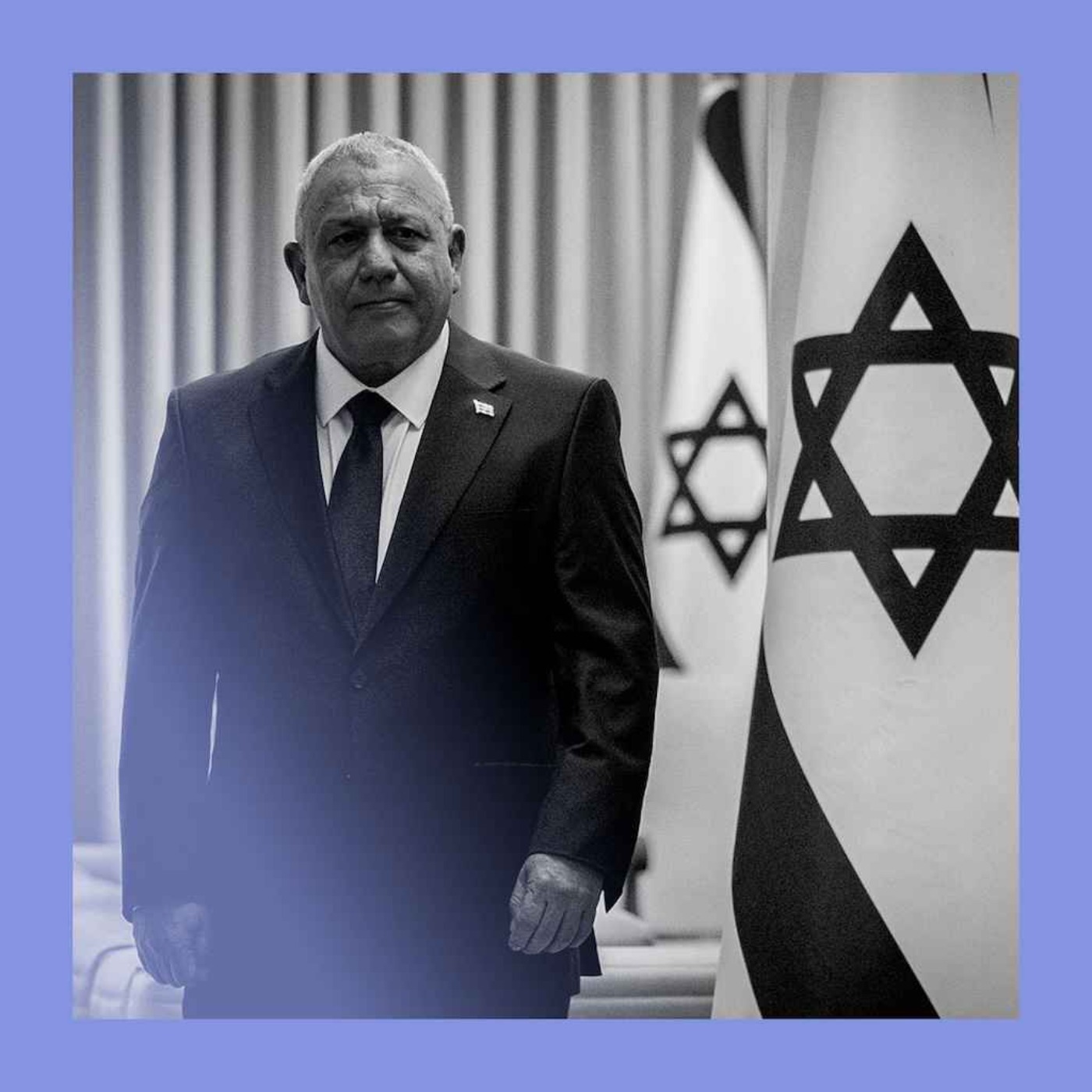
The episode of The Intelligence from The Economist focuses on Israel’s potential leadership change after a close election with no majority. President tasked opposition leader Gadi Eisenkot with forming a coalition.
Eisenkot has about six weeks; he aims first for a minority government with four opposition parties holding barely a third of Knesset seats, then possibly broadening later. He likely needs Arab parties and/or ultra-Orthodox parties to support or abstain for a confidence vote, requiring compromises. Eisenkot, a former IDF commander-in-chief turned politician (joined politics in 2022), faces limited coalition-building experience and obstacles from Avigdor Lieberman, who won’t back an Arab-supported minority government. Netanyahu is trying to block Eisenkot, including proposing a unity government and delegitimizing election results.
Netanyahu’s alleged use of Shin Bet for politics and campaign to disqualify Arab votes; Eisenkot calling Netanyahu “hysterical.”
Anshul Pfeffer, The Economist’s Israel correspondent.
0:00Grainger knows if you're a procurement manager at an industrial manufacturing facility, you're balancing inventory and budget while sourcing critical supplies across the operation. Too much inventory? Costs climb. Too little? Production slows. Grainger's$2 billion in on-hand inventory helps you get what you need when you need it. So you can help keep budgets balanced and lines moving. Call 1-800-GRAINGER, click grainger.com or just stop by. Grainger, for the ones who get it done.
0:32This Economist podcast is sponsored by Apollo.io. In a fast-moving business environment, finding the right people to connect with takes time. For sales teams, prospecting, outreach, and follow-up can mean juggling multiple tools and workflows. Apollo.io brings these activities together in one platform, helping sales teams find the right buyers and spend less time on scattered, manual tasks and more time building relationships. Apollo.io. Sign up for free at Apollo.io.
1:10Ọrẹ Ogunbiyi: Hello, and welcome to The Intelligence from The Economist. I'm Ore Okunbiye.
1:20Ọrẹ Ogunbiyi: Today on the show, the slow but significant shifts along Ukraine's front lines and the importance of who's who.
1:35But first...
1:44Ọrẹ Ogunbiyi: Israel could be about to see a change in leadership. After a very close election in which no side won a majority, This weekend, Israel's president tasked the opposition leader, Gaddy Eisenkot, with trying to form a new coalition government. Mr. Eisenkot is Prime Minister Binyamin Netanyahu's strongest rival. Yesterday, at a short ceremony, Mr. Eisenkot told the onlooking media that Israel needs new leadership as urgently as it needs air to pave the way for a new era. and will bring the way to the new party. This is all unfolding in the aftermath of the American midterm elections, in which President Trump, and those close to him, pointed fingers at Israel as a reason why his party fared so badly in the House and Senate.
2:40Ọrẹ Ogunbiyi: Without much time or foreign support, will Mr. Eisenkot be able to pull this off?
2:45Anshel Pfeffer: Gadi Eisenkot now has the mandate to form Israel's next government
2:54Ọrẹ Ogunbiyi: Anshul Pfeffer is The Economist's Israel correspondent
2:57Anshel Pfeffer: The big question now is whether Eisenkot can gather enough of the opposition parties to form this new minority government and most importantly to get it sworn in by the Knesset
3:12Ọrẹ Ogunbiyi: Okay, so he has the mandate What could his coalition look like?
3:16Anshel Pfeffer: So from what we know of his plans is that he's at present trying to form a minority government with just four opposition parties, which hold barely a third of the Knesset seats because his view is that the most urgent thing is to replace Benjamin Netanyahu's government. And after he succeeds in doing that, perhaps to broaden his coalition. In recent weeks, Netanyahu has tried to drag Israel into another war with Iran. He has been in a campaign to disqualify the votes of Arab Israelis. He's used the Shimbet security service for political purposes. So all that adds urgency to Eisenkot's attempt to form a government.
4:03Anshel Pfeffer: Eisenkot has at most six weeks to do so. So that's why his current priority is to try and form a minority government.
4:12Ọrẹ Ogunbiyi: And speaking yesterday, Eisenkot talked about the need for compromises. What concessions does he need to make to form that emergency coalition government?
4:22Anshel Pfeffer: So a minority government will still need support from other parties in the Knesset. And that means either the Arab parties or the ultra-Orthodox parties, or perhaps a combination of both camps, either voting in favor of his government without actually being members or abstaining just to allow this minority government to pass its inaugural confidence vote. And that in itself would mean compromises because some of the parties in Eisenkot's coalition, including his own party, Asher, have been, let's say, reluctant to join with the Arab parties and they've also been very reluctant to compromise on various issues with the ultra-Orthodox parties.
5:05Anshel Pfeffer: So just to swear in a minority government, there will be need for compromise.
5:10Ọrẹ Ogunbiyi: Now, Ansh will remind us, who is Gadi Eisenkot? What's his background? Do you think he's got the political skills to pull this off?
5:19Anshel Pfeffer: Gadi Eisenkot is a former general. He was, until 2018, the commander-in-chief of the Israel Defense Forces, spent most of his life in uniform. And he only joined politics in 2022, has been a party leader now for just over a year. So his experience in the coalition building is, shall we say, limited. And that means that the other members of the opposition bloc, the other party leaders, are far, far more experienced than he is. They don't have as many seats. Eisenkot being this fresh face and having won many more seats than the other opposition parties, but he still needs them. And his main problem is Avigdor Lieberman, leader of a nationalist opposition party, someone who began his political career over 40 years ago as an assistant to Netanyahu.
6:15Anshel Pfeffer: Now he's sworn to replace Netanyahu, but Lieberman has his own agenda and he is now on a freelance manoeuvre to try and broker some kind of a deal with the ultra-Orthodox parties. And that's a big headache for Eisenkott because instead of having a coordinated opposition bloc, he's got other party leaders trying to build their own coalitions, breaking election promises not to compromise with the ultra-Orthodox on issues like universal national service. And at the same time, Lieberman has said he will not support a minority government supported by the Arab parties, which does seem to be Isenot's preferred course of action right now.
6:56Anshel Pfeffer: So it's a big headache for Isenot, who is not only up against his political opponents, maybe Benjamin Netanyahu, and his camp of far-right parties, but also up against some of his potential partners.
7:10Ọrẹ Ogunbiyi: And speaking of Netanyahu, how has he responded to all of this?
7:14Anshel Pfeffer: Well, Netanyahu has so far failed to disqualify the election result. He's tried. His party, Likud's lawyers, have petitioned to do so, but the election results have been ratified by the Central Election Commission and are now basically set in stone. So there's not much he can do about that, though. He's going to continue trying, at least in public, to delegitimize those votes. Netanyahu's aim now is to try and prevent Isencot from forming a government in that six-week period he has. His latest ploy has been to call for a unity government, obviously a unity government which he will lead and in which some of the parties of the opposition will agree to sit.
7:58Anshel Pfeffer: And he's doing everything he can and using parts of the Israeli media to slime any kind of Isencot government. Netanyahu said on Saturday night that Eisencott's government is a government relying on Islamists that will dismantle Israel from within, and a government that will simply not allow Israel to survive. Eisencott responded that Netanyahu is hysterical, but he still doesn't have the numbers to replace him.
8:27Ọrẹ Ogunbiyi: Looking beyond Israel for a moment, in last week's American midterm elections, we saw a Democrat blue wave. Where does that leave U.S.-Israeli relations?
8:37Anshel Pfeffer: There is an increasingly hostile vibe towards Israel because the Democrat Party is much less supportive of Israeli policy. It's less supportive of arms sales without conditions to Israel. And it's not just the Democrats. We're also seeing from Donald Trump and from J.D. Vance and other parts of the Republican Party also So an increasing tendency to blame Israel for their woes. Both Trump and Vance have mentioned in the Iran war, in which Israel was a partner with America, and in general Israel's relations with the US, as one of the reasons for their dismal results.
9:17Ọrẹ Ogunbiyi: So it sounds like when these newly elected representatives and senators take office in January, that relationship between the US and Israel could continue to weaken.
9:27Anshel Pfeffer: Well, it certainly will be tested. And really the question is, how does the Israeli government or what Israeli government will be there to respond to this? Now, Benjamin Netanyahu in his many years in office has presented himself as an ultimate expert on American politics. He began his public career as a diplomat in the United States. And he's obviously made a huge deal out of his own personal relationship with Donald Trump. And what we're hearing now from Washington doesn't sound like that relationship amounts to very much anymore. So this could also add more urgency to the attempts to replace Nitzan Liao as the Prime Minister of Israel.
10:08Anshel Pfeffer: Will this be enough to get Eisenhower over the line? We'll see in the next few weeks.
10:14Ọrẹ Ogunbiyi: Anshil, thank you so much for coming on the show.
10:16Anshel Pfeffer: Thank you for having me, Ori.
10:25This episode of The Intelligence is sponsored by VantageScore. For years, credit scores have been generated with just a snapshot, and that snapshot left millions of people out of the picture. So VantageScore is modernizing the whole process. They use 400 % more credit report and alternative data than legacy models, bringing more people into the credit economy, like 5 million more mortgage-eligible people. So all the banks win, but so do all the francs. The lenders and the borrowers, the Lindas and the Olivers. When you build credit scores the right way, everybody wins. That's the power of VantageScore.
11:00Get started at VantageScore.com. Grainger knows. If you're a procurement manager at an industrial manufacturing facility, you're balancing inventory and budget while sourcing critical supplies across the operation. Too much inventory? Costs climb. Too little? Production slows. Grainger's$2 billion in on-hand inventory helps you get what you need when you need it, so you can help keep budgets balanced and lines moving. Call 1-800-GRAINGER, click grainger.com, or just stop by. Grainger, for the ones who get it done.
11:46Ọrẹ Ogunbiyi: Recently, we've told you how Ukraine is being bombarded from the air by Russia in a way that it hasn't been before in nearly five years of conflict. It's a big deal. It's a big deal. It's a big deal. Its defenses suffered after Elon Musk's Starlink withdrew satellite service, while Donald Trump eased sanctions on Russia and cut a deal to buy its diesel exports.
12:16Ọrẹ Ogunbiyi: But over the past several years, the picture from the eastern frontlines of this war in Ukraine have been muddied. a stalemate largely established a long time ago. Now, satellite intelligence suggests that new trends are at play. To track the fighting, what we are doing is to repurpose a NASA system originally set up to track forest fires. Sonjo Solstad is a data journalist with The Economist. Now, forest fires produce a lot of heat, but so do explosions. and the sort of stuff you see along an active front line. We are using the data from the satellites to track the war along the front and beyond in near real time.
13:02And what we found is that over the past three months, there's been more activity along the front line than in any other comparable period of the war. And in all this activity, what we are seeing is that it's actually Ukraine, which is gaining ground, not Russia.
13:19Ọrẹ Ogunbiyi: Okay, Sanjay, this is a wall where the front line has barely moved in years. Tell me a bit more about what exactly we're seeing here. Yeah, sure. So in the past 90 days, Ukraine has gained on net about 73 square kilometers. That is not a lot. Ukraine is about 600 ,000 square kilometers to give you a sense of the numbers here. But it is a lot if you take it in comparison to Russia's gains over the year so far. Effectively, what we've seen is that they've wiped out half of Russia's gains in just 90 days. And in part, that's been through some quite sophisticated and audacious operations. And here, I think we should mention Operation Vivaldi, named after the composer.
13:58So this was a four-stage Ukrainian counteroffensive that began in the spring in May and ran into October. And the context of the operation was that Russia was trying this enveloping move, where they would attack both from the south and the north to cut off three of Ukraine's key cities in the defense of the country, the Fortress Belt cities. Now, what Operation Vivaldi did was to target the northern part of that attack and effectively nullify it, meaning they trapped a lot of Russian forces and stopped the attack in its tracks. But again, the frontline in Ukraine is not like the frontline, have in your mind, of like World War I or what have you.
14:38These are enormous areas where effectively you can't operate at all. And then sort of people trying to stake out positions and move it incrementally.
14:46Ọrẹ Ogunbiyi: And so what does that mean for the loss of life in that bloody battle? As far as we can tell, Russia is losing a lot of men. Casualties are very high. And casualties would be both the dead and the severely wounded. And the signs point towards the dead being a big share of that compared to some other conflicts. Because just the attacks tend to be lethal if they hit at all. And also, some suggest Russia isn't making that good of an effort to actually get its wounded out of the front before they perish. So our meta-estimate, which looks at all the credible estimates we have from various sources, these are intelligence agencies, researchers, huge efforts to basically collect a list of all the dead Russian soldiers you can find in memorial, social media, and so on.
15:30All these different sources, we pull those together to come up with a number that is also informed by what we are seeing on the front lines in terms of activity. So that long prologue aside, our meta-estimate puts Russian fatalities at about 370 ,000 to 780 ,000. And total casualties, which would also include the severely wounded, between 1.4 million and 2.1 million. And you could look at those numbers, and especially the dead, and compare it to what we know about the Ukrainian side. And here, I think the best source is this website, which also categorizes Ukrainians that are known to have died.
16:05And we've checked that, and we found it to be quite credible. So that lists 116 ,000 soldiers as dead and another 106 ,000 as missing, giving a range from 116 ,000 to 220 ,000 effectively. Now, what the Russian president, Vladimir Putin, thinks is that he has the initiative regardless because he feels like he can replenish his forces, it seems. And he's basically inflicting pain and seems to be willing to accept the cost, at least for now.
16:34Ọrẹ Ogunbiyi: And as those casualties are mounting on both sides, I guess it makes sense then that the Kremlin wants to inflict even more pain by attacking from the sky even harder. Yes, and that's really what the last month has been about, where you've seen this dramatic uptick in deep strikes on Ukraine. So these are strikes that are at least 100 kilometers from the front line or the international border between the two countries, hitting Ukrainian cities, infrastructure, railroads, its industry. And it's been effectively a tripling of attacks between June and September. In the past month, Russia hit 290 civilian infrastructure targets, killing at least 62 civilians.
17:17And that's the total that sadly is just increasing. On October 29th, we saw one attack kill 15 people. This was when a Russian drone hit the train platform. What this is doing is it's limiting Ukraine's ability to function. It's effectively targeting its industry and society. You've had over 500 trains been hit since the start of the invasion. 300 of those were this year. And I think overall what this suggests is a sort of a change in strategy, or at least an expansion of what Russia's forces is trying to do. Not just destroying Ukraine's defenses at the front, but also its economy and society in the rear.
17:56Ọrẹ Ogunbiyi: So for all of President Trump's talk that he was going to bring parties to the table, that doesn't seem to have happened then? No, at least not in the sense of any sort of pause in the conflict. The American president has been trying to get both sides to the table to set up high-level talks between Ukraine and Russia. And that might bear fruit in that we could see a meeting as soon as mid-November. But what he's also tried to do was to push through this so-called energy ceasefire, which would limit attacks on the energy infrastructure of both countries, though some later said that it was only about Russian refineries.
18:35In any event, the ceasefire never took effect at all. And the week in which it was announced was one of the worst weeks of the war so far for these attacks on Ukrainian infrastructure. Blackouts and power cuts are routine in Ukraine already, and it's getting colder. And so it's going to be a very tough winter. Ukraine has also, of course, continued to step up its long-range attacks, though that has plateaued over the summer, whereas Russia's attacks have just accelerated massively. On the Ukrainian side, they have conducted more than 100 long-range attacks in the past month. And these have killed 11 civilians, as far as we can tell.
19:11Overall, though, the picture seems to be that Putin holds the upper hand in Washington. and the Trump administration sees more assertive fight between two enemies than the Russian aggression and escalation, which the data reveal.
19:27Ọrẹ Ogunbiyi: So, Andre, thank you so much for coming on the show. A pleasure. Thank you.
19:52Thatcher, Baroness, liked music, reading.
19:57Ọrẹ Ogunbiyi: Catherine Nixie is a Britain correspondent. Chamberlain, Neville, enjoyed shooting. Stalin, Joseph, and Hitler, Adolf, did not deign to send in their recreations. This was unlike Mussolini, Benito, whose hobbies included violin, horse riding and fencing. And how do we know all this? It's thanks to a little red book, Britain's catalogue of the elite, known as Who's Who.
20:31Who's Who was first published in 1849. It's the world's oldest biographical reference annual. and arguably its oddest. It is a catalogue of a certain sort of British elite and the just occasional foreigner. The first entry, listed in 1849, was Our Beloved Sovereign, Queen Victoria. It included notable people, including Churchill and Trotsky. It was copied widely and ripped off even more widely. There was Wer ist Wer in Germany, Wem, Wachem for Norway, and even Who Was Who for the afterlife. Now its publisher Bloomsbury is selling it. It's not known who the buyer will be and it's not even known whether it will continue.
21:17And if it doesn't, this matters. Because Who Is Who has gone on for so long and collected so many entries, it's no longer just an anthology. It's an anthropological guide to the English elite. There have been 179 editions and over 125 ,000 entries. It lists these elites' habitats, their hobbies, and their sort of humour. For example, the comedian John Cleese listed his pastimes as gluttony and sloth. The current edition contains John Macdonald, a former shadow chancellor, who lists his recreations as fermenting the overthrow of capitalism, rather than fomenting it. Spelling is evidently less of an enthusiasm.
22:05The selection process is complicated. Broadly speaking, people fall into two categories. There are the bigwigs you've mostly not heard of. MPs, KCs, judges, peers, the kind of people who wear tights. And then there are the bigwigs you may well know. Actors, writers and business figures. And they get voted in by a board. But quite who the board are is not very clear. its selection process is shrouded in secrecy to prevent bribery and corruption.
22:39The demographics of Who's Who are striking and quite different to the rest of Britain. 80 % of the entrants are male, 97 % of the current ones are white. It doesn't really reflect Britain's demographics in any way. The entrants are also more likely to live in London almost 36 % of them do versus 13 % for the average Britain and they are way more likely to be privately educated 47 % of them are versus 6 % in the rest of the population They are far, far more likely to have gone to Oxbridge Who is who in Britain is more or less exactly the same as who was who and both are pretty much exactly what you'd expect In the older editions, hunting is a popular pastime.
23:24In the 1850s, a quarter of entrants listed hunting as a hobby. And this, as they explained, could either be for Tusker elephants, or, as one Etonian put it, he enjoyed hunting the Philistines. It's odd, but it's also important. Historians absolutely love it. It is, as Tristram Hunt, the director of the V &A Museum, put it to me, absolute gold dust. Even in an age of online oversharing, Who's Who offers you information that's hard to find elsewhere. This information goes back so far and is so homogenous that you can easily compare the 1870s with the present day. It's often at its most telling in the incidental details, so earlier volumes list telegram addresses and car number plates.
24:09Later ones will give a person's social media handles. It can be quite eerie reading it, Mostly when you read history about the Second World War, you're reading it mediated through a present-day author. But if you pick up Who's Who, you're reading history as it was written at the time. So if you pick up the 1938 volume, you find Hitler, Stalin and Churchill all listed, all in capitals. But it's a strange feeling reading it. It's like reading the cast list for a play whose ending hasn't yet been written.
24:46It is still relevant today, and it's still interesting. It shows that Britain's elites are changing. Fewer these days list hunting as a hobby. Now they prefer pets, and displaying an awkward sort of irreverence towards things like who's who. Far too many of them list sex as a recreation. Britain's elite are not going to disappear, but they may well become harder to spot if who's who is lost. But what's most striking, actually, if you pick up an old volume of Who's Who in the library, apart from the odd Hitler or Stalin or Churchill, you will hardly have heard of any of the people listed inside.
25:39Ọrẹ Ogunbiyi: That's all for this episode of The Intelligence. We'll see you back here tomorrow.
26:11Too much inventory? Costs climb. Too little? Production slows. Grainger's$2 billion in on-hand inventory helps you get what you need when you need it, so you can help keep budgets balanced and lines moving. Call 1-800-GRAINGER, click grainger.com, or just stop by. Grainger, for the ones who get it done. I'm Jake Stouck, co-founder and CEO of Serval. Your IT team is full of builders who understand how your company works, But too much of their day goes to password resets, app access, and repetitive tickets. We built Serval to give them that time back. It's the AI-native enterprise service management platform that automates the work legacy tools only track.
26:52Tell Serval what you want automated in plain English, and its AI agent builds it. No drag-and-drop workflow builders, consultants, or lengthy implementations. Then, our help desk agent resolves employee requests using the tools IT has approved. Your team stays in control, and your builders get to build. Companies including Fox, Live Nation, Notion, Ramp, and Lucid Motors run on Serval. Whether you have 200 employees or 20 ,000, your team should be building what's next. Start a free pilot and we guarantee you can automate 50 % of your IT tickets during it. Go to serval.com slash automate. That's S-E-R-V-A-L dot com slash automate.
27:30Serval.com slash automate.
The president has tasked the former general – and Binyamin Netanyahu’s strongest rival – with building a new government. With just six weeks and barely a third of the Knesset seats on his side, will he succeed? Russia has a stalled front line with Ukraine but is bombarding harder from the air. And why the sale of the world’s oldest biographical reference annual matters.
Guests and host:
Topics covered:
Listen to what matters most, from global politics and business to science and technology—subscribe to The Economist.
Hosted on Acast. See acast.com/privacy for more information.
Scan the code with your iPhone camera
Listen in the app.