
In short
The episode of The Intelligence from The Economist covers three segments. First, Ukraine: Ukrainians protest Bill 12414, signed by President Volodymyr Zelensky, which strips independence of the country’s two main anti-corruption agencies (NABU and SAPO) by placing them under the prosecutor general, a Zelensky appointee. Oliver Carroll argues the haste follows earlier moves (blocked appointments, arrest of anti-corruption campaigner Vitaly Shabunin, raids on NABU/SAPO) and may reflect either private negotiations or investigations into Zelensky’s inner circle; he says some raid allegations may have “kernels of truth” but the bill’s structural change is the key concern.
Notable examples
Maidan Revolution reforms; protests in Lviv and 5,000–10,000 in Kyiv; Zelensky’s promise of a new law to restore independence.
Guests
Oliver Carroll (Ukraine correspondent); Tom Sass (Britain public policy editor); Michael Han (music writer for The Economist).
Written by AI. May contain mistakes. Listen to the episode to check what was said.
Chapters
Tap a time to open that second in VOUnderstanding Bill 12414 and Its Implications
0:25 to 0:56
Discussing the recent bill in Ukraine that threatens anti-corruption efforts.
“It's designed to support you in reaching your goals.”
Understanding Bill 12414 and Its Implications
2:38 to 4:24
Discussing the recent bill in Ukraine that threatens anti-corruption efforts.
“Ukrainians are taking to the streets across the country and they are not happy.”
Political Context and Reactions
4:28 to 6:32
Analyzing the political context surrounding the bill and reactions from the public.
“and we're probably to zoom out a little bit, to increase our focus the last month or so.”
Protests and Western Relations
6:33 to 10:03
Examining the protests in Ukraine and their impact on relations with the West.
“likely, a more convincing explanation is the activation of investigations into members of Mr.”
Future of Anti-Corruption in Ukraine
10:10 to 10:28
Discussing the future of anti-corruption efforts in Ukraine amidst protests.
“Oliver, thanks very much for joining us.”
Future of Anti-Corruption in Ukraine
10:49 to 11:15
Discussing the future of anti-corruption efforts in Ukraine amidst protests.
“It's called Chat Concierge and it's simplifying car shopping.”
Cycling in London: A Shift in Culture
11:18 to 14:00
Exploring the rising popularity of cycling in London and its implications.
“Personalized, affordable care that gets you.”
Exploring the Benefits of Cycling in London
14:00 to 18:36
Learn about the advantages of cycling, including urban transport benefits and safety improvements.
“what made you decide to write this story?”
The Legacy of Ozzy Osbourne and Black Sabbath
19:56 to 27:51
Explore the impact of Ozzy Osbourne and Black Sabbath on the heavy metal genre and their enduring legacy.
“Symptom of the Universe is a track on Black Sabbath's 1975 album, Sabotage.”
Transcript
Automatic transcript. May contain errors.0:00With the Spark Cash Plus card from Capital One, you earn unlimited 2 % cash back on every purchase. And you get big purchasing power so your business can spend more and earn more. Steven, Brandon, and Bruno, the business owners of SandCloud, reinvested their 2 % cash back to help build the company's retail presence. Capital One, what's in your wallet? Find out more at CapitalOne.com slash SparkCash Plus. Terms apply. If you felt stuck trying to lose weight, you're not alone. Enter Weight Loss by HERS. It's designed to support you in reaching your goals. And HERS now offers access to an affordable range of FDA-approved GLP-1 medications, including the Wegovi pill and the Wegovi pen.
0:40Even better, with a range of affordable GLP-1 options, HERS makes it simple to find an approach that fits your needs and your budget, if eligible. You'll get a treatment plan personalized to you and unlimited dosage changes as needed. It's weight loss designed to work with your life. Ready to reach your goals? Visit forhers.com slash eligible to get personalized, affordable care that gets you. That's F-O-R-H-E-R-S dot com slash eligible. Forhers.com slash eligible. Weight loss by HERS is not available in all 50 states. Wegovi is the registered trademark of Novo Nordisk AS. To get started and learn more, including important safety information, Wegovi clinical study information, and restrictions, visit forhers.com.
1:35Hello and welcome to the Intelligence from The Economist. I'm Rosie Blore. And I'm Jason Palmer. Every weekday we provide a fresh perspective on the events shaping your world.
1:51If you live in London, you'll be familiar with the rash of white and green bikes that at times appear to be taking over our roads. Our correspondent takes a ride to find out why cycling in the city has become so popular and what it is that's frustrating car drivers. And it's a dark week in the world of heavy metal. Well, I guess it's kind of always dark in that world, but there's a great sadness at the passing of Ozzy Osbourne. We pay tribute to the Prince of Darkness with a listen to some of his landmark tracks.
2:27First up, though.
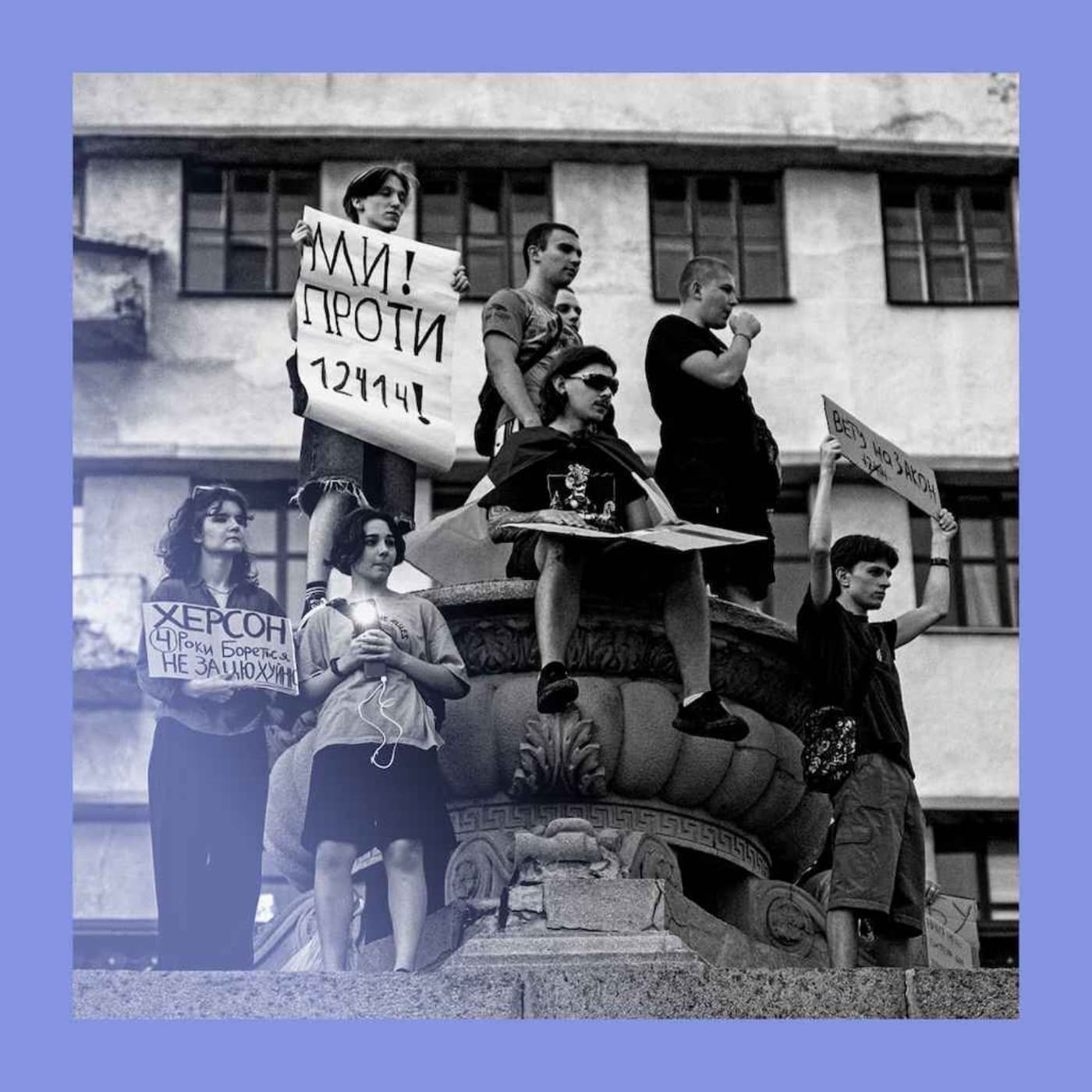
2:38Ukrainians are taking to the streets across the country and they are not happy. Bill 12414, freshly signed by President Volodymyr Zelensky, puts the country's two main independent anti-corruption agencies under the jurisdiction of the prosecutor general, a Zelensky appointee.
3:01Those agencies were formed after the Maidan Revolution in 2014, in which President Viktor Yanukovych, a stooge of Russia with notoriously sticky fingers, was booted out and fled. They were a visible effort to shake off a reputation of corruption, a sign to the world and to Ukrainians themselves that the country wanted more democracy and less rot. Now, those agencies are about to be stripped of their independence.
3:32This protester in Lviv made clear that Ukrainians know why that independence matters. We fought dictatorship for many years, she said. The power of leaders needs to be curbed. No one can remember a bill of such significance being rushed so fast through Parliament. Oliver Carroll is our Ukraine correspondent. It was 8 a.m. when the relevant committee was convened with almost indecent haste. Nine o 'clock, the call went out to the deputies urging them to vote a three-line whip. Some of them were apparently sort of threatened. By 12, the vote had happened, and shortly after, the bill was on Volodymyr Zelensky's table for signing.
4:15And despite the pressure from protests and from Western agencies of various kinds, he signed it. I mean, how surprising is it to you that this legislation got tabled at all? Well, there's been a build-up to this moment, and we're probably to zoom out a little bit, to increase our focus the last month or so. So when we've seen the presidential office essentially take out a number of moves which look to, one would say, crack down on dissent and increase the control over various aspects of politics. In early July, the government blocked the appointment of a well-regarded detective to the vacant position of the director of the Bureau of Economic Security.
4:55And that was unexpected, to put it mildly. Then there was the seemingly politically motivated arrest of Vitaly Shabunin, an anti-corruption campaigner in mid-July. And then we had the largely expected shake-up of government, which promoted uber-loyalists, including a new prime minister. And then on Monday, we saw the domestic security service, the SBU, and the prosecutor's office launch a series of raids against these two anti-corruption bodies, the Naboo and Sapo, in the English acronym, targeting officers and essentially accusing them of criminality and links with Russia. Now, these bodies are the direct result of the Maidan revolution.
5:38They were insisted on by the West and the civil society. These were good governance reforms. So when on Tuesday, this bill came in to limit their powers, this was quite shocking. Still though, why this bill? What's it intending to do, do you think? In terms of why it's happening, I think there are two main explanations. The first is that perhaps something is going on in the background with negotiations that might not be particularly public. And we know that there have been talks this week in Istanbul with a view to a possibility of a grand meeting with Trump and Putin and perhaps Zelensky along with that.
6:18That might suggest there's talking about a potential breakthrough with a ceasefire, perhaps then followed by elections, and that would be an impulse to clear the political field and to consolidate internal power. So that's one explanation. My conversations with sources and indeed subsequent reports suggest that a more likely, a more convincing explanation is the activation of investigations into members of Mr. Zelensky's inner circle. And that would explain the haste and speed in which this law was pushed through. And what about those investigations into the anti-corruption bodies? Is there any validity to the accusations there, do you think?
7:00If we're talking about the raids themselves, I suspect there are kernels of truth in the specific allegations made against perhaps a few of the officers. I mean, no institution in Ukraine is clean, certainly not a Russian infiltration, certainly not of criminality. And to a large degree, these bodies were privileged bodies. They were able to do a lot of the things they wanted to. And that had a corollary of certain elements of criminality. If the Zelensky administration had limited themselves to these raids, I could see how you could possibly make a fudge. You could say that, you know, law needs to be investigated.
7:37The problem is this bill fundamentally changes the structure of the anti-corruption bodies in Ukraine. And it's that direct challenge, the subordination of bodies which were not under direct presidential control to a roundabout way of putting them under direct presidential control. That's the thing that's most concerning. And concerning seemingly also to Ukraine's people who have been taken to the streets. Right. The level of protest, I think, in many respects was surprising. And I certainly was speaking to some presidential office insiders early on, and they thought this would wash over. But the protests last night were greater than the first night and certainly 5 ,000 or 10 ,000 were gathered just in front of the presidential administration in Kiev.
8:22These are the first real protests during wartime. But it's the damage which has been done to relations with the West. Because the West sees those institutions as putting Ukraine on the path to getting closer to the West, in short. Right. And during that Tuesday, there was immense pressure put on Zelensky not to sign the bill. He signed the bill in the end. And I think there's going to be a bigger task for Ukraine to persuade not only European Western institutions that Ukraine still is a cause worth fighting and paying for, but also with, you know, the people, you know, I'm just thinking about the MAGA group in America.
9:00This is red meat to them. And it is an unforced error. And to some people, it's the moment that the mask actually slipped. Well, is there a path back? Is there going to be a reaction to all of this protest, all of this disquiet both inside and outside Ukraine? Well, already you can see the first forms of response, which is looking to perhaps reverse some of the damage. You know, after doubling down in the early hours of Wednesday, Zelensky is now talking about a new law to establish the independence of these bodies. And he said it will be drafted in the next couple of days and it might be before Friday.
9:36Re-establish the independence of these bodies. Re-establish. And I think the devil will be in the detail and we'll have to scrutinize exactly what he's suggesting. You know, he's tempted to use sort of Orwellian descriptions of whether, you know, this is giving us an appearance of solidity to win. We'll have to see what actually comes through with that legislation. but clearly no one is talking about cancelling the bill at this moment and that's the only real thing that would re-establish full trust in this troubled administration's ability to keep Ukraine on a European western path. Ironically they'd been in a pretty good position diplomatically with Donald Trump perhaps coming on side and I think that might have been a moment that actually gave the presidential office some confidence and allowed them to take this ultimately reckless decision on this very risky bill.
10:28Oliver, thanks very much for joining us. It's a pleasure to be with you.
10:45This episode is brought to you by Capital One. Capital One's tech team isn't just talking about multi-agentic AI. They already deployed one. It's called Chat Concierge and it's simplifying car shopping. Using self-reflection and layered reasoning with live API checks, it doesn't just help buyers find a car they love. It helps schedule a test drive, get pre-approved for financing, and estimate trade-in value. Advanced, intuitive, and deployed. That's how they stack. That's technology at Capital One. If you felt stuck trying to lose weight, you're not alone. Enter Weight Loss by HERS. It's designed
11:47Thank you. Personalized, affordable care that gets you. That's F-O-R-H-E-R-S dot com slash eligible. ForHERS dot com slash eligible. Weight loss by HERS is not available in all 50 states. WeGovi is the registered trademark of Novo Nordisk AS. To get started and learn more, including important safety information, WeGovi clinical study information, and restrictions, visit ForHERS dot com.
12:17OK, so I'm standing here on a corner on the Strand and there's a cluster of these white and green lime bikes and a few of the forest bikes. And I'm going to grab this one and just scan the QR code so I can pick it up. Tom Sass is our Britain public policy editor. OK, so we're off. I'll just turn onto the strand here. And really quietly in the last couple of years, London has become a cycling city. So there was a survey last year which found that the number of cyclists had increased by 57 % in two years in central London. and cycling is actually now the most common way people are getting around, more common than any other type of vehicle.
13:14We're just going to turn right here down towards the Thames. Okay, and now we're on the cycle superhighway. This is one of the miles of cycleways that London mayors and councils have put in in the last few years. This one goes right along the Thames, so we're just going past the London Eye with a nice view of Big Ben and Economist Towers up on our right. Cycling's often seemed quite unappealing, partly because of this cycling culture dominated by rather macho middle-aged men in Lycra. But what you're starting to see now is a much more diverse cycling culture. We'll just wait here for the red. In part, that's thanks to a big boom in electric bikes.
13:59Tom it's nice to see you made it back safely from your cycle what made you decide to write this story? Well there was a bit of a backlash brewing in London people were getting quite angry about some of what I saw as teething problems including parking on the street but also safety issues people crashing these bikes and what I wanted to look into was partly how you could address those but also I wanted to zoom back a bit and look at what are the bigger benefits of this transition to more cycling for cities. Tom, clearly you're a cycling evangelist. So preach to me about the benefits of cycling in London.
14:37Well, I'm a regular pedal cyclist and I have been for a long time. And I have to say, initially, I was slightly snurgy about these electric bikes and thought that they were cycled not very well and weren't really putting in the effort, etc. But I've come round to them because I can really see the big benefits that they're having for the city. And one of the really interesting things they do is they fill in gaps in the urban transport system. So Lime estimates that something like 95 % of Londoners live within a two-minute walk of a Lime bike. And what you have then is a really easy ability to get from, say, home to your nearest train station in a five-minute cycle, or from a commuter rail station into the office.
15:19So they're filling in that first and last mile. What that does is it shaves a big chunk of people's commutes. A lot of people that might reduce their commute by as much as a third, which is obviously very good if you're a worker, you get that time back. It also has what we call agglomeration benefits. So it means that firms can access a bigger pool of workers because more people can get to that job more easily. So I think we should think of this increase in cycling and the spreading out of electric bike hire as a really useful thing for cities to just tick. And is it the kind of thing that other cities can replicate?
15:55Absolutely, yeah. I mean, London is now Lyme's biggest service area. So there's 30 ,000 Lyme bikes in London. There's also a British company called Forest, which has got a lot of bikes here. And there's a couple of new entrants to the market. There's other cities, Amsterdam, Copenhagen, which have long had a cycling culture. But there's other cities beyond that that might want to look at this as a way of encouraging more people to cycle. And it could certainly do more on this rental electric bike hire. It's still scary cycling in London, isn't it? And quite dangerous. I think it's got much safer because of the increase in cycle lanes.
16:31And actually, if you cycle on the cycle lanes, it's become less scary. Certainly when I moved to London about 15 years ago, and it was a pretty scary place to cycle and it's got easier. I think it does take some getting used to still. You're still mingling with quite a lot of traffic. We're at a busy T-junction just underneath Big Ben and a forest biker is just ridden straight through the red light there and she's carrying on. Oh, there goes another lime. The important thing I think about the electric bikes is they accelerate very quickly. You don't have to be putting in quite so much effort to get up to a decent clip.
17:04So you do need people to be aware of what they're doing on the road. These bikes are also quite heavy. They weigh about four times as much as your regular pedal bike. So if you're a pedestrian, you really don't want to be crashed into by a line biker who's just run a red light. So there are certainly some safety aspects to think about, but I don't think we should let those allow us to clamp down with regulation that stymies the benefits. And also as a pedestrian, they're kind of annoying. I mean, you often see these bikes scattered around on the pavements. And you only have to think if you're partially sighted or a wheelchair user, that's a really big problem.
17:41Lime has been trying to fix that in a few ways. In central London, it's introduced quite tight GPS enforced parking zones. And that's what leads to these massive clusters of bikes all in one place. In outer boroughs, what it tends to do is try and convert more car parking spaces into bike parking spaces. So there's various things you can do. I see this as a very soluble problem, partly because you can fit 10 bikes into a single car parking space. So actually what you can imagine in the future is a world in which most residential streets have two, three, four, five car parking space given over to bikes.
18:22You have lots of places to park them safely around the city so you can pick one up very easily. You can drop it off very easily at the end of your ride. and that avoids the problems of them being left on the pavement in annoying places. Tom, thank you so much. Thanks, Rosie. OK, we're back where we started. Not a drop of sweat. 18 minutes. I'm going to click end ride. I've got to prove that we've parked neatly at the end of your ride, so I'm going to take a photo. All right, there we go. We're back safely. £6.80.
19:04What, again? But I've already done it like three days this week. Yeah.
19:17Uh-huh. All right, all right, take it easy. Uh, right, okay, cue the app promoting music. Right, it's been pointed out to me that I should tell you again about our newly improved app for subscribers. It's got a bunch of souped-up new features, but for listeners, the big deal is you can download episodes, create audio playlists, and tap into our profoundly deep archive. All of it ad-free. Happy? You happy with that?
19:52Yes, fine, okay. Subscribers, catch us over there. Non-subscribers know that your life is incomplete until you sign up and get all our journalism on the app.
20:17Symptom of the Universe is a track on Black Sabbath's 1975 album, Sabotage. Ozzy Osbourne, the Prince of Darkness, at his peak. You can hear the seeds of the entire genre of metal music in there. Metalheads the world over are mourning Ozzy's death at the age of 76, including me and Michael Han, who writes about music for The Economist. As one quarter of Black Sabbath, Ozzy Osbourne helped invent heavy metal. Black Sabbath defined its sound, doomy and down-tuned, and a lot of its ethos, all the talk around Satanism. And then as a solo artist in the 1980s, he defined a different kind of rock and roll excess, that of drugs and drink and crazed behavior.
21:02I think the former is more important than the latter, but both are things that people know about it. I'm glad that we are agreed that Ozzy and Black Sabbath were progenitors, basically, of the entire, all of the metal genres. Why don't we go through, for the uninitiated, and hit some high points, some songs that sort of prove this for you. Black Sabbath's Golden Age was the records they made in the early and mid-1970s with Ozzy. The opening notes of Black Sabbath, their theme tune from their first album, spell out what heavy metal would be.
21:40What became known as the Devil's Interval, a succession of three chords that do sound like the end of the world. but I think they get really great from their third album, Master of Reality, onwards. Their sound gets deeper and wider all the time and the title track of Sabbath Bloody Sabbath has just one of the all-time great sections of heavy music. Where Tony Iommi's guitar is ferociously down-tuned. It sounds like it's coming from the very bowels of hell and Ozzy Osbourne's very top of his range singing about how dreams turn to nightmares.
22:24After Ozzy was sacked for Black Sabbath and set about building a new solo career, he recruited a young American guitarist called Randy Rhodes, who'd been playing around L.A. for a few years with a group called Quiet Riot, who had later become famous themselves. And on his first couple of solo records, Ozzy did find a new way of doing heavy metal. I mean, the fear when anyone goes solo is that they're going to be what they did before, but not as good. And Ozzy knew he couldn't do that. You can't be Black Sabbath, but not as good. So he found a different way of presenting music, a different way of playing.
22:57But also, his own persona on the records became more of a caricature. You know, there was an album called Diary of a Madman. There was one called Bark at the Moon. Playing himself up, not as satanic, but as this horror movie. It's almost like something from the universal monster cycle. except the rock star rather than the wolfman. But if you go back to the start of Blizzard of Oz and to Mr. Crowley, for example, a song that plays on Ozzy's image and also is musically imaginative and was pointing a way forward for heavy metal at that point.
23:34Musically, though, honestly, I think his career tail off after the first two solo records, which are great. And by the mid-80s, honestly, there were some not very good records. What's your take on what all of that wrought for metal? Because there was at one time kind of one heavy metal and now there are a great, great many kinds of metal. Do you think the spirit of Sabbath, Ozzy's spirit sort of appears in all of them, or was it just sort of an ingredient that's now way down in the mix? It's a crucial part of what we must inevitably call the DNA of heavy metal. I was at the Black Sabbath Back to the Beginning farewell show at Villa Park the other week.
24:10And to see the array of people who turned up, two of the support bands were bands who fill stadiums around the world, Guns N' Roses and Metallica. Below that were bands who fill arenas and do festivals, Slayer, Tool. All of them willing to turn up for free and just play for a few minutes. Now, I think that speaks to how everyone in metal just accepts the importance of Sabbath and of Ozzy Osbourne. There are always groups forming who want to sound exactly like Black Sabbath. These days we'd call them doom metal or stoner metal or something, but they exist still, and that's the real power of it all.
Read the full transcript
24:48You mentioned being at the concert and just sort of observing the wide demographic. What about for you personally? What was it like for you to be at that concert, the last ever? At the very end of the final show at Villa Park, I think what really shone through was the mutual love between Ozzy and his audience. He was saying to them, you don't know how much this effing means to me. You effing don't. And he was pretty much on the brink of tears. And the audience were pretty much the same as well. I mean, it was a really powerful moment. One thing about metal is that it never forgets its own. Never.
25:26I've never seen metal on its own in quite that way. and if you have to announce your, well, the end of your career and following very soon with the end of everything, well, what an amazing way to go. Are you able to pick a single song, one you'll treasure, one you think that is key, one that pops to mind perhaps when you ever think of Ozzy? I'm going to think a little bit laterally and not play what I think is a great Sabbath song, but which perhaps epitomizes the way that Ozzy will live on. The title track of his final album with the group, Never Say Die, which he never did say die.
26:11Michael, thanks very much for joining us. Thank you very much.
26:26That's all for this episode of The Intelligence. We'll see you back here tomorrow.
26:49This episode is brought to you by Capital One. Capital One's tech team isn't just talking about multi-agentic AI. They already deployed one. It's called Chat Concierge and it's simplifying car shopping. Using self-reflection and layered reasoning with live API checks, it doesn't just help buyers find a car they love. It helps schedule a test drive, get pre-approved for financing, and estimate trade in value. Advanced, intuitive, and deployed. That's how they stack. That's technology at Capital One. Hi, I'm Jack Ravici, Kramer, host of The Best One Yet. At T-Boy, we're always talking about small decisions that can have an outsized impact.
27:26One of the simplest is staying hydrated. Whether I'm traveling, getting a workout in, or heading into a busy day, I keep Liquid IV on hand. It's clinically demonstrated to hydrate faster than water alone and contains three times the electrolytes of the leading sports drink, plus eight vitamins and nutrients. It's an easy addition to your daily routine and helps support hydration when you need it most. Shop now at liquidiv.com. Liquid IV hydration that goes wherever life takes you.
From the publisher
A new bill threatening the independence of anti-corruption agencies has brought Ukrainians onto the streets and rattled international observers. London’s electric bikes are making it ever more a cycling city—and plugging longstanding transport gaps. And a tribute to Ozzy Osbourne, who did perhaps more than anyone to found the genre of heavy metal.
Get a world of insights by subscribing to Economist Podcasts+. For more information about how to access Economist Podcasts+, please visit our FAQs page or watch our video explaining how to link your account.
Hosted on Acast. See acast.com/privacy for more information.