In short
The episode has three segments. 1) Venezuela: “Caracas under pressure: democracy in Venezuela.”
Guest
Kinley Salmon, The Economist’s Latin America correspondent.
Key claims
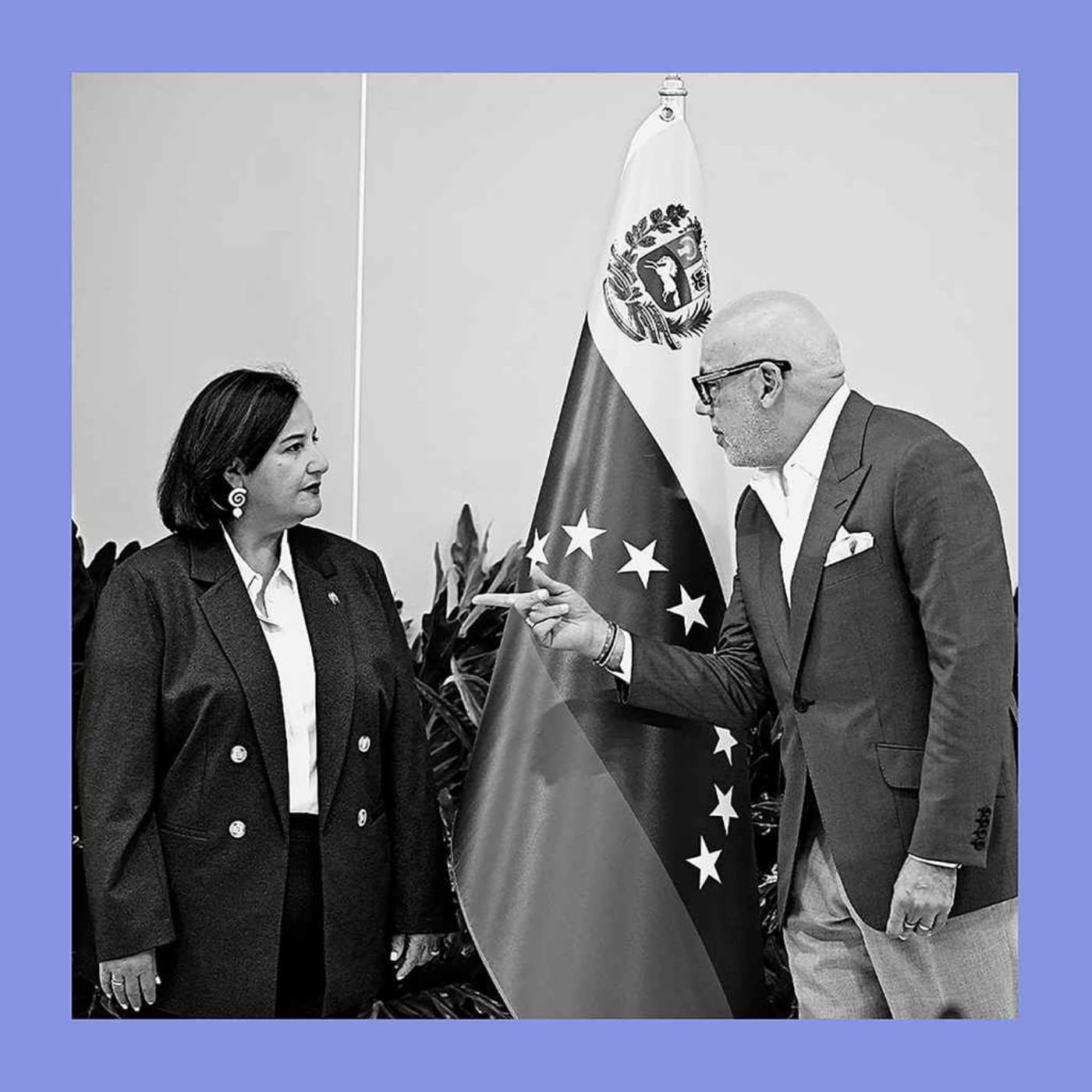
the January US raid removed Nicolás Maduro; his deputy Delcy Rodríguez leads with US backing; recent talks between regime and opposition aim to reform the electoral council and Supreme Court and restore political rights. Notable example: Maria Carina Machado (Nobel Peace Prize laureate) is absent from talks, creating doubts; the agenda also includes earthquake relief as a way to discuss sanctions relief and access to frozen state resources. 2) US fast food: Guest Shira Aviona, The Economist business correspondent.
Key claims
sales are pressured by inflation, a lettuce-linked outbreak, and consumers shifting to grocery/convenience; chains respond with value deals, viral collabs (e.g., McDonald’s Minecraft), and longer-term menu shifts like more chicken and premium coffee/energy drinks. 3) Wagner “Ring Cycle” history: Guest not specified.
Written by AI. May contain mistakes. Listen to the episode to check what was said.
Chapters
Tap a time to open that second in VOPolitical Landscape in Venezuela
0:12 to 0:43
An overview of the political turmoil in Venezuela and recent changes.
“Grow connects you with thousands of high-quality, licensed therapists across the U.S., offering both virtual and in-person sessions, nights and weekends.”
Political Landscape in Venezuela
1:30 to 1:41
An overview of the political turmoil in Venezuela and recent changes.
“Hello and welcome to The Intelligence from The Economist.”
Political Landscape in Venezuela
1:50 to 3:56
An overview of the political turmoil in Venezuela and recent changes.
“Today on the show, Americans may be falling out of love with fast food.”
Negotiations and Their Challenges
3:56 to 6:06
Discussion on the current negotiations between the Venezuelan regime and opposition.
“I mean, it was only just over seven months ago, back in January, when US special forces swept in in a dramatic raid and seized the then president dictator, Nicolás Maduro.”
U.S. Involvement in Venezuelan Politics
6:06 to 8:34
Examining America's influence and role in Venezuela's political talks.
“In my view, these talks are essentially a US creation from top to bottom.”
The Role of Maria Karina Machado
8:34 to 10:56
Analysis of Machado's absence in negotiations and its implications for the opposition.
“And yet, Kinley, you sound kind of hopeful.”
The Role of Maria Karina Machado
11:06 to 11:49
Analysis of Machado's absence in negotiations and its implications for the opposition.
“So why are so many people quietly Googling a therapist between summer Fridays?”
The Changing Landscape of Fast Food in America
12:11 to 14:00
Exploring the decline of fast food popularity among Americans and its causes.
“It may shock some listeners, but Americans appear to be falling out of love with fast food.”
Fast Food Industry Adaptations
14:00 to 17:46
Explore how fast food chains are evolving to attract consumers amidst changing preferences.
“in some cases with more reasonable prices.”
Wagner's Musical Legacy
17:46 to 19:14
Learn about Wagner's influence on music and culture through his magnum opus, The Ring Cycle.
“The opening of the first chapter of The Ring Cycle begins primordially with a rumbling E-flat from the double basses that seems to portend all that ensues.”
Show all 12 chapters
Wagner's Vision and Impact
19:14 to 22:37
Discover Wagner's revolutionary ideas and their cultural implications beyond music.
“If you've read or watched The Lord of the Rings, you've fallen under its spell at second hand.”
Wagner's Vision and Impact
23:40 to 24:13
Discover Wagner's revolutionary ideas and their cultural implications beyond music.
“Taxes aren't something you can only think about once a year.”
Transcript
Automatic transcript. May contain errors.0:00Summer's supposed to be the easy season. So why are so many people quietly googling a therapist between summer Fridays? Because more daylight doesn't fix the hard stuff. Sometimes it just turns the volume up. Grow does therapy differently. Grow connects you with thousands of high-quality, licensed therapists across the U.S., offering both virtual and in-person sessions, nights and weekends. There are no subscriptions, no long-term commitments. You just pay per session. Grow helps you find therapy on your time. The therapist you want takes your insurance on Grow. Grow accepts over 125 insurance plans.
0:37Sessions average$21 with insurance and some pay as little as$0 depending on their plan. Visit growtherapy.com slash ACAST today to get started. That's growtherapy.com slash ACAST. Growtherapy.com slash ACAST. Availability and coverage vary by state and insurance plan.
1:01Rosie Blau:This intelligence podcast is sponsored by Backmarket, the leading global marketplace for refurbished tech. When the kids need phones, laptops, or tablets for school, buying refurbished tech makes sense for families trying to save money without sacrificing quality. At Backmarket, tech costs up to 50 % less compared to new. All devices have been professionally refurbished and come with a one-year warranty and 30-day return policy. Start saving money. Visit Backmarket.com or the Backmarket app to shop now.
1:40Rosie Blau:Hello and welcome to The Intelligence from The Economist. I'm Rosie Bloor.
1:50Rosie Blau:Today on the show, Americans may be falling out of love with fast food. and would use it through 15 hours of Wagner.
2:04Rosie Blau:First up, though.
2:12Rosie Blau:In January, American troops seized Venezuela's leader, Nicolas Maduro, in a dramatic dawn raid on the capital, Caracas. His deputy was installed as interim president, backed by the Trump administration. Maduro was taken to New York. At the time, Donald Trump boasted about how he now controlled Venezuela's oil. Restoring democracy in a country known for its rigged elections didn't seem to be much of a priority. But in recent weeks, negotiations have been taking place between the Venezuelan regime and figures from the opposition, coaxed or perhaps pushed along by American support. The first round of those talks ended yesterday with a joint statement.
3:03Rosie Blau:Working groups established an initial agreement on reforming the Supreme Court and more dialogue to come. That may not sound like riveting stuff, but it could be progress of a sort. America's efforts to restore democracy in Venezuela have been gathering speed recently with talks in the capital Caracas. Kinley Salmon is our Latin America correspondent. These talks are between the Venezuelan regime and opposition parties in Venezuela, but they're controversial also because of the glaring absence of, by far, the most popular opposition leader, Maria Carina Machado, who's also the Nobel Peace laureate.
3:41But despite this absence, I think there are real reasons for hope in these talks.
3:47Rosie Blau:Kinley, before we get to the talks themselves, just remind us what the political situation is in Venezuela right now. Well, it's been an extraordinary year. I mean, it was only just over seven months ago, back in January, when US special forces swept in in a dramatic raid and seized the then president dictator, Nicolás Maduro. Since then, his deputy, Delcey Rodríguez, took over. Donald Trump has backed her leadership over the country. She's been doing as he wishes. And Trump's been pretty enthusiastic about all of this. The US Secretary of State, Marco Rubio, has been talking about a three-phase transition that's going to culminate, he says, in free and fair elections.
4:25And these talks are now kind of the first real step in that direction of political change, not just economic.
4:32Rosie Blau:Kinley, the full restoration of democracy seems like a pretty big ask. You've been watching what's happening with these talks closely. You've been in Caracas recently. What can each side really hope to achieve at this stage? The agenda has three points officially. One is to help the victims of these very severe earthquakes that hit back in June. A second point is strengthening democracy. The third is political rights and guarantees. But underneath those three points, there is quite a bit more that's specific. They are looking at how to reform the electoral council, the body that runs election in Venezuela.
5:07They're also talking about reforming the Supreme Court. Both those bodies more or less allowed Nicolás Maduro to steal the last presidential election in 2024, in which Ms. Machado was banned from running, but the candidate she supported still won. Also on the agenda is negotiating for political parties to get their rights back, to be able to operate and participate in elections, which most of them can't at the moment. That's mostly from the opposition side. From the regime side, the big focus is expected to be on relief from foreign sanctions and access to some frozen state resources outside the country.
5:41That's perhaps why earthquakes are on the agenda. They're not really, in helping earthquake victims, it's clearly very important, but not exactly an issue of dispute. But it's a way to get this discussion of sanctions and resources onto the agenda. Those, of course, could help to recover from the earthquake, but they would also be a real boost for the regime more generally.
6:00Rosie Blau:You mentioned sanctions, which of course brings up America's role. What is the US actually doing in these talks? Well, we should be clear. In my view, these talks are essentially a US creation from top to bottom. It is a big political move by the Trump administration to actually get some change happening in Venezuela on the political side. Until now, they've been basically focused on changing oil and mining laws, trying to make all that more beneficial, if you like, for American businesses. But now, you know, with Secretary of State, Marco Rubio, playing a key role, they have designed these talks so that they're going to be led on the opposition side by a woman called Dinora Fageda.
6:38She's the president of the National Assembly that was elected back in 2015. But that was the last freely elected legislature. And it's the last one that was also recognized by the US, which is part of their explanation for why they're focusing on that. This is also clearly not a negotiation being led by Maria Karina Machado, and that is controversial. The Americans seem to think that having her involved when she might be a candidate would be somehow prejudicial to sort of participate in deciding electoral rules and then stand, but it also may be because they think the regime simply wouldn't cooperate and sit down with her in the way they might with this group.
7:12So it's American setup. On the regime side, it's being led by Jorge Rodriguez. He's the president of the less legitimate, now rubber-stamping, current National Assembly, but he's also the brother of the president. And it's happening, I think, because the Americans are realizing that they need to make progress also on the political side, partly to convince investors that this is a good long-term bet and there'll be rule of law, and partly because there's pressure back in Washington to show results and elections coming down the timeline in Venezuela.
7:40Rosie Blau:These are very optimistic aims you're talking about. Is any of that feasible? Talks like these are always extremely difficult. Neither team really agrees on exactly what it is they're negotiating about. I mean, the opposition fundamentally frames this as being a negotiation to end the dictatorship. And the regime frames it instead as being a negotiation on how to cool down a long-running, two-sided political conflict, right? So there's a huge gap. And I think, you know, some expectations have got out of hand. I mean, I think there's widespread hope in Venezuela that negotiations will culminate in a full election timetable, perhaps a very short one.
8:14My understanding is that that's unlikely and that setting out the details of elections and registrations and so on will come after an electoral body that's legitimate has been set up. But negotiators may at least agree on broad timeframes for elections. And if they can set up these institutions that would make a real free and fair election possible, it would still be great progress.
8:34Rosie Blau:And yet, Kinley, you sound kind of hopeful. I hope I'm not just being naive, but I do think there are real reasons to think that this time at least could be different. And the biggest of those reasons is that Marco Rubio is running this, and he is deeply invested in the success of this. He's also deeply invested in the success of Venezuela as part of a potential presidential candidacy and platform for him and the United States. But also, that's not just intent. He has, and the United States has enormous leverage, and they control all of Venezuela's oil revenue, which amounts to some$14 billion so far this year, for that to be dispersed, you know, the royalties and taxes from that to be dispersed to the regime, it has to be approved by the State Department, in effect, by Rubio himself.
9:18So that's extraordinary leverage. It's also true that the memories of the raid, which all of the people in this negotiation went through, of bombs falling in Caracas and special forces swooped in and took the then president, who they thought was safe, from his presidential palace in the heart of the capital. And that lives in the memory also. I think the question then is not so much about intent of Marco Rubio and of whether they have leverage. The problem is instead that it's not clear that Donald Trump, who after all is Marco Rubio's boss, wants to use all that leverage. And it's not clear that he's as committed to seeing a democratic transition in Venezuela either.
9:53He sounded very pleased. He's enthused about the fantastic job that Delce Rodriguez is doing. And it rather begs the question, if he thinks it's going so well, why would he risk changes with an election?
10:03Rosie Blau:And yet Machado isn't there. Where does that actually leave the opposition's prospects? Well, that is, I think, the kind of big doubt about these negotiations. And the United States seems to have kept Machado away from the negotiating table in order to make it easy to talk to the regime. But keeping her out of the country, as they also seem to be doing, she's still in Panama, seems to be problematic. I mean, her presence in the country would add pressure for more concessions from the regime. And if she were a bit more engaged with these talks, it would strengthen the credibility of what might come out of it.
10:34She has said, look, we're not going to obstruct these talks and we would judge them on their results. And that seems, I think, fair enough. If they come out of these talks with a fairer electoral council, a real Supreme Court and a path to elections, there's a good chance that she will give her approval and start to participate more fully. We're some ways from that.
10:54Rosie Blau:Kenley, thank you very much. Thank you.
11:05Summer's supposed to be the easy season. So why are so many people quietly Googling a therapist between summer Fridays? Because more daylight doesn't fix the hard stuff. Sometimes it just turns the volume up. Grow does therapy differently. Grow connects you with thousands of high-quality licensed therapists across the U.S., offering both virtual and in-person sessions, nights and weekends. There are no subscriptions, no long-term commitments. You just pay per session. Grow helps you find therapy on your time. The therapist you want takes your insurance on Grow. Grow accepts over 125 insurance plans.
11:43Sessions average$21 with insurance and some pay as little as$0 depending on their plan. Visit growtherapy.com slash ACAST today to get started. That's growtherapy.com slash ACAST. Growtherapy.com slash ACAST. Availability and coverage vary by state and insurance plan.
12:11It may shock some listeners, but Americans appear to be falling out of love with fast food. Shira Aviona is a business correspondent. In the first half of this year, traffic is down. We saw in McDonald's most recent earnings report that U.S. sales, which is kind of their key market, are not going particularly well. And share prices, including McDonald's, have fallen, in its case, by some 10 % this year.
12:41Rosie Blau:Americans falling out of love with burgers is a big deal. That's big news. What's going on? So for one, as any American will tell you, inflation is part of the story. So price increases at quick service restaurants, which is kind of the industry lingo for what we would think of as fast food. have really outpaced grocery inflation. So federal statistics track food at home inflation and food away from home, and food away from home has been on a tear, but particularly so at fast food establishments. That has led consumers to turn elsewhere, no matter how much they might love a burger and fries. And more recently, they have not been helped by the fact that America is currently going through a parasitic outbreak that has been tied to lettuce that is used in some fast food chains, but also has kind of just made consumers a bit afraid of going to places even where iceberg lettuce is not kind of a common part of the menu.
13:39Rosie Blau:So it sounds like people's tastes haven't actually changed. Not in particular, but they've been forced to wean themselves from their beloved burgers, at least for now. So low-income Americans who are the kind of core customer for fast food chains are eating at home more in response to cost pressures, especially as gas prices have risen. Supermarkets and convenience stores are kind of eating at fast food chains market share, in some cases with more reasonable prices. And possibly in the kind of longer term, slimming drugs like GLP-1s might be changing the way that people choose what they want to eat.
14:16Rosie Blau:Fast food companies have traditionally been absolutely brilliant at working out what it is that consumers want. So are they still trying to do that? Yes, they're trying their best. And as I was writing the story, I thought to myself, this has really become a gimmick or meme-based industry in response. So they've thrown everything at this that they can think of over the past couple of years. One is just a succession of value deals. So first there was the war over the$5 value meal. Now that's even fallen to$3 or$1 items and so on and so forth. They've also been trying to turn to the kind of classic collab.
14:54So one reason why McDonald's sales might not look that good this year is that exactly a year ago, they did a super successful collaboration with Minecraft. the game.
15:05Rosie Blau:McDonald's meets the Minecraft universe with six new collectibles in a Minecraft movie meal. People probably remember the kind of Barbie collabs. You know, there's no end to the attempt to juice sales through both value deals and also attempts at virality. Is it just burgers we're talking about here then? No, it goes beyond burgers. Actually, the entire fast food industry is struggling. It's not just burgers and it's not just McDonald's either. So you see chains like Pizza Hut and lots of other different fast food locations struggling to win consumers. So Yum Brands, for example, which is one of the big conglomerates in this area, recently sold off Pizza Hut as Americans turn away from the kind of carb fest.
15:50And many different chains have been working to try to figure out how do we win back people that have turned away to other food options. So Taco Bell has tried a kind of fan sweepstakes type model, trying to look for those social media off-menu hacks and actually incorporate them onto its menu and highlight the people that came up with the combos. Burger King even gave out the cell phone number of the head of its North American business in February and was like, if you have a problem with our products, call me and tell me so we can do better. So they've changed their marketing, but not actually their products.
16:25So some of the product is now changing. They're starting to realize that doing kind of short-term attempts to change their fortunes is not enough and that longer-term shifts are probably what's going to win back consumers. So one is just including more chicken, which has been on a kind of multi-year rise in Americans' hearts. So Americans' love for red meat does seem to really be shifting. Another is to lean into sectors that have been more successful. So one is coffee, where McDonald's is trying to win back market share. And another is energy drinks and fancy sodas. So there's a bit of premiumization that's also going on as they attempt to figure out how can we give consumers something that they value more?
17:14That way we don't have to necessarily lower prices. And is that going to work long term? Only time will tell. So those kind of longer term menu changes and changes to the kind of value equation will take possibly quarters, if not years, to roll out. But certainly it doesn't seem like the headwinds of health consciousness and inflation are going away anytime soon. So we'll see if these new kind of more meaningful strategic shifts will do the trick. Sure. Thank you very much. Thanks very much, Rosie.
18:01The opening of the first chapter of The Ring Cycle begins primordially with a rumbling E-flat from the double basses that seems to portend all that ensues.
18:13Rosie Blau:Brooke Hunger is a senior digital editor at The Economist. Soon, the music depicts the undulating Rhine, one of more than a hundred leitmotifs, earworms that recur and evolve throughout the cycle, announcing, recalling, and commenting on characters' ideas and things. Figures express themselves not in the set-piece arias of conventional opera, but in uninterrupted, infinite melody.
18:49In his influence, audacity, and divisiveness, Wagner was art's analog of Elon Musk. His works remain lodged in Western culture subconscious, revealing both the human condition and the age that encounters them. That is especially true of The Ring, the most magnum of Wagner's opuses, which was first performed in full 150 years ago today. If you've read or watched The Lord of the Rings, you've fallen under its spell at second hand. If you experience it, you may find yourself obsessing the way Wagner's contemporaries did.
19:34Though royalty attended its birth, the ring is a child of revolution. In 1849, a year of European insurgency, Wagner was doing his bit to dethrone the king of Saxony by reporting troop movements. He fled to Zurich soon after starting work on the Ring Cycle. His starting point was Germanic and Scandinavian legends written down in the 13th century, in particular the Nibelungenlied, the Icelandic Eddas, and the Volsunger Saga.
Read the full transcript
20:08This was natural source material for a revolutionary who wanted Germany's patchwork of principalities to become a nation-state. From this, Wagner fashioned a tale of gods, heroes, dwarves, and giants that stretches out over four music dramas, 15 hours of opera in all.
20:34The idea of the Gesamtkunstwerk, or total work of art, is another bequest of the Ring, an expression of Wagner's yearning to unite poetry, music, and spectacle in a way that recalls the staging of tragedies in ancient Greece. His festival house in Bayreuth conceals the orchestra and fixes the audience's attention on the stage, prefiguring cinema. Wagner, more than any other composer, has influenced arts beyond music. Owen Wister, hyoneer of the cowboy novel, was a besotted Wagnerian. James Joyce returned to certain images and words in Ulysses. So, too, did Virginia Woolf and Mrs. Dalloway. Leitmotifs influence film scores.
21:18Think of As Time Goes By in Casablanca. I'll hum it for you.
21:27Or the character themes, like the Imperial March in Star Wars.
21:37The philosopher Friedrich Nietzsche heard in the music the complete degeneration of rhythmic feeling, the opposite of the vitality he prized. He recoiled from Wagner's anti-Semitism, which endeared the composer to the Nazis, but alienated later generations of music lovers as well. Despite the Nazis' imprimatur, the ring reads more as a dream of the left than as a fascist fantasy. Much as Wagner rejected kings, he reviled industrial capitalism, making him a rebel against modernity as well as its herald. Alberich exploits the Nibelungen who mine his gold.
22:23The cycle ends with a vision of a post-divine world governed by love, rather than law and lucre. Adding to its powers the paradox that the ring is malleable in the hands of the auteurs who stage it. It's telling that an international award for musical theater, direction, and design is called the Ring Award. Wieland Wagner, the composer's grandson, set a precedent by staging highly abstract productions in Bayreuth that purged the works of their associations with German nationalism. Environmental plunder has been a theme of staging since the 1970s. Revolutionary or royalist, Wagner was no liberal and so did not see that modernity could self-correct even as it spawned new faults But as long as humans fail to achieve their unattainable ideals the ring will resound
23:39Rosie Blau:That's it for this episode of The Intelligence. See you back here tomorrow.
24:02This message comes from Jackson. Taxes aren't something you can only think about once a year. With investments, planning for tax days year-round. Fortunately, Jackson offers tax-efficient products. Visit jackson.com for more information on how our products can make your tax bill a little bit less painful. Jackson is short for Jackson Financial Incorporated, Jackson National Life Insurance Company, Lansing, Michigan, and Jackson National Life Insurance Company of New York. Purchase New York. Healthcare can feel complicated. That's why Optum uses technology to connect the people and processes that make healthcare easier, more affordable, and more effective.
24:38We're making it clearer for you to know exactly what your benefits cover. And to help you better manage your health, we're coordinating care between your doctors and your technology. We believe better, simpler healthcare is always possible. That's healthy optimism. That's Optum. Visit Optum.com to learn more.
From the publisher
After American troops snatched Venezuelan president Nicolas Maduro in a dawn raid in January, democracy did not seem like a priority. Yet this week, talks between the regime and opposition ended with small, positive steps. Why US consumers’ love of fast food may be slowing. And how many hours of Wagner opera would you sit through?
Guests and host:
- Kinley Salmon, Latin America correspondent
- Shera Avi-Yonah, business correspondent
- Brook Unger, senior digital editor
- Rosie Blau, co-host of “The Intelligence”
Topics covered:
- Venezuela, Maduro, Delcy Rodríguez, Machado
- Fast food, McDonalds, burgers
- Wagner, “Ring” cycle, classical music
Listen to what matters most, from global politics and business to science and technology—subscribe to The Economist.
Hosted on Acast. See acast.com/privacy for more information.