In short
Germany state-election shock for Chancellor Friedrich Merz and the CDU; plus Africa’s booming stock markets via Dangote’s refinery IPO and retail investing; plus bedtime science on whether blue light from screens harms sleep.
Guests
Tom Nuttall, Economist Berlin bureau chief (covers Germany elections). Oret Ogunbi, Africa correspondent based in Nigeria (covers Dangote IPO and African retail investing). Sam Wykely, science correspondent (covers blue light and sleep research).
Key claims
CDU is losing ground in Berlin and Mecklenburg-Vorpommern; AfD surged in Mecklenburg-Vorpommern (38%) and Die Linke did well in Berlin, potentially excluding CDU from coalition. Dangote’s Dangote Petroleum Refinery IPO aims for $50bn valuation; retail investing is expanding via fintech (e.g., Bamboo). Blue light’s melatonin link is real, but real-world impact and blue-blocking glasses evidence are unclear; dim brightness and reduce bright white light.
Notable examples
Mecklenburg-Vorpommern CDU below 5% threshold; AfD 44% in Saxony-Anhalt; Die Linke’s forced expropriation of corporate landlords; Bamboo average trade under $50; 2023 review of 17 trials finds no clear benefit of blue-blocking glasses.
Written by AI. May contain mistakes. Listen to the episode to check what was said.
Chapters
Tap a time to open that second in VOGerman State Election Results
0:36 to 0:59
Analysis of the recent election outcomes in Germany and their implications.
“Hotels.com makes booking work trips easy and rewarding.”
German State Election Results
1:20 to 7:15
Analysis of the recent election outcomes in Germany and their implications.
“Today on the show, why African stock markets are having a field day and the truth about blue light before bed.”
Political Fragmentation in Germany
7:15 to 9:21
Discussion on the shifting political landscape in Germany and the impact on traditional parties.
“I mean, we shouldn't draw too many conclusions from elections in two of Germany's 16 states, both of which are relatively small.”
African Stock Market Surge
10:25 to 14:01
Insights into the rising interest in African stock markets among retail investors.
“We want to have everybody, yourself, driver, everybody, my own driver, my mother, everybody will now come and have a stake.”
Investing in African Markets
14:01 to 17:04
Learn about the rise of retail investors in African stock markets and the role of fintech startups.
“interested in buying stocks, they're becoming a little bit deeper and less fickle.”
Risks and Reward in Investing
17:05 to 17:30
Explore the risks involved for low earners investing in volatile markets and the nature of potential losses.
The Impact of Blue Light on Sleep
17:31 to 23:10
Investigate the effects of blue light from screens on sleep and the misconceptions surrounding it.
“the studio is nice and dark and despite it being the morning science correspondent sam Wykely is here for a bedtime story about blue light.”
Navigating Screen Time Before Bed
23:11 to 24:38
Understand best practices for managing screen time and light exposure before sleep for better rest.
“That's all for this episode of The Intelligence.”
Transcript
Automatic transcript. May contain errors.0:00This intelligence podcast is sponsored by Perk, the intelligent platform for travel and spend. Every person on your team loses up to seven hours a week doing the work behind the work, submitting expenses, matching receipts and booking travel. Using AI and automation, Perk can do that work bringing travel and spend together in one place. Enjoy three months without platform fees when you sign up at Perk.com forward slash the intelligence. That's Perk.com forward slash the intelligence. New U.S.-based corporate customers only. Terms apply. This intelligence podcast is sponsored by business travel on hotels.com.
0:35Does booking business travel feel like another job? Hotels.com makes booking work trips easy and rewarding. It's easy because you can set your preferences once and get results tailored to your business travel needs every time. It's rewarding because with hotels.com's free rewards program, you can save instantly on your next work trip and earn rewards for future travel. Book faster with confidence at Hotels.com. Loyalty members 18+.
1:09Hello and welcome to The Intelligence from The Economist. I'm Jason Palmer. And I'm Rosie Bloor.
1:20Today on the show, why African stock markets are having a field day and the truth about blue light before bed.
1:37But first...
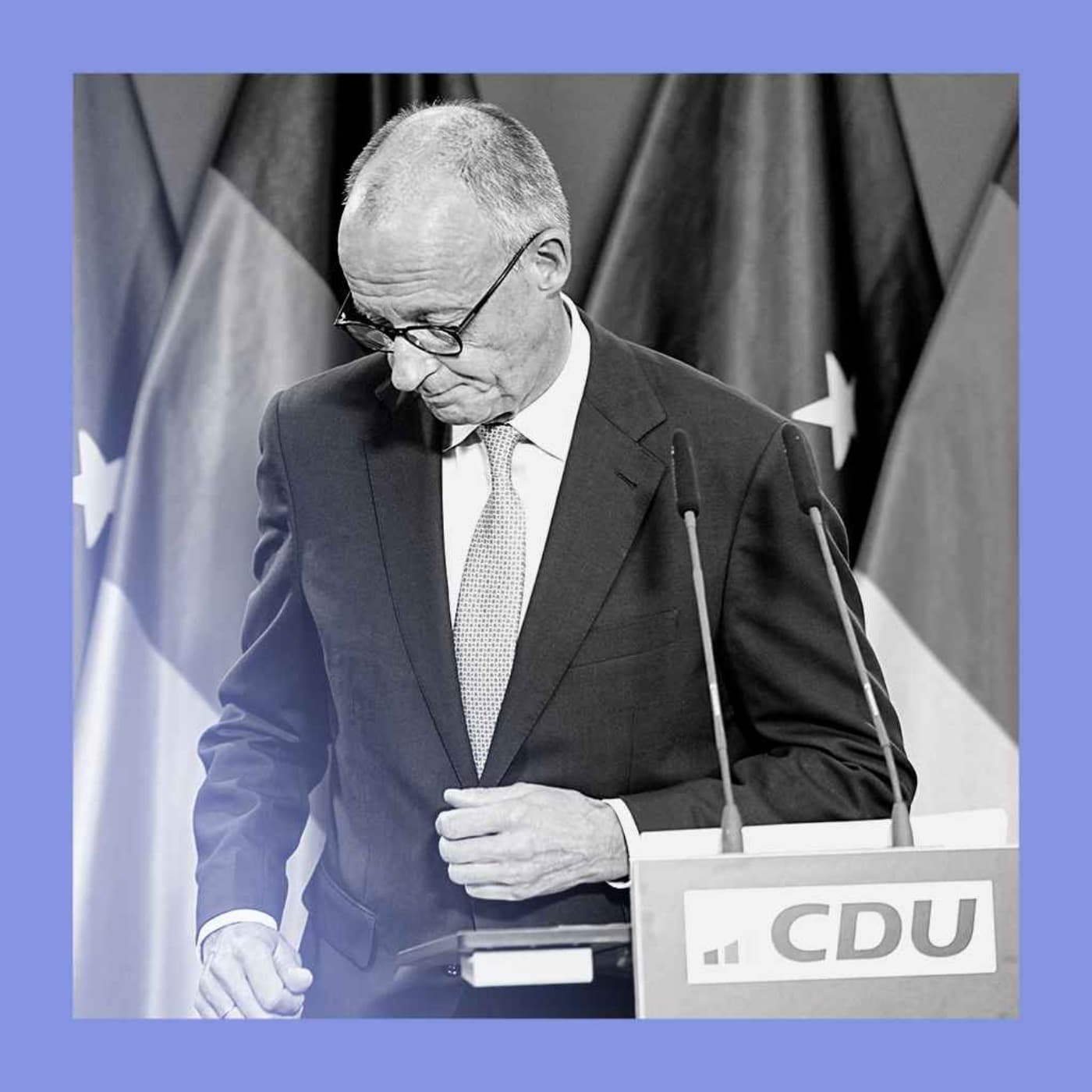
1:45Another set of results are in from elections to state parliaments in Germany, and it's not looking good for Chancellor Friedrich Merz and his Christian Democratic Union. In the city-state of Berlin and in the northern state of Mecklenburg-Vorpommern, the CDU again got a kicking, this time from both ends of the political spectrum.
2:14In Mecklenburg-Vorpommern, it was the same story as in Saxony-Anhalt a couple of weeks ago. The far-right alternative for Germany or AfD party surged. But in Berlin, it was the populist left that made a surprising showing. All that puts Mr. Merz on thin ice, but he put on a brave face. But that's why we can't stop these decisions now. The reforms must come.
3:04parliament in Mecklenburg-Fortpommen. Tom Nuttall is our Berlin bureau chief. They took 4.9 % of the vote, just below the 5 % that you need to make it in. And before these elections, that was regarded as a kind of acid test for Merz, who's in serious trouble in his party. If the CDU failed to make it into that parliament, then the sense was that things were going to get really, really hairy for Merz. And that is exactly what's happened. And so who did win in Mecklenburg-Worpommen? The populist right alternative for Germany came first with around 38 % of the vote. The Social Democrats who run the state pushed into a very close second spot with 35 % of the vote.
3:52And they are likely to continue running the state because no other party will work with the AFD. The second problem for Meads and for the CDU is that in Berlin, the capital, which is currently run by a coalition led by the CDU. Die Linke, a party of the hard left, had a fantastic result. And the chances are that they will now be able to form a coalition that doesn't have the CDU in it. So they will fall into opposition there as well. And how did Mr Merz respond to all of that? Well, it was interesting. About 10 minutes after the exit polls in both states dropped at 6pm, Merz came out and made a short speech to the press corps in the capital.
4:31So this is very unusual for a chancellor to do this on the evening of the state election. And there was a little bit of speculation, you know, is he going to announce he's going to quit? There's been all sorts of speculation about this in recent days. But no, that's not what he did at all. The result in Mecklenburg-Vorpommern, we can't talk about it, it's a disaster. He said that the result in Mecklenburg-Vorpommern was a disaster for the CDU. And that was before we knew, actually, that it had fallen out of the state parliament. He said he was worried about what he called the authoritarian poison dripping into German politics.
5:16But he said to channel his inner Churchill essentially that he was going to keep buggering on. He was not going to quit as leader of the CDU. He was not going to quit as chancellor. and crucially he was going to stick to the reform path of his coalition government in Germany. Remind us about the reform path? A few months ago the coalition agreed to quite a comprehensive set of pension, labour market, other economic reforms that now need to be approved in parliament and he said that not only was the government going to stick to this path but sticking to the path was the best way to tackle the populists of left and right.
5:53But clearly, with these results now in hand, that job is going to be harder. Yeah, particularly now that the CDU has fallen out of the parliament in Mecklenburg-Vorpommern, I think the pressure on Merz is only going to increase. And the next couple of days, I think, could be crucial for his future. There's going to be all sorts of conversations taking place within the party, including a lot of the associations in the German states, which are very important. power brokers, including some of the state premiers, may have something to say. Those premiers did actually back him in a letter that they all signed last week.
6:29So you're probably not going to see some sort of dramatic putsch led by one of these associations in the next few days. But with these results, with Merce's approval ratings barely in double figures these days, with no sense that they really have some kind of strategy to reverse their fortunes, I find it quite difficult to imagine that he and this government can just carry on as if nothing has happened. So I think we are potentially now entering quite a febrile moment in German politics. But what seems clear from these results in particular is that this is not just simply a shift of the German electorate to the right, but generally away in both directions from the centre.
7:11Yeah, I think if you stand back, then you can get quite a clear indication that politics in Germany is really fragmenting, it's fraying to an extent it's radicalising. I mean, we shouldn't draw too many conclusions from elections in two of Germany's 16 states, both of which are relatively small. But nevertheless, you can see some examples here of what's happening across the country. Essentially, it's becoming much, much more difficult for the traditional parties of the centre to impose their agendas and to govern and to put together stable coalitions. In Berlin, where Die Linke is likely to form a government, their signature issue is the forced expropriation of the properties of corporate landlords, which obviously is highly, highly contentious and could be extremely damaging to the reputation of the city amongst investors, but that's what that party is pushing for, and they now claim that they have a mandate.
8:12The AFD perhaps didn't do quite as well as it might have hoped to have done yesterday, but it's come first in a German state election for the third time. In Saxony-Anhalt, which had an election two weeks ago, there's still every chance that the AFD, which took 44 % of the vote there, could find itself leading a government for the first time ever in Germany. So we really are now entering uncharted territory in a country that was once a byword for political stability. It's now becoming something rather different. Thanks very much for joining us, Tom. Thanks, Jason.
9:06shared by real people. Whatever you're working on, Scribd is where you go to find information, build understanding, and get it done. And if you're a student or educator in the U.S., a valid school email address gets you a discounted subscription plan. Head to Scribd.com to claim yours. That's S-C-R-I-B-D dot com. Must be 18 or over. Okay, real talk. Every time I open up my inbox, I've got this vision of the day I'm going to have. Deep work. Big ideas. The project I keep meaning to start. Three hours vanish into replying to threads and hunting down a file someone sent last week. I've tried AI tools that promised to fix this.
9:47They didn't. They were just another tab I had to open, explain myself to, and abandon by Thursday. Superhuman is different. It's at your service, not after your job. It's already where you work, so I'm never starting from a blank tab. It's from the makers of Grammarly, living right inside of the tools I already use, like Gmail and Slack. When I'm drafting a message or making sense of a messy thread, it just helps. Like a thought partner that's already caught up, so we get to the hard part together. The problem was never too little time. It's that busy work crowds out the work that actually matters.
10:21Start streamlining your workflows with Superhuman. Try today at superhuman.com.
10:34We want to democratise the company. We want to have everybody, yourself, driver, everybody, my own driver, my mother, everybody will now come and have a stake.
10:47Ọrẹ Ogunbiyi:Ali Kodangote is Africa's biggest tycoon, currently worth around$30 billion. But he's about to be worth a whole lot more. Oret Ogunbi, our Africa correspondent, is based in Nigeria He owns several businesses, including the Dangote Petroleum Refinery A huge complex which I took a tour of back in February I caught up with Dangote again last week Just before the company launched the biggest African IPO in history I just want every single African to take a stake in this refinery. If the company reaches its$50 billion valuation by November, when shares begin trading on the Nigerian exchange, it could become the most valuable listed firm in Africa.
11:41Ora, it was by no means certain that Dangote was going to list the company in Nigeria. Why has he decided to do so?
11:50Ọrẹ Ogunbiyi:Ever since the refinery kicked off, he's been very clear that this is all about Africa's energy security. And so I think this is still in line with that. Even though he's toyed with listing other bits of his businesses in London, he's been really keen that the stocks of the refinery are available for Nigerians and Africans more broadly to buy into. So that's why he's decided to list on Nigeria's stock exchange. And are Nigerians buying? Well, sort of. The stocks don't actually begin trading until November. But what's open now is a window for people to bid for all the shares that they want. And people really are subscribing.
12:24Ọrẹ Ogunbiyi:This IPO has come at a time when the stock market has become a lot more accessible for first-time investors. So you've even got people in rural areas, for example, buying stock on many points of sales terminals down the road or just from their local bank. You've got Africans in the diaspora buying in as well. You've got these wealth tech startups advising people how to invest from the comfort of their phones. And it does seem that they're actually doing it. The demand has actually been so overwhelming that several banking and trading apps, like Bamboo for example, actually crashed when the IPO opened.
12:57Ọrẹ Ogunbiyi:Dangote says he wants many shareholders, that this IPO is for everyone. So we're trying to make sure that in future when we're having our annual general meeting, we'll hold it in the stadium. We want to make what you call history. And whether or not it fills arenas, stock picking is certainly becoming a much more popular sports across the continent. Is stock picking a big thing then? Well it's becoming a much bigger one and this is partly because retail investors are buying up shares on their phones and helping to lift Africa's stock markets. So if you look at the Nigerian benchmark index that's up by 71 % in dollar terms just this year on par with South Korea's.
13:38Ọrẹ Ogunbiyi:If you look at Ghana's as well that's increased by 50%. If you look at Zambia's in March that index was twice what it had been a year before and it's stayed about that high ever since. Now just to put that in perspective, African markets are quite small by global standards, accounting for less than one percent of global market capitalizations. But with all these new entrants, with all these new people who are interested in buying stocks, they're becoming a little bit deeper and less fickle. And the stocks on the African markets, next to the frothy valuations in many other parts of the world, are beginning to look more and more affordable.
14:14Ọrẹ Ogunbiyi:Who exactly then is buying? Well, it's lots of people who weren't buying these stocks before. So what's happened is you've got fintech startups who are helping make this process a lot easier. They've taken a lot of the paperwork out of the equation and now people are doing this from the comfort of their phones. Lots of these companies, these fintech startups, are pitching investing in stocks as a safer way of saving money than shoving bundles of cash under your mattress. And lots of people are following suit. So Bamboo, one of these startups, lets its 2.3 million users across Nigeria, Ghana, Kenya and South Africa invest in local and foreign stocks using their phones.
14:51Ọrẹ Ogunbiyi:And their user base is actually quite interesting. So in the first quarter of 2026, there was more trading of Nigerian stocks on the Bamboo app for the first time than American ones. So Richmond Bassey, who is a boss at Bamboo, told me that Bamboo is focused directly on African consumers. Think about the nurse in Yaba. Think about traders in the market that didn't think that the stock market was something that was for them. But those are the customers that we essentially were building for. But these millions of users are actually only cashing in very little. The average trade on bamboo is less than$50.
15:28Ọrẹ Ogunbiyi:So lots of these new retail investors are people who don't have very much. But for entrepreneurs like Dangote, it all adds up. Isn't there some risk to this? Definitely, there's a lot of risk, especially in markets like these that are historically quite shallow and volatile. The prospect of spectacular gains also presents the prospect of spectacular losses. And for low earners, the people who are investing around$50, they have the most to lose. So you can look at Malawi, for example. They had an incredible bull run last year in their stocks, but that ended with a 20 % correction this year. So lots of people lost money.
16:07Ọrẹ Ogunbiyi:The same TikTok users who are telling people to invest in their favourite banks were the same people who turned around and warned them that actually investing in the stock market is a roller coaster and a big boy game and people needed to be careful. The real liquidity, the one that's actually going to shift these markets, is still going to come primarily from those deep-pocketed institutional investors and maybe even some foreign ones as well. It sounds like international markets may still then play some kind of role. exactly and I think even Dangote knows that he's already thinking about a secondary listing in New York just a few years from now but by also listing in Africa by bringing all this attention to these markets Dangote may also attract more domestic smart money Africa's most dynamic economies from Zambia to Ghana are already doing this and this current upswing according to analysts that I've spoken to might last a few years beyond that though who knows and that's where the risk question comes But for now, people are really excited about the prospects of Africa's stock markets.
17:10Ọrẹ Ogunbiyi:All right. Thank you very much. Thanks so much for having me, Rosie.
17:31the studio is nice and dark and despite it being the morning science correspondent sam Wykely is here for a bedtime story about blue light. Now, Sam, I'm a bit scared to ask you this question, but despite being a devout reader, I have a tendency to actually scroll on my phone for ages before bed. And I suspect you're going to tell me that's a terrible idea, aren't you? Well, you are certainly not alone. And I am guilty of this too, as are many other people. So a recent survey showed that more than 40 % of respondents use a screen every night in the hour before bed. And a number of studies have linked evening screen use with poor sleep.
18:15So I wanted to know if it is really that bad and decided to dive into the research. And what did you find? Well, the connection here appears to be to do with blue light. So artificial light from screens often has a lot of blue in its spectrum, which has led to many pinning the blame on blue light specifically. And this has led to a whole slew of different products that claim to filter out these blue frequencies. There are blue blocking glasses. There are settings on phones that will dim the blue wavelengths. And there are even screen attachments and supplements that promise to protect the eyes from blue wavelengths from the inside.
18:53But the evidence justifying this bias against blue is hardly clear. So before we get to the evidence, what's wrong with blue light? Well, the link between blue light and sleep is not completely unreasonable. So the body's daily rhythm is conducted by what's called the circadian clock. This makes sure that you feel alert in the morning and drowsy in the evening. And it is light that sets this tempo. So there are a handful of cells in the eye that contain this light-sensitive pigment called melanopsin. So they don't assist in vision, but simply send signals to the brain's circadian clock that suppresses the production of melatonin.
19:33So this is this hormone which induces night-related physiological processes. And that syncs the body to the Earth's day-night cycle. And melanopsin is particularly sensitive to light with wavelengths of around 480 nanometers, which is squarely in the blue region of light's spectrum. And yet you say this evidence is now in question. Well, the link between blue light and the suppression of melatonin is uncontroversial. That is not the issue. The question is really whether everyday exposure to blue light will have any clear, sizable impact. So there was one major study published in 2015, which asked a dozen participants to read either a print book or an electronic book for four hours before bed in an otherwise dimly lit room to judge its effects.
20:26And what they found is that those reading screens had a roughly 50 % reduction in melatonin compared to the print readers and also took longer to fall asleep. That sounds like pretty good evidence. Blue light's bad. Well, I don't know about you, but for me, four hours of reading before bed is quite a long time. I'm rarely hitting those numbers. And even with that excessive amount of time, the e-readers only took an average of about 10 minutes longer to fall asleep than the print readers. So the following year, in 2016, there was another study. And here the authors lowered the reading time for each group to only two hours and also exposed the participants to a constant bright white light for about 6.5 hours during the day.
21:12They found no differences between the groups in melatonin levels as well as sleep parameters like onset or duration of sleep. So what the scientists concluded is that a person's light history, you know, their prior exposure to light throughout the day will affect their sensitivity to it in the evening. So where does that leave us in terms of bedtime? What are we supposed to do? It puts us in a bit of a complicated position. And Russell Foster, who is an expert in sleep science, he told me that these blue light studies are just swamped with complications. And he stressed that we need to be very careful when extrapolating away from these lab-based experiments and advising people about what they should do before they go to bed.
21:54And what's more, the power of blue blocking glasses is also very unclear. So there was a review of 17 trials in 2023 that found no clear evidence of blue blocking glasses impact on sleep. And the effectiveness of blue filtering software on screens is similarly inconclusive. So doom scrolling is fine? Well, what we can say is that you should try to minimize light exposure before you go to bed. That is not necessarily about avoiding these blue wavelengths. It's more about avoiding bright white light. So regardless of its source, bright white light increases your alertness and can shift your circadian clock.
22:37That itself is not settled. You know, how bright and for how long that exposure should be to shift the circadian clock is still uncertain. But it does make sense to reduce your exposure. So scroll away to your heart's content before bed. But before buying a pair of blue blocking specs, you're probably better just dimming the brightness on your screen. Sam, thank you very much. Thanks very much.
23:17That's all for this episode of The Intelligence. We'll see you back here tomorrow. Thank you.
23:52most Capital One cafes are open seven days a week to assist with your banking needs. Yep, even on weekends, it's pretty much all he talks about. In a good way. What's in your wallet? Terms apply. See CapitalOne.com slash bank. Capital One N.A. Member FDIC. With no fees or minimums on checking accounts, it's no wonder the Capital One bank guy is so passionate about banking with Capital One. If he were here, he wouldn't just tell you about no fees or minimums. He'd also talk about how most Capital One cafes are open seven days a week to assist with your banking needs. Yep, even on weekends, it's pretty much all he talks about.
Read the full transcript
24:30In a good way. What's in your wallet? Terms apply. See CapitalOne.com slash bank. Capital One N.A. Member FDIC.
From the publisher
Two more state-election results reveal surging support for both the far-right AfD and the populist-left Die Linke parties. Chancellor Friedrich Merz himself described the outcome as a disaster; what will it mean for him? Our correspondent looks into why there is so much enthusiasm for African stocks. And what the science says about blue-light exposure and sleep.
Guests and host:
- Tom Nuttall, Berlin bureau chief
- Ọrẹ Ogunbiyi, Africa correspondent
- Sam Wikeley, science correspondent
- Rosie Blau, co-host of “The Intelligence”
- Jason Palmer, co-host of “The Intelligence”
Topics covered:
- German politics, Friedrich Merz, AfD, Die Linke
- African stockmarkets, Aliko Dangote
- sleep science, blue light
Listen to what matters most, from global politics and business to science and technology—subscribe to The Economist.
Hosted on Acast. See acast.com/privacy for more information.