
In short
Economist Podcasts Episode Summary
Episode Title
Check in the mail: our analysis of Epstein’s correspondence
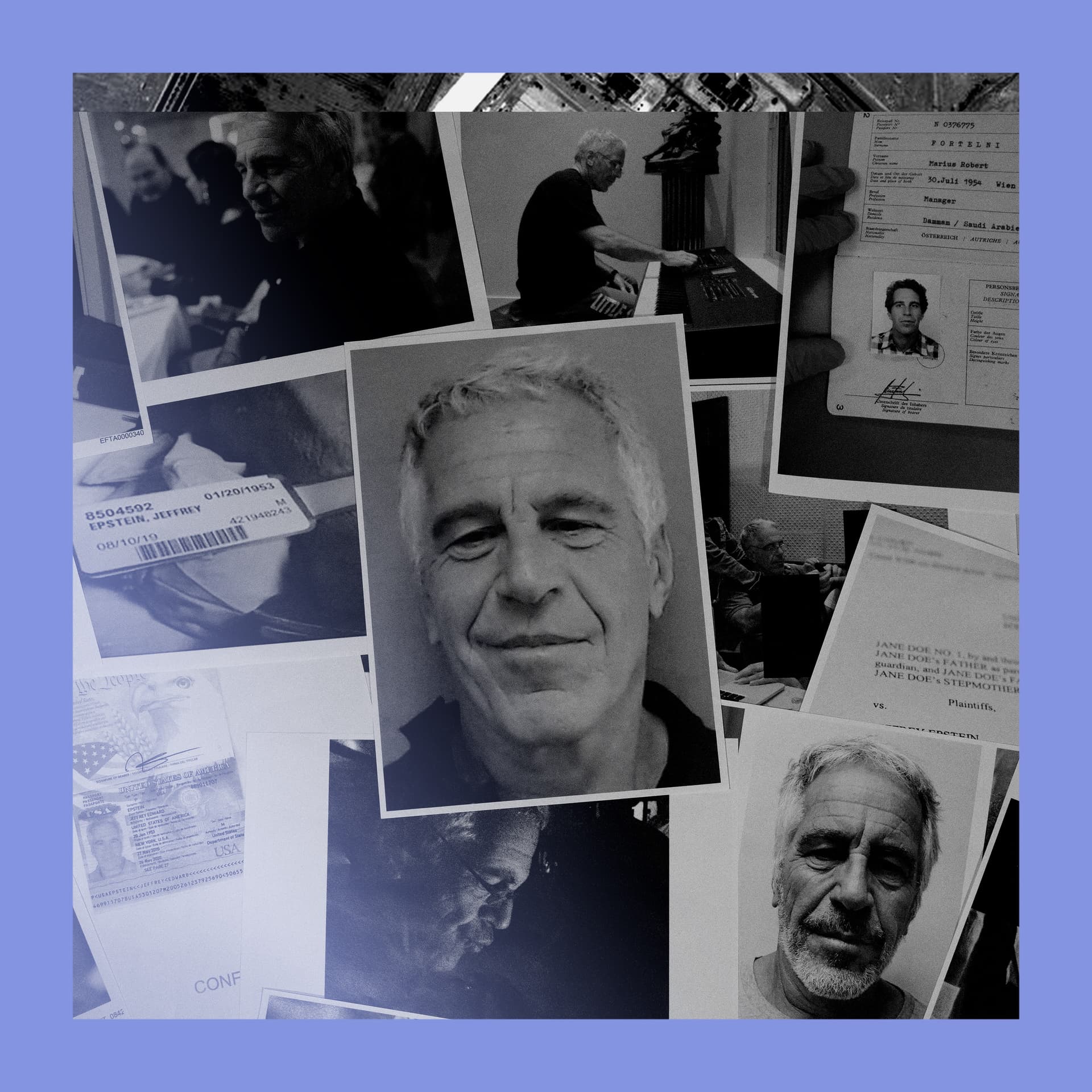
Episode Description In this episode, the data journalism team from The Economist explores the extensive email archive of Jeffrey Epstein, a convicted sex offender. The discussions include insights into the network of individuals Epstein communicated with, a critique of proposals to ban youth from social media, and an introduction to a new wine variety known as "blouge."
Guests and Host
- Rosie Blau - Host of “The Intelligence”
- Dan Rosenheck - Data Editor
- Tom Wainwright - Media Editor
- Tom Standage - Deputy Editor of *The Economist*
Topics Covered
- The Epstein files
- Social media bans
- “Blouge” wine
---
Key Discussions
- Epstein's Correspondence
- Context: The release of Epstein's emails provides insight into his vast and influential network, which includes powerful figures from various fields.
- Analysis Method: The data team utilized a database constructed from over 3 million emails, categorizing correspondents and categorizing messages by their disturbing nature.
- Findings:
- Majority of correspondence was with his staff (secretary, accountant, etc.).
- Notable high-profile contacts included:
- Katherine Rumler - Barack Obama's former White House Counsel, with over 11,000 emails exchanged.
- Arianda Rothschild - Member of the Rothschild banking family with 5,500 emails.
- Larry Summers - Former Treasury Secretary.
- The network extended across various fields including finance, science, law, and more, indicating Epstein's reach and connections.
- Social Media Bans
- Current Trends: Australia has implemented a ban on social media usage for individuals under 16, with other countries considering similar regulations.
- Concerns:
- Debate over the effectiveness of blanket bans in protecting youth from online harm.
- Potential for bans to inadvertently isolate children from social connections and support systems.
- Expert Opinions:
- Tom Wainwright argues that while there are concerns regarding social media's impact on mental health, outright bans may not effectively mitigate risks.
- Many parents and child protection advocates express skepticism, suggesting that bans could push harmful content to less regulated platforms.
- Introduction to “Blouge” Wine
- Definition: A new wine style that blends white and red grapes, designed to be versatile and climate-resilient.
- Taste Profile: Offers a unique combination of characteristics from both red and white wines.
- Market Appeal: Positioned as a trendy option, akin to craft beer, with an emphasis on casual consumption and food pairings.
- Climate Resilience: Provides a solution for winemakers facing challenges due to climate change by balancing alcohol content and freshness.
---
Key Takeaways
- Epstein's email analysis reveals a troubling yet fascinating glimpse into his relationships with influential figures, raising questions about accountability and complicity.
- The debate over social media bans emphasizes the need for more nuanced approaches to protect youth without stifling their access to supportive online communities.
- The emerging "blouge" wine indicates shifting trends in winemaking, catering to changing consumer preferences while addressing environmental concerns.
---
Conclusion This episode sheds light on complex societal issues, from the ramifications of Epstein's network to the challenges of modern digital communication and innovative trends in the wine industry. Each discussion underscores the interconnectedness of personal actions, societal norms, and emerging solutions to contemporary challenges.
Written by AI. May contain mistakes. Listen to the episode to check what was said.
Chapters
Tap a time to open that second in VOAustralia's Social Media Ban
1:35 to 2:12
Explore the implications of Australia's ban on under-16s using social media.
“And for this recording, I was taken into the studio blindfold, then asked to guess what I was tasting.”
Analysis of Epstein's Correspondence
2:12 to 7:00
Delve into the findings of The Economist's analysis of Epstein's emails.
“The recent release of documents relating to paedophile and rapist Jeffrey Epstein has revealed an astonishing network.”
The Implications of Epstein's Network
7:00 to 11:28
Understand the breadth of Epstein's connections and their significance.
“convicted, is Ghislaine Maxwell, who was his longtime accomplice.”
Social Media's Role in Youth Wellbeing
11:28 to 14:02
Examine the challenges and discussions around youth mental health and social media.
“We must make digital literacy tools available in our schools.”
The Debate on Social Media Bans for Teens
14:02 to 15:40
Explore the motivations behind proposals for social media bans aimed at young users.
“Question is, does a ban actually help kids?”
Public Support for Bans
15:40 to 16:44
Investigate the overwhelming support for social media bans among adults globally.
“There's huge support for this among adults pretty much all over the world.”
The Complexity of Social Media's Role
16:44 to 18:40
Discuss the multifaceted impact of social media on children's lives and mental health.
“Yeah, I mean, it's early days, but I think there's reason to be sceptical about how much good these outright bans are going to do.”
Real-World Effects of Australian Bans
18:40 to 19:32
Examine the outcomes of Australia's ban on under-16s using social media.
“We can't recreate times from years ago because we have fond memories of it.”
Reforming Social Media for Youth
19:32 to 21:44
Consider potential reforms to make social media safer and more suitable for teenagers.
“Australia hasn't banned young teenagers from messaging apps or from multiplayer online games, so cyberbullying may continue on those.”
Exploring New Wine Trends: Blouge
21:44 to 26:41
Learn about a new wine trend blending red and white grapes for a unique flavor.
“Wait a minute, where are all my bits and bobs?”
Transcript
Automatic transcript. May contain errors.0:00Tom Standage:Youth mental health is a complex challenge that requires comprehensive solutions. We must strengthen after-school programs. We must make digital literacy tools available in our schools. We must work with mental health professionals to support children. And we must empower mentors, educators, and parents to keep kids happy. Learn more about our commitment to finding lasting solutions at empowerourfuturecoalition.com slash solutions. Paid for by the Coalition to Empower Our Future. If your eyes are the windows to your soul and your glasses are the windows to your eyes, then it's pretty important to find your perfect frames.
0:38Tom Standage:That's why at Warby Parker, we've made shopping for eyewear as easy and fun as can be. Peruse endless styles in our stores, or use our app to virtually try on frames and get personalized recommendations. To find your next favorite pair of glasses, sunglasses, or contact lenses, or to locate your nearest Warby Parker store, head over to warbyparker.com. That's warbyparker.com.
1:12Rosie Blau:Hello and welcome to The Intelligence from The Economist. I'm your host, Rosie Blore. Every weekday, we provide a fresh perspective on the events shaping your world.
1:27Rosie Blau:Since December, under-16s in Australia have been banned from social media. Other countries are getting ready to follow. But does such legislation actually work? And for this recording, I was taken into the studio blindfold, then asked to guess what I was tasting. It turned out to be part exercise in ritual humiliation, part education about a new phenomenon coming to a supermarket near you.
2:03Rosie Blau:First up though.
2:12Rosie Blau:The recent release of documents relating to paedophile and rapist Jeffrey Epstein has revealed an astonishing network. An unknown number of powerful men and some women trafficked and abused a much larger number of vulnerable women and girls. The emails also reveal a broader trade in influence and favors, a network peddling patronage, secrets and access. But making sense of the more than 3 million documents comes with incredible challenges, one journalists all over the world are tackling. Our data team has just published its analysis of what the trove contains.
2:50Tom Wainwright:Fortunately, there was this volunteer group of software engineers who extracted all of the text from these PDFs.
2:59Rosie Blau:Dan Rosenheck is The Economist's data editor.
3:03Tom Wainwright:And transformed them into a big fat database that anyone can search on the internet via a website that looks just like Gmail and that we were able to train our analysis on.
3:18Rosie Blau:What were you actually looking for as you combed through the releases?
3:22Tom Wainwright:These emails, which are concentrated between 2008 and 2019, span a range from the mundane to the explicit to, in some cases, the potentially criminal. We were looking for two things. First, just straight counts of who Epstein was in touch with. And second, what evidence was there of Epstein's crimes in these files? For the first portion, we identified each message by sender and recipients and then tried to group them all together despite misspellings and different names and email addresses and stuff. And for the second, we trained a large language model to search through and score all 1.4 million emails on how disturbing they would be to an average reader to find the needles in a haystack that were at least explicit and potentially evidence of criminal activity.
4:24Tom Wainwright:So what did you find? Most of the correspondence was with his team, secretary, accountant, pilot, lawyer, all of the various staff at all of his properties. Then if you exclude them and look at his external contacts, one of the main things that struck me was Epstein's network was unbelievably broad and balanced. He was messaging directly with very high level or top end or elite people of the non-staff contacts fully a quarter have their own Wikipedia page in like lots of different industries. 19 % finance, which makes sense because he was a financier, but 10 % science and technology and I think 6 % in law and 6 % other types of business.
5:18Tom Wainwright:You name the field, he had at least a handful of very influential and well-connected people in that industry. Really broad.
5:29Rosie Blau:And what did you find out about the individual correspondents?
5:33Tom Wainwright:There were a handful of people who were in touch with him all the time. The one that leapt out really in a class by herself was Katherine Rumler, who was Barack Obama's White House counsel for a number of years. She actually just resigned from Goldman after this came out. But she exchanged over 11 ,000 emails with him between 2014 and 19. And I like broke down the frequency and it was on 70 percent of days. So out of every seven days of the week on five of them, they exchanged at least one email. Other people who were always in his inbox, Arianda Rothschild of the Rothschild banking family, a billionaire, 5 ,500 emails with her.
6:29Tom Wainwright:He was in touch with Larry Summers all the time, the former Treasury Secretary. He was in touch with Tom Pritzker all the time, the Hyatt Hotels billionaire. A lot of these relationships were extremely consistent and intense. Emailing with Jeffrey Epstein is not a crime. And many of the people who did email with him say that they had no knowledge either of his crimes or of the scale of his crimes. and the only person on our tree map who has been even charged with a crime, not to mention convicted, is Ghislaine Maxwell, who was his longtime accomplice. And then there was a long tale of rich and powerful people who were there less often, but enough to show up.
7:17Tom Wainwright:And one way you can really tell you're kind of getting only the tip of the iceberg here is some of the rich and famous people who appear less often when you look at those messages, a lot of them are messages to and from secretaries and assistants just being like, can we schedule a phone call?
7:39Rosie Blau:And do you have an example of that?
7:41Tom Wainwright:One in particular that leapt out, Steve Tisch, who's a billionaire, who's the owner of the New York Giants American football team. They had an exchange where they were discussing women to whom Epstein could introduce Tish. And Epstein says in a message, can you give me a number to call? I don't like having written records of this stuff. Steve Tish, for his part, has issued a statement saying that he regrets his relationship with Epstein and that all discussions he had with Epstein regarding women were regarding adult women.
8:17Rosie Blau:Dan, you've spent far more time with these emails than is probably healthy. What have you found out about how Epstein spoke with the people he was involved with? There are some very worrisome needles in haystacks.
8:32Tom Wainwright:To find them, we fed the entire archive into a large language model and had it score every message based on how disturbing it would be to an average reader. And that filtered out 1 ,500 email threads that were, at least in the Baht's estimation very much not mundane. And the vast majority of those disturbing messages were not with people with big public profiles. A small handful of individual messages with people with public profiles that were flagged as alarming, but not a ton.
9:17Rosie Blau:And Dan, there's so much information here, and yet we know there's also a lot more. So what's not here?
9:23Tom Wainwright:The Justice Department said that it did not publish everything it dug up. Three million of the six million total documents that they unearthed on a first pass, they determined not to release. The second thing is that we were only able to analyze the email portion of the files. There are lots and lots of other types of documents that are also in the files that may reveal a lot more. And analysis of that is trickling out, but that will take longer. The final thing is that I think the biggest remaining questions about Epstein are not answered and probably cannot be answered by this type of information, which are, number one, how exactly did he get that sweetheart plea deal in 2008?
10:16Tom Wainwright:How did he manage to kill himself in a jail cell when he was supposed to be under constant surveillance? And who else was involved in his sex trafficking ring and potentially might be being protected to some degree with all the redactions. There's one example that we cited in the story of a message from a redacted sender that says, and I quote, your littlest girl was a little naughty to Epstein. So we don't know if that is from somebody who abused the littlest girl, somebody who provided the littlest girl, but the name's blacked out.
11:02Rosie Blau:Dan, thank you very much.
11:04Tom Wainwright:Thank you.
11:07Rosie Blau:And you can find much more by digging through the Digital Teams Project online. Find it in the Economist app.
11:31Tom Standage:after-school programs. We must make digital literacy tools available in our schools. We must work with mental health professionals to support children, and we must empower mentors, educators, and parents to keep kids happy. Learn more about our commitment to finding lasting solutions at empowerourfuturecoalition.com slash solutions. Paid for by the Coalition to Empower Our Future. Taking care of your eyes shouldn't be a hassle. That's why Warby Parker is a one-stop shop for all your vision needs. Our prescription glasses and sunglasses are expertly crafted and unexpectedly affordable. Stop by a nearby store or use our app to virtually try on frames and get personalized recommendations.
12:12Tom Standage:Did we mention we offer eye exams and take vision insurance too? For everything you need to see, head to your nearest Warby Parker store or visit warbyparker.com today. That's warbyparker.com.
12:31Rosie Blau:People don't agree on much these days, but whatever their politics, one thing does bring them together. The belief that social media is harming children and teenagers.
12:42Tom Standage:All right, kids are ended up in the hospital with burns all over their hands. Other places too. Why? You asked, but they're lighting themselves on fire for TikTok trip.
12:51Dan Rosenheck:A teenager has been remembered by his family as gifted after taking his own life following blackmail over nudes he sent on snap.
12:58Tom Standage:Dr. Vivek Murphy says social media is contributing to the ongoing mental health crisis in young people.
13:04Rosie Blau:Many people reckon they should be banned from using it altogether. And in December, Australia did just that, stopping under-16s from using Facebook, Instagram, TikTok and other platforms.
13:16Tom Standage:So I was kicked off off my YouTube and my Snapchat platforms.
13:21Rosie Blau:So far, that has had mixed success.
13:24Tom Standage:Um, I wasn't kicked off any of my social media accounts except for YouTube. Yeah, same here. Only YouTube has denied my access to it. I've only known a few people that have been banned only on TikTok and Snapchat. And really, there was no huge difference. They would easily fix the situation, make another account, get another device.
13:47Rosie Blau:But other countries are considering similar regulation. Spain recently proposed a ban to protect children from the digital wild west. A dozen countries from Britain to Malaysia are also toying with the idea, as are several American states. Question is, does a ban actually help kids?
14:05Dan Rosenheck:These proposals come from a totally understandable desire to keep young people safe online.
14:12Rosie Blau:Tom Wainwright is our media editor.
Read the full transcript
14:14Dan Rosenheck:They come after years in which governments have been probably too relaxed about some of the risks that people face. there. But these blanket bans for younger teenagers may be unlikely to achieve the aims that policymakers hope they will achieve.
14:29Rosie Blau:Tom, aren't we all worried about what our kids are looking at online? There seems to be a problem here that does need solving.
14:37Dan Rosenheck:Yeah, I think it's one of those things that every parent worries about and I think probably quite a few children worry about as well. We're at this interesting moment where today's parents of teenagers for the first time are of an age where they themselves might have used social media in their own teenage years or in their 20s. We've seen a thankfully small number but significant number nonetheless of really serious tragedies involving children who've hurt themselves or even killed themselves partly as a result of things that they've seen online and at a bigger population level I think many people are trying to figure out what is behind a worldwide decline in the mental health of young people.
15:15Dan Rosenheck:There's been a statistically significant increase in depressive episodes across many countries over the last 15 years or so, which roughly coincides with the period in which smartphones and social media have become much more popular. And so people are wondering what, if anything, can be done to try and solve this problem.
15:32Rosie Blau:So what's the general perception of those bans? What do people in different countries actually think about the idea of social media bans?
15:39Dan Rosenheck:Well, I'm not sure I've ever seen a more popular policy than this. I mean, it's just extraordinary. There's huge support for this among adults pretty much all over the world. I saw one series of polls done by Ipsos last year. They did questioning in something like 40 countries and in every single one there was a majority in favour of banning under-16s from using social media. I looked down in a bit more detail at one of the polls here in the UK and it's a policy which has support among people of all ages, of both sexes, people who lean left, people you need right. I think it's one of those policies where there's kind of something for everyone.
16:16Dan Rosenheck:The left-wingers, I think, maybe like the idea of holding to account these sinister global corporations that want to monetise your children, and right-wingers, for their part, maybe want to get back to a conservative traditional childhood where kids are outdoors, building dens in the woods and that kind of stuff. So it seems to be something that really everybody likes the sound of.
16:36Rosie Blau:And yet you said at the top that those bans might not have the impact that politicians and the general population wants them to.
16:44Dan Rosenheck:Yeah, I mean, it's early days, but I think there's reason to be sceptical about how much good these outright bans are going to do. One reason that is worth saying that people sometimes forget is that social media aren't all bad for children, just as they're not all bad for adults. If children are cut out of social media, it cuts them off from one of their sources of news about the world, in particular children who feel a little bit isolated, maybe because of where they live or something about themselves, their sexuality for example going online can make them realize that they're part of a bigger community worldwide there's a lot of worry about what the ban might do to them and what they might be missing out on and we spoke to a number of Australian parents about what they thought about
17:24Tom Wainwright:this as a social worker I'm really concerned about the socially isolated kids those young people I
17:33Tom Standage:I think the threat to their well-being and lives, that outweighs the benefit of a poorly implemented ban. That's my feeling about it.
17:42Dan Rosenheck:One of the things that really struck me when I was doing this reporting was that these bans had been largely opposed by child protection groups, as I discovered when I spoke to Andy Burrows, the chief executive of the Molly Rose Foundation. The problems of bad actors and criminality won't disappear. They will simply migrate to where children go. there's a real risk that if we say that we're proceeding with a ban that immediately drains the energy away from regulating the services that are still in scope. I think many parents have in their mind a sort of idealised idea that as soon as they take away Instagram their child is instantly going to get back to the Latin poetry or learning the piano or something like that but the reality is that the kind of childhood that people perhaps had in the past has been pretty severely curtailed in recent decades.
18:34Dan Rosenheck:And that's what we heard from some of the parents that we spoke to.
18:36Rosie Blau:We can't go back to the 80s. That's not realistic either. We can't recreate times from years ago because we have fond memories of it. And I'm pretty sure some of my teenage behaviour was extremely risky. I think I'd rather Charlotte's in her bedroom on Instagram, to be honest. Tom, we've got a concrete situation, which is Australia, where under-16s have been banned from going on social media since December. How's that ban going?
19:04Dan Rosenheck:Well, we thought we'd ask the real experts, meaning teenagers themselves in Australia. And the first thing they pointed out was that they're finding lots of ways to get around this ban. They're faking their age, they're recreating accounts using other people's identities, or they're using obscure news sites like LemonAid, for example, which had a burst of popularity when the ban first came in.
19:25Tom Standage:A lot of kids have found ways around it and now that so-called harmful content is easier for them to access because parents don't have control over their accounts anymore.
19:34Dan Rosenheck:Australia hasn't banned young teenagers from messaging apps or from multiplayer online games, so cyberbullying may continue on those.
19:41Tom Standage:I do not like the ban because it's just purely isolating the people who were banned from the other people and I feel like we were born around it, our generation, and them just taking away from us is not good for our mental health.
19:57Dan Rosenheck:And then there's the worry that higher age limits may just delay problems until youngsters are 16. Then they'll suddenly gain full access to social sites that they don't have much experience using.
20:06Tom Standage:16 is such a high number. People are thinking about their jobs, thinking about university, getting their learner's permit and getting ready for the real world, their future. and not having social media is honestly kind of harmful.
20:19Dan Rosenheck:It'll be a long time until we know exactly how the Australian plan has gone, but so far it seems as if implementation isn't without its problems.
20:26Rosie Blau:So then what can be done, Tom? How can social media be made a more suitable place for teens to spend their time?
20:33Dan Rosenheck:I think there's a lot of appetite for reform here. And one thing that interests me is that whereas in the last decade or so, all the focus has been on the content on social media, it seems as if now people are moving more towards thinking about how the platforms themselves might change the design of how they operate. And we're seeing a pincer movement here where in the US there are legal challenges which have just got underway which could have some very big impacts. There's a case going on in California against Meta and against YouTube by an individual who believes that those platforms harmed her mental health when she was a child.
21:10Dan Rosenheck:And at the same time in the European Union, the European Commission has preliminarily found TikTok guilty of breaking its laws on creating an addictive platform. And it has cited features like TikTok's infinite scroll, its auto-playing videos, its personalised algorithm. And these are things which are completely core to how TikTok and apps like it operate and what makes them so popular. So if these design features of the apps are now in the crosshairs, the result could be that these apps turn out to be quite different things, not just for teenagers, but for adults too going forward.
21:47Rosie Blau:Tom, thank you very much.
21:49Dan Rosenheck:Thank you.
22:04Rosie Blau:This is hilarious.
22:05Dan Rosenheck:I see you've got the... I do, I do. Wait a minute, where are all my bits and bobs? You've got them here.
22:11Rosie Blau:I may have my blindfold on, but my excellent sense of perception tells me I'm hearing the voice of Tom Standage, one of the Economist deputy editors.
22:22Rosie Blau:What are you going to feed me?
22:24Dan Rosenheck:Yeah, you're going to find out. Right, here comes a pop. One of them.
22:31Rosie Blau:It's a good sound.
22:32Dan Rosenheck:It is. Happy sound. So what can you tell me about that wine? What does it strike you as?
22:39Rosie Blau:Not very sweet.
22:41Dan Rosenheck:Okay, what colour would you say that wine was?
22:43Rosie Blau:Oh, good question. I was assuming it was white. Ooh, maybe this is, hang on.
22:49Dan Rosenheck:I'm going to have this one.
22:50Rosie Blau:This one is a different temperature.
22:52Dan Rosenheck:Yes.
22:53Rosie Blau:Look at those skills of perception. Yeah, this does smell like red wine.
22:58Dan Rosenheck:Okay, so now we have another wine here.
23:02Rosie Blau:It's cold. I would say it is white. It's not fragrant. It's quite clear. Now I've tried it again. I think it's red. But I wouldn't be sure about that.
23:15Dan Rosenheck:Well, the answer is yes, because it's both. The third wine is this one here. And this is a wine called a blouge wine. That is a combination of blanc, white and rouge, because it's both. And what's happening there is that...
23:33Rosie Blau:I thought that was rosé.
23:34Dan Rosenheck:No, it's different from rosé. So basically with white wine, you take white wine grapes and you crush them and you have very little skin contact. You take the skins away and that's how you make white wine. With red wine, you take your red grapes, you crush them and you have a long period of skin contact. And that puts all of the structure and the colour into the wine. If you take white grapes and you treat them like a red grape, so in other words, you crush them and you leave the skins in there for a long time, you get orange wine. So that's white grapes put through a red wine process. And if you take red grapes and put them through basically a white wine process, you get rosé, almost your namesake.
24:12Dan Rosenheck:You get a wine that is much lighter than a red wine. What's happening with this wine, with Bluge, is that white and red grapes are being fermented together, essentially like a red. So it's like a red where you've lobbed in some white. Winemakers are deliberately splitting the difference between white and red. So you've got a wine that initially, when you first tasted it, tasted like a white. It had the freshness and the clarity of a white, but then it has the kind of depth and the structure of a red. And this makes it very, very versatile for food pairing. And these wines are generally being marketed in quite a funky way.
24:46Dan Rosenheck:They're not being aimed at old wine nerds like me. They are being marketed rather more like craft beer. So with names like Boogie Woogie and Superbloom, it's fantastic for, you know, a barbecue on a Sunday. Do you want red or white? Well, you don't have to choose. You can kind of have both. But the other thing that's really good about it is it turns out to be, for winemakers grappling with climate change, a really, really good hedge.
25:06Rosie Blau:And why is that?
25:07Dan Rosenheck:The trouble with red wines right now is that in many parts of the world that make red wine, if there's a heat wave or there's just a lot of very hot days, the red grapes are over-ripening. So when you come to harvest them, you get a very alcoholic wine, 15 or 16 % sometimes. If you harvest them early to avoid that problem, then the tannins basically in the skin and in the pips haven't ripened and then you get a very kind of stalky taste. It just doesn't taste right. So what you can do if you throw some white grapes in is you can leave the red grapes to ripen, you can harvest them and then you can co-ferment them with white grapes.
25:39Dan Rosenheck:And the white grapes reduce the alcohol content and they also add back the freshness and the acidity that's lost when you have these very flabby alcoholic wines.
25:48Rosie Blau:And how much of this is happening? I've not heard about it.
25:52Dan Rosenheck:The problem is that there isn't a way of tracking the sales of this wine. There isn't an agreed-on definition here. In some ways, it's not new because there have been wines in the past. I mean, some champagnes use mixtures of red and white grapes and so on. So, there is a sort of market category for this. And in fact, even the word bluige is quite controversial. Some American and Australian winemakers think that even though they're doing this style, their customers won't know what it means. Instead, they prefer to call this a chillable red or a light red. But the trouble is we don't actually have a category of bluige that we can track.
26:21Dan Rosenheck:So, you can't measure how much of this is selling. But the makers I've spoken to who are selling it say that they're seeing sales of this style going up every year.
26:29Rosie Blau:And why do you have to drink it chilled?
26:31Dan Rosenheck:Because then you get the freshness of the wine. And just, I mean, people like to chill red wines as well, actually, to make them less flabby, give them a bit more definition. So this is a wine style that is designed to be consumed just out of the fridge.
26:44Rosie Blau:And people are actually buying it?
26:46Dan Rosenheck:Yeah. This is something that the wine press has latched onto, that the sellers of these wines are seeing their sales go up, you're starting to see wine lists in restaurants and wine shops specifically saying that they have these chillable light reds of this style.
26:59Rosie Blau:Cheers. Cheers. Thanks, Tom. Thank you.
28:00Tom Standage:We'll see you next time.
28:05Tom Standage:at empowerourfuturecoalition.com slash solutions. Paid for by the coalition to empower our future. If you work in university maintenance, Grainger considers you an MVP because your playbook ensures your arena is always ready for tip-off and Grainger is your trusted partner. Offering the products you need all in one place from HVAC and plumbing supplies to lighting and more and all delivered with plenty of time left on the clock so your team always gets the win. Call 1-800-GRAINGER, visit grainger.com, or just stop by. Grainger, for the ones who get it done.
From the publisher
Our data journalists trawled through the vast email archive of Jeffrey Epstein, a dead sex offender. It is a revealing look at how and with whom he communicated. As interest grows in banning young people’s use of social media, we argue there are better ways to mitigate harms. And a blindfolded introduction to “blouge”, a new, more climate-resilient wine variety.
Guests and host:
- Rosie Blau, host of “The Intelligence”
- Dan Rosenheck, data editor
- Tom Wainwright, media editor
- Tom Standage, deputy editor of The Economist
Topics covered:
- The Epstein files
- Social-media bans
- “Blouge” wine
Get a world of insights by subscribing to Economist Podcasts+. For more information about how to access Economist Podcasts+, please visit our FAQs page or watch our video explaining how to link your account.
Hosted on Acast. See acast.com/privacy for more information.