In short
The episode mixes three stories: (1) a Premier League ruling on Manchester City’s alleged financial “doping” via sham sponsorships; (2) Russia’s “grey zone” attacks and Europe’s dilemma on how to respond; (3) Japan’s Chikawa character boom and why “kawaii” comfort resonates.
Guests
Sonny Loughran (Economist Britain correspondent; covers UK football and the City case). Jonathan Rosenthal (Economist international correspondent; discusses Russia-Europe security operations). Moeko Iida (Japan writer; reports on Chikawa culture and fandom).
Key claims/examples
City allegedly overstated income by over £830m through sham sponsorships to evade spending rules, enabling record-breaking player purchases; City denies guilt and may face title stripping, relegation, and up to nine years of points deductions. Grey zone examples include drone attacks, parcel bombs, attempted assassinations, and sabotage of Dutch trains; Europe is hardening defenses but risks escalation if deterrence fails. Chikawa: viral 2020 comic strip, anime/English dub, Hong Kong metro branding, and a film drawing 10m+ viewers; despite cuteness, stories include gig-economy jobs, anxiety, and body-horror.
Written by AI. May contain mistakes. Listen to the episode to check what was said.
Chapters
Tap a time to open that second in VOManchester City's Financial Allegations
1:40 to 8:05
Explore the allegations against Manchester City regarding financial mismanagement.
“Sergio Aguero's 94th minute goal for Manchester City in 2012 is among the greatest moments in football history.”
Russia's Grey Zone Attacks
8:05 to 14:00
Understand the range of grey zone activities attributed to Russia and their implications.
“Now they could face a return to the footballing wilderness which could end up being the biggest test of their faith yet.”
Europe's Response to Russian Aggression
14:00 to 17:47
Explore how Europe is grappling with responding to Russian threats and the implications of its actions.
“create an effect that is big enough to actually matter.”
Introduction to Chikawa: A Cultural Phenomenon
17:47 to 18:10
Learn about Chikawa, a popular character in Japan, and its growing appeal.
“Jonathan, thanks very much for your time.”
The Success and Appeal of Kawaii Culture
18:10 to 22:34
Discover the charm of Chikawa and the broader kawaii culture in Japan, including its impact on global trends.
“Chikawa is a small, white, round, hamster-like puffball.”
Understanding Kidults and Nostalgia
22:34 to 23:00
Discuss the phenomenon of adults engaging with children's culture and what it reveals about society.
“One sociologist I spoke to said the franchise acknowledges that this world is highly anxious, and it tells you it's okay to be anxious.”
Transcript
Automatic transcript. May contain errors.0:00This intelligence podcast is sponsored by Perk, the intelligent platform for travel and spend. Every person on your team loses up to seven hours a week doing the work behind the work, submitting expenses, matching receipts and booking travel.
0:13Rosie Blau:Using AI and automation, Perk can do that work, bringing travel and spend together in one place. Enjoy three months without platform fees when you sign up at Perk.com forward slash the intelligence. That's Perk.com forward slash the intelligence. New U.S.-based corporate customers only. Terms apply. This Economist podcast is sponsored by Scribd, the knowledge platform with more than 350 million documents shared by real people. Whatever you're working on, Scribd is where you go to find information, build understanding, and get it done. And if you're a student or educator in the U.S., a valid school email address gets you a discounted subscription plan.
0:52Head to Scribd.com to claim yours. That's S-C-R-I-B-D dot com. Must be 18 or over.
1:03Rosie Blau:The Economist.
1:10Rosie Blau:Hello and welcome to The Intelligence from The Economist. I'm Rosie Bloor. And I'm Jason Palmer.
1:19Rosie Blau:Today on the show, Russia's grey zone attacks become more brazen. And they're small, they're cute, and they're going global. Japan's Chikawa.
1:35But first... Manchester City are still alive here. Balotelli, Aguero!
1:52Rosie Blau:Sergio Aguero's 94th minute goal for Manchester City in 2012 is among the greatest moments in football history. It won the Premier League title, not just in the dying moments of the game, but of the whole season. That goal has become as infamous as it is famous. Man City is the most successful English team of the past 15 years We are City! Super City! Now an independent commission has found it guilty of breaching over 100 Premier League rules
2:26Sonny Loughran:The legal case against Manchester City is by far the most complicated in the history of English football
2:32Rosie Blau:Sonny Loughran is a Britain correspondent
2:36Sonny Loughran:It's eight years since allegations of financial mismanagement first arose, and it's two years since the Independent Commission had a closed-doors hearing into those allegations. With more than 700 pages worth of witness statements submitted, it's been dragging on for a while. And it could also prove to be the most consequential case in English football.
2:57Rosie Blau:Sunny, years' worth of investigation, hugely complicated as you say. Give us a summary. What's at the heart of this judgment?
3:05Sonny Loughran:So in football, there are lots of rules around spending. The relationship between money and success is famously quite linear. And most of the charges against Manchester City relate to attempts by the club to circumvent regulations that prevent owners from pumping vast sums of money into their club by limiting what teams can spend relative to their revenue. According to the verdict, City's ownership evaded those rules with sham sponsorship contracts that allowed the club to overstate its income by more than£830 million, money that enabled City to buy players who made a mediocre club record-breaking.
3:43Sonny Loughran:Manchester City's chief executive, Ferran Soriano, has branded those claims a conspiracy theory. But in the decade 2020, the club, which was far from the global brand it is today, recorded£600 million more in commercial income than Arsenal, Chelsea or Liverpool.
4:00Rosie Blau:Give me a bit of context here. Man City was mediocre. It became record-breaking. How did that happen? And tell me about its owners.
4:09Sonny Loughran:So for decades, Man City were the second team in Manchester. Kids were picked on at school for not supporting Manchester United, who they had to watch win all of the trophies and break all of the records. In 1998, City were playing in the third tier of English football. But that all changed in 2008 with the takeover by the Abu Dhabi United Group. Its majority owner is Mansour bin Zayed Almayan, who is Vice President and Deputy Prime Minister of the United Arab Emirates. That was really the catalyst for unprecedented success. And the allegation is that inflated sponsorship deals allowed the group to pump money into the club so that they could buy the big name players that made them such a success.
4:51Sonny Loughran:And it worked. City have won 24 trophies, including eight Premier League titles since the takeover. They've even broken the Premier League points record.
5:00Rosie Blau:What's the club said about these rulings?
5:03Sonny Loughran:Well, they strongly deny any guilt. In a statement, they said that they have a comprehensive body of irrefutable evidence proving their innocence. It has until Friday to lodge an appeal, which everyone expects them to do and a separate panel will then have 12 weeks to consider it. But the most significant decision is still to be made. The Premier League says that sanctions will be addressed in a separate hearing.
5:27Rosie Blau:And what kind of penalty could Manchester City face?
5:31Sonny Loughran:Well, nothing's off the table. Frival fans are demanding that Man City be stripped of its titles, forced out of the Premier League and handed nine years of points deductions to atone for nine years of financial doping. Something of that scale seems the most likely. The Premier League has handed out four and six point deductions for single breaches of its financial rules, and we're talking about more than 100. Given the scale of Man City's alleged cheating, serious punishment seems the only way for the Premier League to emerge with its reputation intact. But we have no time frame for that decision.
6:05Sonny Loughran:And when it comes, City will also be able to lodge an appeal.
6:09Rosie Blau:Are other Premier League clubs also likely to be out for compensation?
6:14Sonny Loughran:Well there are rumours that they've been lining up these cases in anticipation of this decision so yes and that's the real doomsday scenario for City. So in July Burnley successfully sued Everton who had been found guilty of a single breach of the league's financial rules for more than 30 million pounds worth of lost income. Their argument was that Everton had cheated to employ the players who kept them from relegation and sent Burnley down. The difference is that while Everton were competing at the bottom end of the table, City tends to compete at the top where there's a lot more money involved.
6:48Sonny Loughran:So Manchester City could soon have multiple clubs suing them to the tune of hundreds of millions of pounds.
6:54Rosie Blau:What does this ultimately mean for the Premier League, which is one of Britain's best exports?
7:01Sonny Loughran:Well, it's not great. The business model of the Premier League depends on being attractive to foreign investment. Costly lawsuits, not to mention financial regulations which limit how much you can invest, are anything but. These financial fair play laws were introduced to stop dodgy owners from loading clubs up with unsustainable levels of debt. But they increasingly serve to prevent the owners of mid-sized clubs from investing the money that their teams need to compete at the top. so the Premier League may succeed in upholding its rules-based order whether those rules are worth having is another matter
7:35Rosie Blau:and Manchester City fans?
7:37Sonny Loughran:I think we can feel some sympathy for Manchester City fans maybe not the young ones who jumped on the bandwagon when they were winning everything but there's a big core of City supporters who have followed the club through years of crisis watching them lose on miserable nights in Grimsby only to find themselves crowned European champions in Istanbul all. Supporting a football club is an act of faith and theirs seem to have been rewarded. They made it to the promised land. Now they could face a return to the footballing wilderness which could end up being the biggest test of their faith yet.
8:14Rosie Blau:Sunny, thank you very much.
8:16Sonny Loughran:Thanks Rosie.
8:45www.hbs.me
8:56show up in some dramatic breakthrough. It shows up in the smallest moments. You bite your tongue instead of escalating. You put your phone down instead of firing off that text. You say what you actually mean instead of what would hurt someone else the most. Nobody applauds those moments, but they quietly change your life. That's what growing feels like, and that's exactly what Grow Therapy is here for. Grow is therapy that works, covered by insurance. Sessions average $21 with insurance, and some pay as little as$0, depending on their plan. There are no subscriptions, no long-term commitments.
9:32You just pay per session. Grow connects you with thousands of high-quality, licensed therapists across the U.S., offering both virtual and in-person sessions, nights and weekends. You can search by what matters, like insurance, specialty, identity, or availability. And you can book a therapy session in minutes and begin in as little as two days, not the national 48-day average. See if you could pay as little as$0 for therapy in seconds at growtherapy.com slash ACAST. That's growtherapy.com slash ACAST. growtherapy.com slash ACAST. Availability and coverage vary by state and insurance plan.
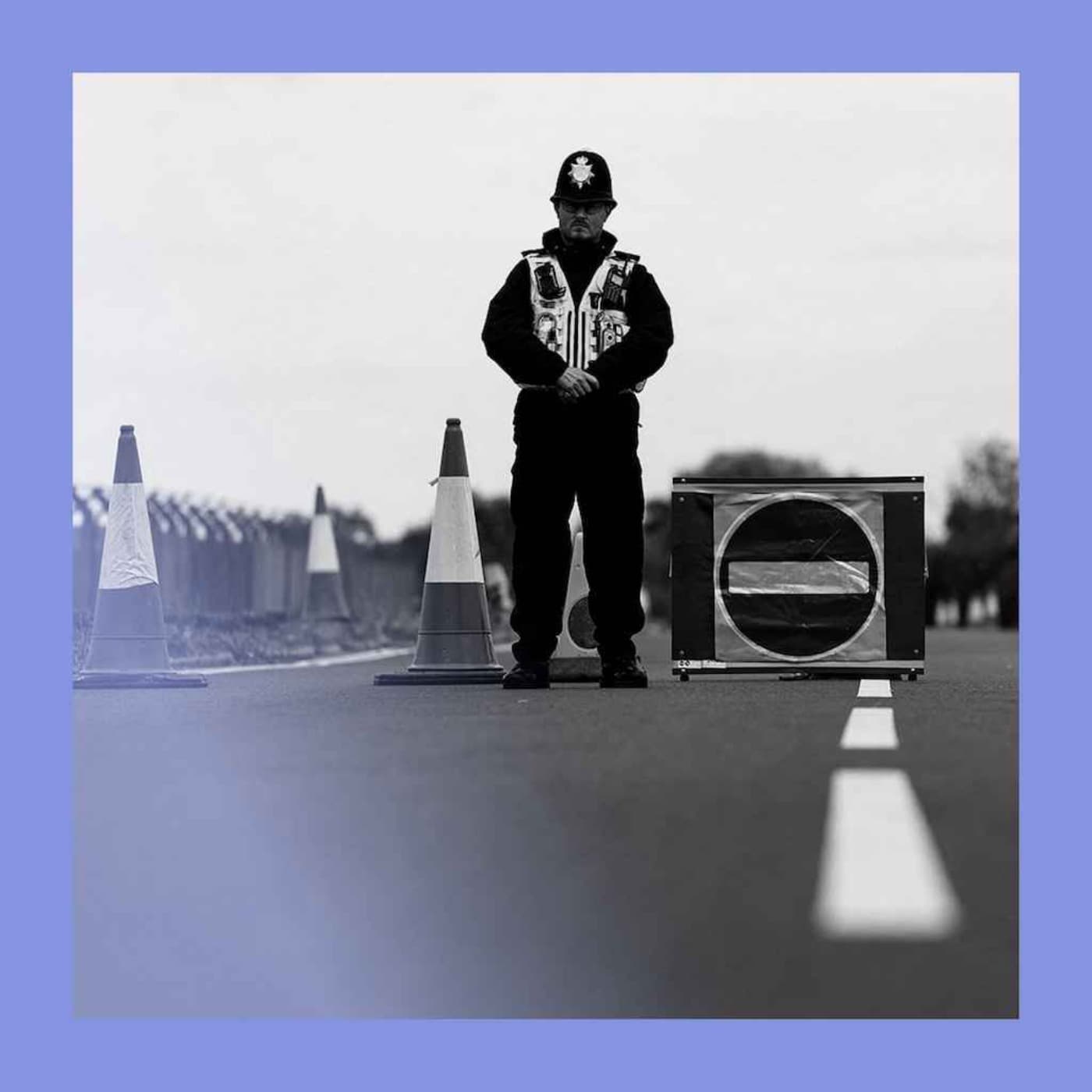
10:19Rosie Blau:On a NATO mission earlier this month, Italian jets shot down an explosives-laden drone that had flown into Lithuanian airspace from Belarus, as Italy's defense minister Guido Crosetto explained. A month ago, Italian pilots have intervened and they have destroyed a threat, probably from Russia. Note that word, probablemente. He said the threat had probably come from Russia. There are plenty of other so-called grey zone acts that can probably be blamed on Russia. They've been going on for years, but they ticked up after Russia's full-scale invasion of Ukraine. Recently, our international correspondent Jonathan Rosenthal says they've ticked up further still.
11:04Russia seems to be trying to pursue a couple of related objectives, making it harder for Europe to support Ukraine, damaging Europe's will to keep supporting Ukraine, and lastly, trying to damage Europe's unity and most of all, the NATO Article 5 guarantee that says that an attack on one is an attack on all.
11:26Rosie Blau:And so tell me the full range of the kinds of attacks that we're talking about here. So there is a really wide range of activities that fall in here and they range from things like cyber attacks, some fairly low-key sightings of drones that just seem to be doing reconnaissance, very hard to attribute who they belong to, up to greater and greater risk and escalation. Parcel bombs that have been found on cargo planes. We've seen attempted assassinations. We've seen plots against executives of European arms firms, all the way up to some quite recent incidents where, for instance, in Leipzig in Germany, a drone armed with military-grade explosives was flown into a cargo plane, fortunately not exploding.
12:08Rosie Blau:And you hinted there that the issue here is attributability. We don't know for sure Russia is behind this and that's what makes it all very gray zone. Again there's a kind of range here. So in some cases Russia is clearly sending a message. The attempted assassinations in the UK and the assassination of Russian defectors going all the way back to 2018 and then 2006, where they used nerve agents, Novichok or radioactive poisons, that was clearly sending a message saying, defect from us and we will find you, into a lot of other stuff that is very gray zone. So the fact that it is difficult to attribute in many cases and or deniable is part of the strategy.
12:51Rosie Blau:How do you mean? Why is being slightly oblique better than just being on the nose. So one of Russia's objectives here is to spread fear and uncertainty without provoking a full response from the West. Part of the deniability is that genuine acts by Russia can be disclaimed and potentially not provoke a response. But Russia also benefits from fear and uncertainty in the sense that it can get blamed for all kinds of things that it may not have been behind. So in Europe, we saw massive disruptions of trains in the Netherlands where saboteurs had put cables and steel pipes onto the train tracks and disrupted train travel.
13:30The government hasn't yet said whether Russia is involved and there is some speculation that it may just have been angry farmers who were protesting about other issues. Either way, Russia benefits because that uncertainty and that fear is a win for Russia.
Read the full transcript
13:44Rosie Blau:So by doing things in an ambiguous way, they get to collect all of the things going on in Europe that are not easily attributable. Yeah, that's absolutely right. There's a second aspect to the methods that they're following, and that is that they are trying to calibrate things. On the one hand, they want to send a message, create an effect that is big enough to actually matter. So raising the cost to Europe of supporting Ukraine means arson, damaging things, burning warehouses, signaling that they might be willing to do more. And making people fearful. Yeah, exactly. At the same time, Russia is not ready right now for a full-scale war with Europe and is therefore trying quite hard to keep things below a threshold at which Europe might feel compelled to strike back militarily.
14:28Rosie Blau:And so short of that, what has Europe been doing? The real dilemma for Europe is how to respond. On the one hand, it is trying to harden its defenses. That means, for instance, putting up drone detectors and drone jamming gear around airports so that your flights don't get disrupted every time an unknown drone pops up. But some of the sources that I spoke to were quite concerned that just doing reactive defensive actions are not establishing deterrence. They're not sending a message back to Russia saying, we will not tolerate this. And the worry there, and this is the great paradox, is that Europe risks allowing Russia to keep escalating to the point that something really bad and really dangerous happens.
15:10So the example that Sam gave to me was, for instance, this drone in Germany that targeted a cargo plane on the ground, while it was flying around, there was a real chance that it could have impacted a passenger jet flying into land and the deaths of hundreds of civilians in an airport that was struck by an armed drone would prompt Europe to have to respond.
15:32Rosie Blau:So is that then a kind of inevitable slope towards that? Russia will keep doing things until it crosses that threshold? Or is the calibration such that it'll just keep on the right side of that line? So there are a lot of ifs in this scenario and a lot of potential for misunderstanding. So Russia does not necessarily know exactly where Europe's red lines are. Europe doesn't know exactly how far Russia is willing to go. Those two lines may unwittingly cross. Lastly, there is this chance for some sort of catastrophic mistake or miscalculation, such as a drone flying into a passenger jet. It is not inevitable.
16:08And I think one of the things that's really happening behind closed doors in Europe now, is a discussion about how Europe can respond in a much more forceful way without triggering massive escalation from Russia. What would that look like? So people are now talking about basically paying Russia back in kind as one of the options, and that's Europe dusting off its old manuals on how to do covert action of its own. So this was in the playbook during the Cold War, where intelligence agencies were supporting covert actions against the Soviet Union. People are now talking about that being a possibility.
16:43Rosie Blau:Implicit in that is that that's not already going on? It may well be going on, and there are some suggestions that it is. There is some speculation, for instance, that the French may be following the lead set by the Ukrainians. Ukraine has been sending operators out into places like Mali, where they have been doing drone attacks on Russia's Africa Corps, the old Wagner mercenary group. The other options are things like offensive cyber warfare, which again would be deniable. We don't know if it's happening and no intelligence agency would say we just hacked the Russian central bank, for instance.
17:18The one further step, which would be overt, is revived talk around seizing the frozen assets that Russia had in the West and using that money to support Ukraine.
17:29Rosie Blau:But the suggestion here is that something, anything more muscular from Europe is actually better for the overall stability of the situation. Yeah, that's exactly right. Again, paradoxically, sitting back and doing nothing may be the riskiest course of action for Europe. Jonathan, thanks very much for your time. And thank you very much.
18:10I'm standing inside a shop in Tokyo dedicated to a popular character called Chikawa. Chikawa is a small, white, round, hamster-like puffball. Moeko Iida writes about Japan. The shop sells all sorts of merch from plushies, stickers, to snacks. Many visitors, I can tell, are super fans. Why do you think Chikawa's become so popular? Because it's cute and fun. And every few seconds, someone walks in or picks up a Chikawa plushie and squeals. Kawaii or cute. Its full name translates to something kind of small and cute. And although Chikawa is small, it's a big business. It's one of the most commercially successful characters in Japan today.
18:57and its popularity extends across the region.
19:04It steadily built a following through its unique storylines that fans can consume through manga or an anime series. And an English dub version of the anime series is out this week.
19:18And this year, the characters following showed up at the box office. There was a new film adaptation of Chikawa that came out called Chikawa the Movie, The Secret of the Mermaid Island. It's currently Japan's hottest film. Since it was released at the end of July, the film has drawn more than 10 million viewers to the box office.
19:41Chikawa emerged online in 2020 as a comic strip by an amateur artist who goes by the name Nagano. It went viral because it filled the void in people's hearts during the pandemic, as one academic I spoke to put it. And then came an anime series, and so did a partnership with the Chinese retail giant Minisaw, which produced enormous sales. In the past two years, metro stations in Hong Kong have decorated their gates and trains with Chikawa art. As commuters pass through the gates, they could even hear Chikawa squeal.
20:20Chico's success is largely a continuation of something Japan has always been good at doing creating insanely cute things. Think of massively popular IPs like Hello Kitty or Pikachu. Kawaii culture or cuteness is among Japan's most successful cultural exports. And in recent years, the Western world seems to have noticed a global cuteness craze as well with the success of things like Jelly Cat or Laboobo dolls. Some academics I spoke to, yes, there are academics that study cuteness, believe that Japanese kawaii influence looms large over these creations.
21:00And Japan is certainly at the leading edge. In the West, these trends spark debates around kiddults, or adults who can't grow up off these cute childish things, but consuming cute things in Japan is rarely seen as weird. And I think that extends beyond the region as well. Chinese social media users call characters like Chikawa digital ibuprofen for the comfort they provide. But Chikawa's comfort comes with a catch. Life is actually tough for Chikawa. The characters scrape by in a gig economy. One kind of job they perform is pulling weeds, which requires a license. Chikawa studies hard, but fails the exam.
21:44And then there's body horror. Friends can suddenly mutate into terrifying monsters. And then the background characters are depicted as faceless grey shadows, evoking urban loneliness. But at the end of the day, what seems to resonate with fans is a wholesome message of friendship. In the tough world Chikawa inhabits, the characters' friendships usually get them through. And in both the film and the series, Chikawa is almost constantly crying. and it can barely speak, but its friend Hacheware, who's extremely polite and cheerful, understands it perfectly.
22:24Many fans relate to Chikawa's fragile state, and in an age where so many young people are feeling lonely, I think they quietly yearn for a friend like Hacheware. One sociologist I spoke to said the franchise acknowledges that this world is highly anxious, and it tells you it's okay to be anxious.
22:44Rosie Blau:And to hear more about kidults, as we call adults who buy children's toys for themselves, you can listen to an episode of the weekend intelligence I did earlier this year when I went on the hunt to find out why we do it and why even I might be beguiled. I've put a link in the show notes.
23:16Rosie Blau:That's all for this episode of The Intelligence. We'll see you back here tomorrow.
From the publisher
An independent commission has found Manchester City guilty of breaching over 100 rules. What penalty will the Premier League exact? Russia’s increasingly brazen attempts to provoke and undermine Europe. And why cute Chiikawa, star of a Japanese blockbuster, gives comfort in anxious times.
Subscribers can listen to “Kidulting” on “The Weekend Intelligence”
Guests and host:
- Sonny Loughran, Britain correspondent
- Jonathan Rosenthal, international correspondent
- Moeka Iida, East Asia reporter
- Rosie Blau, co-host of “The Intelligence”
- Jason Palmer, co-host of “The Intelligence”
Topics covered:
- Man City, Abu Dhabi, Premier League
- Russia, Europe, grey-zone, drone
- Chiikawa, kawaii, manga
Listen to what matters most, from global politics and business to science and technology—subscribe to The Economist.
Hosted on Acast. See acast.com/privacy for more information.