
In short
Episode topic: Iran’s anti–Islamic Republic uprising and the prospects of exiled royalist Reza Pahlavi, plus a separate segment on whether renting beats buying after interest-rate hikes, and an obituary of CIA traitor Aldrich Ames.
Guests/backgrounds
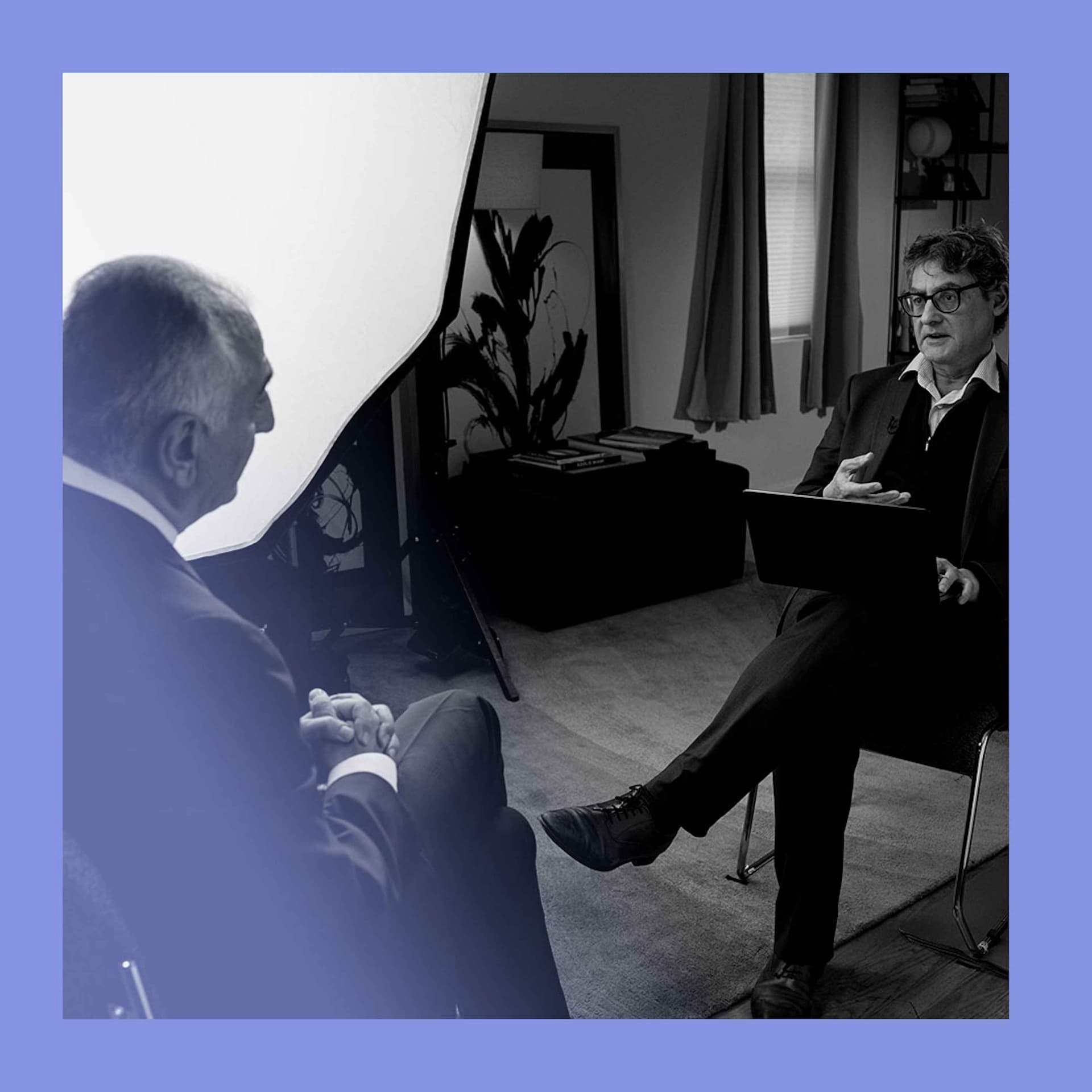
Nick Palom, Economist Middle East correspondent, interviews Reza Pahlavi (exiled son of the last Shah). Mike Bird, Wall Street correspondent and host of Money Talks, discusses housing economics. Anne Rowe, Economist obituaries editor, covers Aldrich Ames.
Key claims
Pahlavi says protests are a “revolution” and argues America must intervene; he proposes a 6-month transitional government then a referendum (monarchy vs republic). Trump’s stance appears mixed as reports of executions stopping conflict with possible military preparations. Renting often wins because higher mortgage interest makes buying costlier than renting; equity benefits don’t offset opportunity costs. Ames wasn’t ideological; he betrayed for money, causing major CIA damage.
Notable examples
chants for “Reza Pahlavi” in Iran; body bags in streets; possible B-52 refueling; Hong Kong as an exception; Ames’s CIA-to-KGB “drop box” signals and major operative deaths.
Written by AI. May contain mistakes. Listen to the episode to check what was said.
Chapters
Tap a time to open that second in VOHousing Market Debate
0:46 to 1:36
Exploring the ongoing debate on renting versus buying a home.
“Every weekday, we provide a fresh perspective on the events shaping your world.”
Protests in Iran: A Call for the Shah
1:36 to 4:28
Discussion on the protests in Iran and the call to restore the monarchy.
“A bit more information is trickling out of Iran thanks to Starlink satellites, but the regime is now trying to choke down that internet access too.”
Reza Pahlavi's Vision for Iran
4:28 to 5:36
Insight into Reza Pahlavi's plans and perceptions during the unrest.
“Now is an opportunity to put an end to this misery.”
The Future of Iran's Regime
5:36 to 7:43
Analyzing the stability of Iran's regime and potential leadership changes.
“Indeed, everyone we spoke to in Washington was convinced that Donald Trump would give the order to strike.”
Pahlavi and Transitional Government Plans
7:43 to 11:04
Discussion on Pahlavi's proposed transitional government and its viability.
“I think the only way in which they might convince some Iranians is that they really are staring into an abbess.”
Economic Shifts in Housing Market
12:11 to 14:04
Exploring the economic changes affecting the housing market and renting.
“That is primarily because of the really rapid increase in interest rates around the world, which began in 2022.”
The Equity Debate: Renting vs. Buying
14:04 to 18:24
Explore the complexities of equity building in home ownership versus renting.
“But I guess the point that a lot of people rely on, myself included, is that buying is better because it's not just handing over the money every month.”
Political Impacts on Renting
18:24 to 19:30
Discuss the political changes affecting renters' rights and market dynamics.
“Now, I say this as an inveterate renter.”
Transcript
Automatic transcript. May contain errors.0:00Hi, this is Dave Musial, owner of Four Seasons Heating, Air Conditioning, Plumbing, and Electric. With our biggest sale ever, furnaces from just$39 a month, furnace and air conditioning combos from just$57 a month, plus six years interest-free financing. Four Seasons guarantees to beat any competitor's price by up to$1 ,000. With an A-plus rating from the Better Business Bureau and over 30 ,000 five-star reviews, we are Chicago's trusted local experts. For all the right reasons, call 866-FOUR-SEASONS.
0:35The Economist
0:42Hello and welcome to The Intelligence from The Economist. I'm your host, Jason Palmer. Every weekday, we provide a fresh perspective on the events shaping your world.
0:56It is, as often said, the biggest financial decision you'll ever make. Buying a house. Or not. Whether it's smarter to simply rent indefinitely has become a perennial debate. And our resolute renter correspondent reckons the answer is now clear. And spycraft is often portrayed as being a principled fight for party or country or philosophy. Often, it's just about the money. Our obituaries editor reflects on the life of Aldrich Ames, a prolific seller of CIA secrets to Russia who got a taste for betrayal.
1:36But first...
1:42A bit more information is trickling out of Iran thanks to Starlink satellites, but the regime is now trying to choke down that internet access too. The big picture is clear. Executed protesters now number in the thousands. Many more have been taken into custody. America's cycle of blowing hot and cold warmed up considerably. An aircraft carrier and its strike group set off from the South China Sea yesterday towards the Middle East. Iran's rulers are more than rattled. Many protesters have called for something that, until recently, would have beggared belief.
2:24Bring back the Shah, the monarch, the kind of government that was booted out in the 1979 revolution. And still one name comes up, Reza Pahlavi, the exiled son of the very Shah who got the boot. What name has been chanted in the streets of Iran in the last few months? What name do you see be written on the walls? What slogans have they chanted in the recent weeks? They have chanted the name of my family. They have called for me specifically. When people have spoken to me about Reza Pahlavi in the past, they've described him as the clown prince. They've said that he was so disorganized that he couldn't even put together a dinner party.
3:03They said that he was a dropout at school. And his team are rookies who have no hope really of managing their own household, let alone something as complex as the country of Iran. This week, my colleagues, including Middle East correspondent Nick Palom, met with the man who sees himself as crucial to Iran's next chapter. And yet the man that we saw in the chair was polished, he was amiable, he was fairly confident, and a lot of what he said hung together. It felt like a very different face of Iran after the Islamic Republic that he was trying to show us. And it seems clear from even what we've heard already that Mr.
3:43Pallavi is convinced that he is the man of the moment for Iran. he's been struggling for 46 years to take over from where his father left off to replace and bring down the islamic republic and to install himself at the helm and he really has a sense now that this is the closest he's come to it you've seen protests which have escalated from a few hundred in the provinces to sweep the main cities in iran and then you've seen this appalling bloodshed to the point where, you know, people coming out of Iran describe body bags spilling into the streets. Most Iranians that I know seem to know somebody who has been killed or arrested.
4:25I don't call it a protest anymore. This is a revolution. People have had it with this regime. Now is an opportunity to put an end to this misery. This has given him a new sense of purpose. It's helped him try and bring America on board for a campaign for military intervention and for military overthrow of the Islamic Republic. And I think it left a void and a question mark as to who would fill the shoes of any regime that collapsed. And at the moment, Reza Pahlavi looks to be like the front runner. But it's clear to you, or it's clear to him anyway, that rallying America to the cause is sort of part of the equation here.
5:03We repeatedly asked him and he was in no doubt that without American intervention, given the extent of the brutality in Iran, the protesters were likely to be gunned down. Now we're talking about a conflict where people are getting butchered and massacred and they have no means to defend themselves. He called them sacrificial lambs. And at one point he described the protesters as a fort and they were waiting for the cavalry. Because this fort, we can hold it only up to a point. That was all the build-up pretty much throughout the interview where he was expecting American intervention. Indeed, everyone we spoke to in Washington was convinced that Donald Trump would give the order to strike.
5:42And yet, right at the end of the interview, we got news that Trump was rolling back and climbing down from that assertion. Bahalavi was talking to our editor-in-chief, Danny Minton-Beddoes, and she had to deliver that news to him of what exactly Trump had said. Just as we've been speaking, President Trump has been speaking at the White House, and I quote, he said, we've been told that the killing in Iran is stopping. It's stopped, it's stopping. There's no plan for executions. And what was his reaction at that point? He looked visibly shocked. Something in the script had changed. I haven't heard it, so I need to hear it on my own and make sure that the veracity of the statement is accurate.
6:24He repeatedly asked Sani for more information. He said, we don't know the context. He didn't want to believe what she was telling him. And with the blackouts being what it is, we don't know the context or much of what's happened since. I think we're hearing two different things for the Trump administration. We're hearing him say, we're rolling back. At the same time, there are these reports that there were refueling craft that were going into the skies to provide fuel for B-52s, which may be on their way to Iran. There are a whole series of mixed messages. Was the prospect of military intervention a ruse, or was it Trump trying to catch the regime off guard by saying, we're going to take you at your word if the killing has stopped, I'm going to hold fire.
6:59So aside from what is going on with America's response to all this, give me a snapshot at this moment of the regime's chances, stability. Does it get through this moment? There are still people going back and forth, trying to pass messages to Khamenei's court, urging Mr. Khamenei and his son Mushtaba to step aside in favor of a, could be a more reform-minded military strongman or a reformist, somebody who could stabilize the country as they see it, to somehow let the theocracy fall to the sidelines and for what remains of the regime to continue. What chances of that? Just so much blood has been spilled.
7:38The regime itself is implicated at so many levels. It's really hard to see how they can claw back from that. I think the only way in which they might convince some Iranians is that they really are staring into an abbess. They're staring into the prospect of chaos. They're staring into a prospect of really the only challenge to this regime being an armed one. There's a fear of civil war. And what are the chances that Mr. Pallavi is the one who can be a unifying figure that can hold together, as you say, what's left of the country? Or is he more of the burn-it-all-down revolutionary bent? I think there are some before this bloodbath who are positing that perhaps Pallavi could be the figurehead that could come in and be the glue to hold the country together.
8:16There were some who thought that there may be a prospect of a deal between the Islamic Revolutionary Guard Corps, the regime's Praetorian Guard, and Mr. Pahlavi. And indeed, it has to be said that Reza Pahlavi himself was reaching out to not just the civil institutions of the state, but also the security forces and said that, yes, the Islamic Revolutionary Guard Corps could be part of his new national army. I think that may just be much harder to sell to his own followers. Because again, without those institutions, it's really hard to see how Reza Pahalavi will return to stand up a state. There is a third force in Iran, which is secular, which is highly educated, highly motivated, knows Iran really well.
8:57Many of them have been in the jails of the Islamic Republic. They've been discussing Iran's future in jail for decades. They could be a third force that would not want to see Pahalavi take over. Did you ask him about what kind of leader he is intending to be? He's taken Saka from the protests that we witnessed over two weeks in Iran. He speaks of a transitional government of six months. After four months, there would be a referendum as to whether people wanted a monarchy or a republic. And he said that he would respect that outcome. All he wants is to oversee that transition. At the same time, that transition, when I asked him, would he rule by decree?
9:37He evaded the question. and I kept asking. It's not ruling by decree. It's the necessity of having a transitional government in place. And this transitional government is the collaboration of elements that I am going to bring into the fray to be able to manage this process. This is all so much in the realm of conjecture and this notion of the transitional government. I mean, what chance do you give such a government if the country ends up needing one, in the absence of the regime as it stands now? He's put together a program for what Iran would look like in the first 180 days of a transition. And he's made it very clear that he can't do it alone.
10:15He talks about curfews being imposed in cities. He speaks of national reconciliation, but he's looking essentially to cleave himself onto the existing institutions. The day the regime falls, somebody has to still pick up the trash. Electricity and water has to be provided. The country has to continue to function. So there is this huge vacuum that does create an opportunity for Pahalavi to try and fill. There was something when we talked to him where it felt like he was already imagining the day where he was back in Iran. There was something slightly delusional, something almost entitled that somehow that notion where he was going to be the successor to the Islamic Republic was already driving him.
10:54And I think it's going to be a much harder sell to a population that he is going to be the man for a new Iran. Thanks very much for joining us, Nick. Jason, thank you as always. You can see a lot more of that interview with Reza Pahlavi on Economist Insider, our newish video offering for subscribers. It's on our app and website. Nick and our editors and correspondents really dig into the possible future of the Iranian regime and how Mr. Pahlavi might fit into it. The link is in the show notes.
11:32Hi, this is Dave Musial, owner of Four Seasons Heating, Air Conditioning, Plumbing and Electric. And I want to guarantee you a breakdown-free winner. Did you know that a dirty furnace costs more to operate and can lead to higher utility bills and untimely breakdowns? Now is the time to schedule your Four Seasons Furnace Tune-Up and save$50. A Four Seasons Furnace Tune-Up includes a 35-point inspection, complete cleaning, and we calibrate every component of your furnace. So call today. For all the right reasons, call 866-FOURSEASONS.
12:10So in the last four years, there has been a huge change in the economics of buying and renting property. That is primarily because of the really rapid increase in interest rates around the world, which began in 2022. Mike Bird is our Wall Street correspondent and a host of Money Talks, our weekly subscriber-only show on business, finance and economics. That made mortgage borrowing much more expensive and started to tip the pure financial analysis in favour of renting. This has also been a period in which house prices have stagnated in large parts of the rich world. Things have started to change a little bit recently, but I think there's still some good reasons to think the streak of wins for renters is going to continue.
13:08Well, run me through the numbers. Talk me through how things were in LAR now. So if you look back to the period between about 2015 and 2021, and I'm going to use the US for this analysis, but it holds in many other parts of the rich world, the cost of buying a home was lower than the cost of renting one. Even if you include things like taxes involved, insurance in owning a property, a little bit of accounting for maintenance, the down payment you make, you were in a better position to buy if you could precisely because interest rates were so low. That has flipped around since. In the US, the average home buyer pays about$400 more per month than the average renter.
13:57That's a huge difference now. In some of the biggest American cities, the difference is in the thousands of dollars. But I guess the point that a lot of people rely on, myself included, is that buying is better because it's not just handing over the money every month. You're building up equity along the way. That is definitely true. And I should note the calculations used to calculate that$400 figure, that the monthly difference between buying and renting at the moment in the US do not include those home equity investments. the repayment of the mortgage. We really are just talking about the mortgage interest there.
14:30The equity point is really the core of the argument here, and it's what people should think about. You are building up equity in a home by repaying your mortgage. You end up with an asset that the renter doesn't end up with. But when there's a difference in the cost between renting and buying, renting is cheaper than buying, that means the renter has much more money to make other investments. And particularly if they want to invest long term in the stock market, historically, the returns to doing that are stronger than those of house price appreciation. Arthur Cox, who's a real estate economist at the University of Iowa, looked at the period between 1984 and 2013, which is a period where overall house prices rose.
15:14They didn't rise spectacularly, but they rose solidly in real terms and mortgage rates fell. And he found that people were better off avoiding home ownership in half the cities he looked at. So this depends where you're buying, and it depends also on the future for equity returns. But I think a lot of people think of the home equity buildup as a pure win. You're not throwing away money like you do with renting. That's not quite right when the monthly rents are lower than the mortgage repayments. You need to consider the opportunity cost, what else you could be investing in as well. And you hinted before that you used American numbers to kind of get a finger in the wind here, but broadly the trend holds everywhere in the rich world?
15:57On the whole, that is true. Most of the rich world went through very similar circumstances. Interest rates are very low from, say, 2010 until 2021, and it went up very sharply after that, and that's disrupted the housing market and seen the same shift. It's very true in somewhere like Australia. It's mostly true in somewhere like the UK. There are exceptions. If you look at somewhere like Hong Kong, so in Hong Kong, mortgage rates have come down quite a bit, and it now looks like buying may be a better option than renting in Hong Kong. That's partly because in real terms, house prices have dropped by about a third in Hong Kong.
16:34But Hong Kong is very different to other rich world countries in that in Hong Kong, mortgage rates float, which basically means that the interest you pay might change month on month. It might change year on year. It changes fairly quickly. And though those short-term rates have come down, longer-term rates haven't. And so if you're thinking about this question, you find yourself trying to decide whether to buy or to rent, whether yours is the kind of city where one thing would be clearly smarter than the other. You also have to take a look then at, well, the mortgage market itself. Absolutely.
17:07The mortgage market and the structure of it is really, really crucial here. So again, you look at Hong Kong, mortgages are effectively pegged to very, very short-term interest rates, more or less where the Federal Reserve is setting its interest rate because the Hong Kong dollar is pegged to the US dollar. In Europe, this is quite different. Lots of people peg mortgages to two or three or five-year interest rates to get a little bit of security in terms of what they're paying. In the US, obviously, this is taken to the potentially ludicrous extreme of pegging to 30-year interest rates, an extremely long way in the future.
17:39Now, that's great news in terms of locking yourself into something secure that you can rely on. But long-term interest rates haven't come down nearly as much in the last year or so as short-term interest rates. There are a lot of worries about the fiscal situation in rich world countries. There's heightened government debt. People worry about long-term inflationary pressures. And as a result, long-term interest rates seem to be staying much higher than short-term interest rates. So if you do want a long-term mortgage. If you want to lock yourself into that, you are going to end up paying more.
18:14And this is bad news for people hoping to buy. So basically, for the most part, renters win this long-running battle. I think so. Now, I say this as an inveterate renter. There are perfectly good reasons to buy a house. Large families might find it hard for somewhere to rent. They might want the more secure tenure. And that secure tenure, knowing where you're going to live, being able to change your own home, being able to amend it means a lot to some people. So this is a very bloodless analysis. There is one more thing, I think, weighing in favor of renters, and that's politics. There have been some fairly significant political moves on both sides of the Atlantic and in some other countries in favor of renters.
18:59In Britain, the Renters' Rights Act has made it much more difficult for your landlord to evict you. It's made it more difficult for your landlord to raise rents aggressively. In lots of American cities, politicians have gone in for more extensive rent control and rent stabilization the past few years. Those things are probably bad for the housing supply. They probably mean that less people are going to invest in housing, but they're cynically good news for current renters. Mike, thanks very much for joining us. Thank you very much.
19:57If you were in northwest Washington, D.C. in the 1990s and you chanced to go past a mailbox at 37th and R Streets Northwest, you might have seen a rather strange mark on it, a white horizontal chalk line, and wondered what it was. Anne Rowe is The Economist's obituaries editor. This was a signal from a CIA officer, Aldrich Ames, to his KGB contact to tell him that he was arranging a meeting or that he had put some documents and data into a drop box. And in this way, the two of them were corresponding, unknown to most people.
20:49This was a very fiddly way to have a correspondence. Audrey James didn't like it at all. What he preferred to do was what he'd done in the early days, which began in 1985 when he decided to give two or three names to an official at the Soviet embassy in Washington. And he simply put them in an envelope and handed them in to a duty officer. As he began to transfer more and more papers, he put them in plastic shopping bags. This was the biggest ever transfer of information and intelligence from the CIA to the KGB. It began in 1985 and it resulted in the deaths of at least 10 Soviet operatives working with the CIA and the complete disruption of the CIA's anti-Soviet operations.
21:50It was, in other words, a catastrophe for American intelligence. And it was all the work of this one man, Aldrich Ames, a little bit of help from his Colombian wife, until 1994, when at last the FBI managed to arrest him.
22:09He always said it was not ideological. It wasn't that he was a left-winger, that he supported the Soviet regime. He enjoyed being at the CIA because it was an extremely heavy, difficult thing to betray trust. But he thought he could justify it. And when he began in his job of transferring intelligence, he thought he could make it a little easier if he actually handed to the Soviets just a little bit of information, which probably they knew anyway, because it involved Soviet operatives working for the CIA and presumably the KGB had sent them there. So it was pretty harmless, he thought, what he was doing.
22:55He was in debt to the tune of about$30 ,000. And when he handed over the envelope at the Soviet embassy, he asked if he could have$50 ,000 in exchange for the information.
23:12the reason he needed money so badly was that his first marriage had crumbled and he'd also taken up with a Colombian woman called Rosario who had very expensive tastes she loved handbags the FBI found 16 of them in their house when they searched it when the couple were arrested it. She loved shoes. She had 500 pairs in the house and designer dresses. She liked to phone her family in Columbia. That cost$5 ,000 a month. One way and another, Aldrich Ames was getting deeply into debt and he needed to keep this exchange going just to keep his head above water. There was a part of him that couldn't resist flaunting it, so he spent$540 ,000 on a house in Arlington, Virginia.
24:01He bought two Jaguar cars. He had his teeth capped. He was an avid smoker and his teeth had got rather yellow, so he improved his appearance. He got tailor-made suits. His colleagues used to comment when his shiny white Jaguar was parked in the car park at Langley. But although a lot of people began to suspect where all this money was coming from and to grow suspicious of him. They never really got to investigate him properly. There were investigative groups set up, but they kept foundering or stalling, and meanwhile he was going on transferring intelligence. He had always been lucky that way, that although he really wasn't a very good agent, and he was not reprimanded, when he was on postings in Ankara and Rome, He was very lazy.
24:56He was meant to be recruiting agents, but he hardly recruited any. He also had a severe alcohol problem. He would need sometimes the best part of a bottle of vodka to get through a meeting with the Russians. He would often get into traffic accidents. He was very casual about storing papers. he would leave his safe open, and he often left things on the subway or just around the place when they were cryptic and secret, and they should not be left behind at all. He was sometimes so undisciplined at diplomatic receptions or agency parties that he would pass out or he'd fall down in the street and he'd have to be taken home.
Read the full transcript
25:38All this was well deserving of a reprimand and even a request that he should leave the agency, but he never got one. he always seemed to stay just about on the right side of his superiors. He was really not sorry that he had done what he did. After all, the people who had been killed had also been just as prepared, if necessary, to hang out their colleagues to dry to expose him too. He could have been himself in exactly their position, he felt. and in a way, as he was publicized and arrested and shamed, he felt he was in the same position as them. Anne Rowe on Aldridge Ames, who's died aged 84.
26:44The Intelligence
27:00and Anne Hanna, and our assistant producer is Kanaal Patel, with extra production help this week from Emily Elias. We'll all see you back here tomorrow for the Weekend Intelligence. This week we'll be talking about baldness. Well, about much more than that. About beauty standards for men versus those for women and how they're fast changing. About the weird nexus of bald man chat forums and the nastiest misogynistic corners of the internet. About medical tourism in Turkey, where my colleague Sam Westron received what he reckons is the most poetic insult ever delivered. It's going to get hairy. See you there.
27:46You can't always predict what's next, but you can be ready for it in a BMW SUV. The performance-driven X1 comes built for every journey. While the X3's sporty design and innovative technology keep your drive connected, the X5 blends performance with a commanding presence, or make it even bigger with three rows of luxurious seating in the X7. For every road, there's an X built to drive it. BMW, the ultimate driving machine. Visit your Chicagoland BMW centers for exceptional lease and finance offers. Hi, this is Dave Musial, owner of Four Seasons Heating, Air Conditioning, Plumbing, and Electric, with our biggest sale ever, furnaces from just$39 a month.
28:24Furnace and air conditioning combos from just$57 a month, plus six years interest-free financing. Four Seasons guarantees to beat any competitor's price by up to$1 ,000. With an A-plus rating from the Better Business Bureau and over 30 ,000 five-star reviews, we are Chicago's trusted local experts. For all the right reasons, call 866-4-SEASONS.
From the publisher
Reza Pahlavi, son of the shah deposed in the 1979 revolution, tells us he sees himself as the people’s choice to lead. We ask how that might work. Our correspondent reckons that, in a full accounting of buying versus renting a home, the smart choice has become clear. And our obituaries editor on Aldrich Ames, a prolific CIA double agent for Russia.
To see much more of our interview with Reza Pahlavi, and deep analysis with our editors and correspondents on how he might fit into Iran’s future, watch the latest episode in our Insider series for subscribers.
Hosted on Acast. See acast.com/privacy for more information.