In short
The Intelligence from The Economist episode covers three threads: (1) Britain’s Makerfield by-election and what it means for Labour leadership, (2) the Iran nuclear deal’s economic effects, and (3) a tour/critique of the Obama Presidential Center.
Guests
Hugo Jai, The Economist British political correspondent; Fraser McGillraith, The Economist foreign correspondent; John Fassman, The Economist senior culture correspondent.
Key claims and examples
Makerfield’s Andy Burnham (Greater Manchester mayor) won with 55% vs Reform UK’s 35%, boosting Labour’s chances and potentially challenging Keir Starmer; Reform and Conservatives also shifted, with Aberdeen South going Conservative and Restore Britain taking 7%. On Iran, the MOU is framed as sanctions relief plus a possibly $300bn reconstruction fund, but with doubts about real sanctions unwinding and likely “humiliating” concessions. Fassman argues Obama’s library emphasizes complexity and uncomfortable questions (e.g., democracy exhibits, Native petitions, “Work That Remains”), while presidential libraries reflect “quasi-imperial” public memory.
Written by AI. May contain mistakes. Listen to the episode to check what was said.
Chapters
Tap a time to open that second in VOSeismic By-Election in Makerfield
1:15 to 1:50
Exploration of the significance of the Makerfield by-election in British politics.
“Today on the show, the Iran deal's effect on a battered economy and a tour of Barack Obama's presidential library.”
Andy Burnham's Victory and Future
1:50 to 2:52
Discussion on Andy Burnham's election win and its implications for Labour.
“Makerfield is a constituency in northwest England that, until yesterday, sat at the center of British national politics.”
The Community of Makerfield
2:52 to 3:50
Insight into the community vibe and sentiments during the by-election.
“It could just be, after quite a bit more party politicking.”
Andy Burnham's Popularity Explained
3:50 to 5:06
Analysis of Burnham's popularity and its fluctuations amidst his political ambitions.
“There is no community called Makerfield.”
Keir Starmer and Potential Contenders
5:06 to 7:25
Discussion on Keir Starmer's leadership and other potential contenders.
“down to Keir Starmer's own failings, and that Burnham is head and shoulders ahead of any other competitor.”
By-Elections and Political Landscape
7:25 to 8:23
Overview of other by-elections and their implications for UK politics.
“will stand up and put their name forwards.”
Reform UK and Its Challenges
8:23 to 9:40
Exploring the challenges facing Reform UK amidst changing political dynamics.
“far-right party, Restore Britain, which has a much more hardline message than reform, took 7%.”
Iran Deal and Economic Impact
9:48 to 14:00
Discussion on the Iran deal and its potential economic ramifications.
“The Memorandum of Understanding that was signed this week by Donald Trump, the American president, and his Iranian counterpart, Masoud Pazeshkin, was really a bit of a coup for Iran's economy.”
Iran's Oil Sanctions and US Strategy
14:00 to 17:57
Explore the implications of potential US sanctions waivers on Iran's economy and regional influence.
“America may waive some of the sanctions on Iran's oil shipments, which will make it much easier for the country to not only sell those to a wider range of buyers, but also command a higher price.”
The Economist Insider Overview
17:57 to 18:38
Learn about The Economist's video series that provides insights into the Iran deal and its consequences.
“There's a lot more to pick through about the Iran deal and which side is right when claiming a victory.”
Show all 11 chapters
Obama Presidential Center and Public Memory
18:38 to 25:39
Delve into the significance of the Obama Presidential Center and its role in shaping public memory of presidency.
“that will usher in an era of peace and security.”
Transcript
Automatic transcript. May contain errors.0:00This podcast is brought to you by Thomson Reuters. The best don't just do their work, they change what's possible. Cases won, audits completed, jobs saved. Behind every one of those moments is a professional who needed to get it right and did. Thomson Reuters builds the technology that sharpens insights, speeds up decision making, and powers the outcomes that matter. So when professionals act, the impact is felt by everyone. Be a changemaker. Visit tr.com forward slash changemakers. Healthcare can feel complicated. That's why Optum uses technology to connect the people and processes that make healthcare easier, more affordable, and more effective.
0:40We're making it clearer for you to know exactly what your benefits cover. And to help you better manage your health, we're coordinating care between your doctors and your technology. We believe better, simpler healthcare is always possible. That's healthy optimism. That's Optum. Visit Optum.com to learn more.
1:05The Economist
1:12Hello and welcome to The Intelligence from The Economist. I'm Jason Palmer.
1:21Today on the show, the Iran deal's effect on a battered economy and a tour of Barack Obama's presidential library.
1:36First up, though.
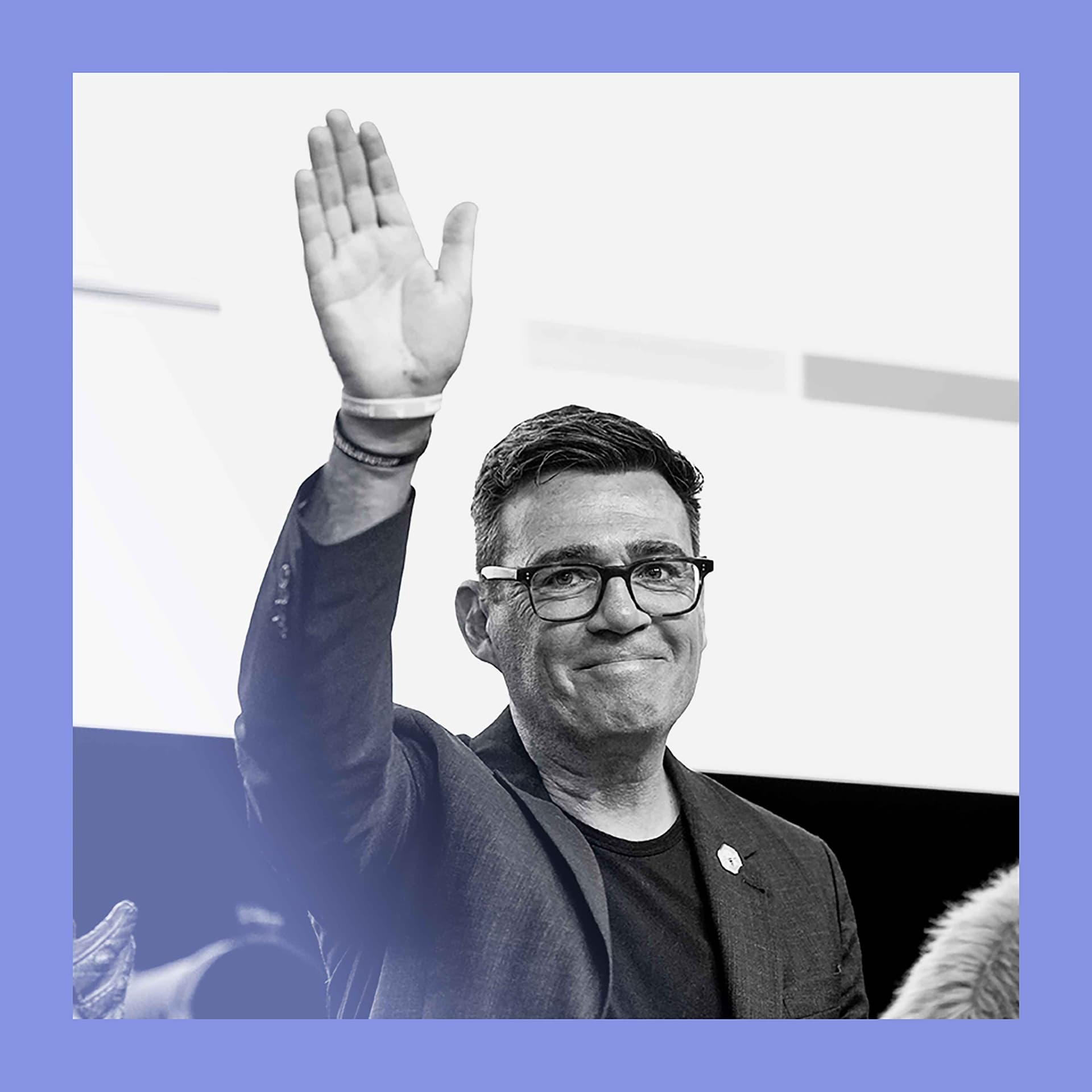
1:45In general, we don't spend a lot of time on the show looking at by-elections in Britain. But this one, this one we told you might be seismic. Makerfield is a constituency in northwest England that, until yesterday, sat at the center of British national politics. From here on, I will give everything I have got to make it so, to ensure the name Makerfield is forever synonymous with bringing about the change this country needs. Bringing back something we've lost, hope, hope for the future. Andy Burnham, the mayor of Greater Manchester, needed to win the election in order to get into Parliament, and from there, to challenge Sir Keir Starmer as leader of the Labour Party and therefore as Prime Minister?
2:33Well, he did it. Step one, tick. Everyone knows that politics isn't working. Everyone can feel that the country isn't where it should be. Tonight could, just could, be the turning point. It could just be, after quite a bit more party politicking. Andy Burnham's won the by-election in Makerfield by a comfortable margin. He took 55 % of the vote with Reform UK, the right-wing populist party, quite far behind on 35%. Hugo Jai is our British political correspondent. Burnham has previously said he's going to challenge Keir Starmer for the Labour leadership, which would also make him Prime Minister.
3:18And in the wake of his convincing victory in this by-election, a growing number of Labour MPs are saying that Burnham needs to take over, preferably as quickly as possible, and that he is the person to turn Labour's fortunes around. So before we get into the meat of that, though, I know you were in Makerfield, as so many British journalists were in recent days. What did you see there? What was the vibe like? Well, the Vibe was a community of people who are thoroughly sick of the by-election, sick of being canvassed by campaigners from all the different parties, sick of journalists. It's a funny place, Makerfield.
3:57In one way, it doesn't really exist. There is no community called Makerfield. It's a collection of towns, villages, suburbs, fields, stretched out over this 10, 15 mile area on the edge of the town of Wigan. It's predominantly white area, mixed in terms of prosperity, some areas extremely prosperous looking, others struggling. The sense is that the population of Makerfield is slightly baffled that they've ended up at the middle of this national and international media storm, and also that they will now be very relieved that it's all over. So let's talk about why this has been so important, why it all has hinged on Makerfield, bit more to the point why there's so much buzz around Andy Burnham.
4:44We spoke about him on the show. Why would you say at this point he's important to Labour? So for a long time as Mayor of Greater Manchester, he's been more or less Labour's most popular figure, both internally and among the public as a whole. He's considered to have done a very good job in his nine years as Mayor of Greater Manchester, put the city really on the map. And so a lot of particularly Labour MPs have been saying for a long time that Starmer needs to go, that Labour's struggles are ultimately down to Keir Starmer's own failings, and that Burnham is head and shoulders ahead of any other competitor.
5:20Interestingly, since this by-election started and since Burnham made it explicitly clear that he does want to return to Westminster and take the top job, his popularity with the public has been falling a bit. Why do you think that is? Well, I think, as in many countries, the British public kind of hates politicians. And as Burnham has gone from being a regional figure to a national figure, I think for some people puts their hackles up. They're already getting ready for him to be the prime minister that they can beat up. Yeah, slightly, slightly. That's certainly the risk for him. He is still much more popular than Keir Starmer and more popular than most other frontline politicians, more popular than Nigel Farage of Reform UK.
6:02But there's definitely been a softening in his opinion polls in recent weeks. Right. But it's not yet, of course, written in stone that he will become prime minister. What happens between here and there for that to happen? No, absolutely not. So he will be sworn in as an MP next week. The manoeuvring has started immediately after the by-election result. Keir Starmer says he is going to stand and fight. He is not going to step down. That's what Burnham wants him to do, to step down and arrange, if you like, a so-called coronation where Burnham steps in. Burnham's not the only candidate, though.
6:36Not only is there Starmer, there is also Wes Streeting, the centrist carrier of the Blairite flame who resigned from the cabinet a few weeks ago and said he was going to challenge Starmer but said he wanted to wait until after the Makerfield by-election so that Burnham could be in that contest too. All the polls suggest that Andy Burnham is going to be their heavy favourite and that Labour MPs overwhelmingly want Burnham to take over, but it's not a done deal. So if it does come to a contest proper, if the coronation you mentioned doesn't happen, then essentially it's a vote for the Labour Party members at large to make.
7:16Do you think it'll come to that? I think both Keir Starmer and actually Wes Streeting, the other contender are pretty stubborn. My guess would be it's likely that at least one of them will stand up and put their name forwards. But again, it's very likely that Andy Burnham's going to win. He seems to be by far the favoured choice of Labour members. And this Makerfield by-election was clearly the top line, the big story overnight, but it was not the only by-election that happened. That's right. There was another by-election in Aberdeen South in Scotland, where the Conservative Party, which has been struggling for so long, won the seat.
7:49They took it off the Scottish National Party. So that's good news for the Conservatives, for their leader, Kemi Badenok, who's trying to re-establish them as the proper national force that they're almost in danger of stopping being. And this is actually concerning news for Reform UK. Reform, they're leading in the polls nationally, they have been for more than a year now, but they lost badly in Makerfield. And they're seeing the Conservatives return as a national force, which makes it harder for Reform to claim that they are now the party of the right in the UK. And another thing that happened in Makerfield is that this far-right party, Restore Britain, which has a much more hardline message than reform, took 7%.
8:32It didn't come close to winning, but pretty decent showing from a party that essentially didn't exist a few weeks ago. So there's a risk for reform after a year or more of really dominating British politics. It's now being squeezed on all sides. Potential Labour revival under Andy Burnham, let's see, potential conservative revival and a threat on the right, which they've never had before. Suddenly, Nigel Farage's life is looking quite a bit trickier than it was. Right. No doubt we'll come back to that and to whether there's a coronation or a vote soon enough. For now, Hugo, thank you very much for your time.
9:06Thank you, Jason.
9:45Thank you. Optimism. That's Optum. Visit Optum.com to learn more.
10:02The Memorandum of Understanding that was signed this week by Donald Trump, the American president, and his Iranian counterpart, Masoud Pazeshkin, was really a bit of a coup for Iran's economy. Fraser McGillraith is a foreign correspondent for The Economist. In a war against the world's most powerful military, Iran managed to wage a war of global economic chaos and came out stronger for it. What do you mean by that? In exchange for not pursuing a nuclear weapon, the deal seems to suggest some of the following. So in the short term, America will lift its naval blockade, which it's been imposing since the middle of April, which has been choking off Iran's oil exports.
10:52It will offer some kind of short-term sanctions relief and possibly unfreeze some Iranian assets. And then there is a truly staggering prize, which seems to have been put on offer as part of the deal, which is a$300 billion dollar reconstruction fund. Lots of details around that remain quite shaky. But if it's real, then that's an enormous prize for Iran. So we'll put aside the nuclear considerations in this deal or in prospect and just talk about the money and the economics of this. We've spoken on the show a lot about how Iran's economy has been squeezed by the sanctions you mentioned may now be lifted.
11:33How much further damage has the war caused, Iran? Yeah, so the war has made things significantly worse. And there are two main shocks that the war has delivered to an economy that was already really struggling. The first is the raw destruction by American and Israeli airstrikes. Those have hit everything from bridges to factories to steel mills, oil refineries. And this damage is quite hard to quantify, but one estimate suggests maybe the damage is somewhere in the region of$150 billion, which is a pretty enormous sum. And then the other shock is the blockade. So the American blockade has done quite an effective job really of strangling Iran's ability to export oil.
12:14One estimate is that Iran's oil exports dropped by about 80 % in May compared to April. That's also affected Iran's ability to import. And one of the consequences of this is that inflation, which was already very high in Iran, has risen very fast since the start of the war. So last month, inflation was about 84 % year on year, which was double the level it was in January. Food inflation was even higher. That was into the triple digits. Lots of poor Iranians were paying for things like bread and meat in installments, buying groceries on credit, which gives you some indication of how dire things are.
12:53And coming back to this memorandum of understanding, no matter what the terms are or could be at best, it's not going to reverse everything that you've just described. No, there's no way that the kind of damage that has been done in Iran can be reversed immediately. And again, it's worth remembering that this is an economy which was struggling a lot even before the war. So getting back to where the country was before the war is still getting it back to a place which is pretty difficult. But it is a start. So the rial, Iran's currency, which has been basically in freefall this year, it did strengthen once the MOU was announced.
13:30And that probably reflects the fact that the blockades being lifted will have an immediate impact. So Iran will be able to get oil exports flowing and that will inject cash into the economy quite quickly. But wait, we're talking now about the lifting of the blockade or lifting of sanctions on the transit of oil. So the MOU seems to suggest that at least in the short term, these things will go together. So as well as the blockade being lifted and Iran being allowed to get its ships out of the Gulf, America may waive some of the sanctions on Iran's oil shipments, which will make it much easier for the country to not only sell those to a wider range of buyers, but also command a higher price.
14:13Really, this amounts to something quite humiliating for America. And that's before we even get to this development fund, this touted$300 billion fund. What do you make of that? Yeah, so there's a lot of question marks all over this figure. It seems to be to be a case of the Americans kind of dangling a big juicy carrot in front of the Iranians. This is a gigantic sum of money, basically equal to Iran's annual GDP. J.D. Vance earlier in the week was talking up the prospect of a fund of this sort, saying this is the kind of thing that the Iranians could have access to if they play along, although he did say that it would be funded by Gulf countries.
14:57Later in the week, Trump said that America wouldn't be involved in paying into this fund. And he said that he hadn't asked Gulf countries to contribute to it. This does seem like it's a kind of typical Trump peacemaking offer. It's basically an offer to get lots and lots of money flowing in the hope that it greases the wheels of the negotiations and helps all of the other issues sort themselves out. But there are some really serious problems with this idea, quite apart from the fact that Iran's Gulf neighbours have been having drones and missiles lobbed at them for the past few months, and they will want to do anything other than send money into Iran.
15:38Sanctions on Iran, which have been built up over the years, of long-deterred foreign investors would need to be unwound for anything like this kind of money going into the country. And we're not talking about sanctions waivers here and there on oil exports. If you think about the way that the Islamic Revolutionary Guard Corps have extended their reach throughout Iran's economy, any kind of investment into the country's industry really would need pretty comprehensive sanctions relief. And that will be a very tough political sell at home for Donald Trump. Well, exactly. You lay out a situation in which none of the aims of the war have been accomplished.
16:18and the outcome is that in multiple ways, the world or America lining the pockets of the regime they were aiming to crush. Yeah, absolutely. So it's a big inducement that America seems to be offering Iran, but I would take it with a pretty serious pinch of salt and there's a good chance that it never materializes. Which brings us to what seems to be the perpetual question about this war and its aftermath is how much this points to things getting back to normal. Yeah, so I think this war in a way is one which has changed everything and changed nothing. In the weeks that follow, I think we will get a situation which maybe has the appearance of normality.
16:57One important thing is the matter of tolls, which we haven't discussed yet. But under this deal, Iran has said that for the next 60 days, it doesn't expect to charge any tolls or fees on ships going through the strait. But in the longer term, it's very clear that the regime has every intention of trying to do that, that would pose quite a big challenge to the status quo that we've all come to expect in that part of the world. At the same time, the regime will come out of this massively emboldened. They've learned that they can really wield a lot of power over their neighbours by controlling the strait.
17:34So I think really what this deal does is it highlights just how badly America has failed to achieve its goals in this war. There's nothing approaching regime change. And what you're seeing is Trump having failed to achieve his objectives militarily, switching to try and achieve something with bribes. Fraser, thanks very much for your time. Thank you for having me on.
18:14There's a lot more to pick through about the Iran deal and which side is right when claiming a victory. So let me point you to our video series, The Economist Insider. Each week, Insider gives you unprecedented access to our newsroom. Our senior editors take you behind our journalism, from dynamic debates to the latest developing stories, explaining what today's events mean for tomorrow. This week, we look at President Donald Trump's claim that the Iran deal is a historic victory that will usher in an era of peace and security. In reality, it's a humiliating climb down that leaves behind a harsh new regional landscape.
18:50Join Zannie Minton-Bettos, our editor-in-chief, Edward Carr, deputy editor, and a trio of The Economist's Middle East experts as they assess how profoundly the conflict has reshaped the region. If you're a digital subscriber, Insider is already included in your subscription. Nothing extra to sign up for. And if you're listening for free, you can watch extended clips from Insider via the link in the show notes.
19:19The Obama Presidential Center towers over Chicago's south side like a brutalist ziggurat. John Fassman is a senior culture correspondent for The Economist. The main building is eight stories high. It's concrete covered in granite. Winding around the top of the main structure is a long quote from a speech Barack Obama made marking the 50th anniversary of the Civil Rights March from Selba to Montgomery, Alabama.
19:47The Obama Presidential Center, which opens to the public today, is the latest entrant in a uniquely American institution of public memory, the Presidential Museum and Library. These entities let their namesakes do what they have doubtless wanted to do ever since taking office, present their achievements and justifications without quibbles from opposition politicians, pesky journalists, or protesting civilians. Now, individually, each one is designed to enhance public understanding of a president, which is a perfectly laudable goal. But collectively, they also reveal the extent to which America has invested its presidents with a quasi-imperial aura.
20:28This institution as it exists today dates back to the waning days of Franklin Delano Roosevelt's administration. Before then, presidential papers were seen as the property of the presidents themselves. By tradition, presidents donated them to the Library of Congress, but they certainly didn't have to. The Presidential Libraries Act of 1955 authorized the federal government to accept for preservation presidential papers and to accept gifts or requests of money for maintaining them. The Presidential Records Act of 1978 made presidents' papers property of the United States rather than the officeholder personally.
21:04And while Donald Trump's Office of Legal Counsel has opined that act was unconstitutional, no court has yet agreed with them. But these libraries also have a private component.
21:17Presidential foundations pay for most of the construction and land acquisition costs. The federal government, meanwhile, controls the president's papers and most maintenance costs, which currently are around$100 million a year for all the museums. The Obama Presidential Center is an exception, Except for the archives' oversight of his papers off-site, his foundation funds the entire complex. This was done, the CEO of the foundation told me, to preserve its independence. It may have been done to keep Donald Trump, who is famously vindictive and doesn't like President Obama, from tampering with its budget.
21:50The CEO of the foundation told me that every former living president will attend the groundbreaking ceremony on the 18th. President Trump will not. He was not invited. Most of these libraries go really heavy on the pomp. Ronald Reagan's has a decommissioned Air Force One along with his limousines and a helicopter. Lyndon Johnson's features a life-size, moving, talking puppet of the president telling hokey jokes. It is exactly as weird as it sounds. Franklin Roosevelt's preserves the cozy private study where he received visitors. A lot of them, including Obama's, let visitors walk around life-size replicas of the Oval Office as they were decorated during that president's tenure.
22:31The main attractions, though, are the museums, many of which border on hagiography, though interestingly, that can change after the president's death. I went to the Roosevelt Library earlier this spring and was struck that it featured exhibits about his mistresses and some really uncomfortable questions about why he was so reluctant to accept Jewish refugees during the Second World War.
Read the full transcript
22:55Obama's library befitting the man himself is attractive, worldly, and invested in culture as well as politics. The exterior may be chilly and gray, but the interior is very warm. There's lots of dark wood. The art is contemporary and ambitious and well-chosen. And the grounds are well-planned too. Michelle Obama, who grew up nearby, insisted on a steep sledding hill because she never had one. Like Obama's presidency, the museum's permanent exhibitions eschew simple patriotism in favor of complexity, emphasizing America's heritage as a creedal rather than blood and soil nation. And it doesn't shy away from uncomfortable questions.
23:35The opening exhibition on democracy's building blocks features the Declaration of Independence next to Native American petitions against removal. The civil rights movement features prominently, as you imagine, and the sections on Mr. and Mrs. Obama's early lives are just intimate enough to make viewers feel included. Each section also features a part called The Work That Remains, showcasing things that President Obama wishes he had accomplished during his presidency, such as gun control and immigration reform. The museum will thrill President Obama's fans and convert precisely zero skeptics.
24:12And that's true of most presidential museums, and maybe that's fine.
24:19Being president is tough, and if their supporters wish to spend their own money celebrating the president's achievements, what does that harm? On the other hand, remember that presidents are not kings. They're civil servants. They work for the American people. They don't rule us. It's one thing to have statues of great accomplished leaders, like Abraham Lincoln or George Washington. But do taxpayers really need to pay the upkeep for John F. Kennedy's scrimshaw collection? I can't help thinking that maybe if Americans stop investing their presidents with imperial trappings and memorials, presidents will stop acting like emperors.
25:03Thank you.
25:33and Hannah, and assistant producer, Kanael Patel, with extra production help this week from Eleanor Sly and Katie Peterson. We'll all see you back here tomorrow for the next installments of our new series, Tocqueville Road Trip. It's a peripatetic look at democracy in America as it turns 250, seen through the writings of Alexis de Tocqueville, who sagely chronicled the American experiment when it was a sprightly 50-something. See you there.
26:23Thank you.
From the publisher
Andy Burnham won a by-election he needed in order to challenge Sir Keir Starmer, Britain’s prime minister. We look at the path ahead for him. The Iran deal seemingly promises a financial windfall for the country and its regime—one that its battered economy sorely needs. And the mythmaking of presidential libraries, as seen in the latest one: Barack Obama’s.
Watch extended clips from Insider here.
Guests and host:
- Hugo Gye, British political correspondent
- Fraser McIlwraith, foreign correspondent
- Jon Fasman, senior culture correspondent
- Jason Palmer, co-host of “The Intelligence”
Topics covered:
- British politics, Andy Burnham, Labour party
- Iran war, Iran deal, Iran’s economy
- Barack Obama, presidential libraries
Get a world of insights by subscribing to Economist Podcasts+. For more information about how to access Economist Podcasts+, please visit our FAQs page or watch our video explaining how to link your account.
Hosted on Acast. See acast.com/privacy for more information.