 Ask ChatGPT


Company profile of Corning Inc., focused on how a small upstate New York town and long-running glass expertise enabled breakthroughs from Pyrex and fiber optics to iPhone “Gorilla Glass,” plus current work on bendable glass and AI data-center optical communications.
Wendell Weeks (CEO since 2005; studied accounting; joined Corning early in career; previously led low-loss optical fiber business; childhood shaped by parents’ alcoholism and father’s plumbing-business collapse). Carol White (Corning museum president; PhD in Roman glass). Jamin Amin (Corning CTO; decades at Corning; led glass development for iPhone watch-cover–strengthened glass research). John Pazansky (leads Gorilla Glass product reliability testing; runs drop/scratch testing). Laurie Hamilton (Director of Technology for Gorilla Glass; long-time Corning “lifer”).
Corning succeeds by “building on what you know,” iterating “vectors” (stronger/thinner/bendable), not timing markets, and treating risk mathematically (double down on positive surprises). Steve Jobs’ blunt feedback reframed risk and pushed Corning to collaborate fully.
iPhone 2007 glass—~20 initial compositions, scale-up via Corning fusion; Jobs’ “you’re afraid” dinner message; Gorilla Glass versions (9 total, latest launched January); drop tests on asphalt/concrete/marble and “dark space” failure analysis; bendable glass down to ~100 microns and trade-offs between thickness and damage resistance; AI data-center optical work requiring different products than telecom.
Written by AI. May contain mistakes.
Wendell Weeks shares personal background and the challenges he faced before becoming CEO.
“In today's episode, the first of three company profiles, we're visiting Corning Inc.”
Understanding the pivotal role of fiber optics in Corning's success in the 1990s.
“Both my parents were alcoholics, and so I come from a lot of chaos.”
Wendell Weeks discusses the impact of the dot-com bubble on Corning's valuation and corporate culture.
“We had invented the first low-loss optical fibre.”
The pivotal call from Steve Jobs that led to Corning's role in the iPhone's creation.
“And that sort of put a fundamental humility in me that has stuck with me ever since.”
Corning's R&D efforts to create glass suitable for the iPhone's revolutionary design.
“I got told I couldn't even talk to his assistant.”
Corning faced challenges in manufacturing glass at the pace required by Apple for the iPhone.
“And we've got people that are around for, you know, so many years, basically lifers.”
Learn about the pressures Corning faced while fulfilling Apple's glass needs for the iPhone.
“And so just learning about the fact that we'd have to be shipping this glass to folks in China who would then be doing the ion exchange work, and all of that had to happen between January and June.”
Discover how Steve Jobs influenced Wendell Weeks' perspective on risk and innovation.
“and Steve had told him that, you know, you're just afraid of doing this.”
Explore how Corning's Gorilla Glass has transformed since its introduction with the iPhone.
“The glass that Amin and his team developed for the first iPhone in 2007 has since spawned an entire division called Gorilla Glass.”
Learn about the rigorous testing processes for ensuring the durability of smartphone glass.
“Pazansky and Laurie Hamilton, the Director of Technology for Gorilla Glass and another Corning lifer, had demonstrated a few of the tests they conduct earlier in my visit.”
Understand the challenges and innovations in developing bendable glass for future devices.
“Smartphones with folding screens aren't new.”
Explore Corning's approach to developing bendable glass and its future potential.
“Chipping away at this problem makes excellent business sense for Corning though because bendable glass fits into the same philosophy of innovation as the original smartphone glass for the iPhone.”
Understand the importance of innovation and avoiding complacency in business.
“I'm going to now try being denser for these products inside a data center.”
Learn how Corning adapts its technology for new demands in AI and data centers.
“He gives the company's work on AI data centres as an example of how it changed course.”
Discover the three key principles Corning follows to stay ahead in the market.
“Pick the attributes, the vectors, that matter in your industry and iterate to improve them.”

Get the gist, explore an idea or ask about something said.
 Claude
On Economist Podcasts, what are the key points of this episode?
Searching your listeningAutomatic transcript. May contain errors.
0:01At Peloton, sometimes thinking big means thinking small. introducing the new Peloton Treadflex our first foldable and movable tread that's just about 3 feet stowed so you can roll it away with an ultra quiet and comfortable belt that whispers while you run made to fit however you move and fit to move wherever you like let yourself run Peloton explore Peloton Treadflex at 1peloton.com
0:37The Economist. So I'm going to start us in the past. And I hope the doors are unlocked. If not, we'll get them unlocked. I'm being given a tour of a museum of glass by its president, Carol White. We start with the origins of glassmaking in ancient Mesopotamia, then it spreads to Egypt and then across the Mediterranean. White has a PhD in Roman glass. If she hosted a podcast, it would be called Boss Glass. And if you can think of a type of glass, her museum probably has it. These are perfume vessels, more perfume vessels. More fabulous Italian glass. That's amazing. So you see a Pyrex measuring cup in here as well.
1:24These look like sort of jellyfish. Yes, exactly. Jellyfish and sea slugs and sea anemones, little octopi and squid. This is actually a prayer rug made of glass. Oh, wow. I'm in a town called Corning in upstate New York. It's a quiet place of about 10 ,000 people, with tree-lined streets, ice cream shops, and a river running through its centre. As well as the museum, one of the town's other landmarks is a tall white structure called the Little Joe Tower, which was once used for making thin glass tubes for thermometers. Corning isn't the kind of place you would normally associate with bleeding-edge innovation.
2:10There are no skyscrapers. The restaurants aren't full of venture capitalists in Patagonia vests. People are inordinately proud of the local supermarket. But the museum and the tower are here because this town is also home to a multi-billion-dollar company whose inventions have helped to change the world.
2:34I'm Andrew Palmer. This is Boss Class Season 2. In today's episode, the first of three company profiles, we're visiting Corning Inc. We'll learn how small-town intimacy and an unnatural obsession with glass have enabled this 174-year-old corporation to keep turning up in the future. We'll pick up advice on timing the market and learn about building on what you know. And we'll hear how some blunt words from Steve Jobs changed the company's thinking on risk and reward and ended up putting one of its products into billions of pockets around the world.
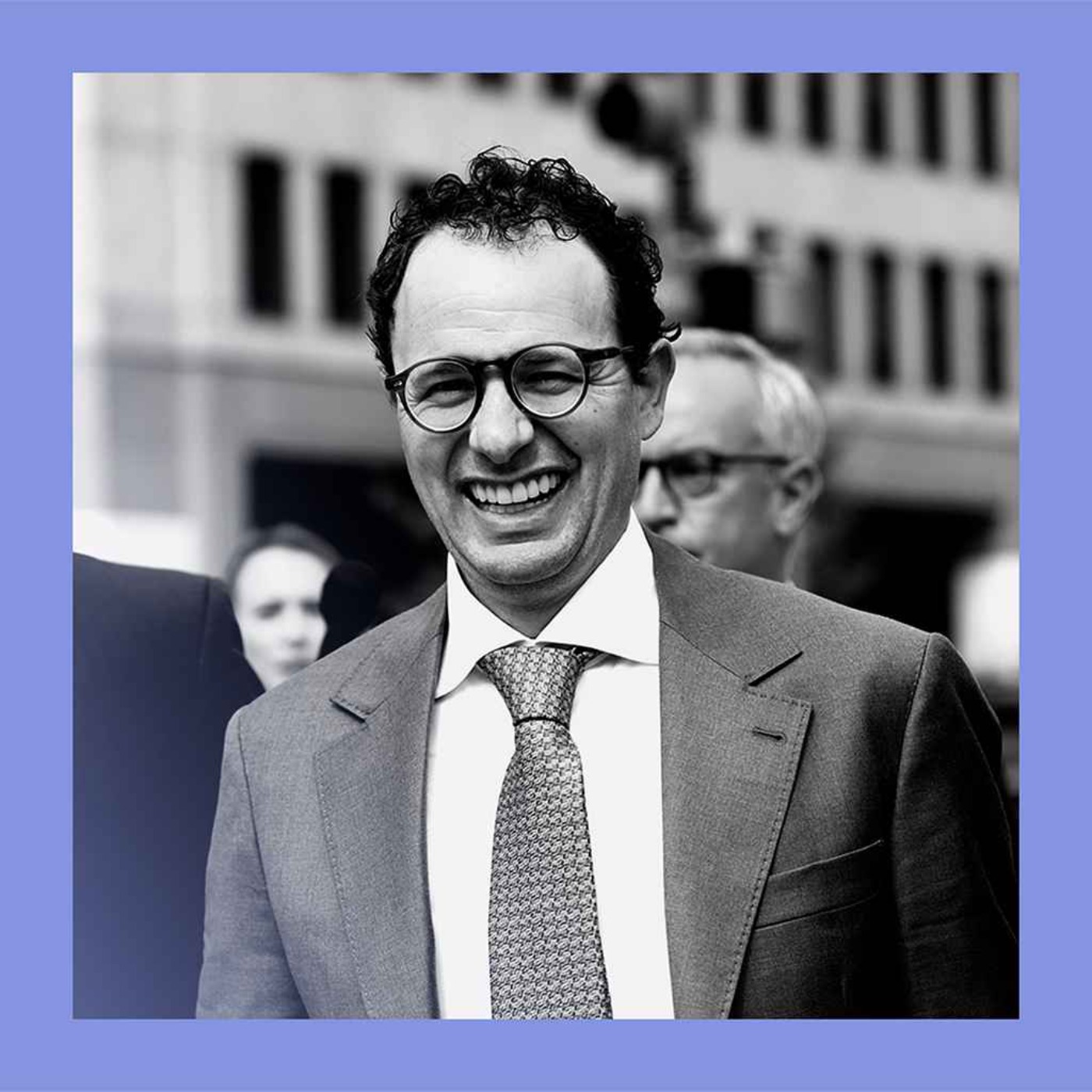
3:20I come from a pretty chaotic background. Both my parents were alcoholics, and so I come from a lot of chaos. us. Wendell Weeks has been the CEO of Corning since 2005. In person, he looks every inch the alpha boss. He's six foot five, confident, suited up. Childhood trauma was not what I expected him to start talking about. But to Weeks, Corning means much more than a paycheck. His path to the top began with the collapse of his father's plumbing business when he was young. My dad was talented, but never really understood business at the fundamental level. And after you go through something like that, he said, like, I'm not going to make that mistake.
4:05I'm really going to understand how finance works. So he studied accounting, and one of his first clients out of college was Corning. In the firm and the town, he found a place that made him feel immediately rooted. The company itself was over 130 years old when Weeks joined. In its early days, it made glass encasements for Edison's new electric lamps. Later, it became known for innovations like Pyrex, spacecraft windows, and the filters in catalytic converters. As the 1990s went on, one of its inventions came to dominate its earnings. We had invented the first low-loss optical fibre. But that is what created the revolution in communications that we have today.
4:56Fibre-optic cables enabled the dot-com boom. Weeks was in charge of this business unit on the way up. And we had tremendous success. It was right in the midst of the internet bubble. The ride up was awesome. The way down was less fun.
5:18So when about half of our revenue in our main lawn business disappeared in under six months, and 90 % in some of the new businesses that I did, then fundamentally the company went from being, you know, one of the top probably 20 most valuable companies on the stock exchange, right, to being worth like a billion and a half dollars. This is the context in which Weeks became CEO. In his telling, the experience left him humbled. I think the biggest thing that I learned there has been sort of a deep sense of humility. What can happen when you're having, especially in tech, is when you keep having success, because you catch a secular trend just right, is you actually start to believe that you're really smart.
6:14And you see this happen again and again with folks. And then when the secular trend turns, then all of a sudden, all those things that you thought were the reason that you were, where are you at, turn out not to be that valuable. And what I learned is more important than being smart is the strong arms of your brothers and sisters caring about the same thing, being willing to stay and fight, that what we're trying to do mattered more than what our P &L was at any given time. And that sort of put a fundamental humility in me that has stuck with me ever since. The strong arms of your brothers and sisters is quite the phrase.
6:56And it's also a clue to the firm's tight-knit culture, to Weeks himself, who likes to quote Marcus Aurelius and a Japanese warrior called Musashi, and to Corning's approach to innovation. If the bursting of the dot-com bubble was one formative moment, another arrived in early 2007, when Weeks got a call from Steve Jobs. Well, sort of. And he called the Corning General number and said, I'd like to speak to Wendell Weeks. The two men had only been in touch via email up to this point. And they said, well, we'd be happy to put you through to Wendell's assistant. He goes, no, I want to be put directly through to Wendell Weeks.
7:43And the corning operator says, I'm sorry. Oops. And so then he fires off this email to my mutual friend and me, copied, that said, just tried to call Wendell. Typical East Coast bullshit, right? Time for Weeks to get his own back. I get that email. And I go, let's call Apple. And I called Apple's general number and asked to be put through to Steve Jobs. Now, what the response was, this is a fax number. You can send a fax with the purpose of your call, which we will give to the assistant. And then we can schedule a call with Mr. Jobs' assistant. That must be a sweet feeling. That was so awesome.
8:30Yeah. Back to the email. and didn't try to call Steve. Typical West Coast bullshit. I got told I couldn't even talk to his assistant. And by the way, who still use fax machine? Right? And by the way, Steve, you want to talk to me? This is my mold number.
8:51This time, Jobs got through. He told Weeks he needed Corning's help with a new product. Do you know about the iPhone? I go, no, I don't know about the iPhone. And it was going to be revolutionary. Because what we're trying to do is turn the whole surface into a display. But to do that, I need a transparent material that's hard to break. Jobs was going to need a new kind of glass. And I go, I can think of about three ways to do it, right? We invented all of them, but we don't really do it anymore. I heard about it on the same day that Wendell got the phone call. Jamin Amin is Corning's chief technology officer.
9:30Like many of the people I met on my trip to Corning, he has been at the firm for decades. And like them, he's really into glass. At the time, we were looking at potentially using chemically-strengthened glasses for watch covers. And we'd just been evaluating this in the background. Wendell knew about that. And so he called and said, do you think that glass would work in this particular application? And I told him, yeah, I think it would, but we'd need to do a lot more. The iPhone needed pieces of glass that were significantly larger and thinner than a watch face, while remaining scratch-proof.
10:12That would require solving two problems in particular. One was getting the composition of the glass right. The other was manufacturing it at scale. And all in about six months or so. Jobs announced the product in January 2007, and the launch was going to be in June. But if you have a glass-related problem, this is a pretty good place to be. We've got decades of information, right? And we've got people that are around for, you know, so many years, basically lifers. So we pulled some of those people in and started talking about the specifics of the composition. Corning's R &D Centre is a place called Sullivan Park.
10:59The part I saw felt a bit like a university where the only faculty is glass. Framed photos of distinguished scientists line long linoleum corridors. We have a library up at Sullivan Park, right? And underneath the library, an area that you can't see is the vault. and in that vault we have 173 years worth of reports and knowledge, right, treasure. We have lab notebooks which are over 100 years old. I mean, you turn the paper and it's really fragile. Looking back at ancient notebooks and old products can be a good way to move forward. Back in the 1960s, at about the same time as they were fitting the office furniture, Corning scientists had worked on a thickened glass for use on car windshields.
11:52It turns out that thickened glass is not the best thing for humans to collide with at speed. That particular product went nowhere. But the technology gave Amin and his team a place to start work on a glass for the iPhone. We started sort of down-selecting from a bunch of properties that we wanted and drew up a range of compositions that we had to make, went into the test kitchen and started sort of working on those compositions and came up with something that was, again, you know, pretty rapid. You know, as time has gone by and we've come up with newer and newer compositions, we go through a process where we will probably do about a thousand compositions.
12:40That first iteration, you didn't have time to do a thousand compositions, presumably. Do you know how many you did, first off? Yeah, probably somewhere close to about 20. While the researchers were busy working on iPhone glass recipes in their test kitchen, the other part of the puzzle that needed to be solved was manufacturing.
13:01Again, Corning had a head start. It had already developed a process called fusion, which was being used in the company's display business. Imagine a suspended triangular trough filled with molten glass to overflowing point. The glass pours out over the top of the tank, rolls down both sides, and then comes together at the bottom, forming a thin, perfectly smooth sheet that gravity pulls downwards. That's fusion. But even if Corning already had lots of the answers to the iPhone problem, it was used to moving at its own pace. And Apple was used to moving at quite another, as Armin discovered when he went to their offices for the first time.
13:44And that was a meeting where we had to go in and give them a timeline on when they would start receiving samples and how we'd be scaling up. How did that go? It was a tough meeting, right? Because we were not necessarily in tune with how things work in the consumer electronics industry. And so just learning about the fact that we'd have to be shipping this glass to folks in China who would then be doing the ion exchange work, and all of that had to happen between January and June. So it was a chastening experience. I did tell Wendell a number of times that I don't think this is going to be possible, not on this timescale.
14:33That was a message that Weeks himself delivered to Jobs at a dinner. Corning could deliver some of the run that Apple needed, but not all of it. The tech firm would need to find a second supplier to hit its deadline of a launch in June. Jobs was not impressed. And then he proceeded to say, well, Wendell, do you know what your problem is? I said, well, you know, I don't know, got a lot of them, but what do you think my problem is? And he said, you're afraid. Which is a heck of a thing for a man to say to another man that doesn't know that well. I don't know about you, but I feel like I'm in a Western.
15:15And I go, I'm sorry, that's not it. It's just like I'm actually an expert in this, and I'm telling you, like, how does it actually work? He says, no, that's not it. Because you're afraid. You're afraid that if I put the iPhone and its launch on Corning's shoulders, that you personally are going to fail to deliver. And what you're doing when you do that is you're taking away all your people's chance to participate in what I think is the most transformational product that's going to hit this space. And so what you're really doing is you're putting your relatively fragile ego in front of the needs of all your folks.
15:53And not to mention mine. And I went, you're right. I am doing that. It immediately resonated. It immediately resonated, right? But Steve had that gift. Steve could make you realize things pretty quickly. it helps by not being that sensitive to others' feelings. Jobs was being a bit of a glasshole. But to Weeks, the experience of dealing with the Apple CEO over this period taught him something that has stuck. He taught me fundamentally about risk, and that people do view risk wrong. I think one of the things that makes great innovators great is they view risk a little differently. and they view it much more mathematically.
16:43They see it without all the psychological things that we put on it. Weeks, who is on the board of Amazon, drew a similar lesson from Jeff Bezos. People spend all of their time worrying about being wrong and how do I manage my downside risk? Well, the really thing they should do, it's like something Bezos taught me, is double down on positive surprises. because it's when you learn that something is working, then it's like, okay, well, we got one that's working. How do I triple down? How do I make sure that this thing that is working goes? And it's that that saves all of innovation. It is that you're always wrong about the future.
17:27No one's ever right. It's just, are you wrong with downside variants or are you wrong with upside variants? And what happens is the upside variants are just so valuable that they pay for all the downside variants. Right? Back in early 2007, Jobs' words did not just affect weeks. They went straight back to Jamin Amin and the rest of the Corning team. You know, when Wendell came back after his conversations with Steve, and Steve had told him that, you know, you're just afraid of doing this. that immediately got sort of echoed back to us right you guys are just afraid of doing this and you should not be afraid did you ever get to a point when you felt like okay this is definitely going to work i think probably um a couple of months into the project we felt very confident especially after we had the display folks uh join us into evaluating the manufacturability we felt really confident that we could make the glass, right, and get it into Apple's hands, you know, in time for their launch.
18:42There was still pressure. Even in faraway Corning, the team gradually became aware of the buzz surrounding this new product. And there was uncertainty about whether Apple would be able to integrate the glass into the phone. Corning's job was to deliver cut sheets of glass, but there was a lot that would then happen out of sight. It goes into a finisher, what some people call converters, and those people basically take the glass sheets, they cut them into smaller pieces, and then those pieces are sent through a whole bunch of other processes like ion exchange. They do some inking on the backside, they put layers of coatings on the front, and then And it goes from there into a system integrator who then integrates that into an entire system itself.
19:35In other words, Amin and his team at Corning would have to wait until the launch to see what the phone actually looked like. Even now, recalling the moment he first unwrapped an iPhone, he lights up. It's almost like holding my first baby. It was just absolutely joyous. I don't know how else to describe it, but it was just such a wonderful product. And so playing around with that, knowing that it's my glass that I'm touching all the time, right, it's just really fantastic.
20:15At Peloton, sometimes thinking big means thinking small. Introducing the new Peloton TreadFlex. Our first foldable and movable tread that's just about three feet stowed so you can roll it away. With an ultra-quiet and comfortable belt that whispers while you run. Made to fit however you move, and fit to move wherever you like. Let yourself run. Peloton. Explore Peloton Treadflex at OnePeloton.com
20:50The story does not end there, of course. The glass that Amin and his team developed for the first iPhone in 2007 has since spawned an entire division called Gorilla Glass. Corning doesn't only supply Apple. Its products are so ubiquitous that the EU has opened an antitrust investigation into its dominance of the smartphone glass industry. If you have a phone in your hand, chances are it has a link to the company. And in the town of Corning itself, it can probably be traced to a specific person. As my kids were growing up, every single weekend, when you live in a small town like Corning, and there isn't a whole lot to do, we would go to Best Buy every weekend.
21:34And every weekend I would show them all the phones that were laid out there and tell them that, you know, we worked on this one, we worked on this one, and again, we live in such a small town that they know all the scientists, right? So you can tell them that such and such a person invented this one, and then this person invented that one, right? And they get to touch and feel it, and it's just such an amazing experience. There have been nine versions of Gorilla Glass thus far, the most recent one launched in January of this year. That means Corning's scientists continue to iterate, cooking up fresh compositions that reduce the glare of phones, make them lighter and even stronger.
22:18When the launches would happen, the folks on my team, myself included, I like to use the joke of leg runners on a start line. They wanted to get their hands on those phones as soon as possible. John Pazansky leads a team devoted to product reliability testing. Boring name, really fun job. Like the local Best Buy, the local Verizon store, any of those places, they knew our team members by name because we would show up and want to buy every phone they had because we wanted to take 100 phones through drop testing, other testing. We wanted to just understand the performance. Pazansky smashes phones for a living.
22:58As well as hoovering up new devices from Best Buy, which clearly plays an outsized role in the life of the town, He and his team also regularly implore their colleagues to bring in broken phones of their own. So that we can understand how are the phones scratching, how are the phones breaking, so that we can do failure analysis, build these databases that allow us to go back to the glass scientists to say, OK, this is your problem that we have.
23:28Pazansky and Laurie Hamilton, the Director of Technology for Gorilla Glass and another Corning lifer, had demonstrated a few of the tests they conduct earlier in my visit. Company PR reps circled nervously. Pazansky and Hamilton gave me a small metal pen, shaped into a ball at the end, and encouraged me to push down on a sample of glass. All right, and what kind of pressure, I mean, in sort of scientific terms... Come on. Breaking a phone screen is much easier at home. We always warn people, please don't push it through your palm. I'm really leaning down on the glass now, trying to look as though this doesn't matter to me at all.
24:09All right, I'm trying... It's sort of... Oh, all right. OK, so that was, you know, a reasonable amount of pressure. And then it went all... The splitting was different as well. It's like everything went at once. Yeah, so in my... Since the beginning of Gorilla, when we developed this demo, you are one of the people I can count on my hands that has actually been able to do that. I'm sure he's being polite, but I'm still absurdly pleased. What was that thing Wendell Weeks said about strong arms? Hamilton showed me another contraption, a tower that was perhaps a metre high. This is really the main focus that we look at to characterise the performance of Gorilla Glasses.
24:50And it's essentially to simulate a drop event. If you drop it from waist hide or selfie hide or, you know, whatever the user is experiencing, And also we've spent a lot of time to characterise the surfaces on which the phone is dropped. There's asphalt, there's concrete, there's marble. A sample phone was attached, glass side down, to a suction cup on the underside of an arm extending out from the tower. My job was to press a button that would release the phone. Which button am I pushing? This one, OK. All right, OK. Moment of truth. All right, I'm going to push this. Off it goes. We did this a few times, swapping out samples of material to land on.
25:30So we've changed out this as a new asphalt.
25:37OK, OK, we've got some cracks. A little spider's web of stuff in the glass. All this dropping and slapping and scratching and splintering is largely for show. The real work goes on out of sight of journalists in a lab referred to as the dark space. We can do extremely precise stress measurements of glass. we can do the full CSI investigation of exactly how a piece of glass broke. So even though we might get a phone back from, say, a consumer and they say, I did this to it, we would look at it and we say, are you sure? Because that's not the story that the glass is telling us. And we learn a tremendous amount from that level of detail and building the equipment around the tests and the failure modes.
26:22Pazansky's team is also testing new compositions, types of glass that may end up defining a new range of products. He led me away from the phone torture instruments and picked up an almost impossibly thin sheet of glass from a table. If you don't mind, I'll handle this because I want to make sure that we don't be safe and everything. But this is a 100 micron sheet of glass that would match for sort of an IT kind of an application. For context, 100 microns is about the diameter of a single human hair. The glass bends and waves like paper as he moves his hand around. Right, and you can kind of hear it.
26:57Yeah, that's right. So can you do a few of those? As you bend it, right? Smartphones with folding screens aren't new. The first one came out in 2018, and there are now dozens of different models on the market. But Pesansky says the trade-offs involved in developing bendable glass make it an enduringly tricky product to get right. So when you move into the bendable space, you move away from a half a millimeter thicknesses, like in the rigid world, down to 100 microns, 50 microns, 30 microns, thick. And so that damage resistance becomes very difficult to manage. And so there's very significant challenges there and work that we're doing to solve that.
27:38But the bendability component is also very important because designers, consumers, there's always that feel of how I open a device and how I close it. And so the actual feeling of the bend or what we call the repulsive force is one attribute and you want to have better reliability and better damage resistance so we want to move towards thicker glass however there's a fundamental trade-off of the thicker I go the harder it is to bend it. Chipping away at this problem makes excellent business sense for Corning though because bendable glass fits into the same philosophy of innovation as the original smartphone glass for the iPhone.
28:19If you work on improving characteristics of glass that are likely to be useful in the future, then you can be ready when demand actually materializes. In other words, says Wendell Weeks, don't try and time the market.
28:37In most businesses, in most technologies, certain attributes will always have value. Transistors did this for a long time, right? It's just doubling the amount within the same area. So that's a vector. The way in which you get there, well, that's a lot of different ways to think. But you know, like that direction is right. It's a vector. It's pointing this way. So a lot of our work is like that. Stronger, thinner, more bendable are all vectors for Gorilla Glass. In optical communications, the division that is most important to Corning's growth right now, another attribute is critical. In fiber optics, denser is probably better than less dense.
29:22I'm going to now try being denser for these products inside a data center. But if I'm wrong, I've learned how to make something denser and timing's like almost impossible to get right. But if you're working in areas that matter, on problems that matter to people, right? Well, then, you know, eventually, you know, you'll find the right place. Weeks says he spends up to 50 % of his own time working in small teams on new products. That is very unusual for the CEO of a Fortune 500 company. But he argues that getting involved in the nitty gritty also helps him to innovate. You must rigorously focus on innovation.
30:10And the best way to do that is rather than trying to manage people who manage people, is to actually work on the product and actually work with our bench scientists, with the people on the manufacturing floor. You can only do that with real experts, which means you have to pierce through all the layers, all the middle management and just get to the core of things and to get there with speed and understanding.
30:42Innovation also requires people to accept that the way things were done before may not be the way things will be done in future, which is not always an easy pill to swallow, especially at a big and profitable organisation. The first time you do a thing, that takes enormous effort. After someone's done it, it's relatively straightforward. And then after someone teaches you how they did it, now it gets even more straightforward. And that's what leads organizations to get caught in these ruts. And why you see great companies get focused on a thing to do a thing and then they just go right off the cliff is because they're not putting themselves in that fundamental reality, not being aware.
31:26They're not accepting what they're seeing and they're not acting. Business textbooks are full of stories of companies that have succumbed to complacency of this sort. Kodak, Nokia, Blockbuster. Weeks sees it as his job to help protect Corning from that fate. He gives the company's work on AI data centres as an example of how it changed course. Corning has a long history of providing fibre-optic cables for use in telecoms. At first glance, these products seemed like an obvious fit for the data centres that companies are now building for AI. And as we started to work closer and closer, and I worked closer and closer with that team, what became evident was, well, this is an entirely different thing.
32:11They work differently. They're going to be connected differently. Why on earth would we think a product that we invented to do telecommunications would be the right product to create a neural network? It doesn't make any sense. Weeks' experience during the dot-com crash also makes him well aware that new technologies can be overhyped. There are plenty of skeptical voices about an AI boom. And he says they are worth listening to, up to a point. It's good to have skeptics on all of these things. But again, there's so little value to being short an idea. You know, it's just so little value. Like, what good happens?
32:57Right? Now, if you're long an idea and you're right and you help create something that, no kidding, makes the world tremendously better, the upside on that is so tremendous. It's like I prefer to be with the believers, my margin, my life. if you are a believer in innovation your place of worship is probably silicon valley where firms and founders investors and academics swirl in an entire ecosystem tucked away on the other side of america corning feels very different from that it's more insular it's less flashy and glass really is the only game in town But the way in which Corning has managed to stay ahead of the curve contains lessons that many firms could learn from.
33:521. Don't try and time the market. Pick the attributes, the vectors, that matter in your industry and iterate to improve them. 2. Build off what you know. Corning works on new, new things with old, old knowledge. If it's been tried before and failed, that doesn't mean it won't work in future. Three, don't obsess with how things will go wrong. You won't lose money by being cautious, but you won't make much of it either.
34:30On next week's Company Profile, we're swapping glass in upstate New York for AI-powered bricklayers in the Netherlands. with a visit to a firm you may remember from the very first episode of this series. You're basically seeing the robots building, and our robots are basically a set, like we call them like a mini team of three robots working together. You'll need to be a subscriber to hear that one. Subscribers also have access to every episode we've aired this season on presenting, crisis management, negotiation, decision making, and embedding a corporate culture. Search Economist Podcasts Plus for our best offer.
35:22In the meantime, we'd love to hear your thoughts on the podcast and what management problems, big or small, preoccupy you. Email us at podcasts at economist.com. Make the subject line boss class. Boss Class Season 2 is produced by Alicia Burrell, Sam Colbert, and Pete Norton. Our sound designer is Weidong Lin. Original music by Darren Ung. The series editor is Claire Reid. Our executive producer is John Shields. I'm Andrew Palmer. This is The Economist.
35:59At Peloton, sometimes thinking big means thinking small. Introducing the new Peloton Treadflex, our first foldable and movable tread that's just about three feet stowed so you can roll it away. With an ultra-quiet and comfortable belt that whispers while you run. Made to fit however you move, and fit to move wherever you like. Let yourself run. Peloton. Explore Peloton Treadflex at OnePeloton.com.
The picturesque town of Corning in upstate New York doesn’t look like the site of bleeding-edge innovation. But inventions by a 174-year-old glass company there have changed the modern world, thanks in part to some blunt advice from Steve Jobs.
To listen to the full series, subscribe to Economist Podcasts+.
https://subscribenow.economist.com/podcasts-plus
If you’re already a subscriber to The Economist, you have full access to all our shows as part of your subscription. For more information about how to access Economist Podcasts+, please visit our FAQs page or watch our video explaining how to link your account.
Hosted on Acast. See acast.com/privacy for more information.