 Ask ChatGPT


The Intelligence from The Economist episode “Confused unity: the mood in Iran” focuses on Iran’s public mood after Israeli strikes. Nicholas Pelham (Economist Middle East correspondent) says Iran’s regime was initially “off guard,” losing senior command, but recovered quickly and replaced targeted leaders within 24 hours. Key claim: Israel’s expanded target list and damage to Iran’s conventional capabilities and air defences have shifted scorn into fear—many Iranians now worry they’re no longer bystanders. Pelham argues Iranians loathe the regime and have tried to rise up before, but are too economically strained and fragmented to openly challenge it now. Examples: resentment over hijab enforcement; protests like “death to the dictator” and “death to Khamenei”; women increasingly not wearing veils.
Nicholas Pelham.
Written by AI. May contain mistakes.
A report on the live strikes in Iran and the regime's response.
“Hotels.com makes booking work trips easy and rewarding.”
A report on the live strikes in Iran and the regime's response.
“Nayib Bukele was elected president in 2019 by pledging to cut El Salvador's extraordinary crime rate.”
Discussion of casualties from the Israeli airstrikes and civilian evacuations.
“a live report was cut short after an Israeli strike.”
Analysis of the Iranian regime's preparedness for the attacks and public sentiment.
“Now cars are streaming out of Tehran, filled with citizens who are suddenly in the midst of a war.”
Exploration of Israel's strategic timing for the attacks on Iran's regime.
“And we spoke yesterday on the show about how the strikes had gone at the outset.”
Insight into Iran's military capabilities and the regime's quick response to attacks.
“But I also think the regime recovered remarkably quickly and was able to launch a retaliatory attack within 24 hours on Israel.”
Discussion on the increasing loathing of the regime among Iranians.
“the overthrow of the Assad regime in Syria, which has prevented Iran from being able to reach to the Israeli border.”
Overview of the regime's attempts for reform amidst increasing repression.
“They're so focused on earning their daily bread, on trying to get by in a system which has been badly bruised both by management and corruption but also by sanctions and people are just really struggling to get by.”
Analysis of the potential consequences of Israel's actions on Iranian society.
“And you go to the streets of Tehran today, and probably about half the women no longer wear the veil, and they do so unimpeded.”
Analysis of the potential consequences of Israel's actions on Iranian society.
“Companies like Shopify and Revolut are scaling effortlessly across borders with Deal.”
Explore how Bukele's actions in El Salvador reflect a shift in governance and public sentiment.
“Or union leaders, for example, farmers who recently were protesting against their land being seized.”
Learn about Valmik Thapar's dedication to tiger conservation and his impact on wildlife protection.
“Once you saw Genghis the Tiger patrolling along the shores of a lake in the Ram Thambor Nature Reserve, you would not forget him.”
Learn about Valmik Thapar's dedication to tiger conservation and his impact on wildlife protection.
“Global payroll is a headache when you're juggling multiple vendors.”

Get the gist, explore an idea or ask about something said.
 Claude
On Economist Podcasts, what are the key points of this episode?
Searching your listeningAutomatic transcript. May contain errors.
0:00This show is supported by Odoo. Business software is expensive and when you buy software from lots of different companies it gets confusing slow to use and hard to integrate. Odoo solves that because all Odoo software is connected on a single affordable platform. Save money without missing out on the features you need. There are no hidden costs and no limits on features or data. Check out Odoo at odoo.com. That's odoo.com.
0:33This intelligence podcast is sponsored by Business Travel on Hotels.com. Does booking business travel feel like another job? Hotels.com makes booking work trips easy and rewarding. It's easy because you can set your preferences once and get results tailored to your business travel needs every time. It's rewarding because with Hotels.com's free rewards program, you can save instantly on your next work trip and earn rewards for future travel. Book faster with confidence at Hotels.com. Loyalty members 18+.
1:06The Economist.
1:13Hello and welcome to The Intelligence from The Economist. I'm Rosie Bloor. And I'm Jason Palmer. Every weekday we provide a fresh perspective on the events shaping your world.
1:28Nayib Bukele was elected president in 2019 by pledging to cut El Salvador's extraordinary crime rate. He was successful, but repression in one sphere has now spilled over into many others. And by 1973, there were only 1 ,800 tigers left in India, down from 50 times that at the turn of the century. Our obituaries editor looks back on the life of Valmik Thapar, who fought relentlessly to give the creatures the space they needed.
2:05First up, though.
2:11Inside the television studio of Iran's state broadcaster, a live report was cut short after an Israeli strike.
2:31Three people reportedly died in the attack yesterday. This morning, Israel claimed to have killed the country's most senior military commander. His predecessor was killed in an airstrike just last week. Prime Minister Benjamin Netanyahu told people to evacuate from Iran's capital because the Israeli Air Force would strike regime targets. But it struck civilian buildings too. Now cars are streaming out of Tehran, filled with citizens who are suddenly in the midst of a war. At the outset, Iranians were flabbergasted at just how inept and threadbare their regime seemed. Nicholas Pelham is a Middle East correspondent for The Economist.
3:14The generals seemed utterly unprepared for this. Some of them were still in their bedrooms. Some of them were targeted at home. And there was real mockery of just how inept their system was. What I think has happened over the subsequent days is that as Israel's target bank has expanded, more and more Iranians have realized that they could be in the line of fire as well. And what had been scorned is now turning increasingly to fear and a concern that they're no longer bystanders, that they could be caught up in the fighting too. And we spoke yesterday on the show about how the strikes had gone at the outset.
3:53How effective do you think they've been as regards damaging the regime? It's hard to overstate how off guard the regime was when Israel attacked. The regime thought that it was engaged in talks with the Americans. They looked at a prospect of having a deal where they could agree on having an Iran that was free of nuclear weapons in exchange for a lifting of sanctions and a return of external investment and somehow an exodus from Iran's isolation. They thought that for the time being, at least, they had delayed the prospect of an Israeli attack. And when it came, there are some who describe this as being Iran's Pearl Harbor moment.
4:30It lost much of its senior command. But I also think the regime recovered remarkably quickly and was able to launch a retaliatory attack within 24 hours on Israel. And the top commanders who Israel had assassinated were very quickly replaced. replaced. But the suggestion here is that Israel did what it did when it did because the regime was inherently weak, that this was a good moment to try to disrupt it. What does that look like at the moment? There's no question that Iran's conventional capability has been badly damaged over the last year and a half. It considered its satellites that it had been investing heavily in across the region, whether it was Hezbollah in Lebanon, in Iraq, in Yemen, and even Hamas in Gaza, as somehow being instruments of its forward defense.
5:20And those forward defenses have either been decimated or they've been neutralized, not entirely, because there are still some force left in Yemen, and there may even be some force left in Lebanon. But those forward defenses, that sense in which they could respond quickly to any attack on Israel, the deterrence of that exercised against Israeli action has largely been taken out by Israel's war in Gaza and in Lebanon and the overthrow of the Assad regime in Syria, which has prevented Iran from being able to reach to the Israeli border. In addition to that, there have been a succession of Israeli attacks on Iran's air defences, and those were badly damaged last year.
5:59So its ability to fend off an Israeli attack on Iran has been severely weakened. But part of this calculation is not just Iran's defenses and its military leaders, but what the Iranian people would do in the face of this challenge to the regime. What do you think is going on there? I don't think you should underestimate the degree of loathing that many Iranians have for this regime. They don't like its values. They don't like what it's done to its own people. They don't like the repression that it's been associated with. And they don't like the sense in which a younger generation, which wants to be connected to the world, feels very isolated and cut off from it.
6:34At the same time, over the past 20 years, there have been a succession of attempts to rise up. Initially, they rose up against the hardliners that appeared to have the supreme leader Ayatollah Ali Khamenei's backing. But increasingly, it's been to turn against the regime itself. And you've had cries in the streets of death to the dictator and death to Khamenei. At the same time, you have had these popular movements which have spilled onto the streets, but each time they've been pushed back and they've been pushed back brutally and it seems at the moment that there isn't the will to try and take on the regime directly.
7:08The regime itself may be weak but its people are even weaker. They're so focused on earning their daily bread, on trying to get by in a system which has been badly bruised both by management and corruption but also by sanctions and people are just really struggling to get by. It's become quite an individualistic society and one which is increasingly hard to organise. But when we've spoken about Iran in the recent past, you've told as there have been some moves towards reforms, things to try to unite the society? I think it's fair to say that the regime has realized that there are limits to the amount of force that it can apply against its own population.
7:41It did try a hardliner who came up with chastity laws to try and enforce the hijab after the protests, crying women lie freedom and attempt to slough off the mandatory veil. And for a time, those seem to have succeeded. But just the amount of resentment that it engendered, the cleavages that it created inside the regime, I think have brought about a rethink. And if you look back over the last year or so, you've had a new president who has been elected, but in many ways brought to power by the supreme leader and his court, who is much more reformist in his thinking, who has dispensed with the morality police.
8:18There hasn't been a formal revocation of the mandatory veil, but in practice, women are much more free now than they used to be to wear what they want. And you go to the streets of Tehran today, and probably about half the women no longer wear the veil, and they do so unimpeded. So that has taken some of the strain off on the street. And it's also taken some of the strain off within the regime, because the regime itself was deeply divided between hardliners and reformists. And now with this reformist president, who's a bit of a figurehead and doesn't have much power, but is nevertheless something of a tool of trying to bring the reformists back on board.
8:51And so the regime itself feels more united than it has done for many years behind Mr. Khamenei. And so to your mind then Israel's attacks what's going on now is only going to serve to unite people more there will be a kind of rally around the flag effect rather than the desired on Israel's part overthrow of the regime? I think at the moment it's too strong to say there'll be a rally around the flag effect I think what it will do is to leave people deeply confused about what their best option is for the future there's a lot of fear of the chaos that could ensue if the regime did collapse. There's a fear about who might take over if Mr.
9:28Khamenei himself was decapitated. And to some extent, as long as the people don't take to the street and openly defy the regime at the moment, this isn't a war that is being waged like the Iran-Iraq war when you need to mobilize hundreds of thousands of people to send them to the front. This is by and large a technological war. It's a war of intelligence. It's a kind of high-level, high-brow war, which doesn't need to have the masses actively engaged in the front. all that the regime at this point needs to do is to ensure that they don't actively turn against their leadership. And I think at the moment, the regime can be fairly confident that that's not about to happen.
10:02Nicholas, thanks very much for your time. Jason, always a pleasure. Thank you.
10:19This show is supported by Odoo. Business software is expensive. And when you buy software from lots of different companies, it gets confusing, slow to use, and hard to integrate. Odoo solves that because all Odoo software is connected on a single affordable platform. Save money without missing out on the features you need. There are no hidden costs and no limits on features or data. Check out Odoo at odoo.com. That's odoo.com. Global payroll is a headache when you're juggling multiple vendors. We get it. Companies like Shopify and Revolut are scaling effortlessly across borders with Deal. Revolut manages over 450 employment contracts across 26 countries without setting up separate local entities.
11:07And KLM pays 189 employees across 12 countries, all from one system. Build your global team with Deal. Visit deel.com slash intelligence and start expanding your business today.
11:27Nayib Bukele was elected president of El Salvador in 2019 on the promise of crushing rampant gang violence.
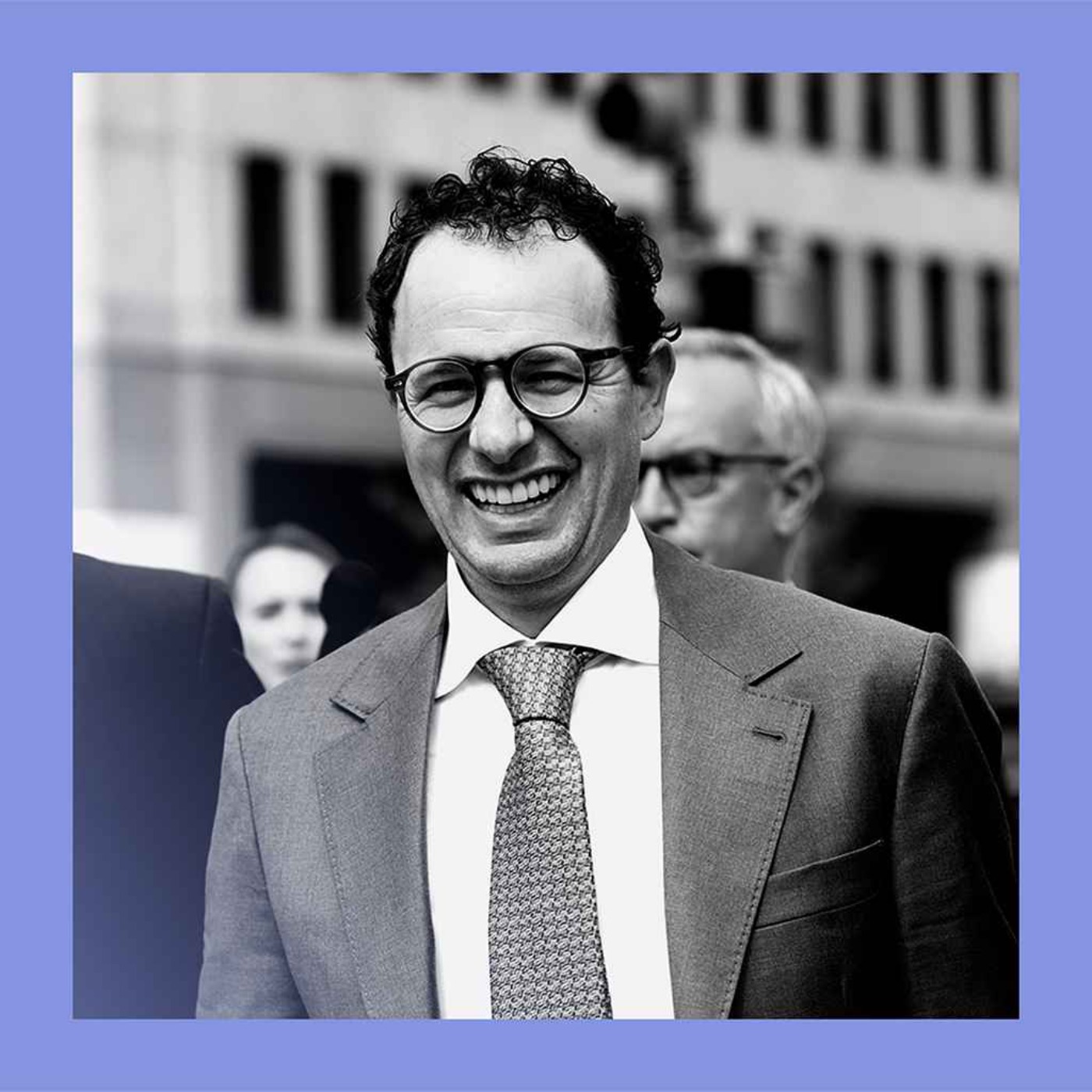
11:38Tens of thousands of young men were locked up without trial, murder rates plummeted, and Bukele's hardline approach was rewarded with another term. Since being re-elected last year, the man who describes himself as the world's coolest dictator is doubling down on that repressive approach. He started by busting gangs. Now he's also busting his critics. Nayib Bukele is young, MAGA-friendly, and pretty ruthless. Sarah Burke is our Mexico and Central America bureau chief. and he's devolving his image from this tech-savvy reformer to actually a standard autocrat. He now has all the tools of repression that he needs to stay in power indefinitely and it looks like he might be planning to do just that.
12:31So Sarah, fill in some of the background for me then. Bukele was elected as president of El Salvador in 2019. What's happened since? Yeah, so he's always had quite autocratic or power-hungry, shall we say, tendencies. And that was very much on show during his first term. He amassed huge amounts of power and in 2022 applied a state of emergency that's still in force. But it was used towards cracking down on crime, which was horrific in El Salvador. There were these gangs who really were incredibly violent and extorted Salvadorans and made their life a misery. And voters were so grateful because it really changed their life that they sort of overlooked the power grab that came with it.
13:11He said, all these powers that I'm amassing to myself, I'm going to use them to this end. But after he won his second term, which we should say was constitutionally dodgy, with 85 % of the vote, things have sort of started to change, especially in recent months. A few people warned that one day he might well aim his powers of repression more widely against not just gang members. And it seems like now he's doing just that. So Sarah, in what ways is he becoming more autocratic? So you're seeing increasing repression towards people who criticize him. You know, in the past, he's locked up previous politicians on charges of corruption.
13:51But a lot of the time, it's been on the basis of being linked to gangs. Now it's more wide. There are arrest warrants being issued. So there are journalists who've reported on corruption in this government who are having to leave the country. Or union leaders, for example, farmers who recently were protesting against their land being seized. You know, he sent the military police to disperse them and arrested a couple of people, including a local pastor. And then the big thing that happened, which is when I decided to get on a plane, was on May the 18th, when his people came and took away Ruth Lopez, who's a very prominent human rights lawyer who'd been sort of digging into corruption in the government.
14:31And this was followed up very quickly a couple of days later by the legislator passing a law that essentially gives the government control and the ability to stifle NGOs and civil society. You know, it's very similar to ones we've seen in Nicaragua and Russia. And Bukele has also amassed powers to rewrite the constitution more easily. That's happened pretty recently. So when I was there, there was really this sense of fear. People kept saying to me, this is a step change. And a lot of people before were worried about what they said, but now it was really everyone. There was a sense of the rules of the game changing, and no one really knew where they stood or what would come next.
15:10And you also said he's MAGA friendly. What do you mean by that? Well, he's always had fans among the MAGA group in the United States. This is long standing. And obviously now Donald Trump is back in the White House, and he has a very values-free foreign policy. And Buckele, I think he admires, you know, this is a strong man who has amassed a lot of power. And that's something that I think Donald Trump aspires to. This was something that Joe Biden obviously objected to. And there were sanctions on allegedly corrupt or abusive people in his government. But Trump is completely opposite. It's this gushing that he's doing a fantastic job.
15:48And more than that, Buckele is now doing dirty work for Trump. So Trump has sent some of the Venezuelan migrants and Salvadoran migrants in his country to El Salvador to be locked up in a mega prison that Bukele built for his crackdown on gangs. They're beyond any reach of the law. There's no due process. It's not clear that many of these people even have committed any crime at all. And they're just now in this hole in El Salvador. And Trump has not indicated in any way that there'll be any consequence for Bukele on the international stage. And what about at home? How is all this affecting his popularity?
16:23So it is affecting his popularity. It's a bit of a chicken and egg situation where Bukele cares a lot about his image and he's incredibly popular. And as that image has slid a little bit, he's sort of become more repressive and then the image slides a bit more. So polls in El Salvador are slightly unreliable because lots of people are actually quite scared of saying what they think. But there are many things that have happened in recent months that have dented his popularity. One is he overturned a ban on mining, which many people didn't like. At least around half of Salvadorians don't like playing jailer for Uncle Sam.
16:57And, you know, now that the streets are safer and people are still incredibly grateful for that, the economy is pretty lackluster and signs of corruption in the government are rising. You know, recent revelations in El Faro, which is a local outlet whose journalists, many of whom have had to leave the country, reported recently about Bukele's cozy relationship with some of the gangs that he had later on cracked down on. And that's pretty damaging too. And all of that has made his image slip both on the international stage and at home. But he's got several years left of his term, right? So what can we expect?
17:35He's got until 2029 and many people think that he will stay in power, run again, do whatever it takes. Public opinion is still in his favour, at least as far as we can tell. But as that stops, he might well step up repression. This is something we obviously have to wait and see over the coming months what happens. But the sad thing is he's probably going to be able to weather any storm. You know, he has a very powerful propaganda machine and all the tools he needs to crush his opponents. He controls the police, the army, the legislator, the courts. I mean, pretty much everything. Civil society is being muzzled.
18:11And Nicaragua and Venezuela are two very clear examples in the region of how autocrats can cling to power long after they are popular. People looked at what Bukele did to clean up the crime problem in El Salvador, and it became extremely popular. Other countries started to think, well, maybe we can do this. And other populations started to think this is what we want from our leaders. But the lesson I think here is that when a strongman or would-be strongman promises to keep you safe from criminals by suspending the rule of law, well, it might well do that. But then at the end of the day, there'll be no law left to keep you safe from him.
18:48Sarah, thank you so much for talking to me. Thanks, Rosie.
19:13Once you saw Genghis the Tiger patrolling along the shores of a lake in the Ram Thambor Nature Reserve, you would not forget him. Anne Rowe is the Economist's obituaries editor. He was a hugely impressive animal, strong shoulders, a sense of power and purpose, grizzled ruff around his face. No one was watching more intently the tracks that were on the path before him, the pug marks of other tigers, the flocking of crows above him, the rustle of piglets in the grass, anything he was picking up with his acute hearing. And that was the kingdom through which Genghis the tiger moved. but you might not have been mistaken if you thought he was also Valmik Thapar.
20:12He had been there for five decades protecting the tigers and learning all about them, intently observing them.
20:25When he had first seen Genghis, he had fallen in love with him completely. It was a love affair that he had with tigers. He had gone to the reserve in the first place when his life was in the doldrums, when he seemed to need something he couldn't find when his marriage was falling apart. He had found there something he'd been searching for in his life. And from then on, he became a tremendous campaigner for tigers. He wrote 30 books about them. He made documentaries, including a famous one called Land of the Tiger. and he made himself really quite unpopular but very noisy in the corridors of power, talking to state officials and ministers and committees about the fate of tigers and what ought to be done.
21:17His campaign was certainly urgent. In 1900, there were 100 ,000 tigers, more or less, roaming in India. By 1974, there were 1 ,800. A number of things had threatened them and killed them Among them the turning of the land to agriculture, the clearing of forest And the shooting sprees various Maharajas had Some Maharajas boasted of shooting a thousand tigers over their lifetimes Then there was opposition from the villagers who lived near the tiger reserves or tiger lands when they found their livestock were being eaten and they themselves were being attacked. So although the tiger was much revered in India, in its mythology and in its politics, the national animal was the tiger, relations between human beings and tigers were often dire.
22:17Much of his work, when he was away from the reserve and he was hardly ever away from it, was in the corridors of power, trying to get hold of people who might give funding to the reserve or just help in his campaign. He reckoned he had sat on 150 committees because they kept being formed with more and more portentous names, and they never did very much. He was appalled by the sloth and the way people at state level too didn't seem to take the problem seriously, by the way the wardens in the reserves were not properly armed or supported and his action plan for the reserves which he made very plain indeed in his booming voice was that there should not be a national tiger conservation authority anymore it should all be done at state level by people who spoke the local language, knew the local forests, knew the local tigers, and also that, if possible, villagers, scientists, politicians, ministers, everyone should be brought together on a strategy for the tigers.
23:30It shouldn't be the ecologists against the villagers, or all the ways in which the campaign had become rather muddled in the past. So most of his time was spent in the reserve, in an old fort, or at least a temple that had belonged to the old fort. There were very extensive ruins, and much of the tiger-watching went on among fallen-down walls and towers. And there he would sit at sundown, watching the reserve. It overlooked a huge valley, so he could watch the tigers even from there, and he could see Genghis along the shore of the lake, at least if he moved in the daytime, for the night time was when he would go out on patrol and when Genghis II would take his little stroll along the lake shore.
24:24Varmictapar would go out in the jeep as quietly as possible and sit and commune with the tiger, who he had decided was really a representation of himself. and he could hear his roaring, echoing both in his head and in the forest, as his own voice did.
24:58Anne Rowe on Valmik Thapa, who has died aged 73.
25:08Thank you.
25:39Global payroll is a headache when you're juggling multiple vendors. We get it. Companies like Shopify and Revolut are scaling effortlessly across borders with Deal. Revolut manages over 450 employment contracts across 26 countries without setting up separate local entities. And KLM pays 189 employees across 12 countries, all from one system. Build your global team with Deal. Visit deel.com slash intelligence and start expanding your business today. Grainger knows if you're a procurement manager at an industrial manufacturing facility, you're balancing inventory and budget while sourcing critical supplies across the operation.
26:18Too much inventory? Costs climb. Too little? Production slows. Grainger's$2 billion in on-hand inventory helps you get what you need when you need it, so you can help keep budgets balanced and lines moving. Call 1-800-GRAINGER, click grainger.com, or just stop by. Grainger, for the ones who get it done.
A sudden war made Iran’s leaders look unprepared. And many Iranians loathe the regime. But there are no signs yet that internal dissent will shape the conflict. Shortly after Nayib Bukele became El Salvador’s president, he was labelled as the world’s first millennial dictator; now he is going after his critics. And remembering Valmik Thapar, tireless campaigner for India’s tigers.
Get a world of insights by subscribing to Economist Podcasts+. For more information about how to access Economist Podcasts+, please visit our FAQs page or watch our video explaining how to link your account.
Hosted on Acast. See acast.com/privacy for more information.