In short
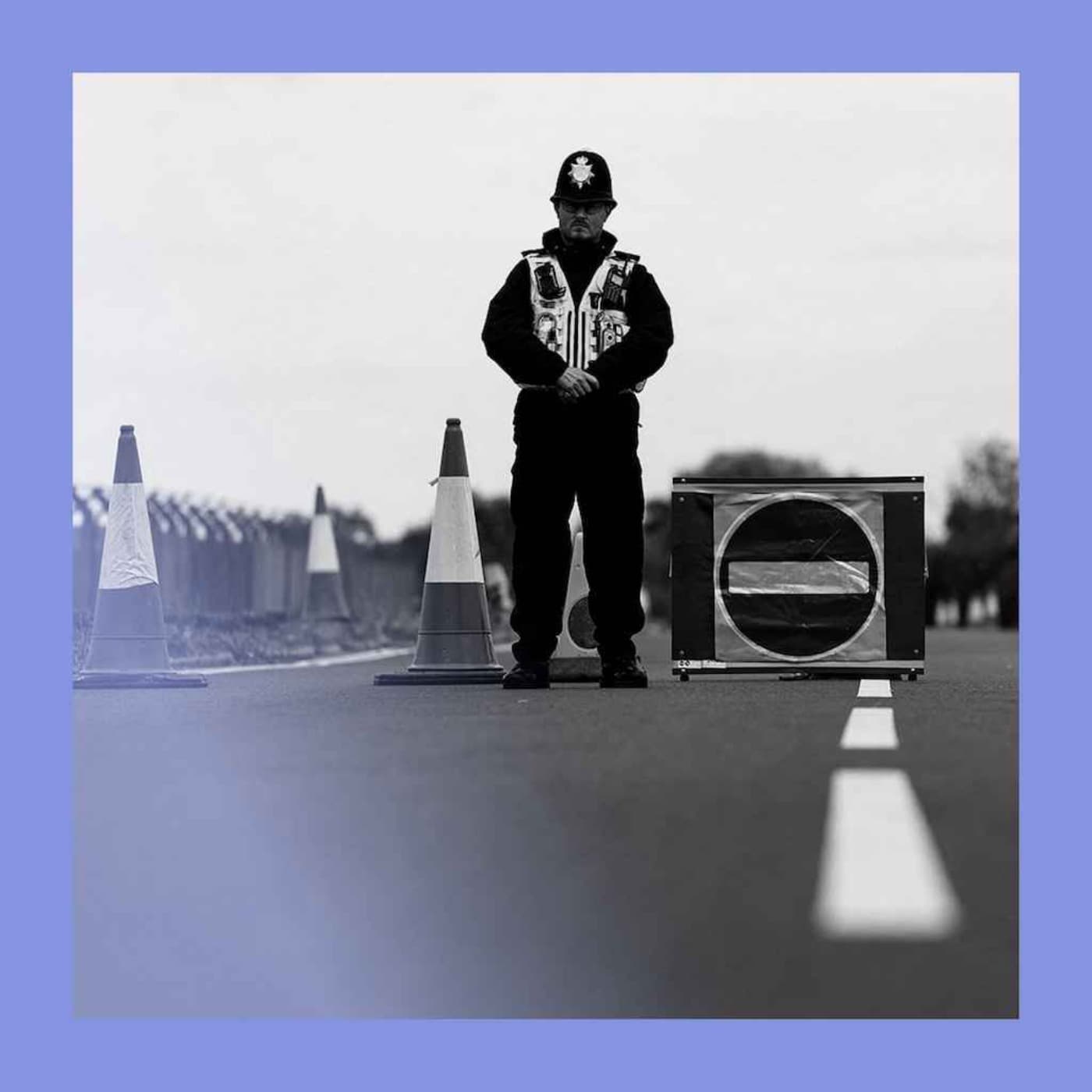
The episode of The Intelligence from The Economist focuses on NATO’s annual summit in Ankara and the tensions shaping it. Topic: NATO’s agenda is tight—defense-spending progress, boosting the defense industrial base so money yields usable weapons, and recommitting to defending Ukraine. Key off-agenda risks include Donald Trump’s grievances about European “loyalty,” his interest in Greenland, and his potential mediation of Ukraine that could favor Russia.
Guest backgrounds
Anton LaGuardia (The Economist diplomatic editor) reports from Ankara; Anna Kerr (senior audience editor) discusses “vibe lawyering” (AI in courts).
Key claims
Russia is using hybrid/grey-zone tactics (drone incursions, sabotage of cables/pipelines, disinformation) and may intensify after any ceasefire. Anton describes Germany permanently deploying troops to Lithuania and notes uncertainty about U.S. troop pullbacks. Examples: AI legal hallucinations—fabricated cases in Canada (CourtReady), fines in court, Sullivan & Cromwell apologizing for AI-generated hallucinations; Garfield AI as a cautious, human-in-the-loop alternative.
Written by AI. May contain mistakes. Listen to the episode to check what was said.
Chapters
Tap a time to open that second in VONATO's Annual Summit Overview
1:18 to 2:48
An insight into the agenda and dynamics of the NATO summit.
“NATO's 32 leaders meet in Ankara today for their annual summit.”
Threats to NATO Members
2:48 to 4:39
Exploring the risks posed by Russia to NATO countries.
“But there are things outside the agenda that may cause trouble.”
Germany's Commitment and U.S. Withdrawal
4:39 to 8:25
Discussion on Germany's military commitment and concerns over U.S. support.
“European Commission, and Mark Ritter, the Secretary General of NATO, wrote an unusual joint piece where they talk about Russia's war economy.”
The Future of NATO Without the U.S.
8:25 to 10:54
Examining NATO's potential survival without American support.
“I think they could, if they were, A, united, B, better prepared, and C, willing to take the cost in terms of blood and treasure that this will entail.”
AI in the Courtroom: Vibe Lawyering
11:09 to 14:00
A discussion on the implications of AI usage in legal contexts.
“By this point, we are used to running into AI in different parts of our life, whether that's in schools or in the workplace.”
AI in Legal Contexts: Caution and Potential
14:00 to 15:00
Explore the role of AI in legal settings and the necessity of human involvement.
“Given all of these perils then, maybe the answer is don't use AI in legal contexts.”
Journey on Route 66: Personal Narratives
15:00 to 15:44
Delve into the personal stories and motivations behind traveling Route 66.
“I met these guys outside the Midpoint Cafe in Adrian, Texas.”
The Allure of the Old West on Route 66
15:44 to 16:41
Understand the romanticism associated with the Old West and its cultural significance.
“Yesterday, he introduced us to the route.”
Experiences in Oatman: Wild West Revival
16:41 to 18:03
Investigate the vibrant tourist experiences and attractions in the town of Oatman.
“Part of the reason is the freedom of the open road.”
The Freedom Symbolism of Route 66
18:03 to 19:45
Examine the deeper associations of freedom and adventure linked to Route 66 and the Old West.
“Descendants of the pack mules, or burros, that used to haul for the mining company, roam the streets freely, stopping traffic and catching food from tourists.”
Show all 12 chapters
California Dreaming: Migration and Changes
19:45 to 20:09
Learn about the historical migration patterns and current trends affecting California and the Midwest.
“When Route 66 opened, fewer than 5 million people lived in California.”
California Dreaming: Migration and Changes
21:06 to 21:32
Learn about the historical migration patterns and current trends affecting California and the Midwest.
“That's why Optum uses technology to connect the people and processes that make healthcare easier, more affordable, and more effective.”
Transcript
Automatic transcript. May contain errors.0:00And I thought, what if I've scaled businesses? What if I scaled my philanthropy? What if I did as much in one year as I've done in my whole life? See how your wealth could have even greater meaning at creativeplanning.com slash impact.
0:30up to 50 % less compared to new. All devices have been professionally refurbished and come with a one-year warranty and 30-day return policy. Start saving money. Visit Backmarket.com or the Backmarket app to shop now.
0:47The Economist
0:53Rosie Blau:Hello and welcome to The Intelligence from The Economist. I'm Rosie Bloor. And I'm Jason Palmer.
1:03Rosie Blau:Today on the show, first there was Vibe Coding, now Vibe Lawyering, and day two of our road trip down Route 66.
1:17Rosie Blau:First up though.
1:28NATO's 32 leaders meet in Ankara today for their annual summit. And like every gathering of an awkward family with a difficult patriarch, the purpose is to get through it without major incident.
1:44Rosie Blau:Anton LaGuardia, our diplomatic editor, is currently in Ankara. They're going to keep it short. They're going to try and keep it sweet. They're going to try to avoid difficult subjects. And they're going to try and bite their tongue if anybody's insulted. The duller, the better. The duller, the better is a slogan I'm sure NATO would be delighted to brandish about. Anton, what's going to be on the agenda for this awkward family meeting? The official agenda is tight. It is about showing that Europe is making progress towards meeting the new targets for defense spending agreed a year ago. So you will see the NATO Secretary General talk a lot about how much more is being spent and indeed a lot more money is being spent.
2:33And it's also intended to boost the defense industrial base to try and make sure that all this money produces actual useful weapons rather than just going into defense inflation. And the third thing is to recommit NATO to defending Ukraine. But there are things outside the agenda that may cause trouble. One is Iran and Donald Trump's feeling that he didn't get sufficient loyalty from European allies during his war. Some of them even tried to prevent him from using their airspace or their bases. Then there's a question of Greenland. Donald Trump has not given up on taking Greenland. And the third question is his return to mediating an end to the war in Ukraine.
3:15That would be a good thing if it's a fair deal, but there's always a worry that he has a soft spot for Vladimir Putin and the deal could be bad for Ukraine and bad for Europe.
3:25Rosie Blau:Trump's presence at the NATO summit is important. It also, as you say, adds a layer of uncertainty. But let's talk about the last point you mentioned. What particular threats are there to NATO members from Russia? Well, I think you can divide them into two buckets. One is that as long as the war is going on, Russia appears to be trying to impose a cost on the countries that support Ukraine. So you're seeing a lot of hybrid or grey zone aggression, drone incursions, incursions into the airspace of allied countries, sabotage of undersea cables and pipelines, disinformation, and much more. And that seems to be a way of signaling below the threshold of war that Europeans will have to pay a price.
4:13Then there's the bigger worry, which is what happens when there is a ceasefire in Ukraine or some kind of diminution of violence, and Russia's large and growing and battle-hardened army, supported by a war industry, decides to turn its attention to others if it chooses to do so and settle the score with the Europeans who have helped Ukraine. In The Economist this week, Ursula von der Leyen, the head of the European Commission, and Mark Ritter, the Secretary General of NATO, wrote an unusual joint piece where they talk about Russia's war economy. They say it would be naive to think that this war machine will slow down the day after there is peace.
4:58So there's nervousness all along the eastern flank, particularly at a time when America's commitment to NATO is so uncertain.
5:07Rosie Blau:Anton, you've been to the Baltics recently. We're at the Pabrata training ground outside Vilnius, about an hour north of this capital city. What did you see there? Tell me about that trip. Well, it was quite striking, Rosie. The first and most notable thing was just the degree to which Germany is increasing its commitment to helping Lithuania in particular. It is for the first time deploying its troops abroad on a permanent basis. There is accommodation being built in the forest, there's schools being set up. So German soldiers can bring their families to Lithuania and essentially do in Lithuania what the Americans and other allies did for Germany during the Cold War,
5:57which is to live permanently in the country to defend it.
6:03So you've got German tanks and armoured vehicles roaming through the forest, exercising, the Germans are deploying a whole brigade, and they are the tip of the spear of its broader modernization in an attempt to expand into the biggest conventional army in Europe. Then there's a strange mixture in the Baltic States with both confidence and nervousness. So if you believe that America is still committed to NATO, then there's this very brave talk of saying we will repel any aggression against us. On the other hand, they're also worried about what America is doing. It is notable that the same training base where I saw the Germans training, the Americans had been there days before and had pulled out.
6:49That was a whole American armored battalion. They've left the country. The broader brigade has left Poland and nobody knows whether they'll be back.
6:57Rosie Blau:Why is America pulling back from NATO? What's their concern? then? One answer to that question is that Europe is rich, should be able to fend off a country like Russia, whose GDP is roughly equivalent to that of Italy. So collectively, they have a lot more resources than Russia does. They should be able to defend themselves. But there is a deeper resentment, particularly from this administration, about the sense that Europe has been both free riding and destroying its own civilization through mass migration and wokery. Pete Hegseth, the Defense Secretary, came to NATO last month and unusually asked for his comments to be broadcast in public.
7:40And at those comments, he harangued his fellow allies for being shameful in their lack of support for America in the war in Iran, a war on which they weren't consulted, never asked for help, but then blamed for as things went wrong. And the president said, all he said was that our jets would need to take off from bases in Europe or our ships from ports to strike targets in the Middle East, Iranian targets that threaten European interests even more directly than they threaten us. But too many of our allies said no. And he said there will be a six-month review, so there will probably be more cuts in both frontline forces and more important than backup forces that America promises to send.
8:24Rosie Blau:Could other NATO countries fend off Russia without America? I think they could, if they were, A, united, B, better prepared, and C, willing to take the cost in terms of blood and treasure that this will entail. The Americans provide obviously a lot of capability, but the most important thing they provide is the ability to integrate the disparate European forces into a greater whole through its command and control, through its intelligence, through its satellites, the ability to fire deep and accurately behind enemy lines. If the Americans pull out, all that stuff becomes harder to defend. It becomes harder to mass.
9:07It becomes harder to integrate your forces on land, sea, air, cyberspace, space. And it becomes, as generals told me, much more like the war in Ukraine, more static, more bloody, more prolonged and difficult. And that would, I think, raise a lot of questions back home in European countries as to whether they're willing to pay that price.
9:30Rosie Blau:And on your end, Ankara, for this exciting summit, what are we really going to see? Are we really going to have a tough discussion about whether NATO can survive without the US? That discussion is banished at official NATO meetings. Nobody will dare imagine a world without America for fear that just thinking about it will bring it about. If that conversation is taking place, it's taking place, I think, outside NATO, in the corridors of the chancers of Europe, among military services, perhaps among the intelligence folks, because it is both very difficult to imagine politically, but also difficult to execute operationally.
10:15You could not prepare within NATO to live without America because the Americans would have a veto on that and still have a big say throughout the organization. But I think there's a general feeling that we're one bust-up away from the potential breakup of NATO, that Donald Trump could at any moment say he's had enough, to hell with you, I'm leaving, and I'm bringing my troops home. And there's also the fear that Russia might try something limited, ambiguous, to test NATO and see whether the Americans respond or not. If the Americans don't respond, that would be to undo a lot of the trust that the alliance is based on.
10:54Rosie Blau:Anton, thank you for talking to me. Good to talk to you, Rosie.
11:09By this point, we are used to running into AI in different parts of our life, whether that's in schools or in the workplace. But we are starting to see it crop up in a much more high stakes environment, the courtroom. Anna Kerr is a senior audience editor for The Economist.
11:52a new trend, which is vibe lawyering. Given what we know about AI and its fallibility, my first question is how good is AI in this high stakes situation? Yeah, not amazing at a professional level. AI chatbots are prone to just making up legal cases to support their arguments. In Canada, CourtReady, which is a legal research firm, has already flagged that fabricated cases have been found in over 80 different rulings so far this year. And chatbots also can often encourage people to litigate when they maybe shouldn't. It can encourage them not to settle cases that they maybe should and can sometimes overstate their chances of winning a case.
12:37And so is the legal profession worried about this given the sort of rocky start? I think there's more so a sense of irritation at how it's impacting cases and courts. So I spoke to a lawyer and he was complaining that grievances, which should in the past have been only a couple of sentences, are now 10 to 12 pages or more. It's also causing kind of wider problems for litigants as well. In one Canadian case, a judge ordered a plaintiff to pay$10 ,000 to the other side, partly for using AI improperly to prepare the case. In another case, Nippon Life, an insurance company, went even further by suing OpenAI itself.
13:20claiming that ChatGPT enabled one of their ex-employees to file a meritless discrimination claim. So the real issue here is that people who don't know better are using AI to defend themselves and is going poorly. They are perhaps not just losing, but also getting fined. Yes. Unfortunately, also the people that do know better, probably should know better, are also running into some problems. Lawyers aren't immune to the issues that are coming out of this. Earlier this year, Sullivan and Cromwell, which is a top law firm in New York, had to apologize for the court for filing a lawsuit that had AI hallucinations in it.
13:57And just last month in a case in Mississippi, lawyers on both sides actually were fined for citing fabricated cases within the lawsuit. Given all of these perils then, maybe the answer is don't use AI in legal contexts. Do not take your chatbot to the gore room. I think with caution, AI can be useful, especially some purpose-built models that are cropping up. For example, there's a platform called Garfield AI, which is billing itself as the first AI-powered law firm that's been approved by regulators. It helped a user recover£7 ,000 in a court in London recently. Even then, a human lawyer argued the case.
14:38So like with a lot of things, AI can have its place in the courtroom, but only when there is humans in the loop. Fundamentally, courtrooms are a place of conversation and we still need humans in there. But AI can maybe be used as a tool that can help some people increase their access to justice. Anna, thanks very much for your time. Thank you, Jason, for having me.
15:10My name is Vince. My name is Christian. And I come from Marseille. And why are you traveling Route 66? What made you want to do this? For me, it's a dream. A long time. And now, it's a reality. I met these guys outside the Midpoint Cafe in Adrian, Texas. named because Adrian is the midpoint of Route 66.
15:36Rosie Blau:This week, John Fasman, our senior culture correspondent, is taking us on a trip down one of America's most storied highways. Yesterday, he introduced us to the route. Today, the romance of the Old West. The first half of the highway has its charms, as we'll see tomorrow and Thursday. But the road really comes into itself out west. Open roads, big skies, desert landscapes, and small towns with wide streets that feel like the Old West. In Arizona, I met bikers from Britain, vintage car enthusiasts from Spain, and octogenarians from France traveling the road for the second straight year. They've come to see, and I hope you can intuit my finger quotes when I say this, the real America.
16:20Now, I was raised and now live in the Northeast, and I bristle at the notion that any part of America is more real than any other part. But I know what they mean. There's a romance to the Old West that, say, New Jersey and Connecticut, whatever their charms, simply don't have.
16:40Route 66 makes the most of it. Part of the reason is the freedom of the open road. I've been riding my whole life, obviously. Still riding. but I grew up on and all around 66 my parents moved four times from southern Milwaukee to southern California and back before my dad decided to stay so I crossed it four times as a child and then grew up in San Bernardino which is a route 66 town used to ride my motorcycle all the way up to Cone Pass and all the way up to Pasadena and Santa Monica up, you know, we're always on it. You know, it's just part of me. That was John Balasteri, a mechanic I met in Seligman, Arizona.
17:26He's planning to open a motorcycle museum, which would not be unique on Route 66. I visited one in Warwick, Oklahoma. And if I'm remembering right, not once on the road between Chicago and Tulsa did I pull into the slow lane to let phalanxes of bikers pass me. But from Texas to California, I did it all the time. All right, you ready? One Arizona! Further down the road in Arizona, an abandoned mining town called Oatman has remade itself as a sort of open-air Wild West stage set.
18:03Arizona!
18:09Descendants of the pack mules, or burros, that used to haul for the mining company, roam the streets freely, stopping traffic and catching food from tourists. Every day, a couple of amateur actors in cowboy gear stage a fake bank robbery and shootout in the main street and then pass their hats for donations to local charities.
18:25Rosie Blau:Have a great day and God bless. It's good, clean, extremely loud fun, and people love it, including this Chicagoan I kept running into that day. Oh, well, the Burroughs are so cute. And then the old town feel. Yeah, the Wild West feel. Absolutely amazing. It's very historic. You see it all over the internet. TikTok. But what is it really that people love about the Old West? I doubt many of the tourists I met would come out of a gunfight unscathed. I'd venture a guess that people's fascination with the Old West is down to two things. First, visitors to America flock to it for the same reason visitors to London go to Fortnum's for high tea or to Kenya go on safari.
19:07They're connecting with the image of the country lodged in their minds from film, television, and literature. And second, well, I'll let one of my new French friends explain. So what put the dream into your head? How did you hear about it? What are your associations with it? A sensation, liberty. And my passion is motorbike. Liberty. There is a deep-seated association between the Old West and freedom. Escaping the old ways, and as Mark Twain wrote, lighting out for the territory. Dust Bowl refugees and others took this highway to California to make new lives for themselves. When Route 66 opened, fewer than 5 million people lived in California.
19:50Today, about eight times as many do, around one in nine Americans. And for the first time ever, expensive, over-regulated California is shedding residents, while the inexpensive Midwest, long a place Americans have fled, is gaining them. Tomorrow, we'll look at the road's story commercial past and its delightfully kitschy present.
Read the full transcript
20:42Rosie Blau:That's all for this episode of The Intelligence. We'll see you back here tomorrow.
21:05Healthcare can feel complicated. That's why Optum uses technology to connect the people and processes that make healthcare easier, more affordable, and more effective. We're making it clearer for you to know exactly what your benefits cover. And to help you better manage your health, we're coordinating care between your doctors and your technology. We believe better, simpler healthcare is always possible. That's healthy optimism. That's Optum. Visit Optum.com to learn more. Thank you.
From the publisher
As NATO leaders gather for the annual summit in Turkey today, the thorniest issue is off the agenda: fractures within the alliance. Our correspondent travels to the Baltics, where a strategic shift is already evident. First there was vibe coding, now vibe lawyering is coming to courtrooms. And day two of our great American roadtrip down Route 66.
Guests and host:
- Anton La Guardia, diplomatic editor
- Anna Kerr, senior audience editor
- Jon Fasman, senior culture correspondent
- Rosie Blau, co-host of “The Intelligence”
- Jason Palmer, co-host of “The Intelligence”
Topics covered:
- NATO, Ukraine, Ankara
- Vibe lawyering, vibe coding, courtroom
- Route 66, California
Listen to what matters most, from global politics and business to science and technology—Subscribe to Economist Podcasts+
For more information about how to access Economist Podcasts+, please visit our FAQs page or watch our video explaining how to link your account.
Hosted on Acast. See acast.com/privacy for more information.