In short
Rare on-the-record look at Iran’s current direction after the JCPOA’s collapse and recent strikes, plus a tech segment on AI model competition and a postal segment on digitization.
Guests/backgrounds
Abbas Arachi, Iran’s foreign minister (interviewed by Economist colleagues Nicholas Pelham and digital editor Adam Roberts). Henry Trix, U.S. technology editor (discusses OpenAI/Anthropic/Google). Wenzelin von Bredow, Economist senior Germany correspondent (postal digitization in Denmark and beyond).
Key claims
Iran is under pressure from drought, blackouts, inflation, and uncertainty over succession; it has relaxed morality police enforcement. Arachi signals readiness for a “fair and balanced” nuclear deal, says no enrichment is ongoing, and proposes “zero nuclear weapons” but not “zero enrichment.” AI labs are “circularly” investing in each other’s compute/cloud/chips, undermining winner-takes-all credibility. Letters are effectively ending in Denmark; parcels are booming.
Notable examples
12-day Israeli/American bombardment damaging enrichment sites; minders and tighter control during the trip; Microsoft/NVIDIA backing Anthropic; Google’s Gemini; Denmark’s letter volume down 90% and standard letter cost about $4.50; USPS losses and Trump’s proposed merger into Commerce.
Written by AI. May contain mistakes. Listen to the episode to check what was said.
Chapters
Tap a time to open that second in VOAI and Tech Industry Dynamics
1:27 to 2:12
Explore the evolving relationships between AI model makers and tech firms.
“It's getting harder to keep track of all the tie-ups between AI model makers and chip makers and old-school blue-chip tech firms.”
Insight into Iran's Current State
2:12 to 6:10
Discussion on the changes in Iran's political and social landscape.
“But really only rarely do we talk about what's happening in Iran.”
The Future of Iran's Nuclear Negotiations
6:10 to 11:34
Analysis of Iran's prospects for a new nuclear deal and its implications.
“An increasing number of the middle class are now impoverished.”
Political Uncertainty in Iran
11:34 to 12:19
Examine the domestic political challenges and uncertainties facing Iran.
“which is no one is entirely sure who has the upper hand politically today or who indeed will be in charge in the coming months.”
The Rise of Competition in AI
14:03 to 21:36
Explore the dynamics of competition in the AI market and its implications for major players.
“And the one to beat has been OpenAI, maker of ChatGPT, which has been the big target.”
Transition from Letters to Parcels
21:36 to 21:56
Discuss the decline of letter writing and the rise of parcel delivery services in the postal industry.
Impact of Digitalization on Postal Services
21:56 to 27:36
Analyze how digitalization has transformed postal services and the challenges faced by state-run entities.
“It's got to do with changes in the way we communicate.”
Transcript
Automatic transcript. May contain errors.0:00To grow beyond limits and even beyond your aspirations, you need the London Business School of the London Business School of London Business School of London Business and the London Is a 2016 The best podcasts give you the sharpest view of the world. Adio is the AICRM that gives you the sharpest view of your business. It instantly builds your pipeline by connecting your email, calls, product data, and more. Then ask Adio to prep for a meeting, spot a deal at risk, or find out where your pipeline stands. It's the AICRM that keeps you 10 steps ahead. Ask more from CRM. Ask Adio. Get 10 % off at adio.com slash intelligence.
0:57A-T-T-I-O dot com slash intelligence.
1:05The Economist
1:12Hello and welcome to The Intelligence from The Economist. I'm your host, Jason Palmer. Every weekday, we provide a fresh perspective on the events shaping your world.
1:27It's getting harder to keep track of all the tie-ups between AI model makers and chip makers and old-school blue-chip tech firms. We pick through the shifting network and ask how it's all likely to shake out. And in other news about an unstoppable future, those who send holiday cards should start thinking about going digital. There'll soon be at least one place where the paper kind just won't get delivered.
2:04First up, though.
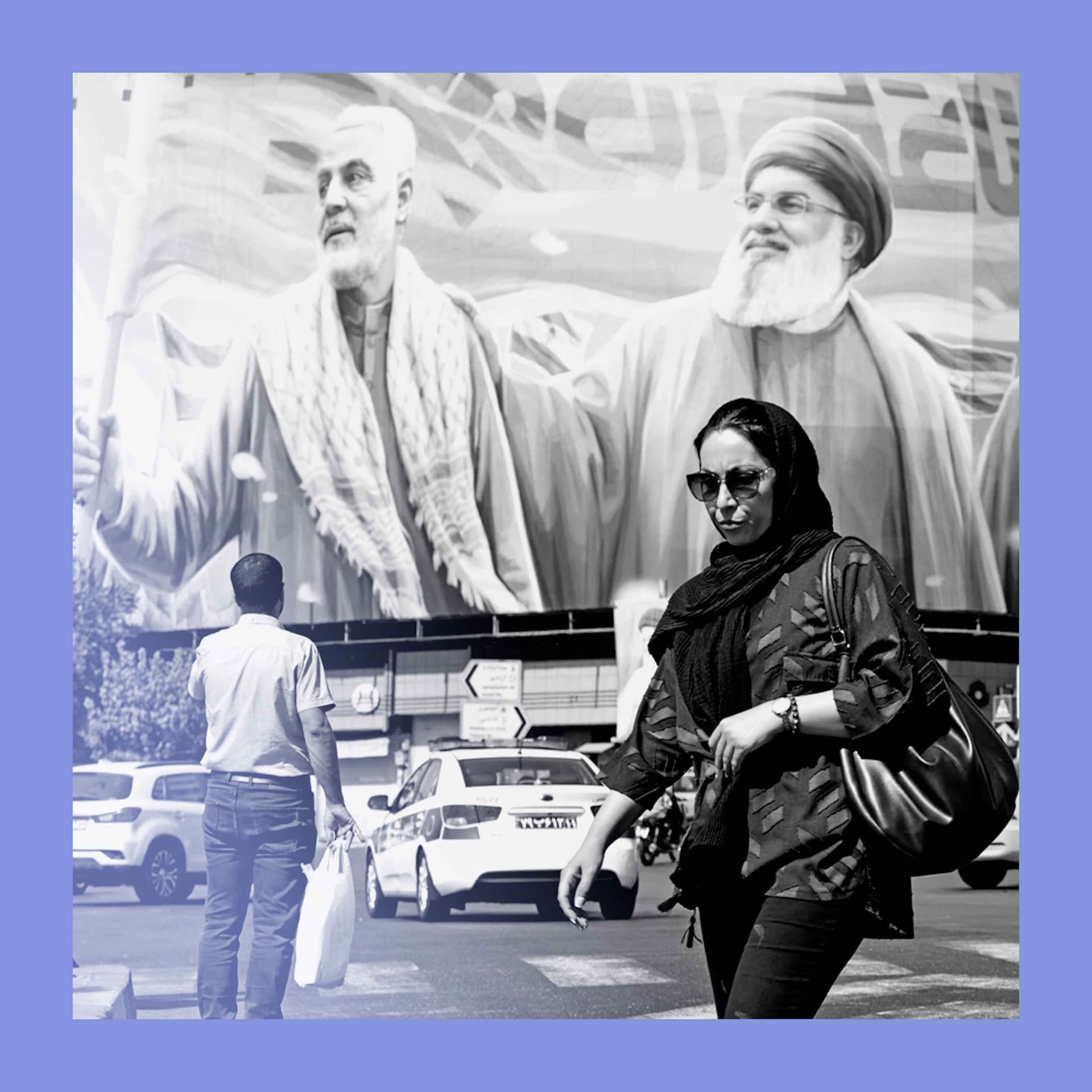
2:12We talk a lot on the show about what's happening to Iran, about the now long-defunct JCPOA nuclear deal, how in June American forces tried to destroy its nuclear sites with airstrikes, how its proxies in the region, the Houthis, Hamas, Hezbollah, have been weakened in recent years. But really only rarely do we talk about what's happening in Iran. The last best look we got was in 2019, when my colleague Nicholas Pelham was detained, imprisoned for a few days and then oddly free to wander around for seven weeks after a daily interrogation. Now he and our digital editor Adam Roberts have gone back and were given a rare on-the-record interview with Abbas Arachi, the foreign minister.
2:59What they saw is that Iran has changed, is changing, and its leadership is sending signals to the West that should be heeded.
3:11It was different to the Tehran that I remembered six years ago, when after the initial sort of harrowing three days of detention, I was largely left to my own devices and able to roam the streets. This time we were much more controlled. the busking seemed to be much more sparse the traffic was more sparse i didn't have a sense of a city which was anything like as thriving and throbbing and vivacious as the one that i remembered it was more somber it was a bit more dour and there was something of a kind of city that was struggling to retain appearances my reaction was quite different i'd never been there before.
3:49I had this idea of a country that had been bombed for 12 days by the Israelis, where there were power carts, where there's no water running. And so even as the plane was coming into land, the fact that through the window you could see twinkling lights and you could see a city was functioning. Actually, for me, it was almost the opposite of yours, that I was seeing a place that worked or worked better than I'd expected. And we drove through the center of Tehran in the middle of the night to get to our hotel with our minders. And I was wide-eyed just seeing the city that had otherwise been portrayed in the Western press, at least, as a place of extremists and dangerous nuclear threats.
4:26So for me, it was a very different experience. And you mentioned minders and being more controlled. Talk me through that. Well, I've been a foreign correspondent in various countries, and I've worked with minders and been aware that spies have now and then followed me in different places. But Iran was another step up for me. So we had an official minder. We'd arranged for that before we traveled and there was no surprise that that person was with us. What surprised me was then the second and potentially third layer of minders who were following them or who were in the next hotel room. And I think they also wanted to show that this would be different from the previous trip.
5:05I think they were very keen to show that the trip would go smoothly, that that episode in the past where I was detained and blindfolded wouldn't reoccur. As soon as we got off the plane, there was a car waiting for us to whisk us away to a VIP lounge. And that sort of somehow emphasised that this wasn't normal, that there is still something quite strange about being a foreign correspondent in Iran. And did you get a sense either from the people that you spoke to, from your minders, from indeed anyone that you interacted with while you were there, that Iran feels like a country under pressure? Absolutely.
5:36And I think it's quite stark when you're outside of Iran. The impression is that the summer bombardment by Israel and America is what is driving the agenda in Iran. But actually, when we were there, it seemed that there were many more pressing problems that the Iranians are having to deal with. A six-year drought where the president had warned that the population would have to evacuate if it didn't rain soon, and it hadn't rained soon. There were blackouts in the summer, which were continuing in parts of the country. There were issues of desertification. Inflation is rampant. People are desperately struggling.
6:10An increasing number of the middle class are now impoverished. And Iranians are really concerned that the people who are running the country aren't delivering and are desperate to find a way out of this limbo between war and peace, between relations with the West or a stalemate between a supreme leader who is ailing and a massive question mark over what comes next. People want answers from their authorities. And the impression we had, I think, was that they weren't getting them. One thing that really struck me walking around in Tehran was I was conscious that two or three years ago there were huge protests in Tehran by young women and other young people who were very unhappy with the morality police, with the enforcement of the law that forces women to wear the hijab.
6:52And women today don't have to wear the hijab. The law hasn't gone, but the enforcement, the morality police have gone. and so there was this little bit of opening up, this sense that maybe some of the pressure from the government was easing on the population. But the sense we got from interviews, from talking to a newspaper editor, from even talking to officials in the government was that there's so much other pressure, whether it's the economic sanctions that are causing high inflation, whether it's the water cuts, the power cuts, the other hassles of daily life that the government almost felt obliged in the face of those protests but also in the face of all those other pressures to ease off somehow.
7:30And the one way they've done that is to relax the morality police. And at the mention of relations with the West, you were there to interview the foreign minister. How did that go? Well, we were there for a foreign policy conference where the Iranians were going to set out the wickedness of the Israelis and the Americans in breaking international law. And then having attended this conference, we sought an interview with a foreign minister and somewhat to our surprise were told we could have not only an interview, but it would be on the record and in English, which he rarely gives. By protocol, we were told he would have to do it in Farsi, but he was actually willing to speak to us directly in English.
8:08And we took that as significant in itself. The foreign minister had been deputy foreign minister when I was last in Iran. He'd been quite important. I subsequently learned in trying to negotiate my release. And so I think there was a message there that Iran was seeking to normalize its ties with the West, did want a new relationship, did want a nuclear deal. I think there are questions as to how many others inside the system share that view, but this was certainly the message that he wanted to communicate. We are ready to go for a deal, but for a fair and balanced deal, not a one-sided deal. This is the problem.
8:45The moment we come to the conclusion that the US has changed its approach and instead of dictating, it's ready for real negotiations, and is ready for a win-win deal, as we call it, then we can consider. But I think beyond that, this is a regime which throughout its history has had really damaged relations with the West that has been looking east to Russia, to China for salvation, but that hasn't really delivered. Iran doesn't have a kind of get out of jail card except through improved ties with the West. And I think that for better or for worse, despite the American bombardment at the end of this 12-day war, Iran is seeking a new relationship.
9:30So if Iran, if the foreign minister is amenable to another nuclear deal here, on what terms? What does that deal look like from his perspective? After the bombing in the summer, Iran's sites where they were doing nuclear enrichment have been left under rubble. And so the official line, at least, is that all that enriched uranium, that could in theory be the building blocks for a nuclear weapon later, is buried under the ground. All of our enriched material are under the rubble, and they have not been recovered yet. Now, we don't know 100 % that that's true. Maybe that enriched uranium was taken away before the bombs hit.
10:09It actually said that they have been negotiating with the International Atomic Agency to allow inspectors back into the country, but that those had been to installations and sites which had not been bombed. He was holding out for the day when there could be a return of the Americans to the negotiating table before inspectors could return and inspect those sites which had been bombed. The foreign minister said categorically to us that there is no enrichment process going on now. And that opens a window. That leaves an opportunity for outside powers, notably the United States, to strike a deal to say that, OK, Aran, you want to do enrichment.
10:49You say you want to do it for reasons of generating civilian nuclear energy. Perhaps outsiders could come in and help you do that and keep a really close eye on the process. The foreign minister said to us at this stage, there's no option for zero enrichment. Zero enrichment is impossible, but zero weapon is possible. If you want us to go for zero nuclear weapons, we have a deal. You want zero enrichment, we don't have a deal. And quite apart from just the nuclear deal, this sense that the time is right or unavoidable for broader reform, How do you see that playing out? What are the roadblocks for real, serious, lasting change in Iran?
11:30Well, I see one big political problem domestically in Iran, which is no one is entirely sure who has the upper hand politically today or who indeed will be in charge in the coming months. One looming question is whether the supreme leader, who is 86 years old, will still be around to adjudicate and to sort of play off the various factions between reformists and hardliners. So there's deep uncertainty in the domestic politics of Iran, and that feeds into the international sphere as well. They're going to be waiting for Mr. Khamenei to meet his maker before you're going to see any substantive change within the political system.
12:10They will toy with the edges, they will give some ground, but you're not going to see, I don't think, a major overhaul of the system as long as he is in place. Adam, Nicholas, thanks both very much for your time. Thank you very much. Thanks, Jason.
12:36To grow beyond limits and even beyond your aspirations, you need the London Business School MBA. Ranked fourth in the world by the Financial Times, the programme delivers academic excellence and unlocks access to leading global businesses and a network of over 58 ,000 professionals. 86 % of the most recent class accepted a role within three months of graduating, and the returns continue beyond today. Search Discover London Business School MBA to find out more. The best podcasts give you the sharpest view of the world. Adio is the AICRM that gives you the sharpest view of your business. It instantly builds your pipeline by connecting your email, calls, product data, and more.
13:19Then ask Adio to prep for a meeting, spot a deal at risk, or find out where your pipeline stands. It's the AICRM that keeps you 10 steps ahead. Ask more from CRM. Ask Adio. Get 10 % off at adio.com slash intelligence. attio.com slash intelligence.
13:44The tech landscape was built with a winner-takes-all mindset. It started back in the 1990s with Microsoft's Windows monopoly. And it's no surprise that with the rise of generative artificial intelligence, everyone has jostled to be, if not the outright winner, then at least on the winning team. Henry Trix is our U.S. technology editor. And the one to beat has been OpenAI, maker of ChatGPT, which has been the big target. And now its rivals appear to be closing in. What do you mean by that, by closing in? So OpenAI, which is the maker of ChatGPT, has been on the ascendancy ever since ChatGPT came out in late 2022.
14:40It's the most popular chatbot. It's been incredibly innovative in terms of the models that it's put out on the frontier of artificial intelligence. But its dominance is starting to come under threat. And there are some recent events that have really brought this to light. So on November the 18th, Microsoft and NVIDIA, who are two of the biggest backers of open AI traditionally, They threw their weight behind Anthropic, which is a big rival to OpenAI. And that means that for the first time, Anthropic will train its models on NVIDIA's chips, and it will run some of its models on Microsoft's cloud platform.
15:27And on the same day that they announced this, Google also threw down the gauntlet to chat GPT with a new model called Gemini 3. And many people in Silicon Valley are really singing the praises of its new model. In fact, Mark Benioff, who's the boss of Salesforce, said that after three years of using ChatGPT, he's finally ditched it for Gemini. I guess you could call what's going on there some spreading of bets, some cross-pollination. What do you think that all means for OpenAI itself? Yeah, well, the word that's being used all the time these days is circularity. And OpenAI started that with some big tie-ups with the likes of NVIDIA and Oracle and other companies.
16:12And it basically did deals with these companies in order to raise some funding to build giant data centers for it to train its models on. And to start off with, it had the Midas touch. So every company that it struck deals with saw a sharp rally in the share price. But then circularity became something of a dirty word because people started to think that open AI was kind of over-promising and perhaps was going to really struggle to deliver on these spending commitments. Now, with Anthropic, the idea of circularity has come back again. And that's because it also did a deal with NVIDIA and Microsoft as it happened.
16:52So basically, the two of them pledged to invest$15 billion in Anthropic, which in turn will spend$30 billion on Microsoft's Azure cloud platform over an unspecified timeframe, which is underpinned by NVIDIA's chips. So as you can see, they're all sort of scratching each other's backs here. In the case of Anthropic, it's probably not quite as serious as OpenAI at this point, because the deals that it's talking about is smaller scale, and there's less risk that it's going to have to raise debt in order to support all this growth. But it does leave something of a bad taste in people's mouths to see everyone propping each other up in this way.
17:34In the sense that, as we've talked about on the show before, it, a crumbling of the AI world would have serious knock-on effects for all of these enormous firms. So investors have been spooked. I mean, shortly after the announcement with Anthropic, Microsoft's shares fell by 3%, which was the sort of opposite of what happened with OpenAI during the mindless touch moment. And there's been general consternation about the AI spending boom. And that's also weighed on NVIDIA's share price as well as the S &P 500. The markets remain very volatile. They go up and down. But even if there are doubts in the public markets, the private markets remain incredibly hot.
18:19So details about the size of the NVIDIA and Microsoft investments that came out, they were sketchy. But there was a report by CNBC that Microsoft and NVIDIA had valued Anthropic at about$350 billion, which is about double the level just a few months ago. And the Wall Street Journal has also reported that Elon Musk's ex-AI, which is a rival to the likes of OpenAI and Anthropic, was in talks to raise money at a$230 billion valuation. So the numbers are pretty punchy here. Well, what about the consumer end of things, though? I mean, what do they want and what are they getting? So ChatGPT remains the biggest chatbot with 800 million weekly active users.
19:10So it sort of streaks ahead of the competition still in that sense. But Gemini, which is Google's chatbot slash search engine, search whatever, call it what you will, It now has 650 million average users every month, which is short of OpenAI, but still looks like it's catching up. And moreover, Gemini is trained on Google's own chips rather than NVIDIA's, which are cheaper, and that gives it potentially a big cost advantage. And then you have Amthropic, which is not so big in the kind of chatbot race. So people don't use Claude as much as they use ChatGPT, for example. But when it comes to the way that businesses use AI, Anthropic has a coding offering that is incredibly popular.
20:03So we've been talking about this in the usual kind of who's winning the race sense. With that kind of winner takes all mindset, does that even work for this industry? Is there a chance that AI models will end up, to use the British phrase, is kind of horses for courses. Not everyone has to win this. Yeah, I think that's the way it's turning out. I mean, I mentioned earlier on the valuations, you know, the fact that these AI labs are valued at stratospheric levels. And there is a sense, I think, still from those who are investing in them that it's possible that OpenAI, for example, could end up cleaning up here and taking the lion's share of the generative AI business, if you like.
20:45But I think that that is beginning to become less credible the more competition emerges. In fact, a lot of people are now starting to look at it the other way, which is that actually these large language models, although they're very highly valued, may actually be commodities. Because no sooner does one lab come out with a spiffing new model, another lab a few weeks later matches or beats it. So there's tremendous competition here. And I think the more competition there is, the harder it's going to be for the labs to generate the revenues that they need to justify the spending splurge and not to mention these stratospheric valuations that they've achieved.
21:35Thanks very much for your time, Henry. Great to talk to you, Jason.
21:56The End
22:14Snail mail. It's got to do with changes in the way we communicate. Wenzelin von Bredow is The Economist's senior Germany correspondent. Communication is online, SMS and social media. So the volume of letters in Denmark in particular, which is one of the most digitized countries in the world, has declined by 90 % over the last 25 years. And it increased the unit cost of letter delivery to such an extent that it's basically not profitable for the company to do so. It's really a hard stop. There's not a single, not even collection, no delivery. It's the end of letters as we know it in Denmark. What did it or does it cost to send a letter in Denmark at the moment?
23:01So a standard domestic letters is costing now$4.50 and anything more is up to$6 or$7 if you want, you know, next day delivery or an international letter. So the cost of sending letters has become prohibitive and the whole tradition of Christmas letters, which was big in Denmark in the olden days, has gone out of the window partly because of the cost of doing so. So good old-fashioned letter writing, perhaps on the decline, but package sending and delivery has been at the same time going up, no? Not only going up, skyrocketing. I mean, e-commerce has taken off over the last 20, but certainly in particular over the last 10 years, the pandemic was another booster for e-commerce.
23:47So whilst personal services are delivering fewer and fewer letters, in particular in the developed world, they've become basically a parcel service. the volume of parcels has gone through the roof. So there's still a huge demand for postal services. They just need to rethink their business model. It's really changed from a business that delivers letters to a business that delivers parcels. In the sense that these are facts about the world rather than just facts about Denmark, it does sound kind of like a death knell for good old-fashioned stuff that comes in envelopes. Indeed. I mean, the trend is more extreme in Denmark in the sense that Denmark is such a digitized country, such an advanced country in that sense that they've basically digitized their entire public administration, banking services and so forth.
Read the full transcript
24:30But you can see it all over the world. And you can see that some postal offices have actually done quite well at reinventing themselves and their business models, but others haven't. And generally, although it's not always true, but privatized postal services such as those of Malta and Portugal tend to be more efficient and profitable than the state-run ones like PostNord in Denmark. One example of a postal services that has done well in reinventing the service, Italy's Poste Italiana, which is part privatized. And it offers a wide variety of other services. So they have become almost like bank, insurer and post office all under the same roof.
25:13And they are doing extremely well with that. Germany's Deutsche Post is also profitable. and they have become basically a logistics group rather than a post service. Britain's Royal Mail, which is partly privatized, has not done as well as other partly privatized companies. So personal services had to rethink themselves. So the broad trend here is that the part privatized ones are navigating this change better. What about the state-run ones? Well, the state-run ones, many of them are in poor shape. In Greece, for instance, in November, the Greek post office closed 204 of its 456 branches to cut costs.
25:55But that caused a nationwide outcry and basically the Greek post office is in turmoil. The state-owned Canada Post has been striking on and off. And at stake are wages, benefits and of course job security as the business model is changing so much. Over in America, which is the world's largest single postal market that accounts for fully 37 % of global postal revenues, things have been grim for a while. So USPS has been making losses since 2007 of more than$100 billion and reported yet another annual loss in November of$9 billion. dollars. President Donald Trump thinks the solution to this very big loss-making government body is to fold it into the Department of Commerce, which means basically more than 600 ,000 workers will suddenly be merged with the Department of Commerce.
26:51Why that would make the service much more efficient or profitable is a mystery to me, but that's basically what he's thinking about at the moment. Let me take the position of a committed letter writer in a general sense, right? What for them if the companies are changing, if they're moving towards shifting packages instead of letters and so on? Is this the death of the letter and thereby the letter writer? No, letters are not dead yet. And in some countries, for instance, in Brazil and in India, the volume of letters has, at least until recently, still increased. So I think some people love writing letters and receiving letters.
27:27So letter writing is not dead yet, but it is on life support. Wendelin, thanks very much for joining us. It's been a joy to be here. I just want to point out to listeners that while they still can, they can send us mail at 1 to 11 John Adams Street, London, WC2N6HD.
28:05The End
28:52Thank you. Returns continue beyond today. Search Discover London Business School MBA to find out more. The best podcasts give you the sharpest view of the world. Adio is the AICRM that gives you the sharpest view of your business. It instantly builds your pipeline by connecting your email, calls, product data, and more. Then ask Adio to prep for a meeting, spot a deal at risk, or find out where your pipeline stands. It's the AICRM that keeps you 10 steps ahead. Ask more from CRM. Ask Adio. Get 10 % off at adio.com slash intelligence. A-T-T-I-O dot com slash intelligence.
From the publisher
Our correspondents get a feel for today’s Tehran: no morality police but still much fear of speaking out. And the foreign minister indicates a desire to return to nuclear dealmaking. Who has bought into whom in AI makes the whole industry look pretty circular; we ask what that means for competition. And the first European country to scrap letter delivery.
Get a world of insights by subscribing to Economist Podcasts+. For more information about how to access Economist Podcasts+, please visit our FAQs page or watch our video explaining how to link your account.
Hosted on Acast. See acast.com/privacy for more information.