
In short
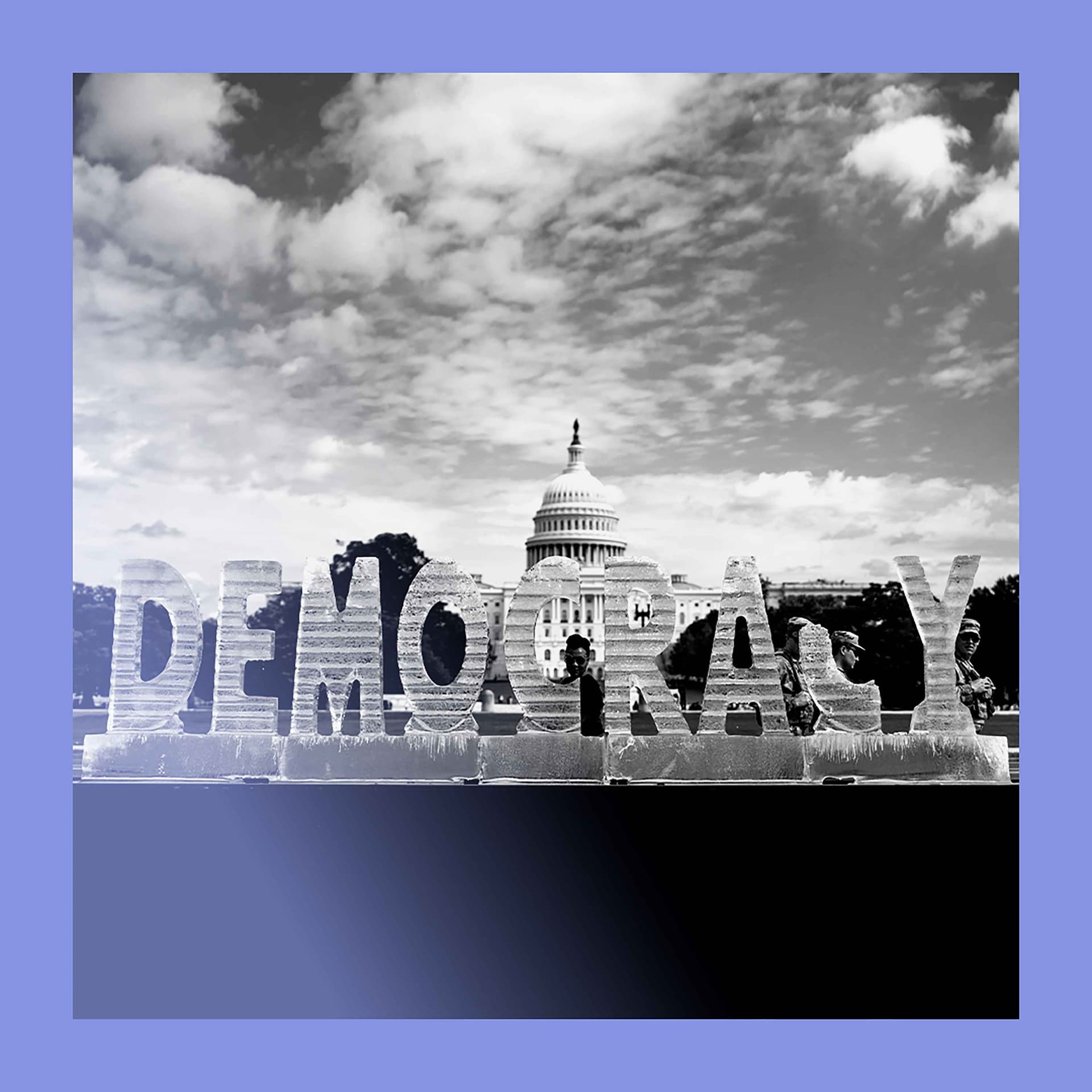
Podcast Summary: Economist Podcasts - "Democracy on ICE? The mood turns in America"
Episode Overview In this episode, the hosts discuss the current political climate in the United States, particularly focusing on immigration policy and its implications for democracy. Key topics include President Trump's immigration agenda, the recent developments in Congress, and the potential future of North Korea under Kim Jong Un.
---
Key Topics and Discussions
- Disapproval of Trump's Immigration Agenda
- Increasing discontent with Trump's immigration policies, particularly in Minneapolis.
- Recent shootings involving federal agents have heightened tensions and public disapproval.
- Congressional Dynamics
- Democrats successfully pushed back against funding for the Immigration and Customs Enforcement (ICE) agency, averting a potential government shutdown.
- A growing number of Republicans are expressing concerns about Trump's aggressive immigration tactics.
- The Role of Protests
- The protests in Minneapolis are seen as a significant catalyst for change, demonstrating organized citizen activism.
- The hosts draw parallels to historical civil rights protests, suggesting that public pressure can influence political action.
- Changes in ICE Leadership
- Transition from Greg Bovino to Tom Homan as head of immigration efforts in Minneapolis.
- Homan's more conciliatory tone suggests a potential shift in strategy, though concerns remain about the overall increase in ICE funding and personnel.
- Judicial and Legislative Challenges
- Questions about the effectiveness of Congress and the judiciary in restraining presidential power.
- The Trump administration's apparent disregard for court orders raises concerns about the rule of law.
- North Korea's Succession Speculation
- Discussion on Kim Jong Un’s daughter, believed to be groomed for leadership, reflects broader concerns about the stability of the Kim regime.
- Speculation about her potential role as a successor amid traditional patriarchal norms.
- Legacy of Mark Tully in Indian Journalism
- Tribute to Mark Tully, a prominent BBC correspondent in India, who reported on significant historical events and issues, advocating for secularism and cultural confidence in India.
- Tully's commitment to the truth and his deep connection with the Indian populace highlighted his legacy.
---
Key Takeaways
- Public Sentiment: There is increasing public and bipartisan concern regarding the tactics employed by federal immigration agencies, suggesting a potential shift in American attitudes towards immigration enforcement.
- Political Engagement: The activism of citizens can provoke legislative action and invite accountability from elected officials.
- Leadership Succession in North Korea: Kim Jong Un's apparent preparations for his daughter’s future role indicate a strategic focus on ensuring dynastic continuity amid internal and external threats to his regime.
- Cultural Reporting: The legacy of journalists like Mark Tully underscores the importance of ethical journalism and the responsibility of media to inform and engage with the communities they serve.
---
Conclusion This episode captures the complex interplay of immigration policy, public protest, and political accountability in the U.S., while also offering insights into North Korea's potential future under a new ruler. It emphasizes the importance of civic engagement and media integrity in the preservation of democratic values.
Written by AI. May contain mistakes. Listen to the episode to check what was said.
Chapters
Tap a time to open that second in VODangerous Times in America
2:13 to 2:50
Discussion of recent violence and political tensions in the U.S.
“Figuring out the plans of Kim Jong-un, North Korea's god-king, is a famously speculative business.”
Congressional Response to Immigration Policy
2:50 to 5:24
Congress's reaction to the immigration policies and funding issues.
“The peril was also, boringly yet essentially, in Congress.”
Trump's Immigration Agenda Under Scrutiny
5:24 to 8:25
Analysis of Trump's immigration enforcement strategies amid public pushback.
“And the second way is that Democrats are trying to force President Trump to the table with a threat of a shutdown, which for now has been averted.”
Community Response and Protests
8:25 to 11:18
Highlighting community actions and protests in response to governmental actions.
“He has a mandate to deal with the immigration issue as he sees it.”
Future Implications for Immigration Policy
11:18 to 13:23
Exploring the potential future of immigration policies and political climate.
“They've been extremely organized, bringing food to their neighbors, helping people get to school, documenting.”
Speculation on Kim Jong-un's Daughter
15:39 to 19:09
Analyzing the potential future role of Kim Jong-un's daughter in North Korean politics.
“At the start of the new year, North Korea's dictator Kim Jong-un paid a visit to a very special place in Pyongyang, the Grand Mausoleum, where his father and grandfather lie in eternal rest.”
The Future of Female Leadership in North Korea
19:10 to 22:12
Discussing the implications of a female successor in a patriarchal regime.
“next successor, to be the fourth generation ruler of the Kim dynasty.”
Mark Tully's Legacy in Indian Journalism
22:14 to 28:00
Exploring the life and impact of Mark Tully as a significant voice in Indian media.
“The Economist's Obituaries Editor when he was in India, where he always felt very big and clumsy anyway.”
Reflections on Mark Tully's Life
28:00 to 28:42
Learn about the life and legacy of Mark Tully as reflected upon after his passing.
“He was aware that his life had formed the shape of a circle and he didn't think that he'd done that.”
Transcript
Automatic transcript. May contain errors.0:28The path to purchase is more fragmented than ever. paid social, programmatic, marketplaces, and creative into one connected growth engine that drives incremental revenue. Ready to stop siloing and start scaling? Visit Code3.com. That's Code, C-O-D-E, the number three, dot com. ¡Cumpleaños, C-O-D-E-C-I! ¡Feliz cumpleaños, Rafa! ¡Sopla, sopla! ¡Traigan la manguera, que son 45! When you're 45, you have to get a lot of smoke and examine you against the colon cancer, because when you're in a early age, it's more treatable in 9 of every 10 people. Use the Color Guard test in your home and send it back to your home to get your results.
1:12The Color Guard test is an option with a recipe to detect the colon cancer in people of 45 years or more with average risk. The positive results can be followed by a colonoscopy. They can give results false positives and false negatives.
1:50The Economist.
1:58Hello and welcome to The Intelligence from The Economist. I'm your host, Jason Palmer. Every weekday, we provide a fresh perspective on the events shaping your world.
2:13Figuring out the plans of Kim Jong-un, North Korea's god-king, is a famously speculative business. but we look closely at how he may be playing an early game of positioning his daughter as his successor. And for more than 20 years, Mark Tully was the BBC's Delhi bureau chief, insisting on balance through times in which that was all but impossible. Our obituaries editor looks back on the career of a man who came to be known as the voice of India.
2:49First up, though.
2:58America reached a very dangerous place this week, not just with the killing of Alex Preddy at the barrel of a federal agent's gun in Minneapolis, just two weeks after Renee Good died the same way, and not just with the administration's vilification of those citizens and the plain misdirection about who was at fault. The peril was also, boringly yet essentially, in Congress. Would a big funding package for the ICE immigration agency get through with all of this going on? In the end, there was a subtle shift. Democrats pushed back, threatened a government shutdown, and won, temporarily at least.
3:36The only leverage Americans have seen recently, the only institutional check on the administration's immigration agenda. In Minneapolis, there's a new boss of that agenda. Tom Homan, the so-called border czar, with this generation's version of mistakes were made. Nothing's ever perfect. Anything can be improved on. And what we've been working on is making this operation safer, more efficient by the book. This is subtle too, a conciliatory tone, a nod to, if not a promise of, holding agents to account. I want to make it clear, ICE and CBP officers are performing their duties in a challenging environment under tremendous circumstances.
4:21But they're trying to do it with professionalism. If they don't, they'll be dealt with. These are the signs that Donald Trump's paramilitary approach to immigration is losing favor. Jacob Fry, the mayor of Minneapolis, put it in stark terms. The Operation Metro surge needs to end. This kind of conduct and siege needs to stop, not just in Minneapolis. It needs to stop nationwide. Three in five Americans now agree that ISIS operations are too forceful. Minneapolis has shown them that there's something more fundamental than immigration going on here, something even deeper than mere partisanship. A big question throughout Trump's presidency has been when Congress would show any sign of life, and it has.
5:10In two ways. Charlotte Howard is our New York bureau chief and a host of Checks and Balance, our sister show on American politics. One is more Republicans have voiced concern over Trump's immigration tactics. And the second way is that Democrats are trying to force President Trump to the table with a threat of a shutdown, which for now has been averted. and they're going to get two more weeks of funding for the Department of Homeland Security while they try to wrangle over restrictions to restrain what has become, in Democrats' eyes, an out-of-control deportation campaign. So this is the sign of life you mentioned, a sign that the legislative branch might, in this instance, be providing a meaningful check on Mr.
5:57Trump's power as regards ICE. So I think, as is always the case with this president, there is an escalation, a crisis of some kind, an outrage of some kind. And then the news historically has moved on. I mean, remember when Maduro was seized from Venezuela and brought into U.S. custody? That seems like a long time ago at this point. But there's reason to remain concerned, I think, from the events in Minneapolis because they really illuminate a vulnerability in America's democracy where the system of providing checks from one branch of government to another has not really shown to be as robust as many people might think.
6:40And at the mention of Minneapolis, kind of the locus of the outrage this week, what's been going on there? Well, there was big change this week in the leadership of the president's efforts in Minneapolis. Greg Bovino, who is this bombastic former customs agent who now leads Customs Borders Protection, he is out. He seems to have been demoted and sent to California. Tom Homan, President Trump's immigration czar, is in. Tom Homan is someone who is much more focused than Greg Bovino has been on trying to deport people with criminal record. In the past few months, according to the Cato Institute, which is hardly a lefty think tank, only 5 % of those brought into custody have had a record of violent conviction.
7:26So they really have been casting a wide net. And it looks like Tom Homan is trying to strike a more conciliatory tone with the governor of Minnesota, Tim Walz, and the mayor of Minneapolis. Jacob Frey. I would note, though, that it's not clear how big a pivot this is for Minneapolis or for other cities. There remains a huge increase in funding for ICE that was authorized by the Big Beautiful Bill last summer. The number of immigration agents has roughly doubled in the past year. There is no broader change in Donald Trump's promise to deport millions of undocumented immigrants. So this is a de-escalation from a situation which you had federal agents shooting an unarmed nurse in the back, but it is not a massive overhaul of Trump's broader immigration agenda.
8:20But in fairness, that is what Mr. Trump has promised to do across two administrations. He has a mandate to deal with the immigration issue as he sees it. You're right, of course, that immigration has always been a very strong issue for him, and he campaigned on this promise. I think it's possible to overread that mandate in a few ways. One is three in five Americans already are saying that immigration officers' tactics are too forceful, and there is not a mandate to pursue this campaign in this way. The second is that the Trump administration is seeking a dramatic expansion in power for ICE in ways that are being litigated now in courts with plaintiffs arguing that this campaign impinges on basic constitutional rights, whether it is their First Amendment right to protest, whether it is their Fourth Amendment right to not have agents forcibly enter a home with just a slip of paper signed by another agent, whether it is Tenth Amendment questions over state sovereignty.
9:16And then there is a bigger challenge, I think, that has been eliminated by the events of the past month. Donald Trump is ignoring court orders. There was a judge just this week that pointed out that he has ignored about 100 court orders just in the month of January. And so the ability of the courts to hold this president to account is really being tested. And then there's now a big question of whether other branches of government can move effectively to restrain a president who is redefining the borders of the executive branch's power. And this is a big test for the courts, and it is a big test for Congress.
9:57So that's what I think many Americans are waiting to see. And it would appear temporarily, at least, that Congress has done something to constrain the president here by cutting a deal with the specter of a shutdown. Yes, I think it would be helpful if some Republicans joined Democrats in seeking a way to set clear guardrails for the activities of ICE and CBP agents. I would say that there's a federal judge in Minnesota who this week noted that ICE is ignoring court orders. And so as Congress thinks about how to restrain this president, there's also a question of how effectively the courts can enforce orders that they issue.
10:39And there, I would say that it's very clear that if the president continues to ignore those, that will become an argument that escalates to the Supreme Court. So on two fronts, both in the courts and in Congress were in some ways in uncharted territory. And it really is up to the leaders within those institutions to show some of the courage and principle that has been displayed by citizens on the streets of Minneapolis. And it's easy to speculate that what citizens were doing on the streets of Minneapolis is ultimately what prompted Mr. Trump's de-escalation, as he called it, climb down, as others have called it.
11:18The people in Minneapolis deserve enormous credit. They've been extremely organized, bringing food to their neighbors, helping people get to school, documenting. Of course, we wouldn't know the details of some of these shootings if there were not citizens who were documenting these horrific incidents. I would say that there is a time limit on peaceful protests. Citizens protest because they want leaders to act. It was one week after Selma in the civil rights era that LBJ, Lyndon B. Johnson, addressed the joint session of Congress and called for the Civil Rights Act as a response to the moral outrage over the violence in Selma.
12:02So protests don't exist for the sake of protests. Protests exist so that people in positions of power move. And so that's what we're waiting to see and hopefully will see from Congress. I mean, how much do you expect that? How much do you think the time-limited protest notion will affect the direction of travel here, which a lot of people are pointing out is troubling? Going on recent history, I would not place too much confidence in the ability of Congress to do anything. However, I do think that this past month, the Minneapolis has sent a shock through the American public. And we are now in a situation in which Congress may act.
12:45I think there will be more protests in other cities. Someone somewhere, I think, is going to break a window at some point. And that is the big risk that Trump uses that as an excuse to assert that he is the president of law and order and that he has the authority to help bring safety in order to cities that risk spiraling out of control. That has always been part of his promise to Americans that he will restore the America they knew and one in which they feel safe. So I don't think this is a question that's settled. There are big issues moving through the courts. I don't think it's settled politically.
13:22We don't know what will happen in other cities. The immigration campaign is going to ramp up with this additional funding. So I think that it's not at all a situation in which, because Greg Bovino is out in Minneapolis and Tom Homan is in, that everyone can breathe a sigh of relief. Charlotte, thanks very much for your time. Thank you. Charlotte will be joining the other hosts of Checks and Balance with a much wider look at the ICE question in America, about just how much of what we're seeing is actually about immigration, about how much all of it looks like a paramilitary force that answers only to the president, and about how America has been in exactly this position before.
14:03For our devoted subscribers, Checks and Balance is out later today and every Friday.
14:16I'm done with subscriptions. Streaming, fitness, razors, vitamins. I've got subscriptions for everything in my life. They lock you in, and half the time, I can't figure out how to unsubscribe. That's why I'm so excited about the new Blue Apron. Now you can get delicious meals delivered with no subscription needed, including new pre-made options. Keep the flavor. Ditch the subscription. Get 20 % off your first two orders with code APRON20, Terms and conditions apply. Visit blueapron.com slash terms for more. The path to purchase is more fragmented than ever. And that's exactly what Code 3, a full-service advertising agency, is built to solve.
14:54Today, your customers might discover you on social, research on ChatGPT, read reviews on Amazon, and then buy on your website. But most brands still manage each of those touchpoints in silos. In this economy, every dollar has to work harder. Real growth happens when your retail partners and your website work as one. Code 3 is built at that intersection. We align paid search, paid social, programmatic, marketplaces, and creative into one connected growth engine that drives incremental revenue. Ready to stop siloing and start scaling? Visit Code3.com. That's Code C-O-D-E, the number 3, dot com.
15:39At the start of the new year, North Korea's dictator Kim Jong-un paid a visit to a very special place in Pyongyang, the Grand Mausoleum, where his father and grandfather lie in eternal rest. Noah Snyder is our East Asia Bureau chief. Standing next to him on this visit was a young woman. It was her first time in this sacred space. She is believed to be the dictator's daughter, but we don't know a whole lot else about her. She stands in the pictures released by the North Korean government directly to her father's right. She's wearing a Bordeaux blazer with a golden brooch. She looks youthful but serious, standing in front of a crowd of generals draped in medals and older men in suits and ties.
16:28She's believed to be in her early teens, but even her name is a matter of some debate. She's typically referred to as Kim Joo-ae, and that name comes to us courtesy of the former basketball star Dennis Rotman, who claims to have held her when she was a baby on a visit to Pyongyang in 2013. But a recently defected North Korean diplomat says her name is in fact Kim Joo-ye. Kim Jong-un is still in his early 40s, but the speculation is that he is preparing this girl, Kim Joo-ae, Kim Joo-ye, to one day do his job. Oh, I do love speculation about North Korea, but why is that the speculation? I should preface this with the disclaimer we use for all reporting and all analysis on North Korea, which is that there is a degree of speculation involved.
17:19The regime is quite closed and quite secretive. But this child, whom North Korean official newspapers refer to as the respected child, showed up at her father's side for the first time in late 2022 at the site of an intercontinental ballistic missile test launch. Speculation at the time went that perhaps Kim Jong-un was seeking to burnish his image to show his people that he was not only a nuclear-armed strongman, but also a loving family man. But in the years since, the respected child's appearances have become more and more frequent. And just as the frequency of her appearances has increased, so too has the weight of those appearances.
18:00She's showing up at ever more important gatherings, not only the internal gatherings like this appearance at the mausoleum, but also important diplomatic events, a reception at the Russian embassy in Pyongyang. And she even went along for a big visit that Kim Jong-un took to Beijing late last year. So it's the fact that she is increasingly in the room where it happens that makes this more than just bring your daughter to work day. That's right, Jason. And there's a lot of symbolism that is meant to lend her a particular kind of authority. It's not by chance that her first appearance was next to the missiles, the nuclear weapons that the regime considers its ultimate source of security.
18:40There are other signs. Military officers tend to defer to her when she walks into a room. State media has mentioned that she has a favorite white horse and North Koreans would know that the white horse was an important part of the Kim Il-sung personality cult, an important symbol in the founding mythology of the Kim family regime. So all of this adds up to a pretty strong case that she's being prepared for higher office or higher duties of some kind. And South Korean officials who I speak to increasingly think that she is in fact being groomed to be the next successor, to be the fourth generation ruler of the Kim dynasty.
19:19And there's even speculation that her status could become formal at the next North Korean party congress, which is held every five years and the next one is expected to happen sometime this year. But insofar as North Korea works in a monarchy kind of way, it's a patrilineal one. You're right, Jason. And it's a deeply patriarchal society as well. In the picture of her in the mausoleum, she's standing before a sea of mostly male faces. So a lot of observers wonder whether North Korean society, the North Korean elite could really accept a female ruler. Now, under Kim Jong-un, who it's worth saying is a millennial who was educated in Switzerland, women have gained some more prominence in his regime.
20:05They've taken on pretty high-level roles. Effectively, the second most powerful person in the country is his sister. North Korea also has its first ever female foreign minister. But still, there is a future vulnerability for the dynastic succession that comes from having a female leader. Future offspring of a female Kim ruler might find it harder to take power if they can't show that they're descended via the male line from the founding fathers. Kim Jong-un is rumored to have a son as well. Perhaps some cynics would say he's just using the girl as a decoy until his son suitably matures. And what's your take on that if we're going to continue in this realm of speculation?
20:49Well, I think what all of this shows is what Kim Jong-un is really worried about. And the regime has built up its nuclear and ballistic missile arsenal substantially since his succession a decade and a half ago. So that makes the regime a little bit less worried about foreign powers invading or outside threats undermining the stability of the regime. And I think what this shows is that what they're really worried about are threats from within, threats from inside the system to the continuity of Kim family rule. And that's why I think he's starting to prepare much earlier than in previous generations.
21:28Neither he nor his father were really ever put on public display until they became adults, until they were much closer to the actual succession stage. And for Kim Jong-un, he became the clear successor only after his father suffered a stroke in 2008. And that left him very little time before his father died in 2011 to really consolidate power. So after he ascended to the throne, essentially, he ended up having to do some pretty nasty stuff. He had his uncle executed and his half-brother assassinated in a wild plot in a Malaysian airport. So he may be thinking that next time around, it's better to give his kids a bit of a head start.
22:11Noah, thanks very much for joining us. Thank you, Jason.
22:37The Economist's Obituaries Editor
22:58when he was in India, where he always felt very big and clumsy anyway. The people would rush up to shake his hand and children would scamper after him. And he was seen more or less by many people as a saint rather along the lines of Mother Teresa. But the reason he was given this respect was because he was the BBC's chief reporter from India for more than 20 years. and he was taken as a voice of truth in the country. He told people all the things that the government didn't want them to hear.
23:39They were informed about, for example, the Bhopal chemical disaster, the riots at Ayodhya, where Mark Tully himself was involved was beaten, put in a room, and caught up in it in the most terrifying way. He said it was the worst thing he ever faced in India.
24:04And ordinary Indians also learned about the attack on the Sikh Golden Temple at Amritsar, and about the assassination of Indira Gandhi soon afterwards. All these stories, which otherwise might not have reached their ears, He was in fact broadcasting to 50 million people, and many of them were illiterate. They didn't read newspapers, they relied on the radio. His broadcasts were turned into six different Indian languages. And on the other end of the broadcast, of course, were the people of Britain hearing about India and what was going on. and not simply in the great offices of state, but Mark Tully made a great effort to get into the villages, the tea houses, the railway stations, anywhere where he could interview ordinary people and send their thoughts on what was happening back to England.
25:12India had much to offer the world. It had a culture, a literature, a spirituality that was extraordinary. And yet the legacy of colonialism was still strong. Indians still seem to believe, especially among the elites, that the Western way was the way to follow. The way to progress was to go full sail for consumerism. And consumerism was based on greed. He could see nothing worthy about it at all. and he wished Indians would have confidence in their own culture to progress in their own way.
25:57The aspect of India that most worried him when he was there was religious tension. He'd managed to avoid the bloodbath of partition in 1947 because he had been at school in England. But his experiences at Ayodhya, where he was beaten up and where he saw the riots that followed between Muslims and Hindus, had scarred him deeply. He felt that the most important thing about an independent India and the most important guarantor of its independence was secularism. the fact that the state took no side between Hindus and Muslims, but that all religions were equal in its eyes. He could see this was changing, especially under Narendra Modi with the rise of Hindutva.
Read the full transcript
26:49He was extremely worried about what would happen to India. He had a terrible bust-up with the direct general of the BBC, John Burt. He decided that he could no longer stay, so he resigned in 1994. But he couldn't bear to leave India. Indeed, he'd taken a pledge that he wouldn't do that. He'd been head of the Delhi office for more than 20 years. And he decided that although he wouldn't leave broadcasting, it would not be for the BBC and he would stay in Delhi. And successfully presented a program called Something Understood, which was about faith and spirituality, which put prose and poetry of music together and was something for listeners that gave them a sense of the divine.
27:44He was very upset when it finished. So in the end, his karma seemed to have worked and he had come back from India with an extremely strong sense of karma. That was the legacy of India on his own faith. He was aware that his life had formed the shape of a circle and he didn't think that he'd done that. His fate had done that. So he'd been born in India and he was determined to die in India. He had wanted to be a priest for a long time since the beginning. And in the end, in a way, he became one.
28:33In his end was his beginning.
28:42Anne Rowe on Mark Tully, who's died aged 90.
28:51Thank you.
29:21We'll all see you back here tomorrow for a little change to your weekend intelligence programming. We'll be introducing Season 3 of Boss Class, our series on work and management. This time, it's all about generative AI, whether and how to use it at work, and whether and how to worry about its use at work.
29:52Trying to grow, but stuck optimizing for efficiency? At Code 3, a full-service advertising agency, we call that the ROAS trap. Because that number doesn't tell you what actually drove the sale. It just tells you what got credit. And those aren't the same thing. When brands chase what looks good in a dashboard, they end up optimizing for existing customers instead of acquiring new ones. Efficiency improves, growth stalls. Code 3 helps brands break out of the trap by connecting retail partners and your website into one unified strategy across search, social, retail media, programmatic, and creative.
30:29Because real growth doesn't live in a single channel. And it definitely doesn't live in a spreadsheet. Ready to reset your KPIs? Visit Code3.com. That's code C-O-D-E, the number 3, dot com.
30:52When you get 45, you have to go to a lot of candles and examine you against the colon cancer, because when you detect it early, it is more treatable in 9 of every 10 people. Use the ColoGuard test in your privacy and send it back to your home to get results. The ColoGuard test is an option with a recipe to detect the colon cancer in people of 45 years or more with average risk. promedio. Resultados positivos deben ir seguidos de una colonoscopía. Pueden darse resultados falsos positivos y falsos negativos. La prueba de Cologuard no reemplaza la colonoscopía en pacientes de alto riesgo. No uses Cologuard si has tenido adenomas, si tienes enfermedad inflamatoria intestinal y ciertos síndromes hereditarios o un historial personal o familiar de cáncer de colon.
31:33Pide la prueba de Cologuard a tu médico. Para más información en español, visita Cologuard.com diagonal prueba.
From the publisher
On the streets of Minneapolis, in polls and in the halls of Congress, disapproval of President Donald Trump’s immigration agenda is mounting. Democrats won a near-term battle on funding—for now—but a wider war awaits. Kim Jong Un, North Korea’s leader, appears to be positioning his daughter ever more visibly as his successor. And remembering Mark Tully, a veteran BBC correspondent in India.
Get a world of insights by subscribing to Economist Podcasts+. For more information about how to access Economist Podcasts+, please visit our FAQs page or watch our video explaining how to link your account.
Hosted on Acast. See acast.com/privacy for more information.