
In short
Podcast Summary: Economist Podcasts - Dhaka Matters: An Election for Bangladesh
Podcast Overview
- Title: Economist Podcasts
- Description: Provides insights into current global affairs, business, finance, science, and technology from a worldwide correspondent network.
Episode Details
- Episode Title: Dhaka matters: an election for Bangladesh
- Episode Description: Discusses the political landscape in Bangladesh following Sheikh Hasina's ousting and the upcoming elections. It also touches on astrobiology and the impact of AI on job applications.
- Hosts and Guests:
- Jason Palmer
- Rosie Blau
- Mark Johnson (Senior Writer)
- Oliver Morton (Senior Editor)
- Shera Avi-Yonah (Business Writer)
Key Topics Covered
- Political Landscape in Bangladesh
- Sheikh Hasina's Ouster:
- Sheikh Hasina was ousted after 15 years of authoritarian rule, marked by protests largely organized by Gen Z using social media.
- The upcoming general election will be the first competitive vote since 2008, presenting an opportunity for approximately 40% of voters who have never cast a real ballot.
- Main Political Contenders:
- Bangladesh Nationalist Party (BNP):
- Led by Tariq Rahman, son of former Prime Minister Khaleda Zia.
- Rahman recently returned from a 17-year self-exile and is seen as a controversial figure with a complicated past.
- The BNP is favored to win the election.
- Jamaat Party:
- Bangladesh’s largest Islamist party, appealing to voters looking for political reform despite concerns about its governance capabilities.
- Has not fielded female candidates and faces scrutiny over its social policies.
- Challenges Ahead:
- New government will tackle significant economic issues, including low government revenue and strained relations with India.
- The interim government has managed to stabilize the economy but faces the challenge of preparing for graduation from least developed country status.
- Astrobiology and Terraforming
- Concept of Terraforming:
- Idea of making inhospitable planets like Mars livable through applied astrobiology.
- Focus is shifting from searching for existing life to creating conditions that support life.
- Near-Term Goals:
- Establishing ecosystems that allow for food production and sustainable living in extraterrestrial environments.
- Developing bioreactors that utilize resources found on the Moon or Mars.
- Long-Term Vision:
- Concept of creating habitable places on Mars, potentially within centuries.
- Challenges include overcoming political perceptions and ensuring the sustainability of life beyond Earth.
- The Impact of AI on Job Recruitment
- AI’s Role in Job Applications:
- Job applicants are increasingly using AI tools to streamline the application process, leading to a significant rise in applications per role.
- Concerns have arisen about the rise of fake profiles and scams leveraging AI, prompting companies to adapt their recruitment strategies.
- Recruitment Shift:
- Companies are starting to adopt AI in screening processes and are considering psychometric tests to ensure a more secure hiring process.
- Future recruitment may see a reversal of roles where companies actively seek out applicants instead of waiting for them to apply.
Key Takeaways
- Bangladesh is at a pivotal moment with its first competitive election in years, raising hopes for a democratic future amid challenges.
- Astrobiology is evolving, focusing on making other planets habitable, indicating a shift in humanity's long-term vision for space exploration.
- The recruitment landscape is transforming due to AI, raising questions about authenticity in applications and the future of job searching.
Conclusion The episode captures critical discussions on Bangladesh's election, the frontier of astrobiology, and the changing dynamics of job recruitment influenced by AI technologies. The optimism for democratic reform in Bangladesh and the scientific ambition for life beyond Earth reflect the ongoing evolution of societal and technological landscapes.
Written by AI. May contain mistakes. Listen to the episode to check what was said.
Chapters
Tap a time to open that second in VOBangladesh's Political Landscape
0:45 to 3:30
Discussion on the recent political upheaval in Bangladesh and its significance.
“Our correspondent, who recently got her job at The Economist the old-fashioned way, reports.”
Key Election Contenders
3:30 to 6:30
Overview of the main political parties and their candidates in the upcoming election.
“waving out of the front window with people who had come to see his convoy go past.”
Challenges Ahead for the New Government
6:30 to 10:10
Exploration of the economic and political challenges facing the new government in Bangladesh.
“The economy was on the verge of disaster 18 months ago.”
Future of Democracy in Bangladesh
10:10 to 14:11
Discussion on the potential for a new democratic future in Bangladesh post-election.
“And habitability became the watchword, often boiling down or condensing into the idea of liquid water.”
Terraforming Mars: Viability and Challenges
14:11 to 15:00
Explore the potential for creating a habitable environment on Mars and the associated timelines.
“And you could imagine sort of like spreading oases in some parts of Mars that might be useful for making stuff that potential astronauts or settlers could actually harvest.”
Philosophical Implications of Mars Colonization
15:01 to 15:22
Discuss the political and ethical considerations of colonizing Mars.
“to partake in the sublime process of moving life from the Earth towards the stars.”
Shira's Journey to The Economist
15:40 to 16:13
Shira shares her personal experience and application process to join The Economist.
AI's Impact on Job Applications
16:13 to 16:43
How generative AI is transforming the job application landscape and recruitment processes.
“So this is not how most people get jobs these days.”
The Rise of One-Click Applications and Scams
16:43 to 17:30
Discuss the convenience and risks associated with one-click job applications.
“Shira, haven't people always applied for lots of jobs with generic application forms and sent the same thing to people?”
Challenges of Fake Job Applicants
17:30 to 18:27
Explore the motivations behind sending fake job applications and how companies are responding.
“What is the point of a fake job applicant?”
Show all 11 chapters
Companies' Strategies Against Fakes
18:27 to 19:28
Learn about the methods companies are using to combat fake applications and improve hiring processes.
“In fact, we'd like you to use it to help, but please don't have it generate your entire application.”
Transcript
Automatic transcript. May contain errors.0:03Shera Avi-Yonah:The Economist.
0:10Shera Avi-Yonah:Hello and welcome to The Intelligence from The Economist. I'm Jason Palmer.
0:14Rosie Blau:And I'm Rosie Blau. Every weekday we provide a fresh perspective on the events shaping your world.
0:25Shera Avi-Yonah:Lots of the scientific work done by spacecraft out in the solar system has been about looking for life. But a new idea is also brewing, taking species to those heavenly bodies in a bid to make them more amenable to human life.
0:41Rosie Blau:And ever more of us use AI to help write cover letters, fill in application forms, and even apply for new roles. Our correspondent, who recently got her job at The Economist the old-fashioned way, reports.
1:03But first...
1:10Rosie Blau:It's been 18 months since Bangladesh finally ousted Sheikh Hasina. After 15 years during which Hasina's Awami League gutted the country's institutions and depleted its reserves, demonstrators burst onto the streets. The Gen Z protesters used social media to galvanize support. Campus rallies expanded into mass protests, and they eventually stormed the prime minister's residence.
1:40Rosie Blau:The image of Sheikh Hasina fleeing by helicopter was one of the iconic shots of that year. Her downfall was celebrated in Bangladesh and beyond.
1:54Rosie Blau:Tomorrow, the country holds its general election. Then comes the real test.
2:00Jason Palmer:This is a seminal moment for Bangladesh. It's the first competitive vote that the country has held since 2008.
2:08Rosie Blau:Mark Johnson is a senior editor at The Economist.
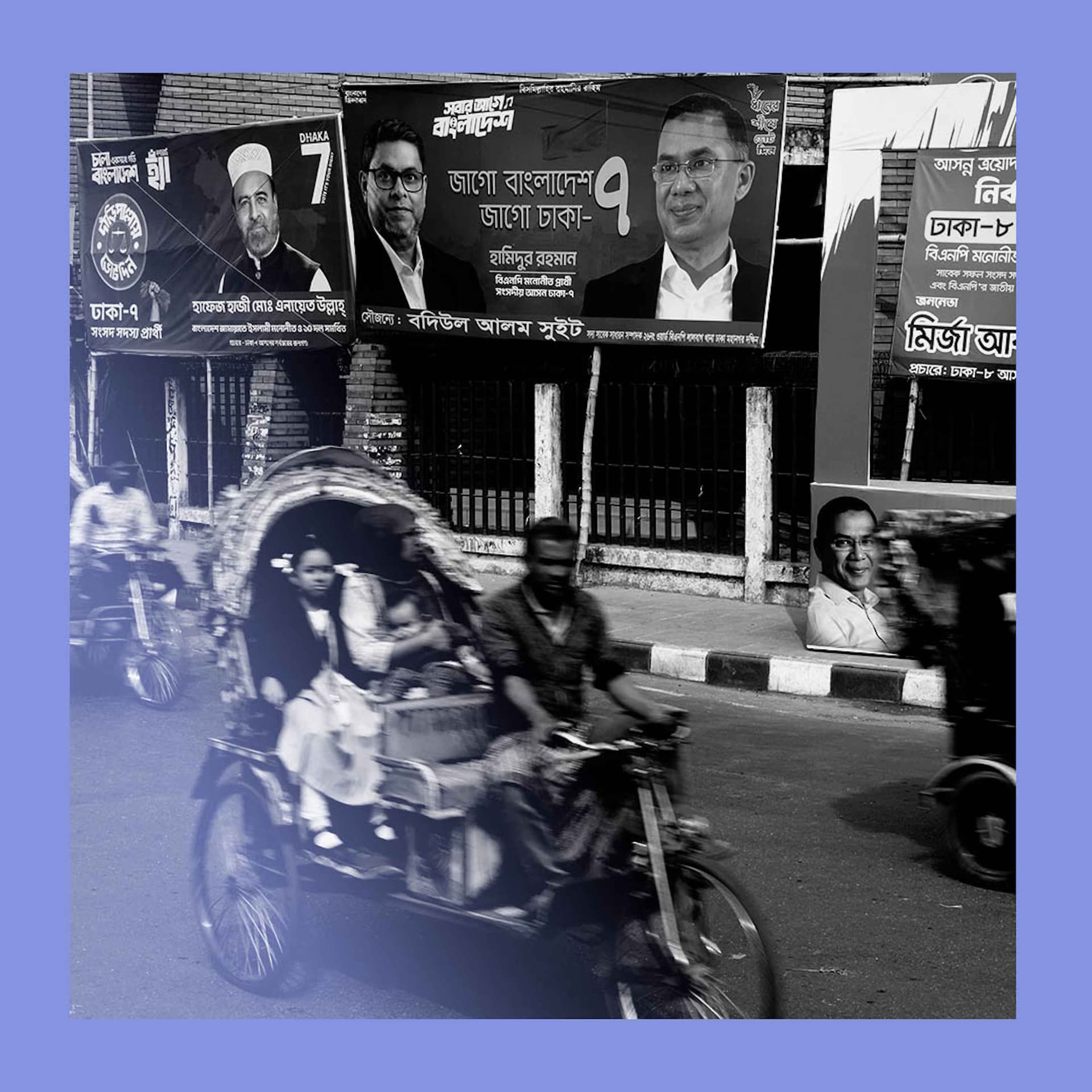
2:12Jason Palmer:So for a large number of voters, maybe 40 % of the country's voters, they've never had a chance to cast a real ballot before. So there's a huge amount of excitement on the streets of Dhaka. There are election banners all over town. The return to democracy is going to bring lots of benefits to Bangladesh. But at the same time, there is a sense that it's not going to bring quite the wholesale political renewal that its revolutionaries had wanted.
2:40Rosie Blau:Okay, so let's just start with the election itself. Who are the contenders?
2:44Jason Palmer:Well, for all the excitement about revolution, the election is largely a fight between two long-established parties. One is Jamaat, the largest and the most moderate of Bangladesh's Islamist parties. The other is the Bangladesh Nationalist Party, the BNP, which was led for years by Khalid Azir, a former prime minister, and is now fronted by her son, Tariq Rahman. And that party, the BNP, is the favourite to win.
3:10Rosie Blau:So you went to Bangladesh recently and met Rahman, right? What's he like?
3:15Jason Palmer:Yes, I got on his bulletproof campaign bus and we drove north out of Dhaka for four hours. We drove up to a big rally in the city of Maiman Singh in a large sports field there. He sat in the front seat of the bus almost all the way there, waving out of the front window with people who had come to see his convoy go past. For many of them, it was the first time they'd seen him since he flew back to the country in December. He spent the past 17 years in self-exile in London.
3:48Rosie Blau:And what does he stand for?
3:50Jason Palmer:Well, Mr Rahman's not an uncontroversial figure. His party under his mother won power three times in the 90s and the 2000s. His rule was not especially glorious. Indeed, in 2006, it looked like it was about to steal an election before the army intervened. Mr. Rahman did not formally serve in his mother's governments, but most people in the country saw him as a power within them. There's this leaked American diplomatic cable that was written in 2008, which allegedly was widely considered one of the most corrupt individuals in Bangladesh. And that's really haunted him ever since that came out in the WikiLeaks stash.
4:31Jason Palmer:I mean, I quizzed Mr Rahman about all of this on the bus. He defended the BNP's record. He denies all allegations of wrongdoing. Bangladesh's newly independent courts have quashed convictions that were pressed against him in absentia during the regime of Sheikh Hasina. That's one reason he's been able to come back to the country now. And lots of observers say that the man who's come back is not the same as the man who went away.
4:54Rosie Blau:So where do the fault lines in Bangladesh come now? What does the opposing group stand for?
5:01Jason Palmer:So its opponents in this election are Jamaat. More than 90 % of Bangladeshis are Muslim. Some of them, after years of misrule, quite like the idea of having a somewhat more pious government. But also Jamaat have a very strong social media game. Although they've been around a long time, they've never held more than 18 seats in parliament. So for many Bangladeshis, they are seen as the reform option. They're seen as more favourable towards constitutional reform. They're seen as cleaner than many of the old parties, more disciplined, more meritocratic. And that's attracting votes. Some cases, in spite of them being Islamist, not because of it.
5:48Jason Palmer:Despite all this, there are lots of people in Bangladesh, lots of the liberal middle classes who were very worried about the rise of this Islamist party. Jamaat says it will rule moderately and for all Bangladeshis, but very notably it's not fielded any female candidates. It's struggled to walk back a suggestion that its members would quite like to reduce the number of hours that Bangladeshi women work. There are questions about its ability to govern, whether it has quite the capacity to fill all the posts in government that need to be filled with strong ministers. So all this is somewhat strengthening the hand of Tariq Rahman and his BNP.
6:25Right.
6:26Rosie Blau:So what are some of the challenges the new government will face?
6:30Jason Palmer:Well, there's big economic challenges. The economy was on the verge of disaster 18 months ago. It's widely considered that the interim government has managed to pull it back from the brink. But there's a huge amount that hasn't been done, a lot of treading water over the last two years, as you might expect. So this year, Bangladesh is going to graduate from this group of least developed countries that get advantages in trade and concessionary loans. It needs to prepare for that. It needs to be making its factories more efficient. It needs to increase government revenue, which is incredibly low compared to the average in Asia.
7:03Jason Palmer:It's about 7 % of GDP. It needs to cut red tape. It needs to hammer down on corruption that holds business to ransom. And the country needs to do something about its relationship with India. It's its big neighbour, but relations are massively fraught. India is harbouring Sheikh Hasina, which many in Bangladesh find completely inexcusable. But there's also been a sense that the caretaker administration has perhaps needled India more than it needed to in the last 18 months. So although it won't be popular, a new government is going to have to rethink its ties with India and try and get them back on a more stable state.
7:41Rosie Blau:So as you say, it's a seminal election. Is this the beginning of a new democratic future now for Bangladesh?
7:48Jason Palmer:Certainly, Bangladeshis hope so. So there is a new constitution, or at least revisions to the constitution, that were written by the interim government. That's a stack of changes that are supposed to prevent Bangladesh ever falling back into a fresh tyranny. Voters have a chance to pass those reforms in a referendum that's happening on the same day of the election. And if they pass, it'll be up to the next government to make sure that those changes go into force. There's also decisions to be made about the Sheikh Hasina's old party, the Awami League. It's been banned from participating in this election, but that's only a temporary ban.
8:25Jason Palmer:Probably the next government, even though it's going to hurt a lot of Bangladeshis, will need to take some steps to rehabilitate them. Lots of Bangladeshis would still vote for them if they had a chance, and lots of Bangladeshis won't feel like they've had a fair election until they've had a chance to do that. There's a huge amount of work to do. People are, on the whole, optimistic, and they can be proud of what they've achieved since the revolution. But the hard job of building the new Bangladesh has only just begun.
8:52Rosie Blau:Mark, thank you very much.
8:54Jason Palmer:Thank you. Thank you.
9:25Mark Johnson:One of the great disappointments of the space age was that the other planets of the solar system, which people had imagined being inhabited and inhabitable, turned out to be really bleak, nasty places. Oliver Morton is our Planetary Affairs Editor. This brought forth an idea that maybe they could be turned into nicer places, even places where humans might gamble under open skies. That's the idea of terraforming. This is leading to a new type of thinking about the universe, one that goes by the name of applied astrobiology.
10:02Shera Avi-Yonah:Now, I've run across certainly the word astrobiology before, but that has been in the context of looking for stuff that is already there.
10:10Mark Johnson:Absolutely. Astrobiology is very much about the already there, because it was created in part to deal with the fact that previous attempts to have scientific looks at life elsewhere were bedevilled by the problem that there wasn't life elsewhere, as far as anyone could see. In the 1990s, various things, including new evidence about the fact that Mars might have been habitable and the discovery of new planets around other stars, stars other than the sun, led to the creation of a new discipline called astrobiology, which looked not merely for life, which was either there or not, but for the conditions that might lead to or support life, for habitability.
10:51Mark Johnson:And habitability became the watchword, often boiling down or condensing into the idea of liquid water. And so what's happening now is that this idea of astrobiology has been to some extent reversed into the question of if we want the universe beyond the earth to be habitable, what do we have to do? So applying astrobiology is making places currently not habitable, habitable. Habitable is one of those words that if you say it a lot, it sounds really silly. Habitable. Habitable.
11:22Shera Avi-Yonah:Habitable. Okay, if the idea then is to go and to make things more habitable rather than looking for habitable places, what does that now look like? What does that entail?
11:33Mark Johnson:Well, the ambition of the people talking about applied astrobiology is that it's a very, very broad spectrum. For there to be life, there has to be something like an ecosystem. At the moment, the ecosystem on space stations is very, very open in that you have to take up most of the stuff that people are going to consume. You have to throw away most of the stuff which they have already consumed. And that's fine when the modal population of outer space is at the moment about 10 people on a couple of different space stations. But if you're seriously thinking that there may be more space stations and there might be moon bases and there might be expedition emissions to Mars, you're going to need more habitability built into those projects.
12:16Mark Johnson:And that means more biology. What do you mean by that? I mean the ability to grow your own food, at least to some extent, the ability to produce your own pharmaceuticals, at least to some extent, the ability to produce feedstocks from which you can build things and make things. So plastics and things like that. These are all things that on Earth you use either life or petroleum products that come from long gone life to do. In space, you don't have those things. And so you're going to have to do them from scratch. And you're going to have to find basically lots of nice little microbes willing to help you in this endeavor.
12:50Shera Avi-Yonah:So how much of the effort to make places habitable comes down to that? Find the right bugs that do the right jobs?
12:59Mark Johnson:Near term, that's very much what this game is about. the thing to do is find the right bugs and the next step is to make sure that the bugs can actually live on the raw materials that you find on the moon or on mars so you've got to actually go out there and try you've got to suck it and see and i think in terms of applied astrobiology that's what the world will see in the next decade or so will be people trying to make bioreactors that make various different stuff that work using materials probably first from the surface of the moon, then from the surface of Mars. And at the same time, similar bioreactors will be fed with earthly materials to make stuff in orbit for space stations.
Read the full transcript
13:41Shera Avi-Yonah:You said that was the near-term goal, but you also used the word terraforming rather grandiose for the, it's kind of very Earth-like endgame of this. How far between the two?
13:52Mark Johnson:Oh, a long way, but exactly how far, hard to say. Once you're used to using bugs that grow in Martian conditions, you might start thinking about how you can build a system whereby the bugs build more of their habitable conditions that allow them to have more bugs. And there are various ideas about ways to do this with light screens over the Martian soil that allow the Martian soil to warm up in places. And you could imagine sort of like spreading oases in some parts of Mars that might be useful for making stuff that potential astronauts or settlers could actually harvest. Further off, there's the idea of spreading this so far across the surface of Mars that Mars as a whole starts to become habitable.
14:40Shera Avi-Yonah:Okay, but how long-term blue sky, red sky is all of this? What kind of timescales do you think we're talking about here?
14:49Mark Johnson:I think, in summary, it's probably easier now to conceive of a habitable Mars for some sense of habitability in centuries rather than millennia. The worry is that it's happening in the context of a political idea of Mars as a bolthole slash frontier slash libertarian hellhole that one would not really want to buy into just because one wanted to partake in the sublime process of moving life from the Earth towards the stars. Oliver, it is always a pleasure to chat. And it's always a pleasure to be chatted with.
15:29Rosie Blau:and if that hasn't blown your mind enough already i recommend an episode of the weekend intelligence from last year on whether it would actually be possible to have sex in space a crucial question i'm sure you'll agree to find out the answer follow the link in the show notes
15:53Rosie Blau:so shira aviona you are one of our business writers tell me how you got your job at the
15:59Oliver Morton:economist um i applied and the economist blessedly i think for both recruiters and applicants has a very low-tech approach and what did you have to do to apply i just sent off an email.
16:14Rosie Blau:You must have had to write something.
16:16Oliver Morton:Oh, yes. I wrote an article about sunscreen.
16:20Rosie Blau:Okay. So this is not how most people get jobs these days. Tell me how AI is changing how people apply for jobs.
16:29Oliver Morton:So a lot of recruiters are very excited by the advent of generative AI, and they thought it would save them a lot of time. But it turns out that they're actually losing an arms race to candidates for whom it's much easier to use AI to send off flurries of job applications than it is for recruiters to read them.
16:45Rosie Blau:Shira, haven't people always applied for lots of jobs with generic application forms and sent the same thing to people?
16:52Oliver Morton:Yes, but the difference now is just the scale at which they're able to do that. So the average number of applications per role is up more than 200 % since the release of ChatGPT. And AI tools can now autofill forms and you can even pay services to apply to hundreds or even thousands of jobs while you're sleeping or otherwise not paying attention. Many jobs also now offer one-click apply. So basically all you need to do is have it auto-populate your basic information or sometimes you can even have it pre-saved. Press a button saying I'm interested and it will send off an application on your behalf.
17:29Oliver Morton:One-click tools have also made it a lot easier for bots and also scammers to apply to jobs. What is the point of a fake job applicant? One reason why you might send off a fake job application is because you're trying to infiltrate a company. So if you get hired for an all-remote job, that makes it a lot easier to access their system. One firm, Gartner, predicts that by 2028, as many as one in four candidate profiles could be fake. So, for example, in December, Amazon announced that it had blocked almost 2 ,000 applications from North Koreans applying for remote IT jobs. This is actually a fairly common North Korean scam.
18:06Oliver Morton:and one way that places sniff them out is that the Minions movies are very popular in North Korea and so looking for names like Kevin can be a way to spot them.
18:17Rosie Blau:So what are companies doing to push back on fakes or just thousands of applications?
18:23Oliver Morton:So the first thing they're trying to do is just ask nicely. So many places have just said to candidates, we have an AI policy, you can use it to help. In fact, we'd like you to use it to help, but please don't have it generate your entire application. But there are also deeper shifts in what kind of material they're asking for from candidates. So a lot of places have tried to fight fire with fire by having AI screen you before you can talk to a human to save recruiters time. And some places are shifting more to things like psychometric testing that is harder to scam, for example, like a visual puzzle that you have to solve.
18:59Rosie Blau:So how in the end is this going to change how we apply for jobs?
19:04Oliver Morton:So eventually experts in the field say that this may bring about a more fundamental change in which companies seek out applicants rather than applicants applying to a job. Or even my job finding agent will talk to a company's recruiting agent. And firms have always done outbound inquiries, but eventually that may come to take over the vast majority of recruitment as a whole. Shira, thank you so much for talking to me. Thanks very much.
19:36Rosie Blau:You can hear much, much more about how AI will change our jobs and the office in Boss Class Season 3, our new podcast series on management, which is just out. And in a special bonus edition coming soon, the host of Boss Class, Andrew Palmer, will be answering your questions. Do send them in to podcasts at economist.com. No bots, please.
20:11Rosie Blau:That's all for this episode of The Intelligence. See you back here tomorrow.
20:22Thank you.
From the publisher
The toppling of authoritarian leader Sheikh Hassina in Bangladesh in 2024 was celebrated as a triumph for democracy. Tomorrow the country finally heads to the polls. Our correspondent weighs the choice. Can Mars and other bleak planets be made fit for human habitation? And why AI bots are applying for human jobs.
To find out how to have sex in space, listen to this episode of “The Weekend Intelligence”.
Guests and host:
- Rosie Blau and Jason Palmer, co-hosts of “The Intelligence”
- Mark Johnson, senior writer
- Oliver Morton, senior editor
- Shera Avi-Yonah, business writer
Topics covered:
- Bangladesh’s election
- Astrobiology
- How AI changes job recruitment
Listen to what matters most, from global politics and business to science and technology—Subscribe to Economist Podcasts+
For more information about how to access Economist Podcasts+, please visit our FAQs page or watch our video explaining how to link your account.
Hosted on Acast. See acast.com/privacy for more information.