
In short
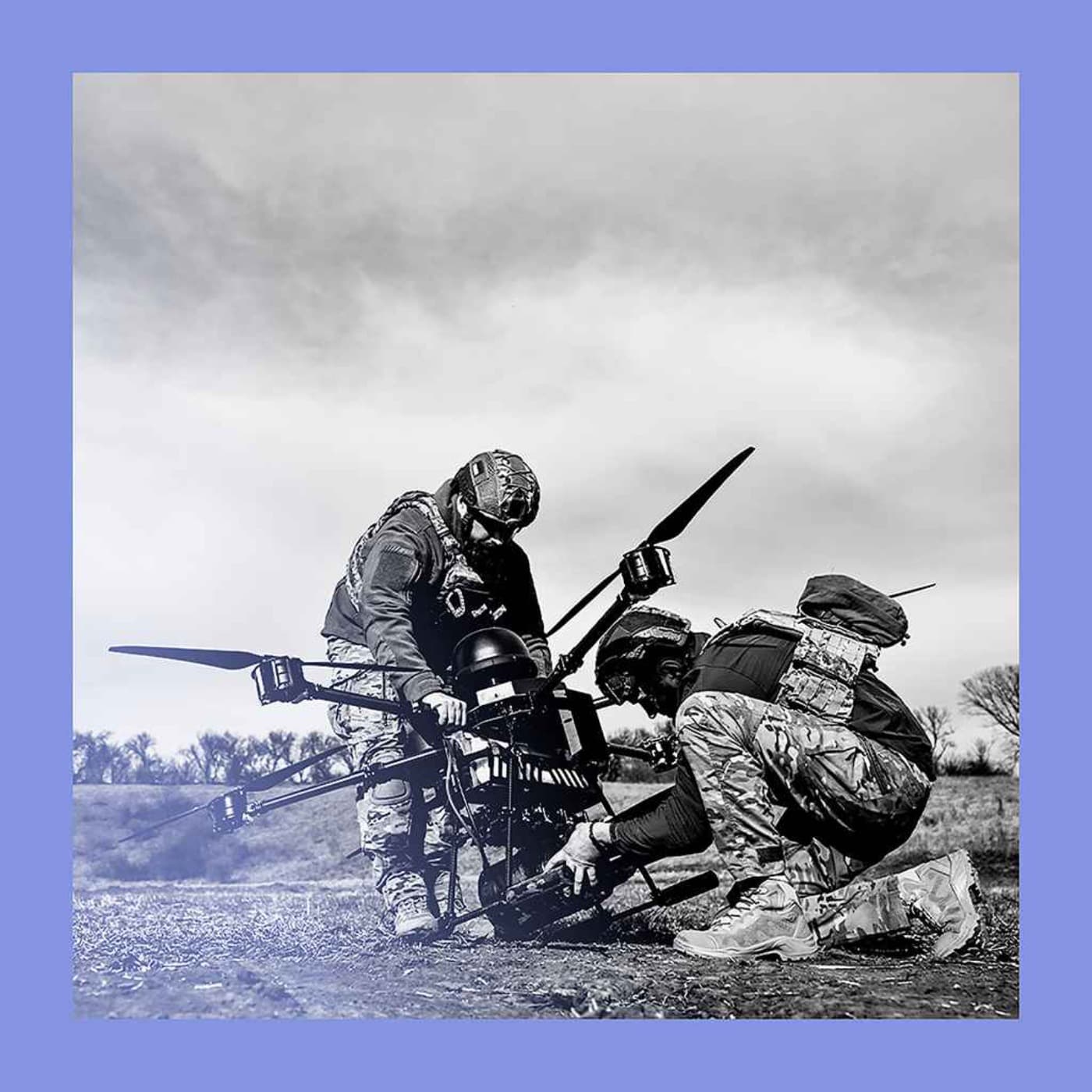
How Russia’s drone and missile innovation is shifting the Ukraine war toward more strikes on Kyiv and civilian/economic targets, and what that means for Ukraine’s winter, economy, and politics; plus a separate segment on global alcohol industry trends toward non-alcoholic drinks and premium RTDs, and an obituary on Gloria Steinem.
Guests
Alex Turner, The Economist defense editor; Avantika Chilcotti, global business writer; Anne Rowe, The Economist obituaries editor.
Key claims
Russia has the upper hand in strike-system innovation and production scale (e.g., jet-powered Shahed drones, higher missile output) threatening Ukraine’s economy more than the front line; Ukraine can adapt with prototypes like long-range quadcopter “Nemesis” and jet interceptors, but scaling and interceptor supply will take time and need money/technical help.
Notable examples
Shahed “Shahed” drones (now jet-powered), estimates of 24,000 produced vs ~2,800 fielded; Nemesis drone battalion battle room; Campari’s on-tap Aperol Spritz selling 22,000 glasses at a Milan Bad Bunny concert; Gloria Steinem’s Playboy Club work and founding Ms. magazine.
Written by AI. May contain mistakes. Listen to the episode to check what was said.
Chapters
Tap a time to open that second in VOThe Current Situation in Ukraine
0:36 to 0:58
An overview of the ongoing conflict in Ukraine and its implications.
“Hotels.com makes booking work trips easy and rewarding.”
The Current Situation in Ukraine
1:20 to 2:15
An overview of the ongoing conflict in Ukraine and its implications.
“From drones to interceptors, innovation has been a hallmark of Ukraine's defense against Russia.”
Insights from Kiev
2:15 to 4:00
Alex Turner shares observations from a recent trip to Kiev amidst the war.
“and it's fair to say Ukraine faces a really hard winter.”
Russia's Tactical Advances
4:00 to 6:20
Discussion on Russia's technological advancements and their impact on Ukraine.
“And the Economist team, we experienced this at an unexpected time and place.”
Ukraine's Response to Threats
6:20 to 8:16
Exploring Ukraine's innovative military strategies in response to Russian threats.
“The front line appears static, but there's lots of innovation, lots of adaptation, and so forth, but it's kind of in balance.”
Economic and Political Concerns
8:16 to 11:15
Analyzing the economic and political challenges faced by Ukraine as winter approaches.
“That's an even more devilish technical challenge.”
The Future of Ukraine Amidst War
11:15 to 12:26
Discussing potential developments and challenges for Ukraine in the coming months.
“of their economy does get strangled, how much of their national infrastructure does get hit, and how fed up people become, how many choose to leave, and how many choose to start arguing about it.”
The Shifting Landscape of Alcohol Consumption
14:13 to 20:23
Explore the decline in alcohol sales and the industry's response.
“Time was when different alcoholic drinks each had their appropriate setting.”
Gloria Steinem's Journey and Impact
20:23 to 26:31
Discover the life and contributions of Gloria Steinem to women's rights.
“Anne Rowe In the summer of 1963, Gloria Steinem decided she would go and work in the Playboy Club on East 59th Street in Manhattan.”
Gloria Steinem's Journey and Impact
28:48 to 29:03
Discover the life and contributions of Gloria Steinem to women's rights.
“It is a test that you can use at home and detect the 95 % of the cancer of color.”
Transcript
Automatic transcript. May contain errors.0:00This intelligence podcast is sponsored by Perk, the intelligent platform for travel and spend. Every person on your team loses up to seven hours a week doing the work behind the work, submitting expenses, matching receipts and booking travel. Using AI and automation, Perk can do that work, bringing travel and spend together in one place. Enjoy three months without platform fees when you sign up at Perk.com forward slash the intelligence. That's Perk.com forward slash the intelligence. New U.S.-based corporate customers only. Terms apply. This intelligence podcast is sponsored by business travel on hotels.com.
0:35Does booking business travel feel like another job? Hotels.com makes booking work trips easy and rewarding. It's easy because you can set your preferences once and get results tailored to your business travel needs every time. It's rewarding because with hotels.com's free rewards program, you can save instantly on your next work trip and earn rewards for future travel. Book faster with confidence at hotels.com. Loyalty Members 18+.
1:10Hello and welcome to The Intelligence from The Economist. I'm Rosie Bloor.
1:20Today on the show, the drinks business is in low spirits and remembering the great Gloria Steinem.
1:35But first…
1:46From drones to interceptors, innovation has been a hallmark of Ukraine's defense against Russia. But Russia is innovating too. The front line is barely budging, yet Ukraine's capital, Kyiv, is being struck day and night, as are civilian and economic targets across the country. It's a new phase of a war that has already stretched on for four and a half long years. And it's about to get tougher. The war in Ukraine has shifted in recent weeks and months, and it's fair to say Ukraine faces a really hard winter. Alex Turner is The Economist's defense editor. We always say that every year that's said about Ukraine, but two things are different and they're connected.
2:30The first is that Russia, temporarily or otherwise, now has the upper hand in innovation and the scale of production of strike systems that can hit anywhere inside that country. And second, these technologies are bringing the war to more parts of the country and in ever more inventive ways. You've just been on a trip to Kiev with a team from The Economist. Tell me what you saw. Kiev is a beautiful city. I first visited there in the wake of the sort of land grabs of the 2014 period. And you can imagine how much has changed. It is a normal, functioning, bustling city. But what's very clear is that the rate of attack and the nature of attack is on the increase.
3:14The locals will tell you that. Both Kiev and the entire country, you feel the war everywhere in Ukraine now. The beginning of the war, there were front lines and cities were being struck. And actually, often it was energy sector outside cities. But anywhere you go in Ukraine now, a petrol station is protected. It's got drone nets. It's got bastions around fuel tanks. 40%, by some estimates, of their retail infrastructure, their supply chain infrastructure has been hit. So you pass warehouses which have been smashed, warehouses of no feasible military value. commuter trains are being hit. And it's night and day is the other thing.
3:54You know, a lot of the time earlier in the war, these attacks would come in the dead of night. Now they're hitting them more often because there's more weapons to strike. And the Economist team, we experienced this at an unexpected time and place. So what happened? Industry waiting to meet some contacts. And you kind of hear the buzz. the old Shaheed drones have a two-stroke petrelend. It kind of sounds like a flying scooter. So it's an unusual sound. So you crane your eyes skyward and then you catch this very distinctive triangular shape beetling along. And then you need to watch it. A good parallel of the V1 doodle bug bombs that rained down on London in the Second World War.
4:35When they used to cut out, you knew there was a problem. And it's a Shaheed when it turns and dives as a problem. and so obviously pretty briskly we took cover and one of them was shot down and one of them was impacted. Most Ukrainians nearby were relatively unfazed by this but it's an example of these things appear largely without very much warning and at any time of the day or night and that's wearing for a country. As you say the war has been going on for a long time so what exactly is it that's changed just in the last few weeks? Well the first thing to say is the Russians have made technical gains.
5:09And the first of these is with these Shahed drones, which up till now have been petrol driven, little engine, and now they're jet powered. And that means they can fly higher and faster. And the Russians have been increasing their production rates. There's, by some measures, we think the production target is 24 ,000 of these things this year. Ukrainian intelligence official instead of that, maybe 2 ,800 have been fielded. Now, so far, only about 1 ,000 have struck Ukraine. So you can see this is going to get worse. These things are coming in greater numbers and harder to hit. Meantime, the Russians are also producing more ballistic missiles, just at the same time as Ukraine is reducing the number of interceptors capable of hitting them.
5:50So again, you've got a problem. You say that Russia has the upper hand. What does that look like in practice, aside from these daily disruptions that you've described? Where this confers an advantage is the stranglehold that it threatens to put on Ukraine's economy. It's important to understand that on the front lines, it's a much more balanced picture. And Ukraine is still capable of holding the Russians back. And there's an innovation battle there, you could say, is kind of in more of a dynamic equilibrium. The front line appears static, but there's lots of innovation, lots of adaptation, and so forth, but it's kind of in balance.
6:26It's the fact that behind the front line, whether it's rail networks, which are the artery of any economy, let alone a wartime economy, or population centres being deprived of heat, light, water, these things will have an impact ultimately on the front line fortunes. This is part of what concerns us. And one of my own concerns, speaking as an ex-soldier, is that people at the front line who are fighting, they know what they're fighting for and they're confident they can do it. But as the situation behind them gets more difficult, they start worrying about their families, it becomes a distraction.
6:58And the less motivated people may be tempted to desert, to go and make sure their families are okay or just to be with their families. And those little things can start subtly and gather momentum. And what about Ukraine's own technological innovations? So Ukraine will respond to this, no question. So for the problem of the jets ahead, which is now moving in a few hundred miles an hour rather than about a hundred miles an hour. They're developing interceptors. Earlier in the war, they developed these little very, very zippy quadcopters that tear off into the sky and close and impact near or against a Shahid drone, really effective.
7:33And they could scale production of those in the same way they've scaled production of battlefield drones. So Ukraine has already got four or five prototypes working. The distinction has been blurring between drone and missile at this point, a little sort of jet engine plane that streaks off a launching rail and could detonate similarly in the sky. But the problem they've got is scaling production of a solution. Once a solution has been identified, they'll need help with this and it's going to take them some time. And where they're looking at hitting ballistic missiles and creating their own version of these very expensive and complicated Patriot interceptors or European equivalents aren't quite as good, but they're all expensive.
8:11They're all in short supply. And, you know, Ukraine is working on a solution. They're going to need some help here too. That's an even more devilish technical challenge. They'll get there. But that one may take years, whereas the little jet interceptors will take months. And in that window, Russia kind of has a free hand. This is our concern. And you went on a tour of a drone unit on your recent visit, didn't you? Yes, we did. We visited a drones battalion called Nemesis. Nemesis is a drones unit that's specializes in long-range operations behind the front line. And it lends its name to a particular type of quadcopter, which flies long distances and drops bombs on pre-identified target.
8:54It's part of the Unmanned Systems Force, and I went there with our editor-in-chief, Sanny Minton-Beddoes. This is a battle room. Here is battle groups, pilots, intelligence and duties. So these are all people with large monitors with, it looks like they're playing video games. Yeah, yeah, this is the pilots and duties who are watching online video from the drones, from our drones, intelligence from another unit's intelligence drones. So this is the heart of our battle room, our brigade. And it's an extremely focused and professional organization that melds intelligence, planning and drone operations almost with a commercial spirit.
9:42We were the first foreign journalists to be allowed to film at Nemesis and you can watch inside defence and see what we produced and meet some of the very interesting commanders and drone professionals that we spoke to. You say that Ukraine needs help. Exactly what does it need? The first and most obvious thing is money. Their military complex is getting more expensive as they scale production of these sort of novel weapons, which we can't necessarily give them. So they need more money both for their economy and for their war effort. And part of the problem is that when Western countries provide bilateral aid, that's not always cash that goes into Ukraine's own war economy.
10:24That's often Western countries buying equipment from their own defence suppliers and providing those to Ukraine. They're not always as good. It's certainly not always as plentiful. And in some sense, there's a change in policy where contracts are let with the Ukrainian companies that already build and scale this stuff, you know, might help. But where we're talking about developing new systems like these jet interceptors or ballistic missile interceptors, it's not just money they need. They're also going to need some of our technical expertise and potentially some of our prized military, industrial intellectual property.
10:58Alex, we're heading into winter. We seem to be entering a new phase of the war. What happens next? It's going to be a long, grim and dark winter for Ukraine. There's just absolutely no question about that. And a lot will depend on how much of their economy does get strangled, how much of their national infrastructure does get hit, and how fed up people become, how many choose to leave, and how many choose to start arguing about it. And this could open up fissures in Ukraine's domestic political picture. And we've seen the protests over corruption, Fedorov's sacking. People have been losing faith to a certain degree.
11:43And when situations like this really bite down, and when things get difficult, uncertain, and scary, you might know the Russians are to blame, but it's sometimes a bit easier to have an argument with the system that's just sitting on your shoulder. And of course, it's not just about people versus politics. Political actors inside that system, if they are minded to oppose or replace Zelensky, can obviously find leverage in that kind of febrile atmosphere, and things can start to unravel. And our biggest concern, in a sense, is that all of these factors, military, economic and political, societal, interplay of these things creates a self-reinforcing down spiral and the whole system gets taken down as a whole further into darkness.
12:28Alex, thank you very much. My pleasure. And you can watch that full report from an elite Ukrainian drone unit on this week's episode of Insider as Alex, along with Zannie Minton-Bedos, the Economist's Editor-in-Chief, and other colleagues find out how Ukraine is building the weapons of tomorrow. If you're a digital subscriber, Insider is already included in your subscription. If you're listening free, you can watch extended clips via the link I've put in the show notes.
13:15Scribd is where you go to find information, build understanding, and get it done. And if you're a student or educator in the U.S., a valid school email address gets you a discounted subscription plan. Head to Scribd.com to claim yours. That's S-C-R-I-B-D dot com. Must be 18 or over. When demand slowed for HydroJug, Amazon Ads rising star Hayden Wadsworth pivoted. When our bank account hit near zero, my brother Jake and I had one last shot to save HydroJug. So we engineered the Traveler, a leak-proof, cup-holder-friendly Tumblr. Amazon Ads enables a business to be able to expand their product shelf because of the visibility and the reach you can get.
13:58Each week, our new-to-brand customers make up about 95 % of all of our sales. Watch HydroJug's story at advertising.amazon.com slash rising-stars.
14:13Time was when different alcoholic drinks each had their appropriate setting. Beer for watching the game, wine with dinner, spirits at happy hour or downed pre-club, and fizz for special occasions. But now people drink less, alcohol companies are all going for the same territory. It's not a great time to be a firm that makes alcohol. Avantika Chilcotti is our global business writer. For quite a few years now, total sales of alcohol around the world have been declining. If you look at the share price of the 10 biggest booze makers, they've been going down and down in the past five years. And the trend really is especially for young people to be drinking less.
14:55They're becoming more abstemious. They're going out less often. And it's all looking like this industry is going the same way as tobacco.
15:08What are the drinks companies doing about that? They're all basically scrambling around to try and find a corner of the market that is growing. So one thing that whether you're a beer maker or a winemaker or you're on spirits, you're trying to get into is non-alcoholic alternatives. Beer companies have done quite a good job of making non-alcoholic alternatives. You can essentially make beer the normal way and strip out the alcohol so it tastes pretty good. And the spirits, it sort of tastes like a fizzy drink, but less sweet than normal. And winemakers are completely unable to make alcohol-free wine with the normal fermentation process.
15:47The other things they're trying to do is get into markets that are growing. So one is what they call RTDs, ready-to-drink beverages. You'll have seen them on a Sunday morning in public bins. Pricey-looking cans of margarita and things like that. Those seem to be doing well. And finally, what they're trying to do is they're trying to muscle into each other's markets. So if you were a beer maker, for example, you basically had a monopoly on outdoor events. You had a monopoly on gigs and sports matches. But now actually spirits firms are thinking, OK, well, that's a place where people still drink.
16:21Can we get in on that market? So they're really trying to eke out growth where they can. Is that working then? Are people actually changing their drinking habits? One thing I'm really interested in is the way in which spirits firms are going into the beer makers market. And the most interesting example of this I've heard is from Campari. Campari is an Italian firm. It makes aperitifs, best known for making Aperol. An Aperol is something that people have as a spritz in the pub at home. You don't really associate, say, a massive concert venue with having Aperol. It's a bit of a faff to mix these things.
16:58You're not going to be making them every second for a long line of people. But what they've done is they've put Aperol spritz on tap in Italy. So in Italy, already 1.5 % of the premium beer market has been stolen by these on-tap cocktails. There was a Bad Bunny concert in Milan recently, and they had Aperol Spritz on tap, and they said they sold 22 ,000 glasses, which is really a lot. If those were all going to be glasses of beer, you've really tipped the market. So people are actually willing to try things in different occasions than they normally would. When it comes to non-alcoholic drinks, for sure, people are really willing to try them, but they do also want them to taste good.
17:40So the non-alcoholic beer flies off shelves. Quite common, let's say, you have a group of men playing sport and normally they would go for beers, people opting for a non-alcoholic beer. That's sort of the typical consumption habit. But they do have to taste good. So non-alcoholic wine is sort of an irrelevant part of the industry right now. Avantika, a lot of this doesn't sound very new. It sounds like the Alco Pops of old. Is there anything really different about it? The canned cocktails and things, honestly, I thought exactly the same thing. And the way to think about that is these are new brands.
18:13They're new producers who are making these canned cocktails. So you'll have heard of Buzz Balls. You might have seen Moth. There's a new brand where spirits companies have tried to bring out ready to drink beverages. They have tried to mix spirits that they already own and sell them. And those really don't do as well. They're a tiny portion of this market. That is much more like a Smirnoff ice. The way one analyst put it to me is people drink something as their first drink when they're 19. And by 25, they're thinking, wow, did I really drink that? And that's what's happening with these spirits mixes.
18:48Whereas you can get a canned margarita in the corner shop around from my house for more than five pounds now. And it's a tiny can. It's not a big one. So they're positioned as premium drinks. They honestly taste much better. They're not as sweet. And crucially, people don't associate them with teenage nights out. So where does that leave spirit makers? So spirits makers are the ones really falling behind at the moment. They're flapping about trying to do things. They're trying to get into this ready-to-drink market. They're trying to have M &A deals. They're trying to spot which startups are doing well, because often it's startups that are ahead of social media trends that are producing the innovative products, and they're trying to snap them up.
19:29But it really is spirits makers that are falling behind. Avantika, there's forever seeming to be innovation in the drinks trade. What's next? So as far as I can see, alcohol itself might be going out of fashion, but people still want a drink to have socially, something that changes their mood. And you're seeing CBD drinks, an ingredient that comes from marijuana that claims to calm you down. There's other mushroom extracts and drinks. You even see them where you get your lunch. And it's a drink that has managed to do what every single alcohol company has not managed to do, which is make themselves available at every occasion, be it you're a bit stressed before a meeting or you're winding down at the pub.
20:13I think that is the corner of the drinks market we don't think of, but really is a big competitor to alcohol. Avantika, thank you very much. Thanks for having me.
20:39Anne Rowe In the summer of 1963, Gloria Steinem decided she would go and work in the Playboy Club on East 59th Street in Manhattan. She was going to be a bunny girl. Anne Rowe is The Economist's obituaries editor. It was a much more difficult job than she imagined. First of all, she had to be fitted for her blue satin bunny costume, which was really tight and painful and exposed her hip bones. Then she had to wear bunny ears on headband around her head and then she had to teeter around in three-inch heels, all while holding aloft a tray of drinks on the palm of her left hand. The dresser stuffed a dry cleaning bag, a plastic one, down her frontage and said this was for stuffing.
21:33Everybody likes stuffing, she said, which meant that the gentleman customers could put their tips inside. All the same, she was supposed to say to them very pertly, Sir, you are not allowed to touch the bunnies.
21:52She was pleased with the piece she wrote quite an expose of the exploitation of women in clubs like this but critics thought it was still a frivolous piece and that it was typical of her as a woman journalist to do She was working at a time when journalism as she described it was not so much a glass ceiling as a glass box Even one of her most impressive and helpful editors had hired her partly because she had great legs. And so after her great work at the Playboy Club, she was put back on the usual beat of fashion celebrities, drapes and how to cook hamburger, and she hated that beat. She wanted to write sharp, weighty political articles, the sort that were in those days the province of men.
22:45And within a decade, she'd actually co-founded a magazine that did exactly that. This magazine was called Muz MS, and it was designed to reflect what women in modern America were really thinking. The first trial edition of it had a picture of the Indian goddess Kali on the cover, trying to juggle all the different tasks that a woman had to do. So with eight arms, she was holding a frying pan and a rake and an iron and a telephone and a mirror. All these sorts of things. The cover of the first Polisius showed Wonder Woman, who had just been stripped of her powers by DC Comics, suddenly restored to them and striding over the globe with her dazzling lasso to right injustice.
23:38and inside this magazine, if you were to buy it, it would find articles on pay for housework, on body hair, the last frontier, and an intriguing lineup of famous women under the title We Have Had Abortions. This was a revolutionary magazine, mostly for that sort of content, but also because it was the first glossy national magazine to be owned, run, and entirely written by women.
Read the full transcript
24:12There was a reason why Gloria Steinem had included that list of confessions by famous women about their abortions because she had had one herself. Abortion in those days was as illegal in America as it was in Britain, but when she'd been in London in 1957, she had had one and she had never told a soul about it. It was her life. It was her choice. But in 1969, as she happened to go to report a meeting of women in Greenwich Village, she found they were all discussing their own illegal abortions. She noticed then what a power there was in sisters getting together, comforting each other, being quite candid and open with each other in a way they would never be in front of men talking about things that women were not supposed to talk about.
25:10And she thought that if Merce could be a forum of this sort, then her particular role would be to create talking circles like the circle of these women in Greenwich Village, up and down the land, in any space like a mall or a bookstore. or she would get women together and they would discuss the things that were important to them. So she started a life of tremendous campaigning and fundraising.
25:41She had a good many frustrations in her life. Most of them were to do with how politics went in the country as a whole. Roe versus Wade legalized abortion in 1973 across the nation, but that was reversed in 2022. Both the good candidates she saw, Hillary Clinton and Kamala Harris, were defeated in favour of Trump. There was still, plainly, a long way to go to get women into the places where they should be. But as rather a nice little addendum, the Playboy Club itself in New York had actually closed down in 1986. Anne Rowe on Gloria Steinem, who has died aged 92.
26:45Tomorrow on The Weekend Intelligence, you can hear the second of our three-part series on Tommy Robinson, the far-right football hooligan, who is now shaping people's views of Britain at home and abroad. Last week, we traced his origin story from the town of Luton. Tomorrow, the move from fringe to mainstream media. It's a mesmerizing story and important. You'll need to be a subscriber to hear it. That's all for this episode of The Intelligence. The show's editors are Chris Impey and Jack Gill. Our deputy editor is Sarah Larniuk, and our sound designer is Will Rowe. With additional help this week from Mark Burrows.
27:22our senior producers are Henrietta McFarlane Emily Elias and Alize Jean-Baptiste our senior development producer is Rory Galloway and our senior creative producer is William Warren our producer is Anne Hanna and our assistant producer is Kunal Patel with extra production help this week from Benji Guy we'll all see you back here for the Weekend Intelligence tomorrow
27:55Hi, I'm Jack Crivechi, Kramer, host of The Best One Yet. At T-Boy, we're always talking about small decisions that can have an outsized impact. One of the simplest is staying hydrated. Whether I'm traveling, getting a workout in, or heading into a busy day, I keep Liquid IV on hand. It's clinically demonstrated to hydrate faster than water alone and contains three times the electrolytes of the leading sports drink, plus eight vitamins and nutrients. It's an easy addition to your daily routine and helps support hydration when you need it most. Shop now at liquidiv.com. Liquid IV hydration that goes wherever life takes you.
28:48is adequate for you. It is a test that you can use at home and detect the 95 % of the cancer of color. Get more information at ColorGard.com. The test is designed to detect the cancer colorectal in adults of 45 years or more with a average risk. Visit ColorGard.com to get more information only with medical recital. The test is a test of love for you and your family.
From the publisher
After a visit to Ukraine last week, our defence editor reports on a new phase of the war as Kyiv and other civilian targets are bombarded by Russian missiles. He also visits an elite Ukrainian drone unit. Why alcohol companies are scrambling to innovate. And remembering the life of feminist pioneer Gloria Steinem. Watch extended clips from Insider
Guests and host:
- Alex Turner, defence editor
- Avantika Chilkoti, global business writer
- Ann Wroe, obituaries editor
- Rosie Blau, co-host of “The Intelligence”
Topics covered:
- Ukraine, drones, Shahed, Kyiv
- Alcohol, beer, aperol
- Gloria Steinem, feminism
Listen to what matters most, from global politics and business to science and technology—subscribe to The Economist.
Hosted on Acast. See acast.com/privacy for more information.