
In short
Economist Podcasts - Episode Summary
Episode Title
Escalation: Middle East War Widens
Episode Description This episode discusses the ongoing war in Iran, which has escalated due to continued American and Israeli strikes, and Iranian retaliation throughout the region. It highlights Israel's recent ground offensive in Lebanon and the involvement of advanced technologies, such as Artificial Intelligence, in military strategies. The episode also touches on the broader implications of these conflicts and ends with a cultural segment marking the 30th anniversary of Pokémon.
Hosts and Guests
- Host: Rosie Blau
- Guests:
- Anshel Pfeffer - Israel correspondent
- Henry Tricks - US technology editor
- Moeka Iida - Japan correspondent
---
Key Topics Covered
- Current Situation in the Middle East
- Conflict Overview:
- The war in Iran has entered its fourth day, marked by Israeli strikes on Tehran and a ground offensive in Lebanon against Hezbollah.
- Iranian missiles have been directed at American bases and civilian infrastructure across the Middle East.
- Israeli Government's Position:
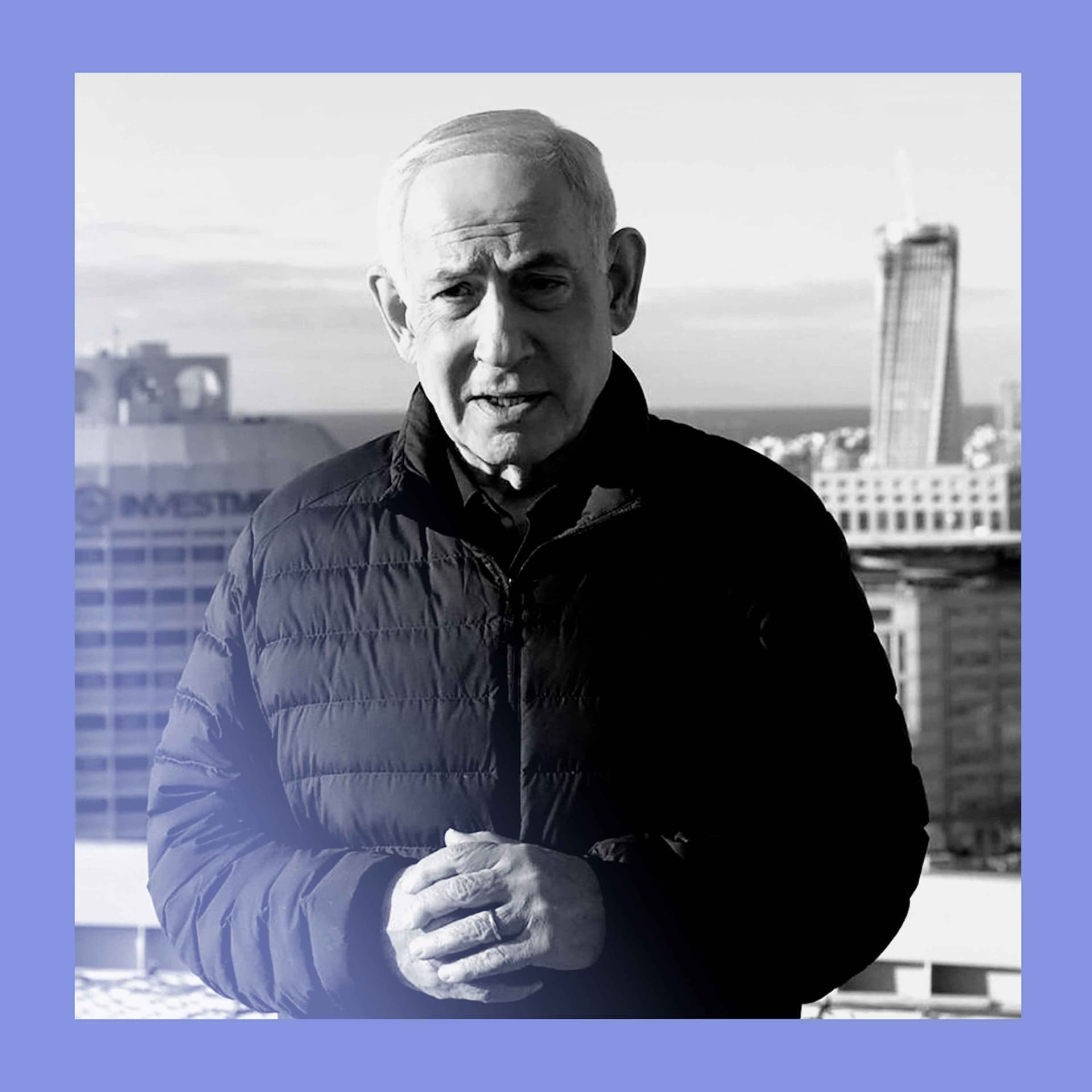
- Prime Minister Benjamin Netanyahu claims the war is progressing well and aims for a quick resolution, but acknowledges it may take time.
- Public sentiment in Israel shows war weariness despite majority support for military actions.
- Hezbollah's Involvement:
- The involvement of Hezbollah, an Iranian proxy, was seen as inevitable due to historical alliances and obligations to Iran.
- The Lebanese government faces challenges as Hezbollah’s actions may not align with popular sentiment in Lebanon.
- Israel's Military Strategy
- Intelligence and Operations:
- Israel's initial strikes aimed to dismantle the Iranian leadership, indicating a goal of regime change.
- Discussions about the long-term strategy reflect concerns over balancing military goals with regional stability.
- US Military and AI in Warfare
- AI's Role:
- The Pentagon utilized AI technology from Anthropic in military operations against Iran.
- Tensions between the Pentagon and AI companies arise due to differing views on the use of AI in warfare.
- Conflict with Anthropic:
- Discussions regarding Anthropic's limitations on the use of AI for military purposes lead to a public spat with the Trump administration.
- Concerns over ethical usage of AI in warfare are highlighted, raising questions about technology control and military contracts.
- Cultural Segment: Pokémon's 30th Anniversary
- Pokémon's Legacy:
- The segment celebrates Pokémon's impact over the past 30 years, highlighting its cultural significance and commercial success.
- Pokémon has become a global phenomenon, influencing media and merchandise, with a recent theme park opening in Japan.
- Cultural Insights:
- The franchise reflects Japanese cultural elements, such as kawaii (cuteness) and otaku (geek culture), which have been successfully marketed to international audiences.
---
Key Takeaways
- Escalation of Military Conflict:
- The Middle East is experiencing heightened military conflict with significant implications for regional stability and international relations.
- AI's Growing Influence:
- The increasing reliance on AI in military operations raises ethical and logistical concerns regarding its use and control.
- Cultural Significance of Pokémon:
- Pokémon remains a major cultural icon three decades after its inception, showcasing the intersection of entertainment and cultural storytelling.
Conclusion This episode of Economist Podcasts provides an in-depth look at the current geopolitical landscape in the Middle East while reflecting on technological advancements in warfare and celebrating a landmark in global pop culture. The discussions reveal the complexities of international relations and the evolving nature of conflict in the digital age.
Listen to More For further insights, listen to "The Insider" special edition on Iran, available on economist.com.
Written by AI. May contain mistakes. Listen to the episode to check what was said.
Chapters
Tap a time to open that second in VOEscalation of Middle East War
1:12 to 3:10
Analysis of the escalating conflict involving Israel, Iran, and Hezbollah.
“Tricky thing is, the Trump administration is having a big spat with exactly the company whose software it relied on, our correspondent explains.”
Israel's Military Strategy and Objectives
3:10 to 6:15
Insights into Israel's military strategy and goals in the current conflict.
“For the moment, the question is not when the war will end, but how far each side could escalate.”
Hezbollah's Role and Regional Dynamics
6:15 to 11:04
Exploration of Hezbollah's involvement in the war and its implications.
“And so you've spoken about a full partnership between Israel and the US.”
AI's Role in Modern Warfare
13:00 to 14:05
Discussion on the integration of AI in military operations and conflicts.
“Artificial intelligence is crucial to the Pentagon's war machine.”
Anthropic's Standoff with the Pentagon
14:05 to 17:01
Explore the conflict between Anthropik and the Pentagon regarding AI use in military operations.
“Anthropik was one of the first AI labs to work with the DOW.”
The Implications of Being Labeled a Supply Chain Risk
17:01 to 19:25
Understand the serious consequences for Anthropik if labeled a supply chain risk by the Pentagon.
“On the one hand, you've got the Pentagon relying on Anthropik to carry out particular activities that it designates as absolutely crucial to the US.”
Debate on AI Control in Defense
19:25 to 21:36
Discuss the ethical dilemmas surrounding AI technology use in defense and the expectations of AI companies.
“The biggest question is essentially, when you sell technology to the Defense Department, are you handing it over to the government of the day to use it as it wishes?”
The Rise of Claude in AI Applications
21:36 to 22:05
Investigate the surge in Claude's usage amidst the ongoing military conflicts and challenges for Anthropik.
“and satisfying your researchers, your most valuable commodity on the other.”
Transcript
Automatic transcript. May contain errors.0:00Rosie Blau:Close your eyes. Listen to Monday.com. Feel the sensation of an AI work platform. So flexible and intuitive, it feels like it was built just for you. Now open your eyes. Go to Monday.com. Start for free and finally breathe. If you work in university maintenance, Grainger considers you an MVP because your playbook ensures your arena is always ready for tip-off. And Grainger is your trusted partner. Offering the products you need all in one place, from HVAC and plumbing supplies to lighting and more. And all delivered with plenty of time left on the clock, so your team always gets the win. Call 1-800-GRAINGER, visit grainger.com, or just stop by.
0:40Rosie Blau:Grainger, for the ones who get it done.
0:50Rosie Blau:The Economist
0:57Rosie Blau:Hello and welcome to The Intelligence from The Economist. I'm your host, Rosie Bloor. Every weekday, we provide a fresh perspective on the events shaping your world.
1:11Rosie Blau:Among the many striking aspects of America's assault on Iran was that it involved the use of AI. Tricky thing is, the Trump administration is having a big spat with exactly the company whose software it relied on, our correspondent explains.
1:30Rosie Blau:And as they used to say, now for something completely different. 30 years ago, a game released on Nintendo featured a strange set of pocket monsters that spawned what is now the world's highest-grossing media franchise. Happy birthday to Pokémon.
1:49Rosie Blau:First up, though.
2:01Rosie Blau:This morning, Israel launched further strikes on Tehran and on Beirut, preparing for a ground offensive in Lebanon. Israeli bombs had already killed dozens of people in Beirut yesterday in response to attacks by Hezbollah, an Iranian proxy, on targets in northern Israel. The war started by America and Israel is now entering its fourth day. Iran has directed missiles not just at US bases, but also at cities, airports and energy infrastructure across the Middle East, and most recently the American embassy in Saudi Arabia. War is rapidly engulfing the region. I hear the people are saying, you're going to have an endless war here.
2:48Rosie Blau:You're not going to have an endless war. Israel's Prime Minister Benjamin Netanyahu told Fox News that there's still much he wants to achieve. I said it could be quick and decisive. It may take some time, but it's not going to take years. It's an effort right now to achieve the peace that we all yearn and pray for. And I think together we'll achieve it. For the moment, the question is not when the war will end, but how far each side could escalate.
3:17Anshel Pfeffer:The situation in Israel now is that for the last three days, there have been first Iranian missiles and now also Hezbollah missile drones being fired at Israel.
3:30Rosie Blau:Anshul Pfeffer, our Israel correspondent, is in Jerusalem this morning.
3:34Anshel Pfeffer:There isn't yet official data, but I'm assessing it around 200 plus. There's been, from what we've seen, four direct hits on residential or built-up areas, and 11 civilians have been killed. So over the last, let's say, 24 to 36 hours, the rate of Iranian missiles has lessened to quite a significant degree. From the polls, we know that this is more that the overwhelming majority of Israeli public support. But on the street, I'm detecting a feeling of war weariness and almost boredom with this after over two years of almost constant warfare.
4:16Rosie Blau:And Shul, how do you think Netanyahu will think this war is going?
4:21Anshel Pfeffer:Well, from Netanyahu's perspective, this war is going extremely well so far. They've achieved, on the very first strike, almost total decapitation of the Iranian leadership, starting from the Supreme Leader Ali Khamenei and downwards. Certainly the success of Israel's intelligence services in pinpointing the location and the timing of the meetings of Supreme Leader Khamenei and other senior Iranian figures alongside the American intelligence will be something that Israel and the Israeli leadership are very pleased with. and perhaps what's most important from Netanyahu's perspective, it's very clear that he's working in full partnership with Donald Trump.
5:03Anshel Pfeffer:Israeli and the American militaries and intelligence communities are working very closely together. That's the kind of image that Netanyahu has always been very eager to project that he is Trump's number one partner in the world.
5:18Rosie Blau:What is Israel's strategy from here onwards?
5:22Anshel Pfeffer:So the officials I've been talking to, both on the record and off the record, are no longer hiding the fact that regime change is what Israel wants to happen. They're not quite saying we're going to make it happen. The official line, and I think also the unofficial line is still that this is something that only the Iranian people can ultimately achieve. we are now providing the Iranian people with the means to do it. And one type of target that the Israeli warplanes have been attacking over the last 24 hours or so are what they call targets which are connected to suppression. In other words, headquarters and offices of the besieged militia which were involved in the bloody suppression of the protests back in January.
6:04Anshel Pfeffer:So there's both a physical attempt and also a message here to say we are trying to remove the forces which prevented the Iranian people from rising up. But now they have to do that.
6:17Rosie Blau:And so you've spoken about a full partnership between Israel and the US. Something that came up yesterday when we spoke on the show to Shashank, our defense editor, was that yes, US and Israel had gone in together, but there could be a rift ultimately about their goals. What do you think of that?
6:36Anshel Pfeffer:Well, I certainly think that there is a point where the interests of Netanyahu and the interests of Israel are not always the same thing. And those of Trump and of America may start to diversion. I think it'll be around not so much what's happening between Israel and Iran in this war, but around what's happening between Iran and countries in the Gulf, the effect on their economy, which is not so much Israel's concern. But I think America is more concerned about how that could have a ripple effect on global economy and, of course, energy prices. and the question is how long will Donald Trump want to continue?
7:12Anshel Pfeffer:They think that he probably has less tolerance for a more drawn-out war than the Tenghau is and I think Israel has more of an interest in eliminating certainly the Iranian ballistic missile threat totally whereas probably Donald Trump is less concerned about that because it's not exactly targeting the United States.
7:33Rosie Blau:And yesterday we saw Hezbollah, which of course is an Iranian proxy, get involved with attacks from Lebanese territory. That was then followed up by retaliation from Israel and what now looks like a ground invasion. Was Hezbollah's involvement in this war inevitable, do you think?
7:50Anshel Pfeffer:I think it was inevitable because ultimately Hezbollah, it's a Lebanese movement, but it's also Iran's number one proxy in the region. It's a movement which was founded partly by Iran back in 1982 and funded and directed by Iran for most of the period ever since. It was also the apple of Khamenei's eye, the supreme leader, now the late supreme leader of Iran, saw Hezbollah very much as an extension of Iranian power and influence in the region and insisted on funding Hezbollah even when Iran's economy was in free fall. So they have an obligation to join in now, a religious obligation, a moral obligation.
8:33Anshel Pfeffer:But at the same time, it's a very bad idea for them to be involved because it's the most unpopular thing they can do now in Lebanon. And it invites Israeli retaliation against Lebanon. We're already seeing the Lebanese government announcing that Hezbollah has military operations and from now on illegitimate. I'm not quite sure what the Lebanese government can do about that, but it still shows how Hezbollah is now running afoul of its own country, of its own population. Another reason why Hezbollah would be reluctant to join in is that they were very severely weakened back in the war in the end of 2024.
9:12Anshel Pfeffer:And for them, they would have hoped this would be a period in which they could rebuild their force rather than being engaged in yet another damaging war with Israel, but they don't seem to have had much choice. The Iranians have forced them to join in.
9:25Rosie Blau:And how well prepared is Israel for a wider regional war?
9:30Anshel Pfeffer:Well, it's been fighting in many ways a wider war since the day after October 7, when Hezbollah joined in then with the sort of constant stream of rocket and drone attacks on Israel. And it's been fighting the Houthis from Yemen. So, you know, this has been a wider regional war from Israel's perspective, a multi-front war almost since October 7, nearly two and a half years ago. The Israeli military, the Israeli intelligence community are pretty prepared for that. And the same thing, I think, for the Israeli public, sometimes when there's a missile, people say, hold on, is this from Gaza? Is this from Lebanon?
10:05Anshel Pfeffer:Is this from Iran? Is this from Syria? Is this from Yemen? It's the constant threat or fire from all directions, and people are used to it and are almost blase about it in some ways. So I think what's different about this round is the involvement of the Gulf states. And we may see two outcomes. One outcome may be that they are very insistent on keeping their bubbles of prosperity and peace and will therefore be pushing very strongly on Trump to try and end this as soon as possible. there is another dynamic that we may see is that they will think well this is what iran is capable of doing and therefore we need to make sure that they don't do it again and if that is the consensus then we may see them joining in this war perhaps not actually sending their own warplanes but being supportive of israel and the u.s in finishing the job in iran and that's i think what we need to look Act in the next few days.
11:06Rosie Blau:Anshul, thank you very much.
11:08Anshel Pfeffer:Thank you for having me, Rosie.
11:12Rosie Blau:And you can hear more from our colleagues on Iran on a special edition of The Insider, our new video offering, which went out last night. Deputy Editor of The Economist, Edward Carr, was joined by a panel of our experts to analyse how the war could unfold. You can find it on economist.com and a link is in the show notes.
12:03Rosie Blau:and Gartner. If you're ready to run the backbone of your business on one unified platform, head to rippling.com slash ACAST biz and sign up today. That's R-I-P-P-L-I-N-G dot com slash ACAST biz to sign up. When you manage procurement for multiple facilities, every order matters. But when it's for a hospital system, they matter even more. Granger gets it and knows there's no time for managing multiple suppliers and no room for shipping delays. That's why Granger offers millions of products in fast, dependable delivery, so you can keep your facility stocked, safe, and running smoothly. Call 1-800-GRAINGER, click grainger.com, or just stop by.
12:43Rosie Blau:Grainger, for the ones who get it done.
13:00Rosie Blau:Artificial intelligence is crucial to the Pentagon's war machine. Over the weekend, America used AI in its strikes against Iran. According to reports by The Wall Street Journal and Axios, the assault involved Claude, which is a powerful AI model run by Anthropic, a giant of Silicon Valley. Yet just hours before the attacks on Iran, Donald Trump ordered federal agencies to stop using the tool, labelling Anthropic a radical left AI company, which was, he said, run by people who have no idea what the real world is all about. All of that raises fundamental questions about the role of AI in conflict.
13:40Rosie Blau:just as a war itself appears to be heating up.
13:44Moeka Iida:For many weeks now, the Pentagon has been locked in a high-stakes standoff with Anthropic, which is one of the world's leading AI companies.
13:53Rosie Blau:Henry Trix is our US technology editor.
13:56Moeka Iida:The crux of the issue is the fact that the Department of War has a contract with Anthropic to use its powerful, clawed family of AI models for military purposes. Anthropik was one of the first AI labs to work with the DOW. It signed a contract last year, but it has clear red lines when it comes to using its models for national security, and these have become more of an issue. And this resulted in a very public showdown between Anthropik's boss, Dario Amadei, and the Secretary of War, Pete Hegseth, last week, which brought in President Donald Trump as well, all guns blazing against Anthropic.
14:43Rosie Blau:So if Anthropic had agreed to work with the Pentagon, then where did this spat kick off from?
14:49Moeka Iida:It came about because Anthropic has a hard line on Claude not being used for mass domestic surveillance or for fully autonomous weapons systems. Hegseth, for his part, argued that AI companies who are working with the Pentagon should give them carte blanche to do whatever they wanted with the technology as long as it was within the bounds of the law. And he issued an ultimatum, which was basically agree to my terms or else. Things kicked off when it became clear that Amadei was not going to accept. And Donald Trump and Hegseth responded with a sort of blistering assault on Anthropic at the end of last week, in which not only was the DOW cancelling its contracts with Anthropic, but it was also going to designate it a supply chain risk.
Read the full transcript
15:49Moeka Iida:This is a very severe form of punishment that no American firm has faced up until now.
15:58Rosie Blau:It's not all that's happened. Of course, America launched its attacks with Israel on Iran. And there are suggestions that Claude was in fact used as part of that.
16:09Moeka Iida:Yes, that's right. There was a report in the Wall Street Journal that the US military command used AI tools for intelligence purposes. as well as helping select targets in Iran and carrying out battlefield simulations, and that Claude was involved in that. It had previously used Claude in the operation against Nicolás Maduro, the strongman in Venezuela. And it's quite clear that increasingly it's being relying on anthropics models in order to conduct operations. And that's because essentially, Claude has been until very recently the only one that is approved for classified work in America.
17:00Rosie Blau:So this seems like an extraordinary situation, Henry. On the one hand, you've got the Pentagon relying on Anthropik to carry out particular activities that it designates as absolutely crucial to the US. On the other hand, it's got this spat. What would it really mean to be labelled a supply chain risk for Anthropik?
17:23Moeka Iida:Yeah, for Anthropik, it's quite serious. It's one thing to lose a$200 million contract with the Pentagon. It's another thing to be told that any company that does business with the Pentagon has to essentially sever relations with Anthropic. And you think of the extraordinary number of companies that in one way or another are connected to the Pentagon, whether that's financial institutions or whether it's military firms or whether it's firms doing bureaucratic work for the Pentagon, they would have to strip Anthropic out of their operations, which could be quite a severe blow to Anthropic.
18:05Rosie Blau:And does the Pentagon have other options when it comes to AI?
18:10Moeka Iida:Yeah, so this was one of the other fascinating wrinkles over the end of last week. And that is the fact that Anthropik's main rival, OpenAI, which is run by Sam Altman, has swooped in and gained a contract with the Department of War, despite the fact that according to Altman, it has its own red lines that are very similar to those of Anthropic. So this has caused a lot of head scratching over the weekend. It does actually look as though, although Altman insists that he has red lines, that they're not as strong as those of Anthropic. They're slightly watered down. They're wrapped in legalese. And there is a bit of a sense that Altman has been trying to reap some benefit here by playing up the strength of its own connections with the White House and the Trump administration, just as Amodei is considered kind of the White House's bet noire.
19:17Rosie Blau:So what does all this mean, Henry, ultimately, for the use of AI in defence or war?
19:24Moeka Iida:It raises some very tricky questions. The biggest question is essentially, when you sell technology to the Defense Department, are you handing it over to the government of the day to use it as it wishes? Or do you have any say over how that technology is used? and in this case, Anthropic is insisting that it has a say. Now, you can understand that when you sell a tank to the Pentagon or you sell an armoured car or whatever it is, you shouldn't really be telling the Pentagon how they're going to use it. That's their responsibility. But Amode's argument is that AI is different here, that laws have not quite caught up with the rapid advance of the technology and until they do, then they need to have some control or some influence over the process.
20:24Moeka Iida:And there's something also very interesting going on below the surface here, and that is the sensitivity of AI researchers, i.e. the people who are building these models, to the way that the models are used. And it's fair to say that Silicon Valley is relatively well stuffed with peaceniks, But Anthropik is not necessarily a peacenet company. It is one of the first AI labs to have forged a military contact with the Pentagon. And Amodei is very firmly in favour of supporting the US against China, for instance. But he's also very worried about losing these AI researchers who are some of the most highly valued resources in Silicon Valley.
21:12Moeka Iida:And it's very interesting that over the weekend, there's actually been a huge surge in usage of Claude as a chatbot. So on the App Store, it's just leapfrogged ahead of OpenAI's ChatGPT for the first time. And researchers have been coming out on X in support of what Amodei is doing. So there's a very delicate balance here between satisfying the Pentagon on one hand and satisfying your researchers, your most valuable commodity on the other.
21:47Rosie Blau:Henry, thank you so much for talking to me.
21:50Moeka Iida:Great talking to you, Rosie.
22:05Henry Tricks:The monsters are everywhere. Moeko Iida writes about Japan. Bushy-tailed Eevee frolic on the grass. Grinning yellow Pikachu climb up trees. This is Poké Park Kanto, the first permanent Pokémon theme park which opened in Tokyo in early February. Here, you can find more than 600 pocket monsters or Pokémon, and fans are desperate to go in. Tickets for the park's first three months sold out immediately. The excitement around Poképark Kanto tells you something about Pokémon's cultural clout three decades on. The first games were released in Japan in February 1996, and at the time, few people expected it to become a global craze.
22:51Henry Tricks:But Pokemania spread quickly.
22:56Henry Tricks:The Pokemon Company has sold about 500 million video games, produced more than 75 billion trading cards, and the anime has been broadcast in around 190 countries. According to the Guinness World Records, Pokemon is the highest-grossing media franchise in the world. Its total lifetime revenue is estimated at around$150 billion.
23:21Henry Tricks:And Pokemon Go, the augmented reality app, still has around 30 million active monthly users. There's even Pokemon World Championships held every year, and collectors pay enormous sums to get rare Pokemon trading cards. Recently, a rare Pikachu Illustrator card sold for a record$16 million. dollars.
23:46Henry Tricks:Despite its international appeal, Pokemon started with a very Japanese obsession, collecting insects. The creator of Pokemon is called Tajiri Satoshi. He was born in 1965 in the suburbs of Tokyo, and as a child, he was obsessed with exploring nature and collecting insects. Classmates used to call him Dr. Bug. But by the time he became a teenager, urban development took over the fields and ponds near his home. At one interview, he said all the insects were driven away. By creating Pokemon, Pajiri hoped to allow children to explore and collect creatures in a digital world, even as the natural one was disappearing around them.
24:32Henry Tricks:And in this he was really successful. A study in the early 2000s showed that British children were more familiar with Pokémon than common wildlife.
24:44Henry Tricks:In the first Pokémon anime, Ash or Satoshi in Japan travels with his best friend Pikachu, the famous electric mouse, and they catch, battle, and tame monsters along the way. The franchise, according to Mizuko Ito, who's a cultural anthropologist, drew on two currents in Japanese culture. One is this idea of kawaii or cuteness. Pokemon characters are often very cuddly and cute and they have anime's signature wide eyes. And the second sensibility is otaku or geek culture. Pokemon was successful in packaging these Japanese sensibilities in a way that was accessible for children in other countries.
25:22Rosie Blau:I wanna be the very best Like no one ever was
25:27Henry Tricks:As Roland Keltz, another pop culture expert, puts it, Pokemon was a Rosetta Stone that unlocked the art of Japanese storytelling for Western audiences. Pokemon was responsible for clearing the path for subsequent hits like Digimon or Yu-Gi-Oh! and today's booming anime industry.
25:48Henry Tricks:Pokemon offers fans a whole universe they can immerse themselves in and almost everyone has their favourite Pokemon Mine used to be Achamo or in English Torchic which is a little fire chick Pokemon Whatever kind of person you are there's always a Pokemon for you and as the fans flooding to the Pokebar Kanto theme park show Pokemon has managed to catch them all
26:23Rosie Blau:that's it for this episode of the intelligence see you back here tomorrow
26:44Rosie Blau:If you work in university maintenance, Grainger considers you an MVP because your playbook ensures your arena is always ready for tip-off and Grainger is your trusted partner. Offering the products you need all in one place from HVAC and plumbing supplies to lighting and more and all delivered with plenty of time left on the clock so your team always gets the win. Call 1-800-GRAINGER, visit grainger.com or just stop by. Grainger. For the ones who get it done. That new thing? Yeah, we've got it. The Drop by GNC, bringing you all the newness that matters, handpicked by the pros who actually know what's up and what's proven to work.
27:26Rosie Blau:We keep you on top of the trends and dialed into what's next. Whether you're crushing it at the gym, leveling up your game,
27:32Moeka Iida:or thriving every day, The Drop by GNC is where the latest solutions in health and wellness land first.
27:38Rosie Blau:non-stop innovation and fresh finds daily explore what's new and what's next on the drop by GNC
From the publisher
The war in Iran has entered its fourth day with further American and Israeli strikes, and Iranian retaliation across the region. Now Israel’s prime minister Binyamin Netanyahu has launched a ground offensive in Lebanon. Attacks on Tehran involved the use of Artificial Intelligence, so why is the Pentagon picking a fight with Anthropic, its supplier? And Pokémon turns 30.
Watch “The Insider” on Iran: Economist experts ask what will happen next
Guests and host:
- Anshel Pfeffer, Israel correspondent
- Henry Tricks, US technology editor
- Moeka Iida, Japan correspondent
- Rosie Blau, host of “The Intelligence”
Topics covered:
- War in Iran, America, Israel, Lebanon, Hizbullah, Middle East
- Anthropic, OpenAI, Claude, Artificial Intelligence
- Pokemon, media
Listen to what matters most, from global politics and business to science and technology—Subscribe to Economist Podcasts+
For more information about how to access Economist Podcasts+, please visit our FAQs page or watch our video explaining how to link your account.
Hosted on Acast. See acast.com/privacy for more information.