
In short
Podcast Episode Summary: From Bad to Awful: Trump’s Four Options in Iran
Podcast Information
- Title: Economist Podcasts
- Episode Title: From bad to awful: Trump’s four options in Iran
- Description: An exploration of the challenges facing Donald Trump regarding the ongoing war in Iran, alongside discussions on scandals involving Thailand’s Buddhist monks and advancements in gene-editing technology for fruits.
Hosts and Guests
- Hosts:
- Jason Palmer
- Rosie Blau
- Guests:
- Gregg Carlstrom (Middle East correspondent)
- Alizée Jean-Baptiste (Asia senior podcasts producer)
- Maria Lisik (news editor)
Episode Highlights
Iran War and Trump’s Options
- Current Situation:
- Ongoing conflict in Iran with significant civilian casualties and military actions from the US and Israel. Over 2,000 civilians have died, and Iran continues missile attacks on Israel.
- Trump has issued ultimatums regarding the reopening of the Strait of Hormuz.
- Trump's Four Options:
- Talk:
- Unlikely due to deep mistrust between the US and Iran, complicated by previous attacks during negotiations.
- Significant differences in demands from both sides hinder potential agreements.
- Leave:
- Could be framed as a victory announcement by Trump. However, leaving would not solve the issue of Iran's remaining military capabilities and nuclear potential.
- A premature withdrawal could lead to instability in the region.
- Continue the War:
- Maintaining the current military strategy may reduce Iranian attacks but risks prolonged conflict without resolution.
- Escalate the War:
- Involves increasing military actions, with potential for more severe repercussions, including retaliation from Iran.
- High risks of escalating tensions in the Gulf region as Iran has indicated they may retaliate against Gulf nations if attacked.
- Conclusion on Options: None of the paths are likely to end the conflict effectively, leading to an uncertain future for Trump's decisions.
Scandals Involving Thai Buddhist Monks
- Overview:
- Reports of misconduct among Buddhist monks in Thailand, including embezzlement and blackmail.
- The monkhood is traditionally revered, but recent scandals are eroding public trust.
- Structural Challenges:
- Difficulty in holding monks accountable due to their high societal status and the informal nature of temple governance.
- Calls for reform face resistance due to the intertwined nature of the monkhood with Thailand's elite.
Advancements in Gene-Editing Fruits
- Gene Editing Technologies:
- CRISPR technology allows precise modifications in crops without introducing foreign genes, leading to innovations in fruit development.
- Future of Gene-Edited Fruits:
- Fruits like seedless blackberries and stoneless cherries are in development, with potential for appealing to consumers.
- Regulation surrounding gene-edited products remains unclear, but some countries are beginning to address these issues.
Key Takeaways
- Iran Conflict: Trump faces a complex situation with no clear exit strategy, reflecting on the deep entrenchment of military and political interests.
- Thai Monks: The old institution struggles with modern accountability, revealing a need for systemic change to restore public confidence.
- Food Innovation: Advances in gene editing may revolutionize the fruit market, but public acceptance will depend on effective communication and regulation.
Closing Remarks
- The episode presents a layered understanding of geopolitical dynamics, cultural issues in Thailand, and the intersection of technology and agriculture, highlighting the intricacies of modern global challenges.
Written by AI. May contain mistakes. Listen to the episode to check what was said.
Chapters
Tap a time to open that second in VOTrump's Dilemma in Iran
1:25 to 2:04
An overview of the complexities surrounding Trump's strategy in Iran.
“You wouldn't believe how naughty some of Thailand's Buddhist monks are.”
Exploring Trump's Four Options
2:04 to 4:19
A breakdown of Trump's potential strategies in the Iran conflict.
“On Friday, he said America's military goals had largely been met.”
The Challenges of Negotiation
4:19 to 6:07
Understanding the barriers to negotiating peace between the US and Iran.
“He can talk, he can leave, he can continue the war, or he can escalate the war.”
Assessing the Options: Talk, Leave, Continue, Escalate
6:07 to 10:10
An in-depth look at the implications of each of Trump's four choices.
“Their ballistic missile program is in ruins.”
Possible Outcomes of Escalation
10:10 to 10:52
Examining the risks and consequences of escalating military action in Iran.
“when there's no guarantee that declaring victory will actually finish the war.”
Thai Monks and Their Financial Practices
14:03 to 18:01
Explore the unique financial practices and societal roles of Thai monks.
“Every morning, Thai monks will go out and collect offerings from the community.”
Abuse of Power in the Monkhood
18:01 to 19:38
Investigate the structural issues and power dynamics within the Thai monkhood.
“And everyone else is down along the pyramid.”
Advancements in Fruit Gene Editing
19:38 to 23:01
Learn about the evolution and impact of gene editing on fruit development.
“Humans have spent thousands of years developing fruit to their liking, mostly through domestication.”
Consumer Perspectives on Gene-Edited Fruits
23:01 to 24:20
Discuss consumer perceptions and market potential for designer fruits.
“Pearwise is hoping that with its new forms of blackberries and cherries, they will follow the success story of the seedless easy peel mandarins.”
Transcript
Automatic transcript. May contain errors.0:00There's one place for the newest drops in wellness and performance and the biggest sale of the year. It's The Drop by GNC, curating the best of what's new, handpicked by the pros who know what works. And right now, get it all, buy one, get one 50 % off during the semi-annual LiveWell Sale. From crushing workouts to leveling up your nutrition and everything in between, get the best deals on the latest innovations. All the newness is all on sale right now during the LiveWell Sale on The Drop by GNC. You know what's wild? Most people are still overpaying for car insurance just because it's a pain to switch.
0:35That's why there's Jerry. Jerry's the only app that compares rates from over 50 insurers in minutes and helps you switch fast with no spam calls or hidden fees. Drivers who save with Jerry could save over$1 ,300 a year. Before you renew your car insurance policy, do yourself a favor. Download the Jerry app or head to jerry.ai slash acast.
1:02Gregg Carlstrom:The Economist
1:09Gregg Carlstrom:Hello and welcome to The Intelligence from The Economist. I'm Jason Palmer. And I'm Rosie Bloor. Every weekday we provide a fresh perspective on the events shaping your world.
1:24Gregg Carlstrom:embezzlement, drunk driving, loan fraud. You wouldn't believe how naughty some of Thailand's Buddhist monks are. We ask why getting rid of the monkhood's bad apples is so difficult. And you know how awkward it is when you eat a cherry and then have nowhere to put the stone. Well, such first world problems may never sour your day again. Gene-edited fruit is coming to a basket near you.
2:00But first... It remains hard to know what President Donald Trump is planning next
2:13Gregg Carlstrom:in the Iran war even more so. On Friday, he said America's military goals had largely been met. Strait of Hormuz, no problem. America doesn't use it. By the next day, back on the socials and on the caps lock with one of his signature deadlines, 48 hours for Iran to reopen the strait or America would obliterate Iran's power plants. Let's game this out. What options does Mr. Trump have to put an end to his war?
2:42Jason Palmer:We've had another weekend of missiles flying in every direction across the Middle East.
2:48Gregg Carlstrom:Greg Karlstrom is a Middle East correspondent for The Economist.
2:51Jason Palmer:There have been ongoing American and Israeli airstrikes in Iran, including in the capital. More than 2 ,000 civilians have been killed over the course of the war, according to human rights groups. Iran has continued to fire missiles at Israel in the Gulf. Two ballistic missiles got through Israel's interceptors. Over the weekend, they injured more than 160 people in towns in southern Israel. And then, of course, we have Donald Trump's threat, his ticking clock 48-hour deadline for Iran to reopen the Strait of Hormuz. And if it doesn't, he has threatened to start attacking power plants inside of Iran.
3:28Gregg Carlstrom:And if what's happened with this war is anything to go by so far, Iran is unlikely to just bend over at this point.
3:37Jason Palmer:I agree. Their whole strategy of this war has been to try and impose costs on their neighbors in the Gulf and on the world by closing the Strait of Hormuz, by throttling the flow of oil and gas and other vital commodities coming out of the Gulf. Iran sees that as its only path to try and bring this war to an end and also deter America and Israel from launching another war in the future. So I don't think they're going to back down. And that leaves Trump with a dilemma, not just around this threat that he's made, but the broader question of how do you proceed? I think he has four broad options for what to do going forward.
4:19Jason Palmer:He can talk, he can leave, he can continue the war, or he can escalate the war. But they're all in various ways problematic options.
4:27Gregg Carlstrom:So not a dilemma, like a quadrilemma. Let's go through those one at a time. You say, talk, leave, continue, escalate. What does talking look like?
4:37Jason Palmer:I think it looks like the least likely option. There are still some diplomats and analysts who believe that there's an opportunity here for America and Iran to strike a deal. But I think it's very difficult to see how that happens in practice for a few reasons. First, the lack of trust on both sides. Iran has been attacked twice in the past year while negotiating with America. The Americans have questions about who is actually in charge in Iran. The leadership is in disarray. So even if you sit with someone, does that person really speak on behalf of the regime? There's even a question about who's going to mediate these talks.
5:16Jason Palmer:Oman has done that in the past, but they've angered a lot of their allies over the past few weeks by sounding very sympathetic to Iran. And then even if you solve all of those problems and everyone gets together and they start talking, what will the deal be? America comes in with this maximalist set of demands. They want Iran to shut down large parts of its nuclear program, stop funding regional proxies. Iran has its own enormous wish list. It wants reparations for the war, closure of American military bases in the region, some kind of new arrangements around the Strait of Hormuz. they're extremely far apart and neither one is in the mood to make concessions right now.
5:56Jason Palmer:So talking doesn't sound likely. What about leaving, packing up and leaving? It would be the Trumpiest option, right? You can imagine him getting up and giving a speech and saying Iran's military capabilities have been completely destroyed. Their navy is at the bottom of the sea. Their ballistic missile program is in ruins. This is the most decisive military victory since the Battle of Hastings. A lot of embellishment. You can hear Trump giving that speech. He did it before. He did it in June. The problem is twofold. First, I think domestic politics, many Americans might not be convinced that America had actually won the war.
6:32Jason Palmer:So there's a political problem for him at home. The bigger issue, though, it's a substantive one in the region. If you end the war now, Iran will still have 400 plus kilograms of highly enriched uranium. Nobody quite knows where it is, and Iran would have a motivation to fashion that into a nuclear bomb. It would also still have a chokehold on the Strait of Hormuz. If you're a leader in the Gulf, that is your worst case scenario. Enduring weeks of war, only for it to end with Iran still strangling this waterway that is so vital to your economies and your societies.
7:06Gregg Carlstrom:So option two, perhaps more plausible, but more unpleasant. Third one was continuing, the attrition.
7:13Jason Palmer:Keep going as you are. Stay the course for a few more weeks. You hear this argument from the Israelis. You hear it from hawks in Washington. They point to the number of daily missile and drone launches from Iran, which has fallen from about a thousand a day on the first day of the war to an average of less than 100 now. and they argue that if America and Israel keep up their strikes on Iran's military, that number can be pushed down further. You can do more and more damage to their capabilities. You also buy time to move more warships into the region. This is the pitch that they're making for staying the course.
7:50Jason Palmer:The problem is it may not work. And as long as Iran can keep up a relatively small volume of attacks on the Strait of Hormuz, it can effectively keep it closed. Which leaves us then with escalation, just ramping things up. And that is where Trump is pointing us. That is where other officials were pointing over the weekend. Scott Besant, the Treasury Secretary, in a television interview on Sunday said the U.S. needs to escalate to de-escalate. And that could take numerous forms. It could be these attacks on power plants that Trump has been threatening a raid to seize Iran's enriched uranium from those nuclear sites inside the country in attempt to seize Khark Island, which is the home of Iran's main oil export terminal.
8:34Jason Palmer:He has different things that he can order. And in the next days or weeks, he'll have assets in place to do those things. The problem is they're all very risky. And then there's also the much greater risk to countries in the Gulf. Iran has said, if America attacks our power plants, we are going to attack power plants and water desalination facilities in Gulf countries, which is a doomsday scenario for the Gulf. So there's a huge risk that escalation may actually just beget more escalation.
9:04Gregg Carlstrom:So as you said at the start, there are simply no good options for anyone really. What do you think is the most likely at this stage? Should we listen to the hawkish view of the weekend?
9:13Jason Palmer:As I've probably said a dozen times over the past year on this podcast, I hesitate to predict what Trump is going to do because I'm not sure Trump knows what Trump is going to do. But the way I'm thinking about it is none of these options are guaranteed to end the war. Set aside negotiations because I just think they're so implausible at the moment. If you declare victory, Iran might decide, you know what, the war isn't over actually. We're going to keep Hormuz closed for another month or two just to impose a cost on the world. In which case, not only is it not a victory, it's a humiliation for Trump.
9:45Jason Palmer:If he stays the course for a few weeks, it might still be inconclusive. And then we're back to the same impasse at some point in April. and if he escalates, again, that's not an end in itself. You can escalate and still not win the war by doing that. So if you have a series of options, none of which necessarily will end the fighting, I tend to think that he is going to either press ahead or escalate. He's not going to declare victory and go home when there's no guarantee that declaring victory will actually finish the war. Greg, thanks very much for your time, as ever. Thank you, Jason.
10:51We'll see you next time. workouts to leveling up your nutrition and everything in between, get the best deals on the latest innovations. All the newness is all on sale right now during the Live Well sale on the drop by GNC. You know what's wild? Most people are still overpaying for car insurance just because it's a pain to switch. That's why there's Jerry. Jerry's the only app that compares rates from over 50 insurers in minutes and helps you switch fast with no spam calls or hidden fees. Drivers who save with Jerry could save over$1 ,300 a year. Before you renew your car insurance policy, do yourself a favor.
11:26Download the Jerry app or head to jerry.ai slash acast.
11:43Wat Rai Hing, just outside Bangkok, is a grand and serene temple. But in many ways it feels less like a monument and more like a town square. Alizé Jean-Baptiste is one of our senior producers. There's a school inside the temple grounds. Along the riverbank at the back, people feed iridescent sharks and black-spotted catfish. Children chase each other across a lush courtyard. For generations, temples like this one have been at the center of Thai life. More than 90 % of Thais identify as Buddhists. Alongside the nation and the monarchy, Buddhism is considered one of the three pillars of Thai society.
12:24But recently, a series of scandals has tarnished this revered institution's reputation Last year, Wat Raihang's abbot was taken into custody after being accused of stealing over$9 million from Temple accounts Then, news of an even bigger scandal broke Several senior monks were allegedly blackmailed by a woman known as Miss Golf According to police investigation, the women had amassed around 80 ,000 photos and videos of monks in compromising positions. Scandals are not rare in the Thai monkhood, but there is a belief amongst some Thais that they've become more frequent lately. To understand why monks are misbehaving, you need to understand what life is like inside the monkhood.
13:15So has this practice changed at all? No, it's been the same. It's still the same. Traditional monks don't talk during the morning. A few months ago at sunrise, I accompanied Venerable Sattalat, a monk, and a temple volunteer called Big on an alms round. The original was that the Buddha went back to visit his family at some point. And his father was organizing a festival or something, and nobody told him his son had come to visit. so nobody formally invited him, and he can't just take food. So he just started walking around, just collecting from the local community whatever people would give him, and that's kind of why they still kind of do this in the morning as part of that ritual.
14:03It's always done barefoot. Oh, yeah. I didn't even notice. Every morning, Thai monks will go out and collect offerings from the community. They'll walk for as long as it takes to fill their bat or begging bowl, Technically, monks are only allowed to eat what they're given. In exchange for the food, they'll offer a blessing.
14:27Thai monks take up a vow of poverty. As part of this, they commit themselves to ascetic lives. What you'll typically see is they won't even take a bottle of water or something directly from you. They'll put out a handkerchief. You put it on the handkerchief and they'll pull it in and take it. Just for most things, yeah, like traditional monks. Because they don't want it to be seen as, like, giving you money. So there's always this arm's length with things. But in effect, this arm's length attitude to money doesn't really work. In theory, temples are supposed to have a designated layperson managing their finances.
15:07In practice, that safeguard is inconsistent. New regulations came into effect last year. They include stricter financial reporting and a limit on how much money temples may hold in cash. But there's no guarantee that these rules will be applied across Thailand's 40 ,000 or so temples. Tracking temple finances is extremely difficult, yet we know the sums involved are enormous. Devotees give money for many reasons. Big, the temple volunteer, tells me there's a high demand for blessing ceremonies. Like this ice cream shop opened up, and at their grand opening, they had two monks come by, or actually six monks come by, and bless the place.
15:46And these will stay on the doors forever. People invite monks to bless anything they've purchased. A new house, a car, even a luxury handbag. Giving is also part of merit-making, which is how Buddhists accumulate good karma to secure a better rebirth in their next life. Whether monks want it or not, money is constantly thrust upon them, the temptation is ever-present. And not all men are prepared to deal with it. Now, most Thai men, like 99 % of Thai men, we become monks when we turn 20. Big is referring to the practice of temporary ordination. It's like a bar mitzvah. All Thai men, including the royal family, everyone in the royal family, like, they still become a monk when they're 20.
16:31Broadly speaking, monks in Thailand fall into two groups. Some ordained as a rite of passage for a short period of time, usually to earn good karma points for their families and themselves. Then there's career monks who commit their lives to the monkhood. Most of the time they enter the order as novices when they were children. They want food, they want education, and sometimes monastery is the only way to provide these necessities to them. Kem Tong Ton-Sakul Rongrong is a scholar at Sri Lankan University in Bangkok. He specializes in the relationship between Buddhism and the Thai legal system.
17:08So to start with, you don't get the brightest marble in the lot. You start with someone who's, sorry, but not very bright. But all of a sudden, once you enter into a mountain, they are given vast authority of respect. All of a sudden, people just respect you and they would never challenge you or debate with you.
17:34With few barriers to entry, the monkhood attracts men of all walks of life, including some who aren't necessarily following the path of the Buddha. Last August, police arrested 154 monks on charges ranging from drunk driving to organized crime. They reported that some of the people they detained were criminals who had sought ordination to evade authorities. The structural issues that have allowed monks to abuse their power clearly aren't new. So why can't they be solved? Thai society is like a pyramid. You have the king at the top. And everyone else is down along the pyramid. I mean, this pyramid is determined by Kama.
18:19You are married and the king by default, the most perfect person. So monks is a more superior class and you don't question them. The only person historically that are able to purge them or purify them is the king. King Wajira Longkhoran is constitutionally bound to protect Buddhism. and in some ways he's really trying. The crown is believed to have been a driving force behind the recent crackdowns on misbehaving monks. But while arrests have increased, there has been little push for deep structural reform. That is partly because of how closely the monkhood is intertwined with Thailand's elite.
19:08A source told me that important conversations about the military or civil service promotions often happen in temples. Influential figures seeking to boost their karma frequently cultivate relationships with prominent monks. A thorough purge of the monkhood would expose these ties, and that is something powerful interests may prefer to avoid. For now, the monkhood has been able to brush off these scandals, but public trust is faltering. Without structural reform, its reputation will continue to erode.
19:57Humans have spent thousands of years developing fruit to their liking, mostly through domestication. Maria Lischik is one of our news editors. Some of the fruit we eat today actually bear little resemblance to what we had before. Many are a lot sweeter, for example bananas. Many are larger. The peaches that we have today are 16 times larger than their ancestors. And many of them no longer have seeds, for example, watermelons. But now advances in gene editing will allow fruits to be altered in new ways. So Maria, what exactly is a gene edited fruit? So at the moment, we've got lots of genetically modified fruits, which involves mixing genes from different organisms to get the desired characteristics.
Read the full transcript
20:45But there's this new advanced technique that is becoming more and more popular, CRISPR, which allows us to delete a single gene. So unlike GM crops before it, this means that we no longer have to add genes from foreign organisms. And that's been shown to put off many consumers before. So if we've been cultivating fruit for thousands of years and evolving exactly the type of produce that we want, why do we now need to gene edit our fruit? CRISPR gene editing allows us to be a lot more precise and efficient. And through that, we can achieve changes that would have been difficult through conventional breeding.
21:26There's this company called Pearwise, which is currently working on seedless blackberries. They're not actually seedless, but the seeds are so small that you don't really notice them when you're eating them. They don't get in your teeth. They have just recently announced another joint venture with a fruit breeding company to develop stoneless cherries. There are other companies working on similar projects. For example, in California, Green Venus is using CRISPR to develop non-browning avocados. Scientists have also developed mushrooms and potatoes that oxidize more slowly. And with AI, scientists will be able to design fruits even more efficiently.
22:03For example, they will be able to predict how multiple genes and biochemical pathways as well as environmental factors all come together to produce more complex traits. So for example chemicals which generate flavour. And are we already eating these? Are these fruits already in our supermarkets? Not just yet. Very few of them are available on the market. Part of the reason is that it takes time to develop new generations of fruit from the altered seeds. If you gene edit the seed of an apple or a peach tree, it will take many years for it to grow large enough to bear fruit. The technology is actually most advanced for tomatoes and strawberries, which are crops that can grow from seed to fruit in a matter of a few months.
22:51But as more of these fruity creations go on sale, companies think that more people will take to such fruit and as a result they will start producing more. Pearwise is hoping that with its new forms of blackberries and cherries, they will follow the success story of the seedless easy peel mandarins. When these became available year round in America around 2012, the citrus market increased by a third as consumers suddenly took to these easy peelers. So it sounds like fruits designed in a lab are going to become the norm then. What's the regulation of them like? Well, there isn't actually all that much clear regulation.
23:30which producers say is a big problem for them. Argentina was actually the first country to rule that gene-edited products should be regulated in the same way as conventional ones. And the EU's parliament and council are looking at a similar move now. They reached a deal in December to simplify the marketing process that would allow producers to no longer have to label them differently from conventional fruits and vegetables, which would probably make consumers more open to buying more of them. Maria, have you tried these designer fruits? Not yet. They haven't come to a supermarket near me, but I am very much looking forward to them and to the next ones to hit the markets.
24:10I'd love maybe larger strawberries that you could bite into like into an apple or perhaps an easy peel pineapple. Maria, thank you very much. Thank you, Rosie. It's been a pleasure.
24:39Gregg Carlstrom:That's all for this episode of The Intelligence. We'll see you back here tomorrow.
25:02There's one place for the newest drops in wellness and performance and the biggest sale of the year. It's the drop by GNC, curating the best of what's new, handpicked by the pros who know what works. And right now, get it all, buy one, get one 50 % off during the semi-annual LiveWell sale. From crushing workouts to leveling up to nutrition and everything in between, get the best deals on the latest innovations. All the newness is all on sale right now during the LiveWell sale. On the drop by GNC. AI pilots are easy, but scaling AI across enterprise customer experience is where most organizations fail.
25:39Parloa's Agentix CX platform helps enterprises move from experimentation to production. With the AI agent management platform for enterprise CX, companies can design, test, and orchestrate production-grade AI agents across customer service operations. The result, AI agents that turn customer conversations into lasting loyalty. Learn more at parloa.com.
From the publisher
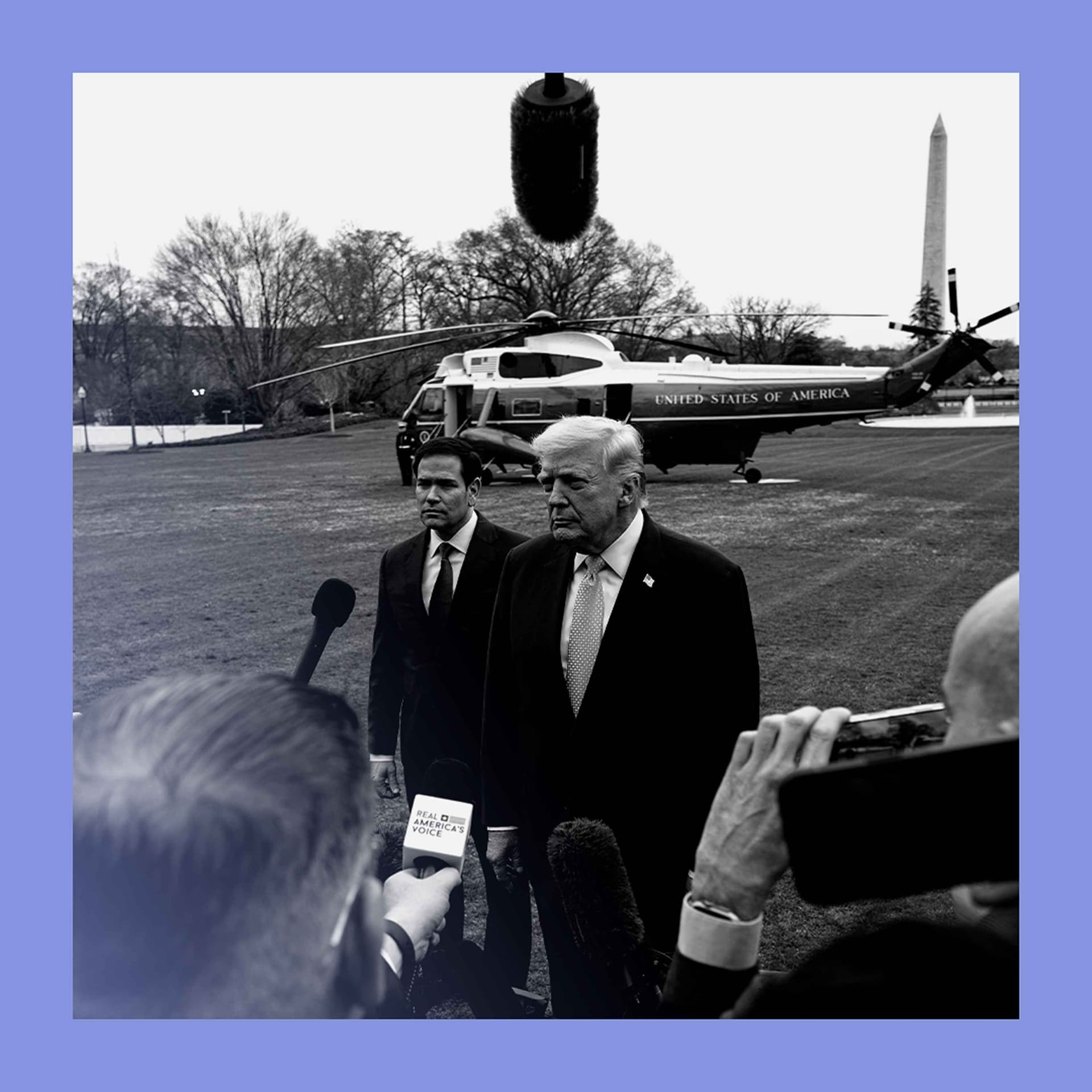
As the war in Iran progresses, none of the options available to Donald Trump looks good. We examine each of them. Thailand’s Buddhist monks are implicated in lots of lawless and dodgy behaviour—but clearing out the bad apples is more complicated than it seems. And gene-editing comes to the fruit bowl: we look at what science is serving up next.
Guests and host:
- Gregg Carlstrom, Middle East correspondent
- Alizée Jean-Baptiste, Asia senior podcasts producer
- Maria Lisik, news editor
- Rosie Blau, co-host of “The Intelligence”
- Jason Palmer, co-host of “The Intelligence”
Topics covered:
- Iran war, Donald Trump
- Thailand, Buddhist monks
- gene-editing, fruit
Get a world of insights by subscribing to Economist Podcasts+. For more information about how to access Economist Podcasts+, please visit our FAQs page or watch our video explaining how to link your account.
Hosted on Acast. See acast.com/privacy for more information.