
In short
The Arctic’s growing strategic importance amid the Ukraine war, focusing on Svalbard and Russia’s semi-legal foothold via the Russian-run settlement of Barentsburg, and the risk of “hybrid warfare” rather than outright invasion.
Guests (backgrounds)
Adam Roberts, The Economist’s digital editor; Matthew Steinglass, Europe correspondent (both interview/field-report with The Economist’s John Joe Devlin and others); Jason (host, likely The Economist’s intelligence/policy voice).
Key claims
The Svalbard treaty lets other countries operate economically/scientifically, giving Russia a legal “toehold.” Barentsburg’s coal mining and Soviet-era infrastructure function as propaganda and presence, not necessity. As sea ice declines, the Arctic matters for naval routes and resources. Russia may exploit Svalbard’s ambiguous status for sabotage/hybrid pressure testing NATO Article 5.
Notable examples
Russian trawlers allegedly cut the seabed Svalbard communications cable 140 times; GPS scrambling; Soviet/Russian flags, Lenin monument, and coal-fired power station in Barentsburg; references to NATO expansion (Finland/Sweden) and intelligence warnings (e.g., David Lammy).
Written by AI. May contain mistakes. Listen to the episode to check what was said.
Chapters
Tap a time to open that second in VOSvalbard: A Geopolitical Hotspot
0:31 to 0:43
Exploring the significance of Svalbard amid rising tensions.
“Sessions average$21 with insurance and some pay as little as$0 depending on their plan.”
Svalbard: A Geopolitical Hotspot
2:16 to 3:06
Exploring the significance of Svalbard amid rising tensions.
“or cooperation in the Arctic over, say, energy.”
The Unique Status of Svalbard
3:17 to 4:33
Discussing Svalbard's treaty and Russia's interests in the region.
“Its windswept main island, Spitsbergen, is mostly covered in ice and is closer to the North Pole than the European mainland.”
A Visit to Barentsburg
4:34 to 10:45
Experiencing the Russian settlement of Barentsburg and its atmosphere.
“So, despite the war on Ukraine, and despite the sanctions that go with it, Vladimir Putin is maintaining a curious little mining town in a far-flung corner of a NATO country.”
Russia's Arctic Strategy
10:46 to 14:01
Understanding Russia's military and economic interests in the Arctic.
“We've seen so many Russian flags, so many murals, Russian street names, of course the bust of Lenin.”
Arctic Geopolitics and Ukraine's Fallout
14:01 to 15:46
Explore how the Ukraine war affects Russia's ambitions in the Arctic.
“And then you've got this question about the impact of the war on Ukraine.”
Hybrid Warfare in Svalbard
15:47 to 17:46
Understand the implications of hybrid warfare strategies in Svalbard.
“Now, Russia can say that Svalbard has this strange legal status.”
Norwegian Sovereignty and Russian Threats
17:47 to 20:26
Learn about Norway's efforts to assert sovereignty over Svalbard amid Russian threats.
“So we've seen hardening of the border in the Baltic countries.”
Concerns Over Russian Aggression in the Arctic
20:27 to 22:26
Examine the concerns surrounding potential Russian aggression in the Arctic.
“And for neighbouring Denmark, that was a huge headache when the US suddenly started talking about grabbing control of Greenland.”
China's Role in Arctic Geopolitics
22:27 to 23:35
Discover how China views its interests in the Arctic and its relationship with Russia.
“It just feels like you see some territory in the Arctic and then you're off in the middle of nowhere.”
Show all 11 chapters
Timing of Potential Conflicts in the Arctic
23:36 to 25:06
Assess when Russia might be ready to confront NATO and the implications for the Arctic.
“is contingent on the end to the war in Ukraine, time for Russia to regroup.”
Transcript
Automatic transcript. May contain errors.0:28Summer's supposed to be the easy season. your time. The therapist you want takes your insurance on Grow. Grow accepts over 125 insurance plans. Sessions average$21 with insurance and some pay as little as$0 depending on their plan. Visit growtherapy.com slash ACAST today to get started. That's growtherapy.com slash ACAST. growtherapy.com slash ACAST. Availability and coverage vary by state and insurance plan. This intelligence podcast is sponsored by Backmarket, the leading global marketplace for refurbished tech. When the kids need phones, laptops, or tablets for school, buying refurbished tech makes sense for families trying to save money without sacrificing quality.
1:15At Backmarket, tech costs up to 50 % less compared to new. All devices have been professionally refurbished and come with a one-year warranty and 30-day return policy. Start saving money. Visit Backmarket.com or the Backmarket app to shop now.
1:58The Economist
2:03When Donald Trump and Vladimir Putin meet tomorrow in Alaska, the principal talking point will, of course, be a ceasefire in Ukraine. But our reporting suggests that more will be on the table, like normalization of America's relations with Russia, or cooperation in the Arctic over, say, energy. Diplomatically, that's a bigger deal than you might imagine. One way or another, the war will end. And as we've said before, the question, in particular for European leaders, is where the next flashpoint for Russian aggression will be. There's some chance the answer is off the European mainland, to the extreme north.
2:46Roads in Longibirn, the most northerly settlement on the planet, are usually only blocked by reindeer. But today they are jammed with visiting dignitaries. Adam Roberts is The Economist's digital editor. Norway's Prime Minister, Jonas Gahr Stöder, along with the Crown Prince and other officials, are gathering for a ceremony marking 100 years of Norwegian sovereignty in the Svalbard archipelago.
3:16The islands have received little attention over recent decades. And why would they? Svalbard is a frigid, barren domain. Its windswept main island, Spitsbergen, is mostly covered in ice and is closer to the North Pole than the European mainland. Its capital is so untamed that travelers are advised to carry rifles wherever they go for fear of roaming polar bears. Yet despite all this, Svalbard is generating a lot of attention, and not all of it welcome. Donald Trump and Vladimir Putin openly express a growing interest in Arctic expansion.
4:04And on Russian state TV, members of the Duma have debated seizing the island in a play for geopolitical dominance in the high north. In part, this is down to a quirk of history, as the very treaty that gives Norway sovereign rule over Svalbard also allows other nationals to set up shop to exploit their own economic and scientific goals. That gives Russia a legal toehold in a region it sees as in its zone of influence. So, despite the war on Ukraine, and despite the sanctions that go with it, Vladimir Putin is maintaining a curious little mining town in a far-flung corner of a NATO country. And I, along with the intelligence's John Joe Devlin, sailed over the Eastfjorden, or the Icefjord, to get to it.
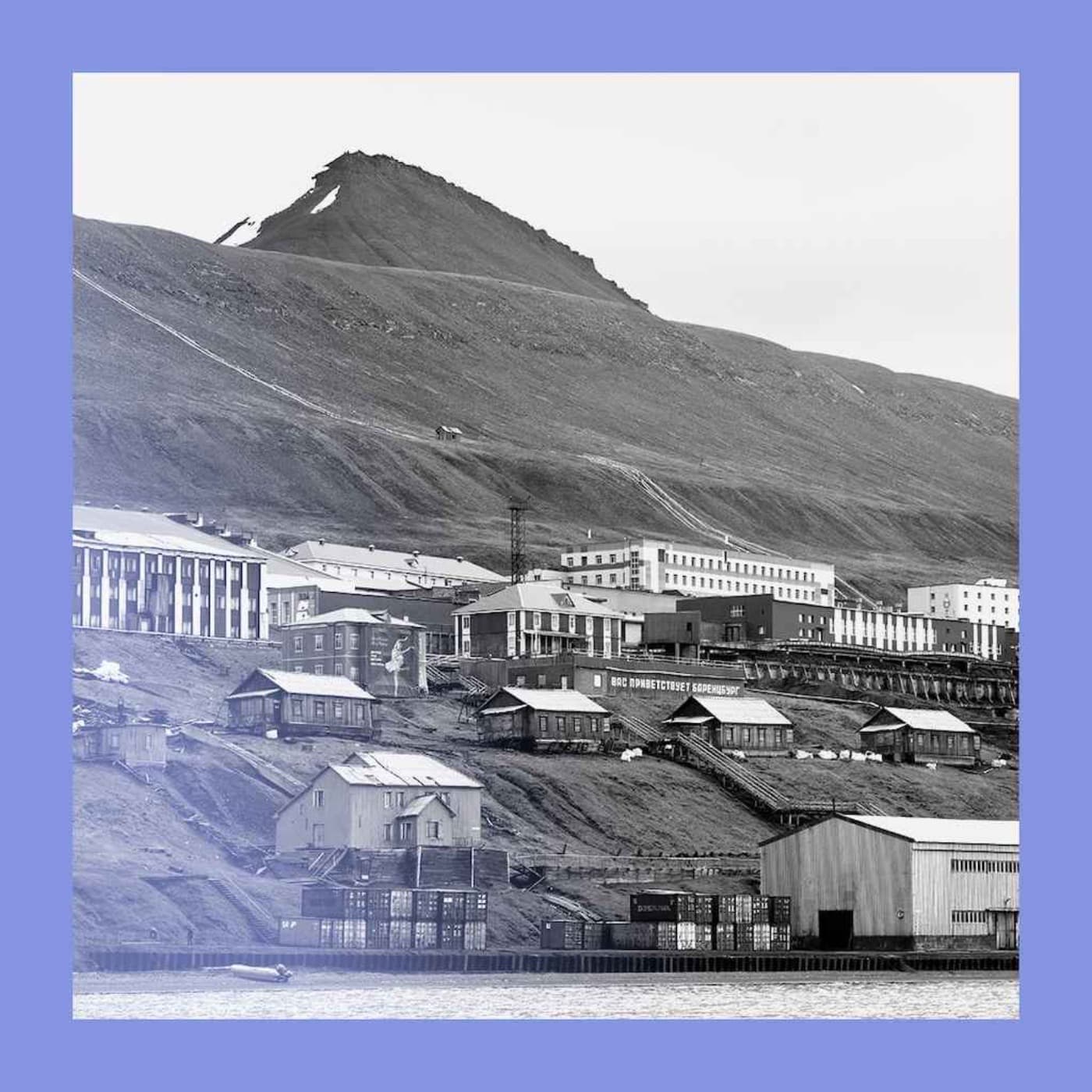
5:03So we've just come ashore in Barentsburg. This is the Russian-run settlement. There's an odd feeling coming here. Although we've only moved an hour and a half along the coast from a Norwegian town to another part of Norwegian territory, we really feel like we're stepping into Russia here. I also feel like perhaps we're stepping back in time. You can see the Russian lettering on the signs. You can see a belching black smokestack. This is the coal-fired power station burning the coal that is dug out from underneath the sea here, 300 metres under the sea. This is a Russian settlement in all but its formal legal form, and we are going to go in and see what we can find.
5:49The walk up the wooden staircase from the dock gave a bleak first impression. The buildings in Barentsburg were in disrepair. Most looked abandoned. It seemed like a ghost town. But we did manage to meet a couple of locals on the way in, who weren't sure about staying. You will see a Lenin monument in the centre. And then to the right, our main street. And so it's everything quite tight here. OK. Have you lived here a long time? Not a long time. Just arrived one month ago for summer season. OK. So you haven't had a winter? No. Not yet. Hopefully not. You're ready to leave. The entire town feels like it was transported right out of the Soviet Union.
6:39A garish orange and white block from 1974, the steel, is promoted as the world's northernmost skyscraper. It is four stories tall. A Lenin bust looks down over the fjord. And once we made it into the settlement, we even attracted minders. An electric truck drove past us, doing loops on the only road in town, going nowhere as we took in the sights.
7:11now here again is a military looking vehicle Barentsburg 100 years this one actually has Soviet flags painted on the side both Soviet and Russian flags on this one but also sort of camouflage paint
7:31again this is the most military looking thing that I've seen since coming to Svalbard and yet it's the Russians who complain about Norway for doing too much of this sort of thing.
7:46You're from Russia? Yeah, from St. Petersburg. St. Petersburg? Yes. It's very different than St. Petersburg. Of course. A little smaller. Overlooking the coal mine itself stood the science quarter. A few ramshackle buildings with grand names like the Kohler Scientific Centre printed on the side. Two geologists stopping by Barentsburg on the way up to Nij Orlesund, a polar research hub, said that their work had taken a turn in recent years. First time I would be here 30 years ago in Barentsburg and Svalbard when I was a student. And you've been coming back for 30 years? Yes. And you're working with other researchers up there or just your own team?
8:39Just our team. Sometimes we work with Norwegian geologists on Svalbard. All corporations are closed now, unfortunately. Another scientist passed by on his way back from a local bar, drunk and keen to talk. But his comrades hurriedly ushered him away. Are you part of the Kola Research Centre? Hi. What are you researching? Er... Gennady. Gennady! Na adnou ronku пригласim, p 'nom wygonim? Yeah? OK, yeah. We are going to sleep. OK. Russian citizens we met in Longyearbyen said that they had left Barentsburg to get away from Russian oppression, which seems to extend all the way up to that desolate place.
9:34Though we were on Norwegian territory, the settlement felt a very long way from Norway.
9:44We've just finished up walking around the town of Barentsburg. Adam, any thoughts on the way out? Yeah, I have to admit that we've had more conversations with Russians than I had expected. But my overwhelming feeling about this place is it's semi-abandoned. It's a project in preserving Russia's legal presence on this island. It's allowed to be here as long as it's economically active. And yet what we're seeing here is in effect nonsense. We're seeing coal being dug by miners only for the sake of heating the houses in which they live. And so they can continue to dig the coal. We've seen some scientists who come through here on the way to Nihalassand, where a lot of research goes on.
10:37But actually, they don't need to come through here. They can go through Longhavine. The purpose of keeping any sort of activity in this place is so that Russia can say that it has a legitimate reason to be present here. We've seen so many Russian flags, so many murals, Russian street names, of course the bust of Lenin. This is an exercise in propaganda.
11:40Transcription by CastingWords stuff. Sometimes it just turns the volume up. Grow does therapy differently. Grow connects you with thousands of high-quality licensed therapists across the U.S., offering both virtual and in-person sessions, nights and weekends. There are no subscriptions, no long-term commitments. You just pay per session. Grow helps you find therapy on your time. The therapist you want takes your insurance on Grow. Grow accepts over 125 insurance plans. Sessions average$21 with insurance and some pay as little as zero dollars depending on their plan. Visit growtherapy.com slash ACAST today to get started.
12:19That's growtherapy.com slash ACAST. growtherapy.com slash ACAST. Availability and coverage vary by state and insurance plan.
12:33Adam is back safe and here with me now and also Matthew Steinglass, our Europe correspondent. Welcome to you both. Thanks. Thank you. And Adam, as you were talking about there, Russia maintaining this settlement in Svalbard, you told us about the legal loophole that makes it possible, but what makes it worth all the effort for Russia? Most generally, Russia cares a lot about the Arctic. They care that there's loads of minerals and resources, there's oil and gas. They've historically been very heavily present in the Arctic. They're the dominant military power, frankly, on the European side of the Arctic.
13:07It matters militarily. If you're going to shoot missiles across from Russia to the Americans, you do it over the Arctic. Far more important militarily, I think, is it's an important naval area. So you've got big military naval bases on the Kola Peninsula, on the northern part of the Russian mainland that opens onto the Barents Sea, onto the Arctic Ocean. And so Russia cares enormously about this region, but it's going to care even more in the future. One of the reasons for that is the sea ice in the Arctic is disappearing at a frantic rate. NASA reckons about 12 % of it is disappearing every decade.
13:47That's opening up sea routes. The Russians are starting to ship oil and gas from Europe across to Asia along a much shorter route along its northern Arctic coast. So economically, the Arctic matters. Militarily, it matters. And then you've got this question about the impact of the war on Ukraine. and how the fallout from that war makes the Arctic much more interesting for Russia to look after because it's being squeezed out from other places. If you think about the expansion of NATO because of the Ukraine war, you've added Sweden, you've added Finland, and that makes the Baltic a difficult place for the Russians to operate.
14:26A Norwegian intelligence chief told me the knock-on effect of the squeeze in the Baltic is that the Russians want to be ever more dominant in the Arctic. Yeah, and Adam, one thing I was interested in is it's a bit hard to picture in terms of the global map, but the route from places like Singapore and Shanghai to Europe, and especially northern Europe, via that northern route is really a lot shorter than you'd think it would be. It cuts a lot of time out. And especially with the Houthis interfering with shipments through the Red Sea and the Suez Canal, which is the other short way to get to Europe, it's a big deal if the northern passage actually opens up.
15:01And we've talked a lot on the show before about how the tip of the Russian spear might be the Baltics. What does that scenario look like, that confrontation look like, if we talk about it in the Arctic, in Svalbard? We talked about the legal situation in Svalbard and why that might make it tempting for the Russians. But I wouldn't suggest, at least not anytime soon, that we're talking about an invasion of Svalbard or outright war on this Arctic archipelago. Instead, the warnings that you get from intelligence services in the West, such as from the head of German intelligence back in November, is that Russia would see somewhere like Svalbard as a great place for hybrid warfare, a place to test the resolve of NATO allies, whether they would really respect Article 5.
15:47This is the bit of the NATO treaty that says each member must come to the defense of the other members. Now, Russia can say that Svalbard has this strange legal status. It has Russians who live there. And by the treaty, the 100-year-old Svalbard treaty, it's not supposed to be militarized. And so you could start to see Russian pressure, hybrid attacks, sabotage, the main communication cable that links the Svalbard archipelago to Norwegian mainland. It runs for hundreds and hundreds of kilometers along the seabed. Well, guess what? Russian trawlers crisscrossed that cable 140 times a couple of years ago until the cable was cut.
16:28It's the sort of sabotage you've seen routinely happening in the Baltic and it happens as well in the Arctic. There are other suspicious things. GPS for airliners being scrambled. Now, maybe that's just some accident or maybe it's some sort of hybrid sabotage. And so the concern is that the Russians can put pressure on Norway and a small country, a NATO country, its neighbor, by doing this sort of hybrid messing in the Arctic. I hadn't known about the ambiguous legal status of Barentsburg, which was totally fascinating to read about that in your piece. And it's a perfect setting for the kind of hybrid warfare that Vladimir Putin is a master at.
17:09If you're Russia, if you're Vladimir Putin, any sort of ambiguity is your friend. And we've seen all over the world that he exploits gray zones. The initial invasion of Ukraine was couched as a supposed rebellion by Russian speakers in eastern Ukraine. We all remember the mysterious little green men who suddenly popped up in Crimea. No one could do anything about them for a while because Russia was disavowing responsibility for them. And that makes areas like this ambiguous area in Svalbard really attractive to him. Part of what countries in the Baltics have been trying to do in order to defend themselves against the risk of hybrid attacks from Russia is to remove any potential gray zones.
17:50So we've seen hardening of the border in the Baltic countries. They're considering reintroducing mines along a lot of that stretch to make sure that that border has no areas where you could imagine an ambiguous crossover by Russian forces to pursue some sort of claim that they've cooked up. It's all a matter of trying to rule out the kind of salami slicing tactics that Russia has been so adept at exploiting. I completely agree. And in turn, the Russians try to do the opposite. So as discussed in Barentsburg, they want to send scientists. They want to encourage Brazilians and Indian scientists to come and work from the Russian bit of Svalbard.
18:29So they want to increase their own presence and their own infrastructure. They have a consulate in Barentsburg. They have these sort of representation of the Russian state almost within this Norwegian territory. And the purpose, obviously, is because of security, because of the propaganda value of having those structures there. You've heard from other members of NATO the real concern that somewhere like Svalbard is a target for Russian aggression. So David Lammy, the British Foreign Secretary, he was in Svalbard just in May. And when he was there, he spoke very clearly about Britain's concerns that the Russians are militarizing in this region really quickly.
19:07Russia has been reopening military bases in the Arctic that were closed after the Soviet Union ended. We've seen reports from Russia that there's going to be a huge increase in military spending for those bases and in the Arctic, whether it's in naval bases or other structures in the Arctic. So this isn't just a fear-mongering. There is real money and real investment going into the region from Russia. Russia isn't doing it for fun. So from what you're describing, it sounds like the Arctic's fallout is a simply better tip of the spear than the Baltics. Perhaps all of the focus should be there instead.
19:43Well, if you're Norway right now, you're concerned about Svalbard. So there's a reason why the Norwegian Prime Minister today is in Svalbard and he's brought members of the royal family, his most senior officials. Throughout this past year, we've seen more and more high profile visits to Svalbard by Norwegian royals and Norwegian officials, as well as NATO folk coming in from other countries. There's a balance to strike. On the one hand, Norway wants to assert its sovereignty to show that it's present and it's defending Svalbard within the bounds of the treaty. On the other hand, it doesn't want to draw too much attention to Svalbard.
20:24It's seen what happened when Donald Trump spotted that Greenland existed. And for neighbouring Denmark, that was a huge headache when the US suddenly started talking about grabbing control of Greenland. So Norway kind of wants to assert its sovereignty and show the Russians that it's present and it cares. At the same time, Norway doesn't necessarily want too many people talking about the threat from Russia. And obviously, de-risking against a Russian threat is no picnic for the Baltics either. There are large Russian-speaking populations in many Baltic states that have, some of them have Russian citizenship.
20:57This has been a constant source of concern for decades for Baltic countries, that some of them could be persuaded to engage in false flag terrorist attacks or anything along those lines to open the way for a Russian intervention. and hardening the border is no walk in the park either. Most of these countries haven't actually lain mines across their border because of the implications for border guards, wildlife and so forth. It's a tough job all along the line of contact with Russia. Jason, to your question of whether the Arctic is the most vulnerable place to watch, I think there's a real concern that Russia has many places of opportunity to look at.
21:32It could be Moldova, it could be more in the Baltics, it could be more in other parts of the world. But we've had a series of guest essays written by experts. John Bolton, the former National Security Advisor in the Trump-Warn administration, he's written for us to warn that he thinks the Arctic is the soft underbelly of the NATO alliance. Mikhail Komin, who was an analyst, a Russian who now works in the West, he's written that Russian insecurity, Russian concern about their weakness when it comes to military technology and their anxieties after the consequences of the Ukraine war push them to be much more active and aggressive in the Arctic.
22:12Now, not everyone thinks that means there's a real direct conflict coming anytime soon in the Arctic, but it means you've got to be much better prepared in case it's coming. I have to say I always find it kind of mind-boggling to see people referring to the Arctic as the soft underbelly of something. It just feels like you see some territory in the Arctic and then you're off in the middle of nowhere. There must be logic to it because military planners know what they're talking about, but it's kind of an amazing idea. We've restricted ourselves so far to talking about Russia and its interests and potential plans, but as all that sea ice melts, as those roots open up, as the bounty of the Arctic becomes apparent, there will be a lot of other players, namely China, which has already expressed interest there.
22:54How much does that complicate the issue? We in the West don't think of China immediately as an Arctic power, but the Chinese do think of themselves as what they call a near-Arctic power. And their interests in that region are usually praised as commercial. People talk a lot about mining interests there, and of course that northern passage trade interest. The hope is that they exercise mostly a restraining influence on Russia because it's not particularly in their interests for there to be an open conflict in the Arctic. It doesn't help with their commercial interests or with their diplomatic interests in being a player in the Arctic Council and so forth.
23:26But they do want to be taken seriously as a power that has interests, in that area. And so their alliance with Russia obviously helps with that. And what we've talked about a lot of times on the show before is that kind of any of this conflict is contingent on the end to the war in Ukraine, time for Russia to regroup. Do we have a sense for whether the dealmaking, whether it comes in Alaska this week or sometime in the future, puts a timeline on when all of this should be a concern? So Western intelligence agencies all produce estimates of when Russia might be ready to confront NATO directly. And those estimates are all over the back.
23:58Some of them don't think that Russia needs to wait for the end of the Ukraine war. Denmark put out an estimate earlier this year that hypothesized that Russia might be ready to go to war with NATO or a group of NATO countries sometime in 2026. Other people talk about seven years down the line. We interviewed a French general recently who thought it was five years down the line. I don't know what to make of all these different assessments, frankly. But it's certainly true that everyone agrees that an end to the war in Ukraine or a ceasefire in Ukraine would make things a lot easier for the Russians.
24:27It means that Russian airborne regiments that are currently deployed in Ukraine can return to their base in Pskov, just across from Estonia. The Estonians are always very worried about that. More generally, it just means that all kinds of resources that they now have to deploy in Central Europe can move up to the north, and that could hasten things. So the idea of a peace deal in Alaska feels like a misc's blessing for some of these countries. Matt, I think you shouldn't beat yourself up on not knowing when this would come because nobody knows when this will come because it all depends on one man.
24:59It depends on the thinking of Vladimir Putin and whether he thinks there's a good opportunity to seize. My concern about the talks in Alaska is that Donald Trump may say something to Putin or may encourage Putin in some way to speed up his decision making and to make him think this is a great moment to move faster because he's got a president in the US who thinks that it's an era of great powers pushing around the smaller powers and the Arctic is a natural place for this to happen. Adam, Matt, thank you both for joining us. Thanks, Jason. Thank you, Jason.
Read the full transcript
26:01The End in the section called By Invitation. Happy reading, and see you back here tomorrow.
From the publisher
In Norway’s north, a geopolitical quirk may yet transform into a geopolitical conflict. We visit Svalbard, an Arctic archipelago that contains a Russian company town complete with a bust of Lenin. Ahead of the high-stakes, high-north summit in Alaska, our correspondents lay out why—perhaps even more than the Baltic states—the Arctic might be the flashpoint for Russia’s next bout of expansionism.
Get a world of insights by subscribing to Economist Podcasts+. For more information about how to access Economist Podcasts+, please visit our FAQs page or watch our video explaining how to link your account.
Hosted on Acast. See acast.com/privacy for more information.