In short
Podcast Notes: Economist Podcasts - Generals’ Selection: Myanmar’s Sham Poll
Episode Overview
- Episode Title: Generals’ Selection: Myanmar’s Sham Poll
- Air Date: [Insert Date]
- Host: Rosie Blore
- Key Topics: Myanmar's military junta, the election situation, and the state of the military conflict.
Key Takeaways
- Current Political Climate in Myanmar
- Background:
- The military junta has been in power since a coup in 2021.
- The upcoming election is perceived as a sham, with credible opposition excluded.
- Recent Protests:
- Dr. Tehza San, a significant protest leader, continues to rally against the military's election. Notably active in Mandalay, he symbolizes ongoing resistance against the junta.
- Military Conflict Update
- Escalating Violence:
- A brutal crackdown on protests led to armed resistance against the junta.
- Young Bamar citizens collaborate with ethnic armed groups in opposition to military rule.
- Changes in Tactics:
- The junta has increased conscription, adopting aggressive tactics advised by Russian trainers.
- The military now employs advanced technologies including drones and paragliders, significantly altering the battlefield dynamics.
- External Influences
- China’s Role:
- Initially supported ethnic armed groups; however, concerns over stability prompted China to cut off supplies and support.
- Impact of USAID Cuts:
- Closure of USAID has redirected military budgets to humanitarian needs, weakening armed resistance capabilities.
- Purpose of the Election
- Internal Junta Dynamics:
- The election might serve as a mechanism to potentially replace the current junta leader, Min Aung Hlaing, amid dissatisfaction within military ranks.
- Global Diplomatic Implications:
- Foreign diplomats hope for a shift in leadership that might allow for re-engagement with the junta, although skepticism about the election's actual impact remains high.
- Public Sentiment
- Disillusionment:
- Many in Myanmar, including opposition figures, have little faith that the election will yield any meaningful change.
- Expectation for Real Democracy:
- After five years of military rule, the call for a genuine electoral process continues amidst continued protests and resistance.
Discussion on War Films
- Introduction to War Films
- War films have evolved to reflect societal anxieties and the extremities of human experience.
- The current discussion pivots from Myanmar's political strife to the artistic representation of war in cinema.
- Notable Films Discussed
- Saving Private Ryan: Known for its realistic portrayal of war and the emotional weight it carries.
- Das Boot: Offers a unique perspective from the German side during WWII.
- Doctor Strangelove: A satirical take on nuclear warfare and Cold War tensions.
- Evolution of War Depictions
- The impact of technology, especially CGI, has transformed how combat is portrayed in films.
- The importance of narrative and character development continues to shape audience engagement with war stories.
Conclusion
- The podcast presents a nuanced view of Myanmar's ongoing strife under military rule and the broader implications of global diplomacy.
- The discussion on war films enriches the conversation, paralleling the real-life consequences of conflict with cinematic storytelling.
Further Listening
- For a deeper understanding of the topics discussed, listeners are encouraged to explore additional episodes of Economist Podcasts.
--- This document captures the essence of the discussed episode, providing an organized summary that highlights the critical political landscape in Myanmar alongside a cultural exploration of war films.
Written by AI. May contain mistakes. Listen to the episode to check what was said.
Chapters
Tap a time to open that second in VOContext of Myanmar's Election
1:26 to 2:18
Explore the significance of Myanmar's recent sham election.
“and every age reinvents the genre to reflect its own anxieties.”
Tehza San and the Protest Movement
2:18 to 3:00
Learn about Tehza San's role in Myanmar's protest against the military.
“Their leader was a wiry, bespectacled doctor.”
Political Landscape and Conflict
3:00 to 4:55
Understand the current political conflict and its dynamics in Myanmar.
“turning out, and he became a kind of national icon at that point.”
External Factors Influencing the Junta
4:55 to 6:20
Examine the external influences affecting Myanmar's military regime.
“And the second factor has been Donald Trump's closure of USAID.”
Impact of the Sham Election
6:20 to 8:34
Discuss what the sham election means for Myanmar's future leadership.
“But then in the air, the junta has been more innovative.”
Soundscapes of War Films
14:01 to 14:34
Explore the contrasting soundscapes in iconic war films.
“The contrast with Das Boot, of course, which is wonderful in its own way, is that the power of its soundscape is in its, I think, silence and its restraint.”
Doctor Strangelove: A Cold War Satire
14:38 to 15:42
Discuss the themes and significance of 'Doctor Strangelove' as a satirical war film.
“We see it starting, yes, right at the end.”
Nuclear War and Lessons from History
15:46 to 16:39
Analyze the lessons from 'Doctor Strangelove' regarding the absurdities of nuclear war.
“Strangelove still personal, do you think?”
Nationalism in Global War Cinema
16:45 to 18:34
Examine the portrayal of nationalism in Indian and Chinese war films.
“I don't think the mass market Indian audience is really much in the market for cynicism and eyebrow raising and eye rolling about their military history yet.”
Zero Dark Thirty and Torture Debate
18:54 to 20:19
Dive into the themes of torture and female representation in 'Zero Dark Thirty'.
“a film from 2012 about the war on terror and the hunt for Osama bin Laden.”
Show all 11 chapters
Evolution of War Films in Modern Context
20:29 to 22:39
Explore how technology and social media have transformed the depiction of war in films.
“The way they depict combat has evolved because technology has changed.”
Transcript
Automatic transcript. May contain errors.0:00If your eyes are the windows to your soul, and your glasses are the windows to your eyes, then it's pretty important to find your perfect frames. That's why at Warby Parker, we've made shopping for eyewear as easy and fun as can be. Peruse endless styles in our stores, or use our app to virtually try on frames and get personalized recommendations. To find your next favorite pair of glasses, sunglasses, or contact lenses, or to locate your nearest Warby Parker store, head over to WarbyParker.com. That's WarbyParker.com. Tired of your car insurance rate going up even with a clean driving record?
0:34You're not alone. That's why there's Jerry, your proactive insurance assistant. Jerry compares rates side by side from over 50 top insurers and helps you switch with ease. Jerry even tracks market rates and alerts you when it's best to shop. No spam calls, no hidden fees. Drivers who save with Jerry could save over$1 ,300 a year. Switch with confidence. Download the Jerry app or visit jerry.ai slash ACAST today.
1:05The Economist.
1:12Hello and welcome to The Intelligence from The Economist. I'm Rosie Blore. Every weekday we provide a fresh perspective on the events shaping your world.
1:25Just as war is as old as time, so war films are as old as moving pictures. and every age reinvents the genre to reflect its own anxieties. With over a century of war films to choose from, which is the best? Our correspondents fight it out.
1:54But first...
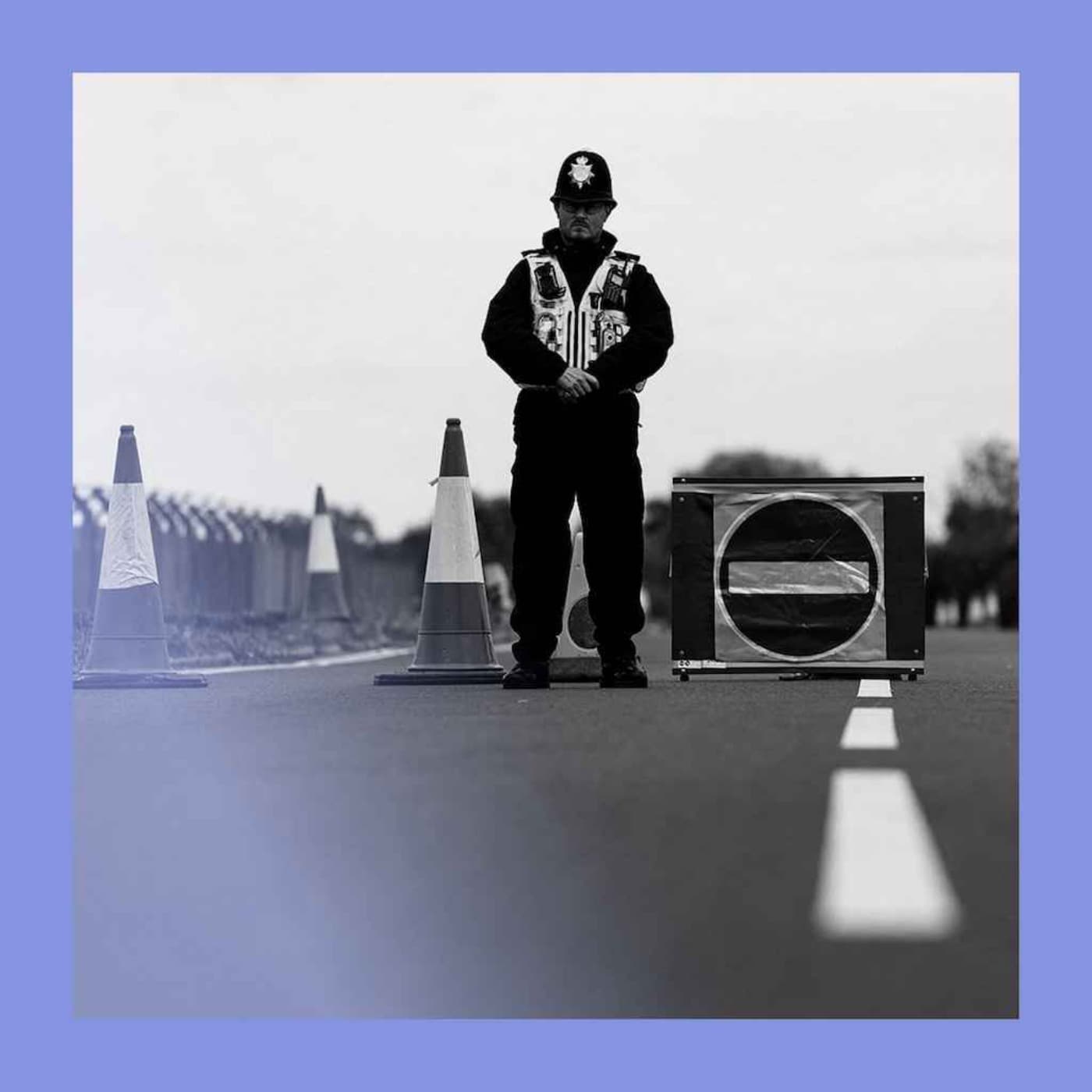
2:00This weekend, voting began in Myanmar's election. It's the first poll since the military junta seized power five years ago. But it's widely viewed as a sham. In the regions and in the cities, rebels have long been trying to oppose the ruling generals. Recently, demonstrators in Mandalay staged a protest against the proposed ballot. Their leader was a wiry, bespectacled doctor. I first met Tehza San about 10 years ago on my first trip to Mandalay. Aaron Connolly is our Asia diplomatic editor. He's a doctor by training, but he was there to introduce me to different people in the city who are working to try and bridge relations between Muslims and Buddhists at what was a pretty tense time between the two faiths in Myanmar.
2:49The day after the military launched a coup d 'etat in 2021, he showed up leading the very first protest against military rule in Myanmar. That led to massive protests around the country, millions of people. turning out, and he became a kind of national icon at that point.
3:09Earlier this month, Tezahsan appeared at a market in the heart of Mandalay, not far from military headquarters, to protest the regime's sham election. That appearance was one of Tezahsan's most daring yet. Okay, so Aaron, fill in a bit of the context for me. What is the current state of politics in Myanmar and this conflict? Well, when the military began to massacre protesters in 2021, a number of them took up arms against military rule. And young people from the Bamar majority in the middle of the country began to work with ethnic armed groups in the hilly borderlands of Myanmar, who had been fighting the regime for decades in many cases.
3:50For a while in 2023, it looked like they might have the junta on the run. At one point, they were very close to laying siege to Mandalay, and there were whispers that the junta might even collapse. But since then, the military has really turned the tables on the revolutionaries, and it's been a brutal year for them. So why has all of that changed? Well, there are a few factors, and two of them are external. The first on China. China had been backing a number of those ethnic armed groups in the borderlands. They had been quite helpful to China in eliminating scam centers in Myanmar that were targeting Chinese citizens.
4:26But when they outlived their usefulness, China began to worry more about the instability that they might be creating in the country and how that would affect Chinese investments. And so they turned on them and they cut their supply lines. And now, in one case, they even kidnapped the leader of one of these groups until they agreed to sign a truce with the junta. And worse, it hasn't just affected those groups on the border because China's also instructed them to stop selling ammunition to other groups, especially those young revolutionaries in the center of the country. So those who are still fighting the junta are desperate for ammunition.
4:57And the second factor has been Donald Trump's closure of USAID. USAID never directly funded any of the armed groups in Myanmar, but they were providing humanitarian assistance to populations under their care, especially food aid. And so a number of those armed groups have had to shift what had been military spending into their humanitarian budgets. And to cite just one example, the resistance in a place called Kareni State had been particularly successful. They had conquered about 90 percent of their state. But then when USAID was closed and the funding that they were providing was eliminated, they had to shift 60 percent of their military budget into their humanitarian budget just to feed their people.
5:39And since then, they've lost most of the major cities in that state. to a junta counteroffensive. So all of that has changed what's actually happening on the ground then? That's right. And the junta has made a couple of adjustments on the ground as well. Since the middle of 2024, the junta has been drafting young people in the middle of Myanmar. It's thought that they now have around 80 ,000 to 100 ,000 conscripts in their army. And on the advice of Russian trainers, the junta has used these conscripts to send them against revolutionaries in human wave attacks. And because these revolutionaries are short on ammunition, they don't have enough ammo to mow down every human wave.
6:16And oftentimes they're forced to retreat. So while they are being used as cannon fodder, when you have the numbers, sometimes cannon fodder can be effective. It's a very primitive tactic. But then in the air, the junta has been more innovative. And so at the beginning of the war, they were loath to use UAVs, but they've really adapted their tactics in the air. They have access to a lot of Chinese kit now. And they also have been using motorized paragliders like those that we saw Hamas use in the attacks of October 7th, 2023 against civilian populations in the middle of the country, which makes it very hard for revolutionaries to administer those areas after they've captured them.
6:54And so the military really does have rebels on the back foot in Myanmar as a result of those external factors and these changes in tactics that they've adopted. So in that case, what is this election really about and why is it being held? You know, it must be said that this is not a real election in the sense of people going to the polls to elect a future government. People are being coerced to go to the polls, but it may serve some purpose internally within the regime. It's thought that most of the military brass don't really like Menong Lange, the senior general of the junta. He's thought to be dim and inept.
7:29They blame him for many of their losses in 2023 and 2024. and they may be seeking some kind of mechanism by which they can displace him. And so what foreign diplomats hope is that he'll give up one of his two titles after the election, either commander in chief or president, and that that might lead to a more consensual form of leadership or even a rival within the junta to rise to the top and who might be easier to work with. And some governments in the region are hoping that that might present an opening to re-engage the military government. The Association of Southeast Asian Nations, ASEAN, has basically suspended the junta from membership.
8:07It doesn't allow Menoncline to attend its meetings, and it disregards Myanmar's views when it comes to decisions, even though these decisions are supposed to be arrived at by consensus. But many in ASEAN feel as though that kind of pressure hasn't really forced the junta to moderate its tactics. And so they're looking for an opportunity to re-engage military government and hoping that they get to work with a new leader. I don't think any of that's terribly likely. And most people in Myanmar don't. But on the ground for people like Dr. Teh Zasan and his revolutionaries, they're not really expecting any change to come out of this election.
8:42After five years of fighting and protesting this military regime, they're holding out for a real election. Aaron, thank you very much. Thanks, Rosie. Nice to talk to you.
8:59If your eyes are the windows to your soul and your glasses are the windows to your eyes, then it's pretty important to find your perfect frames. That's why at Warby Parker, we've made shopping for eyewear as easy and fun as can be. Peruse endless styles in our stores or use our app to virtually try on frames and get personalized recommendations. To find your next favorite pair of glasses, sunglasses, or contact lenses, or to locate your nearest Warby Parker store, head over to WarbyParker.com. That's WarbyParker.com. Tired of your car insurance rate going up even with a clean driving record? You're not alone.
9:33That's why there's Jerry, your proactive insurance assistant. Jerry compares rates side by side from over 50 top insurers and helps you switch with ease. Jerry even tracks market rates and alerts you when it's best to shop. No spam calls, no hidden fees. Drivers who save with Jerry could save over$1 ,300 a year. Switch with confidence. Download the Jerry app or visit jerry.ai slash ACAST today.
10:06last week on the intelligence we looked at books that changed the world today we're turning our attention to films specifically the best war films to talk about this genre i'm joined by richard cockett a senior editor at the economist thanks rosie and shashank joshi the economist defence editor. Hi, Rosie. Thanks very much for having us. So tell me, why do people like watching war films so much? First of all, they're exciting and everyone wants to be entertained. Generally, the more action, the better. You usually involve some sort of domineering characters. I think also war, sadly, is always with us.
10:44It's always highly topical. I think it's also that war represents the extremity of the human experience. And so you end up putting ordinary people into extraordinary situations. And you see these people tested in a way that they're tested in no other walk of life in no other way. Richard, you've been putting together a list of the best war films, which is a tough call. How have you been doing this? So the War Room newsletter, we sent out an ask to our readers to nominate their films. And we got scores and scores of replies, long lists in some cases. And there are one or two of the films mentioned by our readers, which I didn't really know much about and one I'd never watched.
11:27So thank you to all our readers for their suggestions. And then all just my arbitrary judgment, I'm afraid, judging them on roughly a mixture of criteria. So authenticity was one. How realistic is this? How good in terms of narrative flow, but also intelligence and wit? I'm afraid now I hear Richard's criteria, I can see why some of my favoured war films did not appear on this list, because my tastes have veered towards the lowbrow, the kitsch, the camp. I noticed we had horrifyingly left off Top Gun in both its incarnations. We'd horrifyingly left off the hunt for Red October. I've noticed that World War II dominated the suggestions readers sent in, and it probably is the conflict that's had the most war films made about it, and the most different types.
12:15I grew up on a lot of prison-of-war films, all the cold it stories, the great escape, can't get enough of them. But you've chosen two very different films and perspectives on the Second World War, Richard. Tell me what you've gone for. The obvious one, which I think would probably be on everyone's list, actually. Saving Private Ryan made in 1998 by Steven Spielberg and basically it's about the D-Day landings in 1944. The first 23 minutes for storming of Omaha Beach set a new standard for realism and authenticity in war movies and I'd argue in all action genres actually and the soundscape alone of Private Ryan on the beach is extraordinary and the way of course they dare to fade everything out.
13:01It's all seen through Tom Hanks' eyes and he's knocked sideways or unconscious for a little bit and then there's no sound at all and then you back into this incredible cacophony, explosions. It's in the end a tribute to the greatest generation and people who made the greatest sacrifice in the Second World War. And your other choice is Das Boot from 1981. Yes, this is less well-known. West German production and it tells the tale of a U-boat mission into the Atlantic to sink British and American merchant shipping during the Second World War. And it's all told from the U-Boats point of view, directed by Wolfgang Peterson.
13:39And no other film from me gets the claustrophobia of fighting on a submarine. I think it's very interesting this comes from the Germans. We think of Germans as sort of ideological robots during the Second World War. Well, here you go. It's just a bunch of scared teenagers on a submarine. That's very effective. What stands out for me is the contrast between these two. And I'm glad you mentioned the soundscape of Saving Private Ryan. It's all about the sensory overload. The contrast with Das Boot, of course, which is wonderful in its own way, is that the power of its soundscape is in its, I think, silence and its restraint.
14:12And I just was really struck by that scene where the captain is testing the ship at the beginning, pushing the operator to get it deeper and deeper and deeper. And the sound is the sound of the rivets, sweat dripping off men's faces. And it couldn't be more different to the beach in Normandy, which is just bedlam and overwhelming. But each is just incredibly powerful in its own way, isn't it? OK, let's try and leave the Second World War behind. Richard, your next pick is Doctor Strangelove from 1964. Is this even a war film? It's a nuclear war film. It's a nuclear war film. Indeed, it's an almost war film.
14:50And we had to have this in because... We see it starting, don't we? We see it starting, yes, right at the end. The first bomb goes away. Yeah, it may not be a war film, but we had to include it because its most famous line spoken by the president against some brawling generals is, you can't fight in here, this is the war room. And that gave us our title of our military newsletter. The war room, which Shashank writes, so we had to have it. But it's also the most brilliant satire on the Cold War and all the language and machinations for posturing of the Cold War. It was made by Stanley Kubrick, of course, Peter Sellers at his comic best plays for three main characters.
15:28You do understand a lot about the psychology of people involved in the Cold War and the decision making processes. And of course, how they can go disastrously wrong as they do in the film. So Shashank, you spend a lot of time thinking about the possibility of nuclear war. Are the lessons from Dr. Strangelove still personal, do you think? One of the great lines from the film is at the very end, I think, where somebody says, what's the point of a doomsday machine if you don't tell the world you've built it? And that's a satire on the absurdity of it. But of course, there's also an incredible kernel of truth to that.
16:02There's a book published many years later by David Hoffman, a great American journalist called The Dead Hand. And it's about the Soviet Union's perimeter system. And perimeter was a doomsday machine in a way. I'm exaggerating. but it was a system to make sure that the Soviet missile force could retaliate, even if the Soviet leadership had been decapitated by an American strike. Most of our picks, most of our readers' picks were Eurocentric and Western films. How much do they differ from those elsewhere, do you know? I certainly have a little bit of experience watching the odd Indian war movie.
16:38I do think there is a clear, really strong nationalistic element that is really at the forefront. I don't think the mass market Indian audience is really much in the market for cynicism and eyebrow raising and eye rolling about their military history yet. Yeah, the same is true of Chinese war films, which have really only one message, which is that the Chinese Communist Party saved us from the Japanese. And the message of something like Wolf Warrior 2, which got some showing outside China as well, was the Chinese are ready. they're going to fight everyone, they're going to win. So that sort of nationalist message was very strong.
17:26Okay, so let's move on to another American war, but one that happened in Asia. Apocalypse Now, for me anyway, really defines how I envisioned the Vietnam War, the Doors soundtrack, the choppers. Tell me about that as a choice. 1979, Francis Ford Coppola's great epic. It was quite early for a big Vietnam War film. So people were not used to the cynicism of the film. It's basically a film about American values and generalship disintegrating in the jungles of Vietnam. So it had a big impact of the time and it was followed by a generation of anti-war films. It was based on a novella by Joseph Conrad, The Heart of Darkness.
18:11And basically, Coppola's saying, and as Joseph Conrad intended, the heart of darkness is not where you go, it's the darkness in your own heart, going into these places which you know nothing about. You regard as primitive and uncivilized, but in fact they capture you and it's you who go to pieces. It's you, the Westerner, who becomes uncivilised, not the people you're fighting. And that was a big message to take on at that time, so soon after Vietnam War had actually finished. What I find interesting about Apocalypse Now is there's that same sort of slight sensory overload, chaos, fog of war that you get in Saving Private Ryan, but none of that kind of heroism around it.
18:53Next is Zero Dark Thirty. a film from 2012 about the war on terror and the hunt for Osama bin Laden. What did you think of this one, Shashank? I think it's a good depiction of something that most people aren't very interested in, which is not spycraft and stealing secrets, but analysing them, assessment, analysis, all the people pouring over data and over maps and things, making stuff happen, which is really dull, but actually it's at heart of a lot of what I write about, even today. And the interesting thing about Zero Dark Thirty is, unlike lots of these films, the Pentagon did not cooperate with lots of these for obvious reasons, the CIA did cooperate with the makers of Zero Dark Thirty.
19:35But also this film really, I think, became a lightning rod for questions around US use of torture. And Richard, this is striking to me because finally we mention a woman's name, indeed possibly several. Indeed, it was directed by Catherine Bigelow and it stars Jessica Chastain as a CIA analyst called Maya. And one of the themes of the film is of Maya's role in all this. And most controversially, she ends up being as enthusiastic a torturer of suspected al-Qaeda terrorists as her CIA male peers. And this is a theme that runs throughout the film and again made it very controversial at the time. So Shashank, as you think back on all of these films we've talked about and many of the other ones that you've seen in the interests of pleasure or business, how do you think war films have changed?
20:29The way they depict combat has evolved because technology has changed. In the 60s and 70s, if you wanted to depict an armoured division going across the planes, you had to get an armoured division and go roam it across the plane. The difference today is CGI has allowed us to depict these things in completely new ways. And you can show certain types of battles that you would never have been able to show in the past. The nature of combat has also changed. And I was reflecting on social media that I was watching Dust Boot and somebody said, Have you thought about the impact of drones on all of this?
21:01Because once upon a time, the drone shot of a battlefield would have been seen as alienating, quite distant, zoomed out. You're looking down at this. But of course, now from Ukraine, we've become saturated with these real, what are I'm afraid snuff movies, you know, of drones, drones eye view of an aircraft zooming in on some hapless Russian or Ukrainian soldier. So Shashank, are we going to see drone the movie or where do war films go from here? They will reflect where war is headed and that will reflect the new domains. We know that attacks on satellites will be increasingly central to any big Sino-American conflict.
21:37It's easy enough to depict a big naval battle in the Western Pacific, but actually those battles will hinge so enormously on things like who is able to knock out the other side's surveillance satellites to blind them, who is able to conduct electronic warfare and jamming, I will have enormous respect for the director who is able to show these esoteric and intangible aspects of modern war in a realistic and effective way. Several people asked me why Star Wars wasn't on this list, to which I had no very good answer, because that is essentially fighting in space. I feel the war film has evolved, but what's interesting about it is that the directors, the writers, they're often doing very good war films about wars that happened several generations before.
22:23I think that always tells us more about the sensibilities of the generation who are making the film often than the battles and wars depicted in the film. So I don't think technology in current warfare will necessarily point you in the direction of the next war films. Richard Shashank, thank you so much. Thank you, Rosie. That was very enjoyable. Thank you so much. And you can read The Economist's full list of the best war films by heading to the Culture section on our website or app.
23:16That's all for this episode of The Intelligence. See you back here tomorrow.
Read the full transcript
23:46And right now, get it all, buy one, get one 50 % off during the semi-annual LiveWell sale. From crushing workouts to leveling up your nutrition and everything in between, get the best deals on the latest innovations. All the newness is all on sale right now during the LiveWell sale. On the Drop by GNC.
From the publisher
Five years after seizing power in a coup, the military junta in Myanmar is holding an election. Yet all credible opposition has been banned. And war has inspired so many films over the past century. Our correspondents battle it out to pick the best one.
Listen to what matters most, from global politics and business to science and technology—Subscribe to Economist Podcasts+
For more information about how to access Economist Podcasts+, please visit our FAQs page or watch our video explaining how to link your account.
Hosted on Acast. See acast.com/privacy for more information.