In short
Podcast Notes: Grave new world: the Greenland row’s lasting damage
Podcast Overview Podcast Title: Economist Podcasts Description: A global network of correspondents provides insights on current affairs, business, finance, science, and technology.
---
Episode Summary Episode Title: Grave new world: the Greenland row’s lasting damage Description: This episode discusses the implications of Donald Trump's controversial remarks regarding Greenland, the status of TikTok in America, and the evolving themes in popular music.
Key Topics Discussed
---
- Donald Trump's Greenland Controversy
- Recent Events: Trump threatened tariffs on NATO allies opposing his Greenland acquisition plan but later rescinded those threats.
- NATO and Transatlantic Relations: The episode reflects on the potential damage to America-Europe relations and what it means for NATO's future agreements.
- Current Military Presence: The U.S. has reduced its military bases in Greenland from 17 to 1, with Denmark open to expanding this presence.
- Sovereignty of Greenland: Denmark’s insistence on preserving Greenland’s self-governance complicates any acquisition plan by the U.S.
- Trade Implications: The EU had suspended its trade deal ratification in response to Trump’s threats, creating uncertainty in transatlantic trade relations.
Key Takeaways
- Shift in European Perception: Europe is reevaluating its approach to the U.S., realizing that strong responses may yield better outcomes with the Trump administration.
- Need for Defense Autonomy: European leaders are considering greater independence in defense matters, reflecting a loss of trust in U.S. commitments.
---
- TikTok's Future in America
- Background: TikTok has faced scrutiny over data privacy and potential manipulation by the Chinese government, leading to proposed bans and ownership transfers.
- Recent Developments: A deal is expected that allows a U.S.-owned version of TikTok, with ByteDance retaining a minority stake.
- Concerns Remain: Critics argue that despite the ownership changes, TikTok's connections to ByteDance could still pose risks regarding data and content manipulation.
Key Takeaways
- Evolving Political Landscape: As TikTok's popularity increases, political momentum against it has weakened, reflecting a broader shift in American political priorities.
- Potential for Influence: Some speculate that new American owners could influence TikTok’s content and advertising, addressing concerns about national security indirectly.
---
- Trends in Popular Music
- Analysis of Lyrics: Recent studies indicate a notable increase in darker themes within popular music, with angst and melancholy becoming more prevalent.
- Statistical Findings:
- Rise of Gloomy Music: Lyrics reflecting themes of despair and angst have significantly increased, now comparable to heartbreak themes.
- Long-Term Trends: The drift towards downbeat music is not merely a reaction to current events but demonstrates a change in listener preferences over time.
Key Takeaways
- Cultural Reflection: The evolving mood in pop music may mirror societal issues such as mental health, economic stress, and broader existential concerns facing listeners today.
- Continued Popularity of Diverse Moods: While sad themes are rising, themes of empowerment and love also persist, indicating a complex emotional landscape in contemporary music.
---
Conclusion The episode provides a multifaceted analysis of international relations, media dynamics, and cultural trends, prompting reflection on how these areas interplay in shaping current societal narratives.
Final Thoughts
- Transatlantic Trust: The ongoing tensions highlight the fragility of international alliances in the face of unilateral decisions.
- Cultural Shifts: The change in music sentiment may suggest deeper issues within society, warranting attention from policymakers and cultural leaders alike.
---
Listen to the full episode for more in-depth insights.
Written by AI. May contain mistakes. Listen to the episode to check what was said.
Chapters
Tap a time to open that second in VOTikTok's Future in America
1:30 to 2:15
Explore the ongoing challenges TikTok faces in the U.S.
“with threats to shut it down or demands to completely separate itself from its Chinese owners.”
Trump's Greenland Controversy
2:15 to 3:40
Analysis of Trump's recent moves regarding Greenland and NATO relationships.
“Even by Donald Trump's usual standards, the past few days have been a whirlwind.”
Current State of U.S.-Denmark Relations
3:40 to 5:34
Understand the evolving diplomatic ties between the U.S. and Denmark.
“We know that there has been some sort of framework of some sort of deal agreed between America and NATO.”
European Response to Trump's Policies
5:34 to 9:21
Discuss the implications of Trump's actions on European leaders' strategies.
“And what about Trump's plans for America to buy Greenland?”
TikTok's Ownership and Data Concerns
11:43 to 14:00
Examine the implications of TikTok's ownership and data management.
“A decade ago, a short video app launched that soon became one of the most downloaded.”
The TikTok Dilemma: Ownership and Security Risks
14:00 to 18:02
Explore the complexities of TikTok's ownership structure and its implications for user data security.
“has duly come up with this plan to create a US-only version of TikTok and reduce its stake in it to just under 20%.”
The Rise of Melancholy in Pop Music
18:03 to 23:25
Learn about the growing trend of melancholic themes in contemporary pop music and its implications.
“The song Die With a Smile by Lady Gaga and Bruno Mars was one of the anthems of 2025.”
Transcript
Automatic transcript. May contain errors.0:00Are you noticing your car insurance rate creep up even without tickets or claims? You're not alone. That's why there's Jerry, your proactive insurance assistant. Jerry handles the legwork by comparing quotes side-by-side from over 50 top insurers so you can confidently hit by. No spam calls, no hidden fees. Jerry even tracks rates and alerts you when it's best to shop. Drivers who save with Jerry could save over$1 ,300 a year. Don't settle for higher rates. Download the Jerry app or visit jerry.ai slash ACAST today. Every idea starts with a problem. Warby Parker's was simple. Glasses are too expensive.
0:38So they set out to change that. By designing glasses in-house and selling directly to customers, they're able to offer prescription eyewear that's expertly crafted and unexpectedly affordable. Warby Parker glasses are made from premium materials like impact-resistant polycarbonate and custom acetate. And they start at just$95, including prescription lenses. Get glasses made from the good stuff. Stop by a Warby Parker store near you.
1:16Hello and welcome to The Intelligence from The Economist. I'm your host, Rosie Blore. Every weekday, we provide a fresh perspective on the event shaping your world.
1:29The future of TikTok in America has long been in flux, with threats to shut it down or demands to completely separate itself from its Chinese owners. Today is the deadline for a resolution on its future, our correspondent reports. And it's a tough world out there, and our music seems to reflect that. Analysis of chart-topping pop lyrics over time shows that the mood is only darkening. Heartbreak has always been a theme. Now angst joins it. The era of the seriously sad song is upon us.
2:07First up, though.
2:15Even by Donald Trump's usual standards, the past few days have been a whirlwind. At the weekend, Trump seemed to take the NATO alliance to the brink, threatening tariffs on any allies opposing his plan to acquire Greenland. Yesterday at the World Economic Forum in Davos, in a long and rambling speech, he lambasted European leaders. I love Europe and I want to see Europe go good, but it's not heading in the right direction. Appeared to confuse Greenland and Iceland.
2:51and again insisted that America must own Greenland to make the world a safer place. But then came two surprises. America would not, he said, take Greenland by force. We probably won't get anything unless I decide to use excessive strength and force, where we would be, frankly, unstoppable. But I won't do that. Later, he dropped the tariff threat too, saying that a deal was in the offing. The storm has abated. But what has been destroyed? We are waking up this morning with a severe sense of whiplash. It's been the most extraordinary week in transatlantic relations, even by the standards of Donald Trump.
3:37Tom Nuttall is our Berlin bureau chief. What it looks like is that the president has withdrawn his threat to slap extra tariffs on eight European countries that have sent troops to Greenland. We know that there has been some sort of framework of some sort of deal agreed between America and NATO. Details are extremely scant right now, and everybody will be very keen to find out exactly what it was that was supposedly agreed last night. But at least for now, it looks like the sirens that were flashing red all over Europe have been turned off. And Tom, as you say, there's still a lot that we don't know.
4:22But what do we know about this possible deal? Very little. America currently has only one military base on Greenland. It used to have 17. It chose to draw those down. Now, Denmark has said all along that the Americans would be welcome to expand their military presence in Greenland again. So that may be happening. There may also have been some discussion on rights to access the rare earths and other minerals that sit under the vast Greenlandic ice sheet. Again, there was nothing stopping American firms from bidding for those under the status quo. But that might be a way in which Trump can be presented with a sort of a win here.
5:03I think the thing to emphasize, though, is that what all sides have said, including Trump, is that all we have at most is some sort of framework for some future agreement. And because Greenland remains a self-governing territory, the Kingdom of Denmark, the details of whatever agreement is going to emerge from this will have to be worked out between the American side and the Danish side. All that we had yesterday was a discussion between Donald Trump and Mark Rutter, the head of NATO. So this is at most, this is the beginning of something, not the end of something. And what about Trump's plans for America to buy Greenland?
5:39I think we can sort of forget about that now. It looks clear that the insistence from Denmark and from its European allies that the sovereignty of Denmark and the rights of the Greenlanders to choose their own destiny would have to be respected, that this was a red line. There is no sense at all that that has been violated, that there's been any sense of compromise on that front. I don't see any possibility for any sort of deal that involves a purchase because the sovereignty of Denmark is going to remain intact. And the EU had suspended work on its trade deal with the US because of the Greenland Row.
6:15Is that all now back on again? God knows. Let's go back to last summer when the EU and the US signed a trade deal that was widely regarded as humiliating for the EU because they basically had to accept that they were going to eliminate tariffs on the import of American goods while accepting that the Americans were going to slap 15 % tariffs on EU exports. Now, the European Parliament had to ratify that deal. Yesterday, before this climb down from Trump, they suspended their work on that ratification. I haven't seen any indication on whether they will resume work on ratifying it now. That's one big unknown.
6:52Another unknown is what's going to happen to a threat that we were hearing from the Europeans to slap tariffs on 93 billion euros worth of American imports that they had ready to go in those trade negotiations last year, but then suspended. Now, there had been strong suggestions on the European side that they would now put those tariffs on those American goods as retaliation. Again, I haven't seen any indication yet from any European leaders on what they're thinking about that. But this evening, we have a summit of the 27 EU leaders. This was arranged a few days ago, when those American tariffs were still on the table.
7:28That summit will still go ahead. And there we should get some sort of indication on whether the Europeans want to back down themselves in response to this Trump climb down, or whether they want to keep this stuff on the table, because it's still not at all. clear what the Americans want to do. It's been the most extraordinary week. In concrete terms, we're not anywhere that different from where we were a week ago. But psychologically, I think perhaps we are. What lessons do you think European leaders can take from this turn of events? This is a really important question, because I think over the course of the last seven to ten days, there's really been a sense now in many European capitals of the scales falling from the eyes that the previous approach that has been taken to the Trump administration of public sycophancy, very delicate diplomacy behind the scenes, to a certain extent, appeasement, you know, I think that's what we saw with this trade deal that was agreed last summer.
8:29There's now a strong sense that this is just not effective with Trump. And I think the lesson that a lot of Europeans will take from what we saw yesterday will be, well, actually, when we put credible threats on the table to retaliate to this, then we get results because this is a huge consumer market. The EU is a very powerful trade player when it can get its act together. The Americans have big interests in Europe. And if they stand to lose out on those, the Europeans could potentially inflict grave damage on the American economy. And of course, we're already seeing huge concerns inside America about cost of living in the run-up to the November midterms.
9:08And this is something that the Europeans have been very aware of. So I think there's now, A, both a strong sense that there is more value in playing hardball with the Americans than we might previously have seen, but also in the longer term, and I think this will be something that is discussed at this evening's summit, that the broader transatlantic relationship may now need to be recalibrated somewhat. And there are all sorts of consequences that might flow from that. Europeans doing more on defence themselves. We were already seeing that, but a sense that we can't rely on the Americans for our security in the way that we might have thought that we could do before.
9:43A sense that America, at least under the Trump administration, cannot be relied upon remotely as a NATO partner, as a security guarantee. There have been concerns in some European capitals that if you push back too hard on Greenland, then you jeopardise what American support remains for Ukraine, including the provision of weapons, intelligence sharing, also potential American security guarantees in the event of a ceasefire. If America has proved itself so unreliable over Greenland, this ridiculous argument that we've been having for the last week, then how reliable a partner might it be in the event of some sort of ceasefire with Ukraine?
10:17So I think all of these issues are going to be discussed in great detail by European leaders this evening. And I don't think the fact that Trump has now climbed down on tariffs means that we're going to have a return to the diplomatic status quo, NTE. Tom, thank you very much. Thank you, Rosie.
10:45Youth mental health is a complex challenge that requires comprehensive solutions. We must strengthen after-school programs. We must make digital literacy tools available in our schools. We must work with mental health professionals to support children. And we must empower mentors, educators, and parents to keep kids happy. Learn more about our commitment to finding lasting solutions at empowerourfuturecoalition.com slash solutions. Paid for by the Coalition to Empower Our Future. Taking care of your eyes shouldn't be a hassle. That's why Warby Parker is a one-stop shop for all your vision needs.
11:22Our prescription glasses and sunglasses are expertly crafted and unexpectedly affordable. Stop by a nearby store or use our app to virtually try on frames and get personalized recommendations. Did we mention we offer eye exams and take vision insurance too? For everything you need to see, head to your nearest Warby Parker store or visit warbyparker.com today. That's warbyparker.com.
11:52A decade ago, a short video app launched that soon became one of the most downloaded. But not everyone was enamored by TikTok. Some Western governments worried that it was a tool of the Chinese Communist Party, an accusation TikTok has always rejected. Donald Trump first tried to ban it in 2020. Then, under Joe Biden, a law was passed. The app had to separate from its Chinese owners or be shut down. Trump ordered officials not to enforce that ban after he took office a year ago. That pause has been extended several times. Just before Christmas, TikTok's boss said a deal had finally been struck to transfer ownership of its US operations to American investors.
12:37That transaction is due to close today. So many deadlines have been broken during the saga that I don't think we can be completely sure of what's going to happen today. Tom Wainwright is our media editor. But it does look as if a resolution to this drama is now close. It seems as if years of back and forth on this may now be heading for a surprisingly low-key ending. So what problem is this deal supposed to be solving? Well, people say that TikTok presents two risks to Americans. One, supposedly, is that it could be stealing users' data. The other, which I think is a more plausible risk, is that it could be influencing what they see.
13:18And American politicians are worried that because TikTok is currently owned by ByteDance, which is a Beijing headquartered company, ByteDance could be open to pressure from the Chinese Communist Party to alter the algorithm in a way that changes what American viewers watch. And given that a lot of people now use TikTok for watching not just entertainment, but news, That's a potential problem. It means that Americans' news consumption could be influenced in theory by the Chinese Communist Party. So does this resolution solve the so-called China problem? Well, on the face of it, yes, it does. The law in America requires investors from foreign adversaries, which includes China, to not own more than 20 % of TikTok.
13:58And so ByteDance, which is the Beijing headquartered owner of TikTok, has duly come up with this plan to create a US-only version of TikTok and reduce its stake in it to just under 20%. The rest of it's going to be owned by a group of investors, most of them American, some from the UAE. And American users' data is still going to be held in America by Oracle, a US tech firm. And Oracle is also going to retrain TikTok's recommendation algorithm on American data to prevent the risk of foreign manipulation of what people see. So all of that sounds fairly promising. And I can hear a but coming. Yeah, there's quite a big snag, which is that ByteDance, the Chinese founder of this company, is going to remain fairly closely involved in the company by the looks of things.
14:42It's reportedly going to have one of seven board seats, and supposedly it's going to lease its recommendation algorithm to the American TikTok in return for ongoing royalty payments, which could be around 20 % of TikTok's revenue. TikTok has also said that global TikTok, owned by ByteDance, will continue to manage American TikTok's ad business, its e-commerce, and what it calls global product interoperability, which implies ongoing close links between the two apps. Advertisers have been told that they're going to be able to buy commercials across all of TikTok via a single platform. All of this really seems to fly in the face of the laws of requirement that TikTok should be cut off from any operational relationship with ByteDance.
15:22One analyst put it to me like this. He said ByteDance may not own the car any longer, but it still owns the engine. Tom, Trump had branded TikTok a threat to national security, and this doesn't sound like it deals with it. So what's changed? Well, we've got to remember how long this whole business has been going on. He first tried to ban TikTok back in 2020. And back then, TikTok was a fairly new app. It was seen by many people as just a teenage craze. Today in America, TikTok is used by about 170 million people, including not just teenagers, but their parents and some of their grandparents. It's a really popular thing and support for banning it has fallen as use of it has risen.
16:00Another reason is that it looks like some of the allies of the president are getting a pretty good deal here. J.D. Vance, the vice president, said last year that the American buyers of US TikTok were going to be paying about$14 billion. dollars. Now, if true, that's an absolute steal is equal to roughly one year's worth of TikTok's American ad revenue. So the American buyers are getting a very good deal. Donald Trump may also see an advantage to himself from TikTok's new setup. It's going to be controlled now principally by American companies which are fairly close to the president. And he may hope that through them, he may be able to influence somewhat the kind of material that TikTok shows its users.
16:39So is anyone opposing this deal? Well, not really. I mean, it's funny because the risk has got higher than it was before. More Americans use the app and more of them are using it for news. So the risk of manipulation is more severe than it was in the past. But Congress just can't seem to muster much fresh indignation about this. They went to all the lengths of passing a pretty comprehensive law on it more than a year ago. It was upheld by the Supreme Court and that law was just ignored for a year. Meanwhile, China hawks within the administration have quietened down too. Marco Rubio, when he was in the Senate, campaigned against TikTok.
17:12He called it a Trojan horse. Now he's fallen in line behind the president. He has other things to do, you know, running Venezuela, all the other things that he's been set. And the Democrats also seem to have quietened down as well. I think worry about foreign authoritarianism is more muted now that many of them are more worried about domestic authoritarianism. So TikTok worries have diminished, but I don't think that's because TikTok is any less dangerous than it was. I think it's because America faces many more dangers than it used to. Tom, thank you so much for talking to me. Thank you.
18:03The song Die With a Smile by Lady Gaga and Bruno Mars was one of the anthems of 2025. Blaine Green writes about language for The Economist. The ballad topped charts globally in more than 30 countries, and if you listen to the lyrics, they are not hopeful.
18:27They verge on depressing. This collaboration between two modern musical heavyweights goes some way to explaining the song's success. But some of its appeal probably owes something to its mood. Melancholy is increasingly topping the musical charts. In other words, sad sells.
18:50In an analysis for The Economist, Music's Match, which applies AI to musical data, gathered lyrics from the Billboard Top 100 songs for each week of the past few decades. And using their artificial intelligence tools, Music's Match assigned moods to each track, such as love or joy or heartbreak or angst. Days pass by like it's ours Sweet memories turn in sour The results suggest that pop has, in fact, grown gloomier. The share of hits with lyrics involving angst has increased by 13 percentage points in the last couple of decades. That puts it neck and neck with heartbreak, another mood which has long been a pop staple, but which is also on the rise lately.
19:43Now, these categories are not exclusive so that many songs about heartbreak are also perhaps classified as angsty. Despair as a mood also began to increase sharply after about 2020. Now, around a quarter of songs in the top 100 have some kind of lyrics that hint at misery. Think of moody hits by Billie Eilish. For example, her song, Everything I Wanted from 2019.
20:18Even though the song is called Everything I Wanted, it's kind of a bummer. She sings that she had a dream about getting everything she wanted before going on to tell you that it might have been a nightmare. Of course, her way of singing makes every song kind of sound like her last dying breath as well.
20:37It should be noted that positive emotions are still prominent in popular music. If you look to Lady Gaga and Bruno Mars, you can hear them singing upbeat songs as well. Bruno Mars is best known for Uptown Funk, a very danceable and happy song. love remains the number one mood expressed and there are still plenty of joyful hits out there some happy themes such as hope have dipped in the last 25 years but others including empowerment have grown more prominent to go back to lady gaga you might listen to the lyrics of born this way which you could call a kind of anthem of empowerment yet empowerment does not always mean happiness.
21:17You might feel empowered to seek what you want, but as another man once saying, you can't always get what you want.
21:29The drift towards more downbeat music has been long-lasting, so another recent scientific analysis published in the journal Scientific Reports found a similar pattern over the past half-century. Looking at the Billboard chart since 1973, the authors showed that lyrical stress, as they put it, has been on the rise over the 53 years since then, while positivity in lyrics has declined. Now, the authors thought that this might be due to the news. They looked at world events like the September 11th terrorist attacks in 2001 or the COVID-19 pandemic beginning in 2020, and they thought that that might drive listeners to darker songs.
22:11But contrary to their initial hypothesis, there was no short-term link. In other words, this is the long-term trend that doesn't seem to be reacting to short-term changes.
22:23Nor were people's listening patterns correlated with economic growth or lack of it. For example, looking at people's incomes, whether they rose and fell. So this doesn't seem to have been driving the trend in downbeat music either.
22:44So these trends are less about music production through the years than about musical tastes. These analyses are of the hits, not of every song that was recorded and released. So people seem to be seeking out gloomier music. If you notice that the top of the pops sounds bluer than it used to, the issue may not lie with the artists, but with the listless listeners and their darkening moods.
Read the full transcript
23:25That's all for this episode of The Intelligence. See you back here tomorrow.
23:47We'll see you next time.
24:03150 % off during the semi-annual LiveWell sale. From crushing workouts to leveling up your nutrition and everything in between, get the best deals on the latest innovations. All the newness is all on sale right now during the LiveWell sale. On the drop by GNC. With no fees or minimums on checking accounts, it's no wonder the Capital One Bank guy is so passionate about banking with Capital One. If he were here, he wouldn't just tell you about no fees or minimums. He'd also talk about how most Capital One cafes are open seven days a week to assist with your banking needs. Yep, even on weekends, it's pretty much all he talks about.
24:39In a good way. What's in your wallet? Terms apply. See CapitalOne.com slash bank. Capital One N.A. Member FDIC.
From the publisher
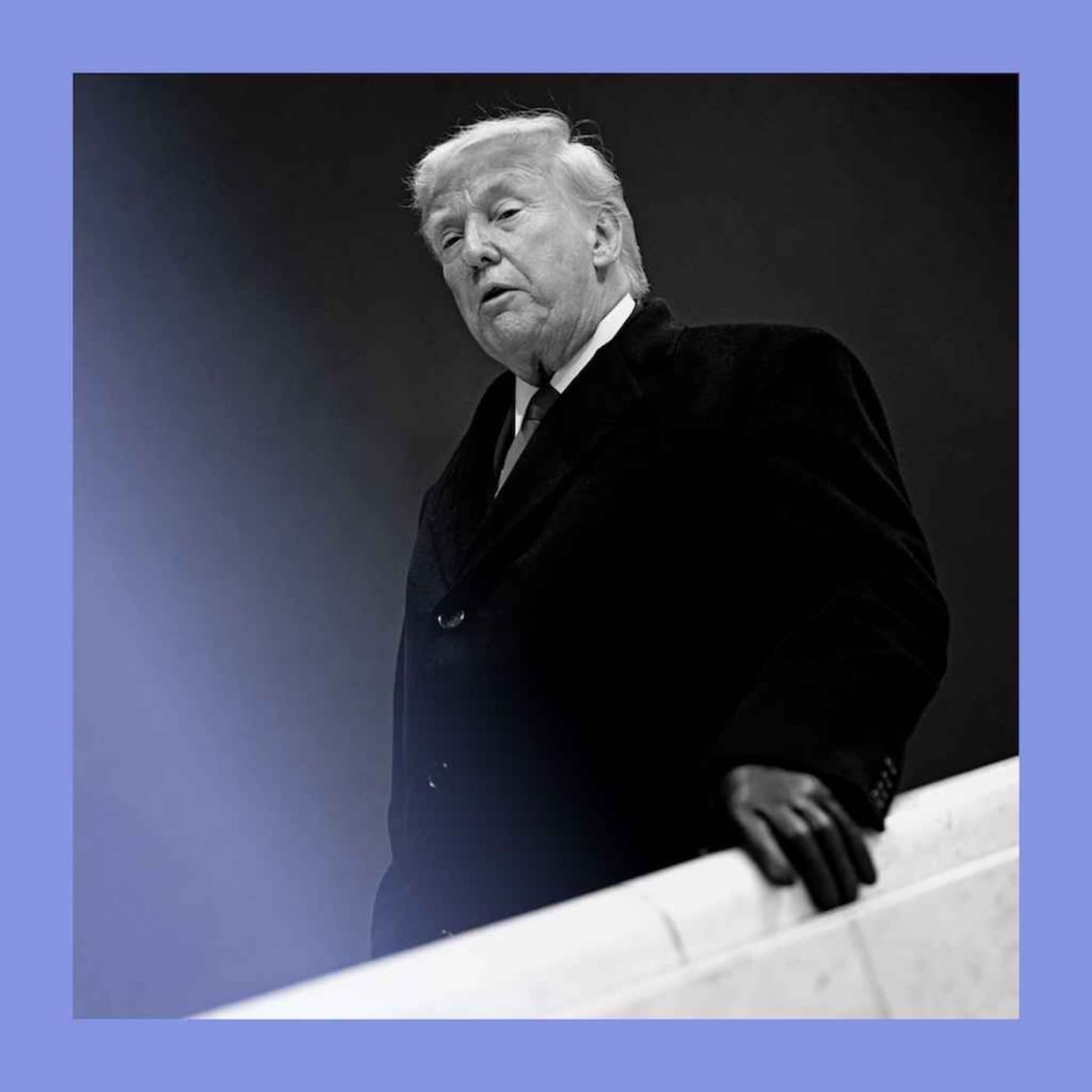
After an astonishing week, Donald Trump has said America will not take Greenland by force, nor put tariffs on those who oppose his acquisition plan. Our correspondent asks if America-Europe relations can ever be repaired. A deal to transfer TikTok to American ownership is due today––why is no one watching? And pop songs get gloomier.
Listen to what matters most, from global politics and business to science and technology—Subscribe to Economist Podcasts+
For more information about how to access Economist Podcasts+, please visit our FAQs page or watch our video explaining how to link your account.
Hosted on Acast. See acast.com/privacy for more information.