
In short
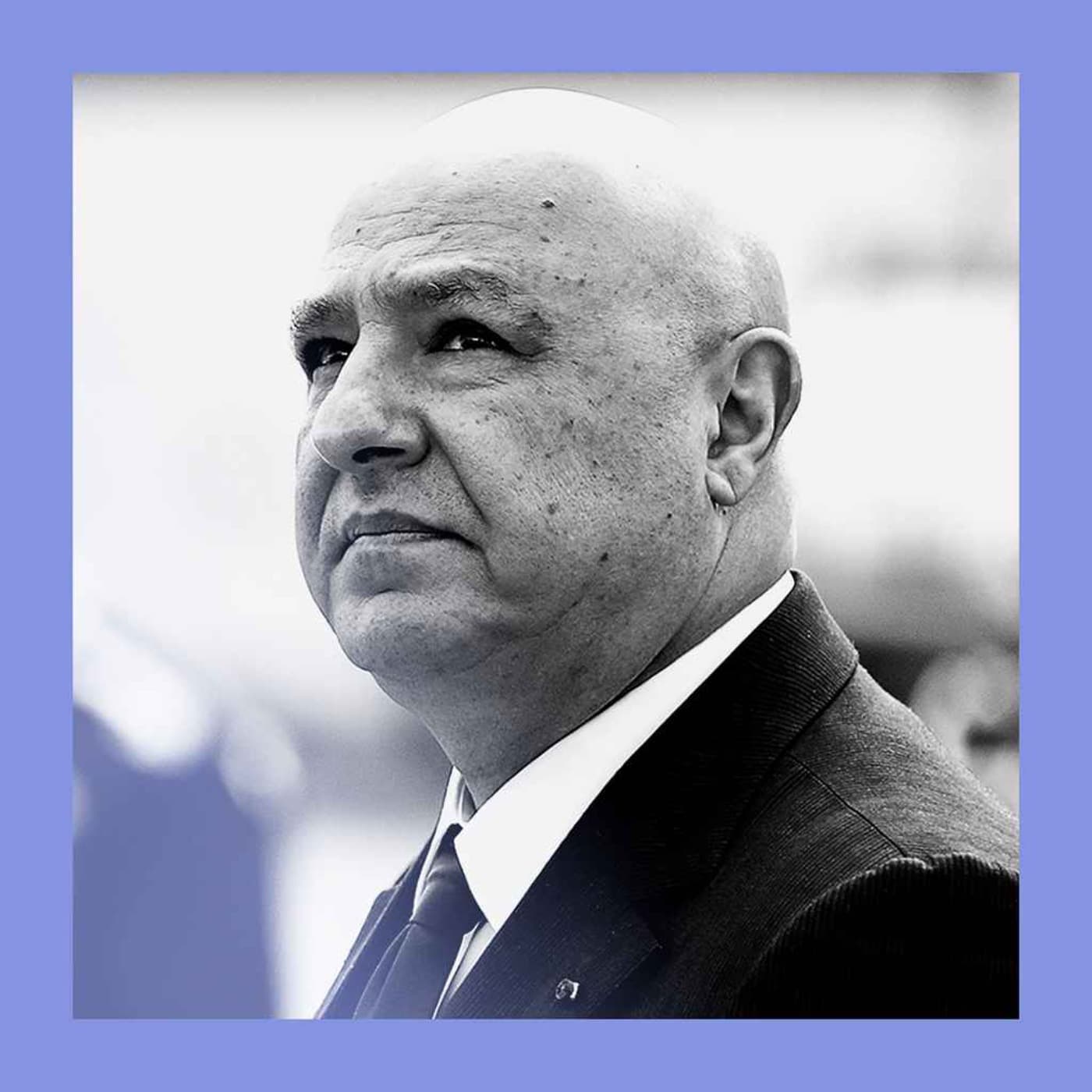
The Intelligence episode covers three segments: (1) Lebanon’s new president Joseph Aoun seeking help from Donald Trump amid Hezbollah-Israel conflict and Lebanon’s economic collapse; (2) Red Bull’s business model and marketing after founder Dietrich Mateschitz’s death; (3) data-journalism findings that the “trophy wife” age gap has narrowed.
Guests/backgrounds
Greg Karlstrom, Middle East correspondent (former Lebanon resident); Wendelin von Bredow, senior Germany correspondent; Doug Dowson, data journalist.
Key claims
Lebanon’s importance is geopolitical (Iran/Hezbollah influence) and economic (potential regional business hub). Aoun wants Trump support for the underfunded Lebanese army, pressure on Israel to withdraw under a June Washington ceasefire framework, and U.S. investment. Red Bull’s success is attributed to an unchanged marketing-first formula (outsourced production, heavy marketing spend). Trophy-wife age gaps among top earners have converged with typical couples by 2024.
Notable examples
Lebanon: 4,000+ deaths; damage ~40% of GDP; village posters showing Hezbollah losses; IMF reform delays; $80bn banking losses. Red Bull: Felix Baumgartner 2012 stratosphere jump; 14bn cans sold in 2023; 28% global market share. Trophy wives: 1980 top 1% age-gap marriage rate ~8% vs 2024 ~5% for typical wages; Forbes 400 men average 7-year older wives; remarriage gap up to 22 years.
Written by AI. May contain mistakes. Listen to the episode to check what was said.
Chapters
Tap a time to open that second in VOLebanon's Presidential Summit
1:16 to 2:21
Discussion on Lebanon's critical presidential visit and its challenges.
“Today on the show, could Red Bull have its wings clipped and trophy wives may finally be going out of fashion.”
Lebanon's Geopolitical Importance
2:21 to 4:21
Exploration of Lebanon's geopolitical significance and internal struggles.
“The past seven years have been by far Lebanon's worst period since the end of its civil war in 1990.”
The Power Vacuum in Lebanon
4:21 to 6:01
Analysis of Lebanon's political instability and the lack of government leadership.
“If you go back to late 2019, when the economic crisis started and there were mass anti-government protests, Saad Hariri, who was the prime minister at the time, resigned but stayed on in a caretaker capacity.”
Hezbollah's Impact and Economic Costs
6:01 to 8:01
Overview of Hezbollah's influence and the economic damage from conflict.
“The first one is the issue of Hezbollah's weapons and the war that it has dragged Lebanon into with Israel.”
Current State of Lebanon's Economy
8:01 to 10:13
Examination of Lebanon's economic challenges and the need for reforms.
“It's the first diplomatic agreement they've signed in decades that was meant to impose a ceasefire.”
Trump's Role in Lebanon's Future
10:13 to 11:50
Discussion on what Lebanon seeks from Trump during the White House visit.
“There's a lot that they need to be doing on the economic front so that donors and investors will finally step in, give money to Lebanon, and then allow the government to start this process of reconstruction.”
The Success Story of Red Bull
14:00 to 20:06
Learn about the rise and marketing genius behind Red Bull's global success.
“who had discovered a Thai energy tonic on a business trip.”
Shifting Dynamics in Marital Age Gaps
20:06 to 24:15
Explore how age gaps in marriages among top earners have changed over the years.
“Having a trophy wife has long been a mainstay of American popular culture.”
Shifting Dynamics in Marital Age Gaps
25:08 to 25:38
Explore how age gaps in marriages among top earners have changed over the years.
“Ranked fourth in the world by the Financial Times, the program delivers academic excellence and unlocks access to leading global businesses and a network of over 58 ,000 professionals.”
Transcript
Automatic transcript. May contain errors.0:00Why get AAA? Because bad roads, bad tires, and bad luck. Out of gas, locked out, or in a ditch? Stuff happens. With 24-7 roadside assistance, AAA's got your back, no matter whose car you're in. Join today at AAA.com. AAA, expect something more. Roadside assistance is provided by independent facilities contracted by AAA. Coverage in taxis, limousines, and other ride-sharing conveyances is excluded. 2024 AAA U.S. Market Track National Surveys. Offers, terms, conditions, and policies are subject to change without notice. Visit AAA.com for details. This intelligence podcast is sponsored by Backmarket, the leading global marketplace for refurbished tech.
0:38When the kids need phones, laptops, or tablets for school, buying refurbished tech makes sense for families trying to save money without sacrificing quality. At Backmarket, tech costs up to 50 % less compared to new. All devices have been professionally refurbished and come with a one-year warranty and 30-day return policy. Start saving money. Visit Backmarket.com or the Backmarket app to shop now.
1:05The Economist
1:12Rosie Blau:Hello and welcome to The Intelligence from The Economist. I'm Rosie Bloor. And I'm Jason Palmer.
1:21Rosie Blau:Today on the show, could Red Bull have its wings clipped and trophy wives may finally be going out of fashion.
1:37But first...
1:47Rosie Blau:Today, Lebanese President Joseph Aoun will visit the White House. It's the first such presidential summit in nearly two decades, and it comes at a challenging moment for Lebanon. The country faces a deep financial crisis, an ongoing power struggle against Hisbollah, the Iran-backed Shia militia, and a conflict between Hisbollah and Israel that's wreaked enormous damage and continues to wreck lives across the whole country. Lebanon certainly needs help, but what will it get?
2:21Jason Palmer:The past seven years have been by far Lebanon's worst period since the end of its civil war in 1990.
2:30Rosie Blau:Greg Karlstrom is a Middle East correspondent.
2:33Jason Palmer:It's been through one of the worst financial crises in modern history, an enormous explosion and almost three years of war with Israel, just to name a few. And it endured most of that without even having a proper government in place. Now it finally has one. There's a new president and a new prime minister, and they are trying to enlist help from Donald Trump and from other allies around the world to get Lebanon back on its feet.
3:02Rosie Blau:Greg, before we get to the details, why is Lebanon so important?
3:07Jason Palmer:I think you can make a couple of arguments. One is geopolitical. If things go well in Lebanon, you can imagine it's an enormous blow to Iran's influence in the region. It's already lost influence in Syria with the fall of the Assad regime. If it no longer had Hezbollah, the Iranian backed Shia militia in Lebanon as a heavily armed cat's paw, then its clout in the region would be diminished further. Conversely, if things don't go well in Lebanon, the risks include more war with Israel, an emboldened Iran, perhaps internal conflict and a migration crisis. So that's one piece of it. And then you can also make an argument around Lebanon itself.
3:48Jason Palmer:This is a diverse country that churns out lots of well-educated, entrepreneurial, talented people, but it ends up exporting most of that human capital because Lebanon itself is so dysfunctional and corrupt that most people can't make a decent living there. So I think people should also want it to succeed on its own merits. It could be a very important business hub for the entire region.
4:11Rosie Blau:You mentioned dysfunction there. Lebanon for a while lacked a proper government. Who was in charge during that time?
4:19Jason Palmer:In effect, no one. If you go back to late 2019, when the economic crisis started and there were mass anti-government protests, Saad Hariri, who was the prime minister at the time, resigned but stayed on in a caretaker capacity. And then he was followed by two additional caretaker prime ministers. So there was no empowered PM, no empowered cabinet that could take decisions. And then you had a stretch of more than two years where the presidential palace was vacant, which is not uncommon in Lebanon. The president is selected by parliament and often MPs can't agree on a president. And so you end up with a vacancy.
4:58Jason Palmer:But this was one of the longest in Lebanon's history. The vacuum finally ended at the beginning of last year under very strong international pressure. Parliament chose Joseph Aoun, the former army chief, as president. And then shortly afterwards, Nawaf Salam, a former head of the International Court of Justice, was named as the country's new prime minister. They look like an odd pairing. Aoun is this former soldier who spent his whole life in the army. Salam is bookish. He's an academic and a diplomat. He's been outside of Lebanon for most of his life. He was also the country's ambassador to the UN at one point.
5:34Jason Palmer:So they're both political outsiders in a country where politics has long been dominated by the same set of ex-warlords who ran militias during the civil war. They both promised to come in and tackle some of the country's longstanding problems, but they came in in a very difficult situation.
5:53Rosie Blau:You've been reporting across Lebanon recently. You used to live there. What are the key problems the country's facing?
6:00Jason Palmer:There are two big challenges right now. The first one is the issue of Hezbollah's weapons and the war that it has dragged Lebanon into with Israel. And the cost of that war has been enormous. You have the human toll, more than 4 ,000 people killed, including plenty of civilians, medics, journalists, ordinary people in the South. But for Hezbollah itself, quite a striking death toll. I drove through one Shia village in the Bekaa Valley in eastern Lebanon, a small place, maybe 1500 people live there, counted at least a dozen posters announcing the deaths of Hezbollah fighters. And that's an undercount.
6:40Jason Palmer:Some of the bodies haven't been identified. Some families have been told not to mourn in public. So we're probably talking one to two percent of the population of this very small village. And then along with the human cost, you have the economic cost of the war. I met with Amr Bessat, the economy minister who estimated the total damage is around 40 % of Lebanon's GDP, also thinks the country is going to be pushed into a recession this year because of a slowdown caused by the war. And this is where it links to Lebanon's second big problem, the economy, the aftermath of this unresolved economic crisis.
7:16Jason Palmer:I lived there when it began back in 2019 and 20, and it was a dizzying time that currency was dropping to new lows every week. The banks were effectively closed. Nobody could get money out of a bank. Things feel a bit more stable now, but it's only because they have really, really bottomed out. Currency is worth 2 % of what it used to be worth. Inflation is still quite high by global standards, but less than the hyperinflation of a few years ago. And ordinary people have been impoverished.
7:48Rosie Blau:And Greg, what is the current state of the conflict between Israel and Hezbollah?
7:53Jason Palmer:It hasn't stopped, but it has slowed down for the moment. Last month in June, Israel and Lebanon signed a deal in Washington. It's the first diplomatic agreement they've signed in decades that was meant to impose a ceasefire. It calls for the Lebanese army to start deploying in southern Lebanon. And then as the Lebanese army does that, Israel is meant to withdraw its troops. It continues to occupy a swath of territory. Now, there's a lot that's vague about this agreement. For example, at what point will Israel be forced to withdraw? The deal doesn't say. It doesn't lay out criteria. Israel continues periodic airstrikes in Lebanon.
8:34Jason Palmer:Again, the war hasn't stopped, but there is meant to be diplomatic movement towards ending it.
8:40Rosie Blau:It's a very long list of very deep problems. Can they be fixed?
8:45Jason Palmer:They're difficult to fix on the issue of Hezbollah. Someone close to the president explained their thinking to me, which is we want to present the Shia community, Hezbollah's constituents, with two images. We want to show them on the one hand, Hezbollah has dragged this country into a war on Iran's behalf. It has killed thousands of your sons. It has started a war that led to your villages being destroyed. On the other hand, we have a Lebanese state that is going to come in and secure the South and rebuild. Really, the mechanism here is to try and drain Hezbollah's support by stepping in and providing the services that the government has long failed to provide in southern Lebanon.
9:27Jason Palmer:But again, this is where the two problems come together, because to rebuild the South, you need resources. And this government, seven years into an economic crisis, doesn't have those resources. So they also need to tackle the economic side of it. They need to make a deal with the IMF. They've been talking about that for years. It hasn't happened because they haven't passed the reforms that the IMF insists on as a precondition. Noef Salem's government has passed some of those reforms, but they haven't figured out how to apportion the$80 billion losses in the banking sector between depositors and shareholders and the state.
10:03Jason Palmer:And they haven't done it in part because the banks still have a lot of political power and their shareholders don't want to see their equity wiped out. So they need to move faster on that. They need to move faster on administrative reforms from strengthening the judiciary to trying to trim the enormous civil service. There's a lot that they need to be doing on the economic front so that donors and investors will finally step in, give money to Lebanon, and then allow the government to start this process of reconstruction.
10:32Rosie Blau:Joseph Aoun is going to the White House today. Where does enlisting Trump's help come into any of this?
10:39Jason Palmer:Almost made it through an interview without talking about Trump at length, but we can never do that these days. I think President Aoun wants three big things from Trump. One is support for the Lebanese army. It is underfunded. It needs better equipment. It needs money. The second thing is this deal between Israel and Lebanon. Because it is so vague on the question of withdrawal, the Lebanese will need American pressure on Israel to ensure that it does withdraw. Now, it's started pulling out, it says, from what are called pilot zones, two areas that are meant to be a proof of concept to show that this deal can work.
11:17Jason Palmer:But if you're going to secure any further reaching Israeli withdrawal, that's going to require pressure from Washington. And then the third thing that Allen and his advisors want is investment from the U.S. They've put together these glossy presentations about how firms in America could benefit from investing in ports, telecommunications. I think they're cognizant that Donald Trump's America doesn't really do foreign aid. So instead of asking for donations, they're looking for ways to make an investment case to the president. I think those are going to be the three big things that Alan wants to focus on in this meeting at the White House.
11:54Rosie Blau:Greg, thank you very much.
11:56Jason Palmer:Thank you, Rosie.
12:20Bill isn't just moving money. They're simplifying financial operations for nearly half a million customers. Bill has securely processed over a trillion dollars in transactions. That's proven infrastructure. Ready to talk with an expert? Visit bill.com slash proven and get a$150 gift card as a thank you. That's bill.com slash proven. Terms and conditions apply. See offer page for details. Why get AAA? because bad roads, bad tires, and bad luck. Out of gas, locked out, or in a ditch, stuff happens. With 24-7 roadside assistance, AAA's got your back, no matter whose car you're in. Join today at AAA.com.
13:00AAA, expect something more. Roadside assistance is provided by independent facilities contracted by AAA. Coverage in taxis, limousines, and other ride-sharing conveyances is excluded. 2024 AAA U.S. Market Track National Surveys. Offers, terms, conditions, and policies are subject to change without notice. Visit AAA.com for details.
13:23Here we have the biggest ski jump in the world. In both America and Europe, the brand Red Bull is known almost as much for its sponsored sport teams and events as it is for its sweet, sweet energy drink. It's a league of daredevils as well as big names like football manager Jurgen Klopp. We have assembled a team of elite football players to take on a series of football challenges all around the world. And all that high-adrenaline marketing? It works. Red Bull was founded in 1984 by Dietrich Mateschitz, an enterprising Austrian, who had discovered a Thai energy tonic on a business trip. And he thought this is something that Europe needed.
14:09Wendelin von Bredow is our senior Germany correspondent. He decided to launch it in Europe, adapt it to European taste, so he made it carbonated and a bit less sweet. And initially, the reaction was a lot of skepticism. People said, this is not going to work, there's not a market for this, nobody wants this, you're going to fail. But he did it anyway. He was Austrian, so he launched in Austria, and it became this huge global success. How did it become so successful? Well, Mr. Mateschitz had a rare genius for marketing. He had so many ideas and really many of them worked. So he came up with slogans and stunts that made Red Bull the worst leading seller of energy drinks.
14:51For instance, Red Bull gives you wings, you know, with lots of eyes. That was his idea. In German it's Red Bull verleiht dir Flügel. It's very catchy and everyone knows it. And then he really branched out into sponsoring sports of all sorts, but in particular, extreme sports. So it was his idea to sponsor the Austrian skydiver Felix Baumgartner, who in 2012 jumped to Earth from a helium balloon in a stratosphere. But most of all, Mertuschitz built a media powerhouse and they have their own TV channel. They have their own magazines. They have their own studio. So his TV channel is the number two broadcaster in Austria after the public broadcaster after the ORF.
15:37And it's hugely influential and it's a big part of Red Bull's success. And so when he died in October 2022, many Austrians feared that Red Bull would fall as quickly as it has risen to the biggest maker of energy drinks in the world. They just thought without Mateusz, it just cannot survive even without him at the helm. So who is at the helm? So now it's interesting, there are three people at the helm. So he doesn't have one successor. And they all keep an extremely low profile. I mean, most people don't even know their names. And they basically continue to do what matches did. They haven't really changed the pillars of success of Red Bull.
16:18So Red Bull today has 28 % of the global market, much ahead of Monster, its main rival, which has about 17 % of the market. And last year, it sold 14 billion cans of its energy drink, up by 10 % from the previous year. And it has 22 ,000 employees in 178 countries. So it's basically sold nearly everywhere in the world. And you say that continued success is just down to, well, not changing the formula. Not really changing the formula. So Red Bull is unusual in that they have very little capex because they mainly do the marketing for the brand. They spend a third of their revenue on marketing, which is much higher than its rivals.
Read the full transcript
17:05I mean, Monster spends 7 % of sales on marketing. So that is really essentially what they do is marketing. But the filling of the cans, the distribution, all of that is outsourced. And even the cans are produced by the Bull Corporation, so an American company. So they are debt-free. They've never taken on any debt because they outsource all the manufacturing and production. They pay for the marketing. That's what they do. And they've done extremely well with that strategy. But having said all of that, there are some health concerns around Red Bull, aren't there? Well, Red Bull is made of carbonated water, taurine, caffeine and sugar.
17:42All of which, except for maybe the carbonated water, is not good for children. So Red Bull themselves say it's safe to consume in moderation for adults, but it's not recommended for children. But the problem is their savvy marketing, you know, the extreme sports, the Formula One, the football, makes it very attractive to children. Children, including my own son, think Red Bull is super cool. And of course, if they get the opportunity to have Red Bull, they will for sure try it and maybe even get used to drinking it on a regular basis. So some countries have decided to ban the sale of Red Bull for those who are under 18.
18:20Latvia is an example, Lithuania, Poland and a few others. And this month, Britain has said it's planning a ban of high caffeine energy drinks such as Red Bull for those under 18 too. The ban will take effect next year, so not immediately. And it's been discussed for a long time, but now it's really happening. So putting aside the very young end of the market, the rest of the market looks fairly healthy for Red Bull. Yes, it does. It continues to be very successful with young men and the party crowd. It's popular all over the world, but it does have rivals. I mean, there's Celsius, an American brand that really taps into the health and wellness trend and markets itself in particular to women who are not very avid Red Bull drinkers.
19:06And Celsus has done incredibly well, has become the number three after Red Bull and Monster in America. So there are some challenges to the crown that Red Bull has had ever since it was conceived. I mean, Red Bull has been the market leader for the last quarter century at least. But I think the future is bright for Red Bull. They've grown and grown and they continue to grow. And I don't see that changing anytime soon. And it's really down to this formidable marketing machine. The sponsoring of extreme sports, of Formula One, of football. It is the most successful marketing machine for fizzy drinks in the world.
19:42And they've done incredibly well with that. Thanks very much for joining us, Wendelin. It's always a pleasure, Jason.
20:06Rosie Blau:Having a trophy wife has long been a mainstay of American popular culture. Just think of the cigar-smoking ad execs of Mad Men, or Daisy Buchanan in The Great Gatsby. Wealthy men wanted to adorn themselves with young, glamorous women. But change may be on its way. The age of the trophy wife seems to be over. Doug Dowson is a data journalist. So we looked at a sample of married couples in the census data, and we actually only looked at heterosexual married couples because the data just aren't available for these kinds of historical analyses. We saw that in 1980, about 8 % of the top earners, so those are people in the top 1 % of the income, married someone at least a decade younger compared to just 5 % of men earning typical wages.
21:03By 2024, that gap had closed. So the richest group behaved just like the rest of us.
21:12Rosie Blau:That's big news, Doug. Let's just get the historical record straight first of all. What did the age gap used to be? One of the interesting papers that I came across was done a few years ago. I looked specifically at the men at the very high end, the very wealthiest men in America, the Forbes 400 list. And what they found was the wealthiest men were on average seven years older than their wives. This was significantly higher than the typical two to three year gap found in the general population. Even more striking was when they looked at men who had remarried. So, you know, they married somebody and then they split.
21:50And then when they're much older, they remarried again. And that gap was significantly higher. That gap was 22 years. So really striking finding there about the sort of men at the very top of the income scale.
22:04Rosie Blau:Why the change? I mean, I'm sure there's all sorts of cultural factors at play. I think one of the interesting explanations is education. People who spend more time in education, so go to university, grad school, etc., professional degrees, they often earn higher salaries as a result. and they also tend to spend a lot of their sort of prime dating years socializing with their classmates. So those are going to be people who are closer to their own age. So education seems to be like a very clean, very tidy explanation for at least some of the change. Diplomatic answer there. What about trophy husbands?
22:42Are they a thing? So I went into this project thinking that I would see something on the female side. So looking at basically as the income of the wife goes up, how does that change the age gap relationship? And it's funny because I really didn't see very much, kind of read lots of stories about high earning women having boy toys, younger men. And that may be the case when these women are dating. But as far as who they marry, the data seem to show that there's really not that many. Only about one in five high-earning women tend to marry men who are younger than them. And that's basically the same proportion that you see across the income scale.
23:26Funnily enough, historically, women who earn a lot have tended to have slightly older husbands, which could be that high-earning women want to be with high-earning men. And those men, you know, want to be with women who are like a little bit younger. So, yeah, basically, it's when you really dig into the data, there isn't that much to that story.
23:50Rosie Blau:Doug, thank you for talking to me. Thank you, Rosie.
24:15Rosie Blau:That's it for this episode of The Intelligence. We'll see you back here tomorrow.
24:37Why get AAA? Because bad roads, bad tires, and bad luck. Out of gas, locked out, or in a ditch? Stuff happens. With 24-7 roadside assistance, AAA's got your back, no matter whose car you're in. Join today at AAA.com. AAA, expect something more. Roadside assistance is provided by independent facilities contracted by AAA. Coverage in taxis, limousines, and other ride-sharing conveyances is excluded. 2024 AAA U.S. Market Track National Surveys. Offers, terms, conditions, and policies are subject to change without notice. Visit AAA.com for details. To grow beyond limits and even beyond your aspirations, you need the London Business School MBA.
25:15Ranked fourth in the world by the Financial Times, the program delivers academic excellence and unlocks access to leading global businesses and a network of over 58 ,000 professionals. 86 % of the most recent class accepted a role within three months of graduating, and the returns continue beyond today. Search Discover London Business School MBA to find out more.
From the publisher
Today, Lebanon’s president Joseph Aoun visits the White House to ask for Donald Trump’s help rebuilding the country. Our correspondent reports from his recent trip to Lebanon on the challenges it faces. Threats to Red Bull’s magnificent marketing machine. And why the age gap between the wealthiest men and their wives is shrinking.
Guests and host:
- Gregg Carlstrom, Middle East correspondent
- Vendeline von Bredow, senior Germany correspondent
- Doug Dowson, data journalist
- Rosie Blau, co-host of “The Intelligence”
- Jason Palmer, co-host of “The Intelligence”
Topics covered:
- Lebanon, Beirut, Joseph Aoun, Hizbullah
- Red Bull, energy drinks, extreme sports
- Trophy wives, age gap, misogyny
Listen to what matters most, from global politics and business to science and technology—subscribe to The Economist.
Hosted on Acast. See acast.com/privacy for more information.