
In short
The episode covers three stories: U.S. pressure on Brazil and its political/economic fallout; India’s rapidly growing private-jet market; and Hong Kong cha chaan teng tea cafes as a cultural symbol amid political change.
Guests
Adelancas, The Economist Brazil bureau chief; Jim Morais, investigator behind probes into Jair Bolsonaro and online misinformation; Leo Maroni, The Economist India correspondent (Mumbai/Bombay); Emma Irving, The Economist Asia news editor (Hong Kong).
Key claims
Trump’s 50% tariff threat and visa/judicial actions target Brazil’s judiciary (Alexandre de Moraes) and indirectly Lula; tariffs are politically motivated and could backfire by boosting Lula via “rally around the flag,” with job losses estimated around 110,000. Examples: Bolsonaro supporters’ Jan 8, 2023 insurrection; Moraes ordering Bolsonaro to wear an ankle monitor. India: private jets rose from 137 (early decade) to 168 (2024), with ~2,400 monthly departures; jets cost $3M–$100M and face 28% taxes. Hong Kong: cha chaan tengs (e.g., Lan Fong Yuen, opened 1952) reflect East-West fusion; diaspora expansion and TikTok popularity (12.5M views) amid national-security clampdowns.
Written by AI. May contain mistakes. Listen to the episode to check what was said.
Chapters
Tap a time to open that second in VOTrump vs. Lula: A Political Clash
1:07 to 4:04
Exploration of the tensions between Trump and Brazil's President Lula.
“And Hong Kong's cha chan tang, or tea restaurants, are a quirk of history, a sugary mix of East and West.”
Economic Consequences of Tariffs
4:04 to 9:01
Discussion on how U.S. tariffs affect Brazil's economy and political landscape.
“And he's been leading the prosecution of Jair Bolsonaro.”
The Long Political Battle Ahead
9:01 to 9:36
Analysis of the prolonged conflict between the U.S. and Brazil regarding tariffs.
“So do you think Lula might stretch this fight out long enough to help keep himself in power?”
The Long Political Battle Ahead
9:52 to 10:02
Analysis of the prolonged conflict between the U.S. and Brazil regarding tariffs.
“Taxes aren't something you can only think about once a year.”
Rise of Private Jets in India
10:56 to 14:00
Insights into the growth of private jet ownership in India and its implications.
“and whenever I'm on my way back, apart from sheer relief, the other thing that's on my mind is the row of private jets that I always see.”
The Role of Private Jets in India
14:00 to 17:20
Explore the dynamics of private jet usage in India, including costs and environmental impact.
“And then you have fixed costs, such as insurance and maintenance and crew.”
Cultural Significance of Cha-Cha-Tengs
17:20 to 19:58
Delve into the history and cultural importance of Hong Kong's Cha-Cha-Teng cafes.
“And then please can I get, I often go to Lan Fong Lian, which is one of Hong Kong's oldest tea cafes, known here as Cha Cha Teng.”
Cha-Cha-Tengs and Hong Kong's Diaspora
19:58 to 21:23
Learn how the love for Cha-Cha-Tengs persists among Hong Kong's expatriates globally.
“But the cafes aren't just popular with Hong Kong's diaspora.”
Transcript
Automatic transcript. May contain errors.0:00With no fees or minimums on checking accounts, it's no wonder the Capital One Bank Guy is so passionate about banking with Capital One. If he were here, he wouldn't just tell you about no fees or minimums. He'd also talk about how most Capital One cafes are open seven days a week to assist with your banking needs. Yep, even on weekends, it's pretty much all he talks about. In a good way. What's in your wallet? Terms apply. See CapitalOne.com slash bank. Capital One N.A. member FDIC.
0:35The Economist.
1:05The Intelligence from The Economist plains in the region is India, but not for the same reasons. And Hong Kong's cha chan tang, or tea restaurants, are a quirk of history, a sugary mix of East and West. In their homeland, they're thinning out, but in the Hong Konger diaspora from Australia to Taiwan to Canada, they're booming.
1:34First up, though.
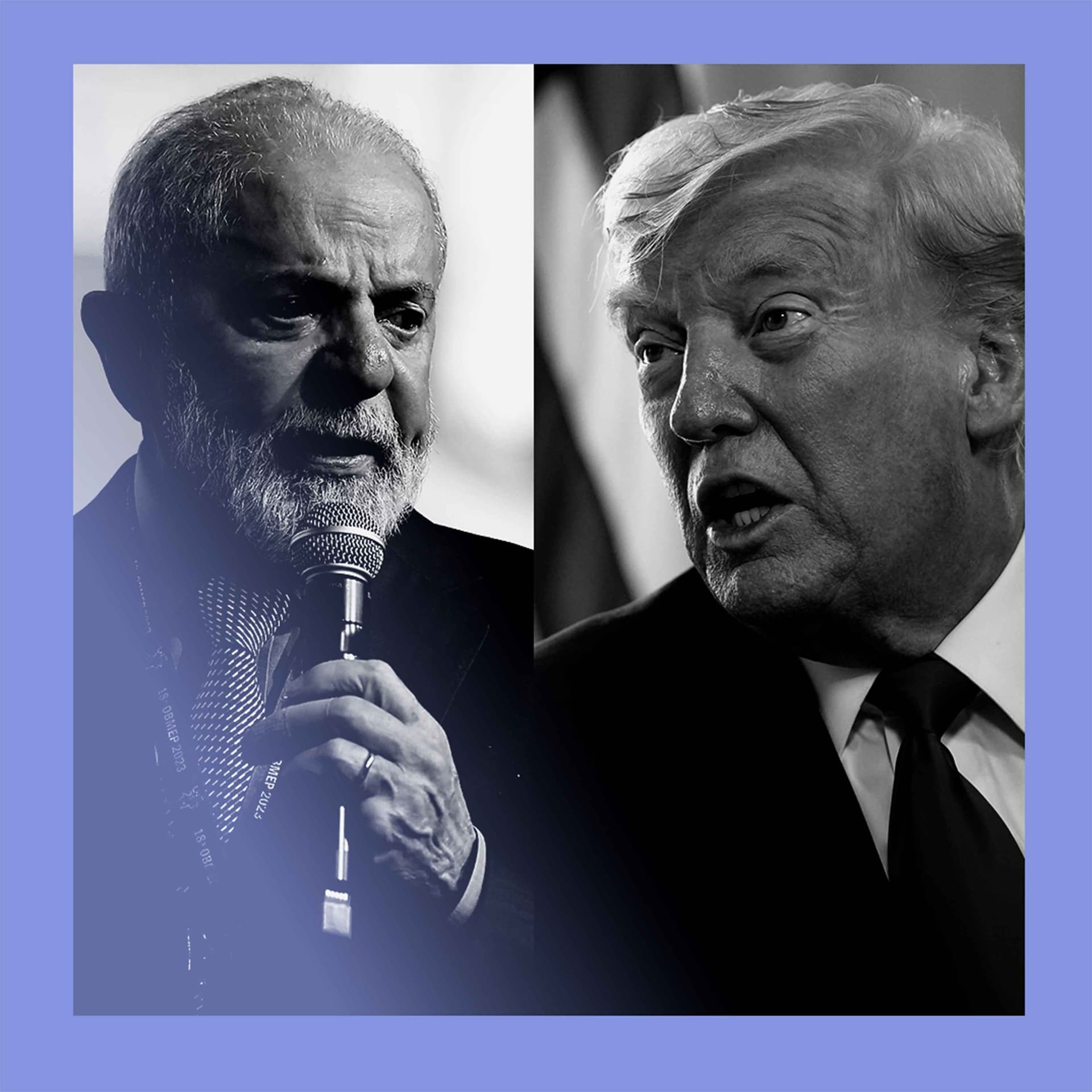
1:43President Donald Trump is having yet another personality clash with yet another world leader. This time, it's Brazil's president, Luiz Inácio Lula da Silva, or Lula. Mr. Trump has amped up his favorite new threat, saying he'll impose a 50 % tariff on all Brazilian imports, which would go into effect on Friday. So, pun only half intended here, what's this beef? It's fair to say that Trump and Lula have almost nothing in common and do not admire each other. Adelancas is our Brazil bureau chief. Lula is a titan of the Latin American left and represents just about everything that Donald Trump hates.
2:27The stakes in this fight are high, both for Lula and the Brazilian economy, but especially for the Brazilian right. And with history in mind, this is not at all the first time America has interfered in Brazilian politics. What's different now? Set the scene for us these days. In the 70s and 80s, military regimes governed most Latin American countries, and Brazil was no different. And many of these regimes had tacit support from the U.S. But now it's different. Since the end of the Cold War, the U.S. has taken a step back in the Western Hemisphere. What we're seeing now is that on July 9th, Donald Trump pledged tariffs of 50 % on Brazilian exports.
3:06And he explicitly cited a witch hunt against Jair Bolsonaro, Brazil's former far-right president. Bolsonaro is soon due to stand trial for allegedly plotting a coup. Then on July 15th, the U.S. trade representative started investigating Brazil's trade practices, claiming that they were unfair. And on July 18th, the U.S. State Department revoked the visas of eight of the 11 judges on Brazil's Supreme Court, as well as those of the public prosecutor and the head of the federal police, who have led the investigations into Bolsonaro. And the parallels between Bolsonaro and Trump are uncanny. Bolsonaro supporters attempted an insurrection.
3:44They attacked government buildings on January 8th, 2023. So it's very similar to what happened with Trump after the January 6th riots. And finally, the end goal of this, Marco Rubio has stated, is that he wants to use the Global Magnitsky Act to place sanctions on Alexandre de Moraes, who is the most prominent of Brazil's Supreme Court judges. And he's been leading the prosecution of Jair Bolsonaro. So this is an unprecedented level of pressure from America's administration that we really haven't seen very much since the end of the Cold War. Now, we've spoken about Mr. de Moraes on the show. You've interviewed him.
4:20Tell us why he's such a lightning rod for the American administration. Jim Morais is the man behind investigations into Bolsonaro, but he has also been leading a probe into online misinformation since 2019. And as part of that probe, he has ordered hundreds of accounts, mainly of far-right activists, to be taken down from social media platforms. So in February, Trump's media group, together with Rumble, which is a video-sharing platform, sued Jim Morais, alleging that because Moraes' actions affected some Brazilian citizens who live in the U.S., Moraes was overreaching. And after the escalation between Trump and the Brazilian judiciary and government, Moraes ordered Bolsonaro to wear an electronic ankle monitor.
5:02He's put him under house arrest during nights and weekends, and he has forbidden him from speaking to foreign officials or give interviews. So all of this is kind of a proxy fight against Lula and Lula's administration. Is that fair to say? I think it's not just that. A lot of the venom has been directed at Alexandre de Moraes because of his orders against American technological companies. But it is definitely fair to say that Lula and Trump hate each other. Lula wants the world to be multipolar. He has been courting China. He has said that he's very keen on countries to use local currency instead of the U.S.
5:39dollar in international trade. So he basically wants to change the world that the U.S. helped to create. And Trump sees this as an affront to American hegemony. And this is all worsened by the fact that Bolsonaro and his family are very close to Trump's entourage. So Eduardo Bolsonaro, who is a congressman in Brazil and one of Jair Bolsonaro's sons, took leave from his job in March. and he moved to Texas, where he has been incessantly lobbying Republican congressmen to put sanctions on Alexandre de Moraes. And Lula has been angrier at the Bolsonaros than he has at Trump.
6:23He calls the Bolsonaros traitors. And in a recent rally, he said about them, let them be ashamed, hide in their cowardice, and let this country live in peace.
6:37But as you hinted at the beginning, this is an ideological fight, but with serious economic consequences, in particular because of the tariffs. Yeah, the economic logic that Trump has so far used to put tariffs on other countries, which is that the U.S. has deficits with all these countries and that's somehow unfair, does not apply in the case of Brazil. Brazil is one of the few countries that has a huge deficit with the United States. So there is no economic sense, even in Trump's own logic, to these tariffs. So the tariffs are entirely political. But what they didn't think about in advance is that the tariffs would backfire.
7:12The tariffs are affecting companies and sectors that are concentrated in regions that support Jair Bolsonaro. And the tariffs have created an amazing kind of rally around the flag effect that is boosting support for Lula. So let me just explain. The U.S. is Brazil's second largest trading partner. But the difference is huge. Only 13 % of Brazil's exports go to the U.S., so that's around$43 billion a year. And forecasts by Goldman Sachs say that tariffs could lower growth by about 0.4 of a percentage point, to around 2 % this year. But all of the effects of the tariffs will essentially be concentrated on cattle farmers, on citrus producers, on airplane manufacturers, and in regions that vote for Bolsonaro.
7:55If the tariffs come into effect, some economists at a local university here have estimated that around 110 ,000 Brazilians will lose their jobs. So along the way there, you mentioned a rally around the flag effect. You mean in a general sense or just against the will-be, soon-to-be disaffected bolsonaristas? No, the tariffs have been universally unpopular in Brazil. No one thinks it's cool that a foreign government is trying to batter Brazil's economy. After Trump's announcement, some people took to the streets of Sao Paulo and burned an effigy of Trump, saying Brazil is ours.
8:32Lula has also taken to wearing a blue cap that says Brazil belongs to Brazilians. And Lula's approval ratings were actually flagging. The left in Brazil has a problem because they've only had like one candidate for basically 30 years. Lula has been president three times and he's getting very old and a lot of people were getting sick of him. and there's high inflation. And this has totally turned around his approval ratings. So now he leads the polls against any right-wing contender ahead of next year's election. So do you think Lula might stretch this fight out long enough to help keep himself in power?
9:06So this is going to be a long drawn out battle and Brazil's government has every incentive to dig its heels. The Trump administration has not been willing to negotiate so far. And it seems that because the motive for the tariffs was political and not economic, it's going to be harder to negotiate a deal than it has been in other countries. The main question is who can credibly attribute blame to whom for the economic pain that Brazil is going to experience over the next few months. Anna, thank you very much for your time. Thanks, Jason, for having me.
9:51This message comes from Jackson. Taxes aren't something you can only think about once a year. With investments, planning for tax days year-round. Fortunately, Jackson offers tax-efficient products. Visit jackson.com for more information on how our products can make your tax bill a little bit less painful. Jackson is short for Jackson Financial Incorporated, Jackson National Life Insurance Company, Lansing, Michigan, and Jackson National Life Insurance Company of New York. Purchase New York. With no fees or minimums on checking accounts, It's no wonder the Capital One bank guy is so passionate about banking with Capital One.
10:24If he were here, he wouldn't just tell you about no fees or minimums. He'd also talk about how most Capital One cafes are open seven days a week to assist with your banking needs. Yep, even on weekends, it's pretty much all he talks about. In a good way. What's in your wallet? Terms apply. See CapitalOne.com slash bank. Capital One N.A. Member FDIC.
10:55I frequently fly between Bombay and Delhi, and whenever I'm on my way back, apart from sheer relief, the other thing that's on my mind is the row of private jets that I always see. Leo Maroni is an India correspondent for The Economist and is based in Mumbai, which he still insists on calling Bombay. So as you're approaching the end of the runway in Delhi, from the left-hand side of the plane, what you see is the general aviation terminal, and there's row upon row of neatly parked, sleek private jets. When you're arriving in Bombay, you see just this long line of Bombardiers, Gulf Streams, all very fancily sitting there against a rather grim backdrop of the city.
11:39And I don't know if I was imagining it, but it feels like there's more and more of these things every time I fly. So the suggestion here, Leo, is that there are more of these private jets than there used to be? Absolutely. At the start of this decade, India had a fleet of 137 jets. And this depends, of course, on how you count it. There's all sorts of nuances. I'm not going to get into those. But just in four years after that, to 2024, it jumped by a fifth to 168. That makes India today the third largest fleet of private jets in Asia, behind only Australia and China. What's more, get this, I mean, I'm really not imagining things.
12:19In the year to March, four of the 10 busiest private jet routes across Asia were in India, all four incidentally either originating or terminating in Bombay. Departures of private jets in the same period have gone from a monthly average of about 800-odd to 2 ,400. So who are the fancy people in all these jets? I sadly was unable to talk to any of these people, so I had to speak to people who work for them. And what I found is it's not just what one guy described as the big boys, by which he meant the chief executives and owners of India's biggest conglomerates, but it's also it's people with businesses in jewelry and pharma and education, construction.
13:03And they're not just in these big cities either. They're in smaller cities spread across India. I mean, there was this lovely thing that one of the guys said to me that reeked of condescension about how I wouldn't believe were there buying those planes. And the result is there's now, roughly speaking, one private jet for every Indian billionaire compared to only half a private jet for every Chinese billionaire. And for the owners of these things, this is still a pricey proposition, not unlike, I don't know, super yachts. Absolutely. But it varies tremendously. So a private jet can cost anywhere from, say,$3 million to$100 million, depending on a whole bunch of factors, such as whether it's secondhand or brand new, the size of the thing, and so on and so forth.
13:48On top of that, there's, as you might imagine, pretty onerous taxes. So taxes on private jets run at 28%. So a lot of buyers charter them out when they're not using them. And then they only pay 5 % tax. And then you have fixed costs, such as insurance and maintenance and crew. And then your actual running costs, fuel, parking, landing charges. When Indians are buying private jets, they, as one guy told me, negotiate down even on a$100 million jet to the last$5 ,000. Nobody's splurging here, or not unnecessarily splurging anyway. I suppose that judgment, though, comes down to what they're using them for.
14:27Are they jetting off to holidays? I guess not, if they're just going between cities? Some are, of course, jetting off to holidays, but largely these planes are used for business. At least that's what we can infer looking at the data around how long they're in the air, where they're flying to and the sorts of planes. So one broker explained to me that in China, people buy jets for status. So they're buying these jets that can do extremely long distances, but they don't actually go very far anyway. Whereas in India, there's a mix of the sort of models that exist in the overall national fleet. And what that suggests is people are buying jets based on their specific requirements.
15:06Then you look at flight durations. About 40 % of private jet flights in India are under 60 minutes, and the majority of them are under two hours. Again, what that tells us is they're using these jets to get to places that would be very difficult for them to get to by other means of transport, whether that is road travel, where it would take forever, because although India has built a lot of highways in recent years, connectivity isn't as great as it is in China, for instance, or even airports, right? India has doubled the number of its airports in the past decade or so. But the flight schedule isn't deep enough to allow quick day trips to random parts of the country where you might have a factory or a meeting.
15:44And then, of course, there's the other issue, which as one person smoothly told me, there's 500 people waiting outside the lounges these days. So, you know, there's also a status element there. But I don't think that's the chief reason that people are splurging millions of US dollars. And as someone who never hesitates to point out the pollution in India, I suppose this is very much adding to the problem. It does contribute to the problem. And there's a sense of unfairness around it as well. Hardly anybody travels in private jets. And yet, private aviation contributes about 2 % of emissions compared to commercial aviation emissions at 100%.
16:21It's a significant chunk considering the number of people who are flying by these airports. But frankly, we have much, much bigger problems when it comes to pollution in India. For me, the biggest issue with private jets is the congestion in India's busiest airports. The reason I'm seeing all these planes when I take off from Delhi or I land in Bombay is because India doesn't have the secondary airports where these guys can go, unlike in Europe and North America, which is why you never see private planes at JFK or London Heathrow. That is something I think we should fix and build more secondary airports, but it's kind of a hard sell.
16:54All the brokers I spoke to think that the fleet is only going to grow. The only thing that could stop it is a general slowdown of the Indian economy. I have my own feelings about billionaires flying around in private jets, especially without inviting me. But the last thing I want is for India's economy to slow down, so more power to them, I suppose. I'm sorry this is such a conflicted issue for you, Leo, but for now, thanks for your time. Thanks very much for having me, Jason.
17:33Do you want one of these? Yeah. Two iced Hong Kong milk tea, please. And then please can I get, I often go to Lan Fong Lian, which is one of Hong Kong's oldest tea cafes, known here as Cha Cha Teng. Emma Irving is an Asia news editor for The Economist and is based in Hong Kong. It has lots of different Canto Western fusion offerings and it's often really, really busy. There are crowds even on a Tuesday lunchtime. In some ways, it's quite surprising that it's so popular. There are these sticky formica tables and precarious wooden stools and lots of faded reviews on the white-tiled walls. But actually that's part of the appeal for lots of the locals who have been going there for decades because Lan Fong Nien opened in 1952 and it hasn't really changed that much since then.
18:25Like most Chachateng, Lan Fongyang was set up in the 1950s, which was a decade in which Hong Kong saw huge population growth because there were lots of refugees from mainland China and were still being run by the British. So what happened is these cafes sprung up that could cater to both local Chinese palates and also more Western palates. They started creating this Canto fusion fair that became really, really popular. And in that way, the cafes really came to symbolise the city's unique blend of East and West. One of the academics that I spoke to said they represent the cultural inclusiveness of Hong Kong.
19:00We have some breaking news coming from Hong Kong, where lawmakers have approved a controversial new national security law. The legislation is an extension of an existing law that was passed in 2020. But now the Chacha Teng spirit of inclusiveness is under threat. In 2019, there were widespread podomoxy protests in Hong Kong. And the following year, the government in Beijing introduced a national security law on the territory that really clamped down on dissent. Since then, the city has become a lot more authoritarian, and it's estimated that around half a million people have left. A lot of the cha-cha-tags that were associated with the pro-democracy movement in some ways have been forced to close.
19:47But there is some hope. A lot of the cafe owners who have moved abroad took their love of cha-cha-tengs with them and new spots have opened all over the world but particularly in places where a lot of Hong Kongers have resettled like America or Australia, Britain and Taiwan In some of these new restaurants a lot of the dishes have changed in order to cater to local palates The restaurant owner I spoke to in Taipei said that he's dialed down the sweetness of some of the dishes because he found that was more popular with Taiwanese customers. But the cafes aren't just popular with Hong Kong's diaspora.
20:23Lucas Sin, who is a trendy chef who has a big social media following, is writing what he calls an ethnographic cookbook about them. And last year, Art Basel, which is a European art fair, opened a cha-cha-teng pop-up in Paris. It was so popular that they actually then ended up opening other pop-ups in Miami and then, funnily enough, in Hong Kong. and the cafes also seem to be drawing in a younger crowd. The hashtag Chacha Tengs now has about 12.5 million views on TikTok. Many of the people who've left feel that the Hong Kong that they knew has changed. Chacha Teng really offer them a memory of the home that they remember.
21:23That's all for this episode of The Intelligence. We'll see you back here tomorrow.
21:40With no fees or minimums on checking accounts, It's no wonder the Capital One bank guy is so passionate about banking with Capital One. If he were here, he wouldn't just tell you about no fees or minimums. He'd also talk about how most Capital One cafes are open seven days a week to assist with your banking needs. Yep, even on weekends, it's pretty much all he talks about. In a good way. What's in your wallet? Terms apply. See CapitalOne.com slash bank. Capital One N.A. Member FDIC.
22:13Thank you.
From the publisher
President Donald Trump’s animus towards his Brazilian counterpart Luiz Inácio Lula da Silva is best seen as solidarity with Jair Bolsonaro, another ousted president who clung to power. India has surpassed China as Asia’s biggest private-jet buyer, but not only because of rising numbers of super-rich. And Hong Kong’s quirky fusion cafes bloom abroad as they thin out at home.
Get a world of insights by subscribing to Economist Podcasts+. For more information about how to access Economist Podcasts+, please visit our FAQs page or watch our video explaining how to link your account.
Hosted on Acast. See acast.com/privacy for more information.