 Ask ChatGPT



Brazil’s election runoff prospects after Flavio Bolsonaro’s surprising first-round win; broader implications for a rightward shift in Latin America and alignment with Donald Trump. Also covers US backlash against AI automatic license plate readers (Flock), citing privacy and misuse concerns. Third segment profiles the booming “ultra-rich” nanny industry and its high-uptime rota demands.
Ana Lankas, Economist Brazil bureau chief; Holly Berman, news editor; Melissa Owen, National Association of Criminal Defence Lawyers; Rindala Alajaji, Electronic Frontier Foundation; Anita Rogers, founder of British American Household Staffing Agency.
Flavio is favored in the runoff; turnout and anti-incumbency could still help Lula. Flock’s AI-enabled, nationwide plate-search network drives opposition. Ultra-rich households now demand full-time, on-off rota nannies costing $300k–$500k/year.
Lula supporters describe voting as “a funeral”; EFF cites police searches logged as “LOL”/“sexy”; Montana candidate shoots a Flock camera; Texas pauses Flock funding; nannies ironing underwear daily; “Million Dollar Nannies” on Hulu.
Written by AI. May contain mistakes.
Discuss the unexpected outcomes in Brazil's recent elections.
“Hotels.com makes booking work trips easy and rewarding.”
Discuss the unexpected outcomes in Brazil's recent elections.
“and a glimpse into being a nanny for the uber rich.”
Examine the role of the Bolsonaro family in the election and their influence.
“Since neither candidate got more than half of the votes, the vote will be decided at the end of the month.”
Analyze Lula's path to victory and the challenges he faces moving forward.
“because since Brazil returned to democracy in 1985, no candidate who lost the first round of the election has won the runoff.”
Explore the implications of a rightward political shift in Brazil and Latin America.
“And if Brazil, the biggest country by far in Latin America, the world's fourth biggest democracy, were to flip to the right, that would be the jewel in the crown for Donald Trump.”
Delve into the controversies surrounding automatic license plate readers in the U.S.
“Transcription by CastingWords a group of men who believe dating in the West is broken, so they travel to places where costs are low, their odds are better, and women are, let's say, more trad.”
Learn about the controversies surrounding FLOC and public reactions to surveillance.
“As I said, they've been long used by police departments.”
Explore the evolving demands and expectations of nannies in wealthy households.
“It's being felt across the political spectrum.”
Understand the dynamics of the high-paying nanny industry and its cultural implications.
“on-off rotor schedule is common in demanding, exhausting and dangerous work, for the recans who tend oil platforms, for miners or for the crew of container ships.”

Get the gist, explore an idea or ask about something said.
 Claude
On Economist Podcasts, what are the key points of this episode?
Searching your listeningAutomatic transcript. May contain errors.
0:00This intelligence podcast is sponsored by Business Travel on Hotels.com. Does booking business travel feel like another job? Hotels.com makes booking work trips easy and rewarding. It's easy because you can set your preferences once and get results tailored to your business travel needs every time. It's rewarding because with Hotels.com's free rewards program, you can save instantly on your next work trip and earn rewards for future travel. Book faster with confidence at Hotels.com. Loyalty members 18+.
0:33The Economist
0:39Hello and welcome to The Intelligence from The Economist. I'm Jason Paulman. And I'm Rosie Bloor.
0:49Today on the show, why license plate readers are angering Americans and a glimpse into being a nanny for the uber rich.
1:04First up, though.
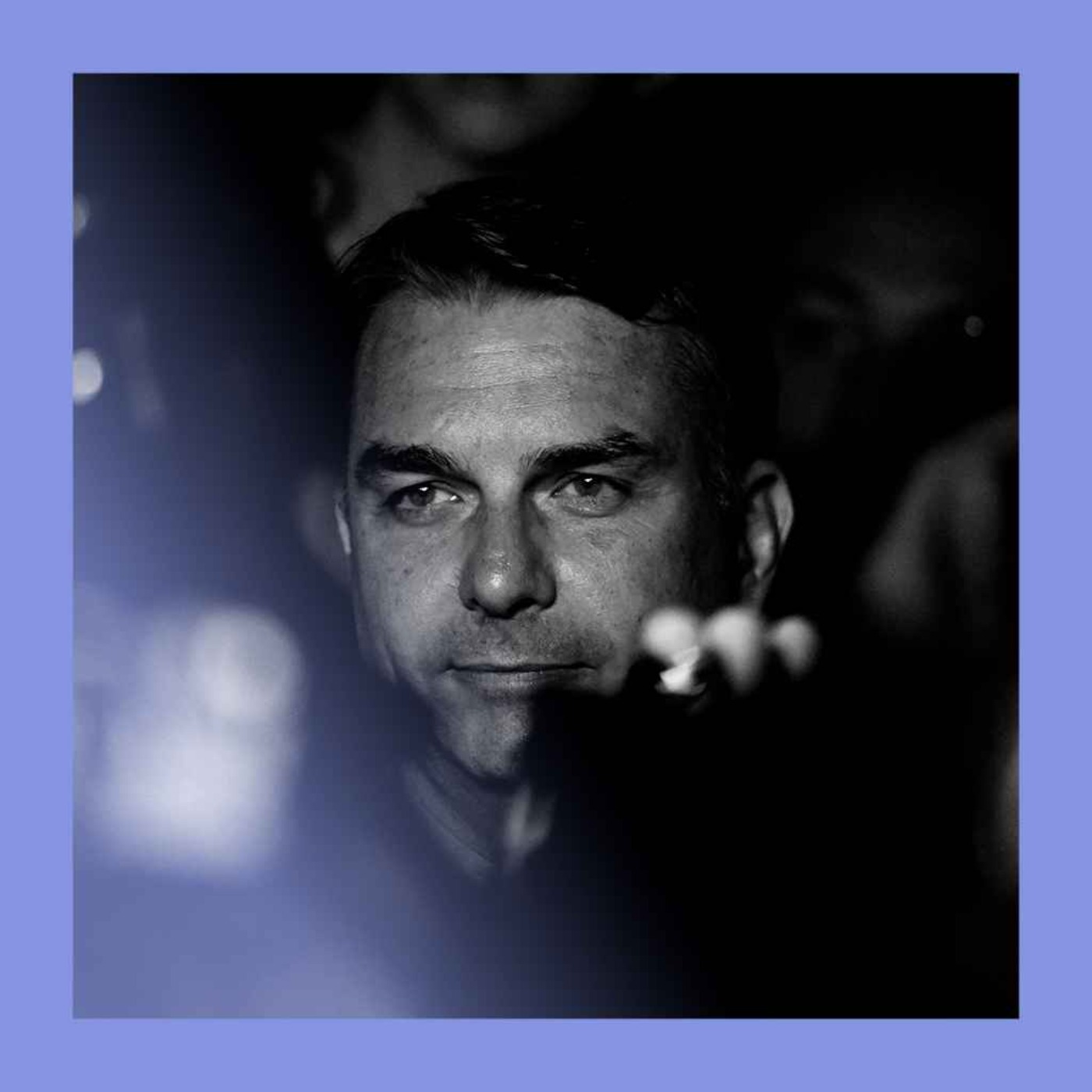
1:13The results are in from Brazil's general election, and in them is something of a surprise. The populist right challenger, Flavio Bolsonaro, got the most votes. His supporters partied, and he sounded triumphant.
1:32We told you last week it was going to be tight, but that was in part because of voter apathy. The choice was between Luiz Inácio Lula da Silva, the incumbent aging lefty who's lost the confidence of the country, and Mr. Bolsonaro, son of the now-imprisoned, coup-staging Jair Bolsonaro, and, like the rest of his family, a big fan of Donald Trump. Neither won outright. So what's still at stake is not only how Brazil will be run, but how it will fit into a whole continent drifting toward the authoritarian right. I went to downtown Rio, where there were a lot of Lula supporters, some of them crying, people were visibly upset, because the results were much better than expected for Flavio Bolsonaro.
2:22Lula's right-wing challenger. Ana Lankas is the economist's Brazil bureau chief. One young voter said to me that the election felt like a funeral. Several people told me that they were just voting in the lesser evil. There was not a whole lot of enthusiasm. At least three people I spoke to on the street today said that the main sentiment was desanimo. which means discouragement. And now Brazilians will head to the polls again. Since neither candidate got more than half of the votes, the vote will be decided at the end of the month. Now, you told us last week that it was an unpredictable election, but nevertheless, Mr.
3:08Bolsonaro did perhaps far better than expected. He did far better than expected, and then the polls had predicted. So leading up to the election, as I said last week, Lula and Bolsonaro have been alternating as frontrunners in the final stretch, which made it very hard to predict the outcome. And there was also a lot of abstention and a lot of undecided voters. So this was always going to be quite a volatile race. But even so, there's no way you can't classify this as a huge win for Bolsonaro. A year ago, the populist right wing movement founded by former president Jair Bolsonaro was in the dumps.
3:44Bolsonaro was sentenced to 27 years in jail for plotting a coup after losing his bid for re-election against the current president, Luis Inácio Lula da Silva, in 2022. And the expectation was that Brazil would be able to get over the polarization that has plagued it for almost a decade. But instead, the Bolsonaro clan had a brilliant night, and they looked set to make a comeback through Flavio, Jair's oldest son. Others in the Bolsonaro family were also really big winners last night. How do you mean? So the Bolsonaro clan is made up of telenovela-like characters. Michelle Bolsonaro is Jair's third wife.
4:23She's much younger. And Brazilians love her. She's a God-fearing evangelical Christian. She has plastic surgery. She's good-looking. And she's going to become a senator, along with Carlos Bolsonaro, who's Flavio's middle brother. And the youngest son, Jair Renan, is inexperienced and very young. He's 28. he's going to become a federal congressman together with Jair Bolsonaro's brother. So that's a lot of names for you in there. But the point is the Bolsonaro clan had a triumphant night. And you told us last week that the younger Bolsonaro's signature policy program is simply to pardon the elder Bolsonaro.
5:03Yeah, that's right. There are other proposals linked to reducing crime and corruption, for example. but Flavio's credentials aren't so strong on either front because he's being investigated for alleged corruption and he has been investigated for alleged ties to Rio de Janeiro's criminal underworld. I will say though that Flavio Bolsonaro denies any allegations of wrongdoing. He also has some proposals on reducing Brazil's deficit but his main thing is to basically pardon his father and his brother Eduardo who's living in self-exile in Texas and to impeach the Supreme court justices that have harmed his family.
5:42And so given the momentum that he apparently has now, what do you see happening in the runoff? Flavio is favored to win the election now, because since Brazil returned to democracy in 1985, no candidate who lost the first round of the election has won the runoff. And several of the other smaller candidates in the race who got around 8 % of votes lean more towards the right than towards the left. There are also other indications that there's a kind of structural right-wing shift happening in Brazilian society because right-wing parties, and particularly Bolsonaro's Liberal Party, swept the Senate and the Lower House.
6:19Almost none of Lula's allies won new Senate seats or governorships. So I think it's going to be very hard for Lula to turn this around, even though there is still a slim chance that he could. Well, talk me through that. So Lula's slim path to victory will rely on increasing turnout. There was a lot of abstention in this race, around 33 million of 158 million eligible voters didn't turn up, which is a record since Brazil returned to democracy in 1985. So if Lula manages to increase turnout, he could still win. He also has some incumbency advantages. He could, for example, pass new popular bills before the runoff or declare new handouts.
6:58But in general, I think Brazilians are tiring of Lula and of his which has been in power for 18 of the past 24 years. And Lula's in his third term in office and is almost 81 years old. So I think there's kind of a sense of stagnation in the country and a lot of people who want change. So it's really mostly an incumbency problem for Lula or just that he's getting on in years too much? I think anti-incumbency does play an important role in this, but I think a lot of people don't trust Lula's party, which is known as the Workers' Party, or PT by its Portuguese acronym. They have faced multiple corruption investigations.
7:38Lula, in fact, was in jail for one and a half years on corruption charges, which were overturned in 2021. The PT was also responsible for a very deep recession in the 2010s. And what I've noticed a lot in this election is that a lot of people feel a sense of stagnation. They feel that there's an affordability crisis in the country and that they aren't getting ahead. It reminds me a lot of the 2024 election in the United States, where Biden lost support because of a sense that the economy wasn't going in the right direction. That's happening in Brazil, even though some economic indicators are actually positive.
8:13But this is not just a vote on pocketbook issues, as you say. There is this big tending towards the right in Brazil at the moment. Yeah, that's right. Not just in Brazil, but in the whole region. So since Donald Trump came back to power in January 2025, all seven presidential elections in Latin America have been won by like-minded right-wing allies. And if Brazil, the biggest country by far in Latin America, the world's fourth biggest democracy, were to flip to the right, that would be the jewel in the crown for Donald Trump. It would also be very important because Brazil is an agricultural powerhouse.
8:51It's about to take over the United States as the world's biggest agricultural exporter. And Brazil is awash in oil and renewable energy and critical minerals and particularly rare earths, which are a group of elements needed in everything from wind turbines to weapons. And Donald Trump's White House is obsessed with getting their hands on these because China has a chokehold. So Donald Trump has made it very clear who his preferred candidate would be, And that would be Flavia Bolsonaro. And if Flavia were to win, we can expect much closer alignment between Brazil and the MAGA movement, Donald Trump.
9:31So this election has consequences far beyond Brazil. It would cement a rightward shift on the whole continent.
9:41Anna, thanks so much for staying up so late to talk to us. Thanks for having me, Jason.
10:17Transcription by CastingWords a group of men who believe dating in the West is broken, so they travel to places where costs are low, their odds are better, and women are, let's say, more trad. We traveled to Vietnam to meet some of the bro-iest. The episode ran in April, but it's now on the Listener's Choice shortlist for the Signal Awards. Listeners, make your choice. Scroll back, have a listen, or listen again, and then pick your winner at vote.signalaward.com. Thanks.
11:17We'll see you next time. Join the millions of customers who trust HomeServe. For 50 % less your first year, go to homeserve.com slash intelligence. That's homeserve.com slash intelligence for 50 % less. Savings compared to renewal price, Void in Florida. In America, the car has long been a symbol of freedom. No wonder people don't like it when they feel their movements are being tracked. In recent months, there have even been protests about apparent surveillance.
11:52The problem? Automatic license plate readers that use AI to identify vehicles. Automatic license plate readers are a technology that has long been used by police on the roads. Holly Berman is a news editor. They collect tolls, they enforce traffic laws. The biggest operator of these is called Flock. They use AI to track vehicles. There's roughly 120 ,000 of its cameras across the country, but opposition to them specifically is growing. Holly, why does anyone care about automatic license plate readers? So a big flashpoint of Flock is the way that they use AI. These can also track the number plate of a car.
12:38They can track a vehicle's colour. Police say this helps them to solve thefts and abductions. Flock itself claims to have helped 10 ,000 missing person cases last year. But many people I spoke to point out that cops don't need warrants to look up plates and state laws vary on how officers should be logging their searches, how long data should be stored for, and whether this footage can be sent or shared with other states. So I spoke to Melissa Owen of the National Association of Criminal Defence Lawyers. And she, like many others, pointed out that when you combine this mix of regulation with the scale of Flock, its network of automatic licence plate readers, in her words, goes far beyond what people previously understood the tools to be.
13:24Who is objecting? It's kind of across the scale. The share of Americans opposed to automatic licence plate readers has increased from a third to nearly a half in less than a year. That's according to polling by YouGov. Lawmakers from both parties are considering bills to limit the technology. Last month, there was a Senate subcommittee hearing in which Josh Hawley, a Republican senator from Missouri, invited several surveillance company bosses to testify amid these mounting privacy concerns. All of them declined. The use of these automatic readers isn't new. So why the backlash against them now?
14:00They're not new. As I said, they've been long used by police departments. Opposition to them actually isn't that new either. Activists on the left have protested against their use by federal immigration authorities. Donald Trump himself likes Flock. He says that it helps law enforcement. But the uproar with Flock is much more forceful. It's escalated pretty fast. I spoke to Rindala Alajaji from the Electronic Frontier Foundation, which is a non-profit digital rights group. I think she summarised quite well why groups like hers, but also why normal Americans feel so uneasy about FLOC. Master violence is master violence.
14:38No matter what you do to make it more secure or transparent, people don't want to be watched. And I think foundational principle of the US has been that if you're not doing anything wrong, then the government should leave you alone. I would compare the reaction to FLOC to the outcry over data centres. actually. They're both technology that has scaled up fast. They're both visible in people's local communities and they're both symbols of AI anxiety. So what is it that people are really objecting to? Is it their use or is it their misuse? It's kind of a mix of both. So on the use side of Flock, in addition to using AI to broaden the way that police can search for the specifics of a vehicle, They can also broaden where they're searching for a vehicle.
15:29Owners can share data with other local police departments and into Flock's nationwide database, which is a unique feature and allows officers to search between different cities and states. the misuse is where this can become more sinister and on some sides you've got cases of software errors that have led to the wrong drivers being stopped the more troubling cases are examples of officers being caught stalking ex-partners and tracking their spouses there are also cases of officers entering nonsensical reasons for why they were looking up plates in the first place When I spoke to the Electronic Frontier Foundation, they did an analysis of this search data.
16:12They found examples of police entering terms like LOL and sexy as for why they were looking up a number plate. The Electronic Frontier Foundation is one of several organisations that are suing cities for allegedly running thousands of unnecessary searches. Flock says it's tightened the requirements for searching its databases and has since added a drop-down category menu for selecting why a search has happened. But I would say a lack of transparency about how flock is used and these problems more broadly is what's anchoring people. Holly, looking from the outside feels like people have a lot of other things to be concerned about right now.
16:49Is this really such a big issue? It is in ways that are quite surprising. It's being felt across the political spectrum. It is spilling into the midterms. you know, float cameras aren't on the ballot, but it's how people are finding ways to campaign. In Montana, you've got Seth Bodno, who's an independent running for Senate. He recently uploaded a video of himself shooting a float camera with a shotgun. Are you tired of security cameras watching your every move? Yeah, me too. I got a message we can send to them. In Texas, Greg Abbott, who's the Republican governor running for re-election, recently paused state funding for FLOC.
17:29And across America, more than 250 towns, cities, and schools ended their contracts with FLOC in August and September. When you look at the same period a year ago, that number was just five. This is all according to data tracked by Secure Justice and Anti-Surveillance Group. More broadly, I think this reflects people's anxiety in America about state overreach, about being watched in ways that they feel like they cannot control. Americans value being free, being able to go about their lives independently. And I think that when you hear cases of how Flock is being used or misused, that makes people anxious about these freedoms being infringed.
18:12Holly, thank you very much. Thank you, Rosie.
18:51Alice Fulwood: on-off rotor schedule is common in demanding, exhausting and dangerous work, for the recans who tend oil platforms, for miners or for the crew of container ships. Yet it is now increasingly common in another taxing and exacting field, the booming business of caring for the offspring of the uber rich.
19:15When I began, you had, you know, very specific tapes of nannies. Obviously, we were British American and I'm English like you. So people to this day still come British nannies, British nannies. We want a normal nanny. We want a British nanny.
19:28Alice Fulwood: Anita Rogers is the founder of the British American Household Staffing Agency. It places nannies and governesses, butlers and chefs in ultra-wealthy households. A few years ago, ultra-high-paying nanny gigs were rare. Even very wealthy families could be price sensitive. But not anymore. We're not getting the pushback we used to get, but we used to just get a lot of, even extremely wealthy families, oh, I'm not paying that. It's like we're not trying to make a higher fee, we promise. This is just the best. And the nannies they offer really are the best. They're trained at the best academies, they speak several languages, have degrees from elite universities, and are willing to dedicate themselves entirely to their nanny careers, travelling constantly and putting in 12 or 14-hour days.
20:15The expectations of this family are high. So, for instance, they want nannies that have experience on yachts and jets. It's just a given.
20:23Alice Fulwood: The enthusiasm of the rich for the very best household staff has led to something of a booming cottage industry. Although institutions like the Norland College have been around for more than a century, many of the agencies often used by upper crust parents to find elite nannies were founded more recently. The basics of being a nanny are the same whether you're doing it for the ultra-rich or the merely affluent Bottle feeding, meal prep, playtime and trips to the playground But the environment, structure, demands and expectations can make the job in many ways unrecognisable Nannies are often one of perhaps a dozen staff on a property Anita told me that not everyone is cut out to thrive in an environment that is, quote, like succession.
21:13Alice Fulwood: But the structure of the job, of nannying for the ultra-rich, is changing. Before COVID, rich families would often cobble together care. They might have a weekday nanny, a weekend nanny, and a babysitter for date nights. Now it's all rota, rota, rota. Wealthy parents want two full-time nannies that can cover every single waking hour every day of the year on an on-off rota schedule. This comes at a combined cost of perhaps$300 ,000 to$500 ,000 a year. There's full uptime, redundant coverage, and shift handovers. The anticipation of total devotion can sometimes result in extreme demands. One night to the ultra-rich recalls a family she once worked for requiring she ironed their son's underwear every day.
21:58Alice Fulwood: Another was furious she did not immediately fetch a ladder to replace a light bulb in the playroom's lofty 17-feet-high ceilings, while caring for their small children. And there are all kinds of things that can go wrong. We placed a nanny in Los Angeles, a good nanny, and they had her in a state in Hawaii. And the family were livid with us because she went to Hawaii, fell in love with the head of security, and they both eloped in Hawaii.
22:32Alice Fulwood: But high expectations come with high rewards. Successful reality television shows have long followed wealthy families like the Kardashians or rich real housewives. This June, Hulu aired Million Dollar Nannies, a reality television show that followed the founder of a new nanny agency in Ibiza, one set up by a nanny who had once worked for Kourtney Kardashian. The show itself was a bit of a farce, more adult drama than toddler tantrums. rooms. Yet it still offered up classic reality escapism. The twist? The fantasy on display was not being one of the rich. It was being employed by them.
23:25That's all for this episode of The Intelligence. We'll see you back here tomorrow. Thank you.
Flávio Bolsonaro, populist-right son of the imprisoned coup architect Jair, received the most votes in the presidential first round. We ask why Luiz Inácio Lula da Silva, the incumbent, fell behind—and what is at stake when they go head-to-head. We examine Americans’ growing anger at automatic number-plate-reading cameras. And the demanding but lucrative business of nannying the children of the super-rich.
Guests and host:
Topics covered:
Listen to what matters most, from global politics and business to science and technology—subscribe to The Economist.
Hosted on Acast. See acast.com/privacy for more information.