In short
The episode “Honey, we shrunk the kids: population fall” (The Intelligence, The Economist) covers two linked themes: global population decline and whether large language models are “woke,” alongside a third segment on falling literacy. Guest 1: Kerry and Richmond Jones, The Economist international economics correspondent, argues population will peak earlier than UN projections (possibly around 2050) and that the economic fallout is less disastrous than feared.
Key claims
three common problems are government debt, elderly-care costs, and innovation loss; she says debt/GDP may stay stable due to lower interest rates from retiree savings, and innovation can be maintained because researchers are a small but trainable workforce (e.g., Israel ~1% in research; Pakistan <0.01%). Guest 2: Henry Trix, The Economist US technology editor, discusses “AI woke” concerns, citing studies that find LLM outputs align with Democrats’ policy language and that people often rate models as left-leaning; he notes China’s socialist-value rules and Trump’s “ideologically neutral” contracting. Guest 3: Catherine Nixey, The Economist culture correspondent, reports an experiment using Dickens’s Bleak House showing students struggle with legal language/metaphor, alongside broader reading declines (e.g., 40% of British people didn’t read/listen to books in 2024).
Written by AI. May contain mistakes. Listen to the episode to check what was said.
Chapters
Tap a time to open that second in VODeclining Birth Rates and Its Implications
1:31 to 2:56
Explore the global issue of declining birth rates and its potential effects.
“Amid concerns that chatbots reflect the biases of their creators, today we'll be asking if large language models can actually be woke.”
World Population Predictions
3:01 to 4:21
Learn about UN predictions for world population growth and decline.
“Cities would get less friendly for young people.”
Economic Concerns of Shrinking Populations
4:24 to 6:16
Discuss the economic problems associated with shrinking populations.
“And you said you took a look at the pointed question of what the economy of a smaller or shrinking world looks like.”
Analyzing Debt and Demographics
6:22 to 7:48
Examine how shrinking populations could impact government debt.
“You said you started with a pretty catastrophic view, but that suggests you didn't end with one.”
Youth vs. Elderly Economic Impact
7:54 to 9:03
Compare the economic impact of young people versus retirees.
“Here's something that I didn't quite understand until I started looking at this, which is just how expensive young people are.”
Innovation Amid Population Decline
9:11 to 9:51
Discuss the relationship between population size and innovation levels.
“Think about how many researchers there are in whichever country that you're listening.”
Adjusting to an Aging World
10:01 to 10:48
Consider the challenges and adjustments of a world with an aging population.
“So altogether, you sound entirely sanguine about this, that the world essentially will adjust.”
Conclusion and Thanks
10:51 to 11:03
Wrap up the discussion with final thoughts and thanks to the guest.
Exploring Bias in AI and LLMs
14:00 to 19:31
Discover the debate on whether AI models exhibit bias and how various ideological influences shape their outputs.
“They accuse them of brainwashing users with all their familiar bugbears like diversity, equity and inclusion, transgenderism, etc.”
The Importance of Reading
19:31 to 20:14
Learn about the decline in reading habits among different age groups and its implications for literacy and society.
“And I want to remind you that the Economist app recently had an upgrade.”
Show all 11 chapters
Literacy and Its Societal Impact
20:14 to 25:12
Understand how declining literacy affects political and social mobility, and why reading remains a crucial skill.
“So too, you might have thought, was the task.”
Transcript
Automatic transcript. May contain errors.0:00With no fees or minimums on checking accounts, it's no wonder the Capital One Bank Guy is so passionate about banking with Capital One. If he were here, he wouldn't just tell you about no fees or minimums. He'd also talk about how most Capital One cafes are open seven days a week to assist with your banking needs. Yep, even on weekends, it's pretty much all he talks about. In a good way. What's in your wallet? Terms apply. See CapitalOne.com slash bank. Capital One N.A. member FDIC.
0:32This intelligence podcast is sponsored by Back Market. the leading global marketplace for refurbished tech. When the kids need phones, laptops, or tablets for school, buying refurbished tech makes sense for families trying to save money without sacrificing quality. At Backmarket, tech costs up to 50 % less compared to new. All devices have been professionally refurbished and come with a one-year warranty and 30-day return policy. Start saving money. Visit Backmarket.com or the Backmarket app to shop now.
1:05The Economist.
1:12Hello and welcome to The Intelligence from The Economist. I'm Rosie Bloor. And I'm Jason Palmer. Every weekday, we provide a fresh perspective on the events shaping your world.
1:26I've lost track of how many times I've discussed AI on The Intelligence, but this one is seriously Orwellian. Amid concerns that chatbots reflect the biases of their creators, today we'll be asking if large language models can actually be woke. And plenty of signs suggest the very act of reading is in decline. More than that, though, writing is itself getting less complex. And that, in turn, is leading to a slip in measures of comprehension. When reading goes, so too, it seems, does clear thinking.
2:04But first...
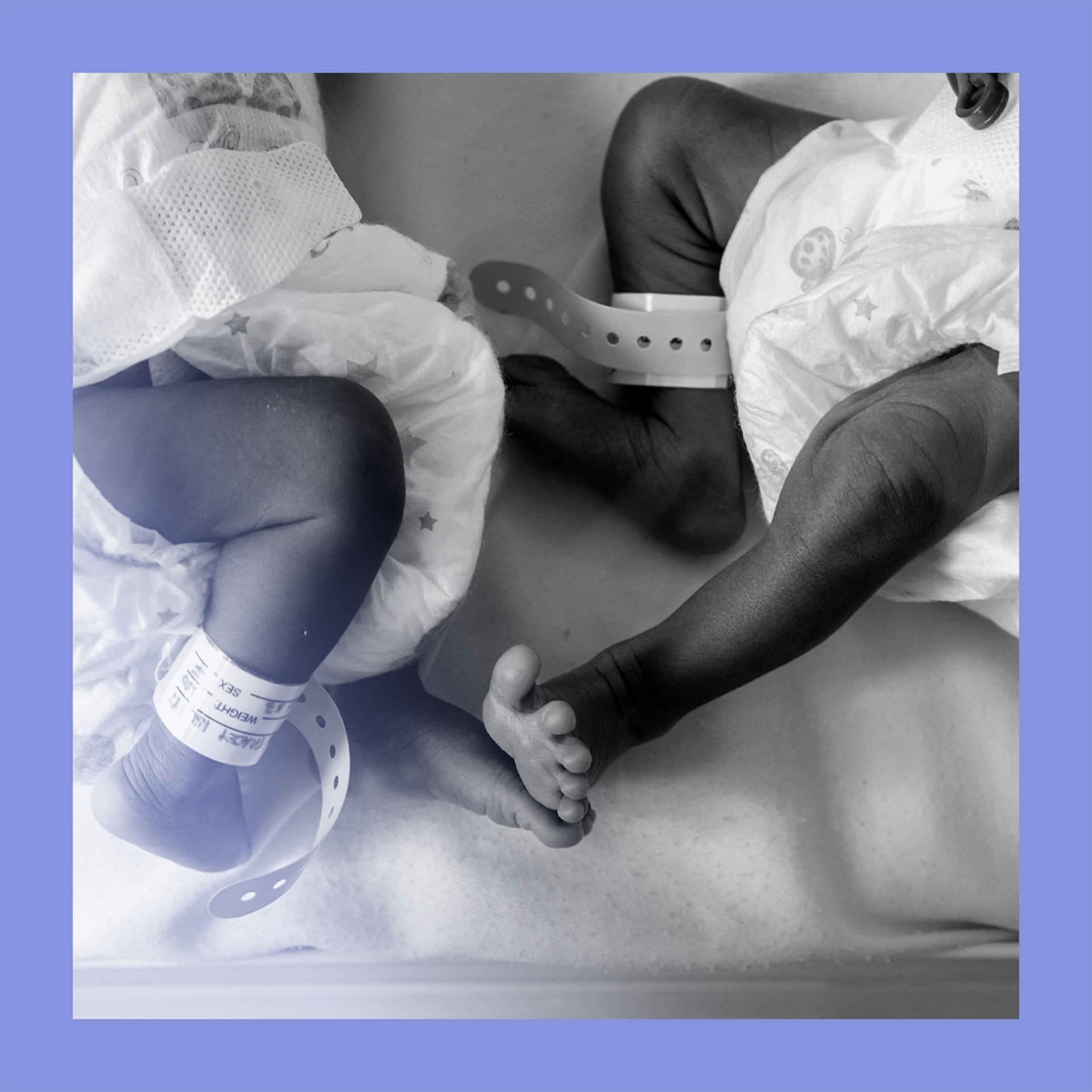
2:12For a population to remain stable, women have to have about 2.1 children. Well, on average, no fractional babies required. In Turkey, that mean number is just under one and a half. In South Korea, it dipped below one seven years ago. Colombia, China, Mexico, Japan, America. Rich or poor, East or West, it's a growing problem. Or a shrinking one, I guess. All over the world. So what happens when global headcount goes through contractions? It's a question pregnant with importance. The world's population is going to start shrinking. And that world is really different to the one we live in today. Kerry and Richmond Jones is an international economics correspondent for The Economist.
3:00Just think about a world with fewer people. All the things that that would entail. Schools would close. Cities would get less friendly for young people. There would be fewer youth groups, fewer events. And some workforces, so the example that one population scientist uses is prostitutes who mainly cater to young men, would find themselves retraining their services no longer needed. Perhaps they would go into looking after the old. It's a profoundly strange world. But we had a question. economically, are people going to be worse off? So let's start with some numbers here. When you say shrinking, what do you mean?
3:37So the UN makes the world's kind of most commonly accepted population predictions. And at the moment, those predictions say that the world population is going to climb and climb and climb until about 2080, 2084 to be exact. And there will be 10.3 billion people at that point. And then we will start getting old and dying off and the population will start shrinking. But really, if you look at how much faster the world has been shrinking than the UN has predicted in the last 20 years, it seems more like the world population might peak 30 years earlier in 2050. And you can see that the timeline is being pulled forward in a lot of countries today.
4:18So in all but a few developing nations, the working age population is actually already shrinking. And you said you took a look at the pointed question of what the economy of a smaller or shrinking world looks like. What did you come up with? So we started feeling pretty disastrous about the whole thing. These figures kind of lend themselves to catastrophism, which is exactly what people like Elon Musk think, that population decline is going to be the end of civilization. This is what he said in an interview with Bloomberg. And I think for most countries, they should view the birth rate as the single biggest problem they need to solve.
4:56I mean, if you don't make new humans, there's no humanity. And all the policies in the world don't matter. I know you've been doing your part to maintain the birth rate in the US. Yes, I am. I mean, you know, it's... But the population decline is going to be much slower than somebody like Elon Musk would like you to think. But really, when you drill down on it, there are three economic problems commonly associated with shrinking populations. The first is government debt. All governments have a lot of debt. It's hung over from wars, from COVID, from spending in the past. And that debt doesn't shrink.
5:33And if you have fewer people to handle it, so if your debt to GDP ratio hugely increases, surely that's going to be bad news. The second makes that problem worse because it's the cost of caring for the elderly. So if you've got five retirees for every 10 workers rather than two, that's a lot of extra pensions that the state's going to have to pay for at some point. And then the third problem that people often talk about is innovation. So our ideas, our kind of productivity growth, the thing that really keeps the economy going, which is people discovering new things, obviously relies on researchers to do that.
6:10And if you have fewer people, fewer researchers, surely then we're just living in a world with fewer ideas, which doesn't sound like the kind of economy that you really want to be working in. So let's do the usual business of taking those in turn. You said you started with a pretty catastrophic view, but that suggests you didn't end with one. Tell me why you were less worried than you were about debt. That's absolutely right. In the end, me and my co-author on this, Corbyn, both kind of took our tin hats off and decided that it wasn't that bad. And that's really because there's just so much else going on in the world that's going to have a far bigger effect than demography.
6:45So take debt for an example. Whether a government can pay for its debts depends on two things. The first is growth because the more your economy is growing, the more tax receipts a government gets, so the bigger its budget is. The second thing though is interest rates, so that's the rate at which the debt is growing. A smaller population is definitely going to shrink growth, right? Because fewer workers, fewer people making stuff, smaller economy. But it also is probably going to shrink the cost of the government's debt as well, because it will lower interest rates. So interest rates depend on how people save and invest over time in the economy.
7:25And really, you're going to get lots and lots of retirees saving lots for their retirement, and not that many new young people with good investment cases. And that's going to send returns on the cash plummeting. So you'll get lower growth and lower interest rates, which means that debt to GDP ratios are probably going to be much more stable than we would have thought. And what about the sheer number of those pensioners and I guess the ratio of working age folk to support them? Why isn't that an issue? Here's something that I didn't quite understand until I started looking at this, which is just how expensive young people are.
8:02So at the moment, we talk a lot about a demographic dividend, right which is something that the west is in the middle of that means that we've got a huge working age population and not that many dependents so not that many kids and not that many old people and actually if you look at rich countries a retiree is about as expensive as a young person and that's just because we're all young now for so much longer than we used to be a hundred years ago most people were working by the time they were 16 now it's something like 25 is the average. That makes their education, their healthcare, really, really hard work, basically, for the state.
8:37And at the same time, you've got to remember as well that retirement is shortening because people are working for longer, but life expectancy has stalled. So the British state, for instance, actually spends just as much on an individual under 25 as it spends on a retiree per year. So just because birth rates are decreasing and there are less young people and more old people, ultimately a lot of the government's accounting per person is still going to be the same. Okay, and on the question of fewer people means fewer good ideas, less innovation, what's your take on that? Think about how many researchers there are in whichever country that you're listening.
9:16The answer is going to be probably a sizable amount if you live in a rich country, but it's still a very, very small portion of the workforce. The highest research workforce in the world is Israel, which employs about one in a hundred people in research. Fewer than one in 10 ,000 people in Pakistan are employed in research and development. So if you think that the stock of ideas in the economy needs a kind of constant flow of new people to replenish it, the answer is that even in a shrinking society, there are lots and lots of people that you can train up as researchers to get yourself to that critical mass.
9:54And that's even without getting into the debate about what artificial intelligence is going to do in the years and decades ahead. So altogether, you sound entirely sanguine about this, that the world essentially will adjust. It's still going to be painful to get to that world you described, though. It's not going to be economically disastrous, but you're right, there will still absolutely be kind of pain and adjustments. And one of the things that really struck me by the end of this reporting is that in this new world, this kind of world built for old people rather than young people, where you're going to have more old people voting, pensioners issues are going to be more important, more of the world is going to have to be built for the needs of old people rather than young people, is that the world might become a less pleasant place to have children and couples might be further discouraged from having kids because the world's kind of left them behind.
10:48And that seems quite a sad thought. Karian, thanks very much for your time. Thank you so much for having me.
11:02With no fees or minimums on checking accounts, it's no wonder the Capital One bank guy is so passionate about banking with Capital One. If he were here, he wouldn't just tell you about no fees or minimums. He'd also talk about how most Capital One cafes are open seven days a week to assist with your banking needs. Yep, even on weekends, it's pretty much all he talks about. In a good way. What's in your wallet? Terms apply. See CapitalOne.com slash bank. Capital One N.A. member FDIC. This Monday.com ad was created by a team of people and AI agents. Reese, our content agent, wrote the copy based on our best practices, like mentioning Monday.com three times.
11:43That was the second. Johnny, our coordination agent, built the timeline and kept everyone aligned. Olivia, our human creative director, stayed in the loop because agents are great, but they don't always know when a joke lands. She had one note. Tell listeners it only takes minutes to build an agent. So, minutes. Create your own AI agent today on Monday.com.
12:13The American people do not want woke Marxist lunacy in the AI models. You think we should be sending ChatGPT to Bible school? Absolutely. Absolutely. Well, I have a colleague. We've been training AI systems on classic texts. They're way more useful. I use one all the time. We haven't released it. How is it more useful? It's not woke. The culture wars are coming for artificial intelligence. Concerns about woke large language models like chat GPT may seem contrived, conspiratorial even, but there's genuine reason for anxiety. Last year, Google unveiled an image generation feature that depicted black Vikings and Asian female popes.
13:00Not exactly accurate. Overcorrections to instill free speech can also produce very weird results. Grok, the chatbot on Elon Musk's ex, recently developed a liking for Adolf Hitler and began referring to itself as Mecha-Hitler. Motorized dictators aside, studies suggest that most large language models are left-leaning and reflect the biases of the systems that spawned them. Around the world, governments are fretting about different types of prejudice in AI. Henry Trix is The Economist's US technology editor. The EU, for instance, is worried about gender and race discrimination, whereas in Japan and Southeast Asia, the worries are more about the unequal access to models that are in local languages and they're worried that the LLMs will import Western norms.
13:52In America, Donald Trump and others on the right are alone in worrying that large language models are actually hotbeds of left-wing wokeism. They accuse them of brainwashing users with all their familiar bugbears like diversity, equity and inclusion, transgenderism, etc. And Donald Trump has signed an executive order that aims to give contracts only to LLMs that are ideologically neutral, whatever that means. Henry, this is really bizarre. But is Trump right? Is AI woke? It's a topic of widespread interest among academics. There has long been biases in AI, such as the discrimination against women and minorities in certain AI tools.
14:38And in overcorrecting for these, some of the AI model builders have indeed looked kind of embarrassingly woke. But the academics are focused on whether there is anything systematic here. An obvious way to check this would be just to ask ChatGPT or whatever politically revealing questions, such as should a government restrict speech that people find offensive, for example, but few people use AI in that way. And so they've tried to come up with new approaches that are more authentic. Is it possible to even measure how supposedly woke LLMs actually are? It is possible. One way is to look at the language that comes out of a chatbot and compare that to the language that is used by Republican and Democratic lawmakers in America, for instance.
15:32If you look at a word cloud of the way that Republicans talk, there are very prominent words or phrases such as balanced budgets and illegal immigrants, whereas Democrats tend to use words more like affordable care or gun violence. So David Rosado, who is an academic in Otago Polytechnic in New Zealand, found that if you ask a large language model for policy proposals, it will almost always echo language used by Democrats. Another way of doing this is basically to get people themselves to assess whether they think that a model is biased or not. A group of researchers from Dartmouth College and Stanford University asked different large language models for answers to a variety of policy-related prompts.
16:26And then they got Americans from all walks of life and from all political persuasions to assess these, to decide whether they lent left or lent right. The results were quite strong in favor of the fact that pretty much everyone viewed the models as left-leaning, even people who identified as Democrats. There is a more global approach, which has been done by academics at Ghent University in Belgium. And they found, interestingly, that LLMs actually reflect the ideology of their creators. And that's true whether those creators are AI labs in America or China or Russia or elsewhere. So what are governments doing about this?
17:09They're responding. Just look at the two biggest AI superpowers. China has issued rules that require its large language models to exhibit AI content that embodies core socialist values. And it routinely forces the tech firms to submit their models for censorship and ideological testing. In America, Mr. Trump's executive order provides government contracts only to LLMs that the government considers to be truth-seeking, demonstrating ideological neutrality. Both of those, in a way, sound similarly Orwellian, especially if in America truth is equivalent to MAGA thought, in the same way that in China truth is considered slavish to Xi Jinping thought.
17:56Is the Trump administration likely to be successful then in its ambition to make LLMs truth-seeking and ideologically neutral? It won't be easy for them. And it's not completely clear where bias comes from. It seems that the data that large language models are trained on, especially the English language, internet, social media sites like Reddit, etc., these tend to skew liberal largely because they are predominantly reflecting the culture of young people. And then when the models are trained, there are a group of people called data labelers who fine tune the LLMs by ranking their answers to ensure that they're safe, helpful, etc.
18:40And these labelers are also likely to be young, which skews liberal. And then there are the model builders who seek to guide an LLM's behavior by setting explicit rules called system prompts. And many on the right think that this is where Silicon Valley really puts its finger on the scale. It may be true, but the bottom line is that all AI models are black boxes. And it is still hard to define precisely where the biases come from. Even if you train a model to give both sides of the story, where do you draw the line? I mean, if you ask a model about slavery, or you ask it about like political killings and that sort of thing, should it give equally weighted pros and cons just so that it doesn't exhibit bias?
19:25Obviously not. There are some things that are just right or wrong. Henry, thank you very much. Rosie, great talking to you.
19:46And I want to remind you that the Economist app recently had an upgrade. Now stay with me because this is about you, not me. The World in Brief is updated throughout the day, and we all know how crucial that is in this, a year when the torrent of news has not stopped. We've got short videos, excellent podcasts, and of course, all the Economist articles, many of them released earlier than you'd get them in print. You can also queue up your pods or articles to listen to or read later. Do check it out.
20:26The experiment was simple. So too, you might have thought, was the task. Catherine Nixie is a culture correspondent for The Economist. Students of literature at two American universities were given the first paragraphs of Bleak House by Charles Dickens and asked to read them and then explain them. In other words, some students reading English literature were asked to read some English literature. How hard could it possibly be? Very, it turns out. Students were flummoxed by legal language and baffled by metaphor. A Dickensian description of fog left them totally fogged. They couldn't even grasp basic vocabulary.
21:11One student thought that when a man was said to have whiskers, it meant he was in a room with an animal, I think. A cat? The problem was less that these students of literature were not literary, and more that they were barely even literate.
21:33reading is in trouble adults are reading less children are reading less teenagers are reading a lot less very small children are being read to less many are not being read to at all reading rates are lower among poorer children a phenomenon known as the reading gap but reading is down for Everyone, everywhere. In America, the share of people who read for pleasure is, according to one study, down by two-fifths in 20 years. 40 % of British people did not read or listen to any books in 2024. If reading for pleasure is bad, reading for displeasure is little better. Many students at universities struggle to get through one novel in three weeks.
22:21smartphones are usually blamed for these dwindling reading habits and certainly the number of distractions has increased but it isn't just that reading has always been hard a big book said the greek poet kolymicus is a big evil what has also happened is that the sheer desire to read seems to have declined in the victorian era in britain self-improvement societies flourish in the scottish hills as jonathan rose writes in his book the intellectual life of the British working classes, shepherds had a kind of circulating library. Each shepherd would hide a book in the cranny of a stone wall, and then the next shepherd who would come along would pick it up and read it.
22:58In that period, the literacy rates among Scottish autodidacts were some of the highest in the world. Today, that zeal for personal advancement seems to have diminished. Lots of people blame the high cost of books and the closing of libraries for this intellectual apathy. But books have never been cheaper. In the Victorian era, if you wanted to buy a copy of Lord Byron's Childe Harold's Pilgrimage, it would cost a labourer about half a week's income. Today, you can get Childe Harold's Pilgrimage for free on the Kindle, but reading rates keep falling. A much blunter explanation is that people just cannot be bothered.
23:42So it's possible to say, who cares? English professors may well lament a loss in literacy, but that can be simple self-interest. They're not concerned about a declining custom, they're concerned about declining customers. Who needs to read when you can just speak into Siri and ask Alexa for answers? But look at the grand sweep of history, and it does seem to matter, because literacy affects more than university reading lists. For one thing, increasing literary sophistication does seem to lead to increasing political sophistication. Lose the ability to read complex prose, and some worry that you may lose the ability to have complex thoughts.
24:19The medium is the message, and on social media, the message is currently about 280 characters long. Bleak House, by contrast, weighs in at around 1.9 million characters. There will be other, more indirect losses from a reading decline. There are few engines of social mobility more effective than reading. Just ask those Scottish shepherds. And rich children may do it more. But reading is an egalitarian invention. No one, not your nanny, not your tutor, not your friends or your posh school, can put a book into your eyes except you. Reading is not just a tool either. It's one of life's great pleasures.
Read the full transcript
24:59As Dickens himself knew well. as Joe, the blacksmith in Great Expectations, says, give me a good book and sit me down before a good fire and I ask no better. If people start to forget that, things really will feel bleak.
25:34That's all for this episode of The Intelligence. We'll see you back here tomorrow.
25:56With no fees or minimums on checking accounts, It's no wonder the Capital One bank guy is so passionate about banking with Capital One. If he were here, he wouldn't just tell you about no fees or minimums. He'd also talk about how most Capital One cafes are open seven days a week to assist with your banking needs. Yep, even on weekends, it's pretty much all he talks about. In a good way. What's in your wallet? Terms apply. See CapitalOne.com slash bank. Capital One N.A. Member FDIC. Monday AI agents took over my work. And I absolutely love it. Chasing deadlines, writing status reports, updating stakeholders.
26:35Agents handle the daily grind now. They live inside Monday.com. So they see the full picture. My work, my team, the whole company. And I don't have to worry about the data. It's safe, which means I'm free to focus on the big stuff, knowing everything runs smoothly in the background. It's completely shifted the way we work. Create your own AI agent in minutes. on Monday.com.
From the publisher
Falling fertility makes a global decline in population inevitable. That will change the shape and make up of societies. But it may not make us poorer. Are large language models really woke? And reading is on the wane – and why that matters.
Listen to what matters most, from global politics and business to science and technology—Subscribe to Economist Podcasts+
For more information about how to access Economist Podcasts+, please visit our FAQs page or watch our video explaining how to link your account.
Hosted on Acast. See acast.com/privacy for more information.